314 entries · An introduction to Galenic pharmacy
A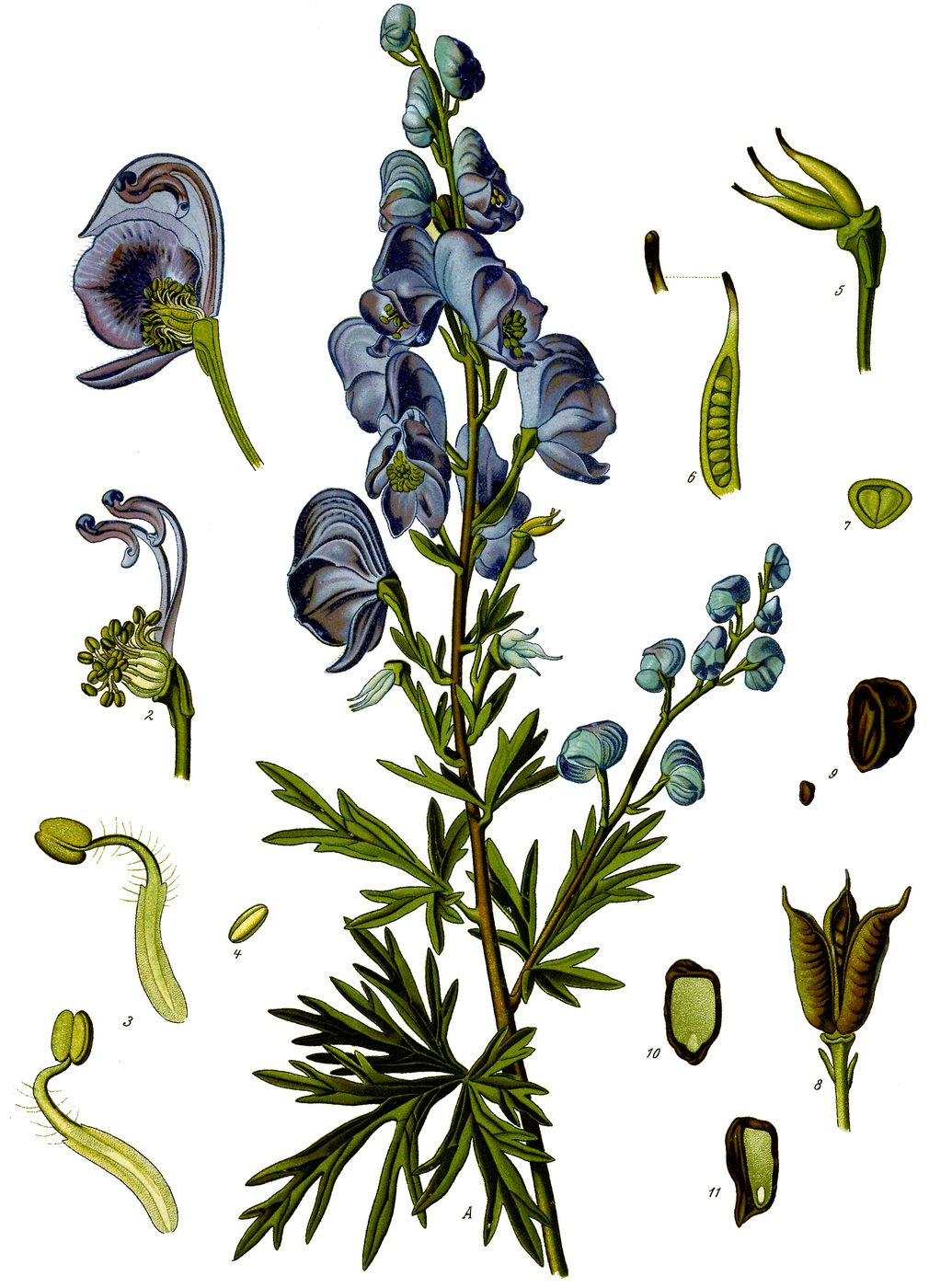
PlantAconiteWolfsbane, monkshood
Aconitum napellus and its relatives, of the buttercup family.CautionA
PlantAdder’s-tongue fernGreen Oil of Charity (a preparation made from it)
Ophioglossum vulgatum. A small, unfern-like fern of moist pastures and meadows, its single spike rising from a single blade said to resemble a serpent’s tongue.A
PlantAgrimonyEupatoria of the ancients, as Sprengel and Desfontaines took Pliny’s plant (Fée preferred hemp agrimony)
Agrimonia eupatoria.A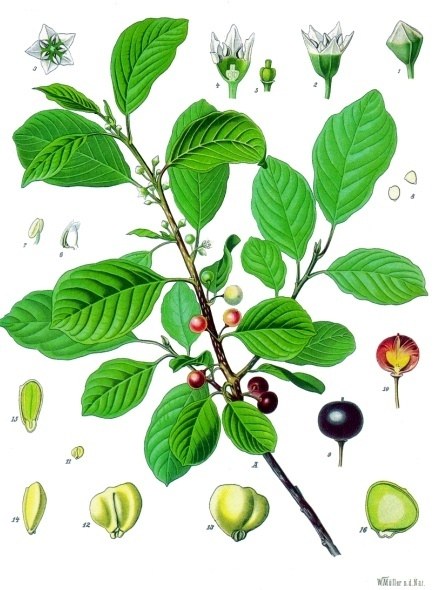
PlantAlder buckthornBlack dogwood, black alder, frangula bark, German Pulverholz; Rhamnus frangula L.; Frangula alnus Mill.; in pharmacy Frangulae cortex
Rhamnus frangula, a slender shrub of the family Rhamnaceae, widespread in Europe and northern Asia and found in English woods and thickets, rare in Scotland. Grieve distinguishes it from the common buckthorn by its more tree-like habit, the absence of thorns, its entire, feather-veined, alternate leaves, and its berries with only two or three seeds. The drug is the bark, papery young quills grey or blackish-brown outside with small whitish warts, crimson beneath when scraped, sweetish and slightly bitter, colouring the saliva yellow when chewed.A
PlantAlkanetAnchusa; Greek anchousa, “paint”
Alkanna tinctoria (syn. Lithospermum tinctorium). A relative of borage, of southern Europe and above all the Mediterranean, grown for the red dye in its root.a
PlantThe amulet herbsBetony, goat’s rue, savin, sage, horehound, cyclamen, laurel, masterwort, and angelica
See each above.CanaleA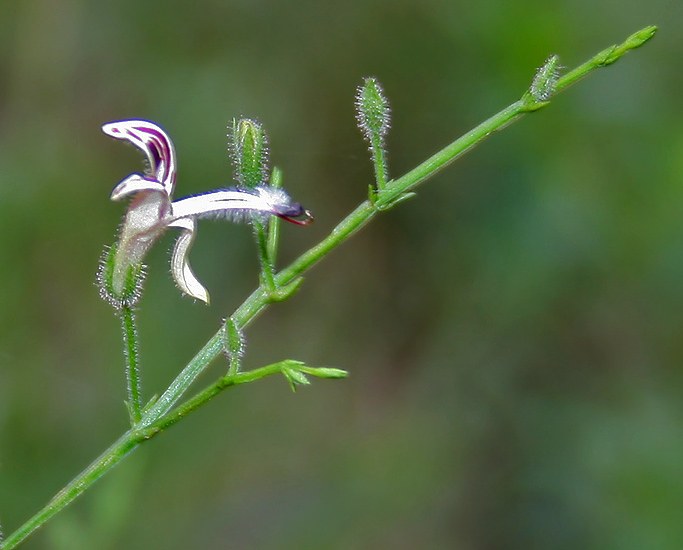
PlantAndrographisKalmegh, Bengali kalmeg, Hindi kiryat; Chinese chuan xin lian; Andrographis paniculata Nees; in pharmacy Andrographidis paniculatae folium
Andrographis paniculata, a bitter herb of the family Acanthaceae found wild or cultivated throughout India. The European Medicines Agency’s assessment report names its diterpene lactones, andrographolide chief among them and considered the most active, as its major constituents.A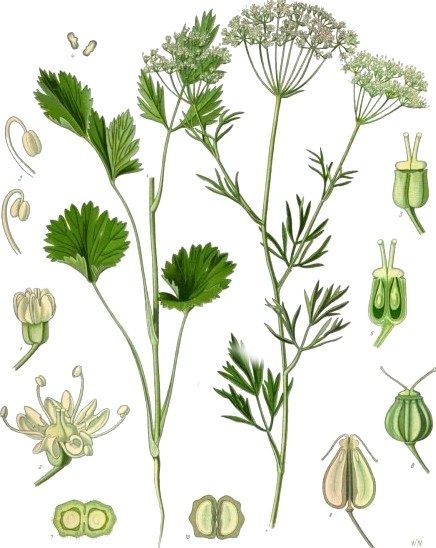
Plant AniseedAnisi
Pimpinella anisum.CanaleA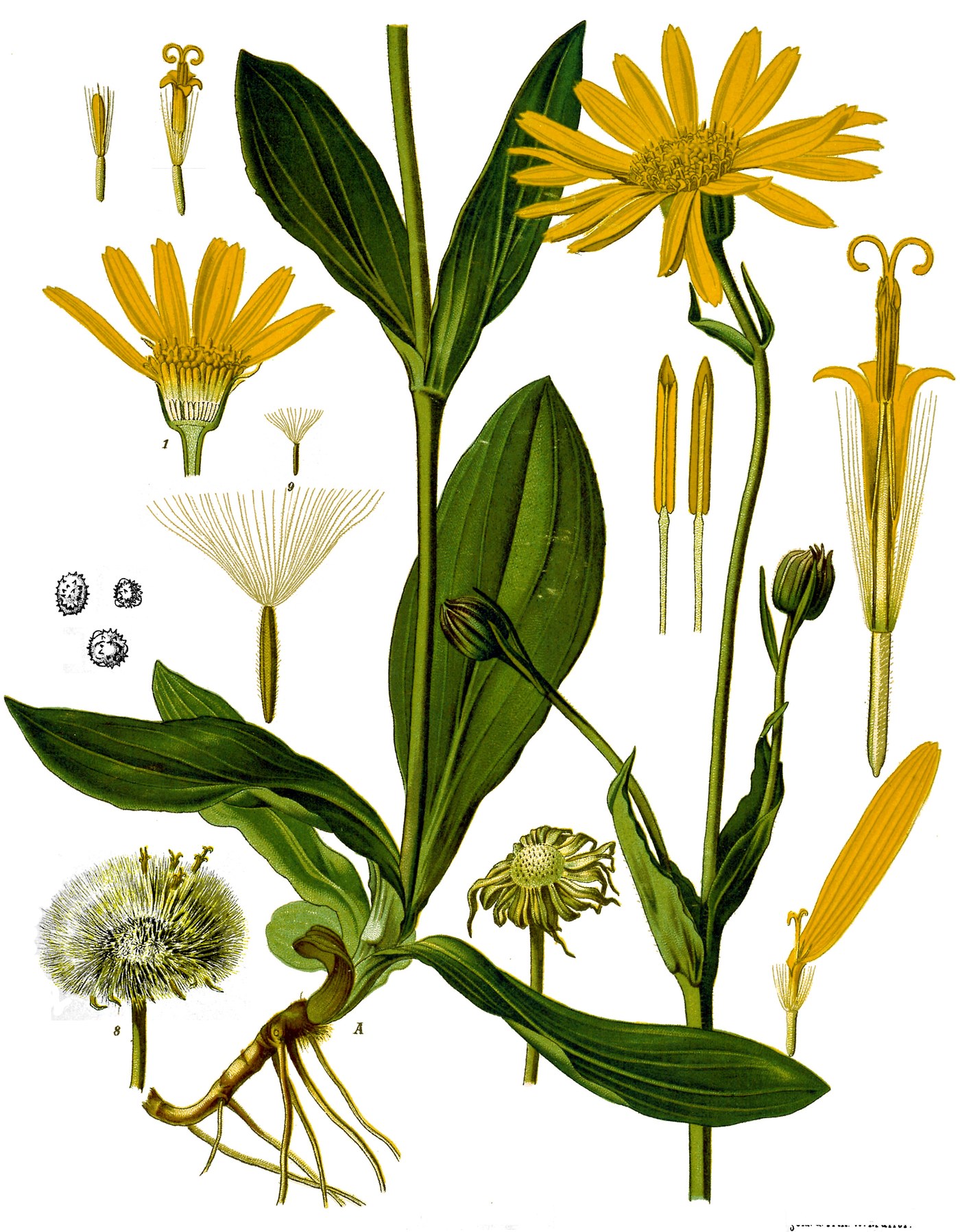
PlantArnicaMountain tobacco, leopard’s bane; Arnica montana of Linnaeus; in pharmacy Arnicae flos, the flower
Arnica montana, a perennial of the family Compositae native to the woods and mountain pastures of central Europe, found in England and southern Scotland but probably as an escape. Its leaves lie in a flat rosette from which a stalk one to two feet high bears orange-yellow flowers; the rhizome is dark brown, curved, with brittle wiry rootlets. The dried flower heads are the medicine now; Grieve’s pharmacopoeias used root and flower both.CautionA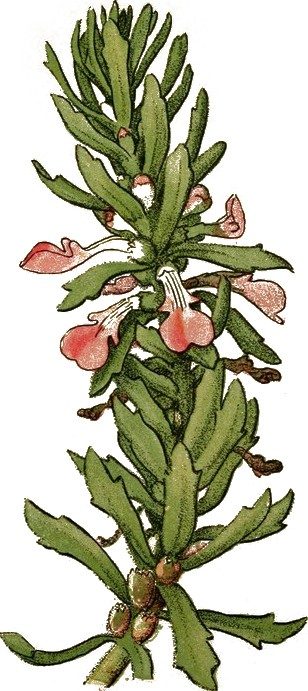
PlantArthriticaArtetico; iva artetica
Ajuga iva, named for its use against gout (note XLIX).CanaleA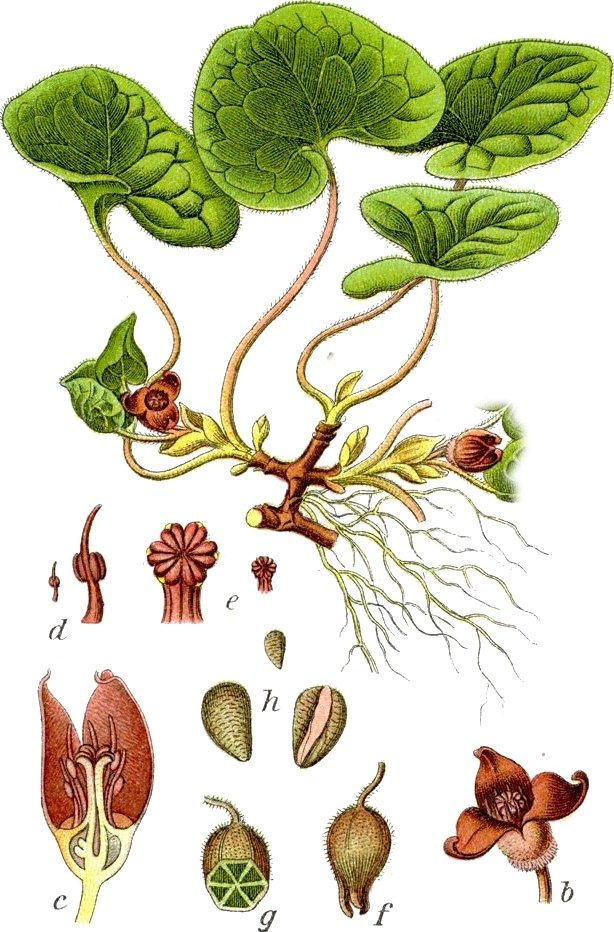
PlantAsarabaccaAsarum
Asarum europaeum, hazelwort or wild nard, of the birthwort family; a rare plant of woods.CanaleCautionA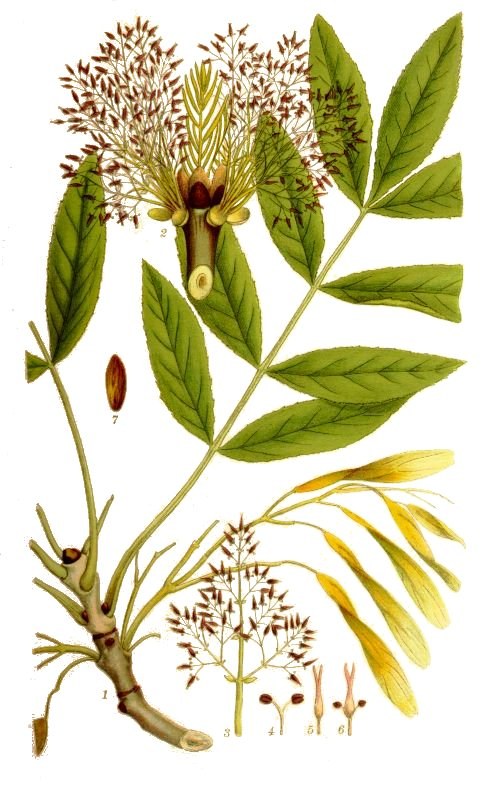
PlantAsh leafCommon ash, weeping ash; Folkard’s ‘Venus of the forest’ and ‘husbandman’s tree’; Fraxinus excelsior L., with the narrow-leaved Fraxinus angustifolia Vahl; in pharmacy Fraxini folium
Fraxinus excelsior, a tall tree of the olive family Oleaceae, with light-grey bark and large compound leaves of four to eight pairs of lance-shaped, sharply toothed leaflets tipped by a single one. Its flowers, without petals or sepals, open before the leaves, and its winged seeds, the ‘keys,’ hang in great clusters until the next spring. Grieve calls its wood the toughest and most elastic of English timbers, surpassing every European tree in that quality. The drug is the dried leaf.A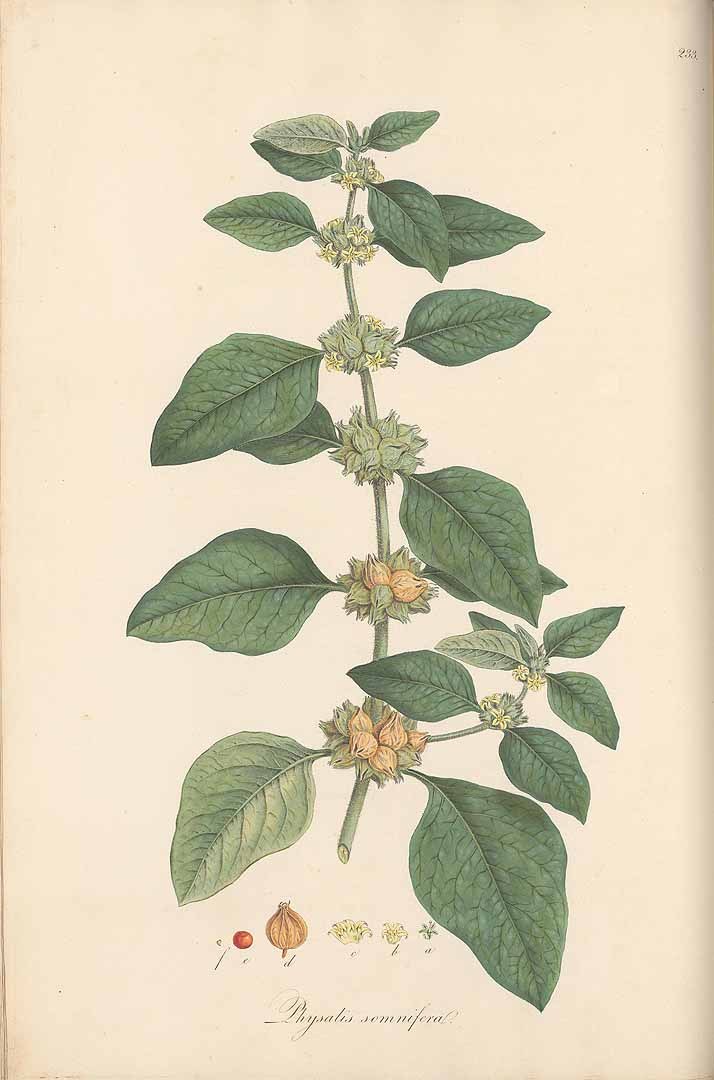
PlantAshwagandhaWinter cherry, Indian ginseng; Hindi asgandh, Bengali asvagandha; Sanskrit asvagandha, turagi-gandha, ‘smelling like a horse or mare,’ and varaha-karni, ‘boar-eared’; Withania somnifera (L.) Dunal; in pharmacy Withaniae somniferae radix
Withania somnifera, a low-growing evergreen shrub of the family Solanaceae, native by LiverTox’s account to India and Southeast Asia; Dymock, Warden, and Hooper found it in dry subtropical India and southern Europe. Dutt describes the root as “long, smooth, rounded, whitish brown externally and of a fine white colour internally.” LiverTox counts more than a hundred constituents, withanolides among them, and notes that the ingredient responsible for its effects is not known.A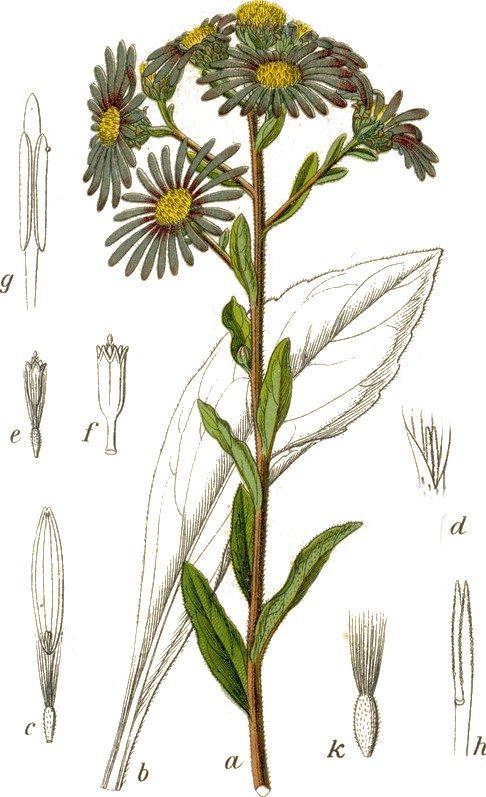
PlantAsterAster attico
Aster amellus.CanaleB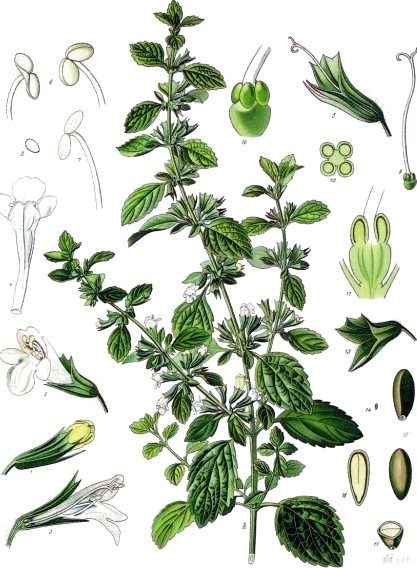
Plant BalmMelissa
Lemon balm, Melissa officinalis.CanaleB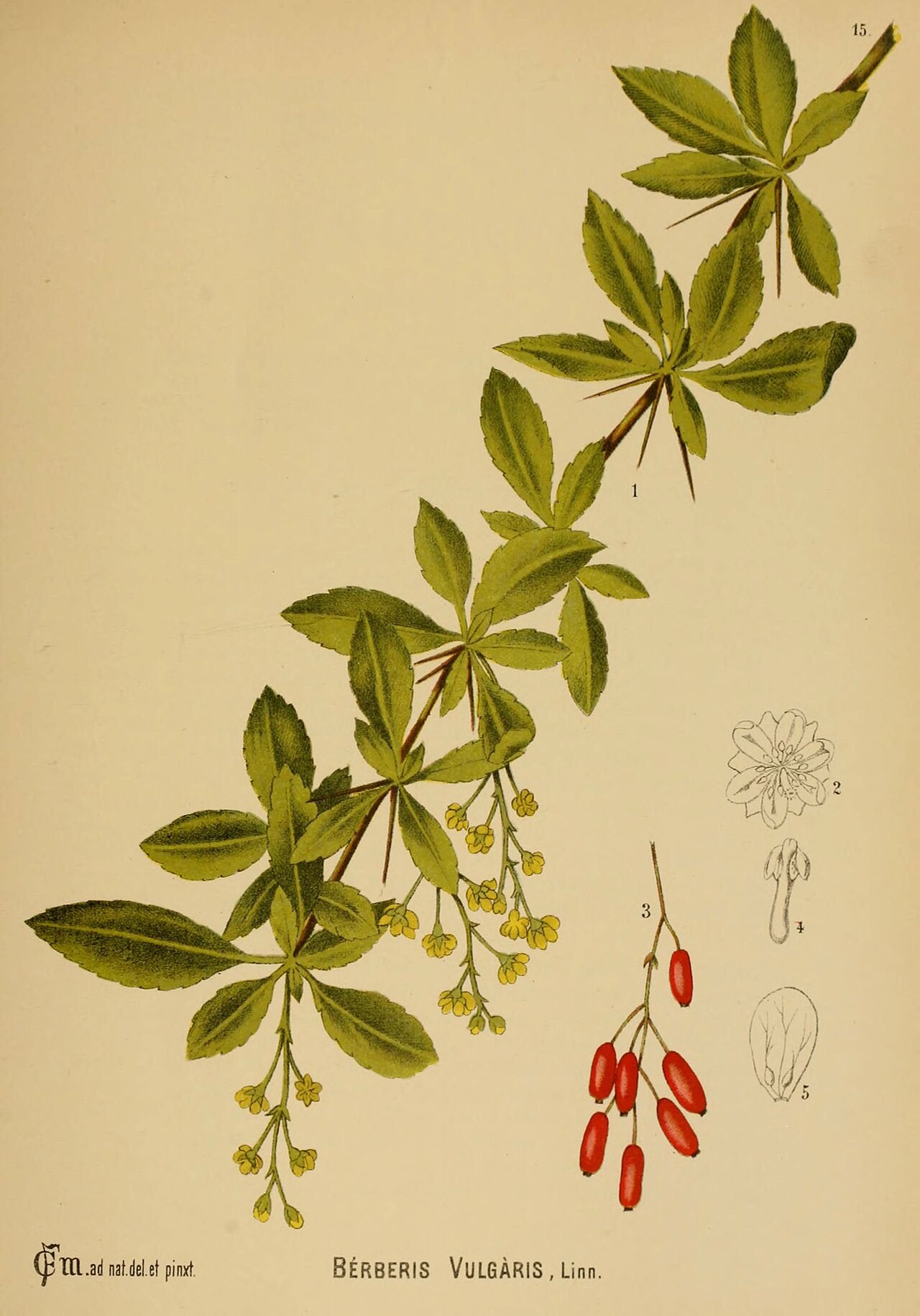
PlantBarberryCommon barberry, berbery, pipperidge bush, Holy Thorn; Berberis dumetorum; Berberis vulgaris L.
Berberis vulgaris, of the family Berberidaceae, a bushy spiny shrub of copses and hedges across most of Europe, North Africa, and temperate Asia, with pendulous racemes of small pale yellow flowers and oblong red berries, “pleasantly acidulous.” Its stamens spring against the pistil when an insect touches them. The stem-bark and root-bark are the drug; the bark is bitter and turns the saliva yellow when chewed. Grieve names its chief constituent as berberine, a yellow bitter alkaloid, with oxyacanthine and berbamine.B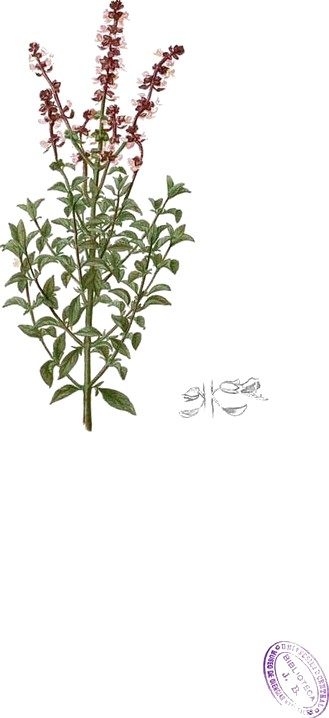
PlantBasilOcimo
Ocimum basilicum.CanaleB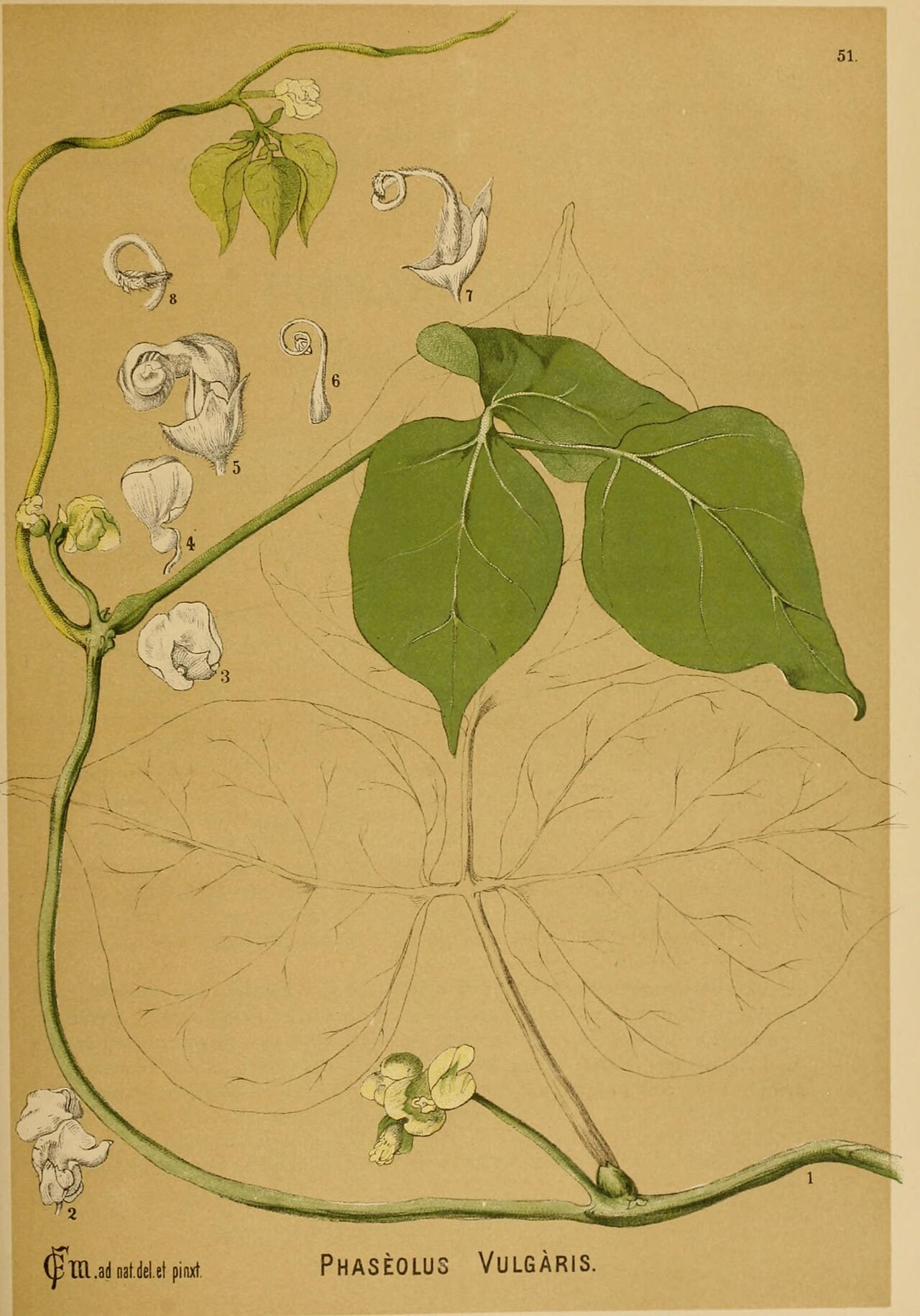
PlantBean podGreen bean pod, kidney bean husk; the pod emptied of its seeds of Phaseolus vulgaris of Linnaeus, the French or kidney bean; in pharmacy Phaseoli fructus sine semine
The pod, without its seeds, of the common French or kidney bean, Phaseolus vulgaris. Culpeper describes the plant rising on one stalk that divides into arms “so weak that if they be not sustained with sticks or poles, they will be fruitless upon the ground,” with three leaves to a stalk, pea-like flowers, and “long and slender flat pods, some crooked, some straight, with a string running down the back thereof,” holding a fruit “made like a kidney.”B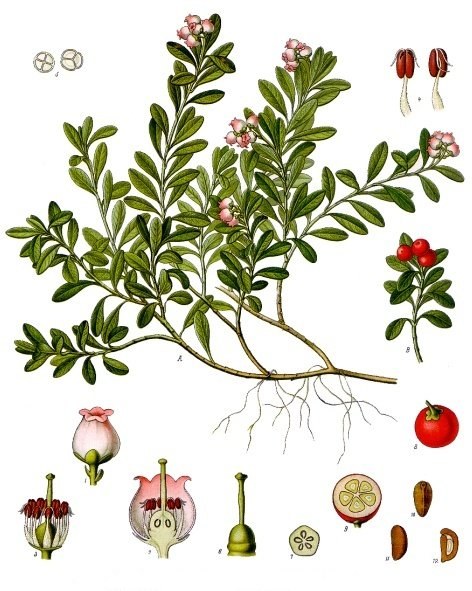
PlantBearberryUva-ursi, the bear’s grape; Arbutus uva-ursi of older books; Arctostaphylos uva-ursi (L.) Sprengel; in pharmacy Uvae ursi folium, the leaf
Arctostaphylos uva-ursi, a low trailing evergreen shrub of heaths and barren hills across the northern hemisphere, common in the Scottish Highlands. Its leathery leaves, half an inch to an inch long, are spoon-shaped, rounded at the tip, dark shining green above with sunken veins and paler below with a coarse network of raised ones, without smell but “very astringent and somewhat bitter.” Waxy reddish-white bells hang in small clusters in May and June, and the berry is bright red, smooth, and mealy. The dried leaf is the medicine.B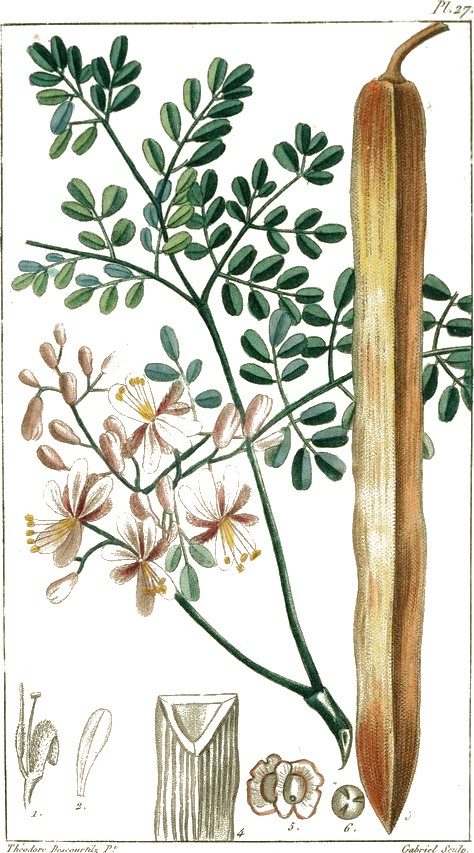
PlantBen-nutBalano mirepsica
Probably the seed of the horseradish tree, Moringa oleifera, whose oil is the “ben oil.”CanaleB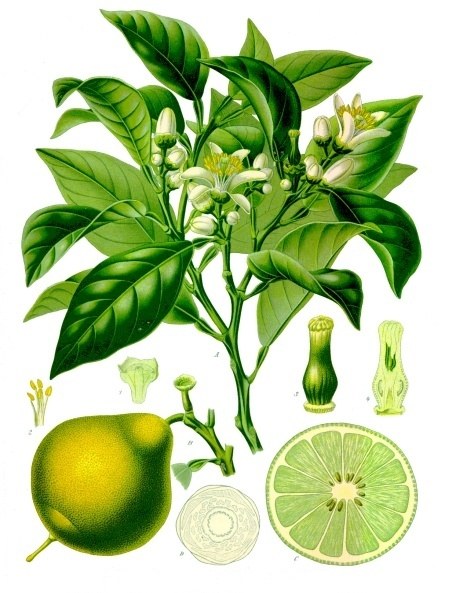
PlantBergamotCitrus bergamia Risso & Poit.; in pharmacy Citri bergamiae aetheroleum, bergamot oil
Citrus bergamia, of the family Rutaceae, a tree up to five metres high with big, dark green, lemon-like leaves, fragrant star-shaped white flowers, and round or pear-shaped yellow fruit with a thin, smooth peel and a sour, bitter, greenish-yellow pulp. The European Medicines Agency’s assessment report calls it a hybrid of bitter orange and lemon, or by other authors of bitter orange and lime, grown mainly in Calabria for the essential oil pressed from the peel. The oil is mostly limonene, linalool, and linalyl acetate, with a small non-volatile fraction holding the furocoumarin bergapten.B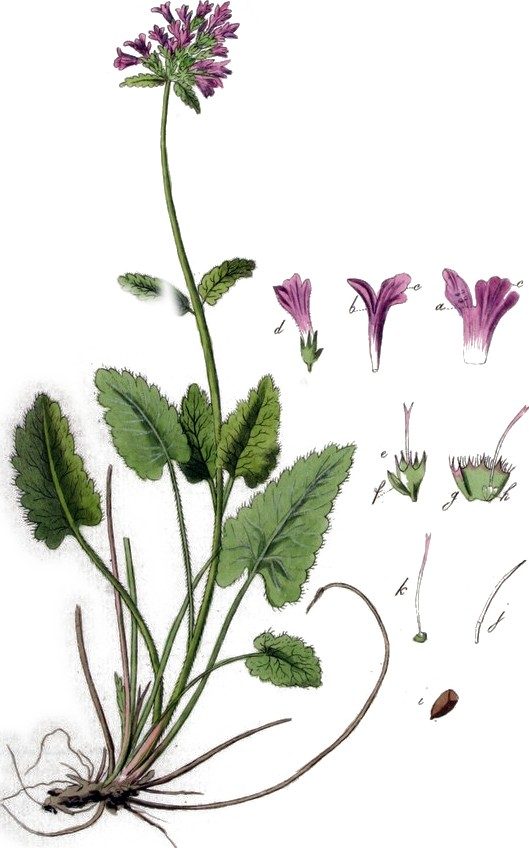
Plant BetonyBetonica
Wood betony, Betonica officinalis.CanaleB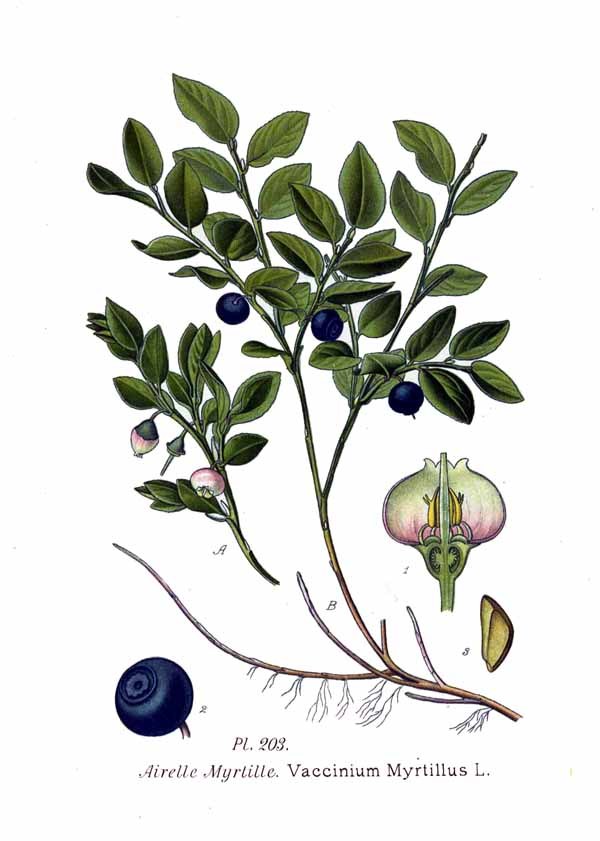
PlantBilberryWhortleberry, whorts, black whortles, whinberry, huckleberry, hurts, bleaberry, hurtleberry, French airelle; Vaccinium myrtillus L.; in pharmacy Myrtilli fructus, dried and fresh bilberry fruit
Vaccinium myrtillus, a small branched shrub of heaths and mountains, rarely over a foot high, with wiry angular branches, globular wax-like flowers, and black berries “covered when quite ripe with a delicate grey bloom.” Its leathery leaves, Grieve says, are shaped somewhat like the myrtle’s, “hence its specific name,” and turn from rosy to yellowish-green and in autumn to red. The fruit is globular with a flat top, about the size of a blackcurrant.B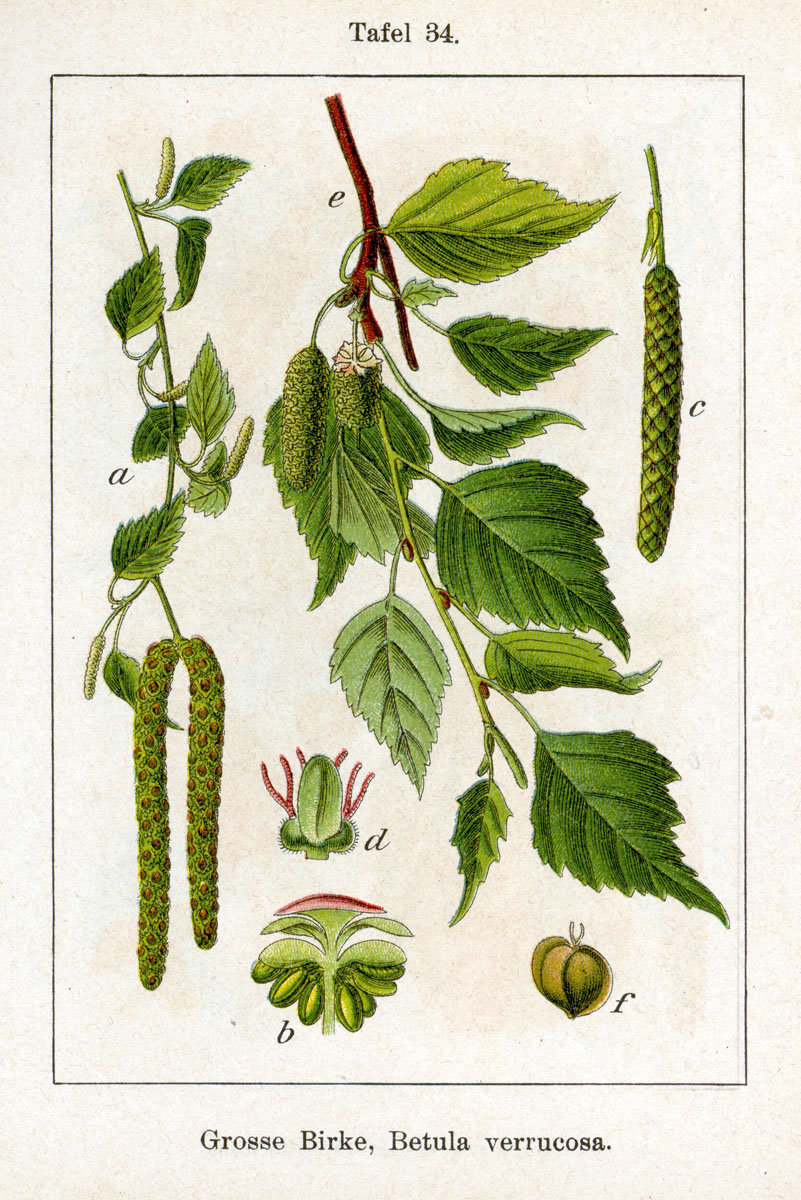
PlantBirch leafCommon or white birch; silver birch, Betula pendula Roth, and downy birch, Betula pubescens, Grieve’s Betula alba; French bouleau; in pharmacy Betulae folium
The leaf of the silver and downy birches, trees of Europe from Sicily to Iceland and of northern Asia. Grieve describes the young branches as rich red-brown or orange-brown and the trunks usually white, the downy birch darker with downy instead of warty twigs, and the leaves with “a peculiar, aromatic, agreeable odour and a bitter taste.” Culpeper saw the leaves “like the beech leaves, but smaller and greener, and dented about the edges.”B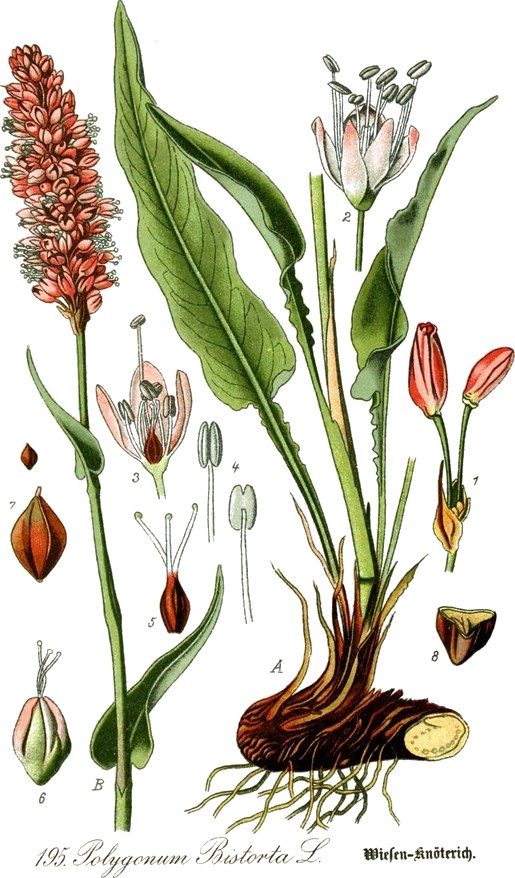
PlantBistortBistorta
Bistorta officinalis, snakeweed.CanaleB
Plant Bitter aloesAloe, Socotrine aloes
The dried leaf juice of Aloe barbadensis and A. ferox, and of old of A. perryi of Socotra.CautionB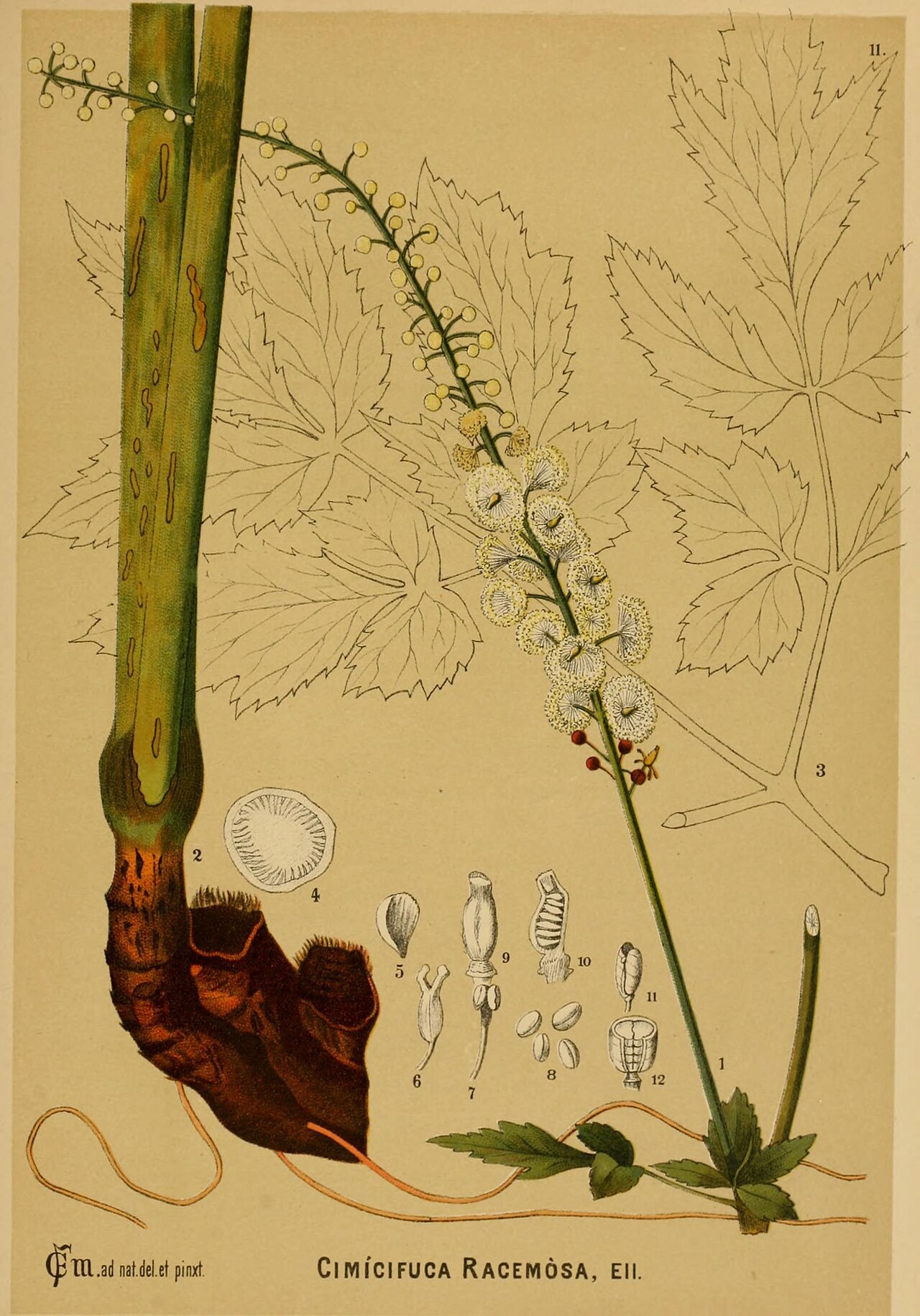
PlantBlack cohoshBlack snakeroot, rattle root, squaw root, bugbane; Actaea racemosa, formerly Cimicifuga racemosa of Nuttall; in pharmacy Cimicifugae rhizoma
Actaea racemosa, a tall North American herb of the family Ranunculaceae, growing freely in shady woods in Canada and the United States, with feathery racemes of white flowers one to three feet long that “droop gracefully.” The part used is the stout, blackish, knotty rhizome with its roots, collected in autumn after the fruit has formed, with a faint disagreeable smell and “a bitter and acrid taste.”CautionB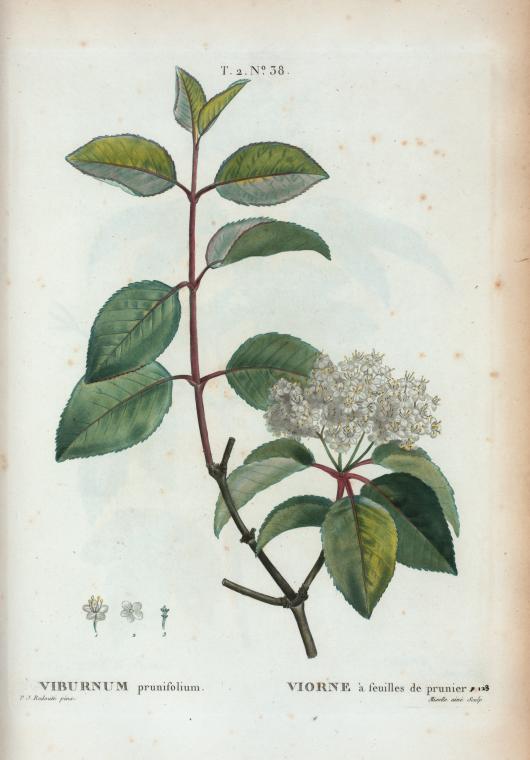
PlantBlack hawSloe, stag bush, sloe-leaved viburnum; Viburnum prunifolium L.
Viburnum prunifolium, a North American shrub or small tree ten to twenty feet high, of the honeysuckle family, growing in dry woods, thickets, and rocky hillsides from Connecticut to Illinois and most abundantly in the south. Its spreading, rather stunted branches give it, King’s Dispensatory says, “an unthrifty appearance”; it bears white flowers in large flat clusters from March to June, and sweet, edible, blackish berries. The bark of the root, stem, and branches is the drug, the root bark preferred by the Eclectics; it is bitter and slightly aromatic.B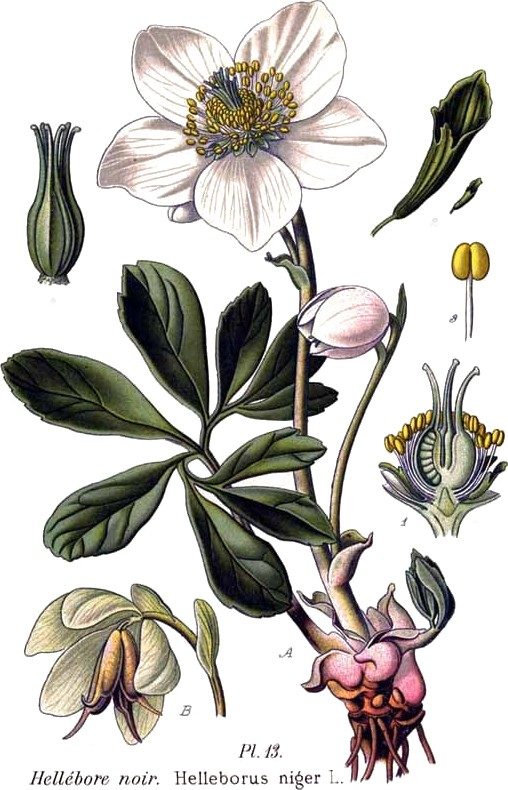
Plant Black helleboreElleboro nero
The Christmas rose, Helleborus niger; the bark of the root was used.CanaleCautionB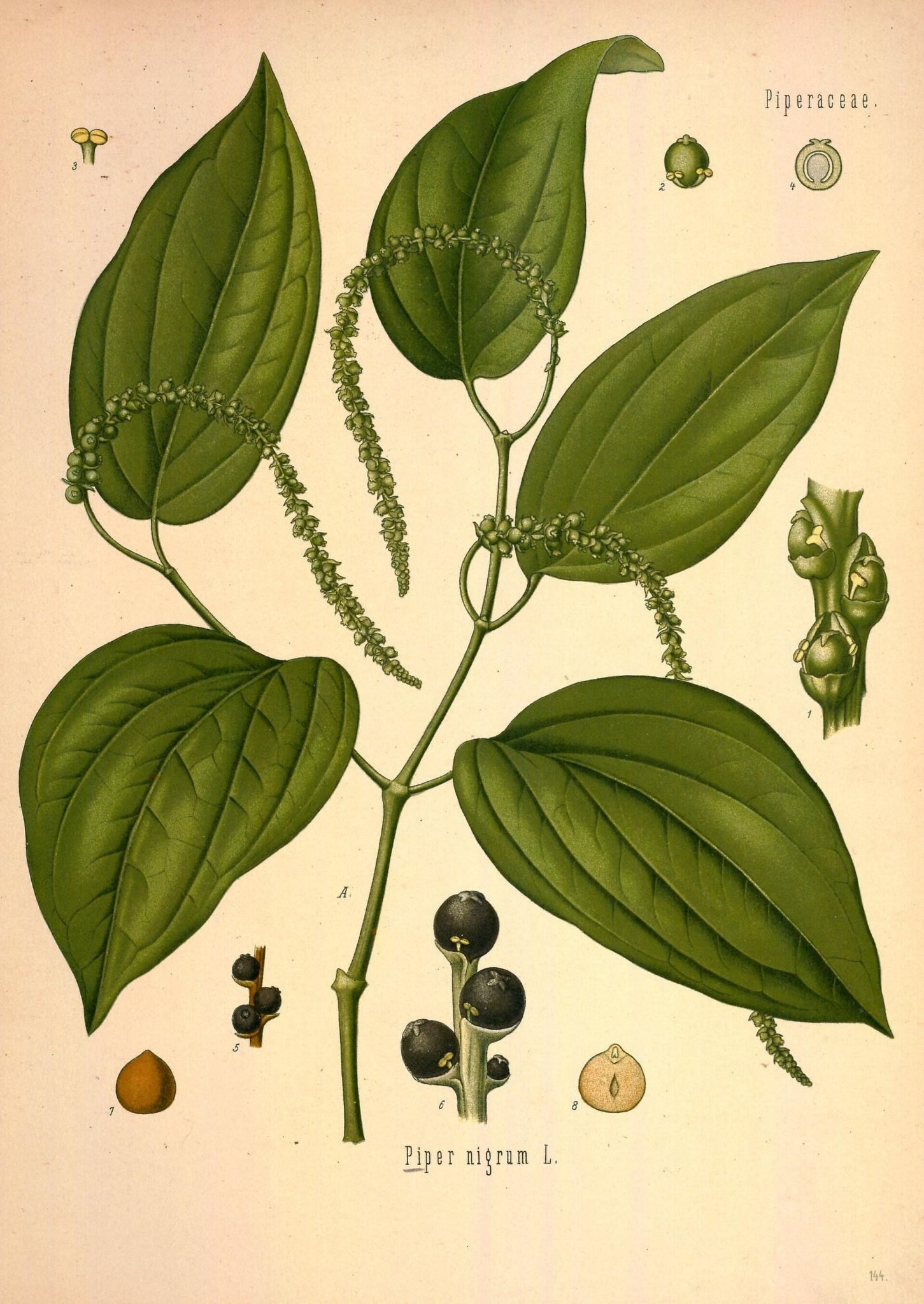
Plant Black pepperPiper
The dried fruit of Piper nigrum.B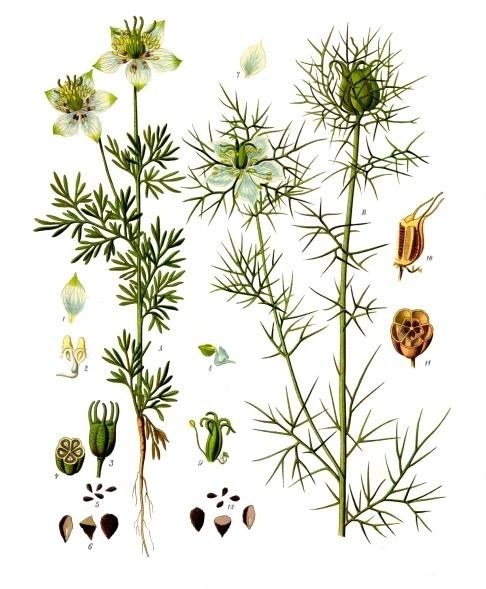
PlantBlack seedBlack cumin, nigella, fennel flower, nutmeg flower, Roman coriander; Hindi and Bengali kalajira, mugrela, Bombay kalonji; Sanskrit krishnajiraka; Persian shuniz; French faux cumin, quatre épices, toute épice; German Schwarzkummel; Nigella sativa L.
Nigella sativa, a small annual of the buttercup family, Ranunculaceae, which Grieve calls “not in any way related to the Fennel” despite its name. It has deeply cut greyish-green leaves and greyish-blue flowers, followed by toothed seed-vessels full of small three-cornered seeds, black outside and white and oily within. Grieve gives it as native to Syria, LiverTox to Eastern Europe and the Middle East. LiverTox names thymoquinone, one of its volatile oils, as the suspected major active component.B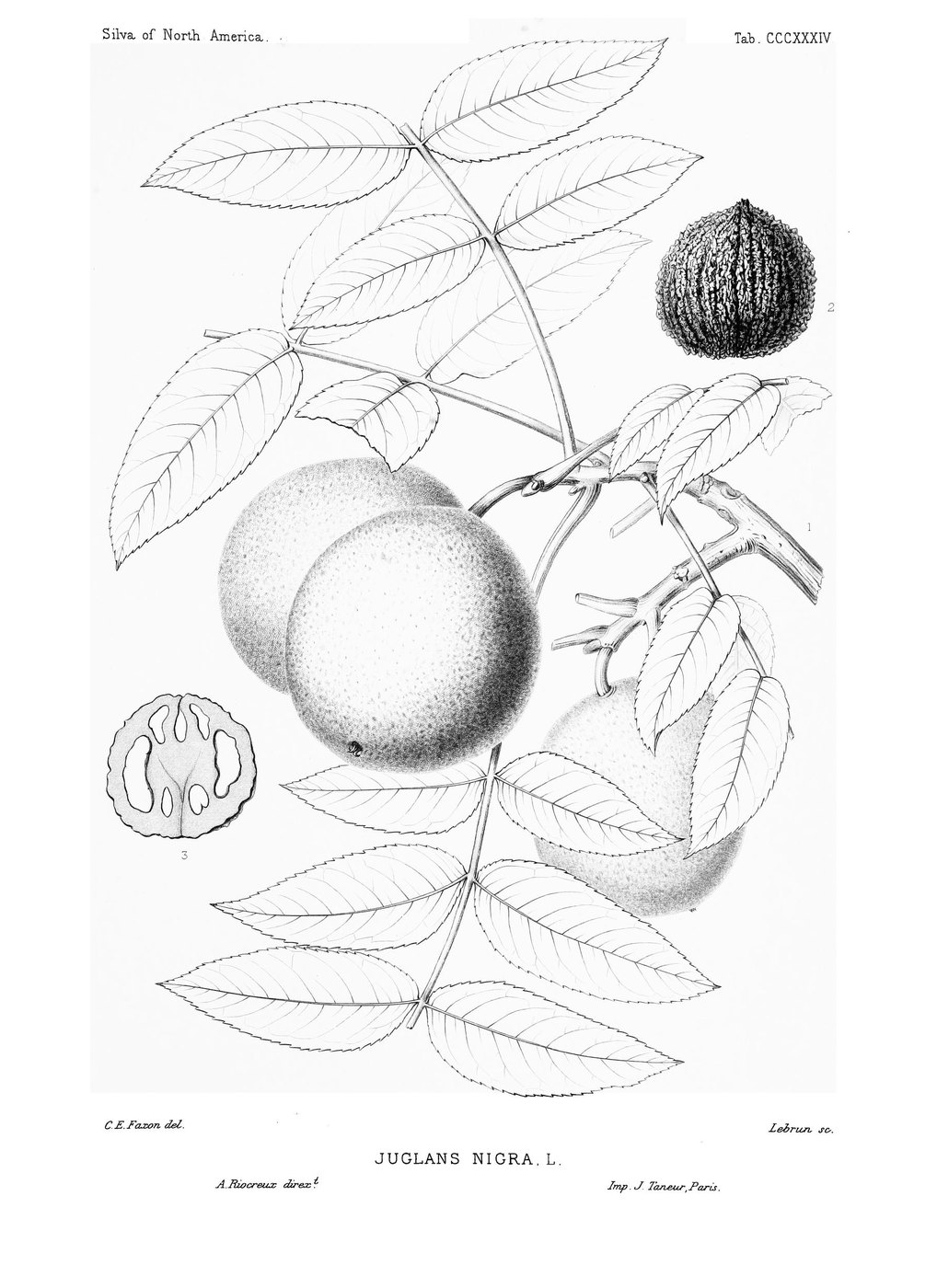
PlantBlack walnutJuglans nigra of Linnaeus; Wallia nigra of Alefeld; the Ojibwe and Potawatomi knew the butternut, Juglans cinerea, their baganak, and not this tree
Juglans nigra, the great walnut of the rich bottom-lands and fertile hillsides of the Mississippi basin: a tree often a hundred feet high and sometimes a hundred and fifty, with a straight trunk clear of branches for fifty or sixty feet, leaves of fifteen to twenty-three leaflets, and a globose green husked fruit an inch and a half to two inches across, holding a deeply ridged nut with a sweet kernel. It ranges from western Massachusetts to southern Ontario, through southern Michigan and Minnesota to Nebraska and Kansas, and south to Florida and Texas.CautionB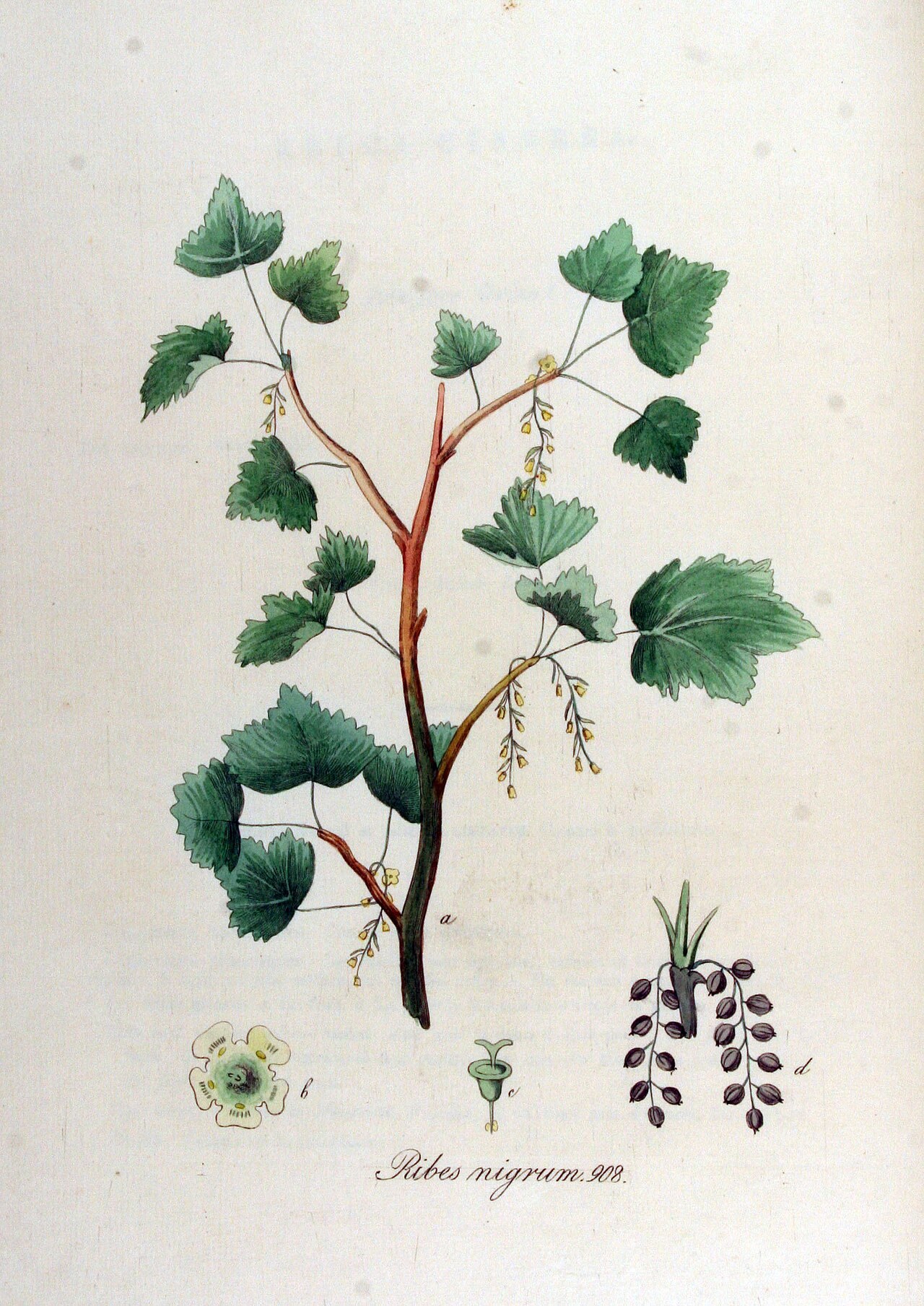
PlantBlackcurrantBlack currant, quinsy berries, squinancy berries; Ribes nigrum of Linnaeus; in pharmacy Ribis nigri folium, the leaf
Ribes nigrum, a shrub of damp woods which Grieve considered truly native in England only in Yorkshire and the Lake District, carried elsewhere by birds, and “easily distinguished at all seasons by the strong perfume of its buds and leaves.” Its leaves are dotted underneath. Fruit, leaves, bark, and roots were all used; modern herbal medicine keeps the leaf.B
PlantBlackthornSloe
Prunus spinosa. A thorny hedgerow shrub bearing small, bitter, blue-black plums, sloes, after the first frost.B
PlantBladderwrackSea wrack; Quercus marina
Fucus vesiculosus, a brown seaweed of rocky shores, buoyed by paired air bladders.B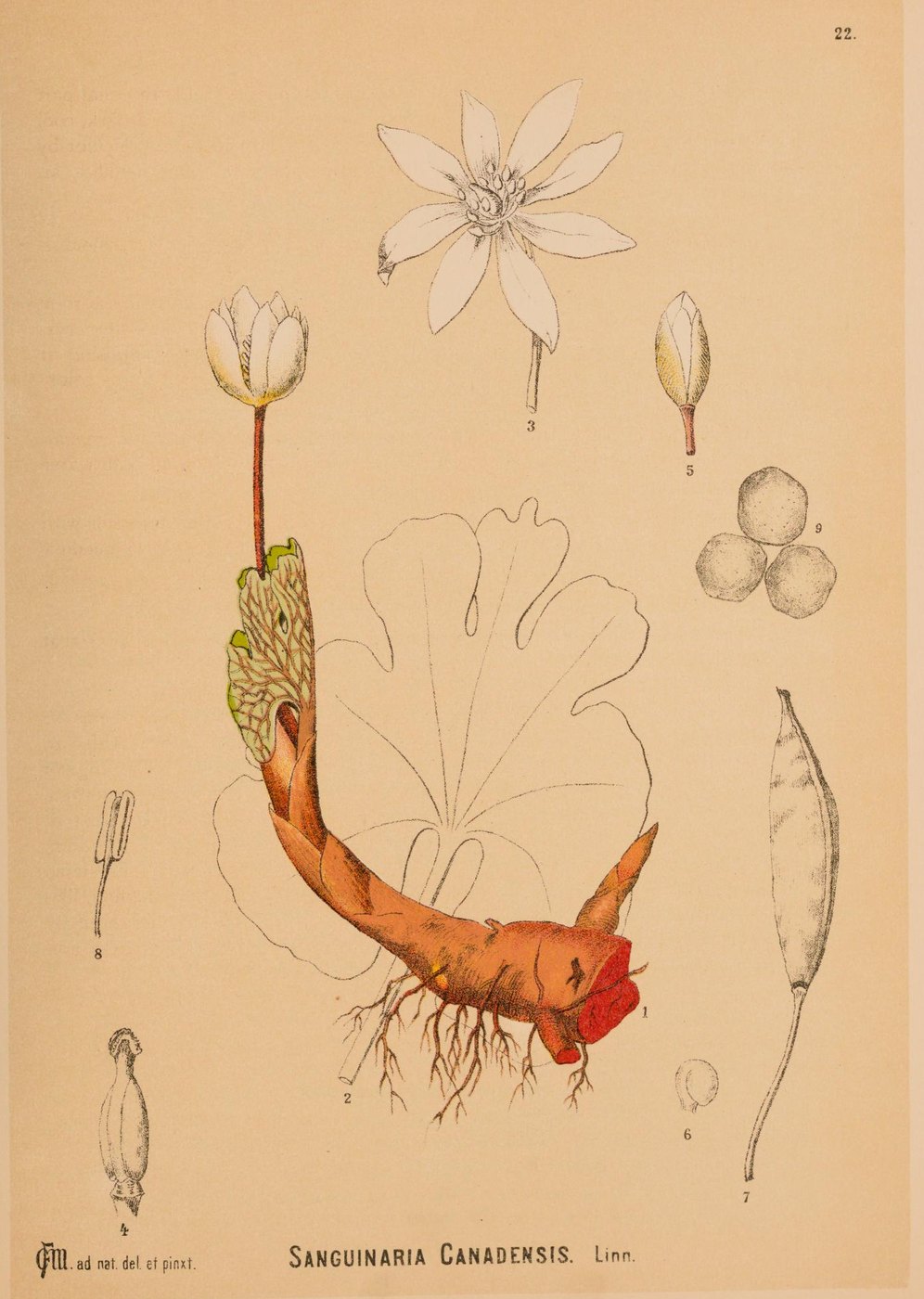
PlantBloodrootRed puccoon, puccoon, tetterwort, redroot, pauson, turmeric, Indian paint; Sanguinaria canadensis of Linnaeus; the Ojibwe meskwadjibikûk and the Potawatomi mackwadjibikûkûk, red root
Sanguinaria canadensis, the first flower of the spring woods from Canada to the South: a single creamy-white flower of eight petals on a naked scape three to six inches high, wrapped as it rises in its one lobed leaf, from a short horizontal root that bleeds a bright orange-red juice wherever it is cut. It grows in rich open woods and on bottom-lands along shaded streams, flowering from March to May and fruiting in June.DeadlyB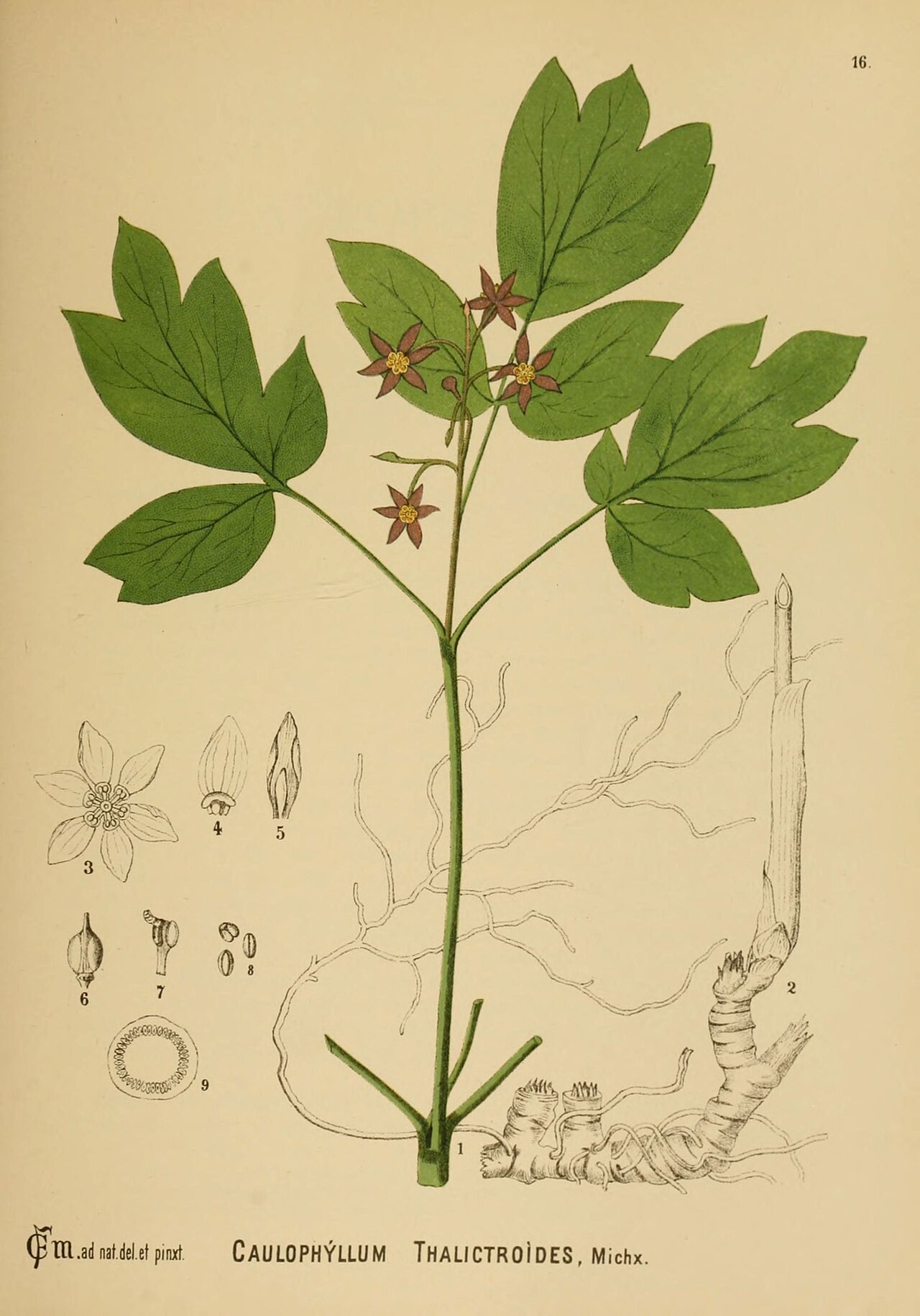
PlantBlue cohoshPappoose root, squawroot, blueberry root; Omaha-Ponca zhu-nakada-tanga-makaⁿ, ‘great fever medicine’; Ojibwe oci’gîmîc; Caulophyllum thalictroides (L.) Michx.
Caulophyllum thalictroides, of the barberry family, Berberidaceae, a handsome perennial, smooth and glaucous, of rich, moist ground in swamps and beside streams in the United States and Canada, bearing small yellowish-green flowers in May and June and seeds the size of a large pea. The knotty root is the drug; its taste is sweetish-bitter, then acrid and pungent, and Grieve lists among its constituents a body like saponin.CautionB
PlantBogbeanBuckbean, marsh trefoil; Menyanthes
Menyanthes trifoliata, a plant of bogs, marshes, and shallow water, with three-part leaves and flowers white and hairy within, rose-coloured without.B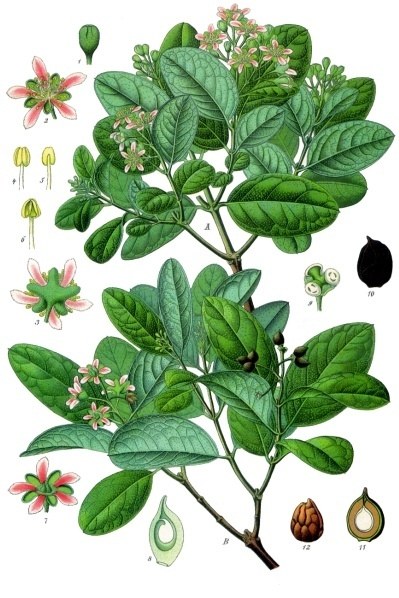
PlantBoldoBoldu, boldus; Boldoa fragrans; Peumus boldus Molina; in pharmacy Boldi folium
Peumus boldus, an evergreen shrub of the fields of the Chilean Andes, whose yellowish-green fruit is eaten, whose bark tanned leather, and whose wood made charcoal, by Grieve’s account. The leaves, the part used, are opposite, stalkless, about two inches long, leathery and red-brown when dried, dotted with small glands, with a smell that when crushed is “very strongly disagreeable, not unlike oil of Chenopodium (wormseed).”CautionB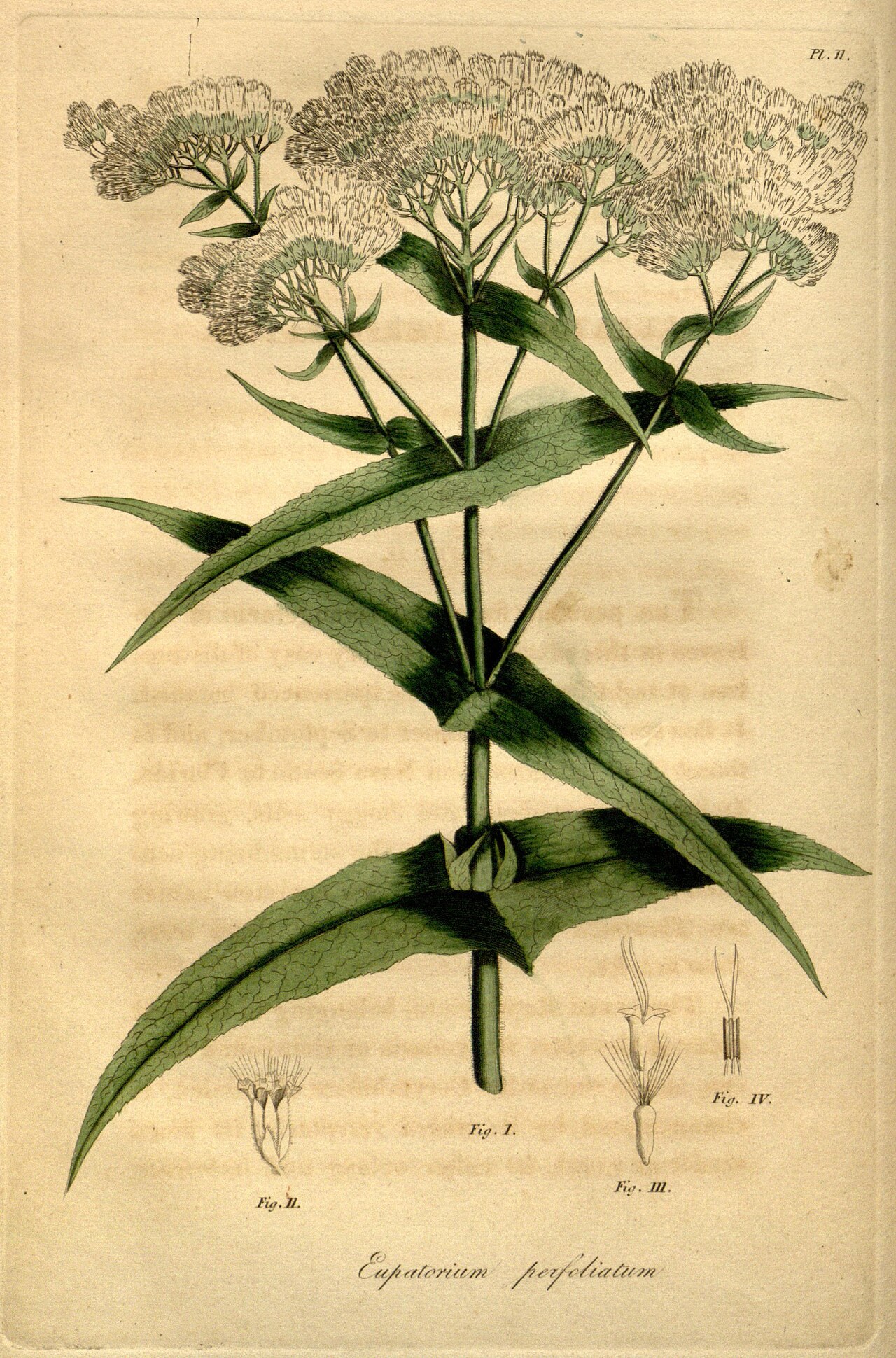
PlantBonesetThoroughwort, ague-weed; Eupatorium perfoliatum L.
Eupatorium perfoliatum, of the family Compositae, a stout, hairy perennial two to four feet high of low meadows and damp ground in North America from Nova Scotia to Florida, flowering from July to September in flat heads of many small white florets. Its leaves are unmistakable: each opposite pair is joined at the base so that the stem seems to pass through a single leaf, whence perfoliatum. The leaves and flowering tops are the drug; they are slightly aromatic, astringent, and strongly bitter, and Grieve names a bitter principle, eupatorin.B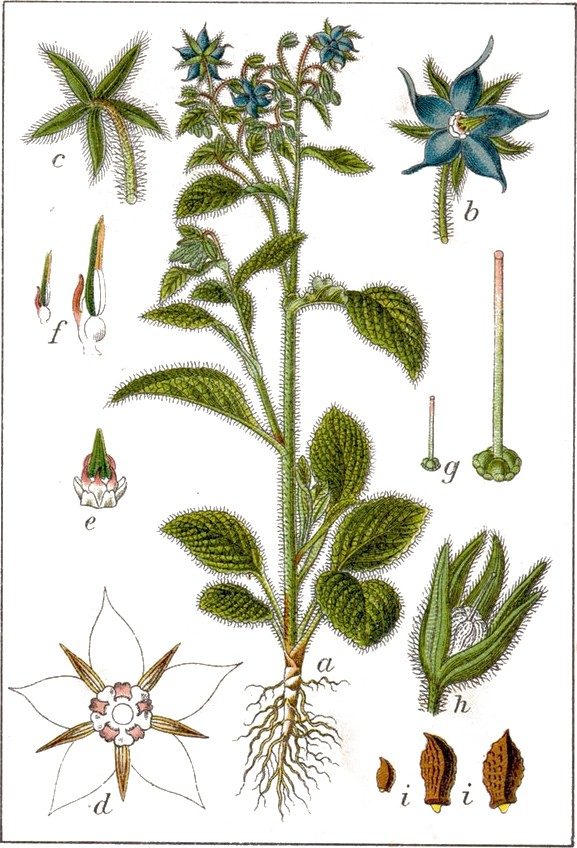
Plant BorageBoragine
Borago officinalis.CanaleCautionB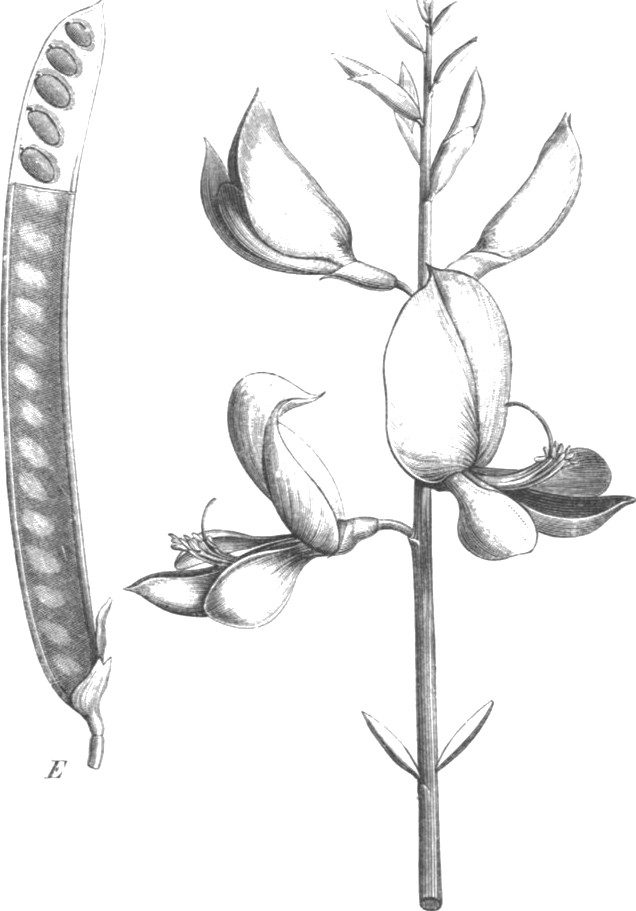
PlantBroomGinestra
Spanish broom, Spartium junceum, or common broom, Cytisus scoparius.CanaleB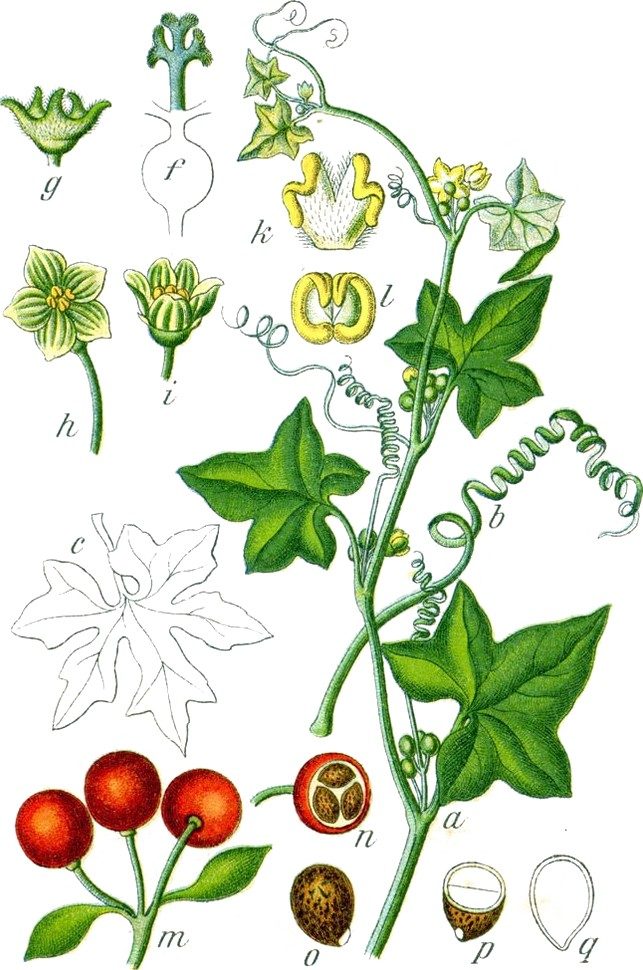
PlantBryonyBrionia
White bryony, Bryonia dioica (syn. Bryonia cretica subsp. dioica), whose large root was sold as a false mandrake.CanaleCautionB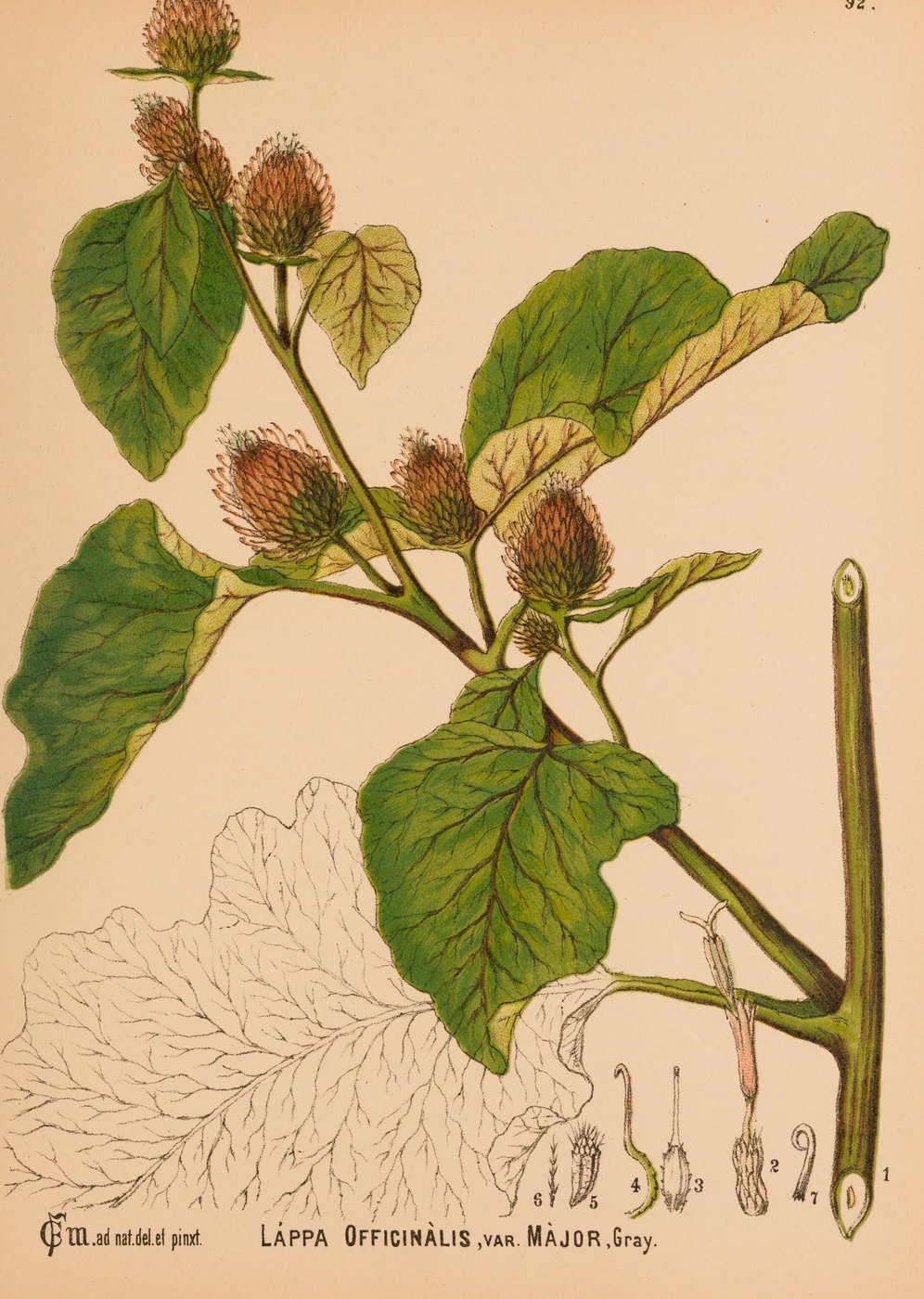
PlantBurdockCommon burdock, Arctium minus; great burdock, Arctium lappa of Linnaeus, Lappa officinalis, Lappa major, Bardana major; bat weed; clotbur, wrongly; the Ojibwe gi’masan, big stickers; the Potawatomi asûkitä’boe, stickers
The coarse biennial emigrant of roadsides and dwellings, three to five feet high, with great heart-shaped leaves cottony beneath and purple flower-heads in burrs of hooked scales, a deep root black outside and white within: native to Europe and Asia and spread westward across America by every coat and fleece its burrs could catch. It flowers from June to October.B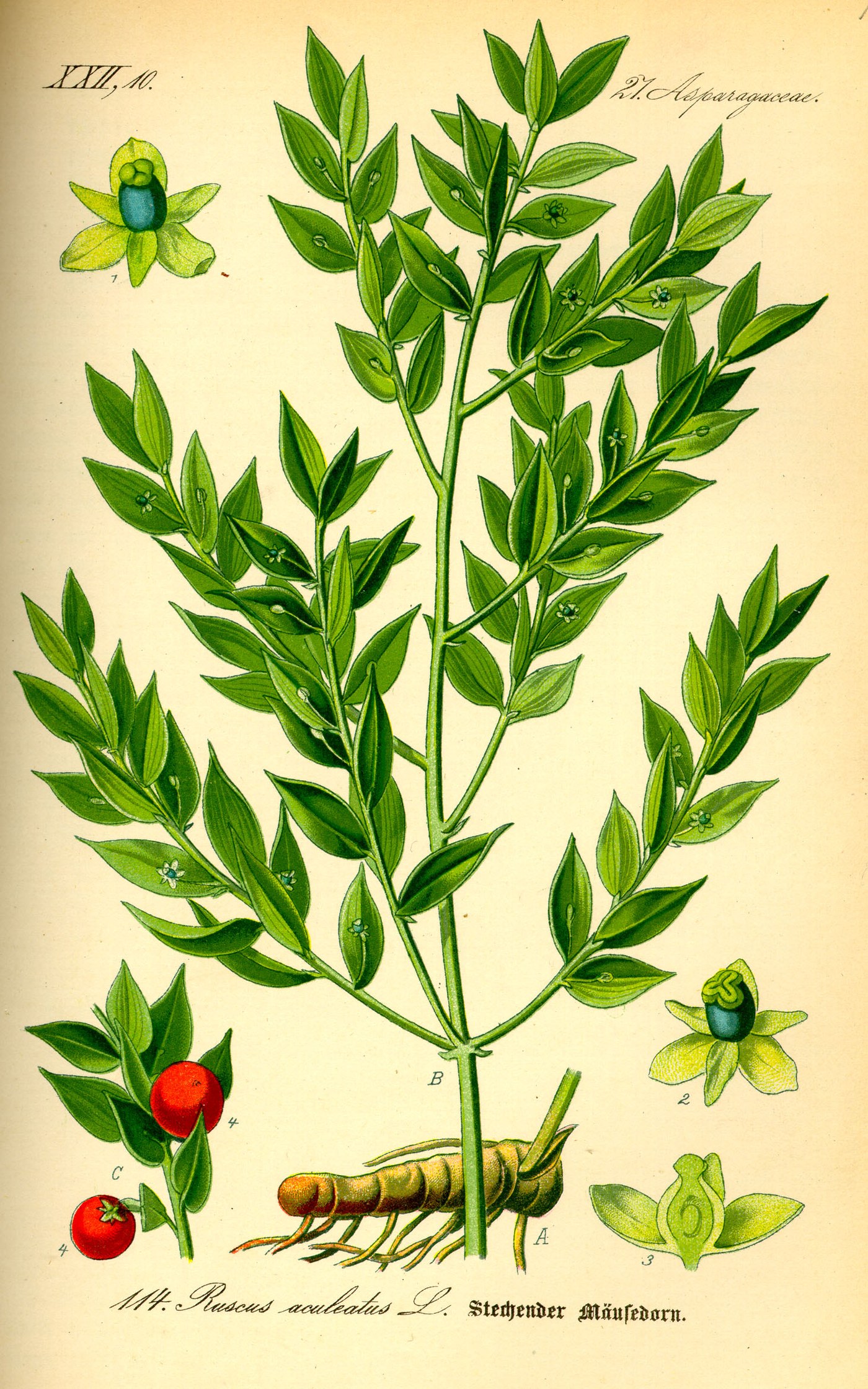
PlantButcher’s broomKneeholly, kneeholm, kneehulver, Jew’s myrtle, sweet broom, pettigree; Ruscus aculeatus of Linnaeus; Culpeper’s Ruscus and Bruscus
Ruscus aculeatus, a low, stiff evergreen of woods and waste places, especially in the south of England, which Grieve called the only shrub of the lily tribe in the country. What look like its leaves are flattened branches, “really a mere expansion of the stem,” each ending in a sharp spine; the small greenish-white flowers sit in the middle of them in early spring, male and female on separate plants, and the female plants carry scarlet berries “as large as cherries” through the winter. The rhizome is the part used now.B
PlantButterburPetasites; plague-flower; old German Pestilenzenwurt
Petasites hybridus, of the daisy family, with huge rhubarb-like leaves in damp places.CautionC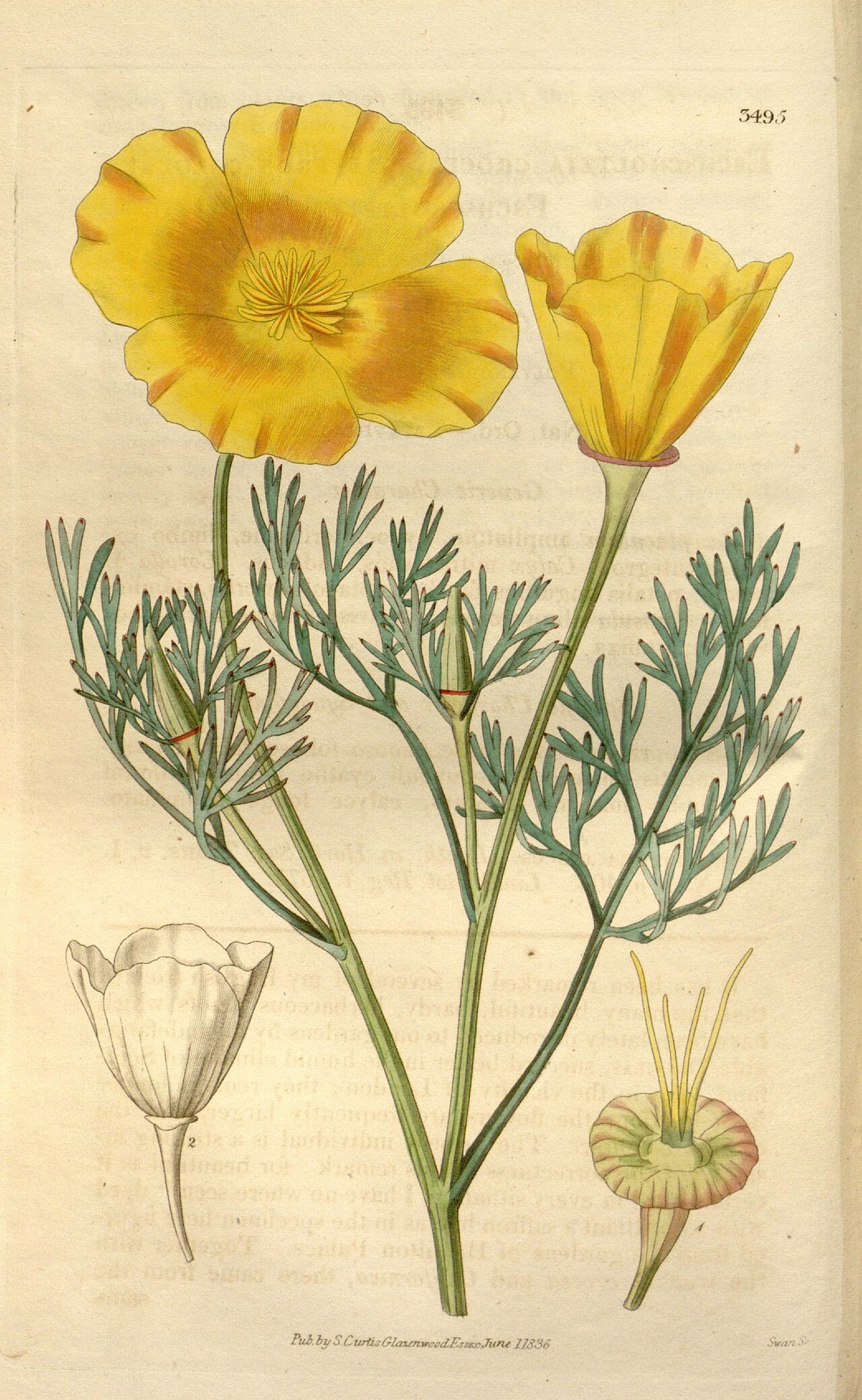
PlantCalifornia poppyEschscholzia californica Cham.; in pharmacy Eschscholziae herba, the dried flowering aerial parts
Eschscholzia californica, of the family Papaveraceae, a plant about 30 cm high with glaucous blue-green leaves divided in threes into round, lobed segments, native to California and northern Mexico and widely grown in European gardens. Its silky four-petalled flowers, yellow to orange, stand singly on long stems; the petals “close at night or in cold, windy weather and open again the following morning.” The aerial parts and, more richly, the roots contain alkaloids, and the flowers a purple-red pigment, eschscholtz-xanthin. It is the state flower of California.C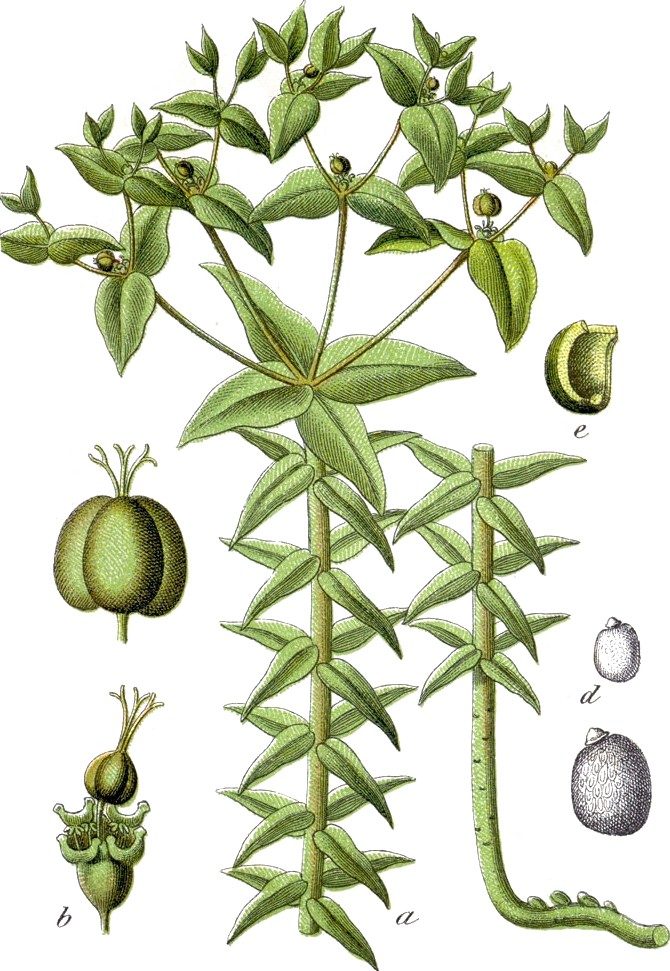
PlantCaper spurgeLatiri; cataputia minore
Euphorbia lathyris.CanaleCautionC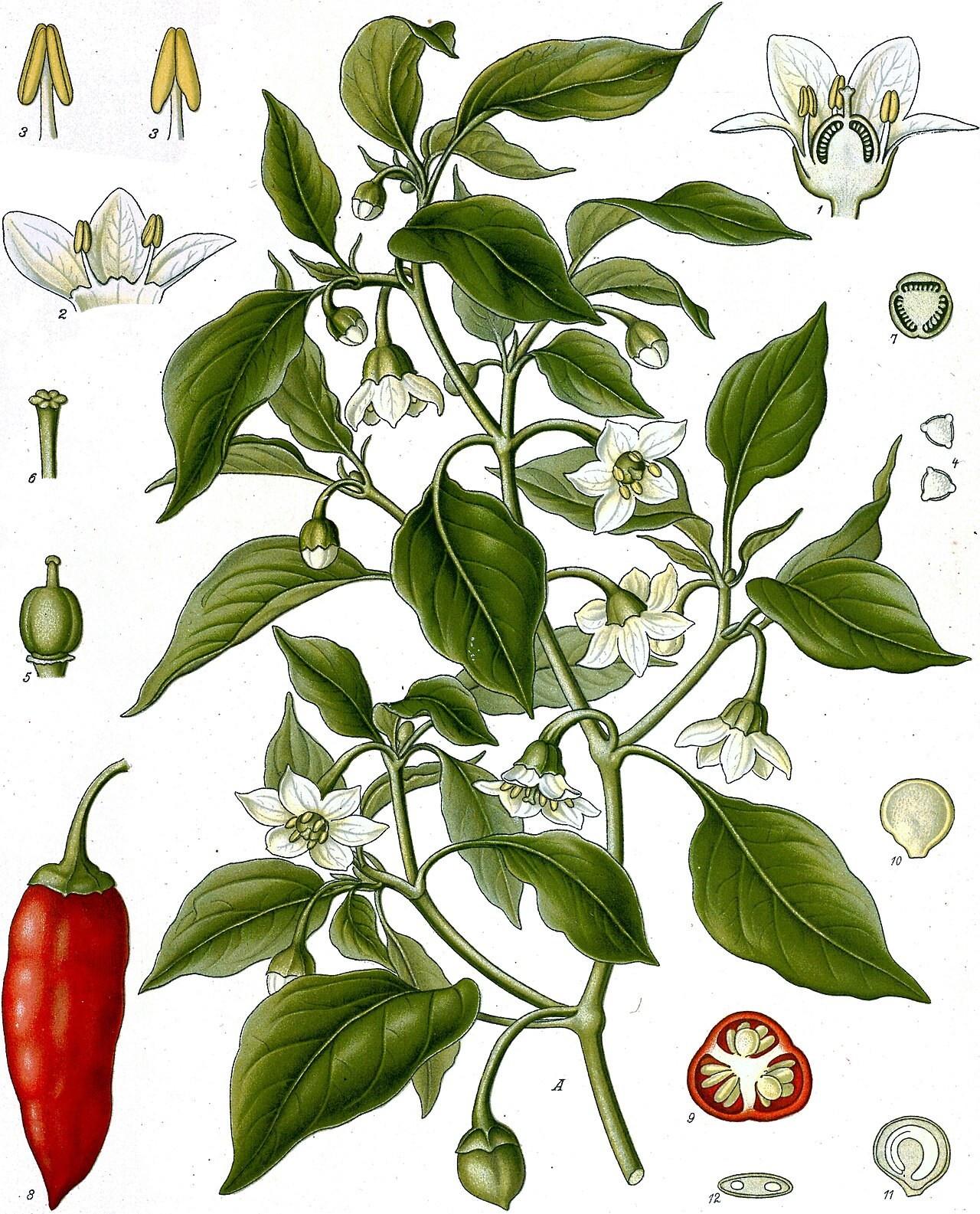
PlantCapsicumCayenne, cayenne pepper, African pepper, chillies, bird pepper; Capsicum minimum Roxb. of Grieve; Capsicum annuum L. var. minimum (Miller) Heiser and small-fruited varieties of Capsicum frutescens L.; in pharmacy Capsici fructus
The dried ripe fruit of small-fruited peppers of the family Solanaceae. Grieve describes cayenne as a shrubby perennial two to six feet high, its branches angular and slightly purple at the joints, the fruit red, ovate, and long, with small flat seeds; “Taste very pungent and smell characteristic.” The European Pharmacopoeia requires at least 0.4 per cent of capsaicinoids, reckoned as capsaicin.C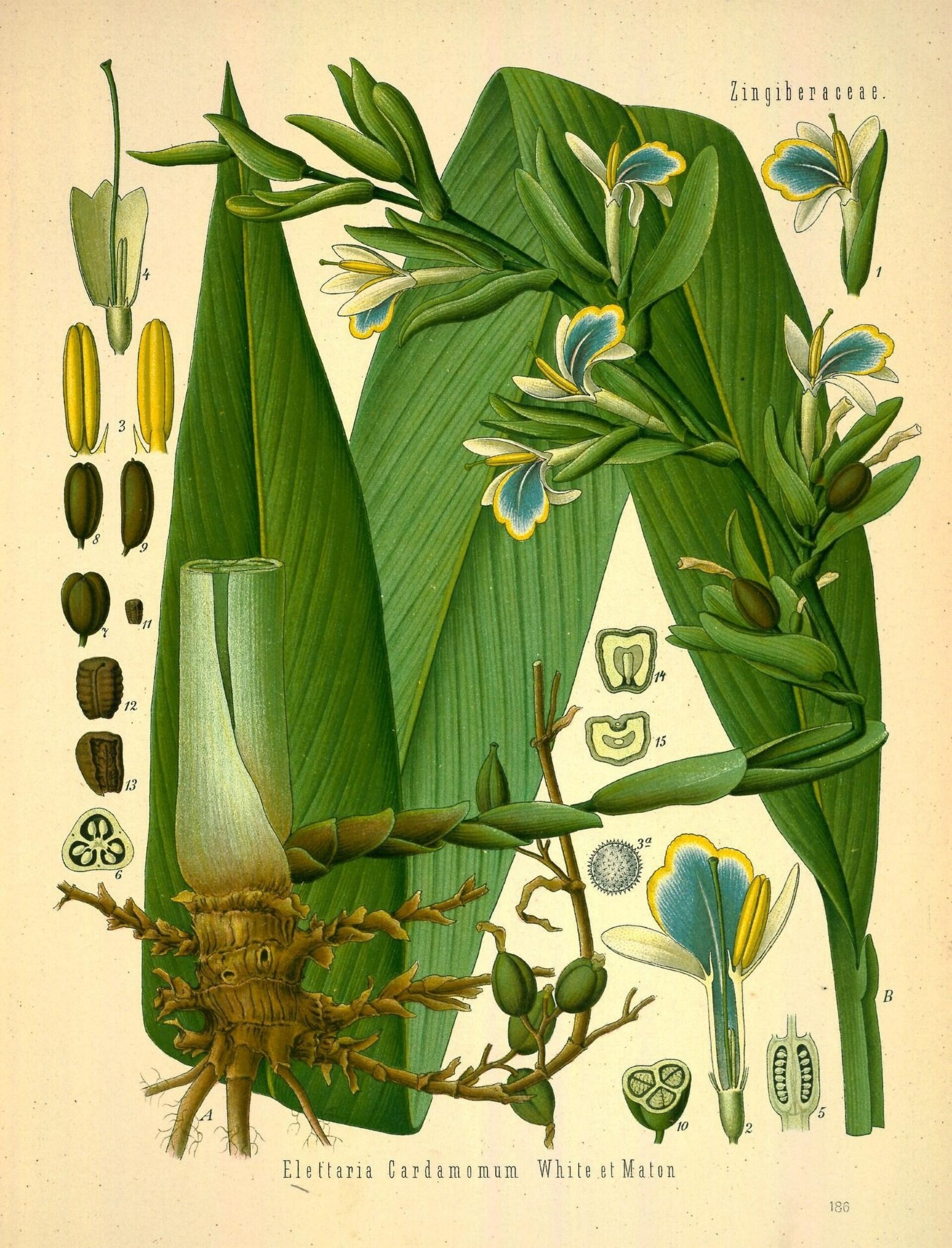
Plant CardamomGreek kardamomon; grains of paradise (of some writers)
Elettaria cardamomum, of the family Zingiberaceae, whose seeds come in pale three-sided pods from India.C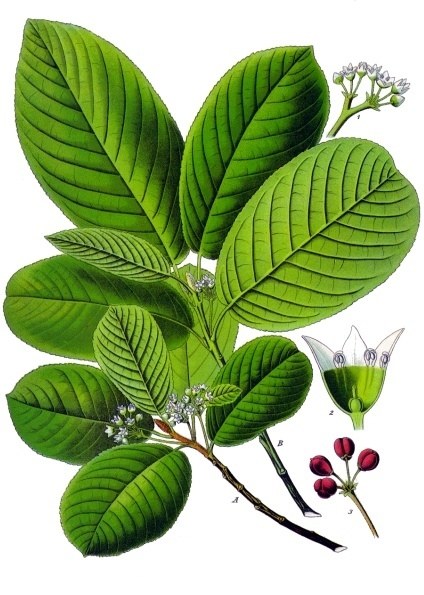
PlantCascaraCascara sagrada, sacred bark; Rhamnus purshiana DC.; Rhamnus alnifolius Pursh; Frangula purshiana (DC.) A. Gray; in pharmacy Rhamni purshianae cortex
The dried bark of Rhamnus purshiana, a small buckthorn tree of the family Rhamnaceae found, King’s Dispensatory says, from the Rocky Mountains west to the Pacific and north into British America, with leaves three to five inches long, small white flowers in close clusters, and a black fruit the size of a large pea. The bark comes in quills or curved pieces, brownish-grey outside, yellowish within, without odour and bitter. The European Medicines Agency’s assessment report explains why it is dried before use: the fresh bark holds anthrones that cause vomiting, which drying oxidises into forms free of that effect.C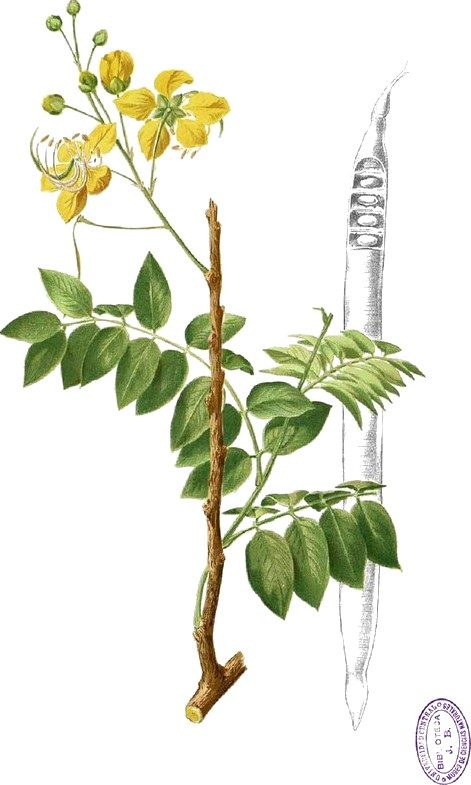
PlantCassia, flower ofFior di cassia
The sweet black pulp of the pods of Cassia fistula, the Indian laburnum; not the bark spice called cassia.CanaleC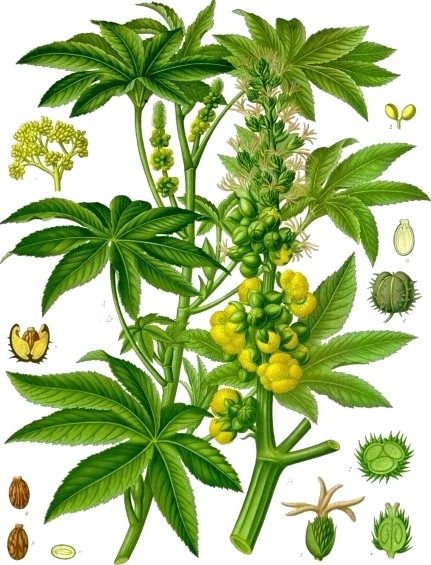
PlantCastor-oil plant, seeds ofRicino; kerua; grano regale
Ricinus communis; Canale gives mirasole as its local name.CanaleCautionC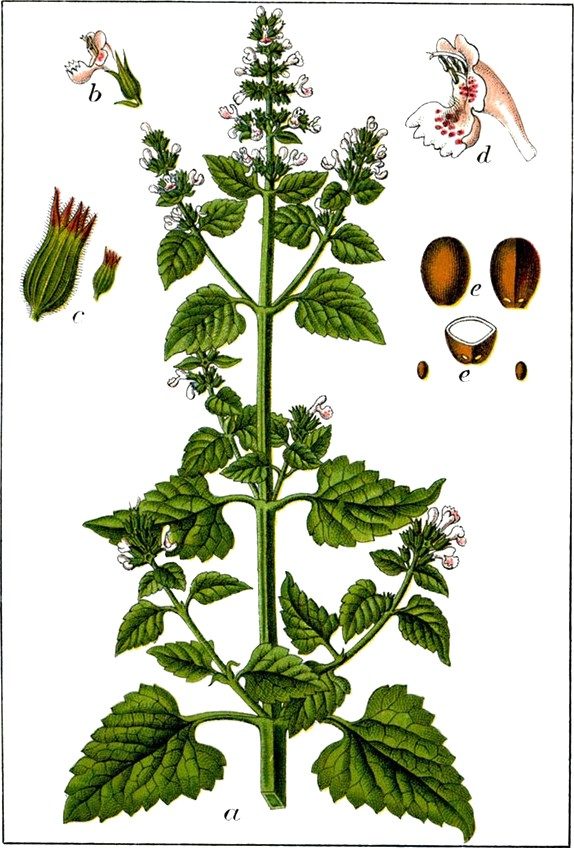
PlantCatmintNepita
Nepeta cataria or calamint, Clinopodium nepeta.CanaleC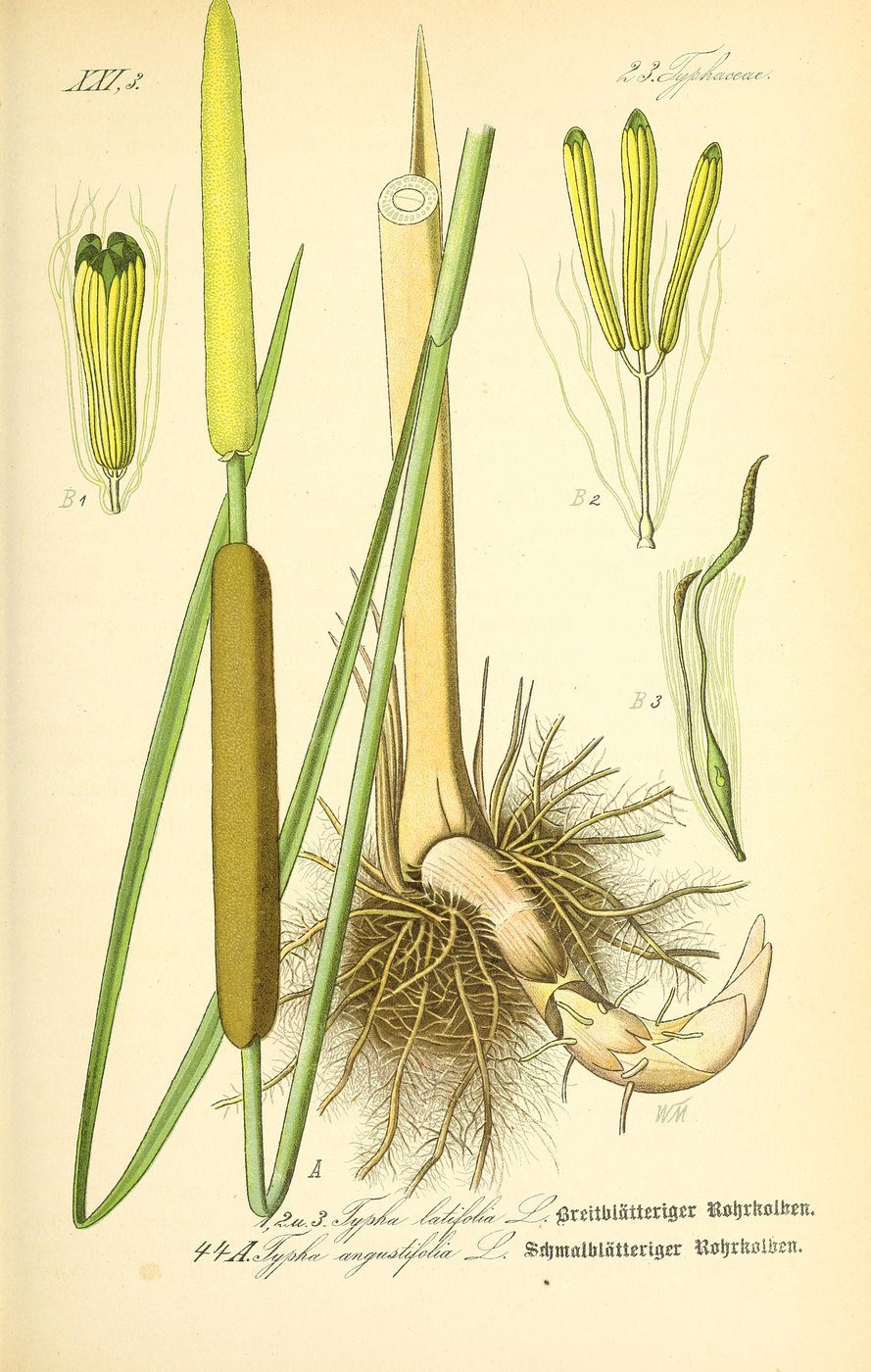
PlantCattailCat-tail, reed mace; Typha latifolia of Linnaeus; German Rohrkolben; the Ojibwe abûkweskwe, wigwam cover, and bebamasûn, it flies around; the Potawatomi aba’kweûck, shelter weed, and biwie’skwinuk, fruit for baby’s bed
Typha latifolia, the broad-leaved cattail of pond margins, ditches, and marshes across the northern world: leaves half an inch to three-quarters wide that overtop a flowering stalk of one to two metres, the male spike set directly above the female, which ripens into the brown thumb-thick velvet club of the name and bursts in the end into down. It flowers in July and August.C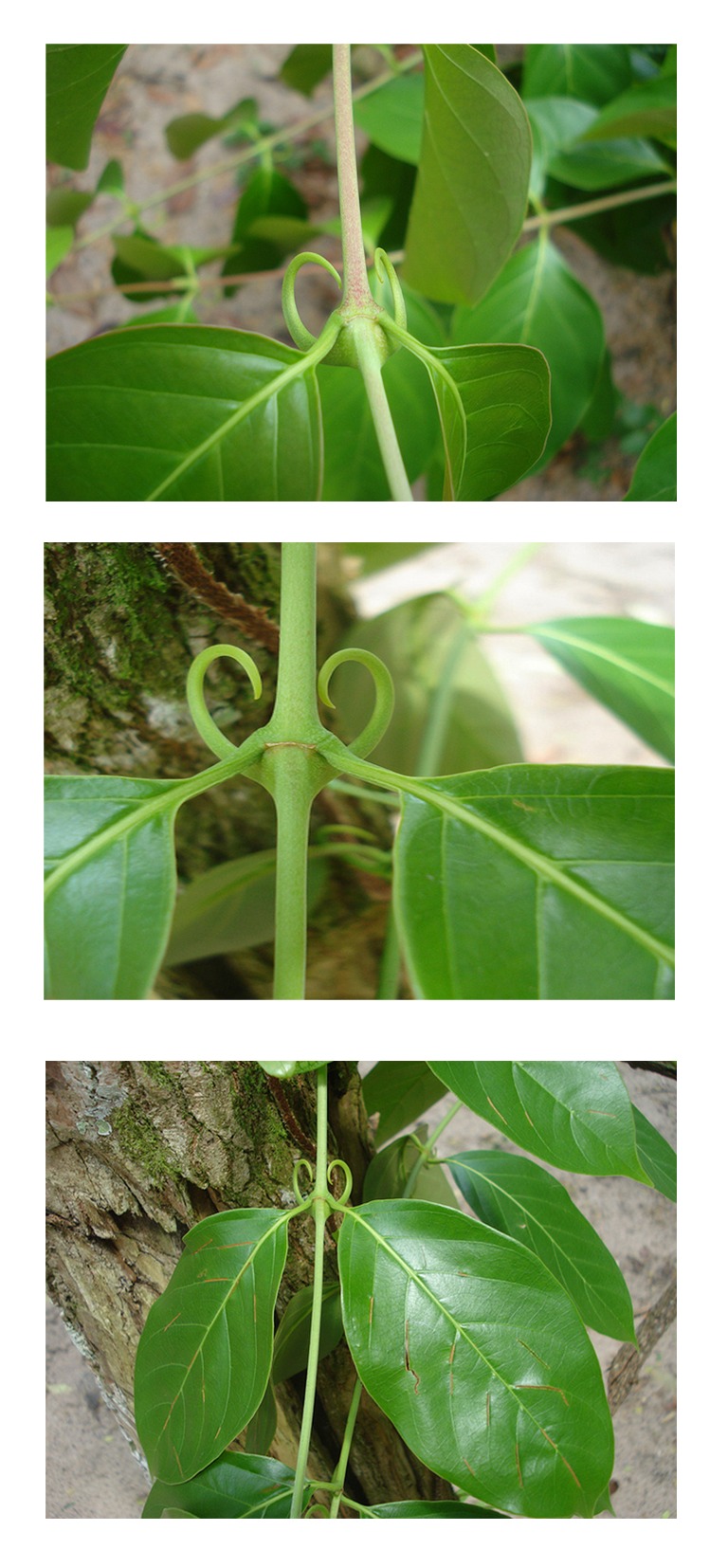
PlantCat’s clawSpanish uña de gato; saventaro; ‘life-giving vine of Peru’; Uncaria tomentosa (Willd. ex Schult.) DC.; in pharmacy Uncariae tomentosae cortex
Uncaria tomentosa, of the family Rubiaceae, a thick woody vine of the Amazon rain forest and other tropical parts of South and Central America, scrambling up to twenty or thirty metres. Its hook-like thorns, set along the vine, resemble the claws of a cat. The drug is the bark of the stem or root. The European Medicines Agency’s assessment report warns that the names cat’s claw and uña de gato are used for several plants in tropical America, and that the related Uncaria guianensis, lower-growing and easier to find, is a common adulterant. Its characteristic constituents are oxindole alkaloids, with quinovic acid glycosides and proanthocyanidins.C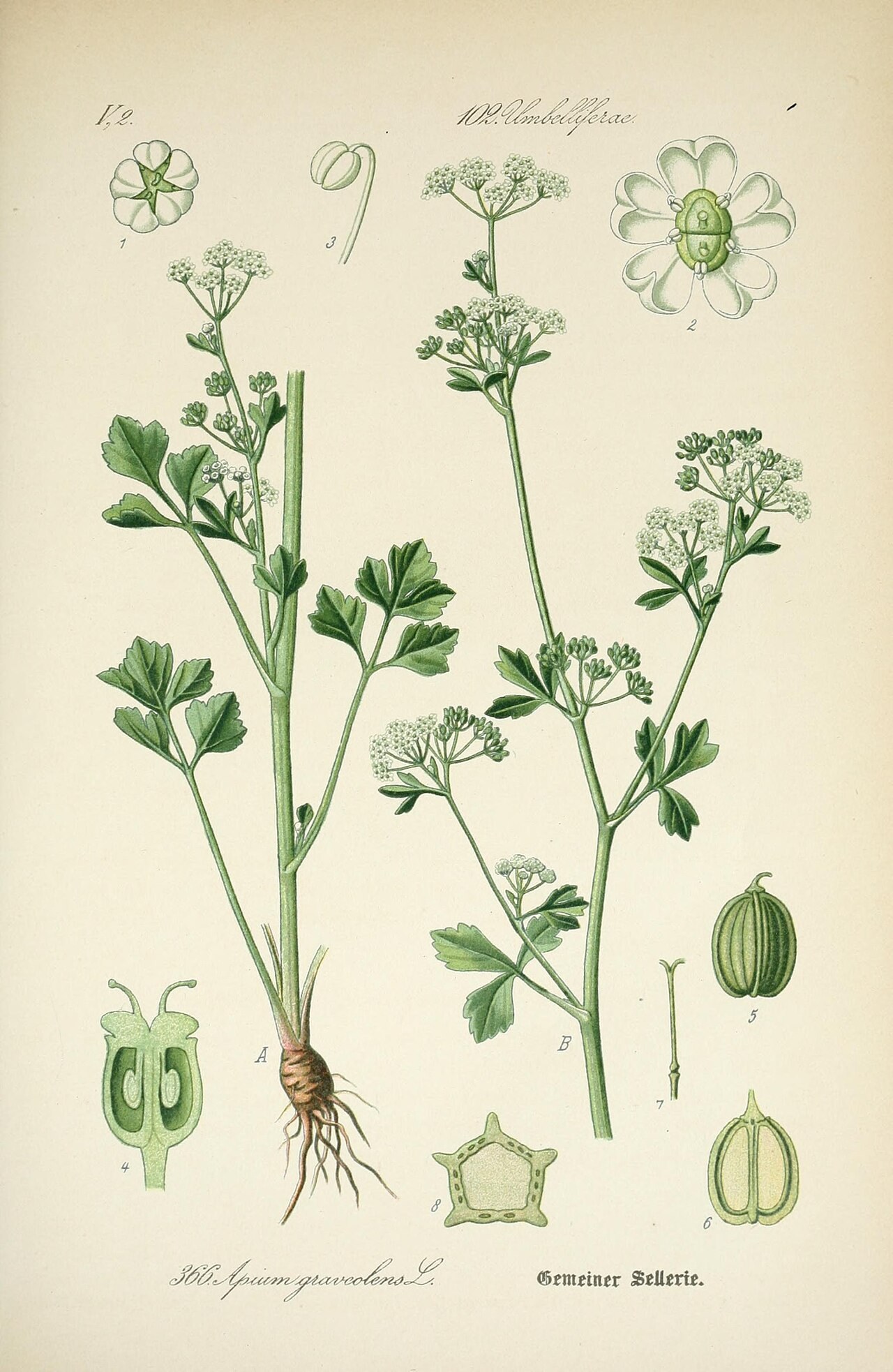
PlantCeleryWild celery, smallage; Apium graveolens L.
Apium graveolens, of the family Umbelliferae, native, Grieve writes, to the Levant and southern Europe and cultivated in Britain; Culpeper found the wild plant growing in dry and marshy ground, green all winter. The ripe seeds, the herb, and the root are used. The seeds have an agreeable smell and a warm, slightly pungent taste, and contain two oils, one heavy and one lighter, and some apiol, less than parsley.C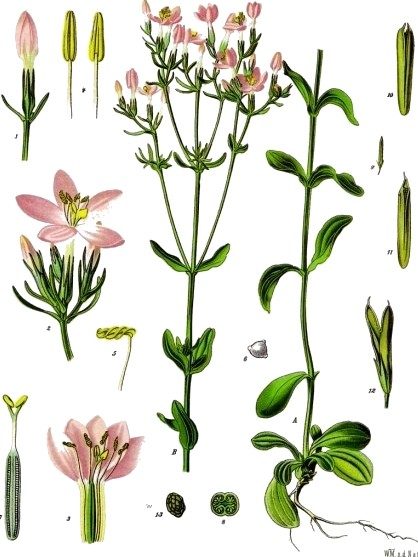
PlantCentauryCentaurea
Red centaury, Centaurium erythraea.CanaleC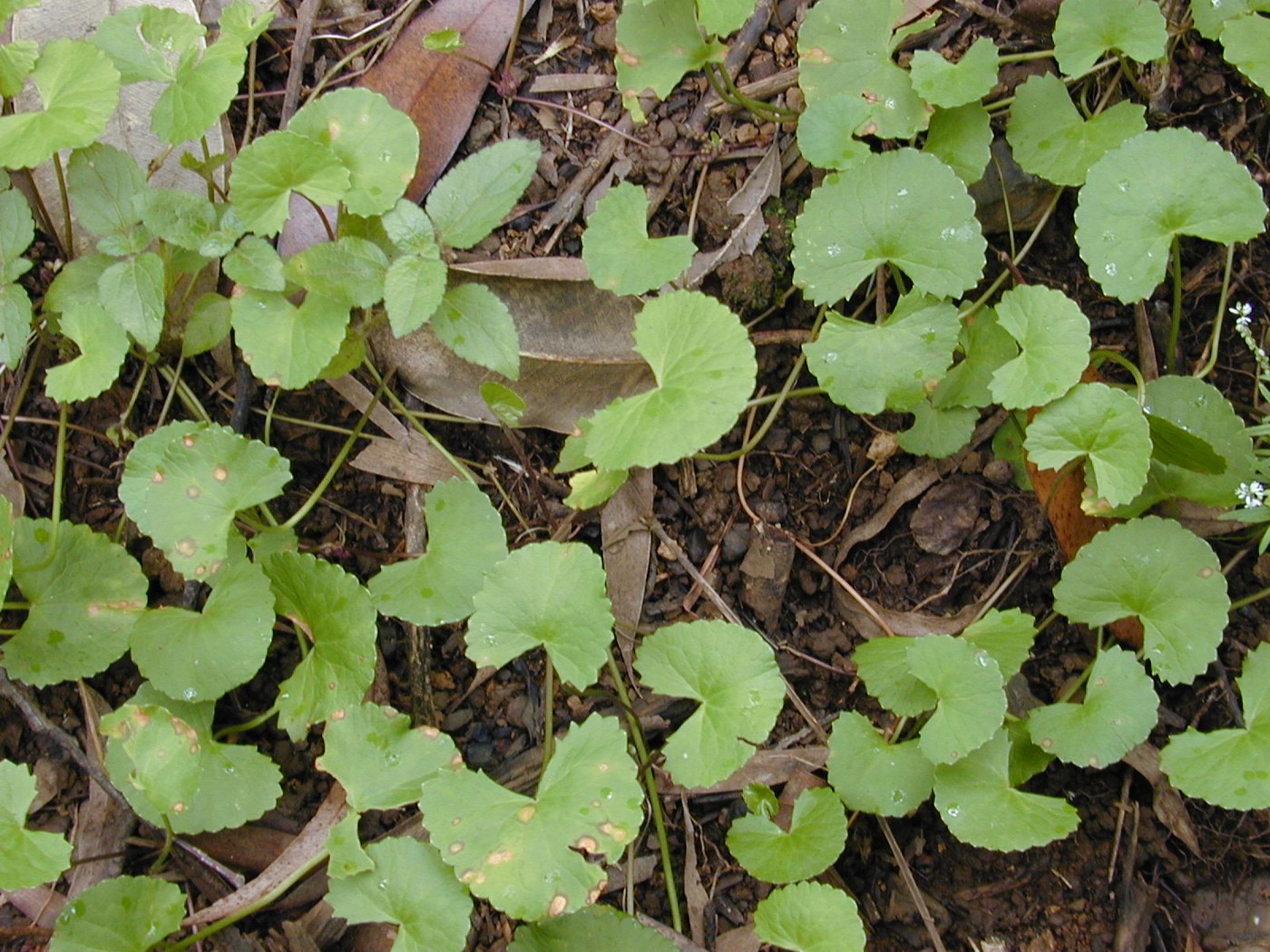
PlantCentellaGotu kola, Indian or Asian pennywort, tiger grass, marsh penny, white rot, thick-leaved pennywort; Sanskrit brahmi and mandukaparni; Hydrocotyle asiatica L.; Centella asiatica (L.) Urb.; in pharmacy Centellae asiaticae herba
Centella asiatica, a creeping herb of the family Apiaceae, native by LiverTox’s account to tropical swampy places in Southeast Asia and Australia and eaten as a vegetable and in salads. Grieve gives its leaves as kidney-shaped, scalloped, seven-nerved, and nearly smooth. The European Medicines Agency’s assessment report finds it rich in pentacyclic triterpenoids, chiefly the saponins asiaticoside and madecassoside and their aglycones, which make up to 8 per cent of the dry plant.C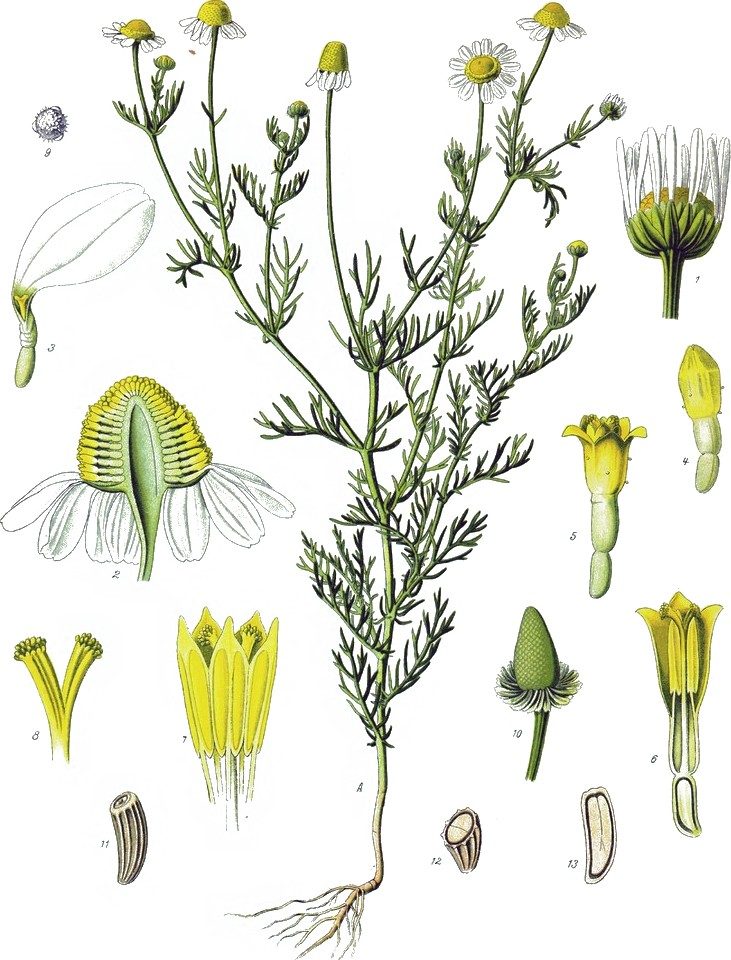
PlantChamomileCamomilla
Matricaria chamomilla.CanaleC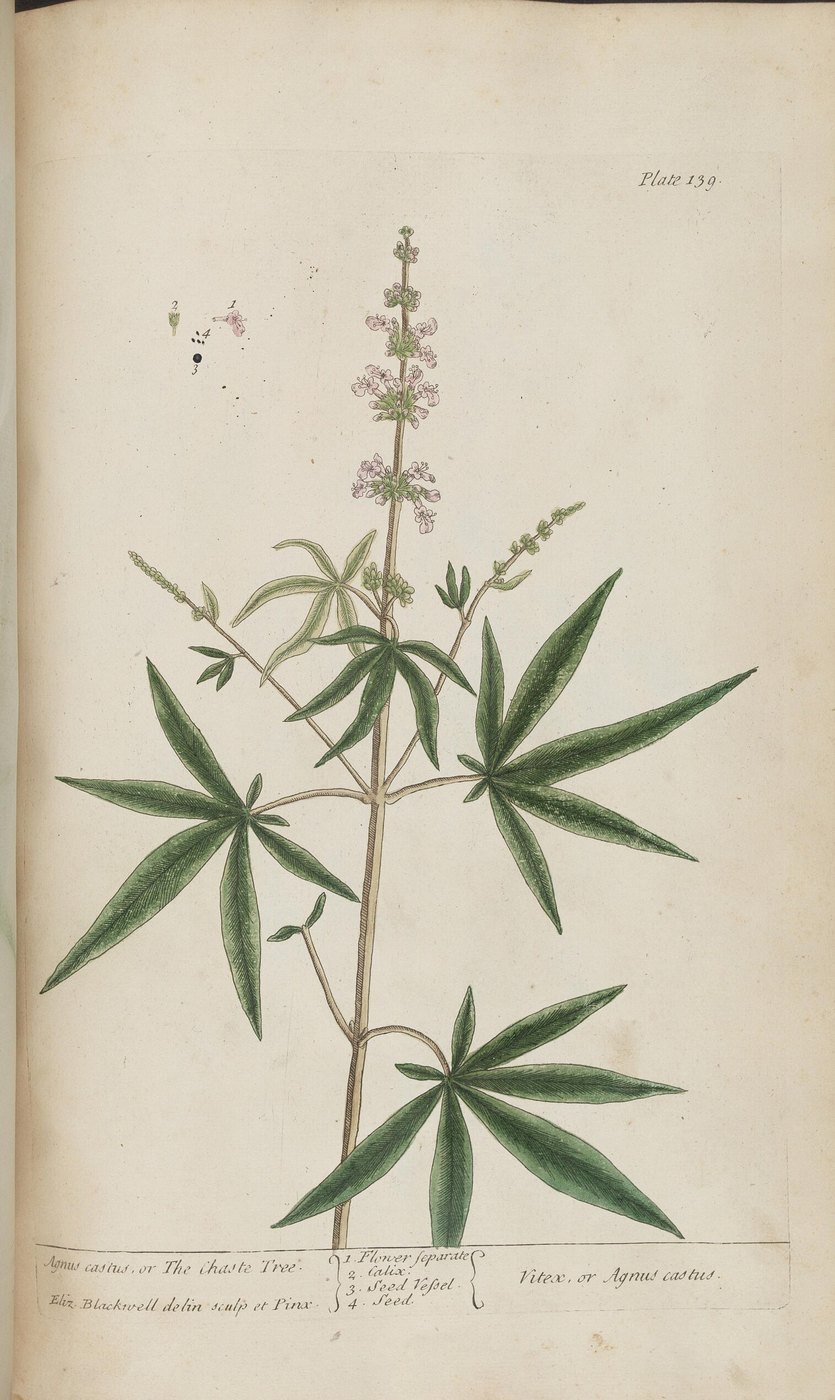
PlantChaste treeAgnus castus, vitex; monk’s pepper
Vitex agnus-castus, a Mediterranean shrub with blue-violet flowers and a seed “like that of pepper.”C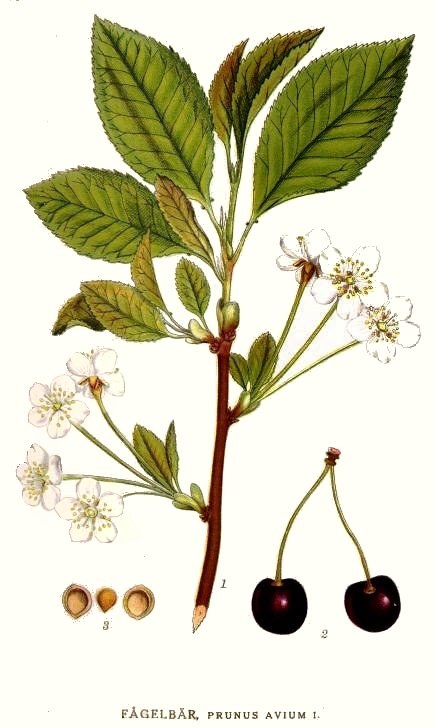
PlantCherry stalksCherry stems; the fruit stalks of the sweet cherry, Prunus avium of Linnaeus, and the sour cherry, Prunus cerasus; the Greek kerasia of Dioscorides
The dried fruit stalks of the sweet and sour cherries. Grieve gives their marks as “stalks 1 3/4 inch long, very thin and enlarged at one end,” and says those of all species were used, gathered in Britain, at Clermont-Ferrand in France, and elsewhere on the Continent.C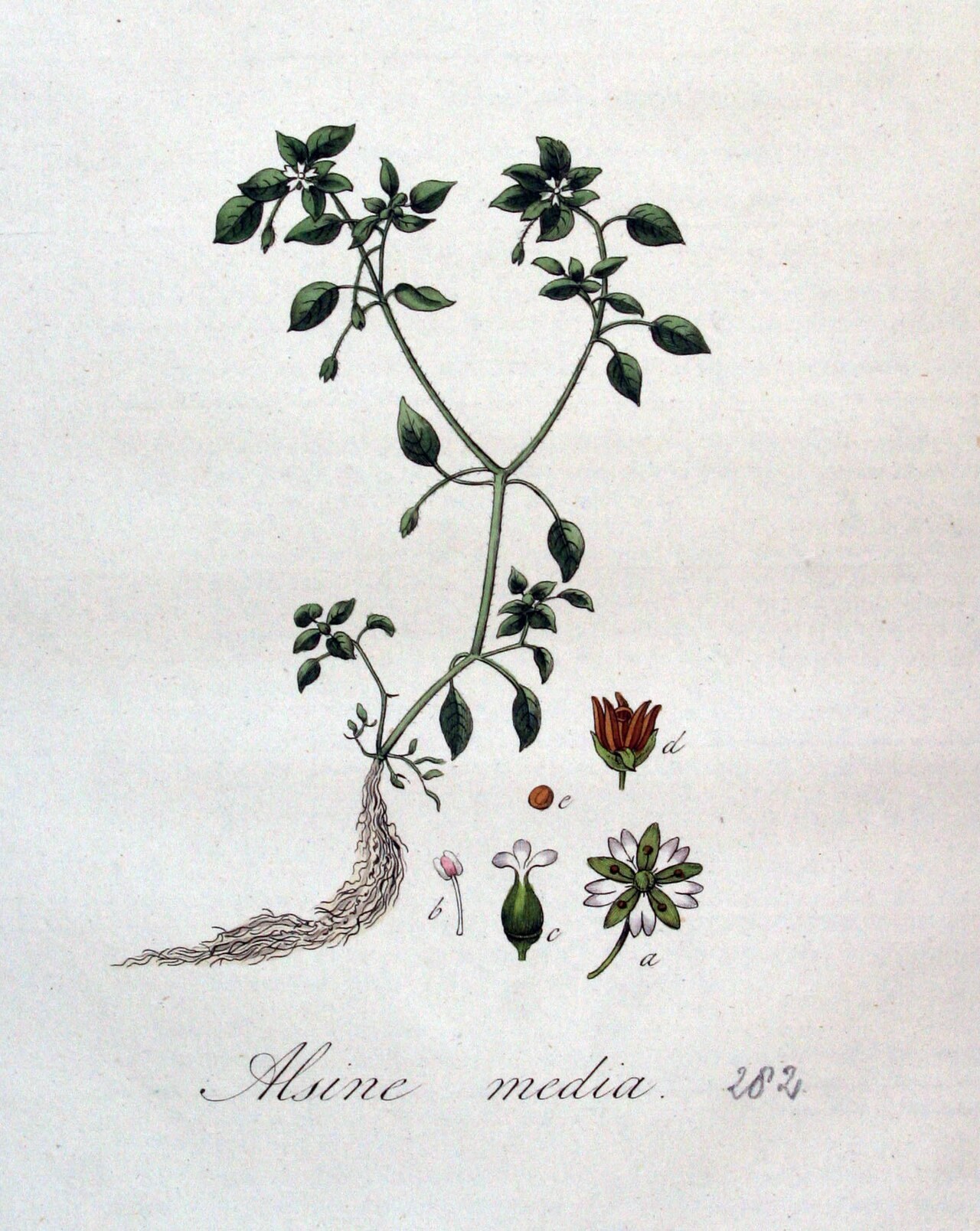
PlantChickweedStarweed, star chickweed, Passerina; French stellaire; German Augentrosgräs; Stellaria media Cyrill., Alsine media Linn.
Stellaria media, of the family Caryophyllaceae, the ubiquitous garden weed: native, Grieve writes, to all temperate and north Arctic regions and naturalised wherever settlers went. Its weak, juicy stems trail on the ground and carry a single line of hairs that switches sides at each pair of leaves; the small white flowers have deeply cleft petals, like stars. The whole herb, fresh or dried, is the drug, and the young leaves can be boiled like spinach or eaten raw in salad.C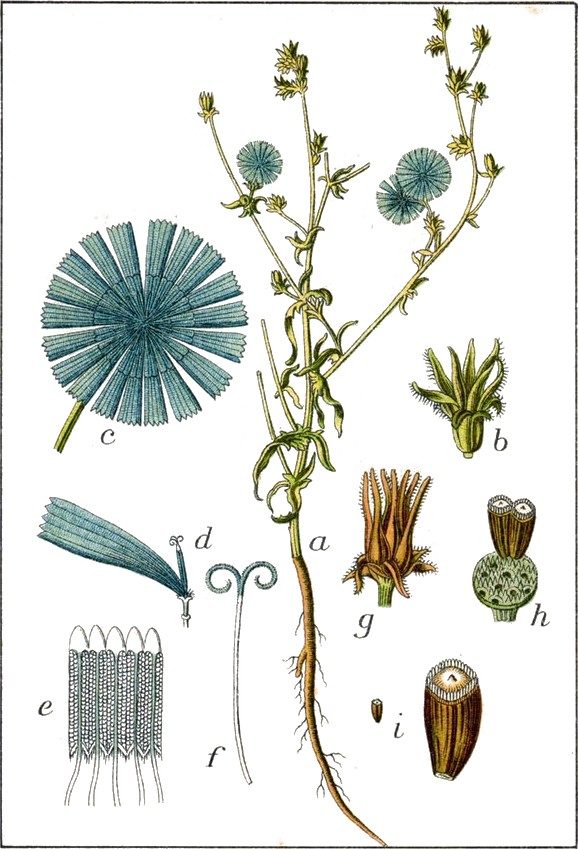
Plant ChicoryRadicchio
Cichorium intybus.CanaleC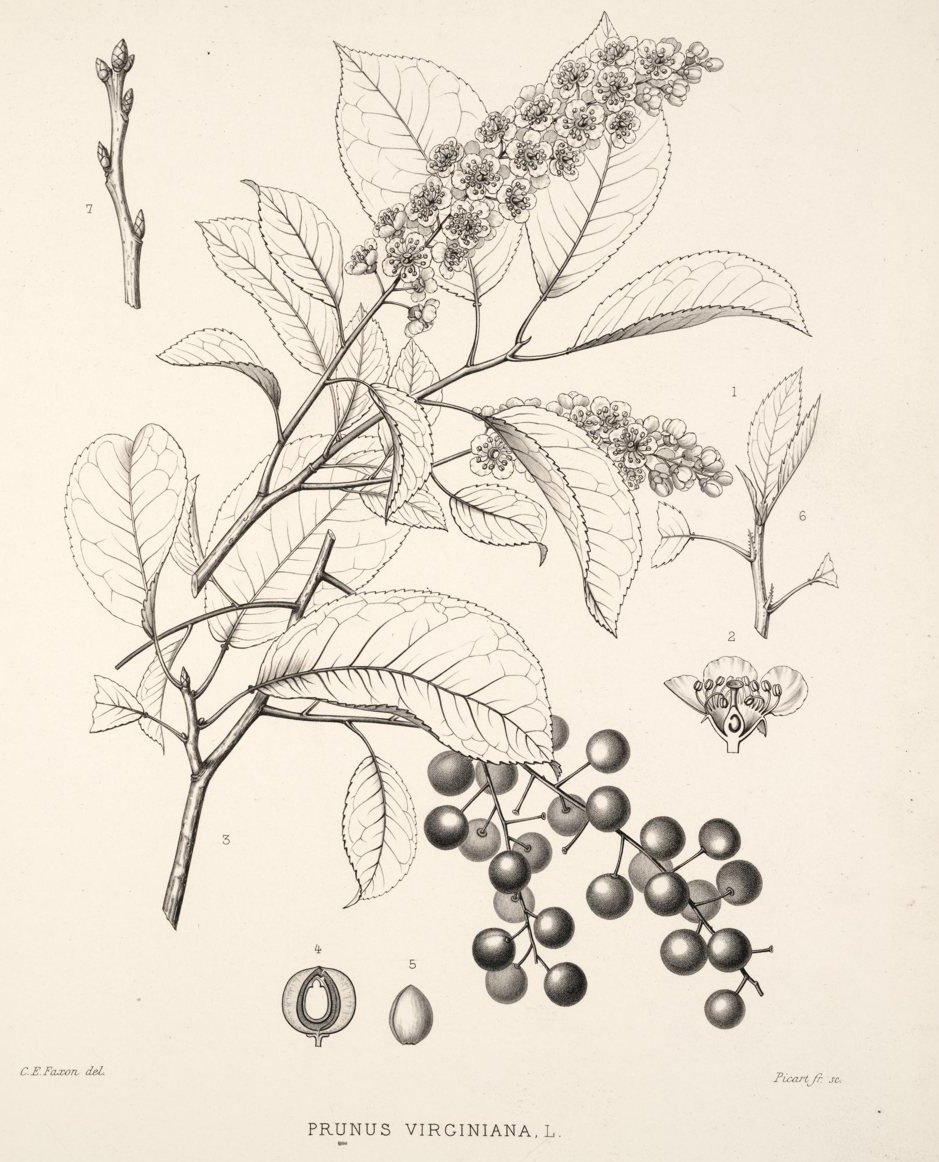
PlantChokecherryChoke cherry; Prunus virginiana of Linnaeus; Prunus obovata of Bigelow and Cerasus virginiana of De Candolle; Prunus demissa in the West; Padus virginiana in some modern papers
Prunus virginiana, the chokecherry of North America: a tall shrub or small tree of forest margins, fence-rows, and highways, with racemes of white flowers and a fruit that ripens from bright red to almost black and furs the mouth until it is fully ripe.CautionC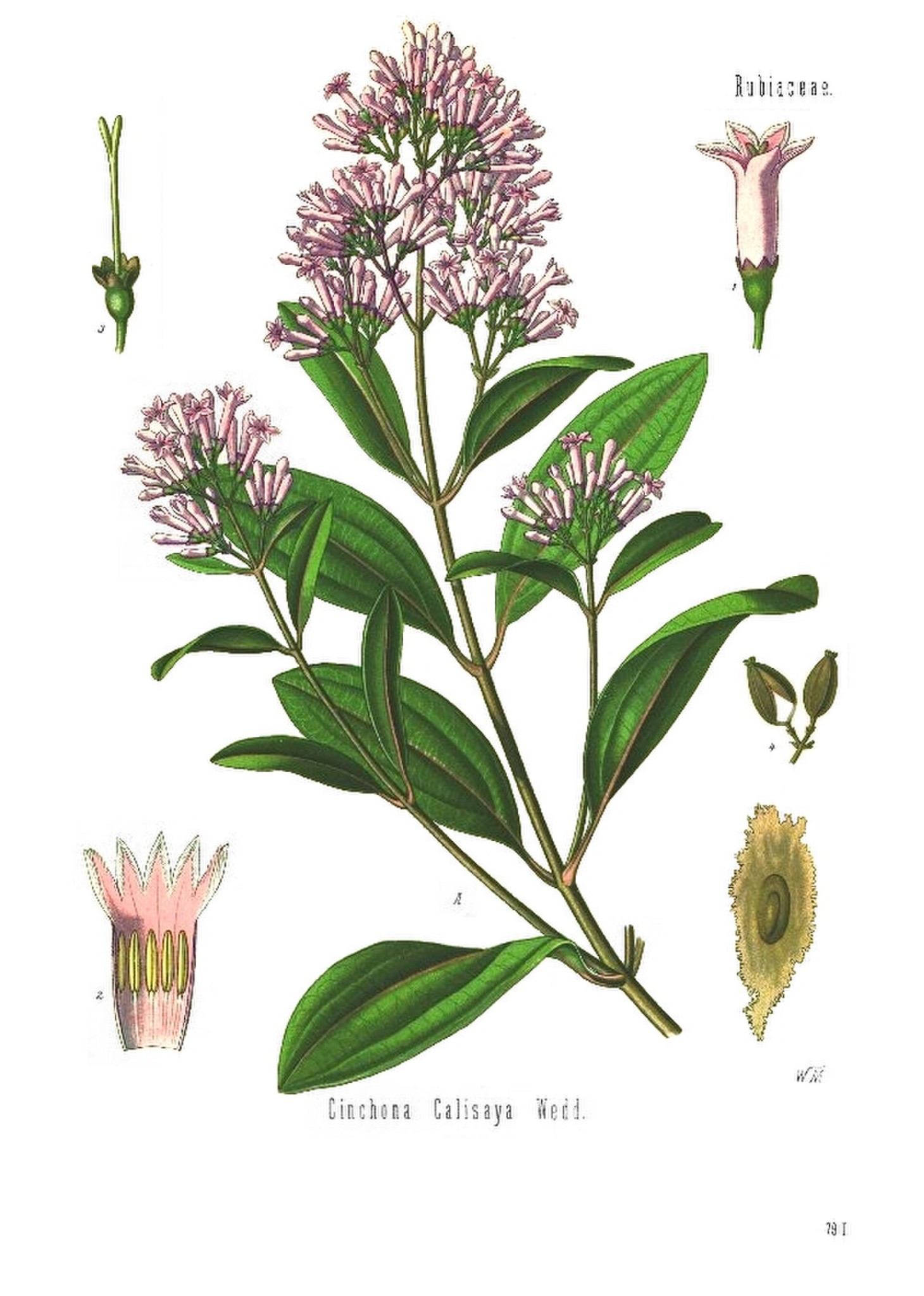
PlantCinchonaJesuits’ bark, Peruvian bark
The bark of Cinchona trees of the Andes.C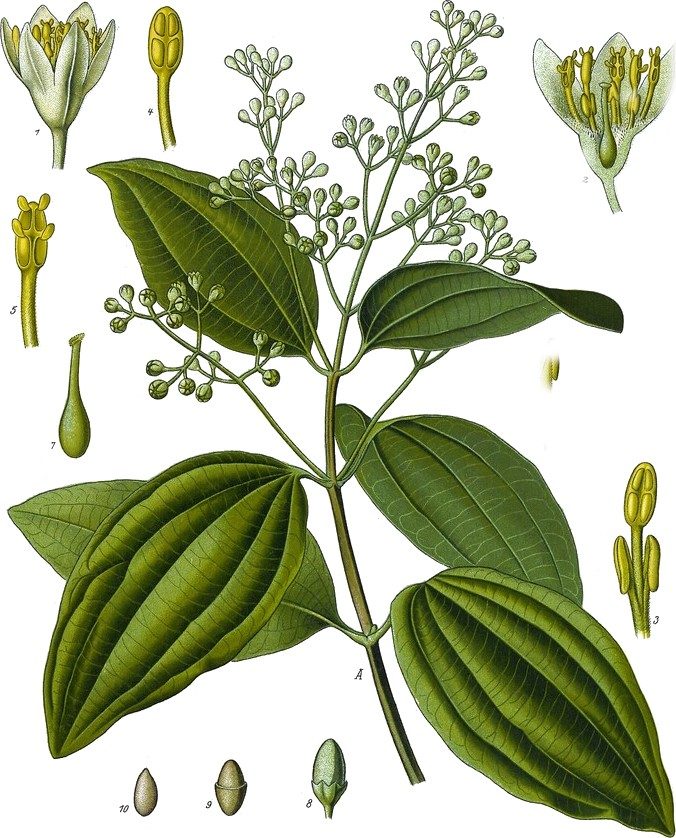
Plant CinnamonCinnamomo; canella
The bark of Cinnamomum verum; “fine” cinnamon in the oil.CanaleC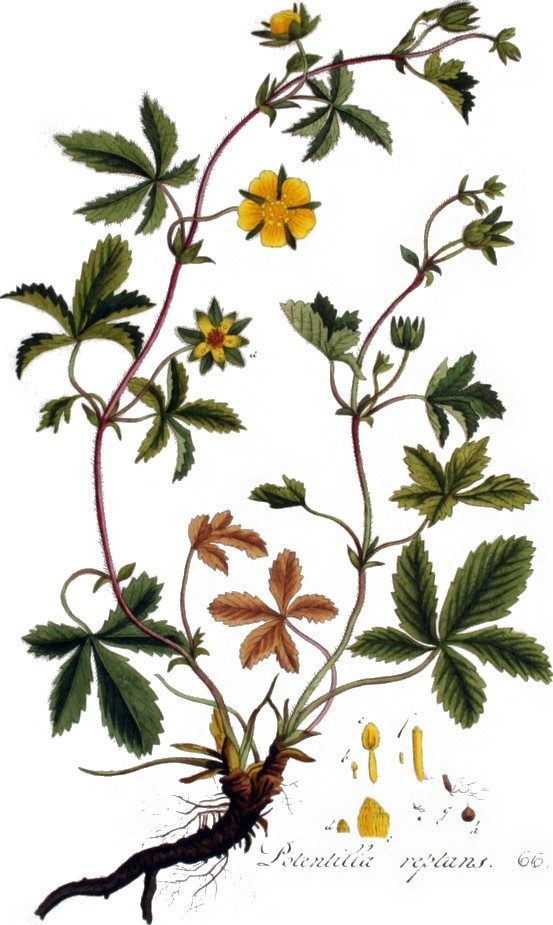
PlantCinquefoilPentafillo
Potentilla reptans.CanaleC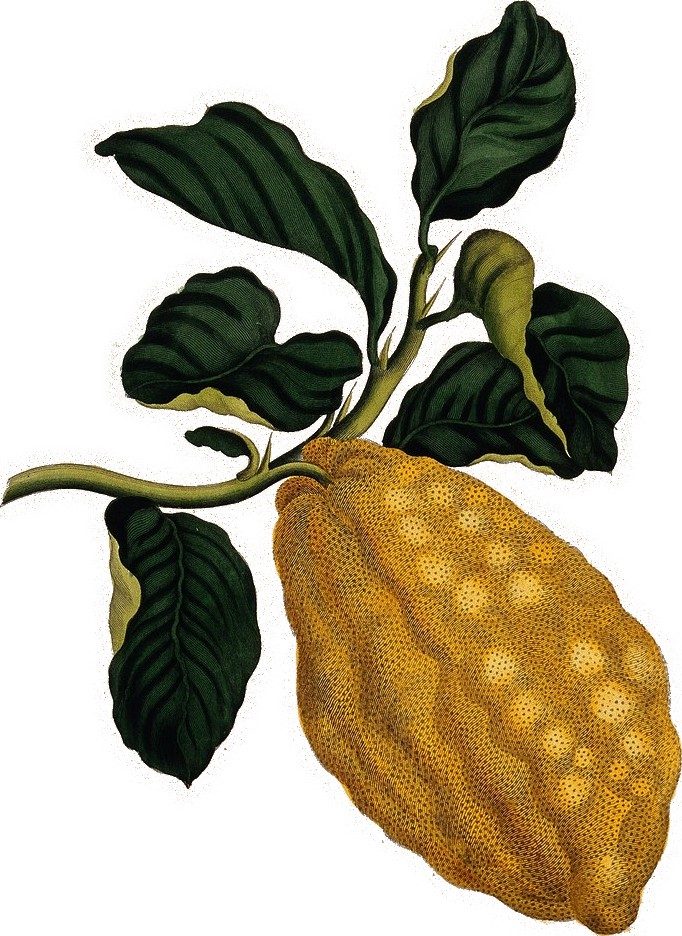
PlantCitronCedro
Citrus medica, the large thick-rinded ancestor of the lemon.CanaleC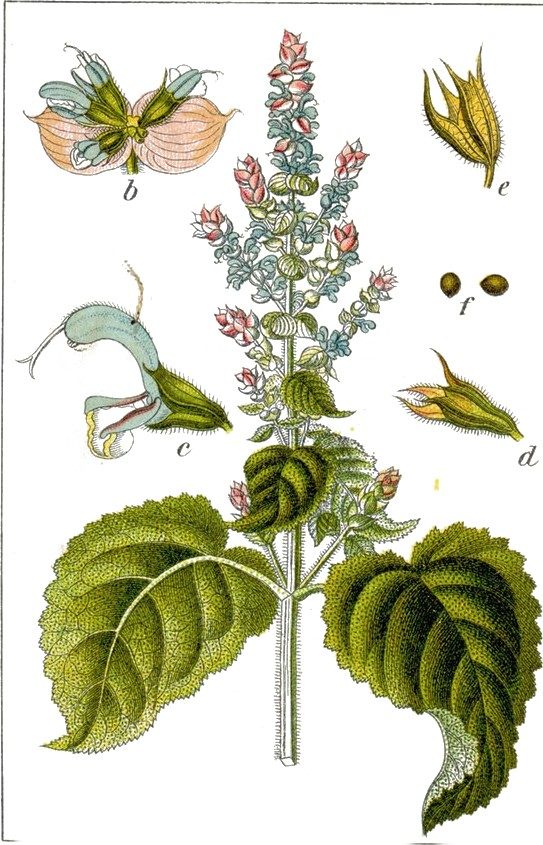
PlantClary, gardenSclarea hortense
Clary sage, Salvia sclarea.CanaleC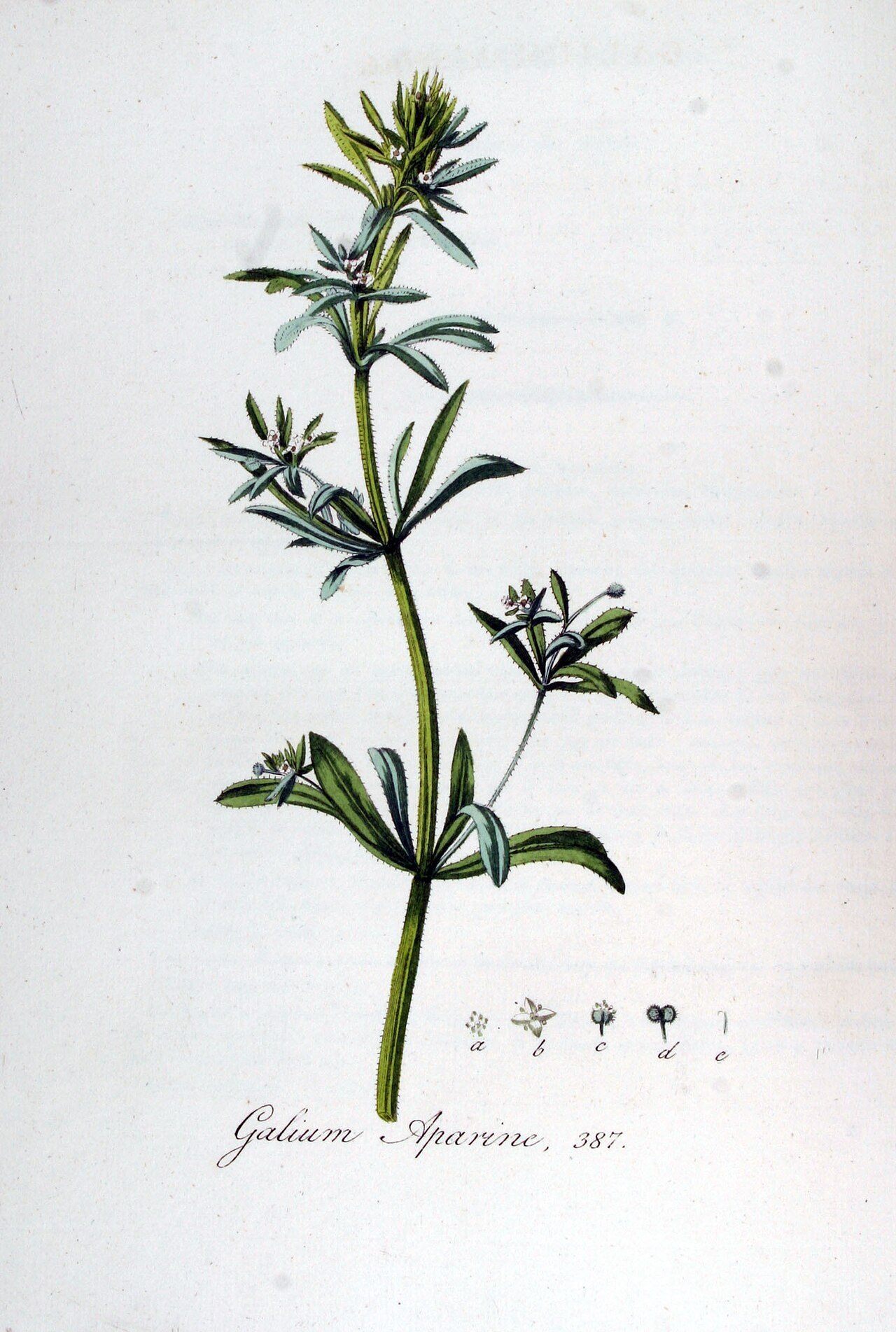
PlantCleaversClivers, goosegrass, barweed, hedgeheriff, hayriffe, grip grass, catchweed, scratweed, mutton chops, robin-run-in-the-grass, loveman, goosebill, everlasting friendship; Greek aparine, philanthropon; Ojibwe sakate’bwi, ‘stickers’; Galium aparine L.
Galium aparine, an annual hedgerow weed of the madder family, Rubiaceae, common throughout Europe and in North America. Its square stems and its whorls of six or eight narrow leaves are covered with little hooked bristles that point backwards, so that it climbs through the hedge “in a ladder-like manner,” Grieve writes, and its small round bristly seeds cling to any animal that brushes them. The whole plant, root excepted, gathered as it comes into flower, is the drug.C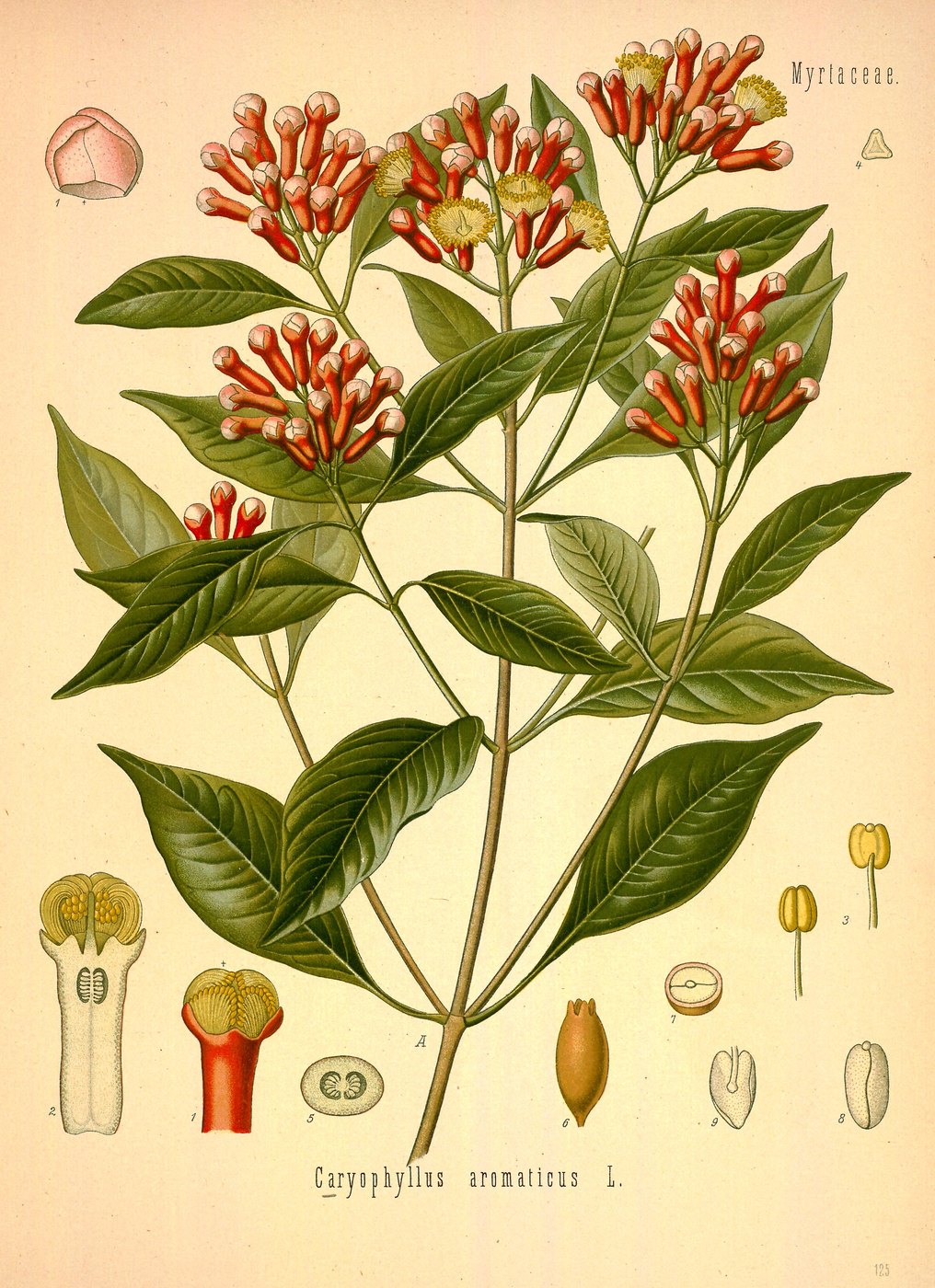
PlantCloveCloves, the dried flower-buds; Syzygium aromaticum; Eugenia caryophyllata of Thunberg; Caryophyllus aromaticus of Linnaeus; German Gewürznelke and Nägelein, the little spice-nail; Italian garofoli; Chinese ting-hsiang
The unopened flower-buds of a pyramidal evergreen tree of the myrtle family, up to twelve metres high, native to the Moluccas and the southern Philippines and now grown chiefly on Zanzibar and Pemba: picked when the calyx reddens, dried to the shape of a small blunt nail, and oily enough to give up their oil under a thumbnail.CautionC
PlantColocynthBitter apple; coloquintida
The dried pulp of Citrullus colocynthis.CautionC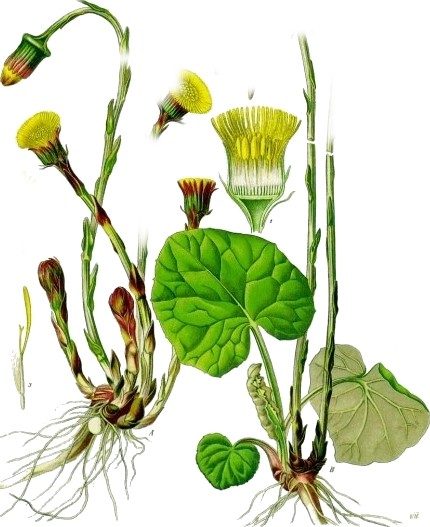
PlantColtsfootTussilagine
Tussilago farfara.CanaleC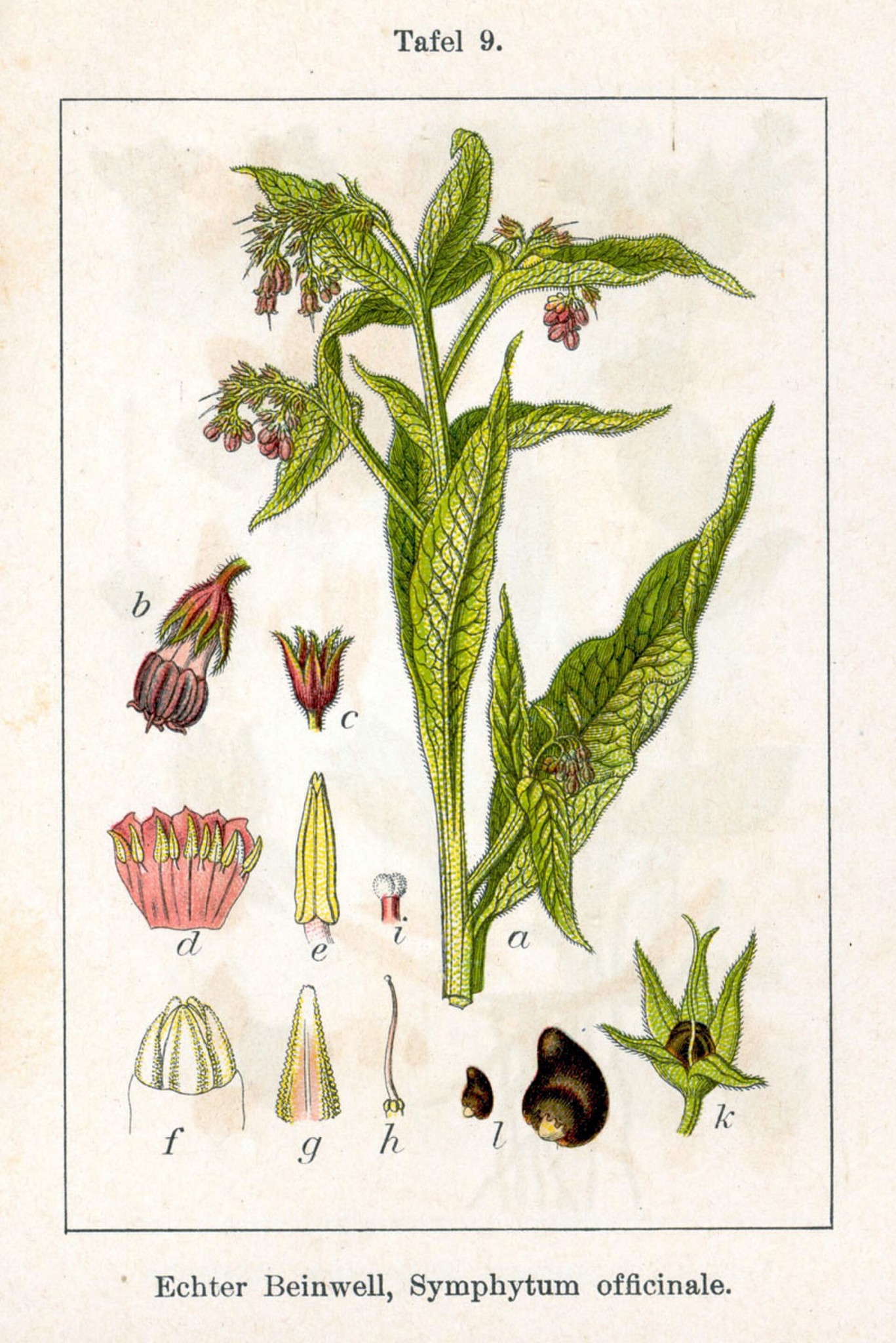
PlantComfreySymphytum, from the Greek for “to unite”; knitbone
Symphytum officinale.CautionC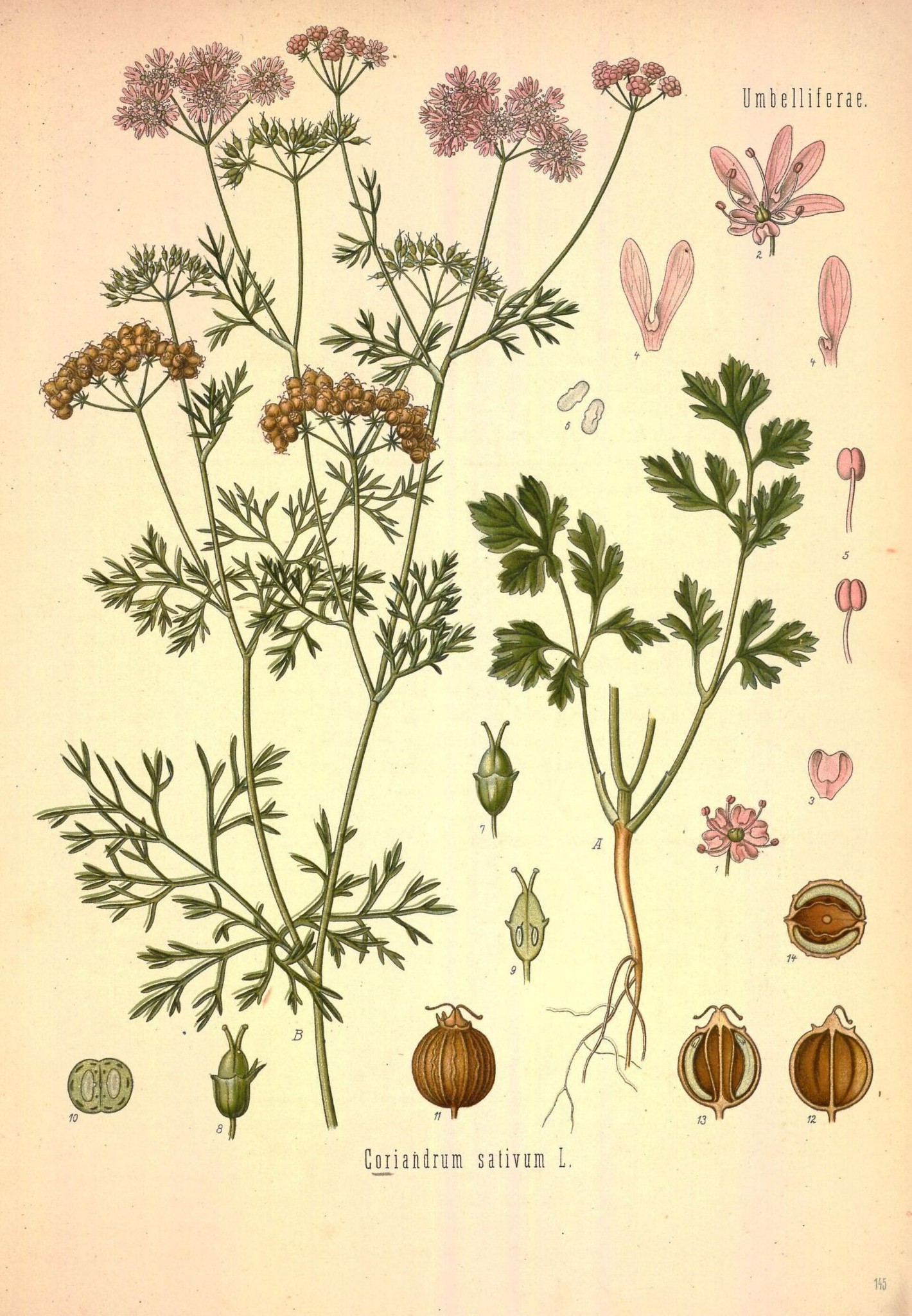
PlantCorianderCoriandrum
Coriandrum sativum, seed and leaf.C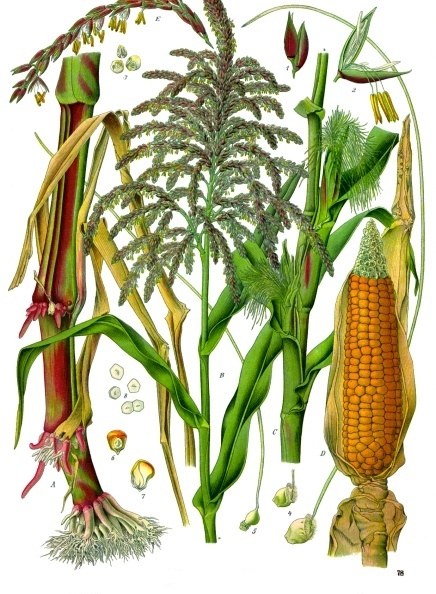
PlantCorn silkMaize stigmas, ‘the silk’; the styles and stigmas of Indian corn, Zea mays of Linnaeus; Ojibwe mandamin, corn; Stigmata maydis
The silk of the maize ear: the threads, four to eight inches long, that grow one from each seed of the female flower and hang from the tip of the husk to catch the pollen, “without which the flowers would produce no seed.” Grieve describes them as fine, soft, yellowish threads, light green, purplish red, yellow, or light brown, “nearly odourless, faintly sweetish.” Once pollination is done, the silk dries up. King’s gives corn as “a native of the warm latitudes of America.”C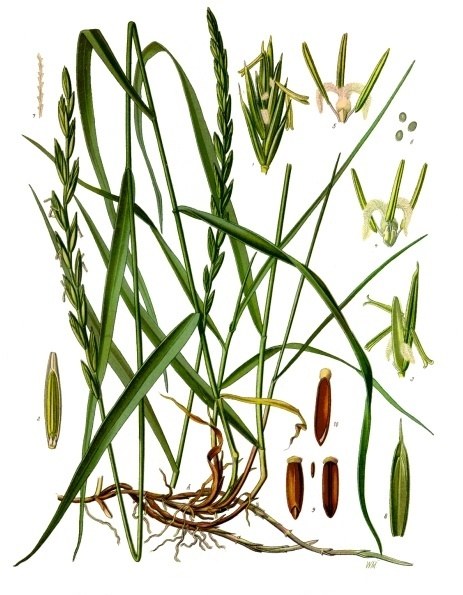
PlantCouch grassTwitch-grass, Scotch quelch, quick-grass, dog-grass, Culpeper’s dog’s-grass or cough grass; Triticum repens L.; Agropyron repens (L.) P. Beauv.; Elymus repens (L.) Gould; in pharmacy Agropyri repentis rhizoma
A grass of fields and waste places across Europe, northern Asia, Australia, and the Americas, with a slender creeping rhizome that runs far just beneath the surface, “so that it is almost impossible to extirpate it when once established in the soil.” Its flower spikes resemble rye or beardless wheat. The drug is the rhizome, which Grieve describes in commerce as “little shining, straw-coloured, many-edged tubular pieces,” without odour but sweet; the name couch, Grieve says, is supposed to come from the Anglo-Saxon for vivacious, “on account of its tenacity of life.”C
PlantCowslipKey of heaven, fairy cups, key flower, herb Peter, paigle; Herba paralysis
Primula veris. A spring flower of the countryside, kin to the primrose, its yellow flowers hanging in an umbel at the top of a long stalk.C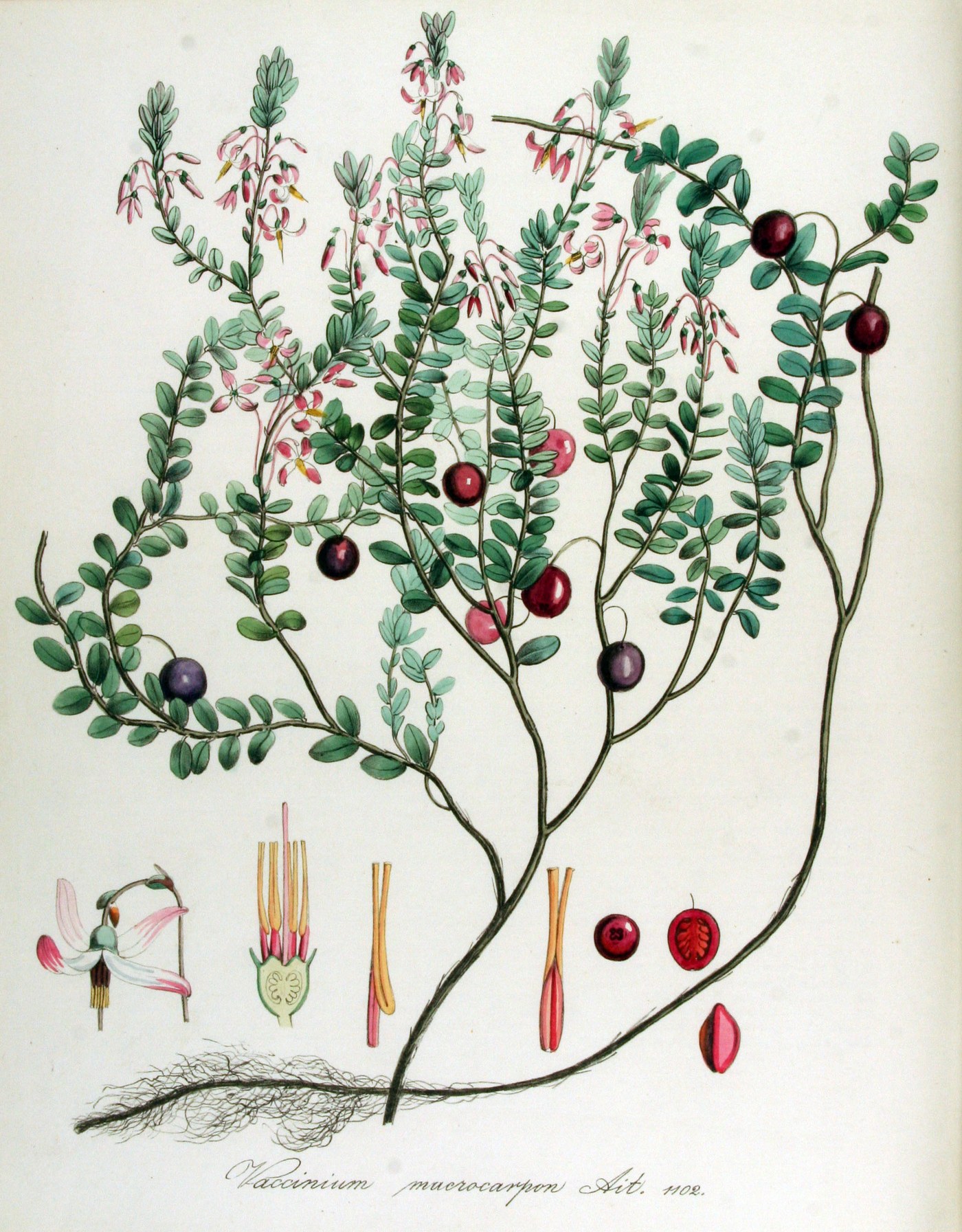
PlantCranberryVaccinium macrocarpon Aiton; the small cranberry, Vaccinium oxycoccus L., is the marsh-wort or fen-berry of Folkard and the Ojibwe swamp berry bush; in pharmacy Vaccinii macrocarpi fructus
Vaccinium macrocarpon, an evergreen shrub whose red berries are, by the European Medicines Agency’s account, 88 per cent water. Massachusetts is one of the primary growing areas of the native plant. Its smaller relative V. oxycoccus, which the agency’s assessment report also counts among the cranberries, is the plant of the older European and Ojibwe sources below.C
PlantCubebTailed pepper
Piper cubeba, a Javanese pepper whose berries keep a little stalk, like a tail.C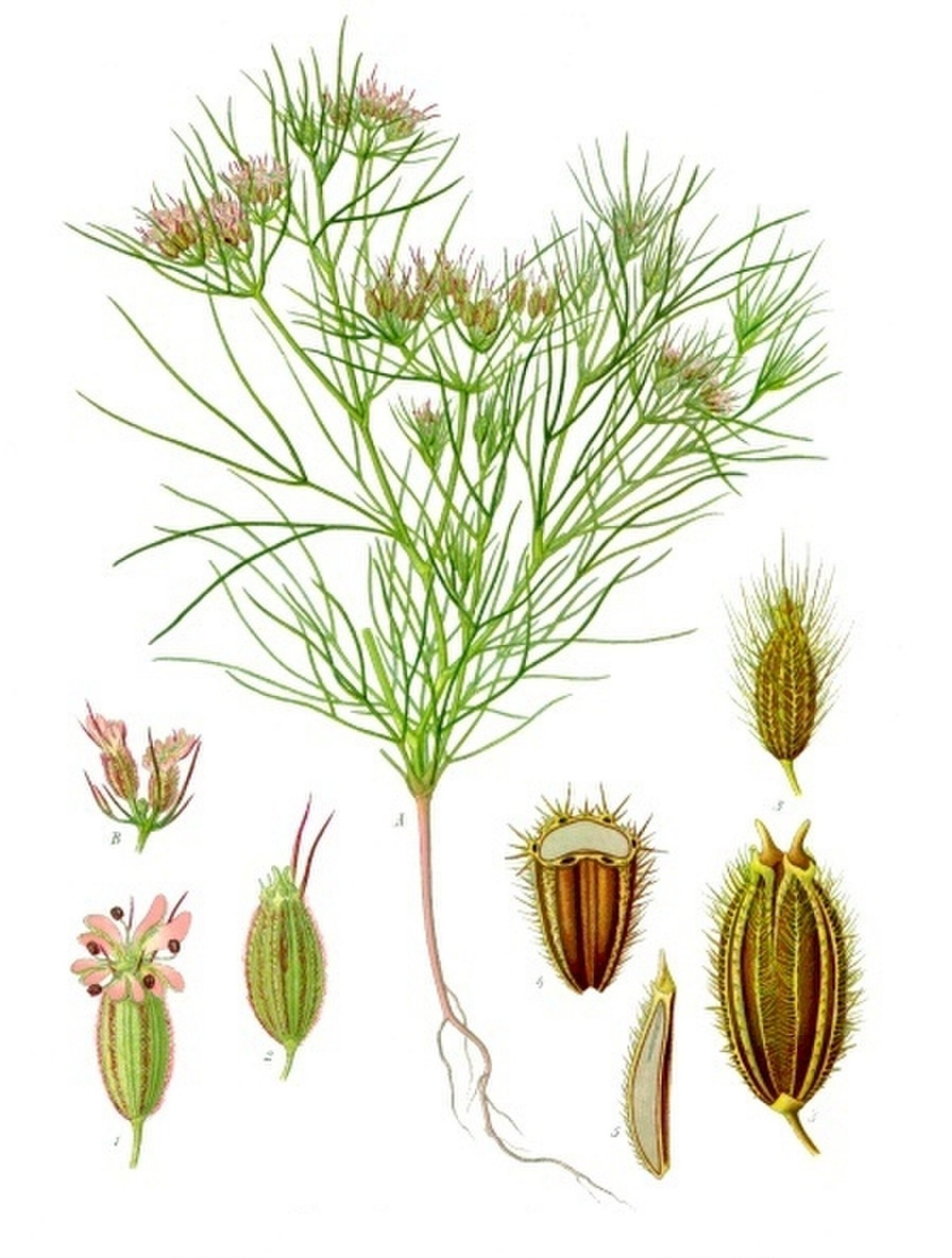
Plant CuminCuminum; Greek kuminon
Cuminum cyminum.C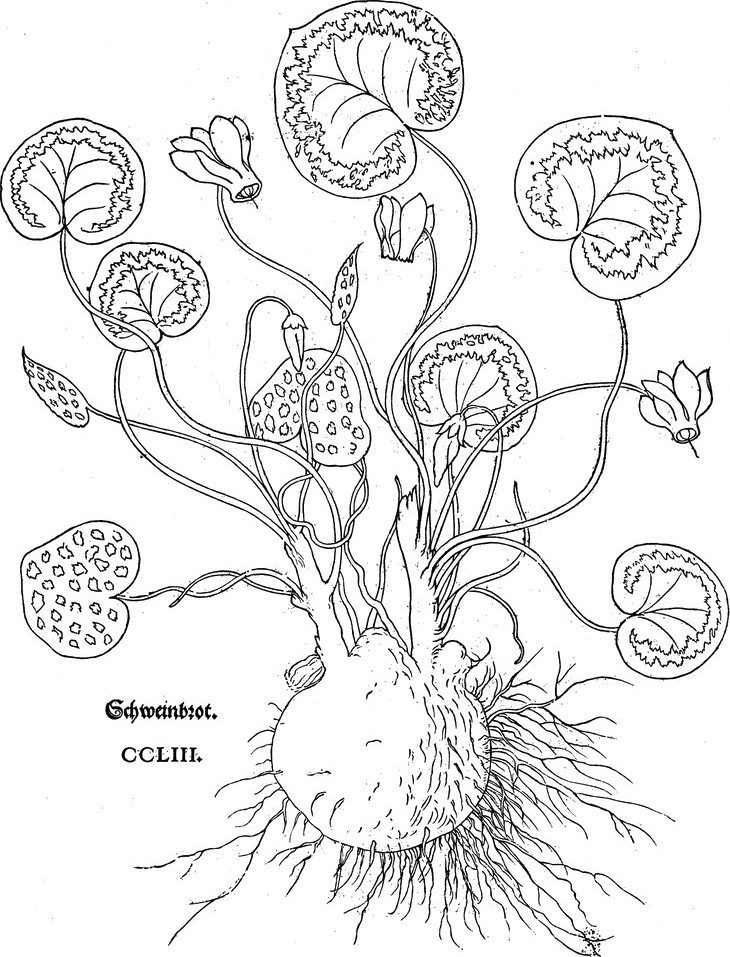
PlantCyclamen, greaterCiclamino; pan porcino
Sowbread, Cyclamen purpurascens or C. hederifolium, eaten by pigs, hence the name.CanaleCautionC
PlantCypressCupressus
Cupressus sempervirens: cones, leaves, and wood.D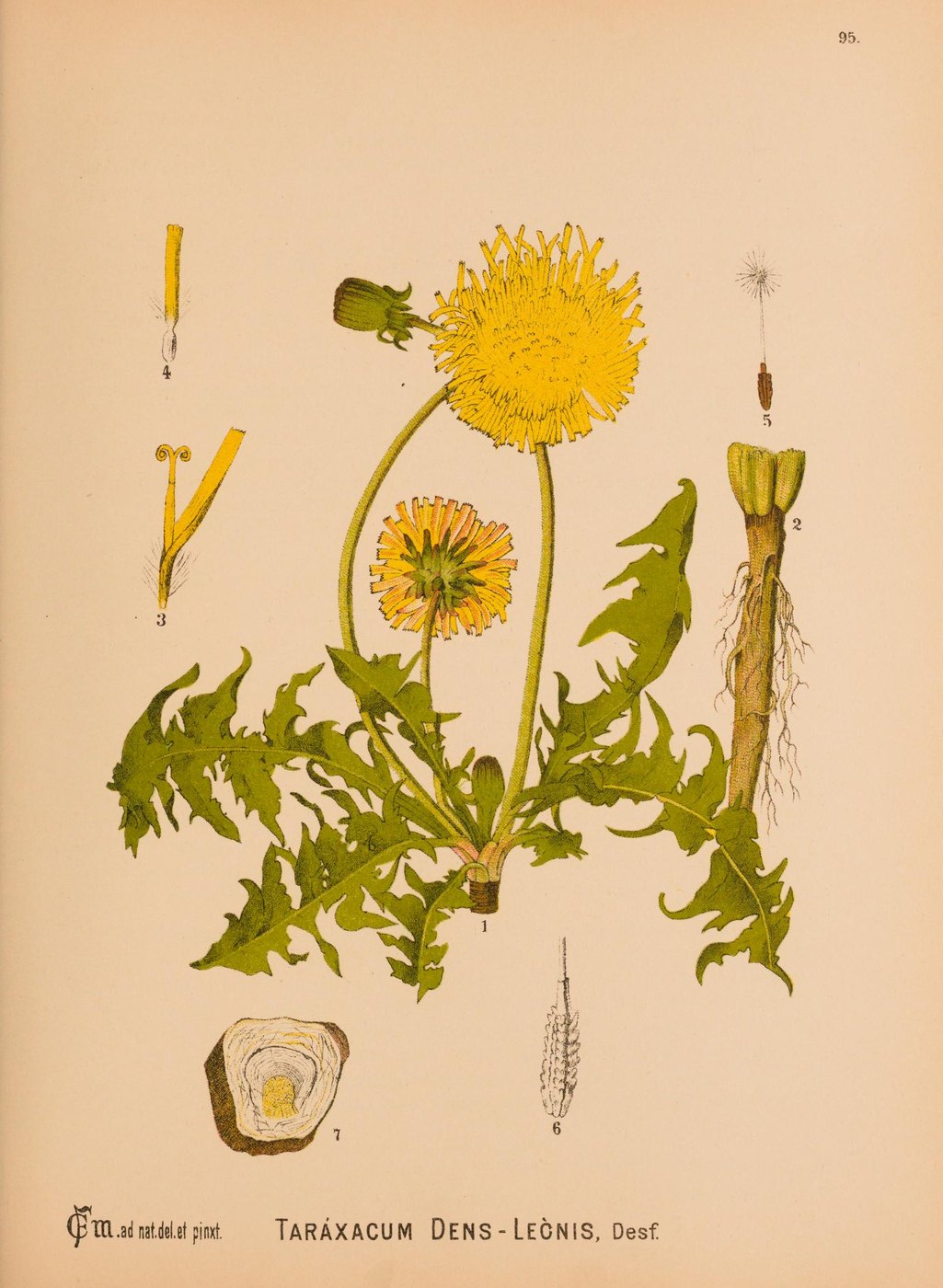
PlantDandelionTaraxacum; French dent de lion, pissenlit
Taraxacum officinale, of the daisy family.D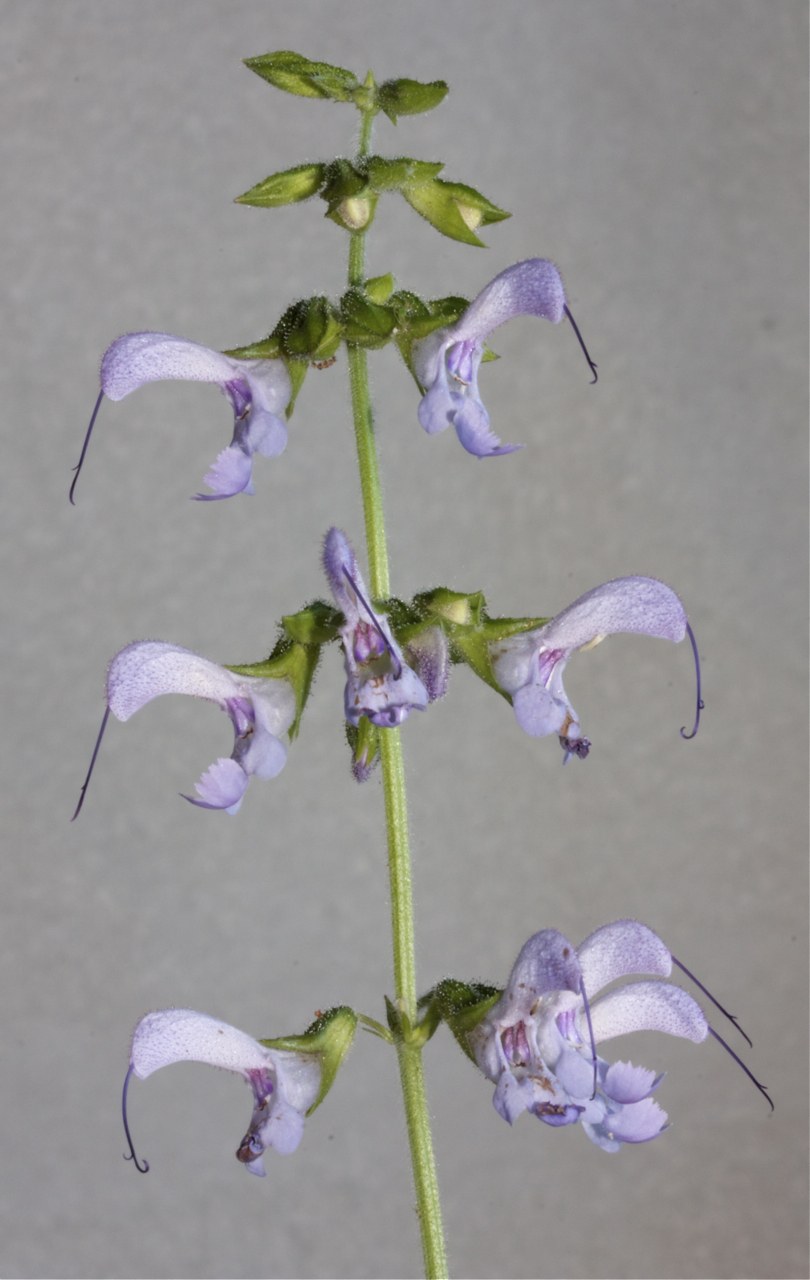
PlantDanshenTan-shên of Stuart; Chinese sage, red sage; Salvia miltiorrhiza Bunge; in pharmacy Salviae miltiorrhizae radix et rhizoma
Salvia miltiorrhiza, a sage of the family Lamiaceae which Stuart, in 1911, found grown in Shensi, Shansi, and Shantung and common in the Peking mountains, with three to seven hairy leaves and large violet flowers. The root is red outside and purplish within when fresh, and is sold “in short, shrivelled pieces of a bright, brick-red color,” sweetish, like liquorice. The European Medicines Agency’s assessment report divides its more than 200 compounds into water-soluble phenolics, salvianolic acid B among them, and fat-soluble diterpenoids, the tanshinones.D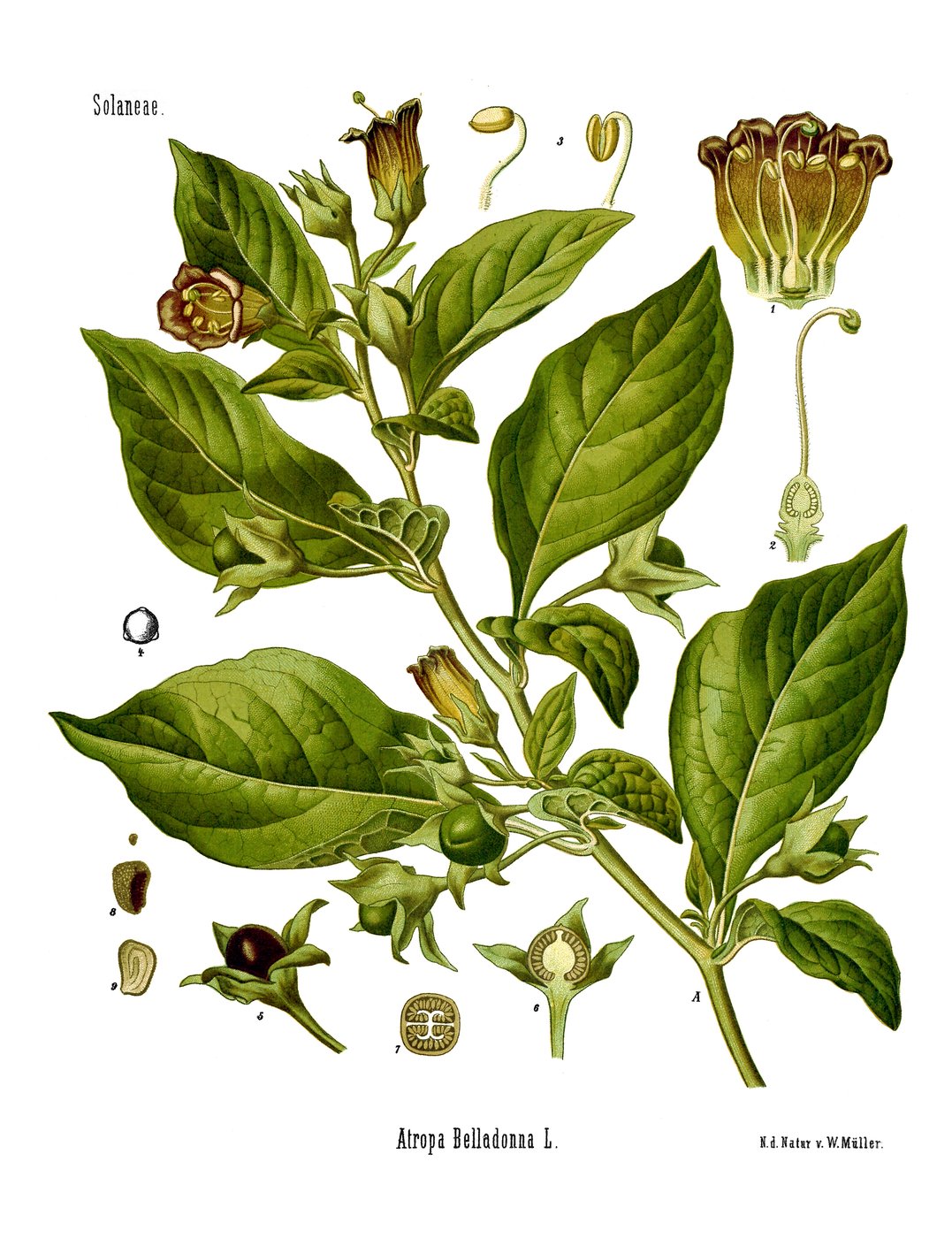
PlantDeadly nightshadeBelladonna, from the Italian; dwale; devil’s cherries
Atropa belladonna, of the nightshade family.CautionD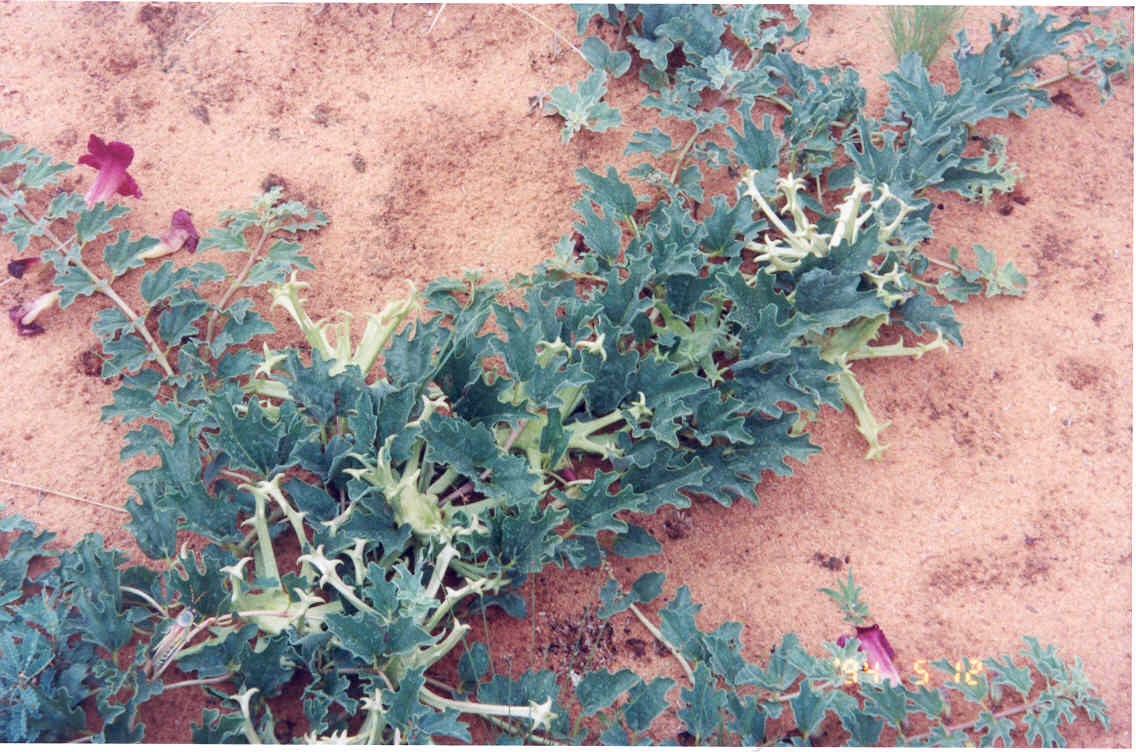
PlantDevil’s clawHarpagophytum procumbens DC., with Harpagophytum zeyheri; in pharmacy Harpagophyti radix, the root
Harpagophytum procumbens, a plant of the family Pedaliaceae, whose root is the medicine. The European assessment report notes that the secondary tubers contain about twice as much of the bitter harpagoside as the primary ones, and that the drug is sometimes adulterated with harpagoside-poor primary roots or with other bitter plants.D
PlantDevil’s-bit scabiousMorsus diaboli, “the Devil’s bite”
Succisa pratensis. A blue-violet wildflower of meadows and heaths, known by its short, blunt-ended root.D
PlantDillAneto
Anethum graveolens.CanaleD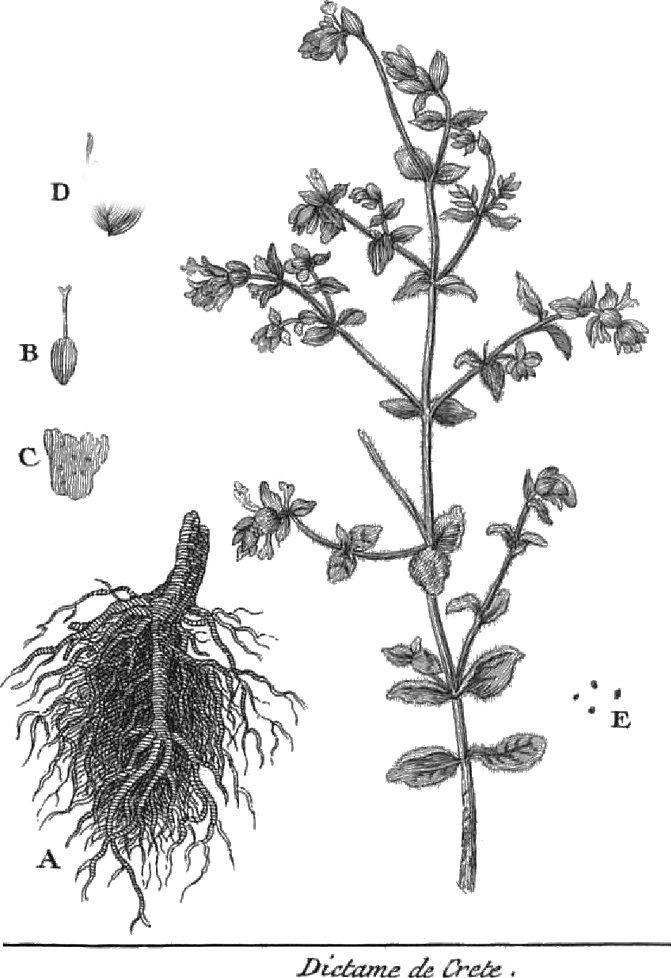
PlantDittanyDittamo
Dittany of Crete, Origanum dictamnus, famous in antiquity for drawing out arrows.CanaleD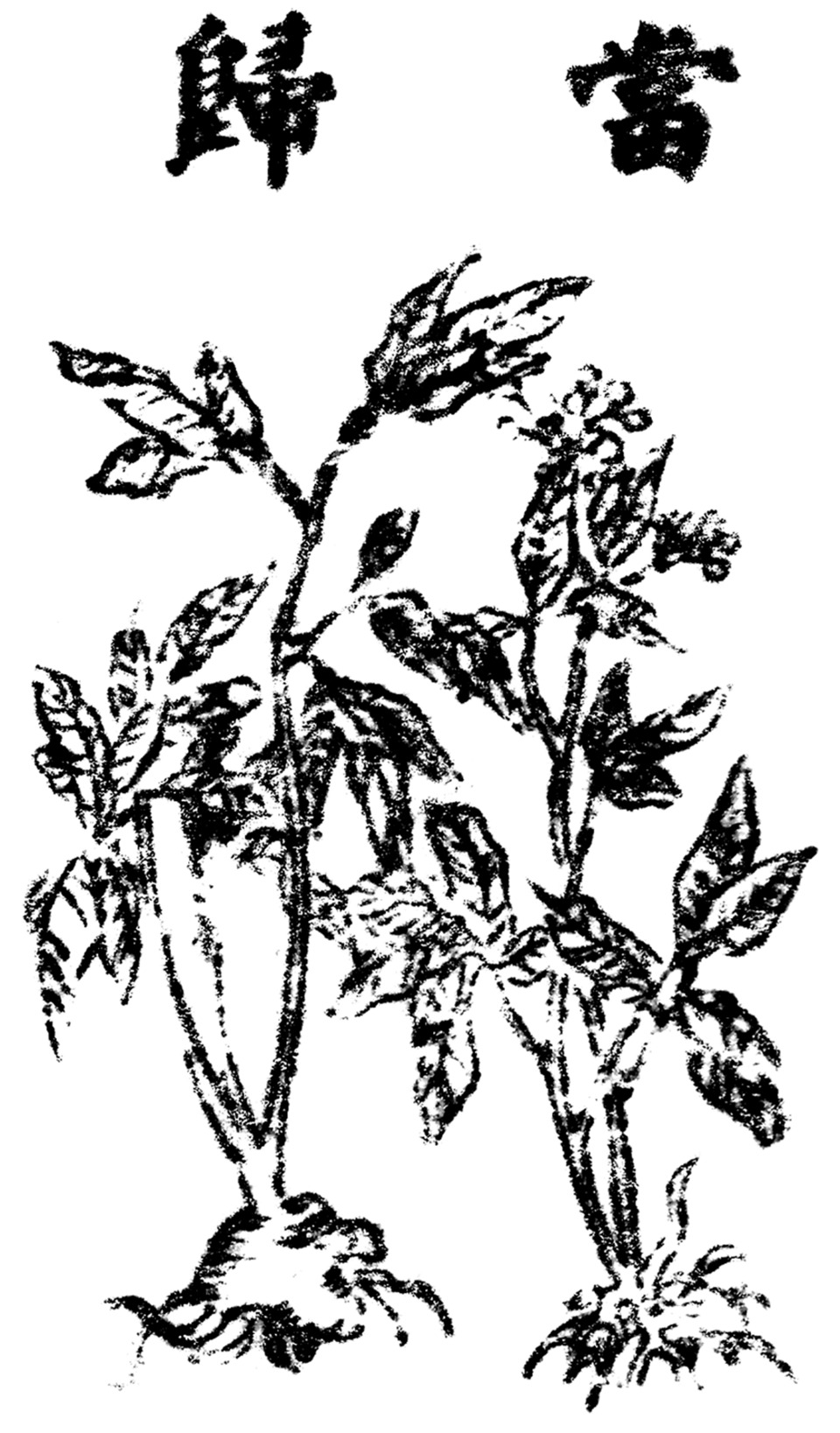
PlantDong quaiDanggui; tang-kuei of Stuart; Angelica polymorpha of Henry; Angelica sinensis (Oliv.) Diels; in pharmacy Angelicae sinensis radix
The root of Angelica sinensis, of the family Apiaceae. Stuart, in 1911, describes the drug as brown, fleshy rootstocks branching into a mass of large, close, pliant rootlets “something like gentian root,” soft and whitish or yellow within, with “a very strong” odour like celery and a sweetish, warm, aromatic taste. Its plant was still disputed in his day, Faber taking it for the honeywort of North America and the Japanese for a Ligusticum or Angelica; he cites Henry that Angelica polymorpha was the source of the drug exported from Ichang and Hankow. The European Medicines Agency’s assessment report names ferulic acid and the phthalides of the essential oil, Z-ligustilide chief among them, as the constituents that seem most important.E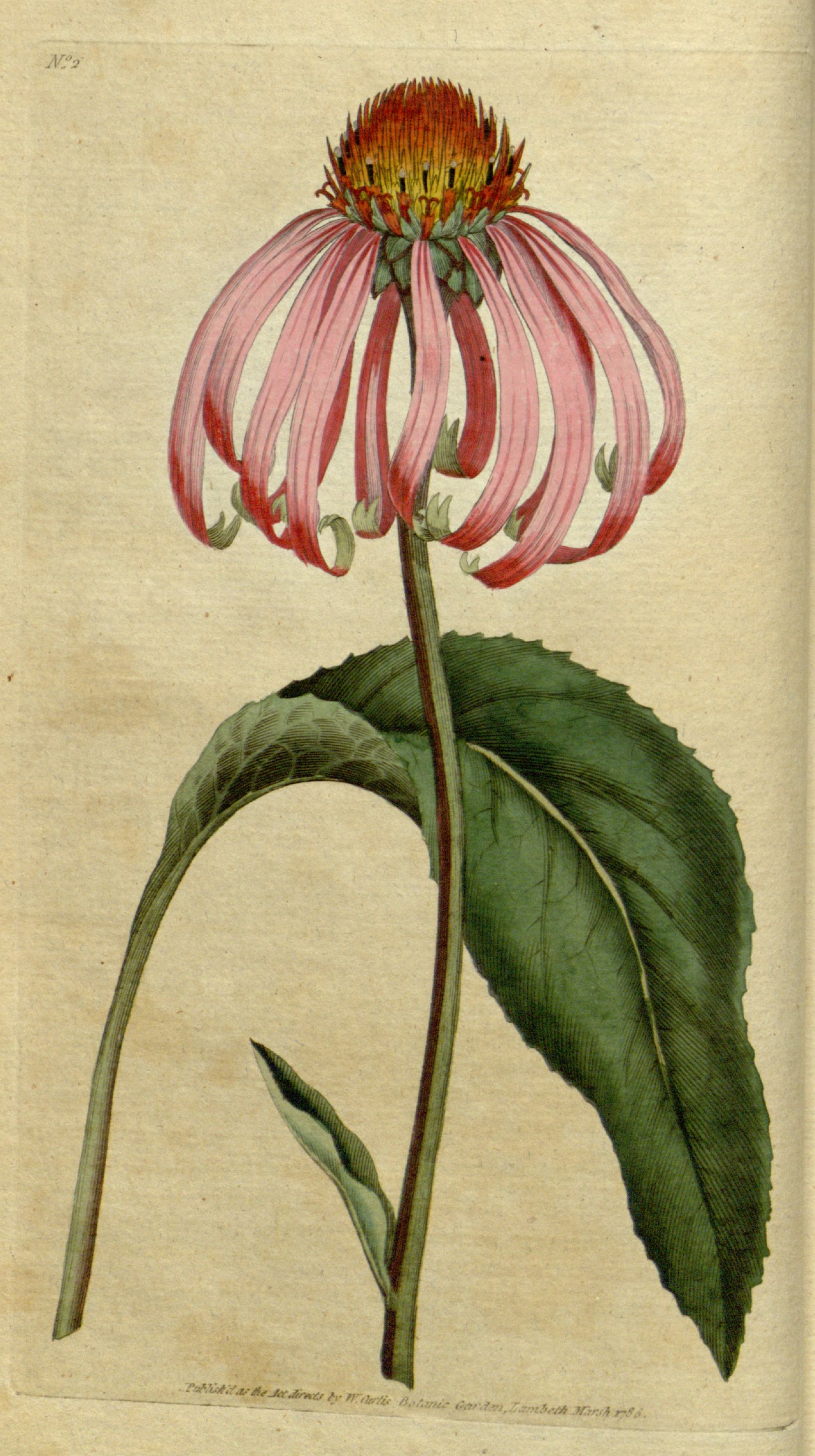
PlantEchinaceaPurple coneflower, American coneflower, Black Sampson, Rudbeckia; Echinacea purpurea (L.) Moench, with the narrow-leaved E. angustifolia DC. and the pale E. pallida (Nutt.) Nutt.; in pharmacy Echinaceae purpureae herba and radix, Echinaceae angustifoliae radix, Echinaceae pallidae radix
The coneflowers of North America, of the family Asteraceae, whose rich purple florets are “seated round a high cone.” LiverTox counts at least nine species, of which Echinacea purpurea, pallida, and angustifolia are the most used, and gives E. purpurea as native to the United States east of the Rocky Mountains. Grieve, describing E. angustifolia from America west of Ohio, notes that its root has a faint aromatic smell and a sweetish taste, “leaving a tingling sensation in the mouth not unlike Aconitum napellus, but without its lasting numbing effect.”E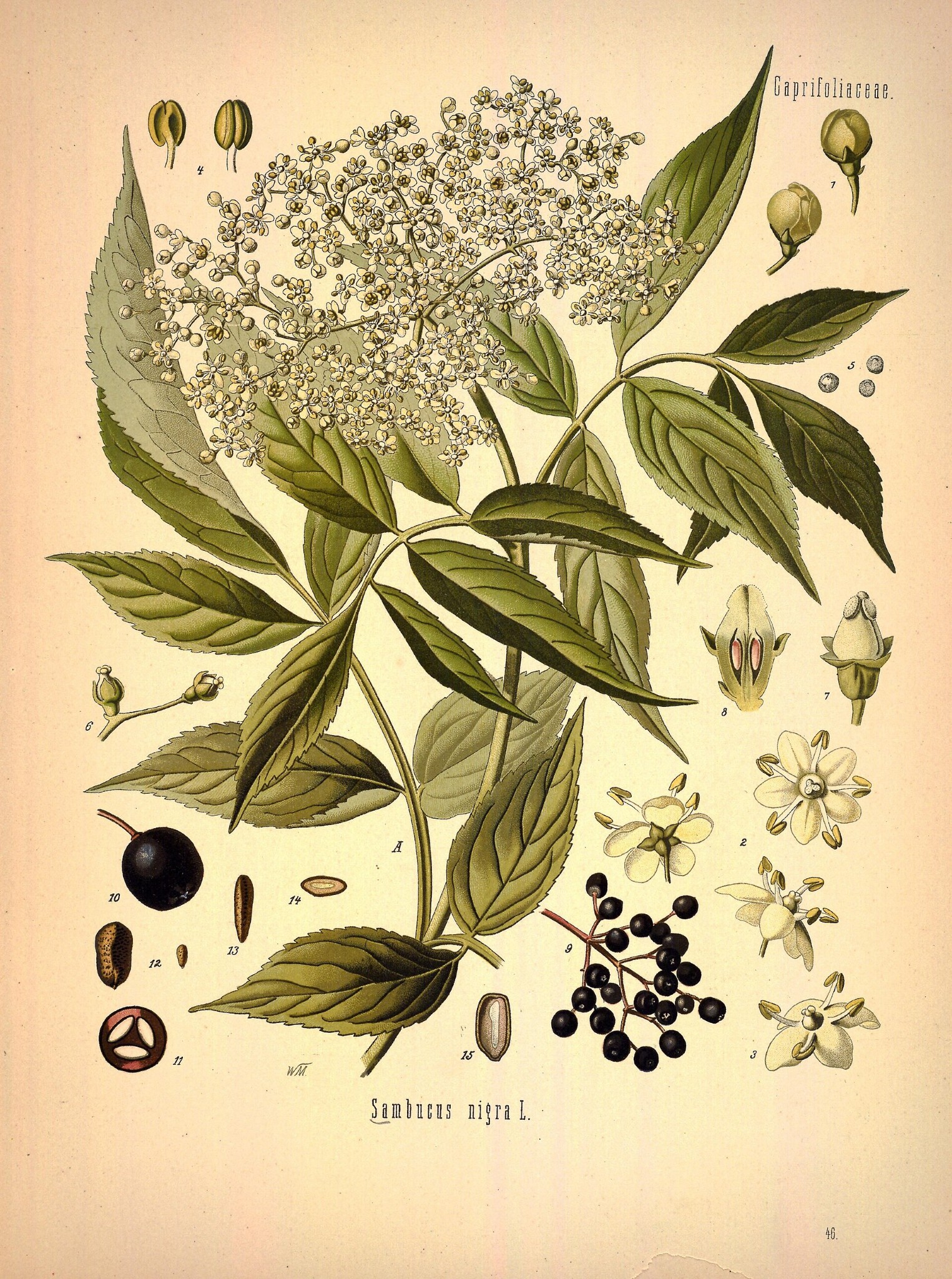
PlantElderSambucus
Sambucus nigra: flowers, berries, bark, and leaves.CautionE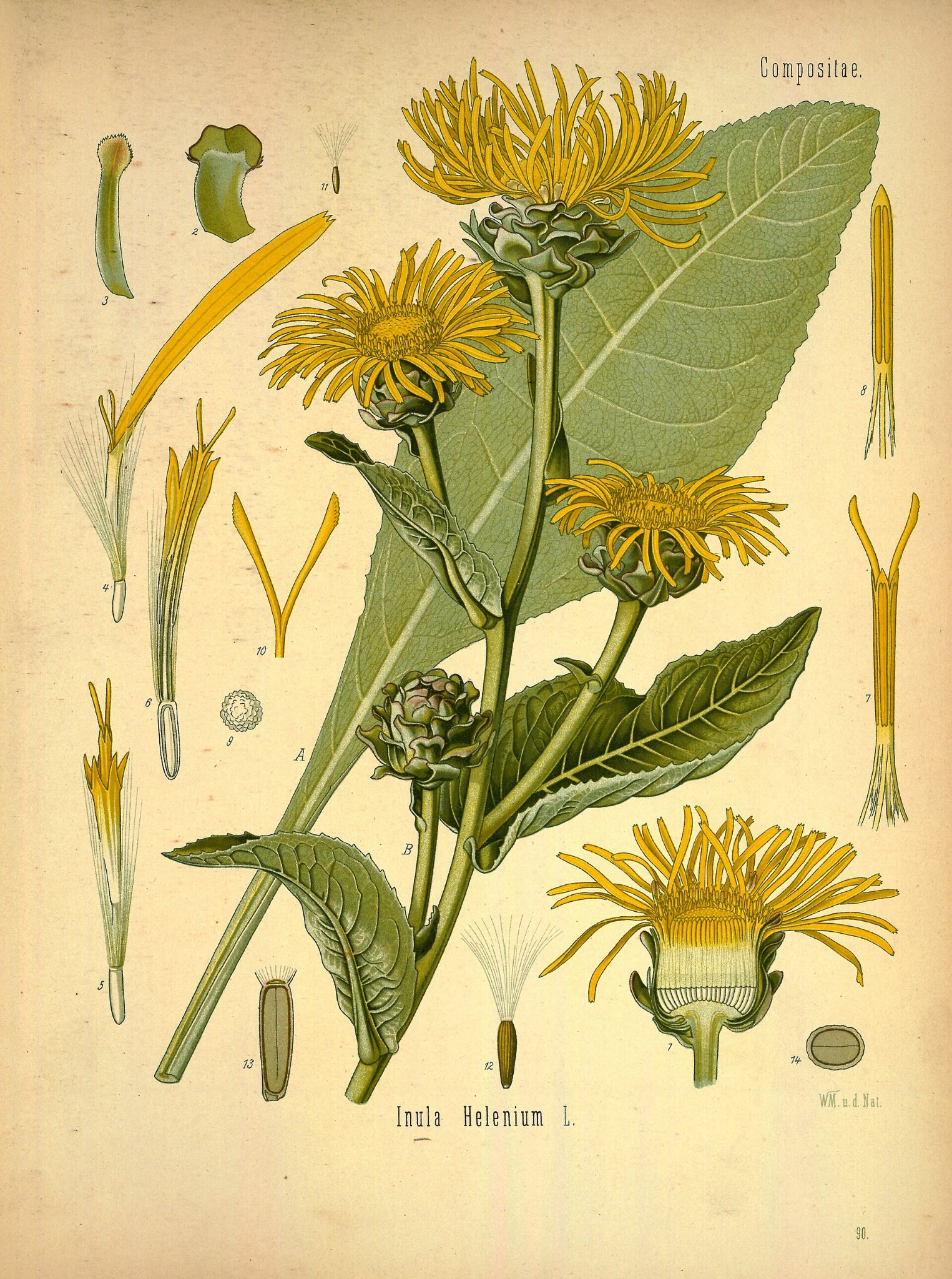
Plant ElecampaneInula, helenium
The root of Inula helenium.E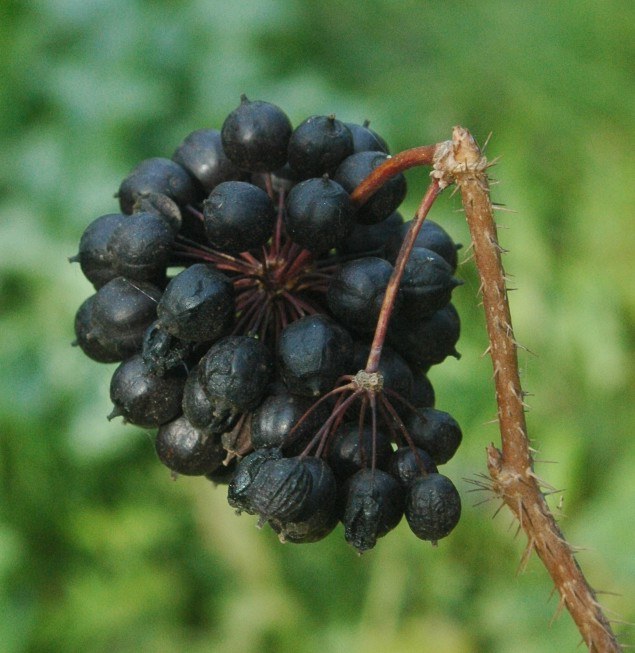
PlantEleutherococcusEleutherococcus senticosus; in pharmacy Eleutherococci radix
Eleutherococcus senticosus, of the family Araliaceae, whose root is the medicine. The European assessment report notes that more than 35 compounds have been identified in the root and that “the search for active substances is not finished yet.”E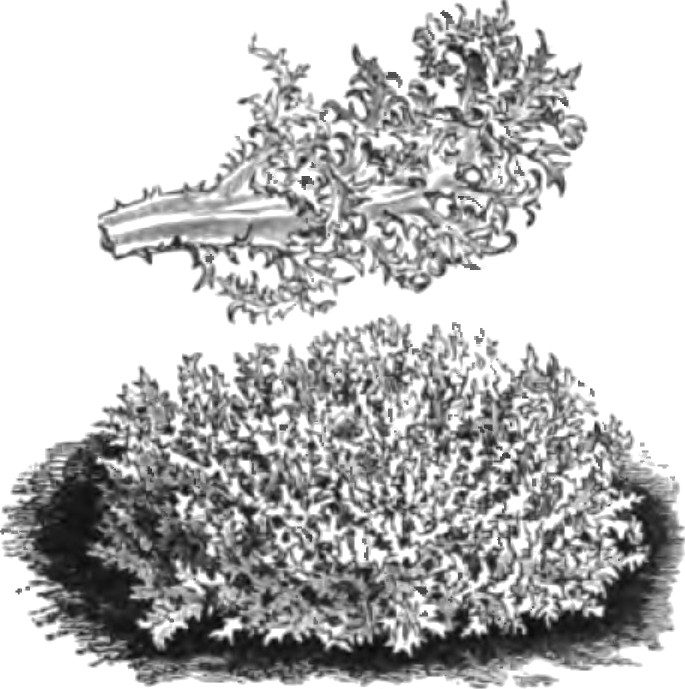
Plant EndiveEndivia
Cichorium endivia, the salad plant.CanaleE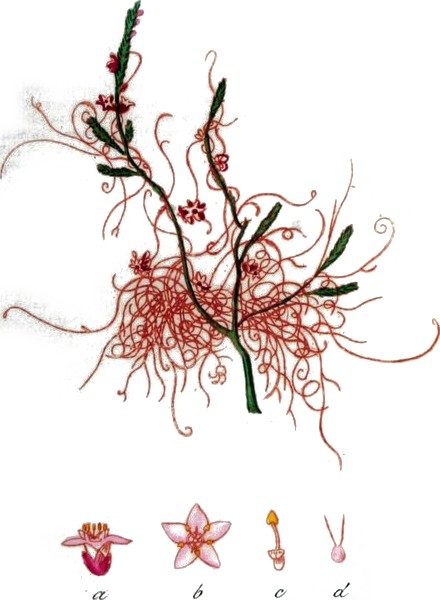
PlantEpithymumEpithymum
Dodder growing on thyme, Cuscuta epithymum, a parasitic plant.CanaleE
PlantEryngoSea holly; Eryngium
Eryngium maritimum, a spiny blue-grey thistle-like plant of sand dunes, with long sweet roots.E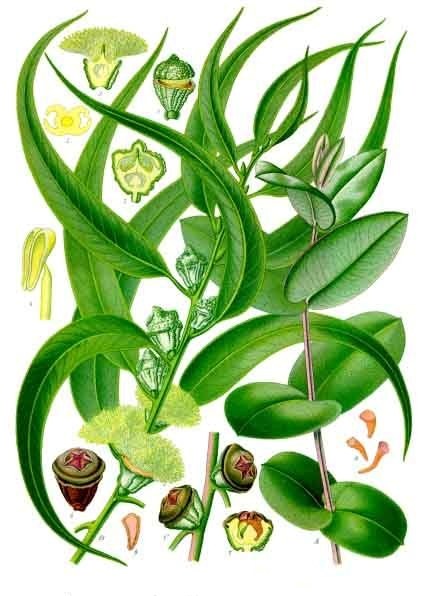
PlantEucalyptusBlue gum, fever tree, stringy bark tree; Eucalyptus globulus Labill.; in pharmacy Eucalypti folium, the leaf, and Eucalypti aetheroleum, the oil
Eucalyptus globulus, the blue gum of Victoria and Tasmania, which Grieve says reaches 375 feet and ranks among the largest trees in the world. Young trees have broad, stalkless, whitish-green leaves set opposite and flat; after four or five years come sword-shaped, bluish leaves, “alternate and vertical, i.e. with the edges turned towards the sky and earth.” The flower bud wears a cap thrown off as a lid when it opens, whence the Greek name, well-covered. The leaves and the oil distilled from them are the medicines.CautionE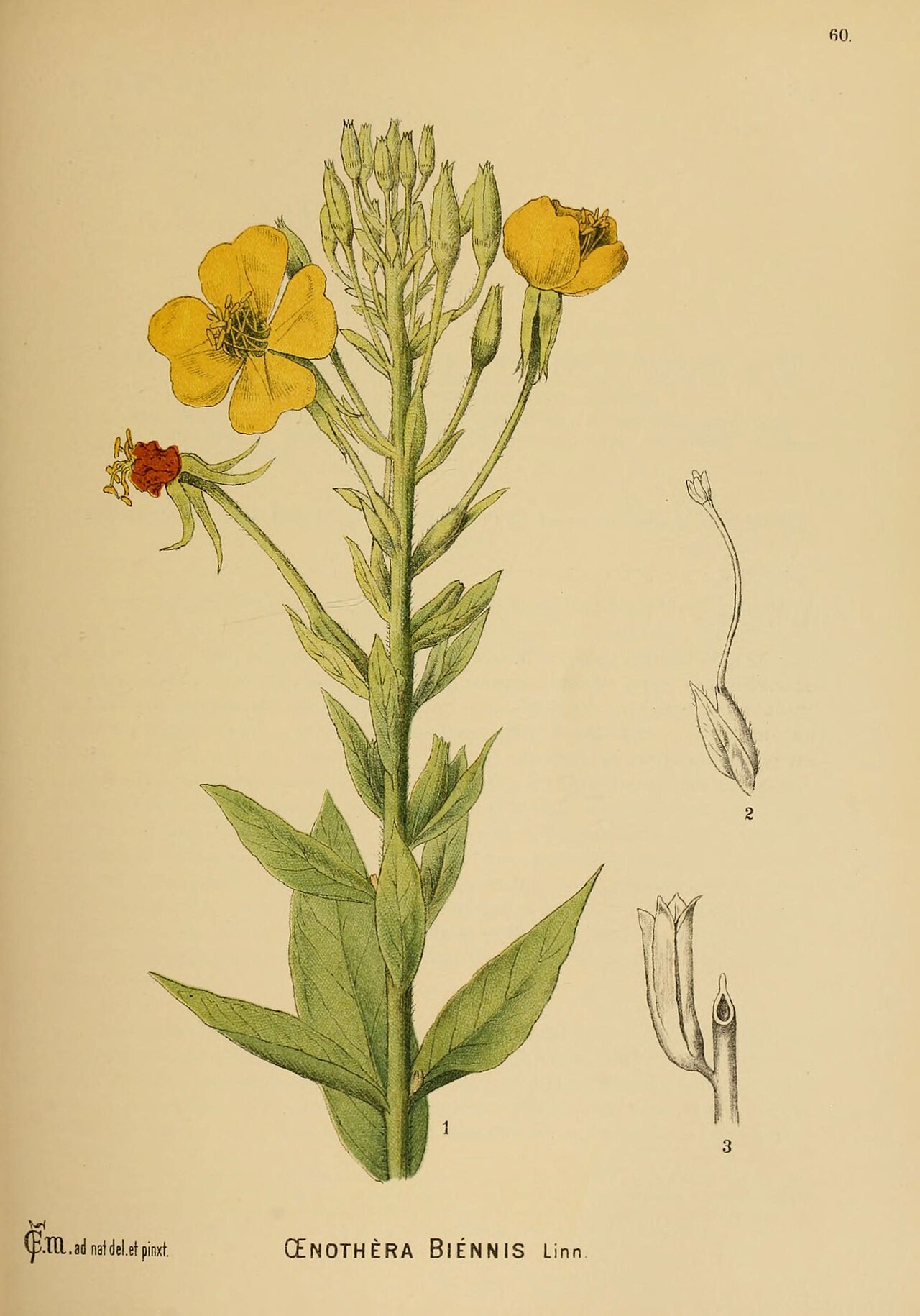
PlantEvening primroseTree primrose; Oenothera biennis of Linnaeus, Grieve’s Cenothera, with Oenothera lamarckiana; in pharmacy Oenotherae oleum, the oil of the seed
Oenothera biennis, a North American biennial, carried first to Italy and since naturalised on river banks and sandy places across western Europe. The first year makes a flat rosette of leaves; the second, hairy stems three or four feet high with a long succession of large, fragrant, yellow flowers that “usually open between six and seven o’clock in the evening, hence the name of Evening Primrose.” Grieve’s medicine was the bark and leaves; the modern one is the fatty oil pressed or extracted from the seed.E
PlantEyebrightEuphrasia, “gladness”
Euphrasia officinalis and relatives.F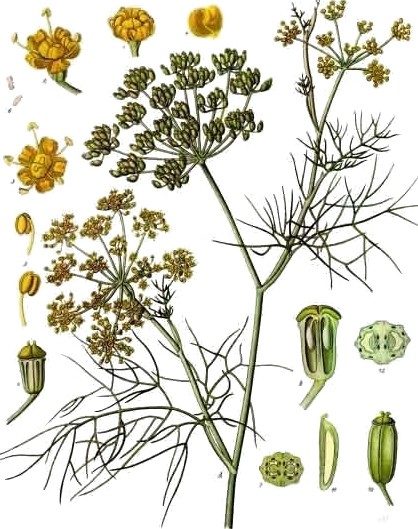
PlantFennelFinocchio
Foeniculum vulgare, seed and water.CanaleF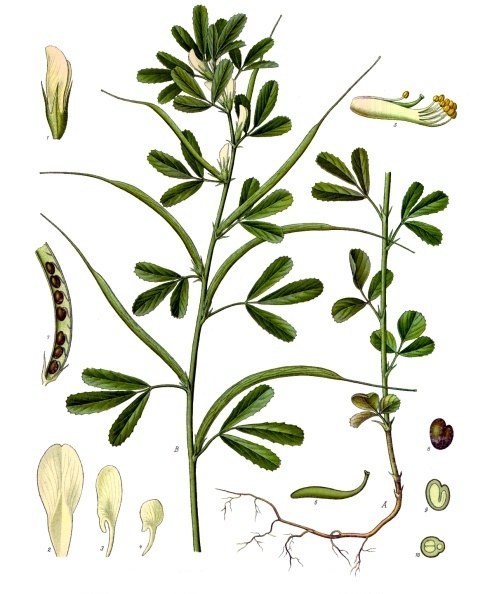
PlantFenugreekBird’s foot, Greek hay-seed; Latin foenum-graecum, Greek hay; the Greek telis, the Egyptian itasin and the Egyptian preparation helba; Trigonella foenum-graecum of Linnaeus
Trigonella foenum-graecum, an erect annual of the legume family about two feet high, like lucerne in habit, native to the eastern shores of the Mediterranean and grown in India, Africa, Egypt, and Morocco. Its brownish seeds, about an eighth of an inch long and furrowed into two unequal lobes, lie “ten to twenty together, in long, narrow, sickle-like pods,” with a bitter taste like lovage or celery. The seed is the medicine.F
PlantFern seedThe “seed” of ferns
The spores of ferns, mistaken for seed.F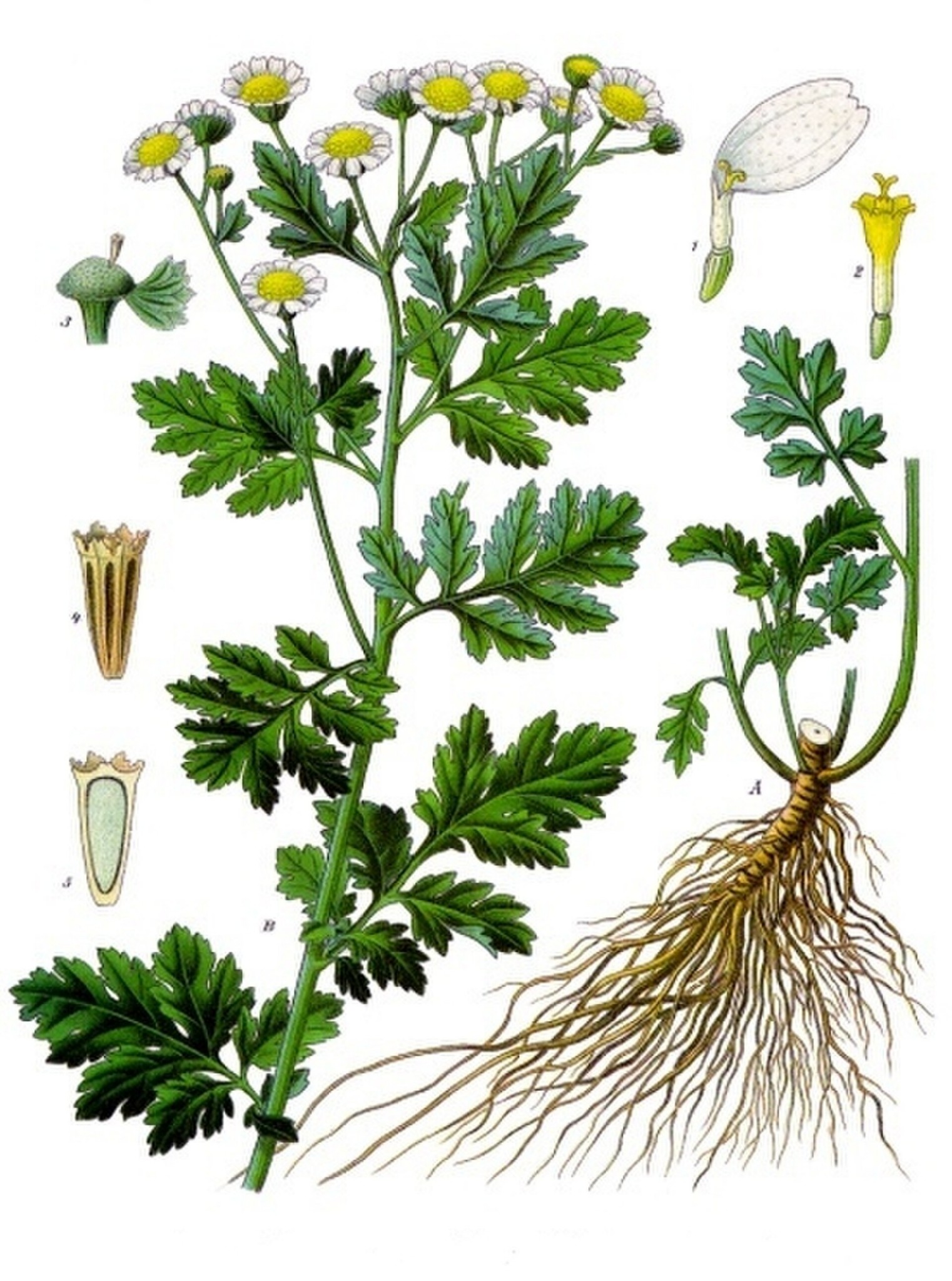
PlantFeverfewParthenium
Tanacetum parthenium.F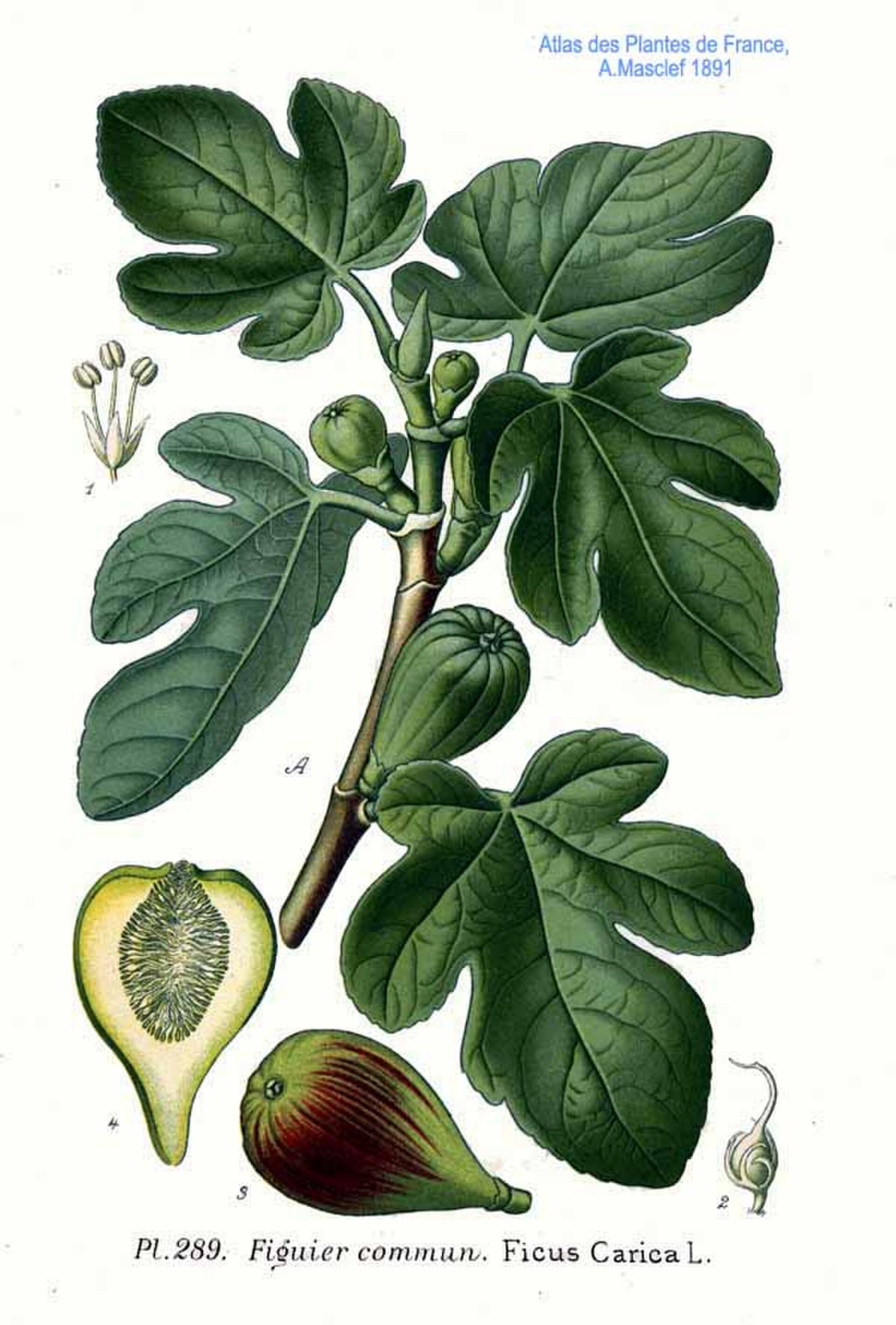
PlantFigFicus
Ficus carica.F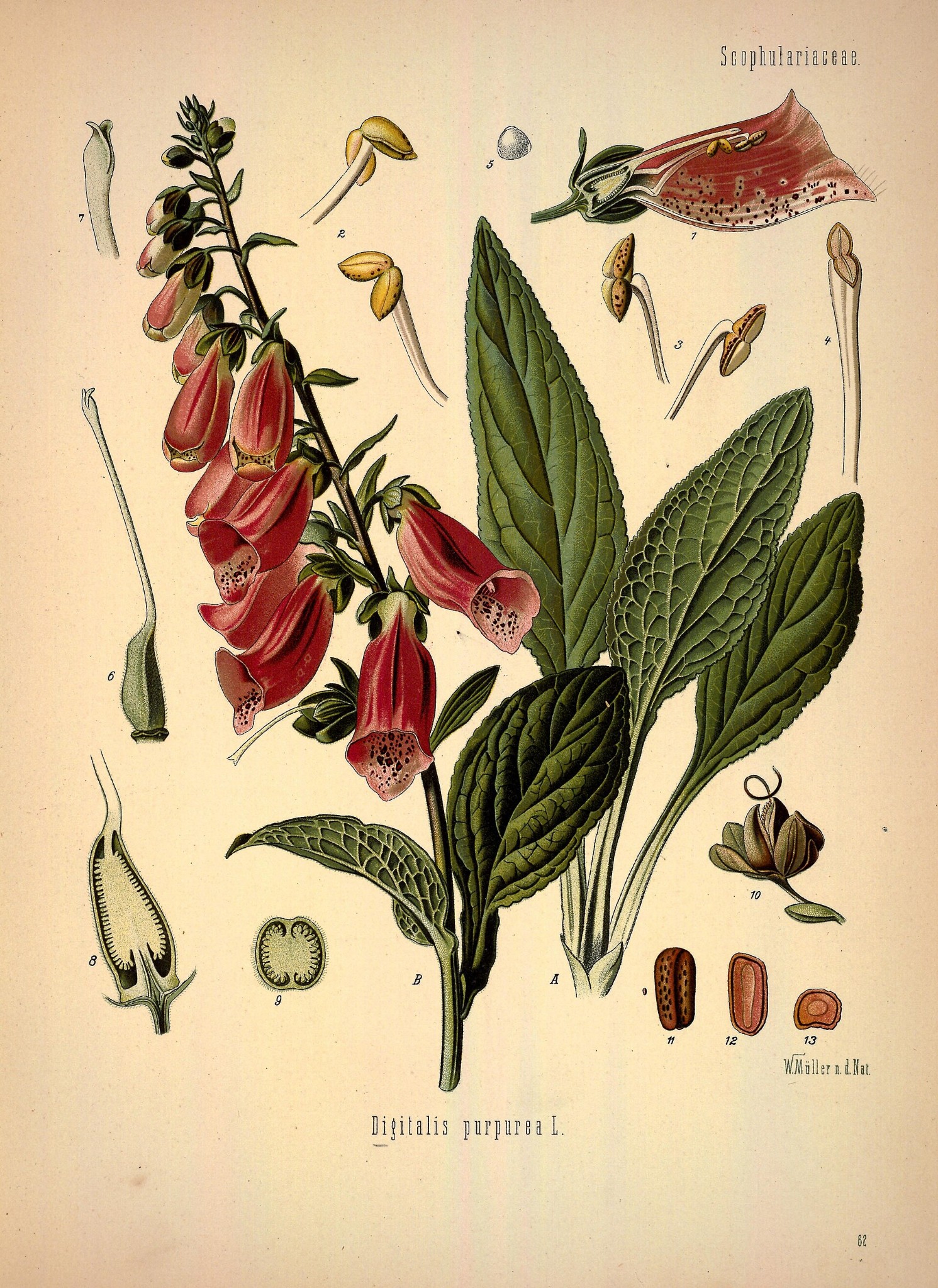
PlantFoxgloveDigitalis, “finger-stall”
Digitalis purpurea.DeadlyG
Plant GalangalGalanga; Hildegard’s galgan
The rhizome of lesser galangal, Alpinia officinarum.G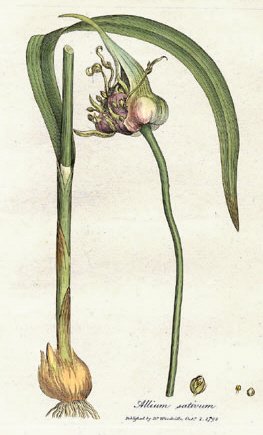
Plant GarlicAllium; Greek skorodon
Allium sativum.G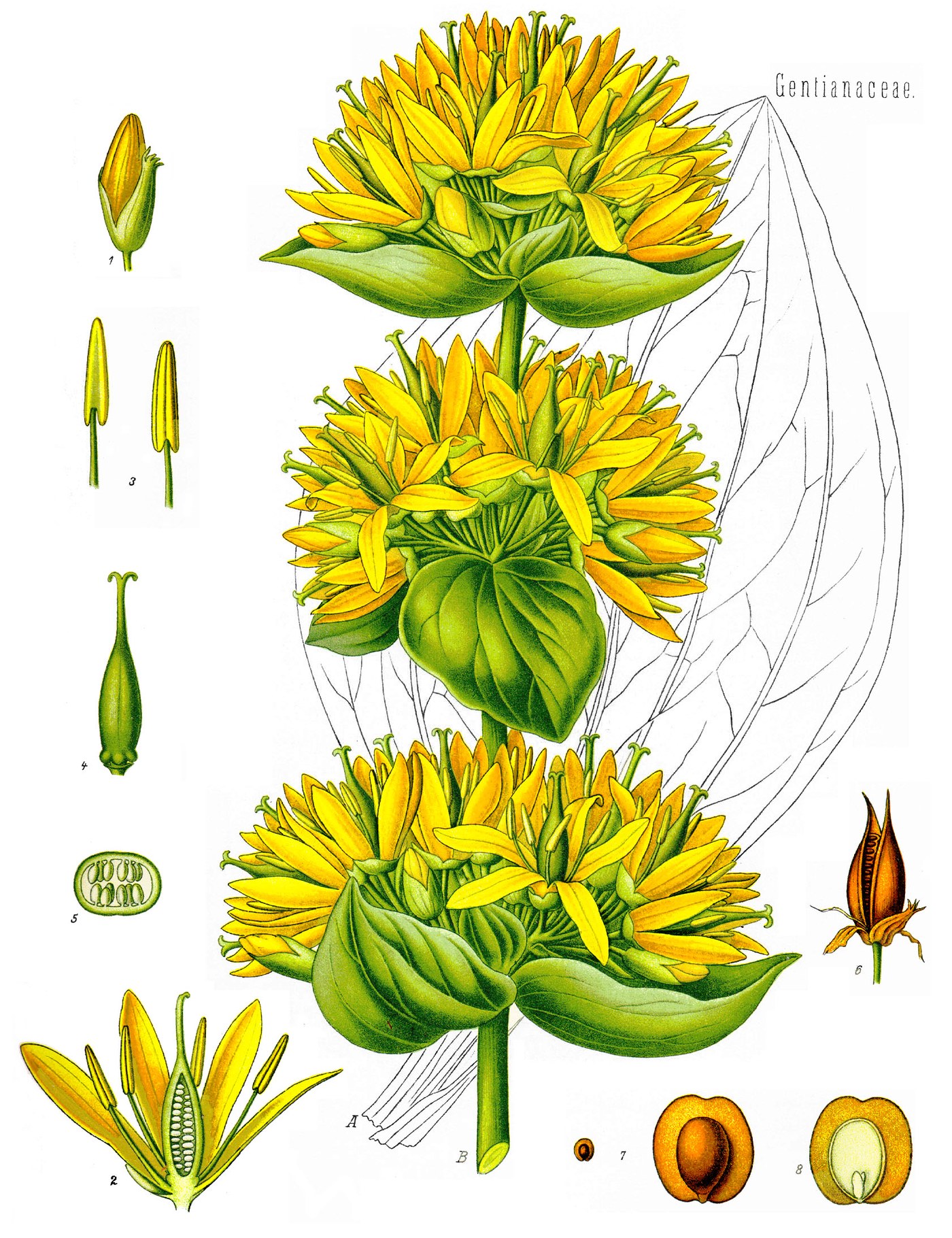
PlantGentianYellow gentian, great yellow gentian, bitterwort; Gentiana lutea of Linnaeus; the Greek gentiane of Dioscorides; in pharmacy Gentianae radix
Gentiana lutea, a stately perennial of the alpine and subalpine pastures of central and southern Europe, from Spain and the Pyrenees through the Alps to the Balkans, absent from northern Europe and the British Isles. Its stem rises three or four feet with paired, stiff, five-veined leaves, and big orange-yellow clusters of wheel-shaped flowers in the upper pairs; its root, “generally about a foot long and an inch in diameter, but sometimes even a yard or more long,” is yellowish brown and very bitter. Grieve warns that cattle leave it untouched and that its leaves are easily confused with those of white hellebore, its frequent companion. The dried root is the medicine.G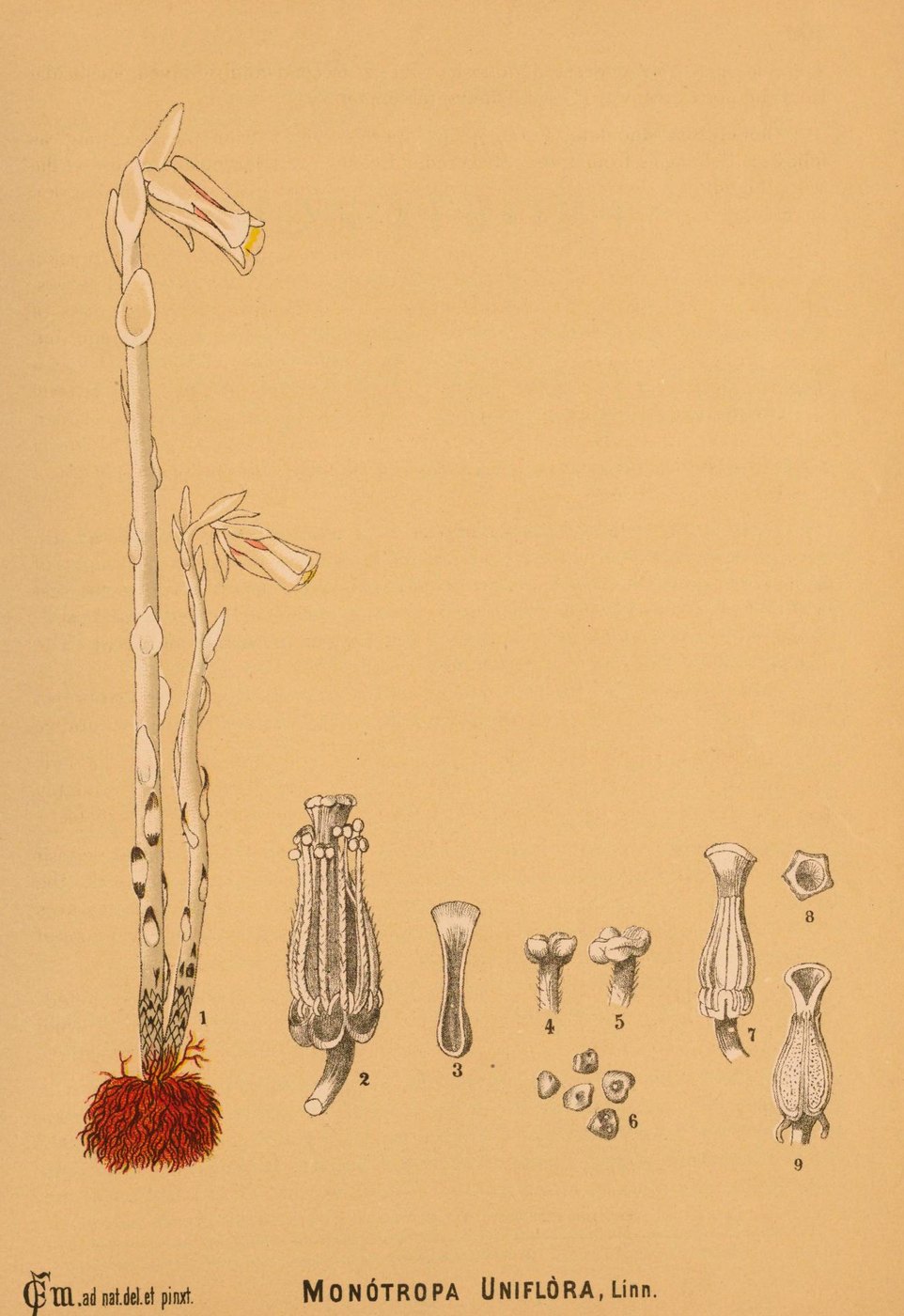
PlantGhost pipeIndian pipe, Indian ghost pipe, corpse plant, ice plant, bird’s nest, fit-root, convulsion-root, pipe plant, ova-ova; Monotropa uniflora of Linnaeus, “one turn,” from the single nodding flower
Monotropa uniflora, a leafless, waxy, ivory-white herb of deep shady woods, two to eight inches high, with scales for leaves and one nodding flower that stands upright in fruit: a plant without green that lives through the fungi on the roots of trees, cool and clammy to the touch, melting in the hand like ice, and turning jet-black when it dries. It grows in eastern North America from Florida northward, and also in the West, in Central America, in Colombia and in East Asia, flowering in July in the North.G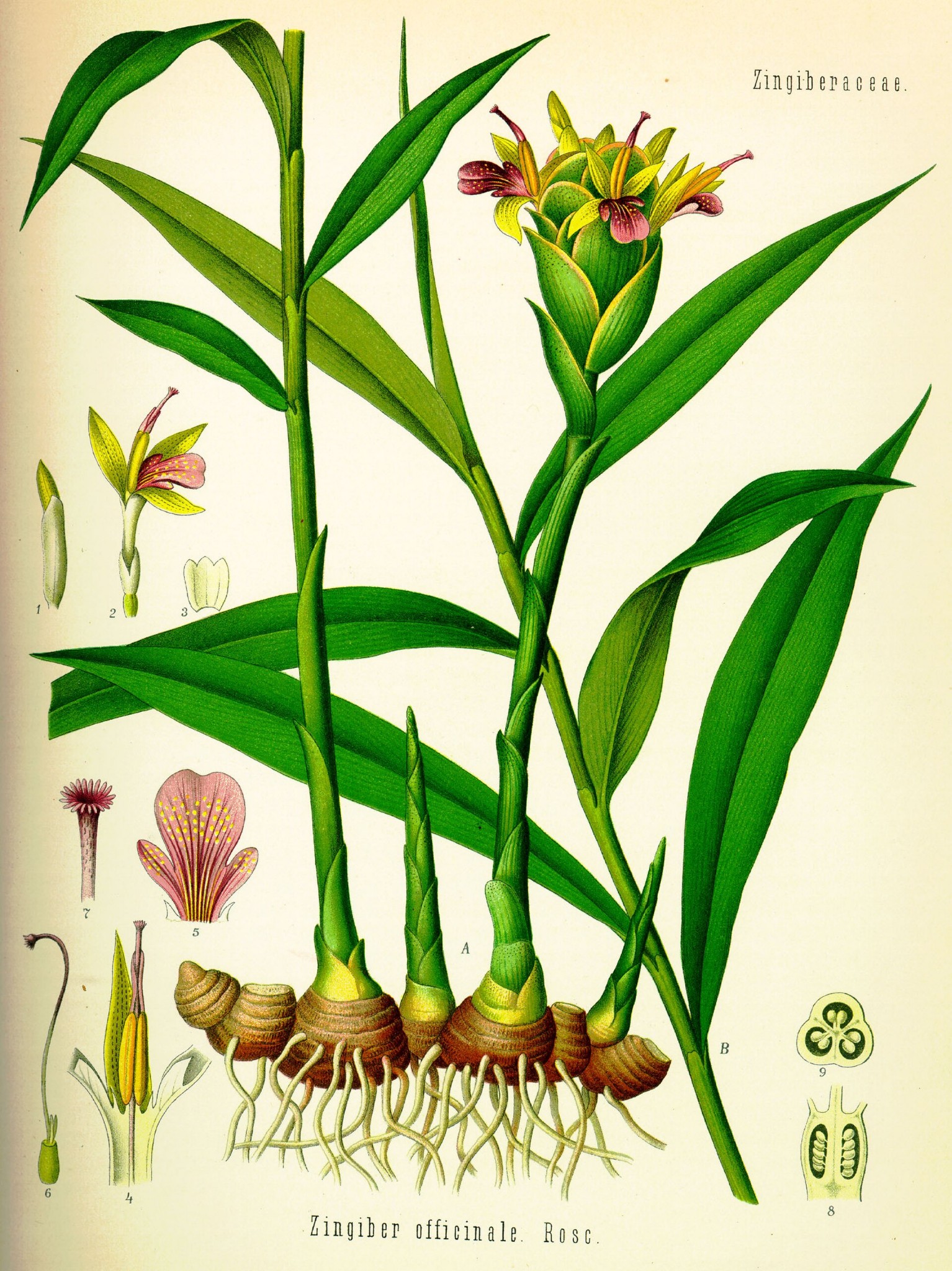
Plant GingerZingiber
The rhizome of Zingiber officinale.G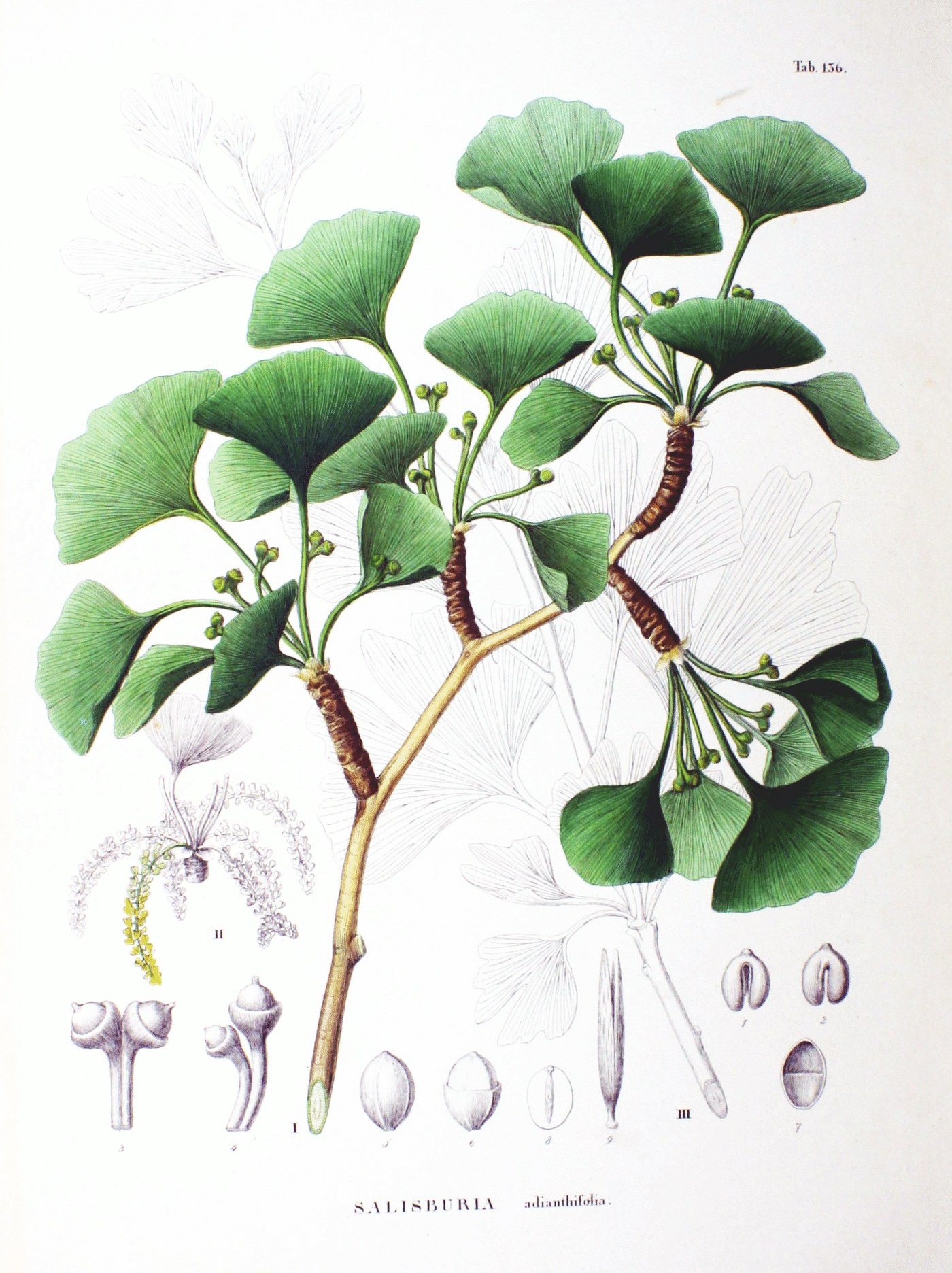
PlantGinkgoChinese yin-hsing, and for the seeds pai-kuo, ‘white fruits’; Salisburia adiantifolia of Stuart; Ginkgo biloba L.; in pharmacy Ginkgo folium
Ginkgo biloba, of the family Ginkgoaceae, a tree which Stuart, in 1911, found growing south of the Yangtse, twenty to thirty feet high, “with thin, vertical leaves resembling a duck’s foot (triangular-fan-shaped).” Its name, he explains, comes from the Japanese reading of the Chinese characters yin-kuo. He calls it “a tree of great beauty,” successfully transplanted to Europe and America. The drug of modern pharmacy is the leaf; the Chinese medicine of Stuart’s day used the nut-like seeds.G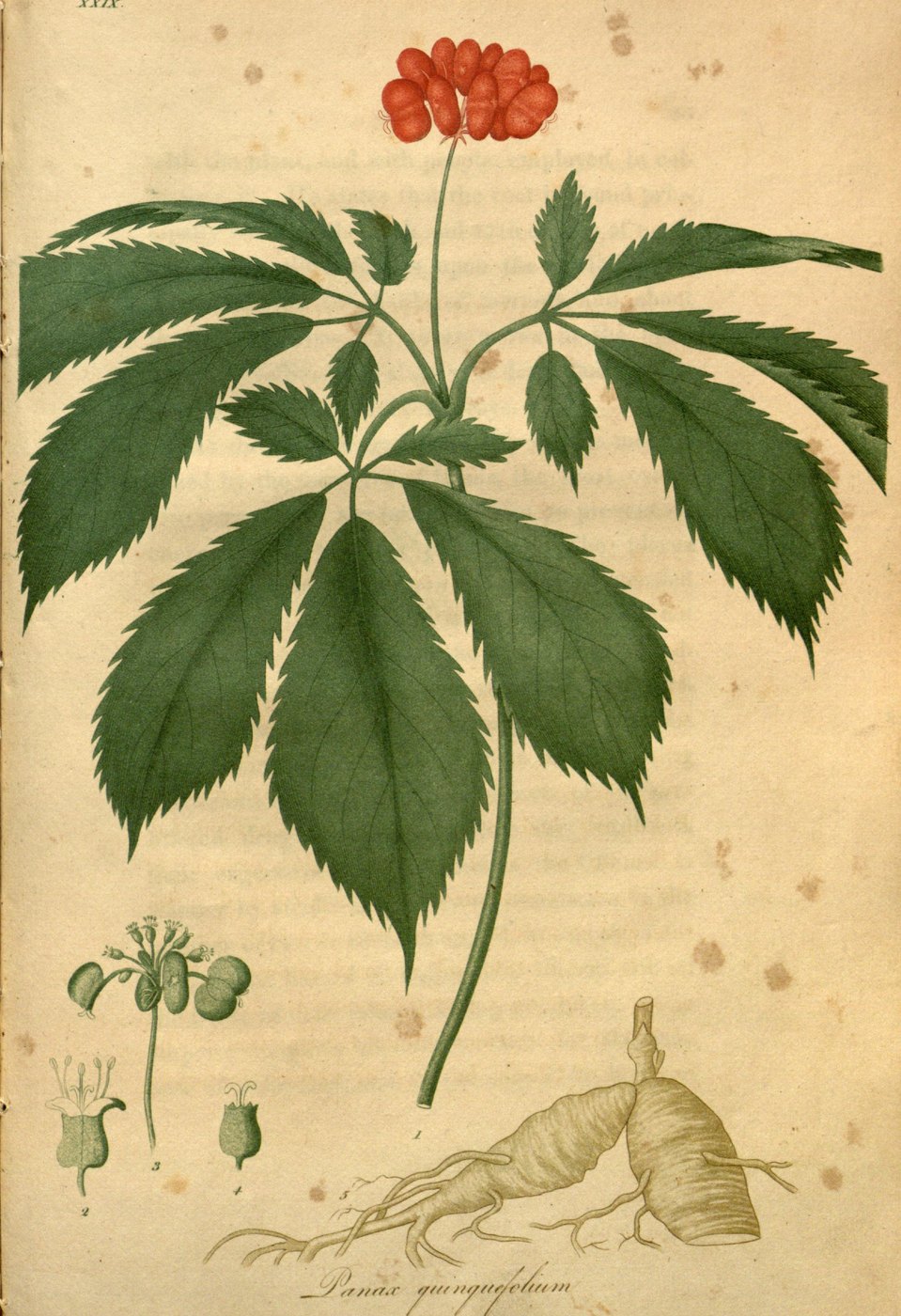
PlantGinsengAmerican ginseng, Panax quinquefolius of Linnaeus, Aralia quinquefolia; Asiatic, Chinese, or Korean ginseng, Panax ginseng; Five Fingers, Tartar Root, Red Berry, Man’s Health; Chinese jen-shen, “like a man”; Iroquois garantoquen; Ninsin of the old pharmacies
Panax quinquefolius, the ginseng of the North American woods, and its Asian kin Panax ginseng: a slow-growing herb of rich shade with three leaves of five toothed leaflets, a head of small greenish flowers, bright scarlet berries, and a fleshy, forked, man-shaped root that China has bought for its weight in silver.G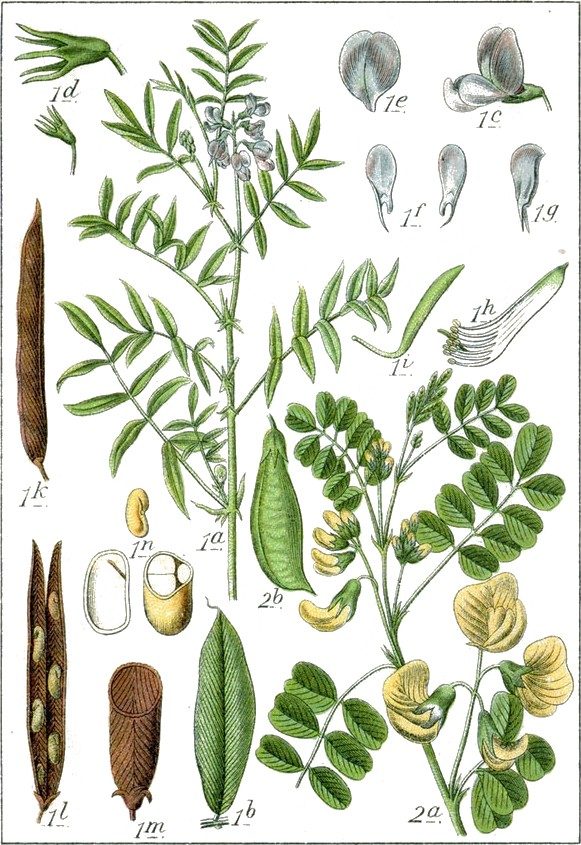
PlantGoat’s rueRuta capraria; galega
Galega officinalis, French lilac.CanaleCautionG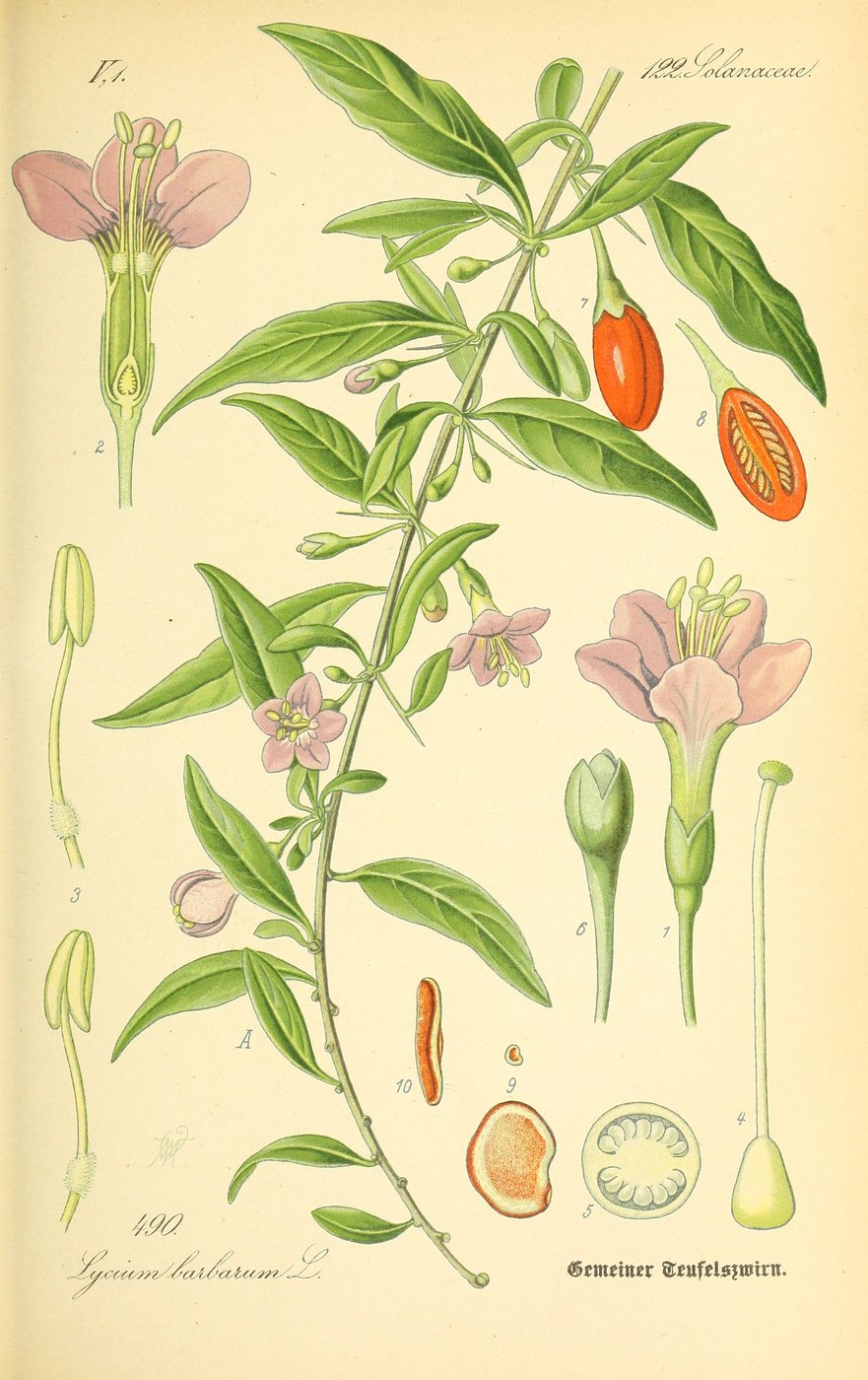
PlantGoji berryWolfberry; the Chinese kou-chi in Stuart’s spelling, its fruit yang-ju, its root bark ti-ku-p’i, its leaves t’ien-ts’ai; Lycium barbarum and Lycium chinense; German Teufelszwirn and Bocksdorn, the devil’s thread and the buck’s thorn
The scarlet berry of Lycium barbarum and Lycium chinense, thin-leaved shrubs of the nightshade family with long, rod-like, hanging branches and small violet flowers from June to autumn: a common shrub of the northern and western provinces of China, and in Europe a Mediterranean plant much planted and long since run wild.G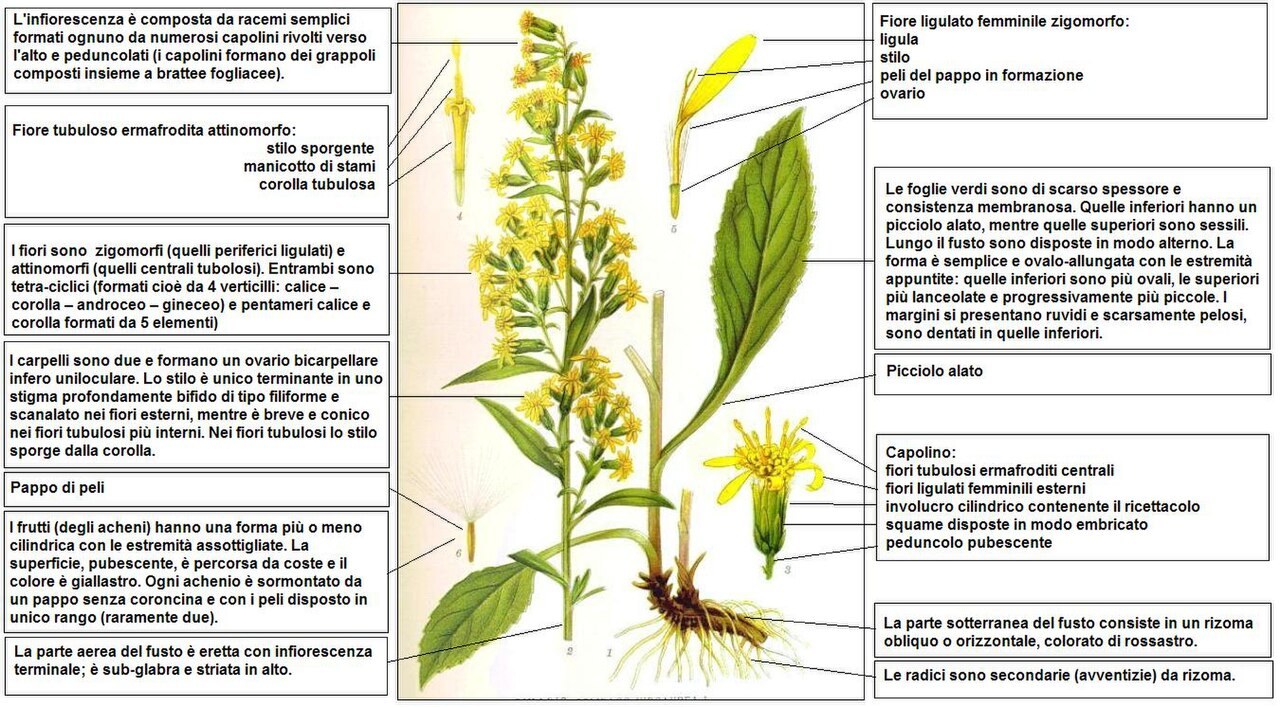
PlantGoldenrodEuropean goldenrod, woundwort, Aaron’s rod, verge d’or, Goldruthe; Solidago virgaurea L.; in pharmacy Solidaginis virgaureae herba
Solidago virgaurea, of the family Asteraceae, two to three feet high, with alternate clear green leaves and terminal panicles of golden flowers; of more than eighty species, Grieve says, it is “the only one” native to Britain. Culpeper found it in the open places of woods and copses, its small yellow flowers all turned one way and ripening into down carried off by the wind. When bruised, Grieve adds, it smells like wild carrot. The European Medicines Agency’s assessment report finds flavonoids, triterpene saponins, and the phenol glycoside leiocarposide.G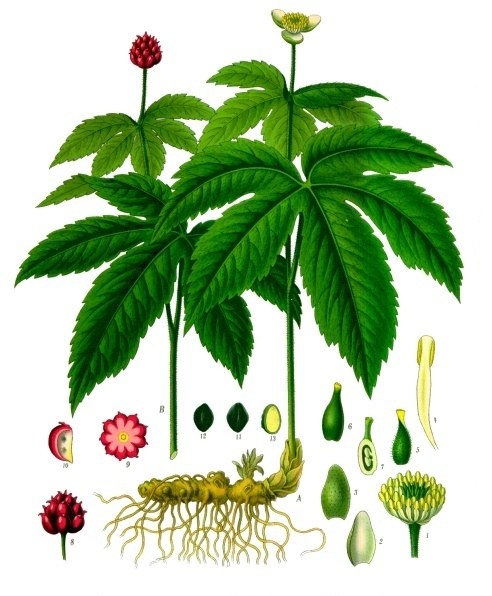
PlantGoldensealGolden seal, yellow root, orange root, yellow puccoon, ground raspberry, wild curcuma, turmeric root, Indian dye, eye root, eye balm, Indian paint, jaundice root, Warnera; Hydrastis canadensis L.
Hydrastis canadensis, a small perennial herb of the buttercup family, Ranunculaceae, native to Canada and the eastern United States, growing in rich soil in shady woods. Its knotted rhizome is bright yellow; its fruit, a head of small crimson berries, has much the appearance of a raspberry, “whence the name ‘Ground Raspberry,’” Grieve notes, but is not edible. The rhizome is the drug. Grieve gives its chief constituents as the alkaloids berberine, the yellow colouring matter, and hydrastine, with a third, canadine.G
PlantGorseFurze
Ulex europaeus. A spiny, strongly scented, yellow-flowered shrub of heath and common land.G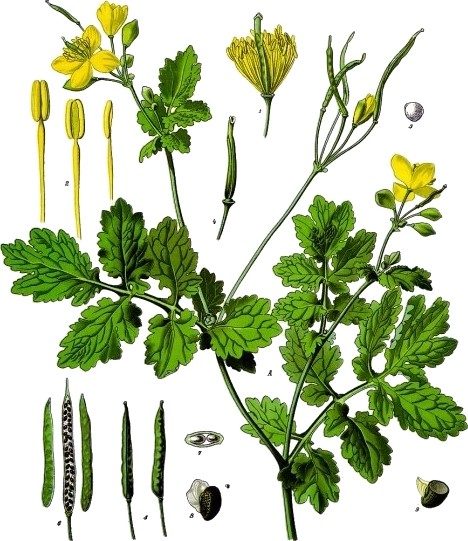
PlantGreater celandineChelidonia maggiore
Chelidonium majus.CanaleCautionG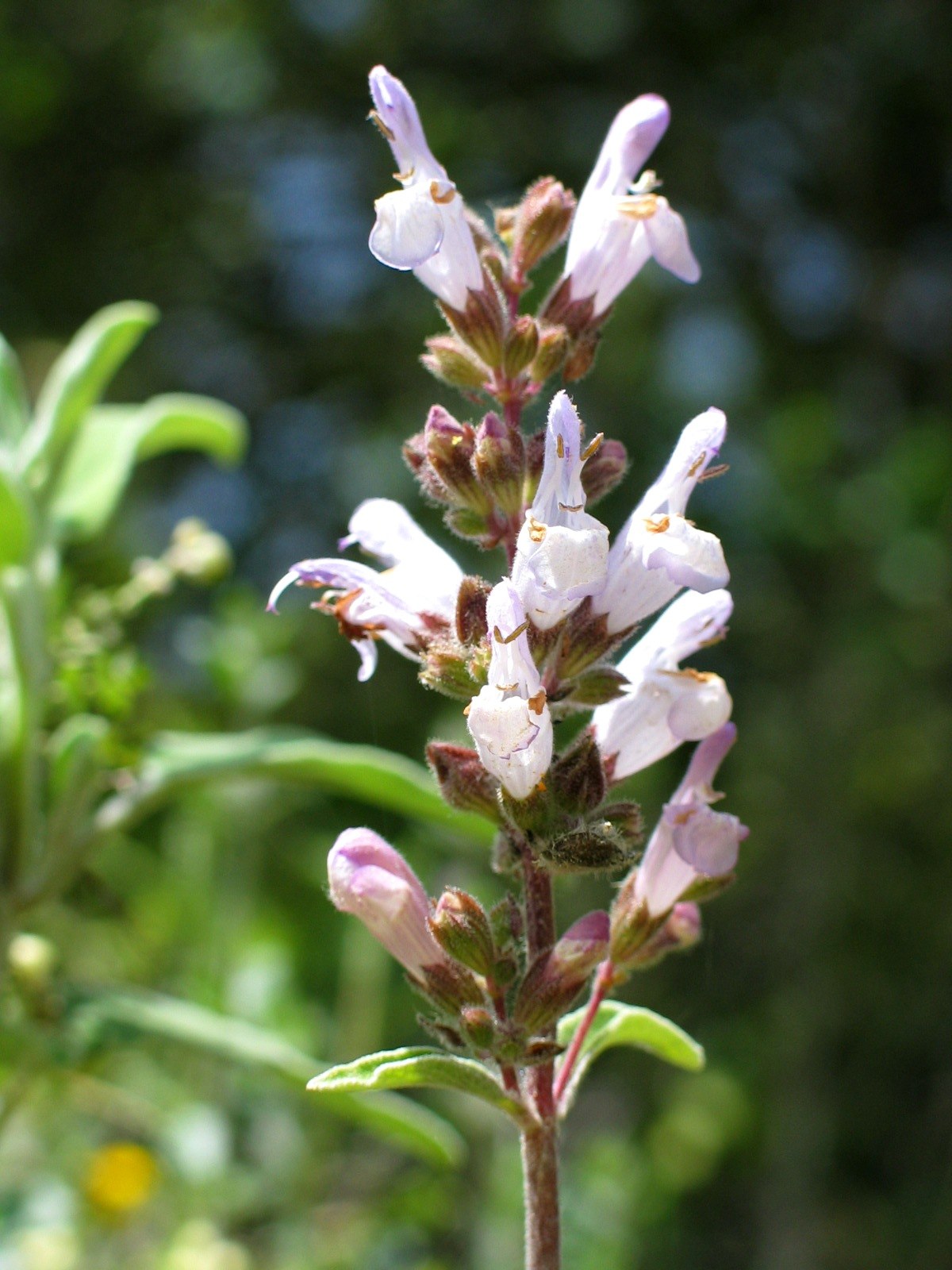
PlantGreek sageThree-lobed sage; perhaps the ancient elelisphakon; Salvia triloba L.f.; Salvia fruticosa Mill.; in pharmacy Salviae trilobae folium
Salvia fruticosa, an evergreen shrub of the family Lamiaceae up to a metre high, native to the eastern Mediterranean from Sicily and southern Italy and Cyrenaica through Greece to western Syria, and naturalised in Spain and Portugal, where the European Medicines Agency’s assessment report thinks it was probably brought by ancient navigators. It is told from garden sage by its leaves, sometimes with one or two small lobes at the base, densely felted, grey above and white beneath. The leaf’s essential oil is chiefly 1,8-cineole, with camphor and a little thujone.G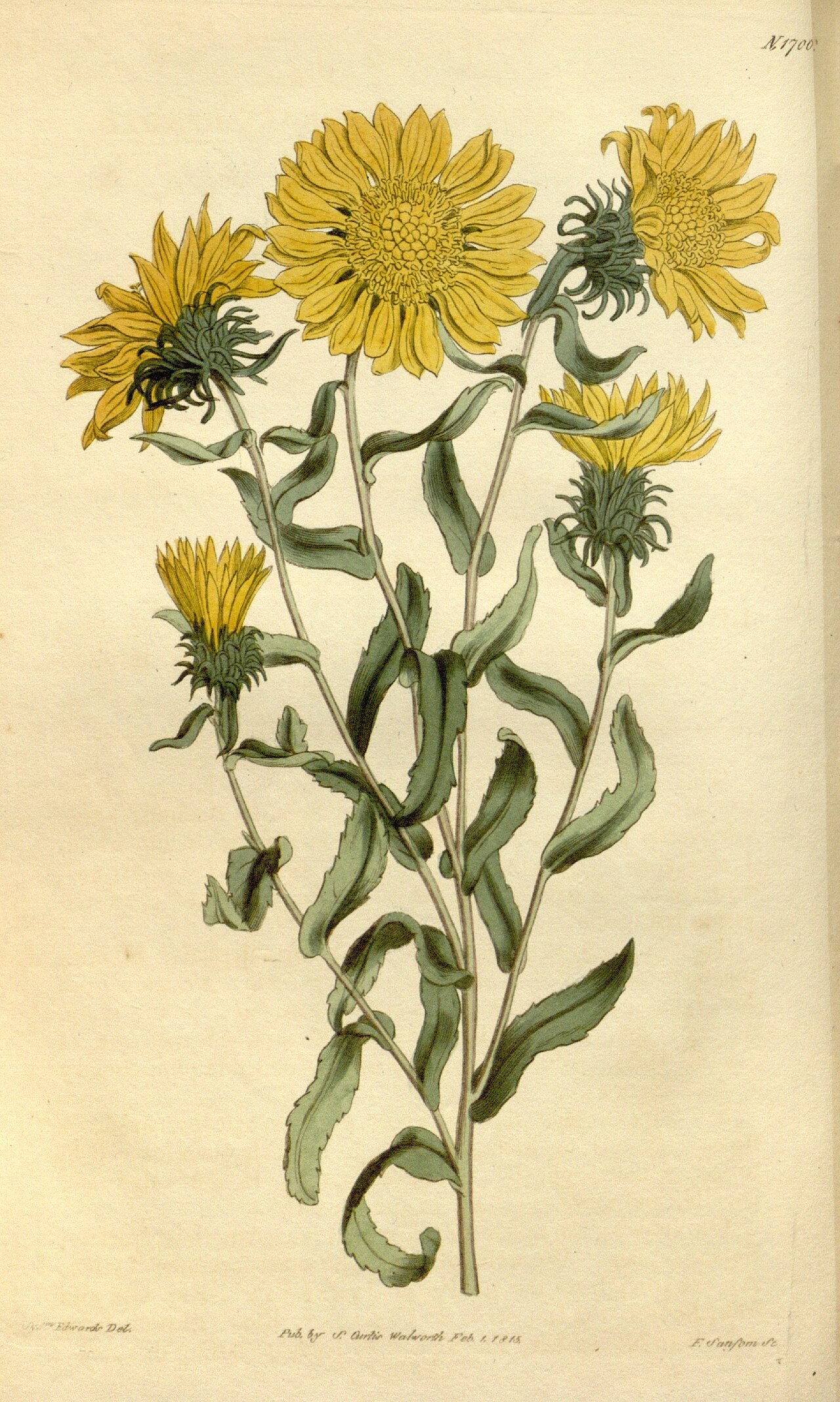
PlantGrindeliaGumweed, gum plant, California gum plant, hardy grindelia, scaly grindelia, rosin weed; Grindelia robusta Nutt., Grindelia squarrosa (Pursh) Dunal, Grindelia humilis Hook. & Arn., Grindelia camporum Greene; in pharmacy Grindeliae herba
The dried flowering tops and leaves of several gumweeds of the western United States, of the family Asteraceae, perennial or biennial herbs or small shrubs whose early growth is “covered with a glutinous varnish.” Grieve describes round, yellow, smooth stems, alternate light-green, coarsely toothed leaves clasping the stem, and large solitary yellow flower-heads, the taste bitter and slightly aromatic; the drug may hold as much as 21 per cent of resins. Until the work of Perredes in 1906, she notes, the drug was thought to come from Grindelia robusta, which is in fact rarely used.G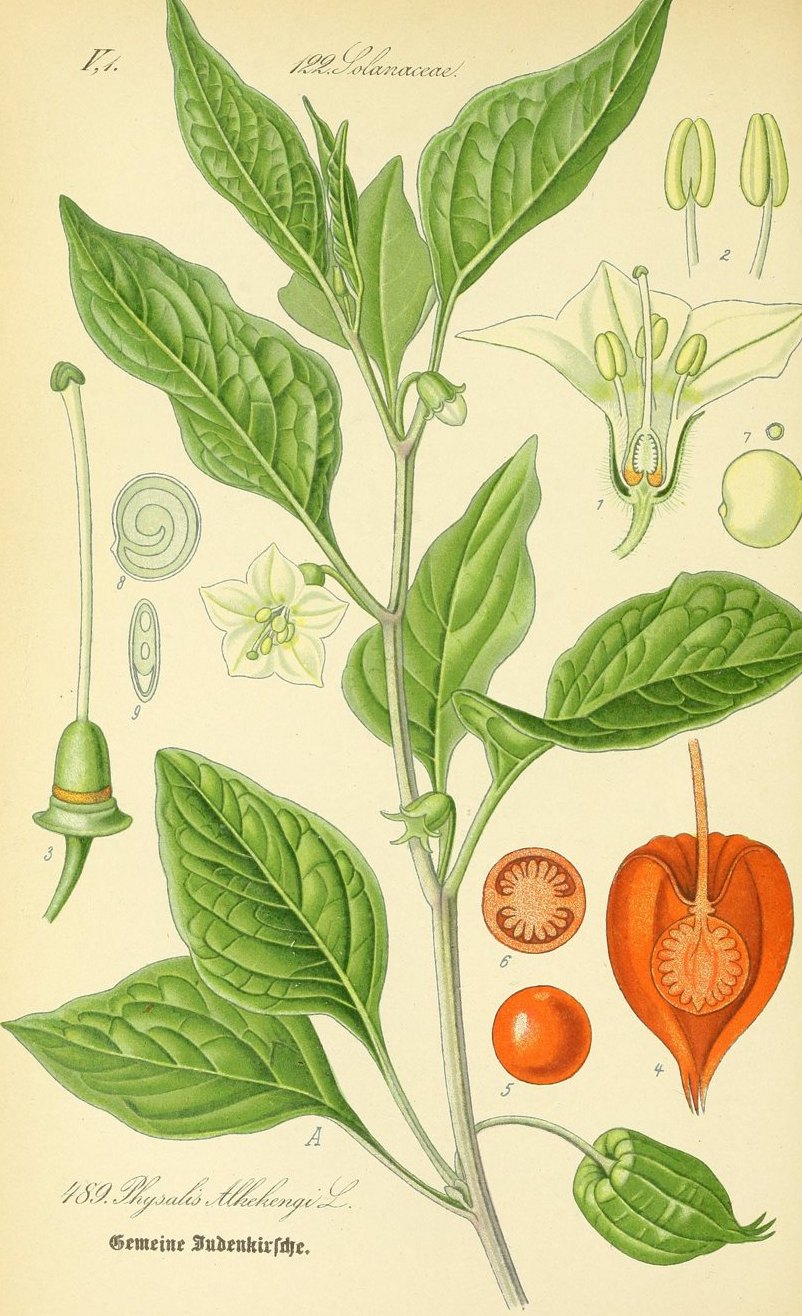
PlantGround cherryWinter cherry, strawberry tomato, Cape gooseberry, goldenberry, Poha; yellow henbane; Alkekengi of the old shops; Judenkirsche and Schlutte in German; Physalis alkekengi, Physalis viscosa, Physalis peruviana
Physalis, the ground cherries: nightshades whose five-cleft calyx swells after the flower falls into a papery bladder, the Greek phusa, that encloses a round berry, red in the European winter cherry and yellow or orange in the American ground cherry.G
PlantGround ivyAlehoof; gill
Glechoma hederacea. A low, creeping weed of the mint family with small purple flowers, common in shaded grass.G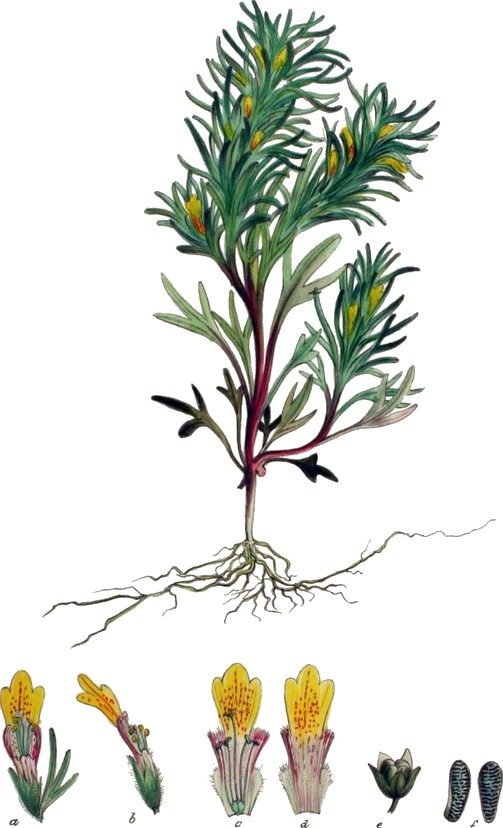
PlantGround pineCamepitio
Ajuga chamaepitys, yellow bugle, distinct from arthritica (note XLIX).CanaleG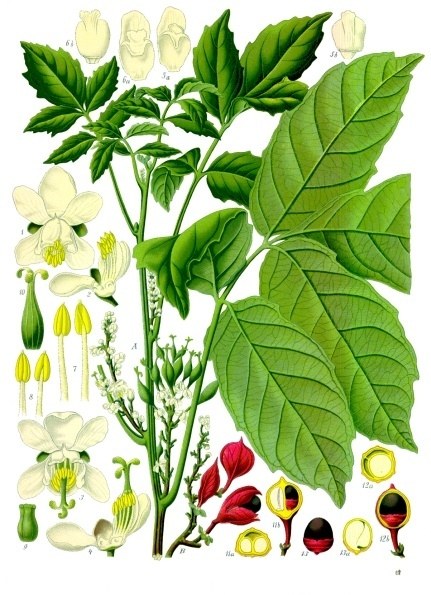
PlantGuaranaGuarana bread, Brazilian cocoa, uabano, uaranzeiro; Paullinia sorbilis of Martius; Paullinia cupana Kunth; in pharmacy Paulliniae semen
Paullinia cupana, a climbing shrubby vine of the family Sapindaceae native to the Amazon basin, whose pear-shaped fruit holds a seed which Grieve likens to a small horse chestnut half enclosed in a flesh-coloured aril. Guarana proper is the paste of the roasted, shelled, pounded seeds, kneaded with water into a dough, rolled into cylinders, and dried over a slow fire; King’s Dispensatory describes the sticks as hard, dark reddish-brown, with a slight odour “resembling that of chocolate” and an astringent, bitter taste. The genus takes its name from C. F. Paullini, a German medical botanist.G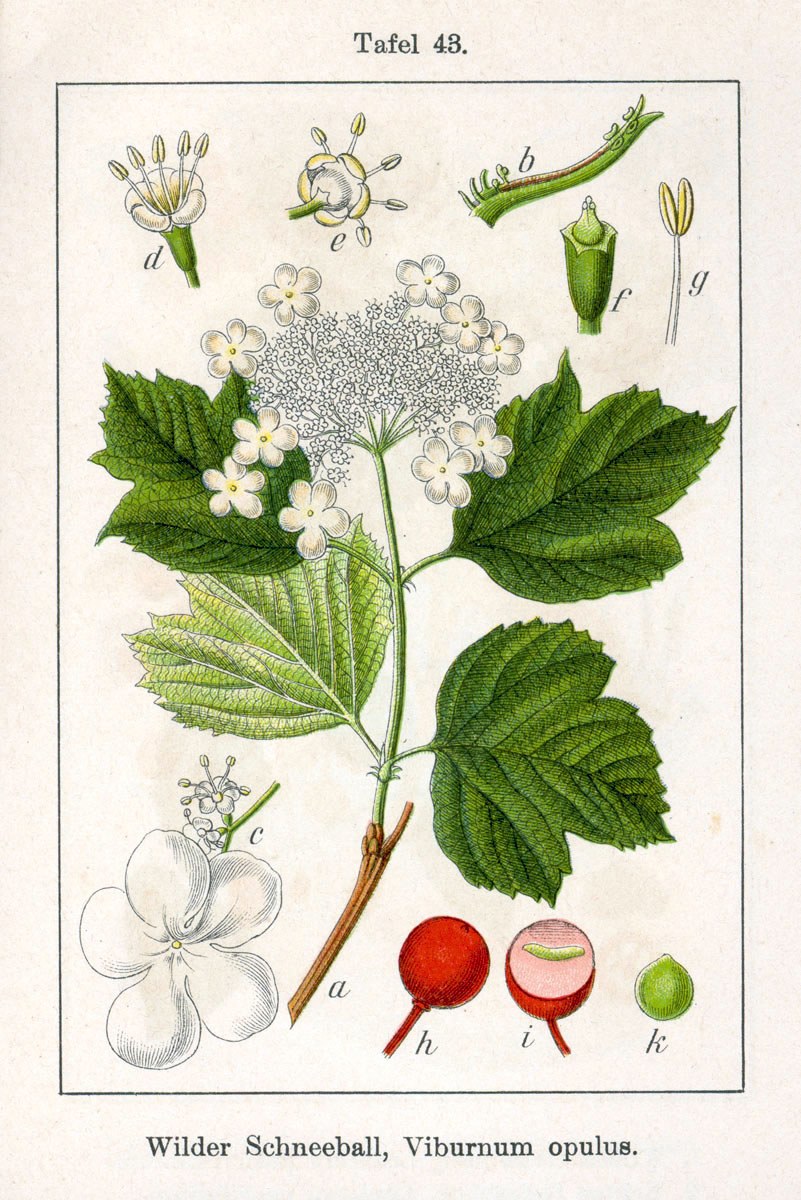
PlantGuelder roseCramp bark, snowball tree, king’s crown, high cranberry, highbush cranberry, red elder, rose elder, water elder, May rose, Whitsun rose, dog rowan tree, silver bells, Whitsun bosses, gaitre berries; Viburnum opulus L.
Viburnum opulus, a shrub five to ten feet high of English copses and hedgerows, rare in Scotland, and native also to low ground in the eastern United States; Grieve places it in the elder’s family, Caprifoliaceae. Its flat heads of white flowers have an outer ring of large showy blossoms that are sterile, around small fertile ones, and are followed by drooping clusters of shining, translucent red berries. The name comes from Gueldersland, the Dutch province where it was first cultivated. The bark, sold as cramp bark, is the drug; Grieve gives its active principle as a bitter glucoside, viburnine.H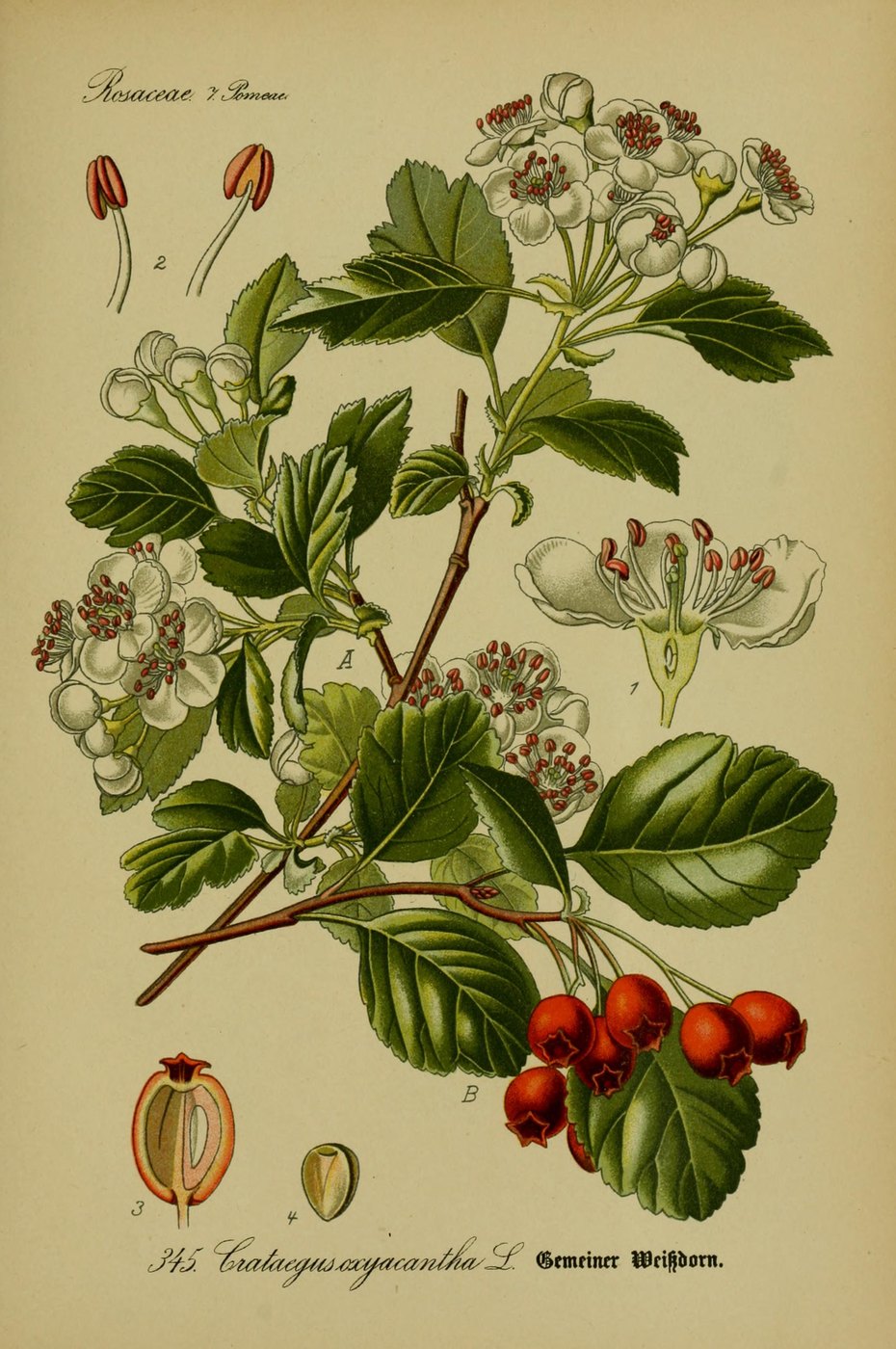
PlantHawthornMay, the May tree
Crataegus monogyna. The May tree, a thorned hedgerow tree whose white blossom marks the start of May in Britain and Ireland.H
PlantHazelCorylus
Corylus avellana.H
PlantHeartseaseViola tricolor; love-in-idleness, pansy
Viola tricolor, the wild pansy of fields and banks, purple, white, and yellow.H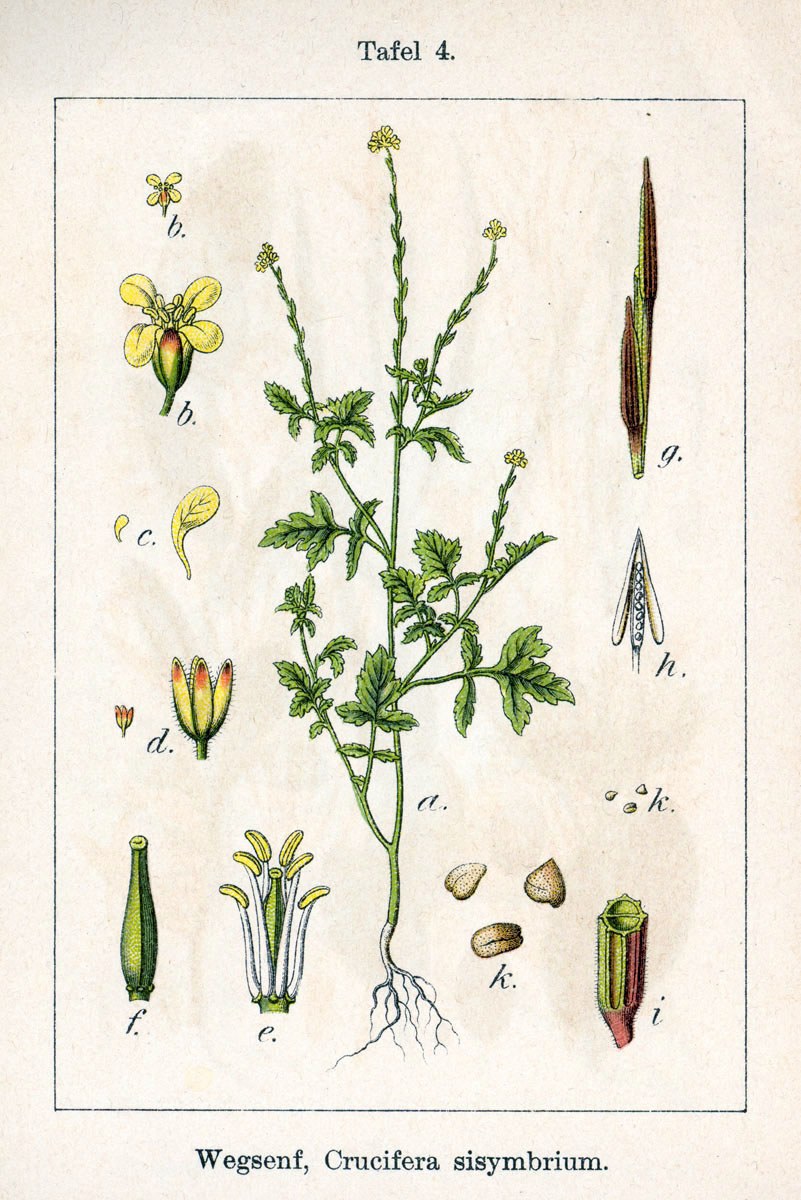
PlantHedge mustardSinger’s plant, French herbe aux chantres; Herba Erysimi; Sisymbrium officinale (L.) Scop. (Erysimum officinale L.); perhaps the erusimon of Dioscorides; in pharmacy Sisymbrii officinalis herba
Sisymbrium officinale, an annual of the family Brassicaceae, of Eurasian origin, growing by ways and hedge-sides. Culpeper describes one blackish-green stalk, “tough, easy to bend, but not to break,” rough leaves much cut on the edges, small yellow flowers in long spikes, and small round pods held upright and close to the stalk. King’s Dispensatory calls it “an unsightly weed” whose taste faintly resembles mustard, the seeds the most pungent part.H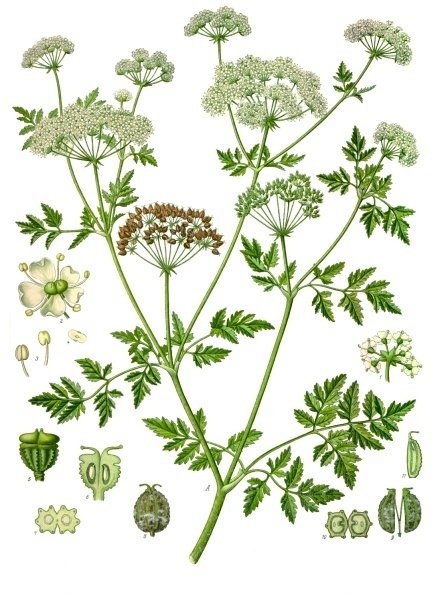
Plant HemlockCicuta; Greek kōneion
Poison hemlock, Conium maculatum, of the carrot family.CautionH
PlantHempCannabis
Cannabis sativa.H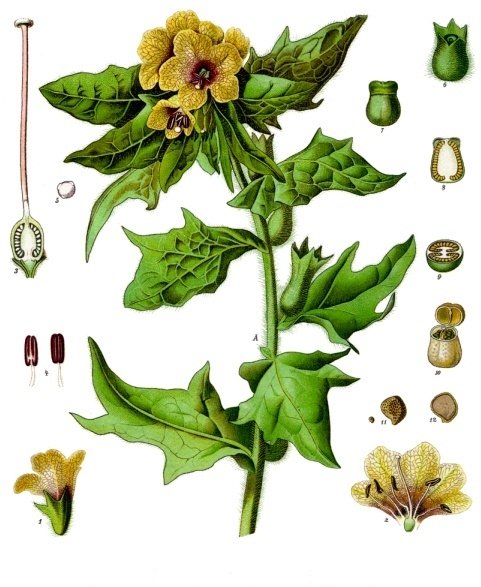
Plant HenbaneHyoscyamus; Greek hyoskyamos, “hog’s bean”
Hyoscyamus niger, of the nightshade family.CautionH
PlantHerb bennetWood avens; herba benedicta, the blessed herb
Geum urbanum, of the rose family, with a root that smells of cloves.H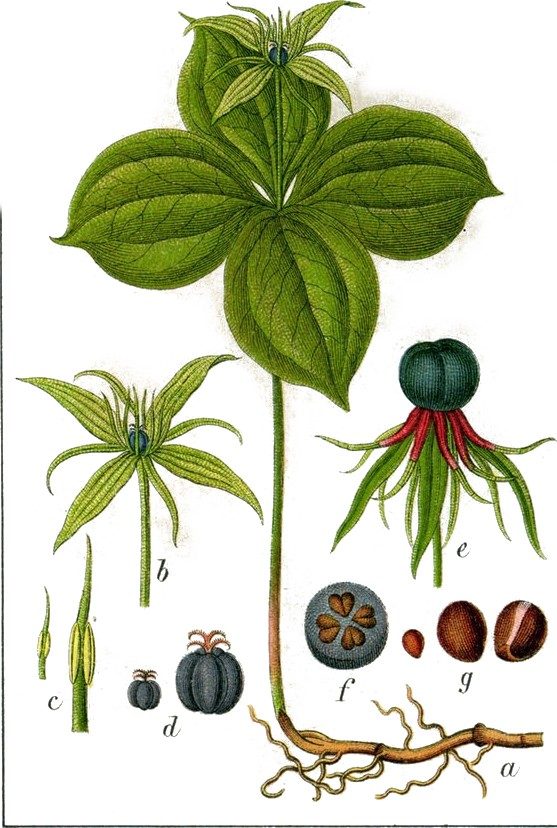
PlantHerb ParisHerba Paris
Paris quadrifolia, true-lover’s knot, a woodland plant with a single black berry.CanaleCautionH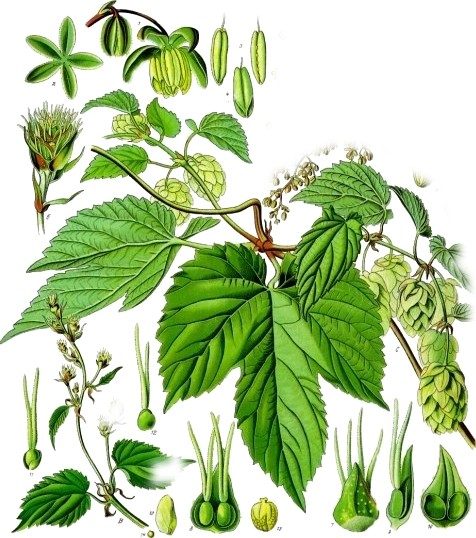
PlantHopLupoli
Humulus lupulus.CanaleH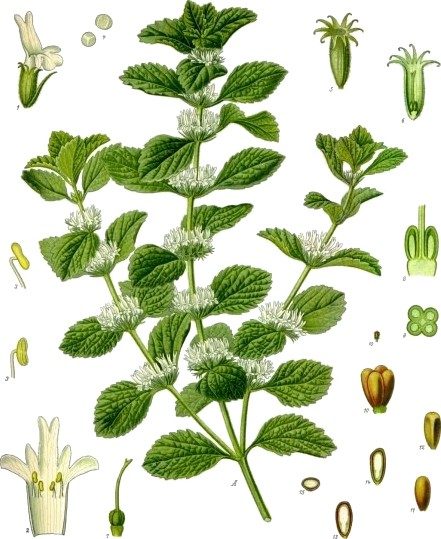
PlantHorehoundMarrubio
White horehound, Marrubium vulgare.CanaleH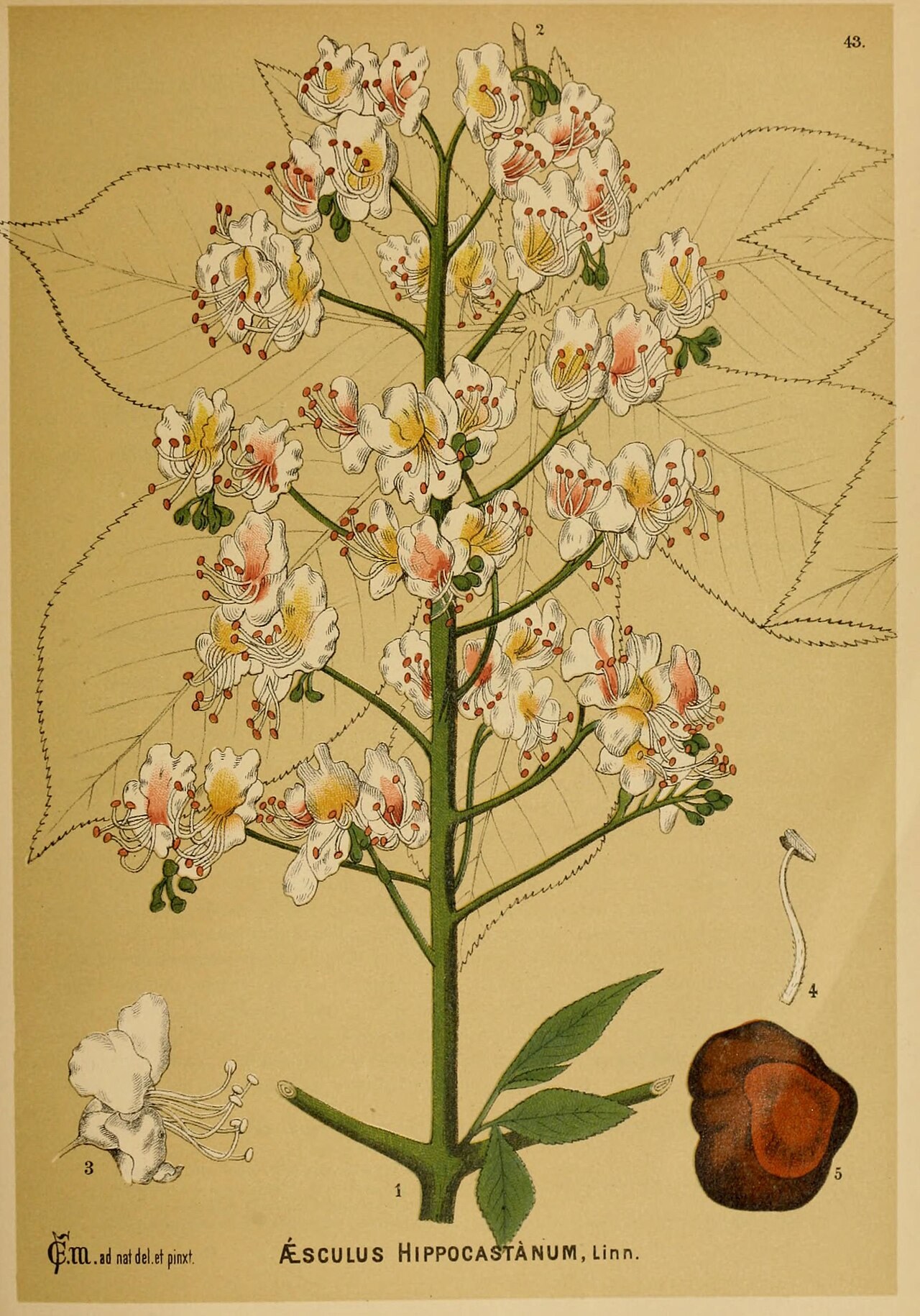
PlantHorse chestnutAesculus hippocastanum L.; Hippocastanum vulgare Gaertn.; in pharmacy Hippocastani semen, the seed, and Hippocastani cortex, the bark
Aesculus hippocastanum, a tall, fast-growing tree of the family Sapindaceae, with an erect, columnar trunk, smooth grey-green bark, and large leaves of five or seven toothed leaflets spreading like the fingers of a hand. Its flowers, mostly white with a reddish tinge, grow in dense, erect spikes, and its fruit is a brown nut with “a very shining, polished skin” in a spiny green husk that splits in three. Grieve, who says it was introduced into England about the middle of the sixteenth century, insists it is “an entirely different tree from the Sweet Chestnut, to which it is not even distantly related.”H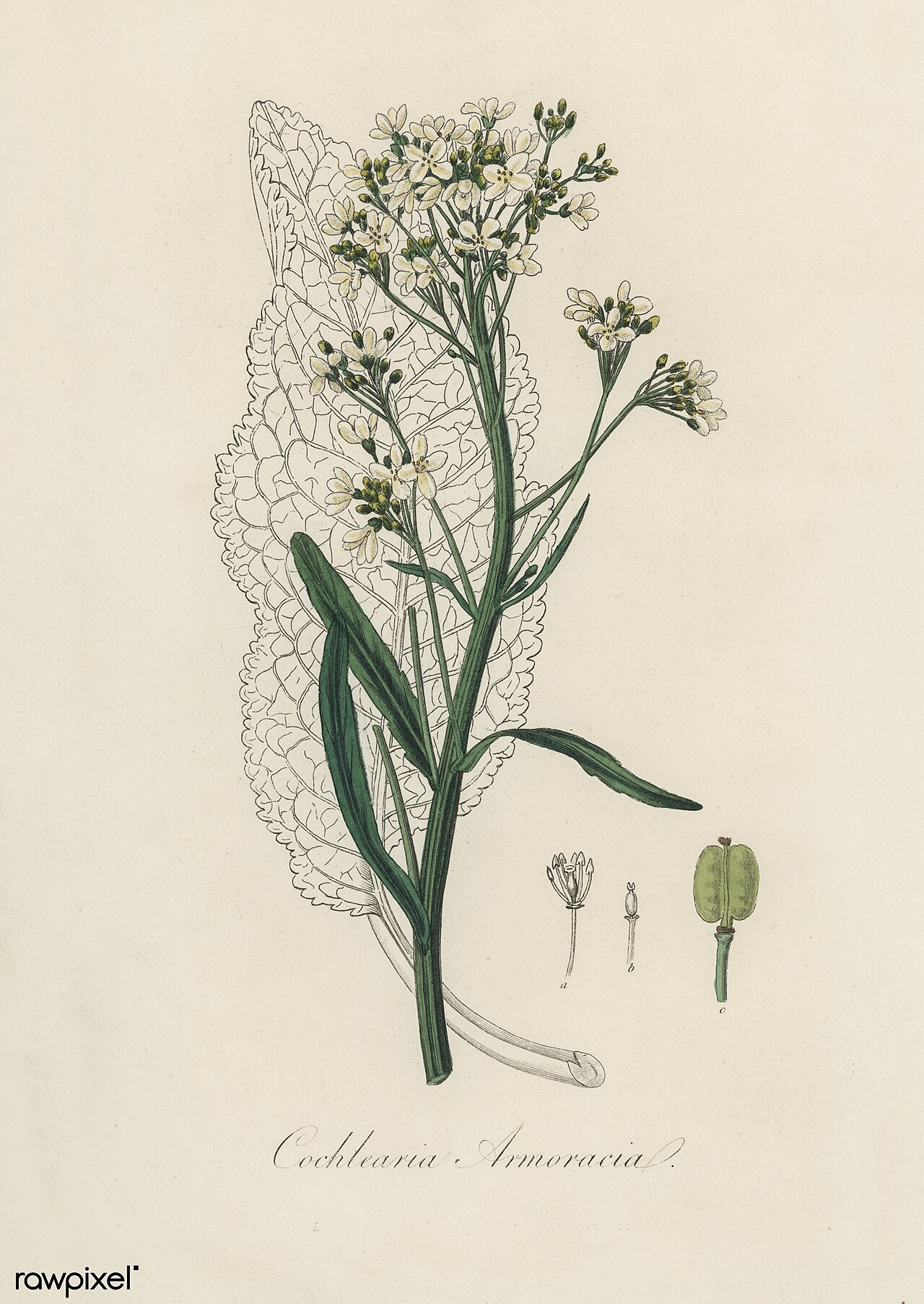
PlantHorseradishMountain radish, great raifort, red cole; French moutarde des Allemands; Gerard’s Raphanus rusticanus; Cochlearia armoracia L., now Armoracia rusticana
Armoracia rusticana, of the family Cruciferae, long cultivated and of obscure origin; Grieve reports that some authorities think it native to eastern Europe, from the Caspian through Russia and Poland to Finland. The fresh root is the drug. Unbroken it has no smell; scraped or bruised it gives off its pungent oil, because the glucoside sinigrin and the enzyme myrosin that splits it lie in separate cells and meet only when the cells are crushed, producing allyl isothiocyanate, the same oil as black mustard’s. Boiling makes it vapid and inert.H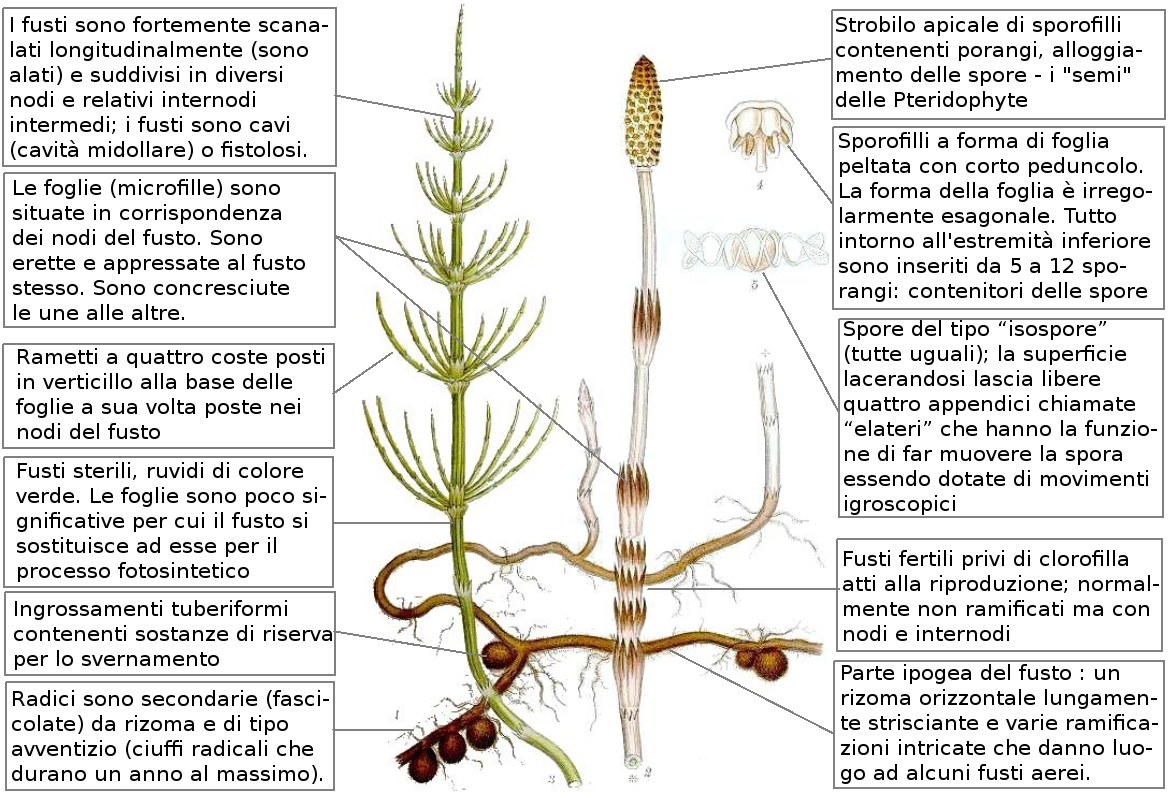
PlantHorsetailField horsetail, shave-grass, bottle-brush, paddock-pipes, pewterwort; Cauda equina of the old pharmacopoeias; Equisetum arvense of Linnaeus; the Greek hippouris of Dioscorides; in pharmacy Equiseti herba
Equisetum arvense, the commonest British horsetail, a rush-like plant of cornfields and wet meadows from a creeping rootstock, with no true leaves: its jointed, grooved, hollow stems end at each joint in a toothed sheath. A short, pale fertile stem with a cone appears in early spring and soon withers; the green barren stems that follow carry whorls of slender jointed branches, and these are the medicine. The name, Grieve says, is from Latin equus, horse, and seta, bristle, for the bristly look of the stems.H
PlantHoundstongueCynoglossum, “dog’s tongue”
Cynoglossum officinale, of the borage family. A rough, bristly plant of waste ground and pastures, named, Grieve says, for the shape and texture of its leaves.CautionH
Plant HouseleekSempervivum; Jupiter’s beard
Sempervivum tectorum.H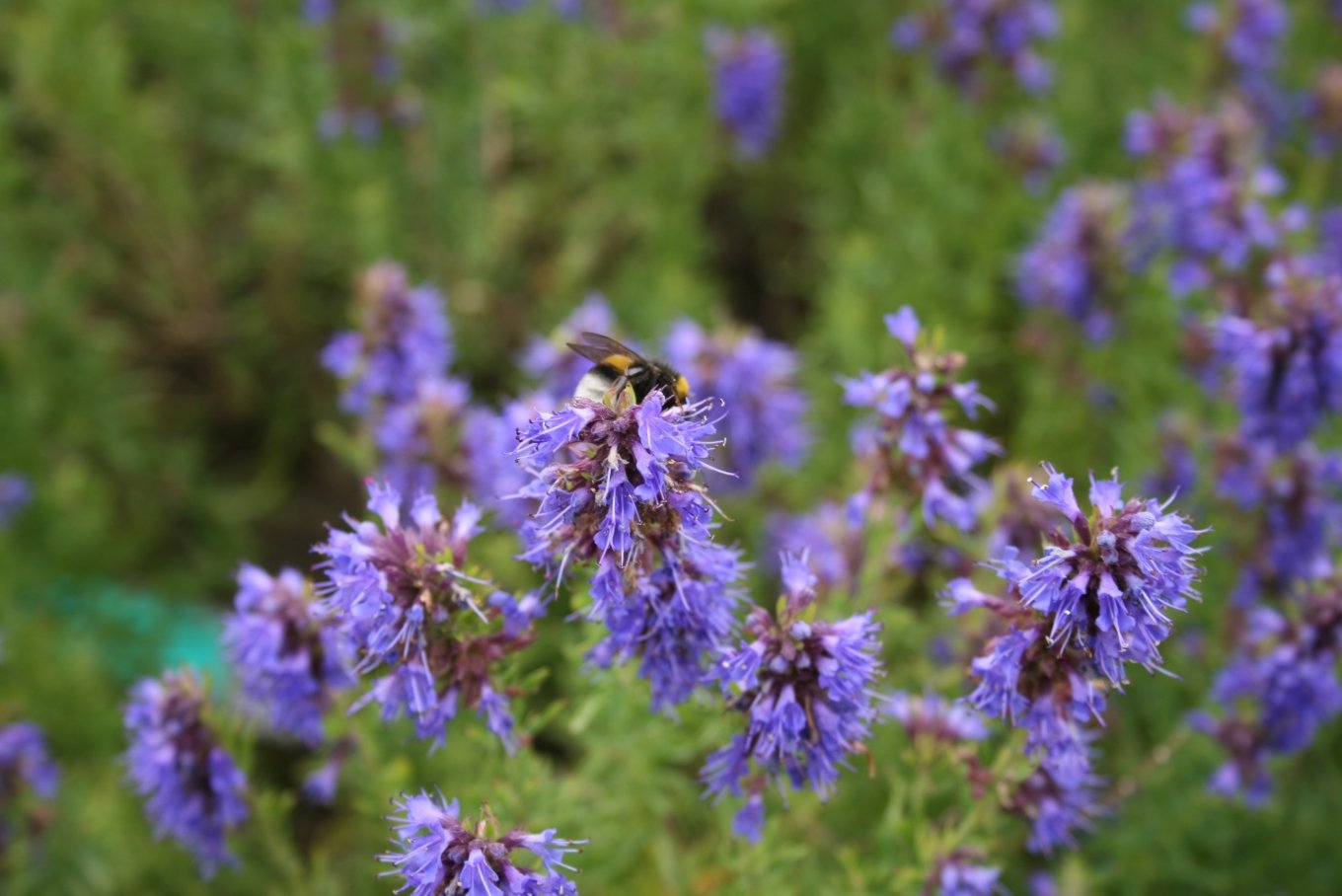
Plant HyssopGreek hyssopos; Hebrew azob, “a holy herb,” in Grieve’s account
Hyssopus officinalis; the hyssop of Scripture was probably a wild marjoram, Origanum syriacum.I
PlantIpecacuanhaIpecac
The root of Psychotria ipecacuanha (Cephaelis ipecacuanha) of Brazil.CautionI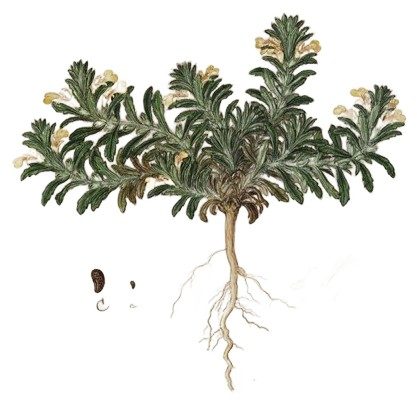
PlantIvaIua
Ajuga iva; see Arthritica.CanaleI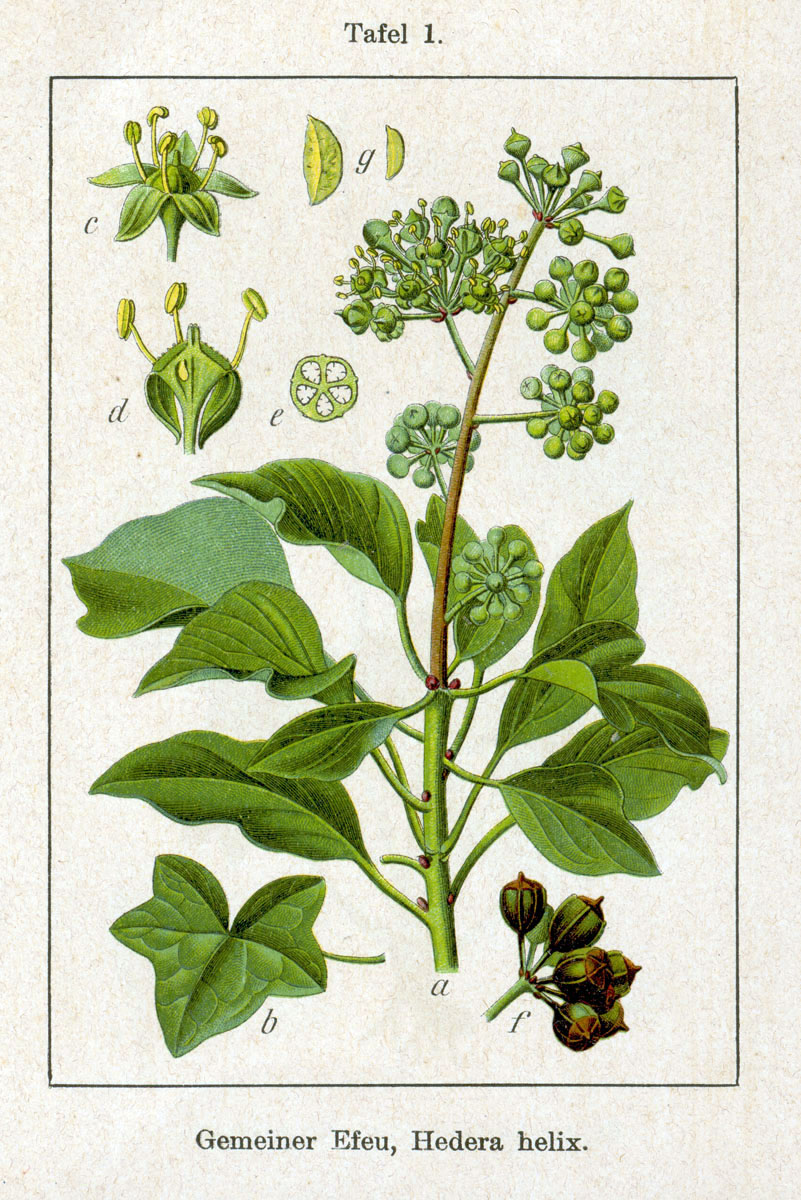
PlantIvy leafCommon or English ivy; Hedera helix of Linnaeus; in pharmacy Hederae helicis folium
Hedera helix, the evergreen climber of Europe and northern and central Asia, with dark, glossy, angular leaves, which clings to bark and walls by root-like fibres ending in small discs. Grieve notes that only when it climbs above its support does it flower, the leaves of the flowering shoots turning oval and entire; the yellowish-green flowers open late in autumn and feed the bees when nothing else will, and the black berries ripen the following spring. The leaf is the medicine.J
PlantJalapJalapa; the root of Xalapa
Ipomoea purga, a Mexican climbing bindweed with a tuberous root, named from the town of Xalapa, where it abounds.CautionJ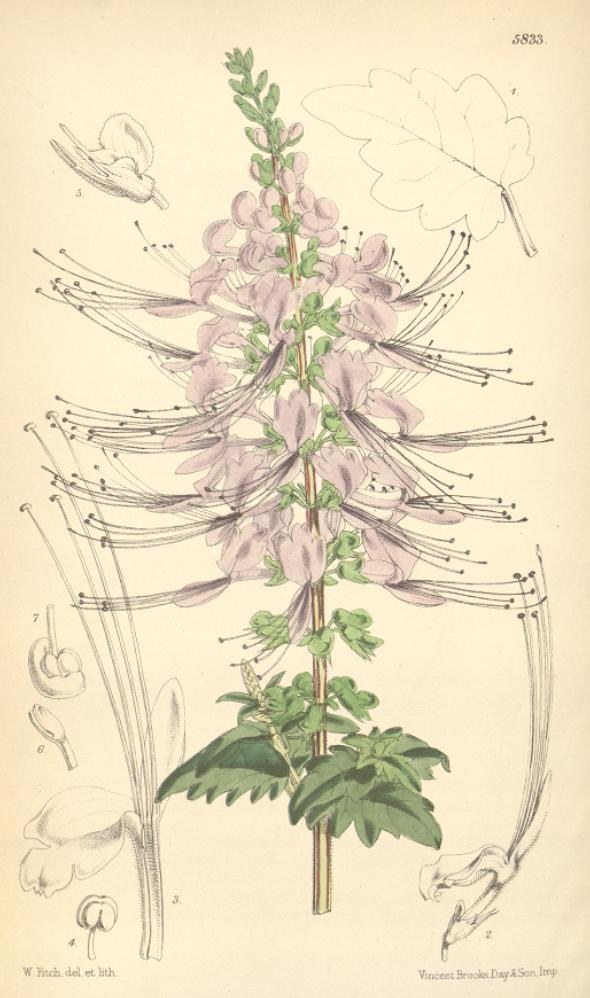
PlantJava teaOrthosiphon stamineus Benth. of Kirtikar and Basu; Ocimum grandiflorum Blume; Orthosiphon aristatus (Blume) Miq.; in pharmacy Orthosiphonis folium
Orthosiphon aristatus, a herb of the family Lamiaceae forty to eighty centimetres high, found from tropical Asia to tropical Australia. Kirtikar and Basu describe slender undershrubs with four-angled stems, leaves in distant pairs, and white or purplish flowers with slender stamens twice as long as the corolla, and quote Hooker in 1870 on its range, “from Assam and Burma to the Philippine islands, and from the Nicobars and Siam to Java, Borneo” and north-east Australia: “It is a stone plant, a profuse flowerer, and of very pretty appearance.” The drug is the leaves and stem tips gathered in flower.J
PlantJavanese turmericTemoe lawak; Curcuma xanthorrhiza Roxb. (C. xanthorrhiza D. Dietrich); in pharmacy Curcumae xanthorrhizae rhizoma
The dried rhizome, cut in slices, of Curcuma xanthorrhiza, a relative of turmeric in the family Zingiberaceae. The European Medicines Agency’s assessment report finds two characteristic classes of constituent: 1 to 2 per cent of curcuminoids, curcumin among them, and 3 to 12 per cent of volatile oil, made mainly of sesquiterpenes and of xanthorrhizol, at about 44.5 per cent of the oil. The presence of xanthorrhizol distinguishes it from common turmeric, Curcuma longa.J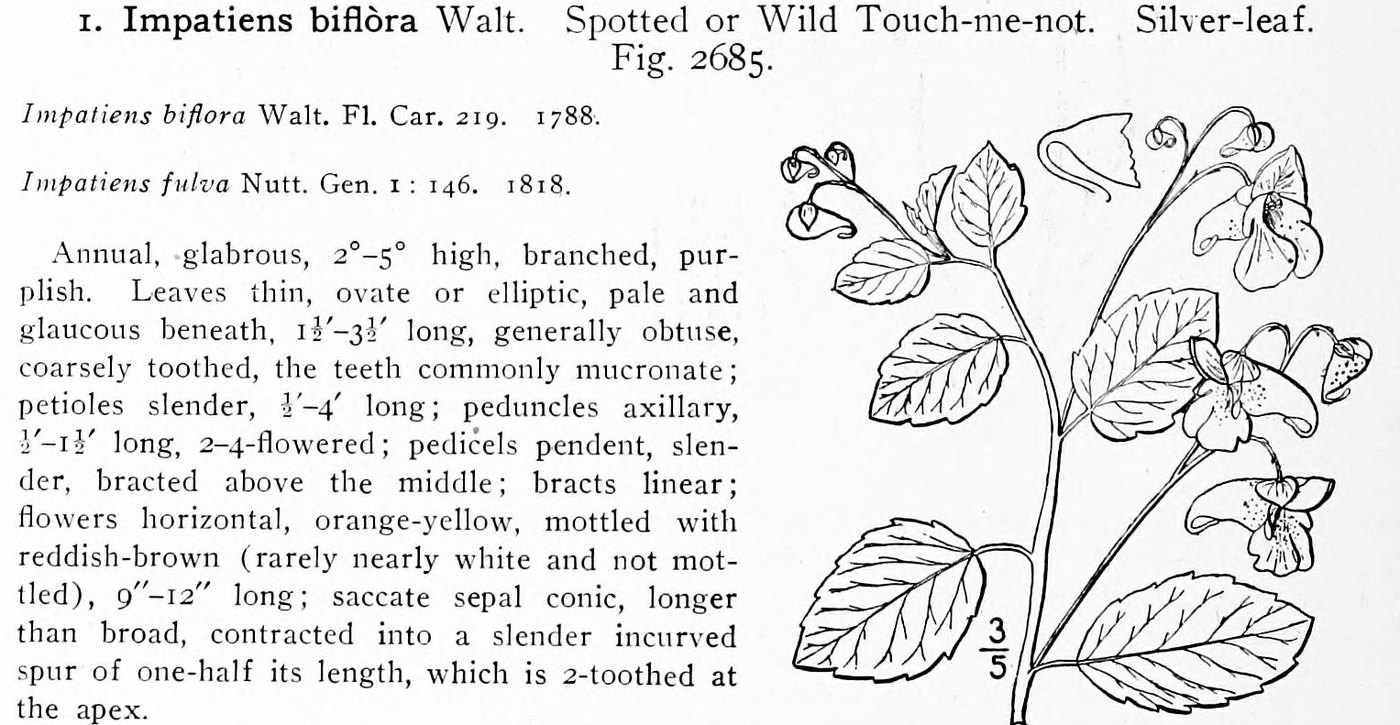
PlantJewelweedSpotted touch-me-not, wild celandine, slippers, quick-in-the-hand, weathercocks; Impatiens biflora of Walter, Impatiens capensis of Meerburgh, Impatiens fulva; the Ojibwe wesa’wûs ga’skonêk, yellow light; the Potawatomi wasawa’shiak, yellow slippery
Impatiens capensis, the orange-flowered touch-me-not of wet shady ground across the eastern and midwestern United States and Canada, a succulent annual whose spurred flowers hang like slippers and whose ripe pods burst at a touch: the plant the tribes rubbed on nettle stings and poison ivy, and the one plant of the Midwestern folk pharmacy that has been put to a controlled test.J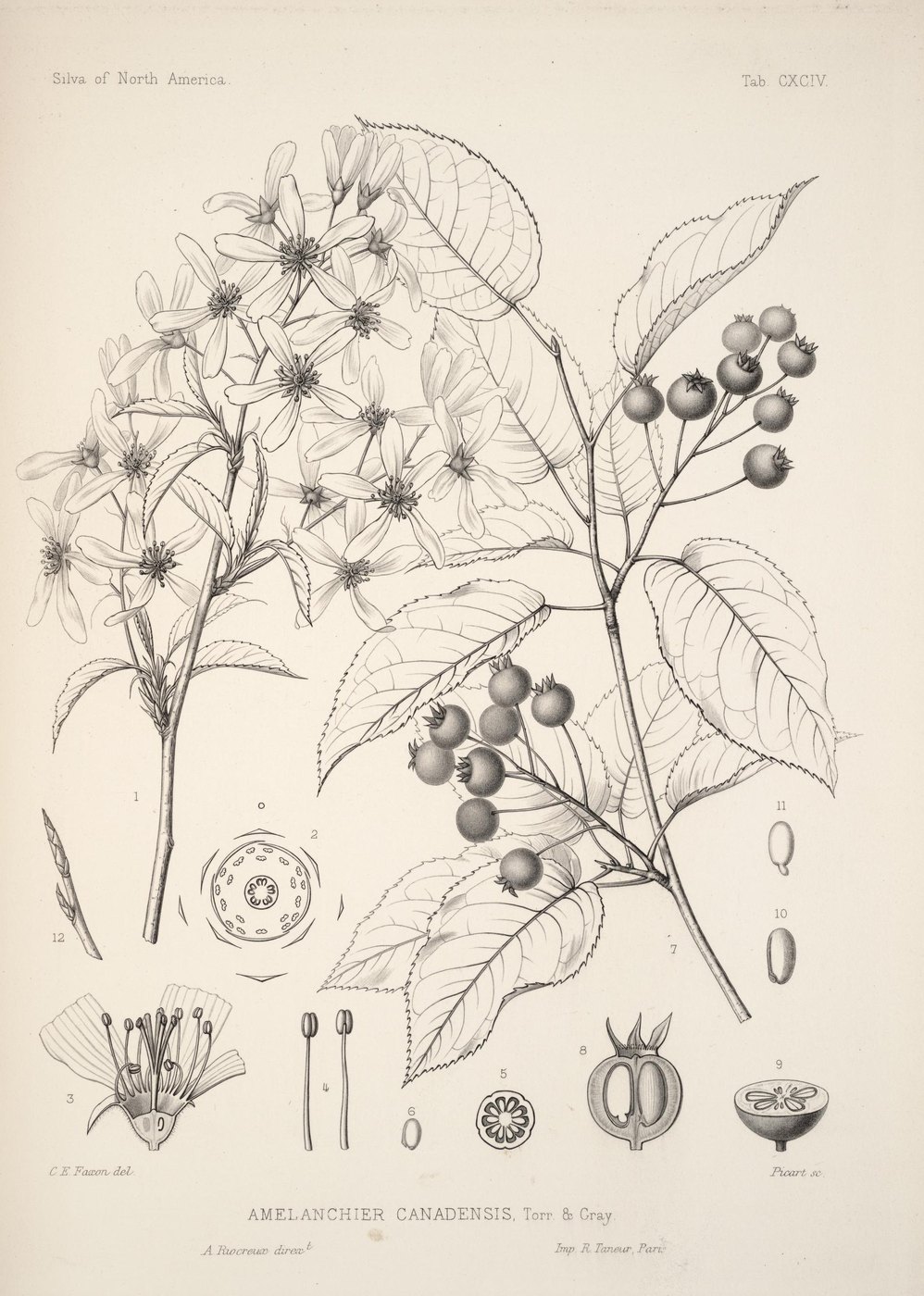
PlantJuneberryServiceberry, shadbush, Saskatoon; Amelanchier canadensis of Medicus, Mespilus canadensis of Linnaeus, Pyrus Botryapium, Aronia Botryapium; Amelanchier laevis, Amelanchier alnifolia; the Ojibwe gozîgagô’mînûn, thorny berry; the Potawatomi bosîkwa’komînûn
The shadbushes of the rich upland woods, small trees or tall shrubs that open their white strap-petalled flowers in loose racemes as the leaves unfold, from the end of March in the South to the end of May in the North, and ripen in early summer a sweet edible fruit, red at first and dark purple with a bloom when ripe. Amelanchier canadensis ranges from Newfoundland to Florida and west to Minnesota, Nebraska, and Kansas, growing with the oaks, hickories, sugar maples, and birches.J
Plant JuniperJuniperus; French genévrier
The berries and wood of Juniperus communis.K
PlantKavaKava kava, ava, ava pepper, intoxicating pepper; Macropiper methysticum Miq.; Piper methysticum G. Forst.; in pharmacy Piperis methystici rhizoma
Piper methysticum, a shrub of the pepper family Piperaceae about six feet high, which King’s Dispensatory describes as somewhat resembling bamboo in growth, native and commonly cultivated in the South Sea Islands, with heart-shaped leaves and small flowers on slender spikes. The drug is the peeled, dried rhizome, in Grieve’s description whitish or grey-brown, starchy, with a faint pleasant odour and a bitter, pungent, aromatic taste. Its active constituents, LiverTox records, are the kavapyrones or kavalactones.CautionK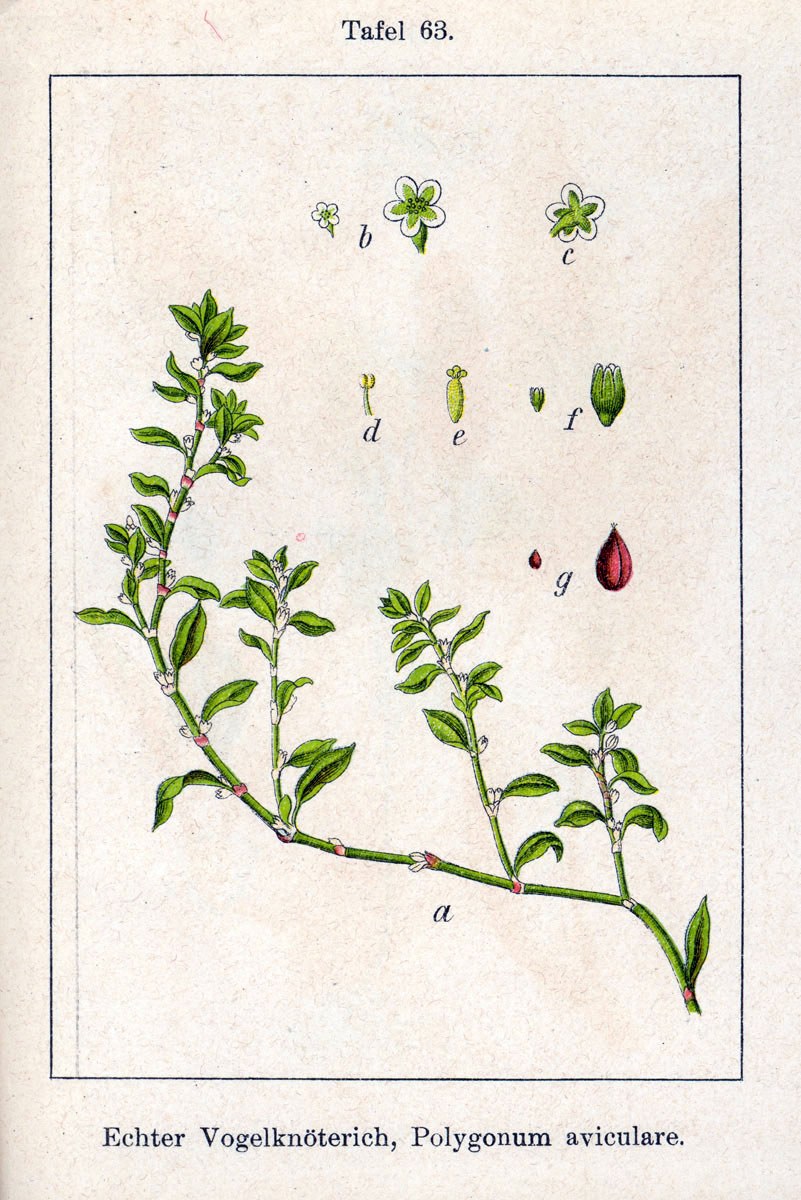
PlantKnotgrassCentinode, ninety-knot, nine-joints, allseed, bird’s tongue, sparrow tongue, red robin, armstrong, cowgrass, hogweed, swine’s grass, swynel grass; the male polugonon of Dioscorides; Polygonum aviculare L.; in pharmacy Polygoni avicularis herba
Polygonum aviculare, of the family Polygonaceae, a common weed of arable land, waste ground, and roadsides the world over. Its much-branched, usually prostrate stems have swollen joints, “hence the common names, Nine-joints, Ninety-knots,” and the small narrow leaves issue from white, shining, torn sheaths; the flowers are minute, usually pinkish. Grieve derives aviculare from the Latin for a little bird, many small birds feeding on its seeds, and ‘armstrong’ from the difficulty of pulling it up.K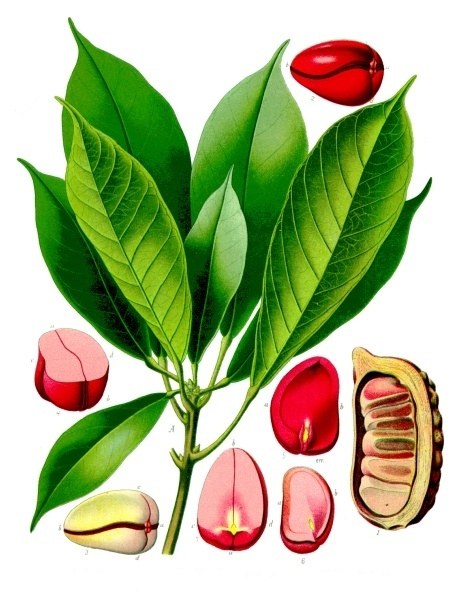
PlantKola nutKola, cola, gurru or guru nut, bissy nut; Kola vera of Grieve; Sterculia acuminata P. Beauv.; Cola nitida (Vent.) Schott & Endl. and Cola acuminata (P. Beauv.) Schott & Endl.; in pharmacy Colae semen
The dried cotyledons of the seeds of the kola trees of western Africa, of the family Malvaceae (in the older books Sterculiaceae), freed from their purplish seed coat. Grieve describes a tree about forty feet high with yellow flowers spotted with purple; the seed, nearly white when fresh, turns reddish-brown on drying and loses much of its astringency. King’s Dispensatory places the tree between Sierra Leone and the Congo and Lower Guinea, carried by the slave traders to Jamaica. The European Medicines Agency’s assessment report takes the drug to contain at least 1.5 per cent of methylxanthines, chiefly caffeine.L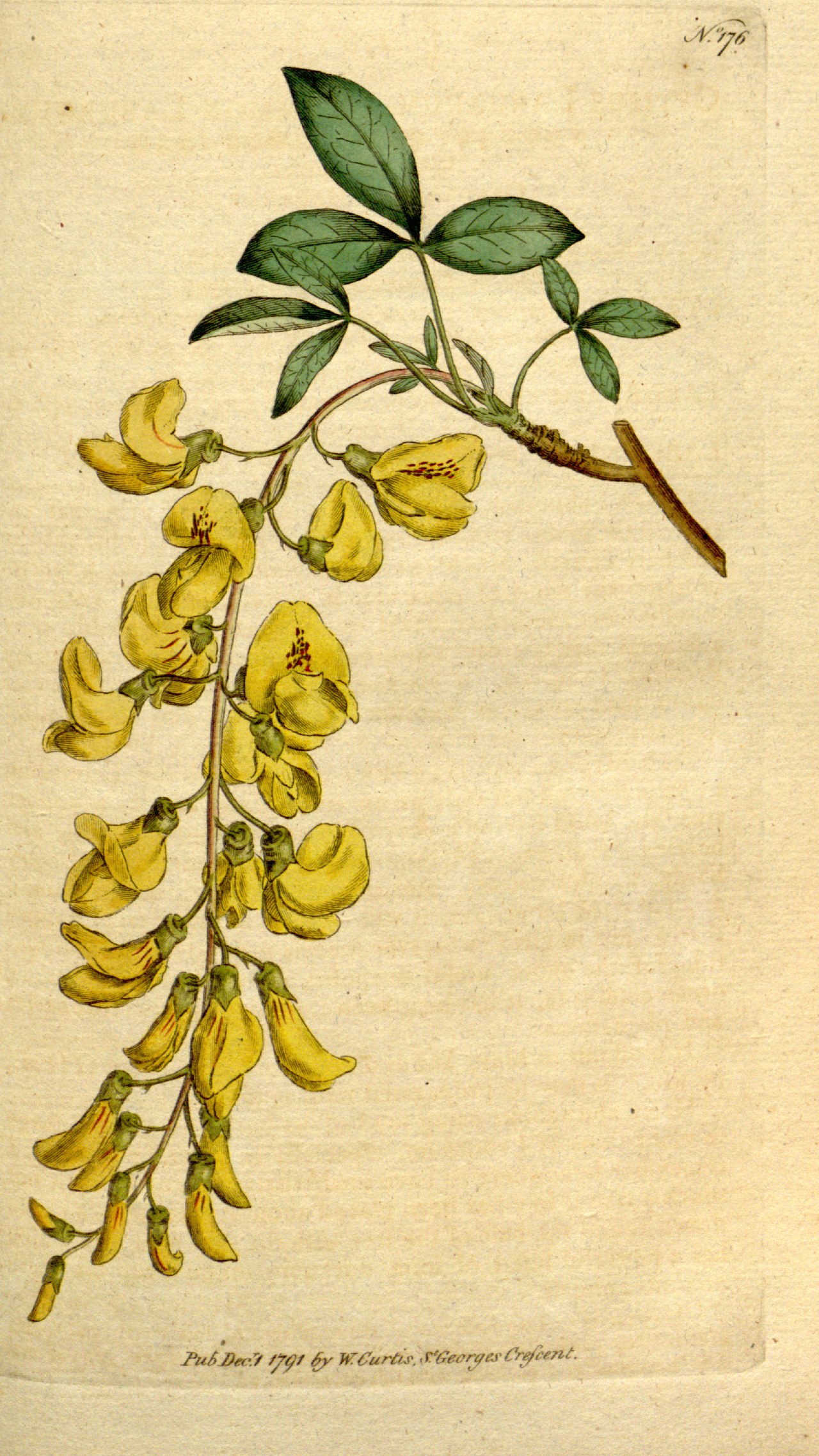
PlantLaburnumYellow laburnum, golden chain, bean trefoil; Gerard’s Anagyris; Cytisus laburnum L., now Laburnum anagyroides
Laburnum anagyroides, of the family Leguminosae, a small tree native to the mountains of France, Switzerland, and southern Germany, grown everywhere for its pendent clusters of golden-yellow flowers in early spring, followed by brown pods of seeds. Its dark heartwood is hard and durable and was prized by turners, sometimes stained to imitate ebony. The poison is the alkaloid cytisine, discovered in its seeds in the 1860s by Husemann and Marmé; Grieve writes that all parts of the plant are probably poisonous.DeadlyL
PlantLady’s mantleAlchemilla; leontopodium, lion’s foot
Alchemilla vulgaris and its kin, of the rose family, with lobed and toothed leaves in whose furrows the dewdrops lie.L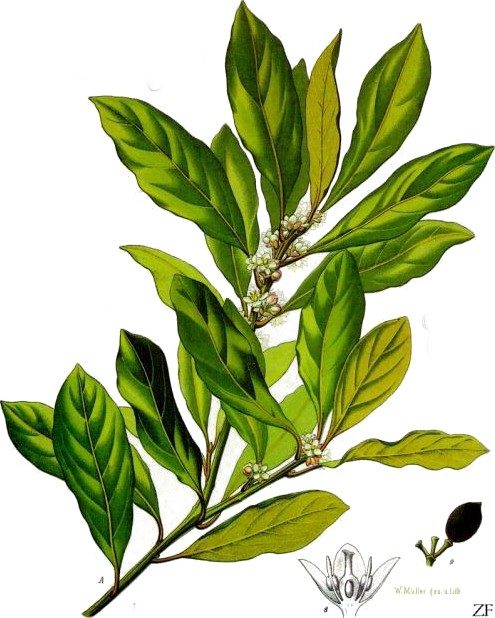
PlantLaurelLauro
Bay laurel, Laurus nobilis: oil, leaves, and berries.CanaleL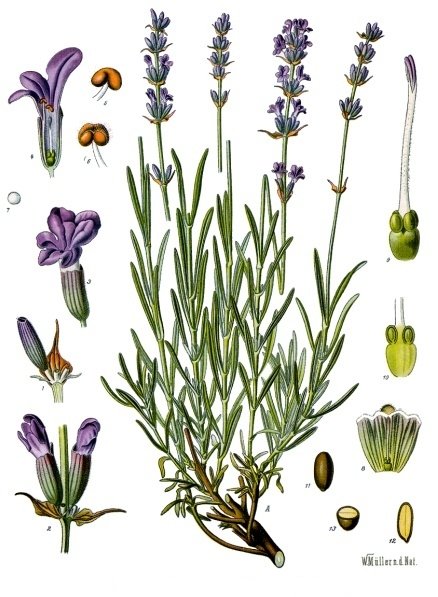
Plant LavenderLavandula; Greek stoichas
Lavandula angustifolia and French lavender, L. stoechas.L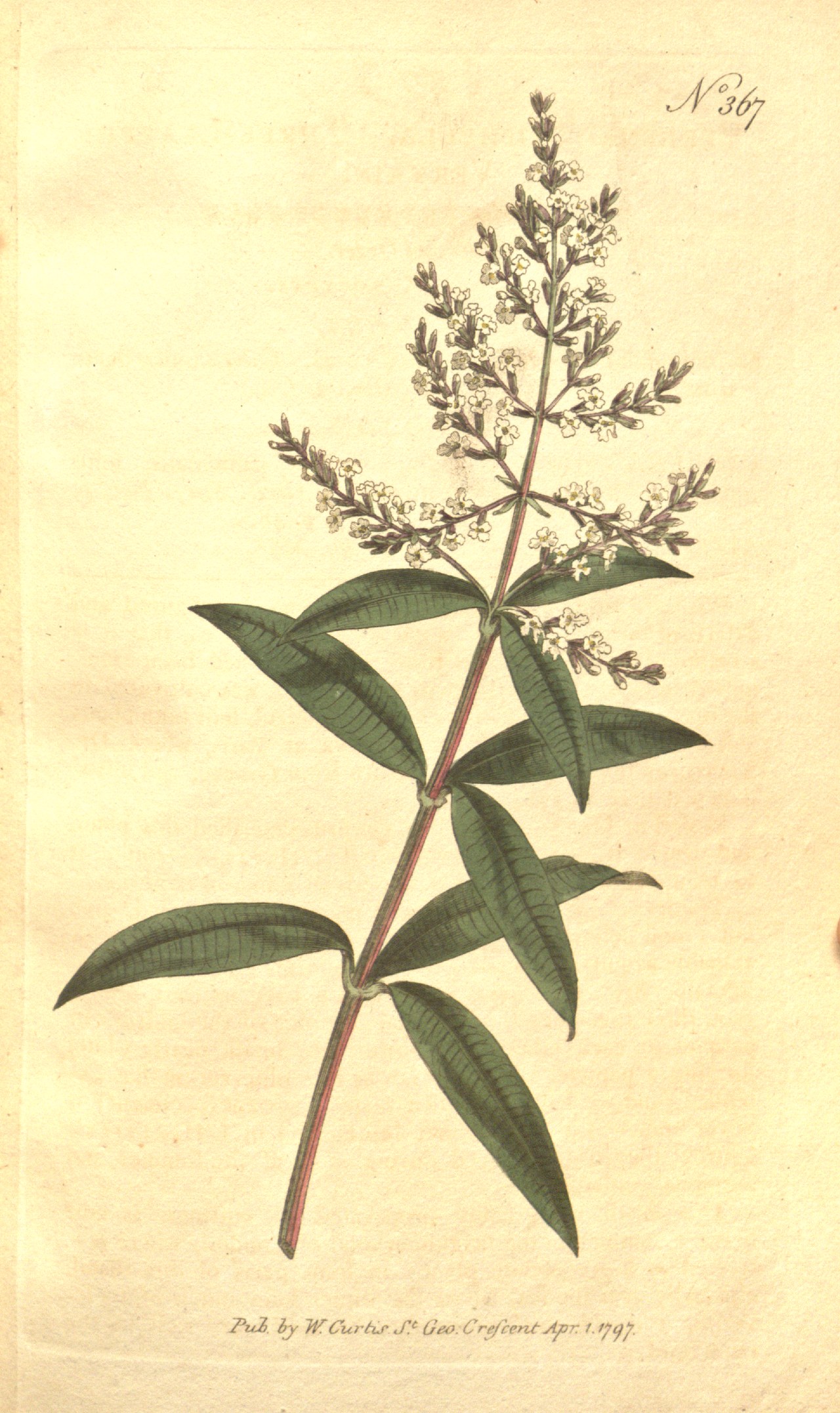
PlantLemon verbenaHerb Louisa, lemon-scented verbena, French verveine citronelle or odorante; Lippia citriodora Kunth; Verbena triphylla L’Hér.; Aloysia triphylla (L’Hér.) Kuntze; Aloysia citrodora Paláu; in pharmacy Verbenae citriodorae folium
Aloysia citrodora, a deciduous shrub of the family Verbenaceae from Chile and Peru, grown in European gardens. Grieve records its introduction into England in 1784 and describes very fragrant, lance-shaped leaves in threes, three or four inches long, pale green, with veins at right angles to the midrib, and many small pale purple flowers in slim panicles in August; the leaves “will retain their odour for years and are used in perfumery.” The European Medicines Agency’s assessment report names citral, as neral and geranial, among the main constituents of the oil, and verbascoside (acteoside) among those of the leaf.L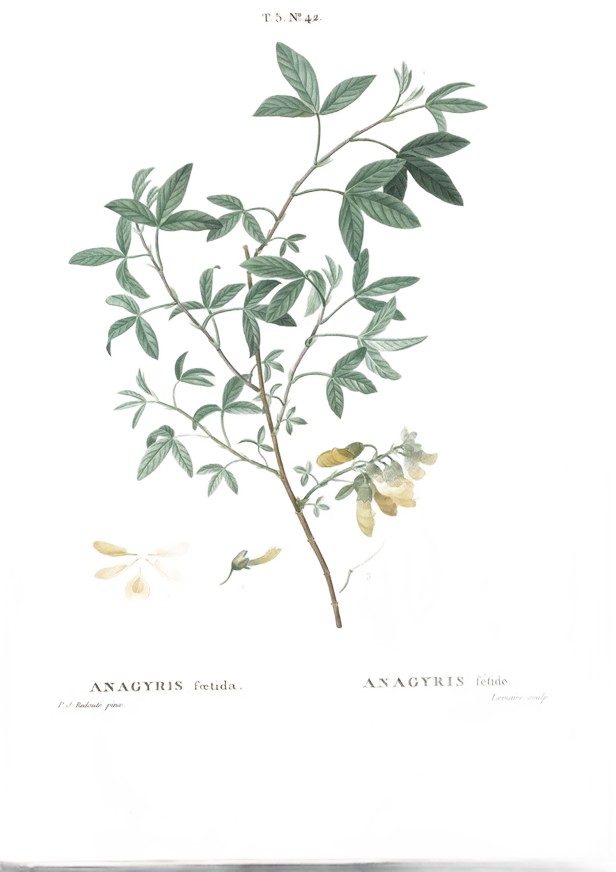
PlantLesser bean-trefoilAnagiride minore
Stinking bean trefoil, Anagyris foetida, a Mediterranean shrub of the pea family. Canale also puts “Anagiri femina” in his oil for the bewitched.CanaleCautionL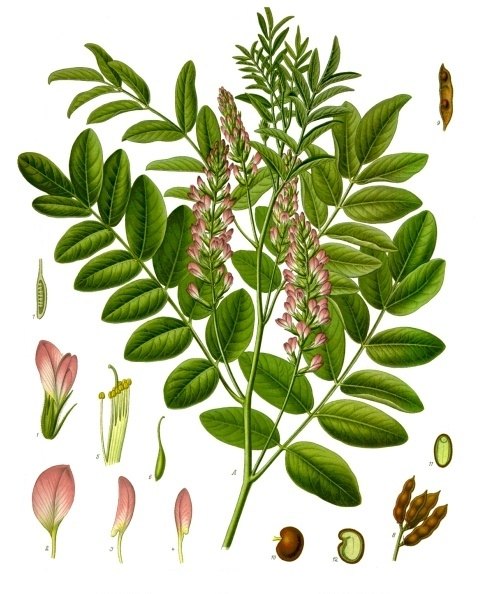
PlantLicoriceGlycyrrhiza, “sweet root”; the Scythian root
The root of Glycyrrhiza glabra.L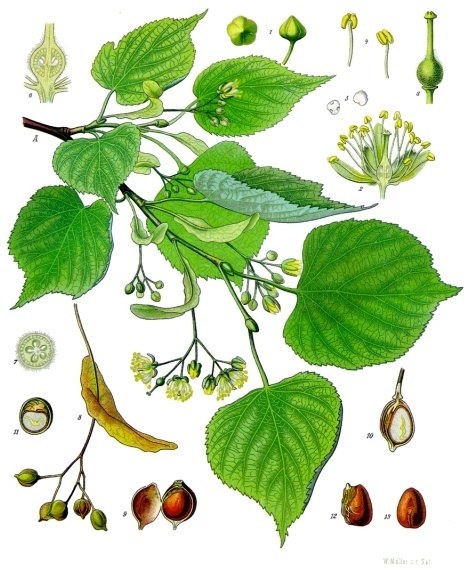
PlantLime flowerLinden, linden flowers, linn flowers, common lime, French tilleul; Flores Tiliae; Tilia europaea of Grieve; Tilia cordata Mill., Tilia platyphyllos Scop., and their hybrid Tilia × vulgaris Heyne; in pharmacy Tiliae flos
The dried flower clusters of the European limes, tall trees of the family Malvaceae (Grieve’s Tiliaceae), which Grieve says grow to 130 feet and “when in bloom perfumes its whole neighbourhood.” The yellowish-white flowers hang on slender stalks in flattened clusters, the stalk joined for part of its length to a narrow, leaf-like bract; King’s Dispensatory finds the smell agreeable when fresh, faint when dry, and the taste “mucilaginous and sweetish.” The European Pharmacopoeia admits the flowers of Tilia cordata, T. platyphyllos, T. × vulgaris, or a mixture of them.L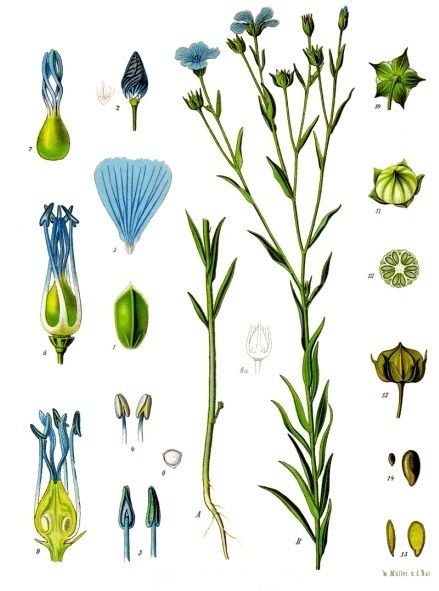
PlantLinseedFlaxseed; the seed of flax, Linum usitatissimum of Linnaeus; the Greek linon of Dioscorides; in pharmacy Lini semen
The seed of Linum usitatissimum, flax, “a graceful little plant with turquoise blue blossoms,” an erect annual one to two feet high with narrow alternate leaves. Each globular capsule holds ten brown, flat, glossy seeds, odourless until powdered, with a mucilaginous taste. The seed coat is rich in mucilage and the seed in a fixed oil, pressed out cold; what remains is oil-cake, and ground, linseed meal.L
PlantLiverwort, or hepaticaLiverleaf; Hepatica, from Greek hēpar, “liver”
Hepatica nobilis (syn. Anemone hepatica). A woodside flower of the buttercup family, blooming in March, with three-lobed, almost evergreen leaves.L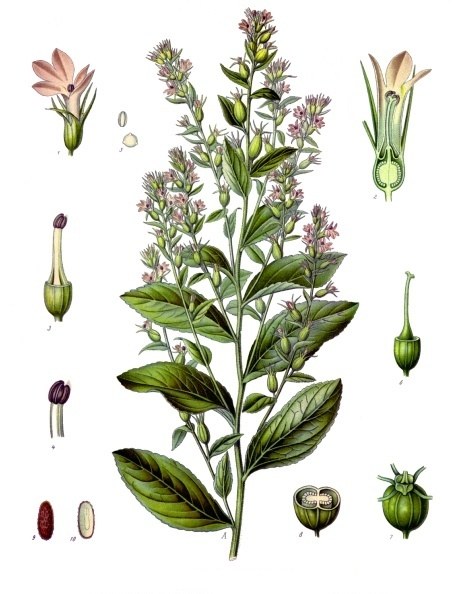
PlantLobeliaIndian tobacco, pukeweed, asthma weed, gag root, vomitwort, emetic weed, bladder-pod, inflated lobelia, eyebright; Rapuntium inflatum; Lobelia inflata L.
Lobelia inflata, an erect annual or biennial of dry places in the northern United States and Canada, a foot or two high, with small pale violet-blue flowers whose calyx swells around the seed pod, whence inflata. The genus is named after the sixteenth-century botanist Matthias de Lobel, who, Grieve writes, died in London in 1616. The dried flowering herb and the seeds are the drug; chewed, it tastes much like tobacco, burning and acrid, and brings a flow of saliva. Its activity depends on an alkaloid, lobeline, first isolated in 1838.CautionL
Plant Long pepperPiper longum; in India pippali
The dried unripe fruit spikes of Piper longum.L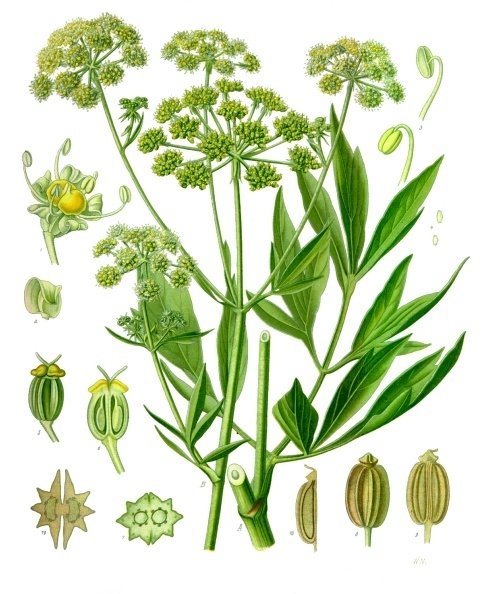
PlantLovageLevisticum
Levisticum officinale, of the carrot family.L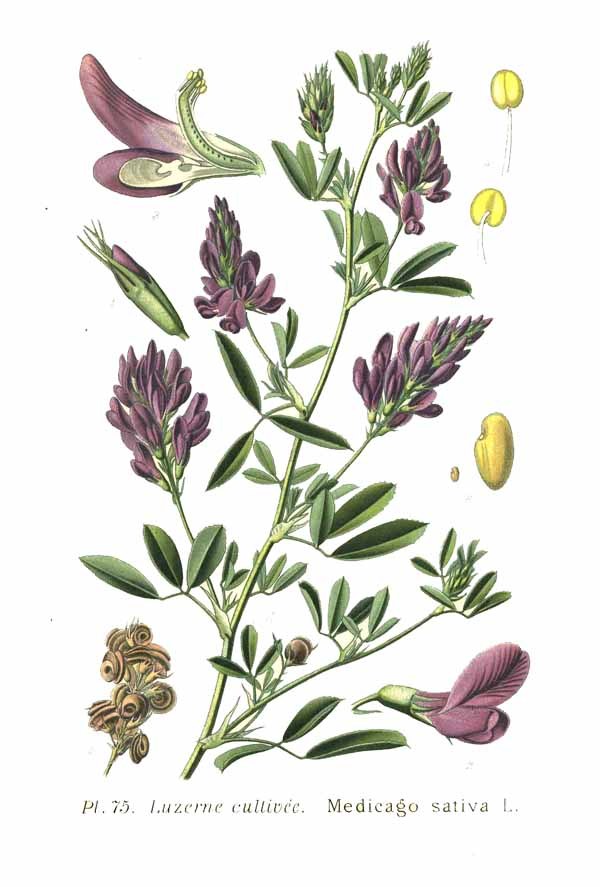
PlantLucerneAlfalfa, purple medicle, cultivated lucern; Chinese mu-su; Medicago sativa L.
Medicago sativa, of the family Papilionaceae in Grieve, a deep-rooting perennial with clover-like leaves of three leaflets, spikes of small blue or violet flowers, and spirally twisted pods. It is chiefly a fodder crop, mown twice a year, “greatly relished by horses and cattle,” Grieve writes, fattening them quickly and increasing the milk of cows; in Britain it grows wild only as an escape from cultivation. Grieve gives the whole herb in flower as the part used.L
PlantLungwortPulmonaria
Pulmonaria officinalis. A perennial of woods and thickets, of the borage family, with leaves spotted with white and flowers red in the bud and pale purple when fully open.M
PlantMadderRubia
Rubia tinctorum. A prickly perennial whose weak stalks often lie along the ground, sown since antiquity for the red dye in its root.M
PlantMadonna lilyLilium; Greek krinon
Lilium candidum.M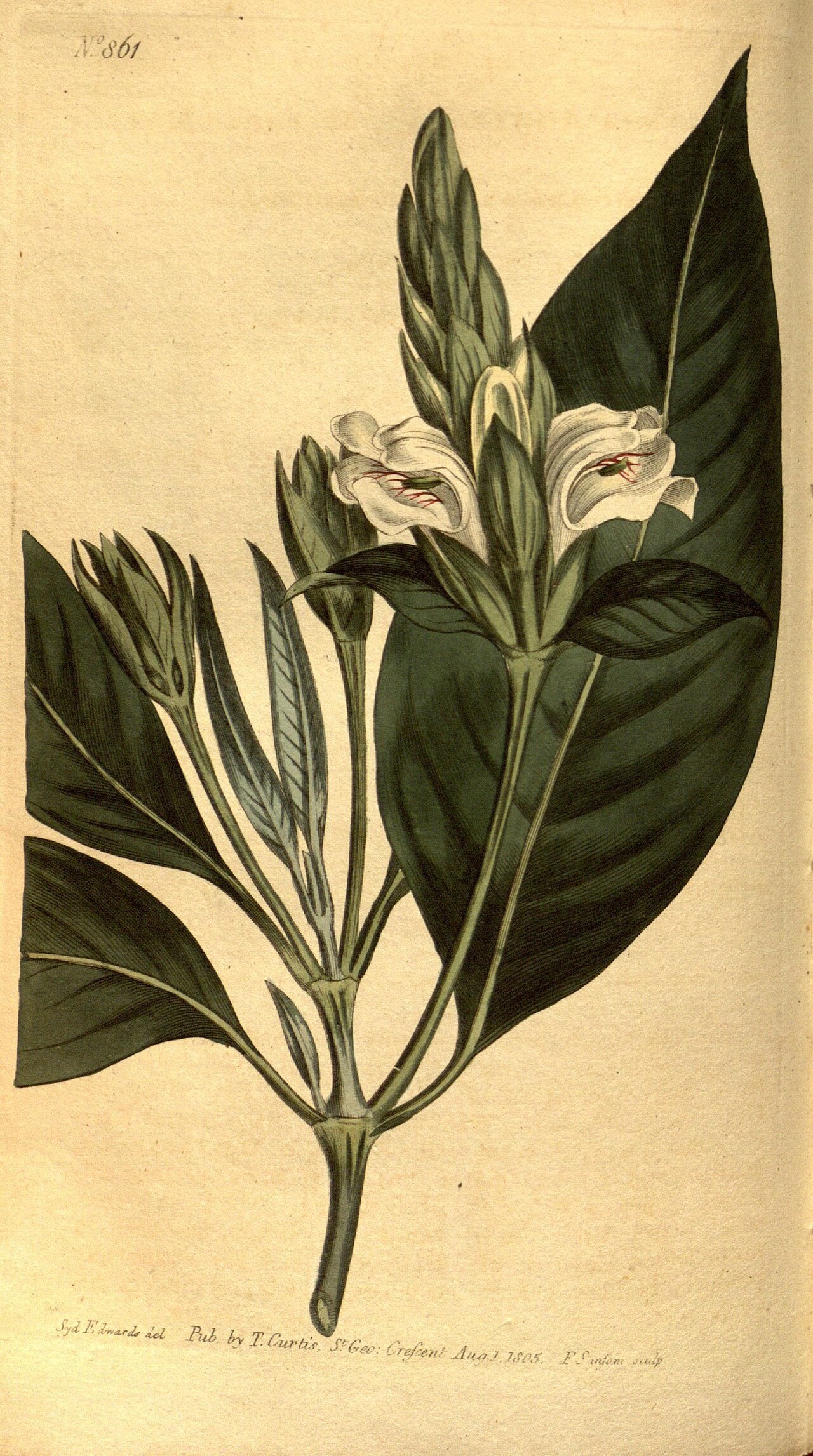
PlantMalabar nutArusa, adulsa, bakas, bansa; Sanskrit sinha-mukhi, ‘lion-mouthed’, and atarusha; Justicia adhatoda L.; Adhatoda vasica Nees; in pharmacy Adhatodae vasicae folium, Malabar nut leaf
Justicia adhatoda, a shrub of the family Acanthaceae common throughout India, from the Punjab and Assam to Ceylon. Grieve describes the fresh leaves as four to six inches long and two wide, lance-shaped and entire, which dried turn a dull brownish green, “taste bitter and smell like strong tea.” She names the bitter alkaloid vasicine among their constituents. Its soft wood, she adds, makes excellent charcoal for gunpowder.M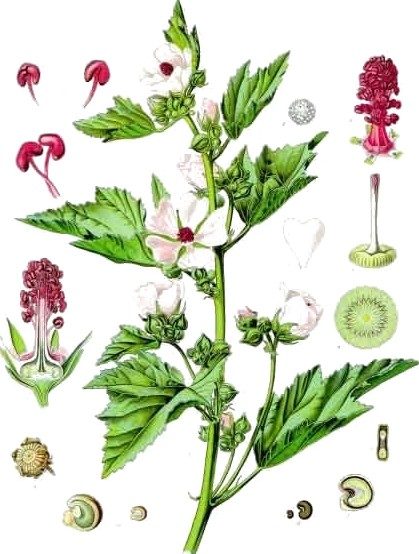
PlantMallow and marshmallowMalva; altea
Malva sylvestris and Althaea officinalis.CanaleM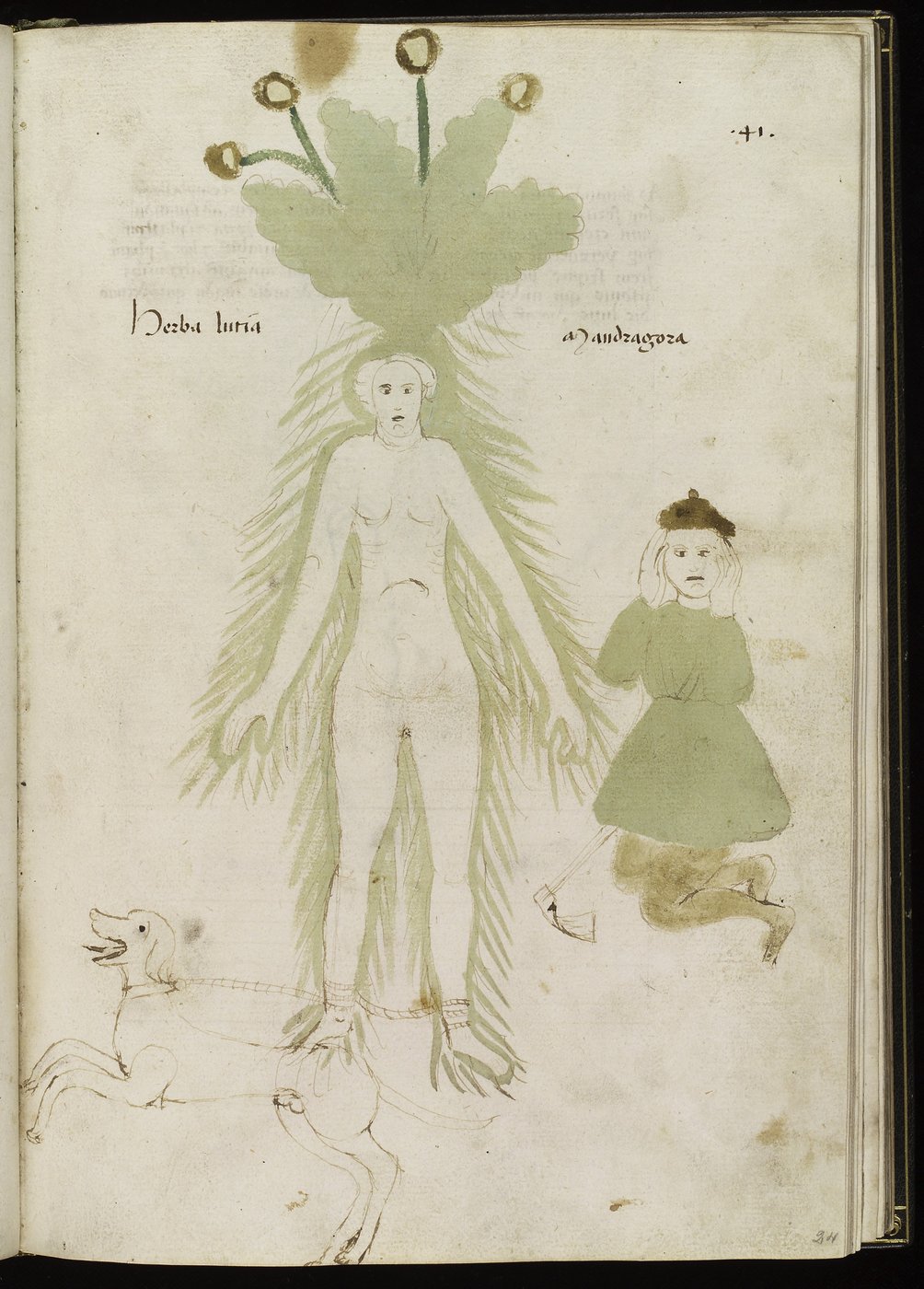
Plant MandrakeMandragora; Greek mandragoras; Hebrew dudaim
Mandragora officinarum and its relatives, of the nightshade family.CautionM
PlantMannaFlake manna
The dried sap of the manna ash, Fraxinus ornus, gathered in Calabria in the sixteenth century and now in Sicily.M
PlantMarigoldCalendula
Calendula officinalis, the pot marigold.M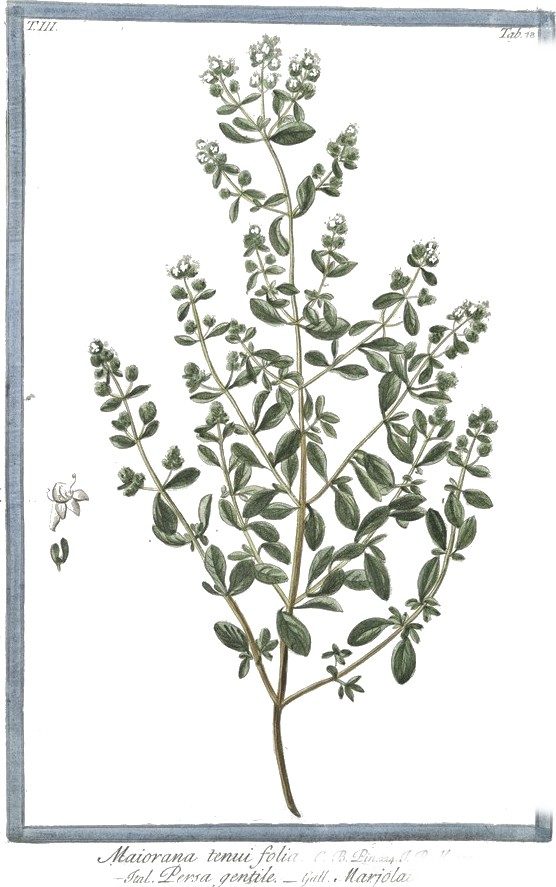
PlantMarjoram and jasmineMaggiorana; gelsomini
Sweet marjoram, Origanum majorana; jasmine, Jasminum officinale.CanaleM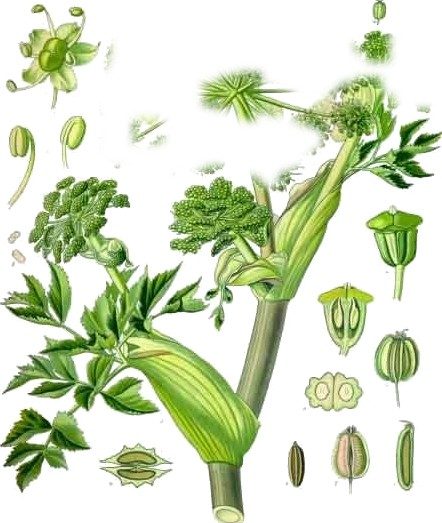
PlantMasterwort and angelicaImperatoria; angelica
Peucedanum ostruthium and Angelica archangelica.CanaleM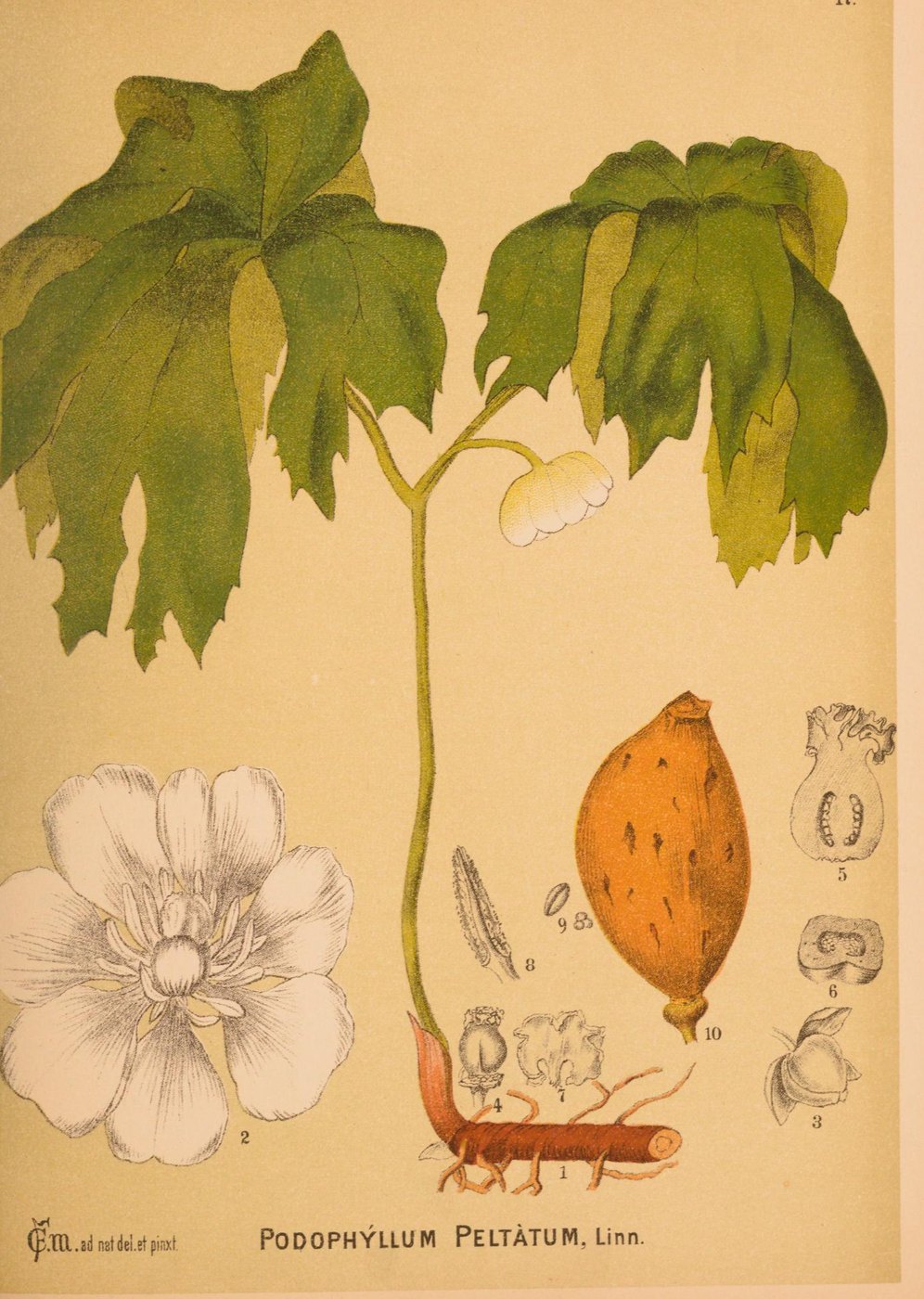
PlantMayappleMay-apple, American mandrake, Indian apple, hog apple, wild lemon, duck’s foot, wild jalap, raccoon-berry; Podophyllum peltatum of Linnaeus, Anapodophyllum canadense of Catesby; the source of podophyllin and podophyllotoxin
Podophyllum peltatum, a herb of low shady ground and damp open woods that spreads by its creeping root into beds: a single stem a foot high, forking into two umbrella-like peltate leaves with one nodding white flower in the fork, followed by a large yellow egg-shaped fruit. It flowers in May and fruits in August, from New England to Georgia and throughout the interior.DeadlyM
PlantMeadow saffronColchicum; hermodactyl
Colchicum autumnale.DeadlyM
PlantMeadowsweetMeadwort, queen of the meadow; Spiraea ulmaria
Filipendula ulmaria, of the rose family, of damp meadows and ditches, with frothy cream flowers smelling of almond.M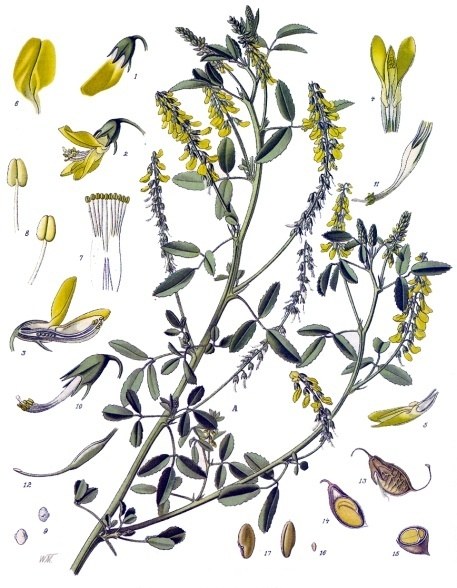
PlantMelilotYellow melilot, sweet clover, king’s clover, plaster clover, hart’s clover, sweet lucerne, wild laburnum; Melilotus officinalis of Linnaeus, with the white melilot, Melilotus alba; in pharmacy Meliloti herba
Melilotus officinalis, a branching herb of the legume family two to four feet high, of dry fields, roadsides, chalky banks, and railway embankments, with leaves in threes and long racemes of small sweet-scented yellow flowers, followed by broad, black, one-seeded, wrinkled pods. All the melilots, Grieve says, have a sweet smell in flower that grows stronger in drying, “somewhat like that of the Tonka bean,” because both contain coumarin, the scent of new-mown hay and woodruff. The dried flowering herb is the medicine.M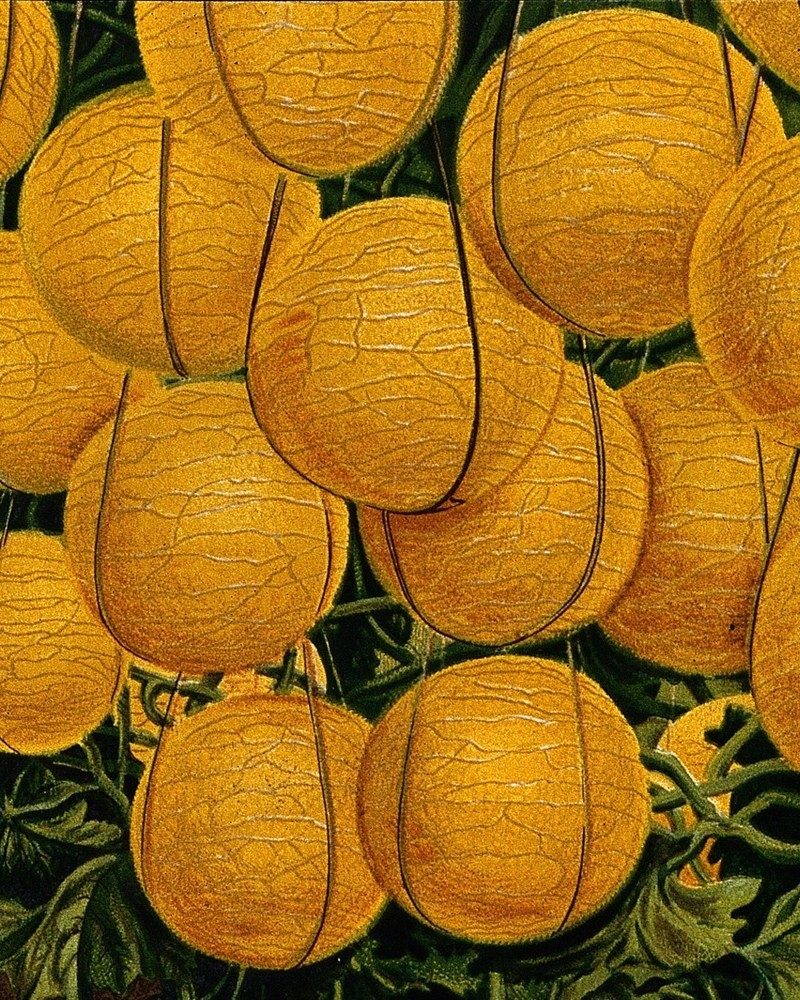
PlantMelon rootRadice di pepone
Root of the melon plant, Cucumis melo.CanaleM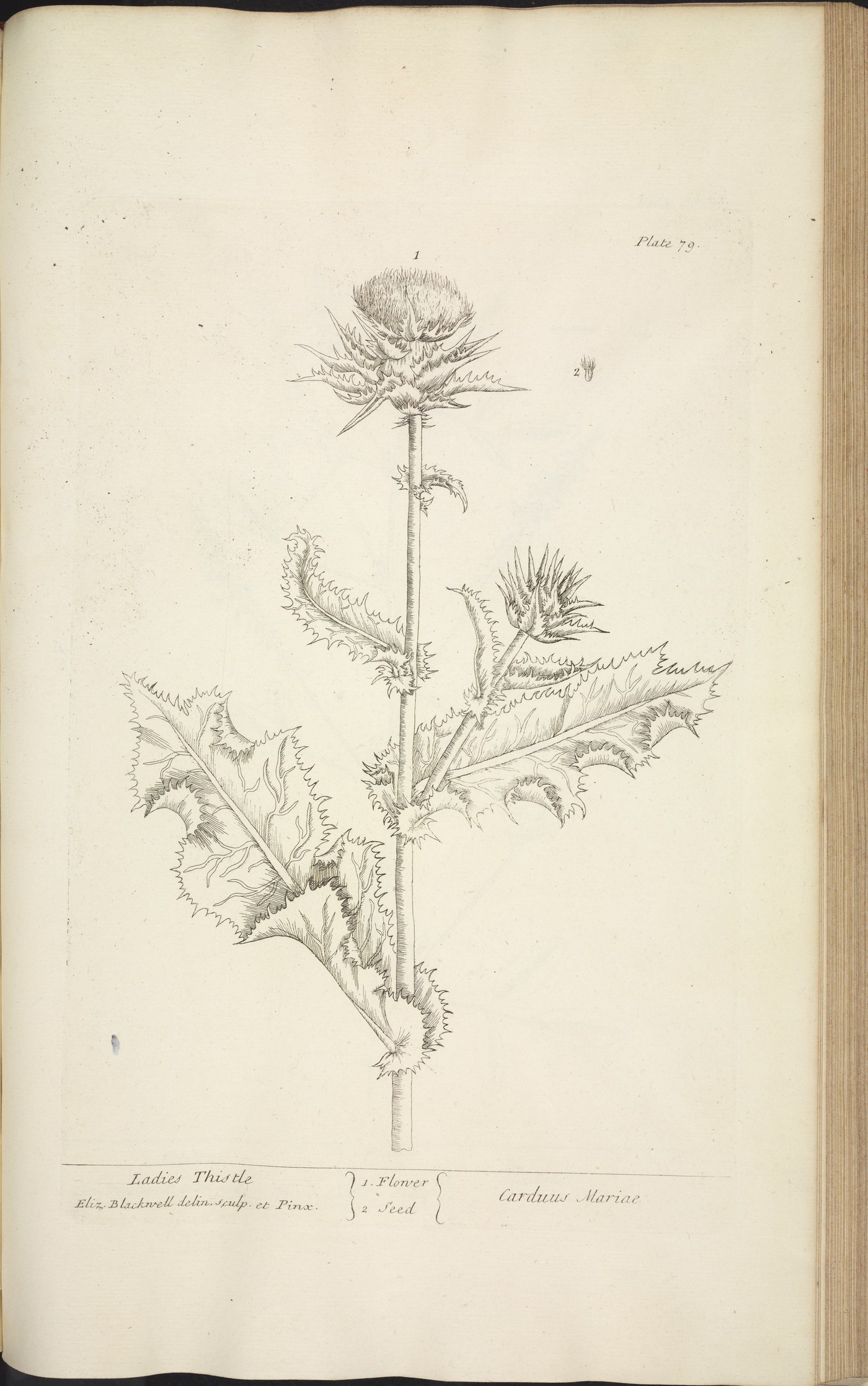
PlantMilk thistleSt Mary’s thistle, Marian thistle; the silubon of Dioscorides; Carduus marianus L.; Silybum marianum (L.) Gaertn.; in pharmacy Silybi mariani fructus
Silybum marianum, an annual or biennial thistle of the family Asteraceae, native to Europe, Asia Minor, and North Africa by LiverTox’s account. What pharmacy calls the seed is technically the fruit, and it is the part used; from it comes silymarin, the mixture of flavonolignans, silibinin chief among them, on which modern interest rests.M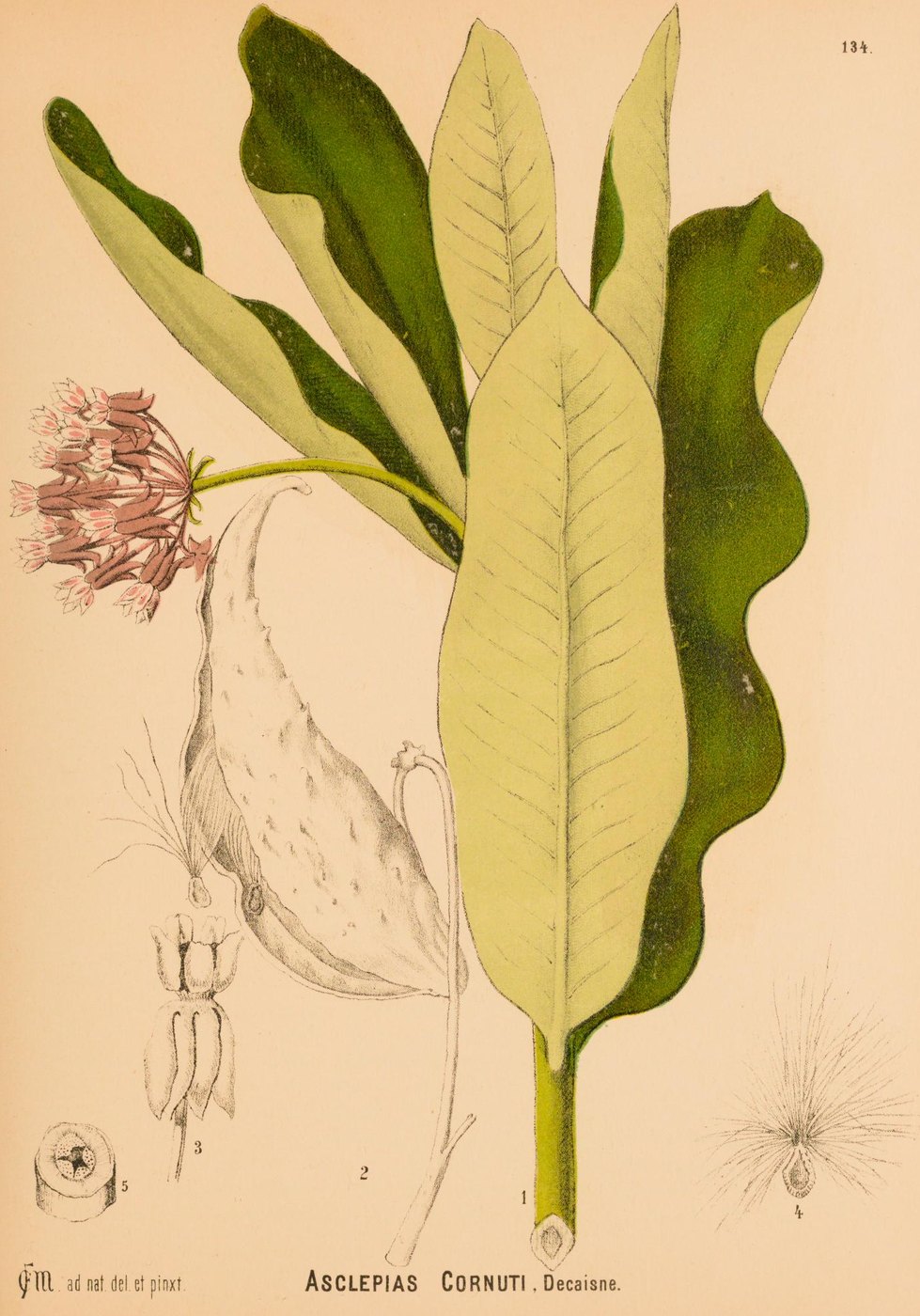
PlantMilkweedCommon milkweed, silkweed, wild cotton, Virginian swallow-wort; Asclepias syriaca of Linnaeus, a wholly American plant misnamed for Syria, Asclepias cornuti of Decaisne; the Ojibwe cabo’sîkûn, milk, and înîni’wûnj, Indian plant; the Potawatomi anêniwîc, man weed
Asclepias syriaca, the stout milkweed of roadsides, fields, and waste places in Canada and the United States, though there are no records of it from Texas to Florida, and few south of 37° N: four or five feet high, leafy to the top, with oval leaves downy beneath, drooping umbels of dusky rose flowers in summer, a white juice that congeals where the stem is cut, and pods covered with weak spines that split to loose seeds on silk. The monarch’s most used food plant in the northern part of its breeding range; its caterpillars eat many other milkweeds as well.CautionM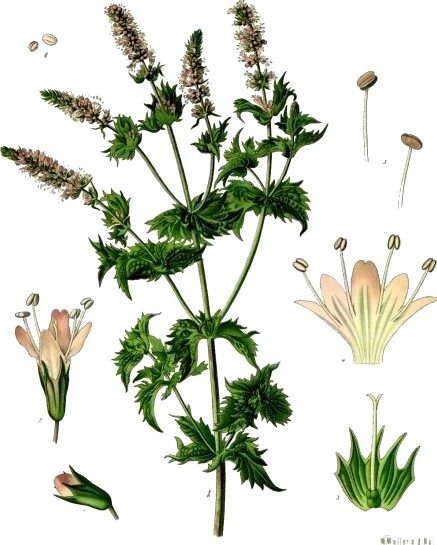
PlantMint, oil ofOglio di menta
Oil of garden or spear mint.CanaleM
PlantMistletoeViscum; all-heal
Viscum album, especially when found on oak.CautionM
PlantMolyGreek mōly
Unidentified. The snowdrop, Galanthus nivalis, is the most discussed candidate.M
PlantMoonwortLunaria
The small fern Botrychium lunaria.M
PlantMotherwortCardiaca; lion’s tail
Leonurus cardiaca, of the mint family, a tall, prickly-calyxed herb of waste ground.M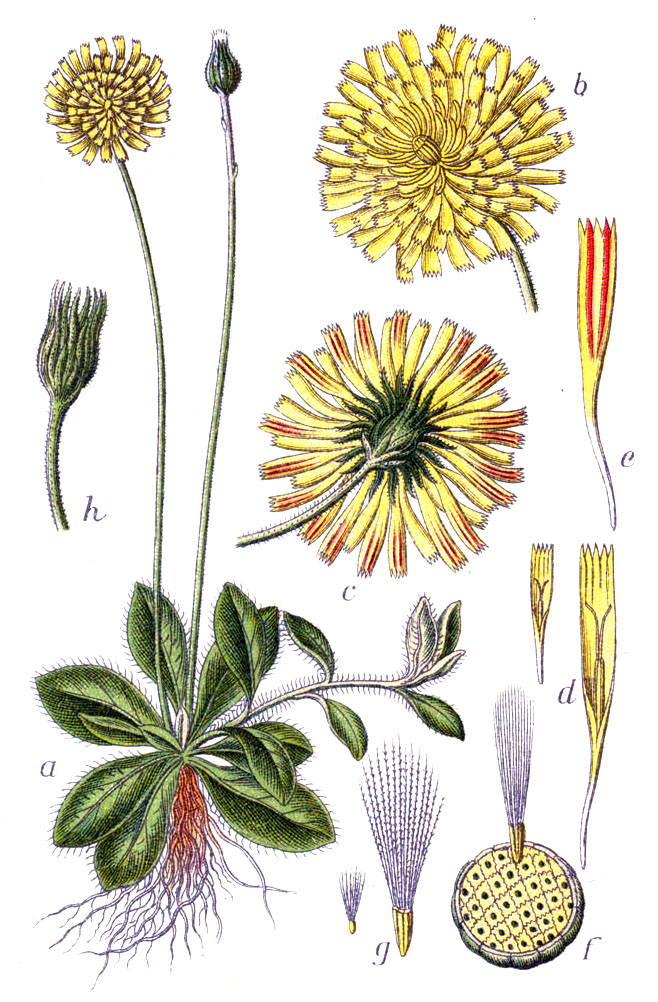
PlantMouse-ear hawkweedMouse-ear, pilosella; the medieval Auricula muris, mouse’s ear; Pilosella officinarum, formerly Hieracium pilosella of Linnaeus; in pharmacy Pilosellae herba cum radice
Pilosella officinarum, a small hawkweed of sunny banks, walls, and dry pastures, which Grieve says is told from every other British plant of its order by its creeping runners, “thrown out in the same manner as in the strawberry,” its rosettes of hairy undivided leaves, grey-green above and hoary beneath, and its single lemon-yellow flowers on stems a few inches high. The heads, about an inch across, have some fifty florets, the outer ones striped purple beneath, and they open, she says, at eight in the morning and close about two in the afternoon, from May to September. The whole flowering herb with its root is the medicine.M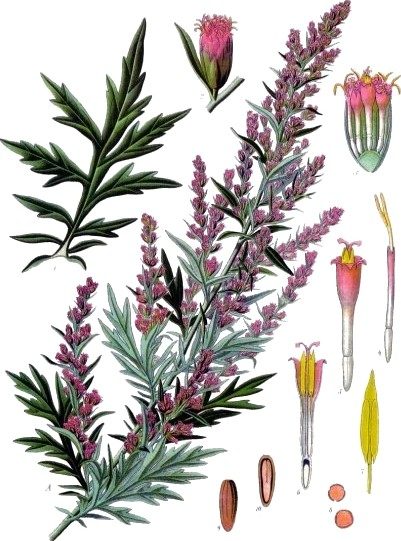
PlantMugwortArtemisia
Artemisia vulgaris.CanaleM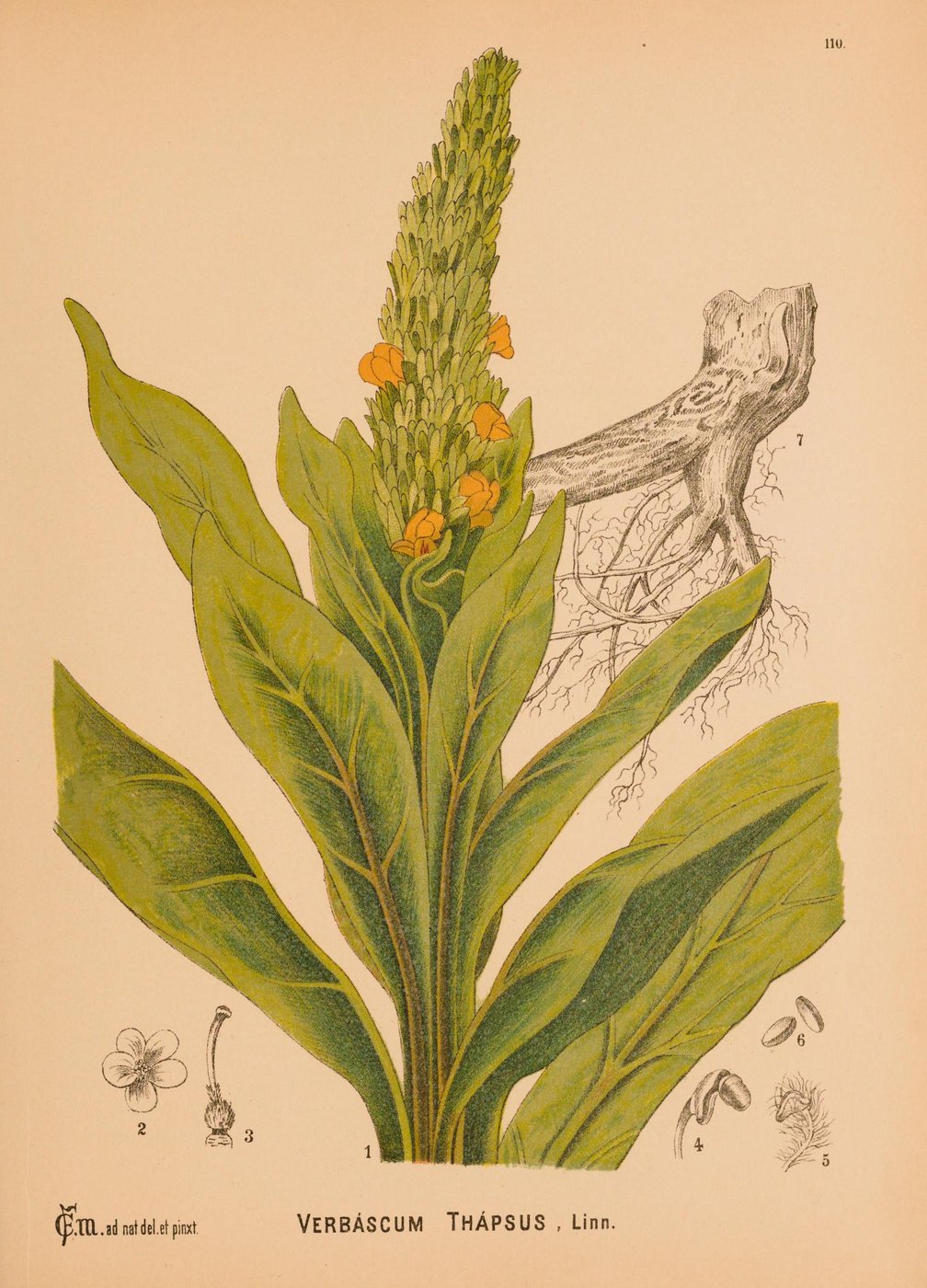
PlantMulleinVerbascum; hag’s taper
Verbascum thapsus.M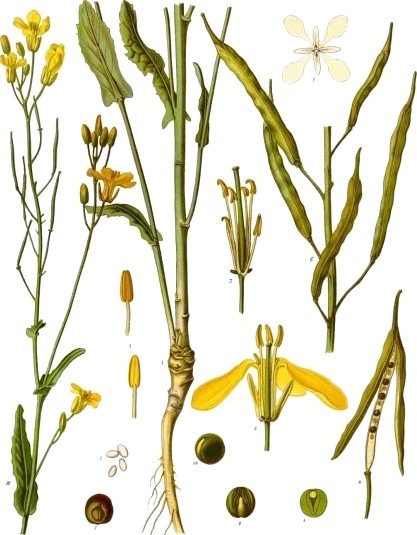
PlantMustard seedSeme di napo, 1660
The English follows the 1674 text as “mustard”; the 1660 printing, whose Italian is given in the heading, reads sem. napi, the seed of rape (Brassica napus), a close relative.CanaleM
PlantMyrobalansMyrobalani
The dried fruits of Terminalia chebula, T. bellirica, and Phyllanthus emblica.N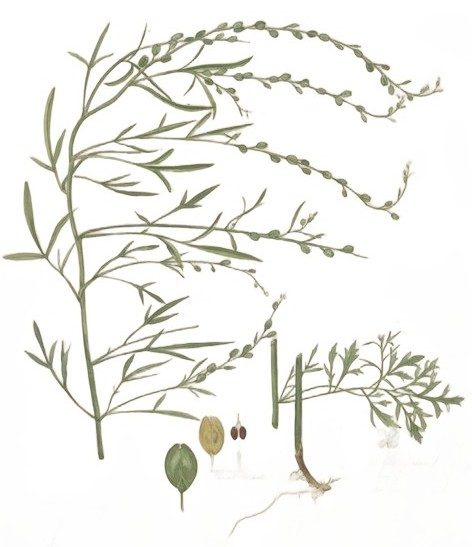
PlantNasturtium, that is, garden cressNasturtio
Garden cress, Lepidium sativum. Not the flowering nasturtium of modern gardens, whose shield-like leaves and helmet-like flowers earned it the Latin name Tropaeolum.CanaleN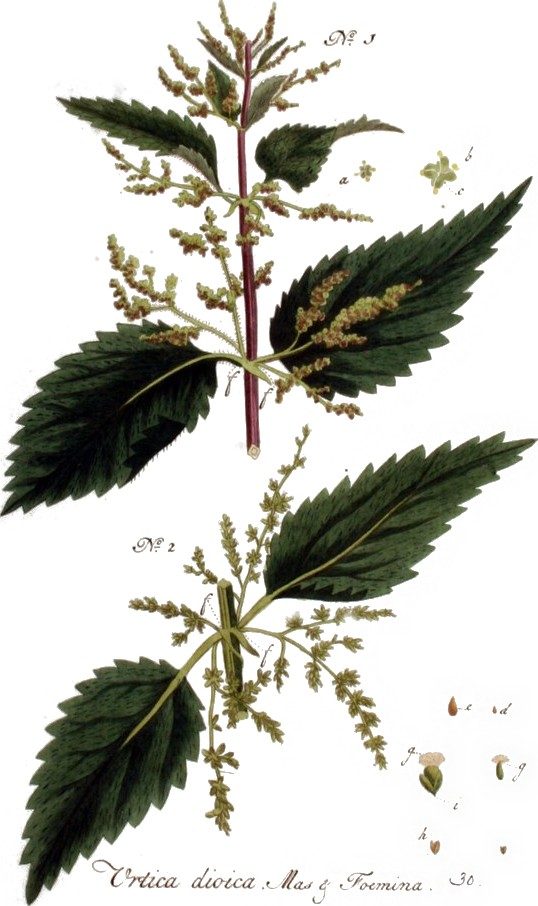
PlantNettle seedSeme d’urtica
Seed of the stinging nettle, Urtica dioica.CanaleN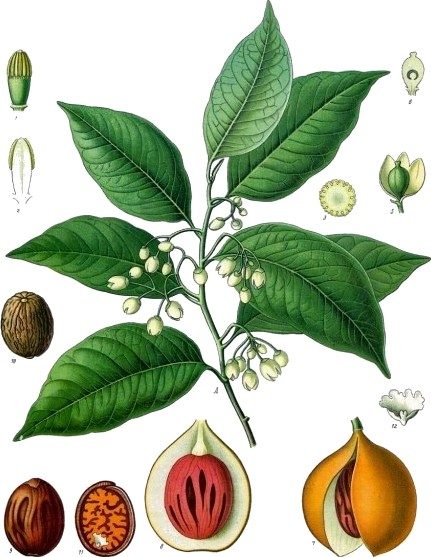
PlantNutmeg and cloveNoce moscata; garofoli
Myristica fragrans and Syzygium aromaticum.CanaleO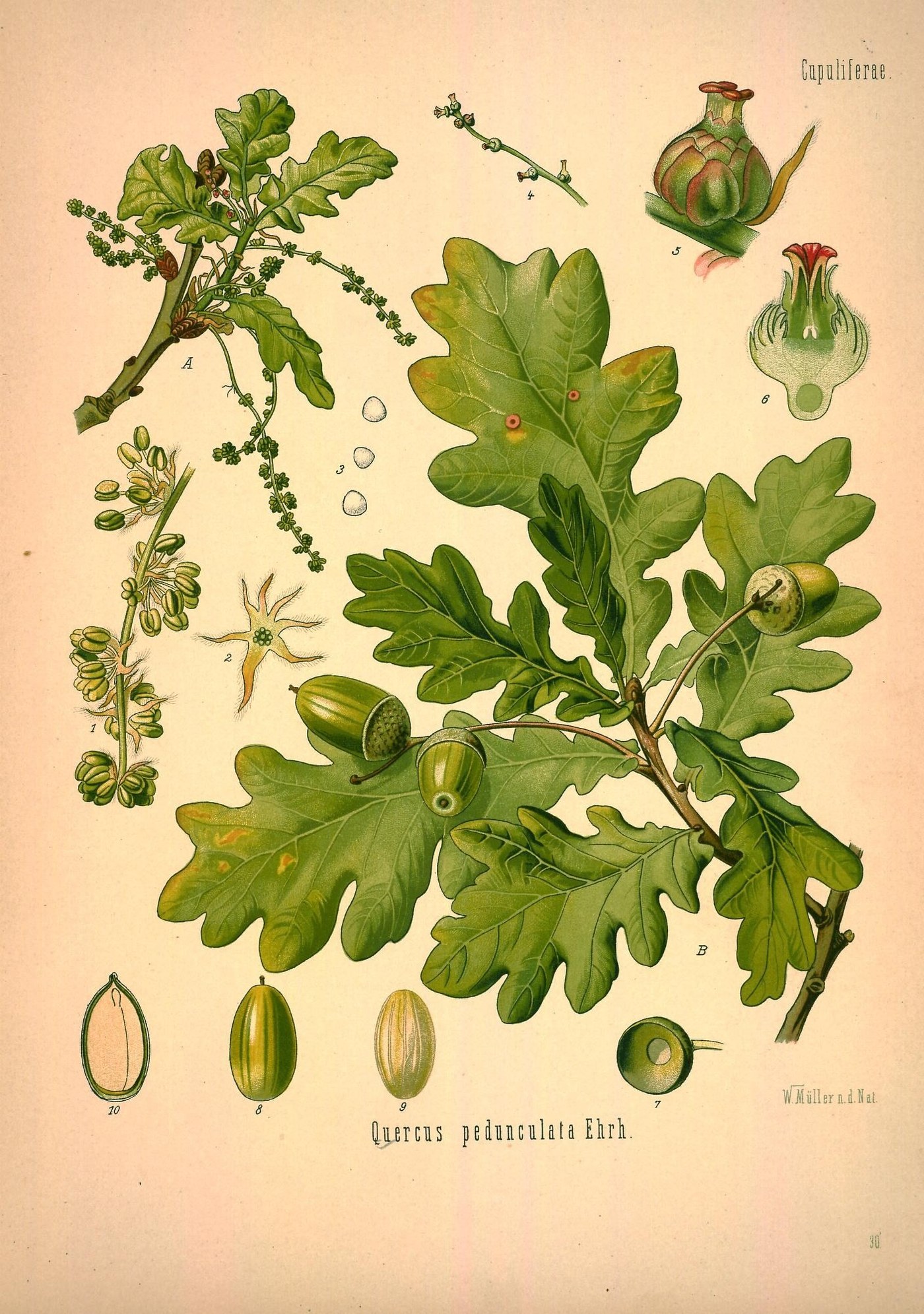
PlantOak barkTanner’s bark; the bark of the common or English oak, Quercus robur of Linnaeus, which the European monograph takes together with the sessile oak, Quercus petraea, and the downy oak, Quercus pubescens; in pharmacy Quercus cortex; the Greek drus of Dioscorides
The bark of the common oak, collected in spring from young trees, dried in the sun, greyish and somewhat polished outside and brown within. Grieve describes it as “slightly tonic, strongly astringent and antiseptic,” with a strong astringent bitter taste and a slightly aromatic smell. The galls of the oak have an entry of their own, Oak galls.O
PlantOak gallsOak apples; gallae
Round growths raised on oaks by gall wasps.O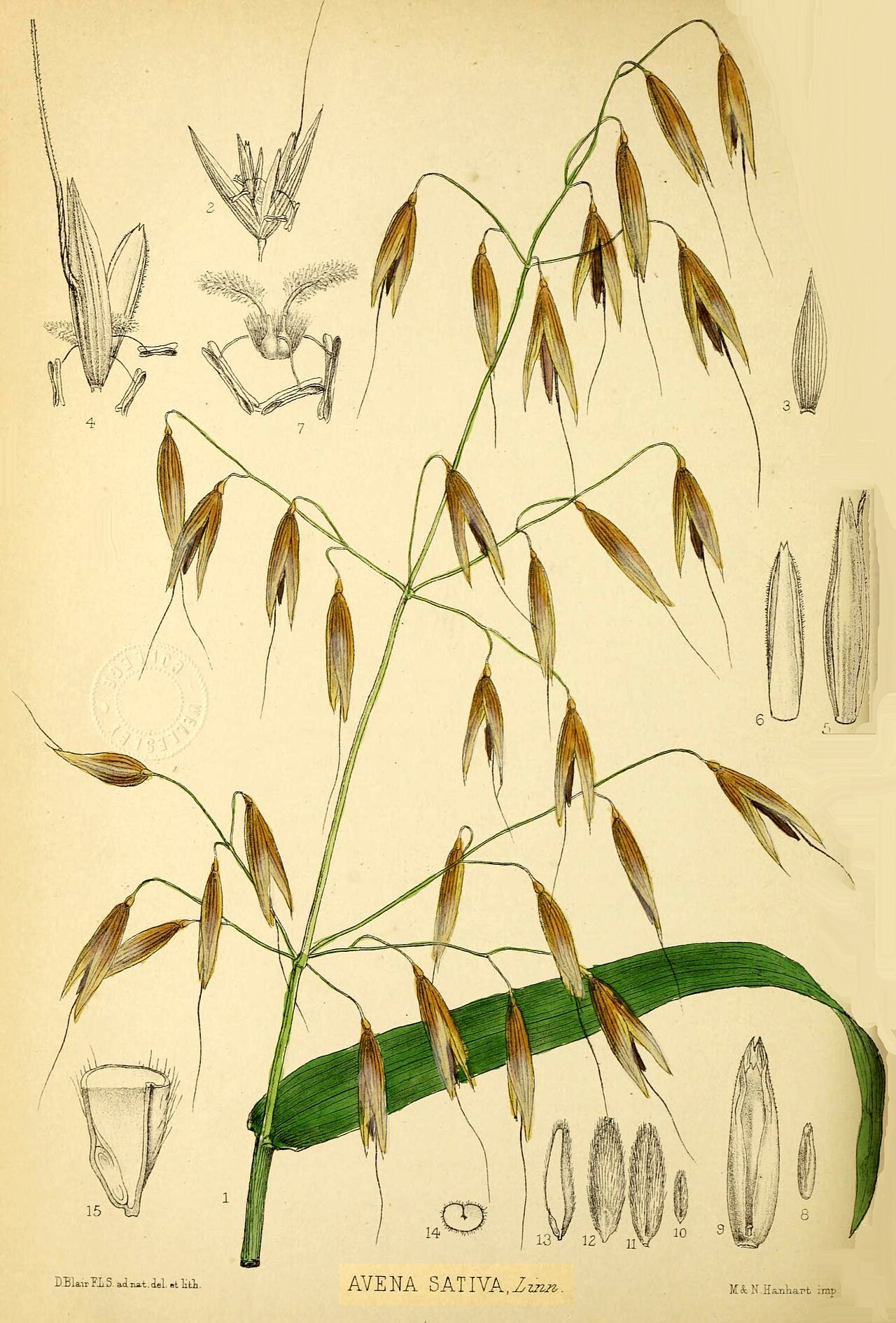
PlantOatOats, groats, oatmeal; old English haver or hafer corn, Welsh hever; Avena sativa of Linnaeus; the Greek bromos of Dioscorides; in pharmacy Avenae herba, the green herb, and Avenae fructus, the grain
Avena sativa, the common oat, a cereal grass up to four feet high with rough, veined leaves and a loose panicle of pendulous two-flowered spikelets. Grieve notes some twenty-five varieties in cultivation, and that the grain stripped of its husk is groats, and groats crushed are Embden groats. Medicine uses both the grain and the green herb cut before flowering.O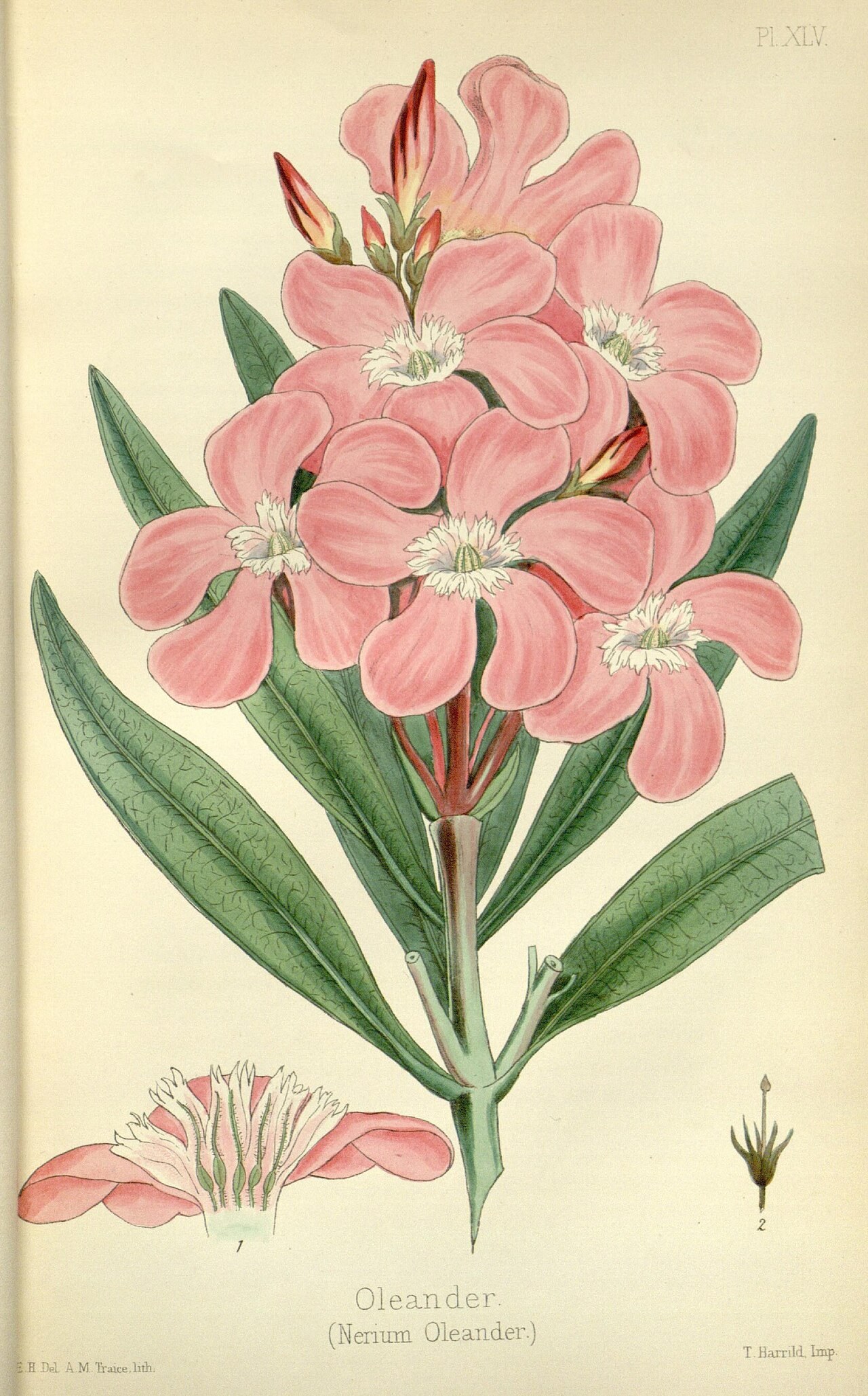
PlantOleanderRose bay, rose bay tree, laurel rose; French laurier rose; Spanish adelfa; Italian Ammazza l’Asino, ‘Ass-bane,’ and in Tuscany Mazza di San Giuseppe, ‘St. Joseph’s Staff’; Nerium oleander L.
Nerium oleander, of the family Apocynaceae, an evergreen shrub up to about four metres, with narrow, leathery leaves usually in threes and clusters of five-petalled flowers, pink or white in the wild form and of many colours in some four hundred cultivars. A broken twig exudes a thick white sap. The poisons monograph of the International Programme on Chemical Safety gives it as native only to the Mediterranean, where it grows along watercourses and in damp ravines, and cultivated worldwide as an ornamental. Its poisons are cardiac glycosides, chief among them oleandrin.DeadlyO
Plant OnionCepa
Allium cepa.O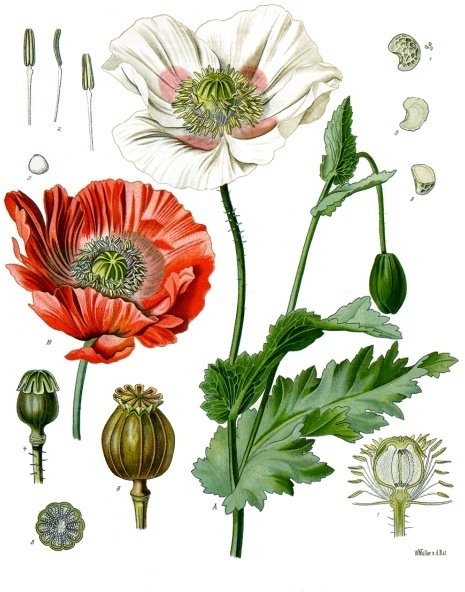
Plant Opium poppyPapaver; Greek mēkōn; the juice, opion
Papaver somniferum; opium is the dried latex of its unripe seed heads.CautionO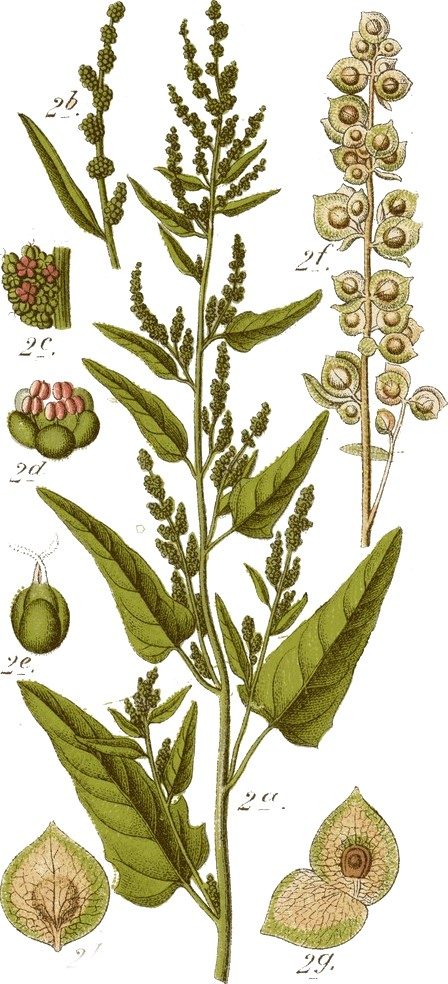
PlantOracheAtriplice
Atriplex hortensis, garden orache, a spinach-like plant.CanaleO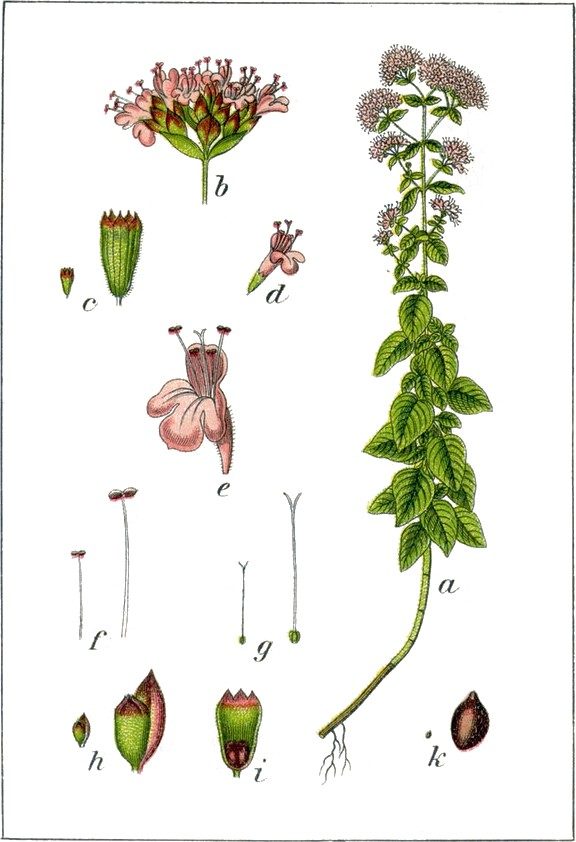
PlantOregano and squinanthOrigano; squinanto
Oregano, Origanum vulgare; squinanth, the schoinos or juncus odoratus of Dioscorides, a sweet rush of Arabia and Libya.CanaleO
PlantOrrisIris; the Florentine iris
The dried root of Iris germanica ‘Florentina’ and I. pallida.O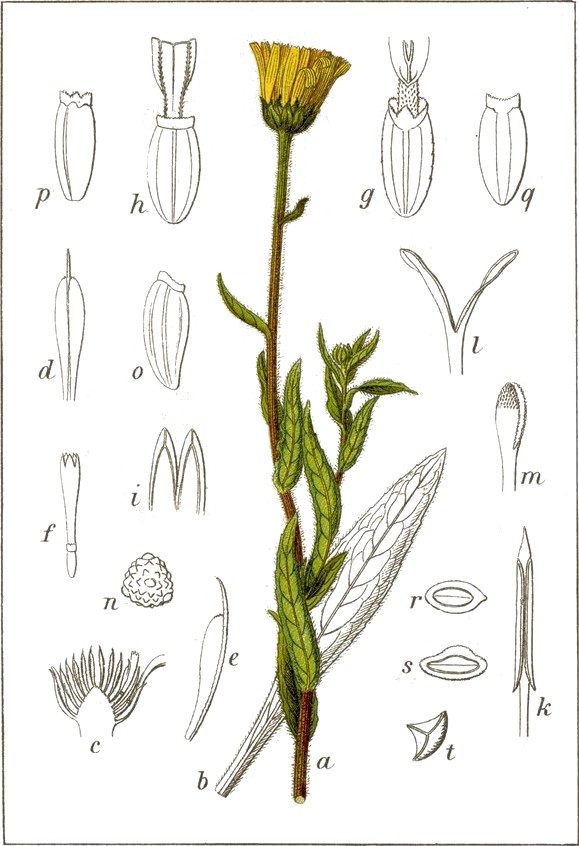
PlantOx eyeBuftalmo
Probably Buphthalmum salicifolium, yellow ox-eye; some read it as the ox-eye daisy, Leucanthemum vulgare.CanaleP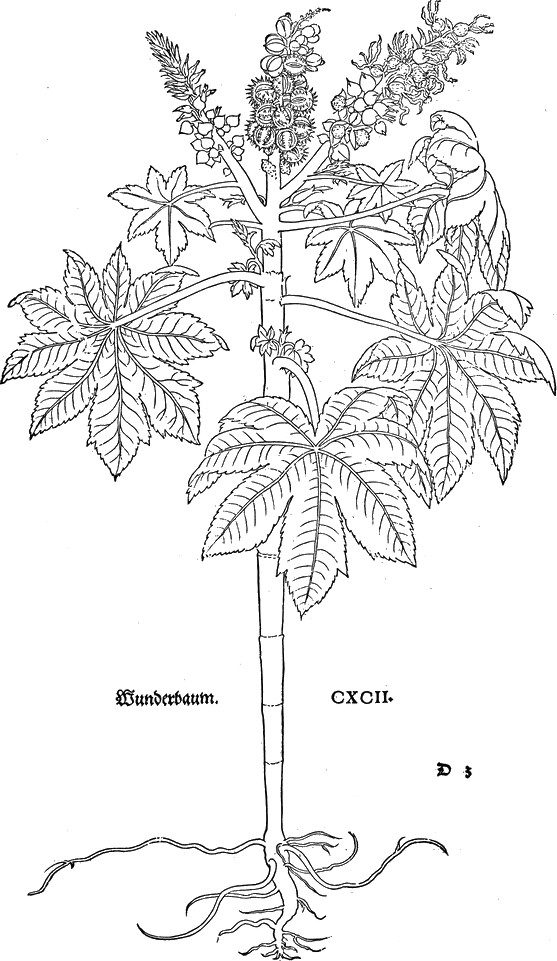
PlantPalm of ChristPalma Christi
The castor-oil plant, Ricinus communis (note XLII). The oil “of castor” in the anointings is this oil, not the animal substance castoreum.CanaleCautionP
Plant ParsleyGreek selinon, petroselinon
Petroselinum crispum.CautionP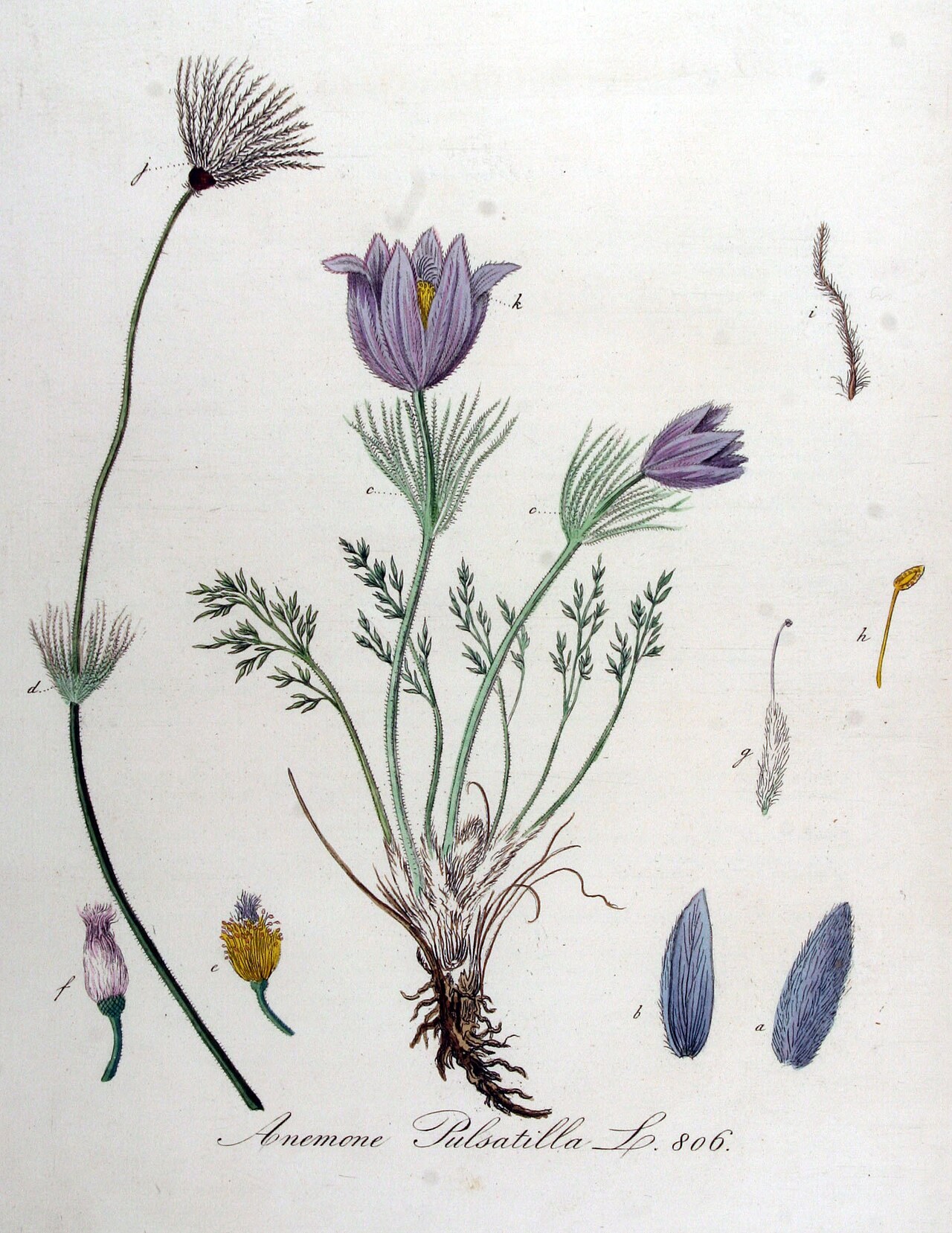
PlantPasque flowerPasque flower, Easter flower, passe flower, wind flower, meadow anemone; pharmacy Pulsatilla; Anemone pulsatilla L., now Pulsatilla vulgaris
Anemone pulsatilla, of the buttercup family, Ranunculaceae, a low plant of dry, open ground across central and northern Europe, in England a local plant of high chalk downs and limestone pastures. Its single flowers, about an inch and a half across, have dull violet-purple sepals silky beneath, and are followed by hairy seeds with long feathery tails; the whole plant is covered in silky hairs. Grieve derives pulsatilla from a Latin word meaning to beat, for the downy seeds beaten about by the wind. The whole herb, gathered soon after flowering, is the drug, and Grieve notes that the drug was also taken from the related meadow anemone.CautionP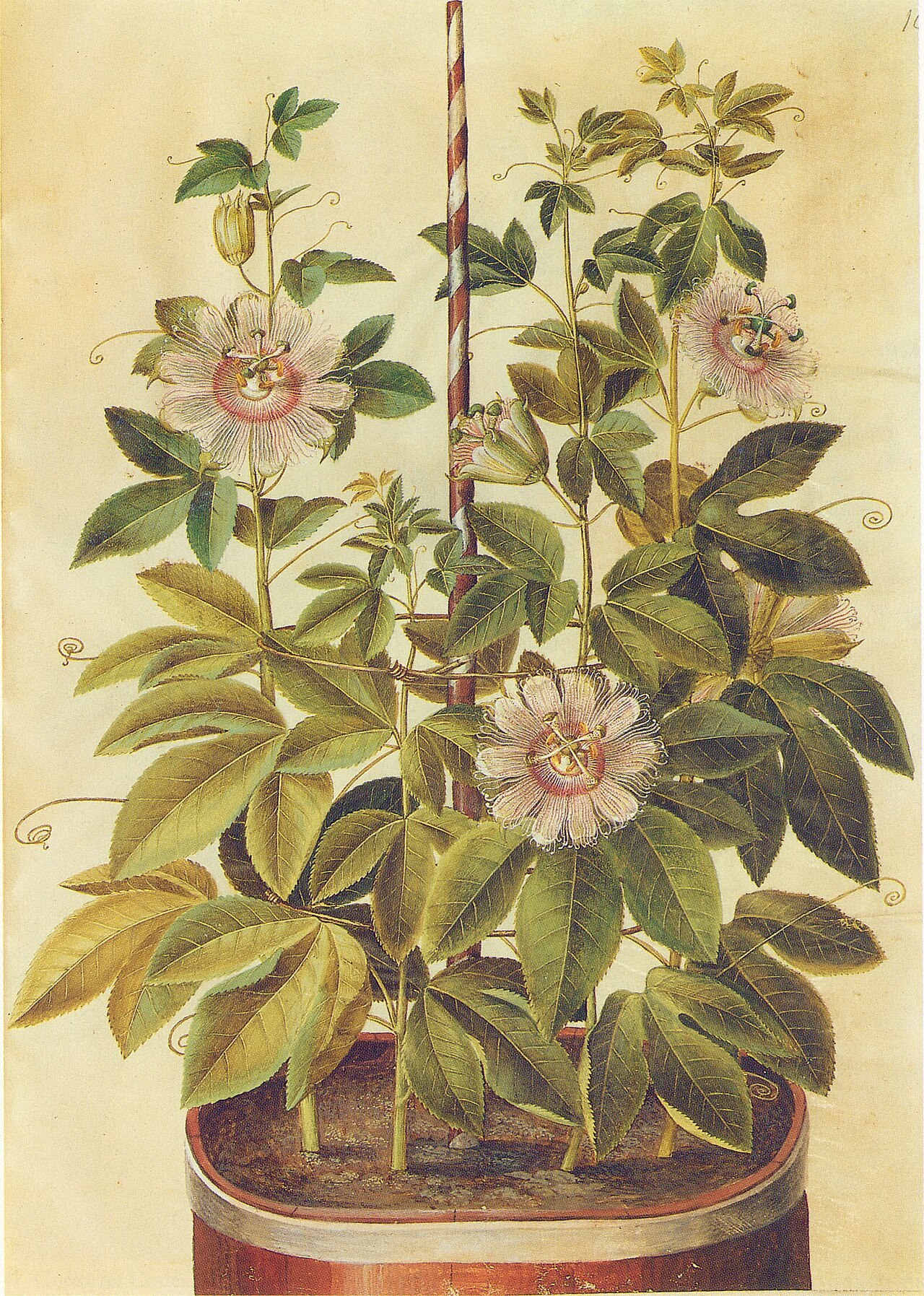
PlantPassionflowerPassion flower, passion vine, maypops, maracoc, granadilla; Passiflora incarnata of Linnaeus; in pharmacy Passiflorae herba
Passiflora incarnata, the passion vine of Virginia, by Grieve’s account a perennial with three-lobed, finely serrated leaves and “flesh-coloured or yellowish, sweet-scented flowers, tinged with purple,” followed by an orange, egg-shaped berry the size of a small apple with sweet, edible yellow pulp. The dried herb is the medicine.P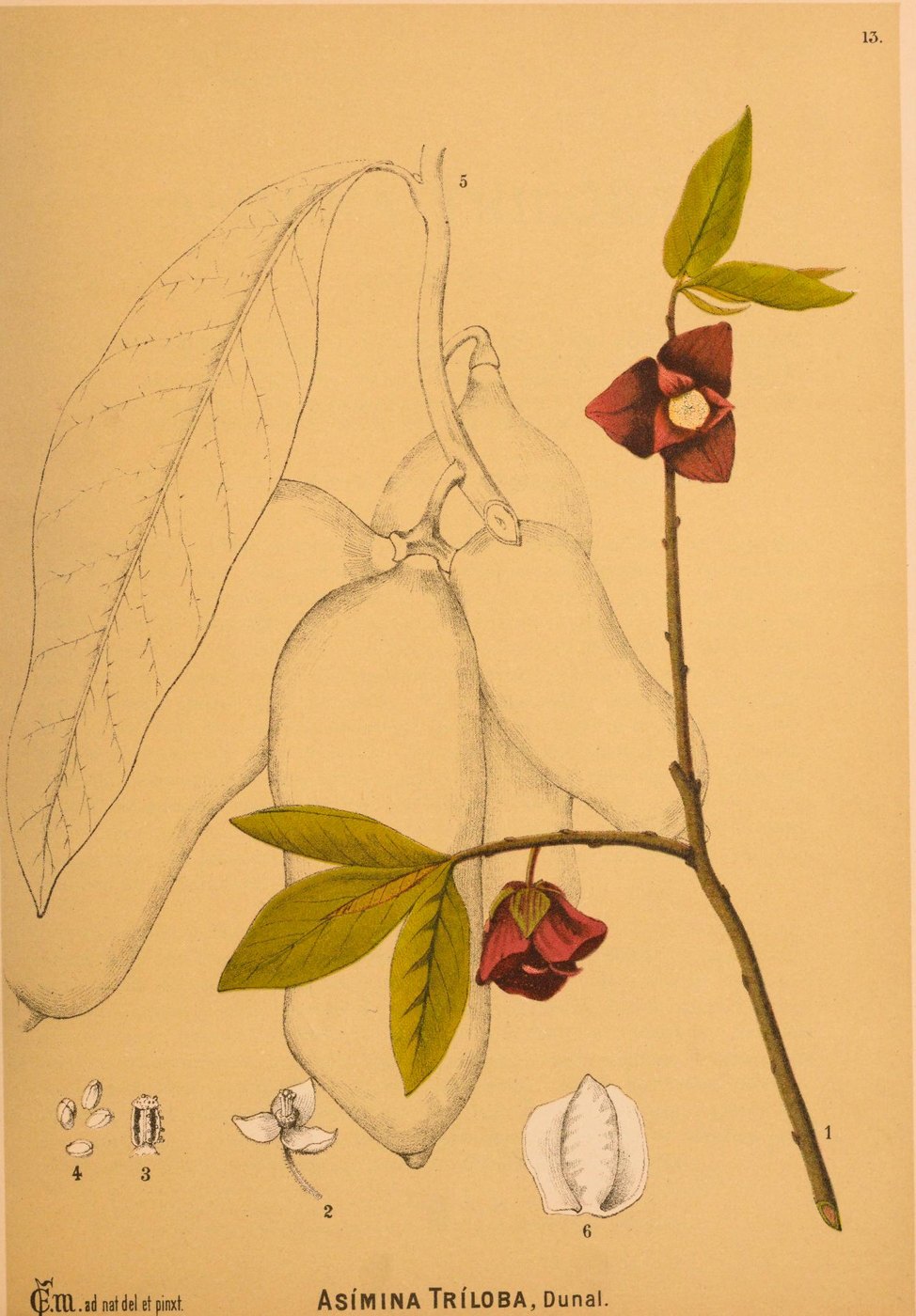
PlantPawpawPapaw, American custard-apple; asiminier of the French colonists; Asimina triloba of Dunal, Annona triloba of Linnaeus, Uvaria triloba, Porcelia triloba; not the papaya, Carica papaya, which has borrowed the name
Asimina triloba, the one temperate tree of the custard-apple family: ten to thirty feet high, with long thin leaves, dull purple flowers that open with or before the leaves, and oblong pulpy fruits like short bananas, native to the central belt of the United States from western New York to the Mississippi and southward, along streams where the soil is rich and the frosts come late.CautionP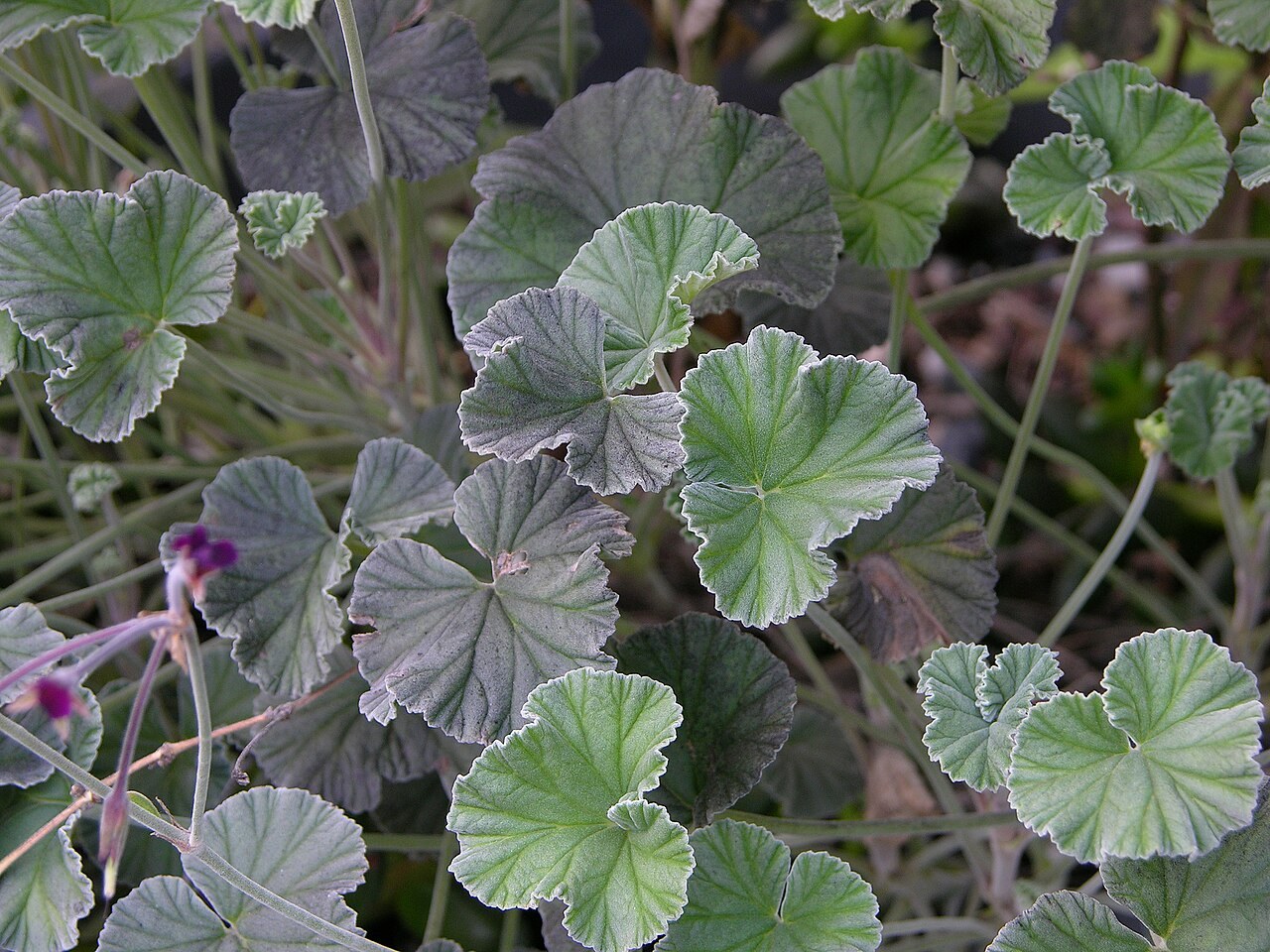
PlantPelargoniumUmckaloabo; Stevens’ Consumption Cure; Pelargonium sidoides DC. and Pelargonium reniforme Curt.; in pharmacy Pelargonii radix, pelargonium root
The root of two South African pelargoniums of the family Geraniaceae, Pelargonium sidoides and Pelargonium reniforme, relatives of the ornamental pelargoniums popular in Europe. The European Pharmacopoeia defines the drug as “the dried, usually fragmented underground organs” of the two species.P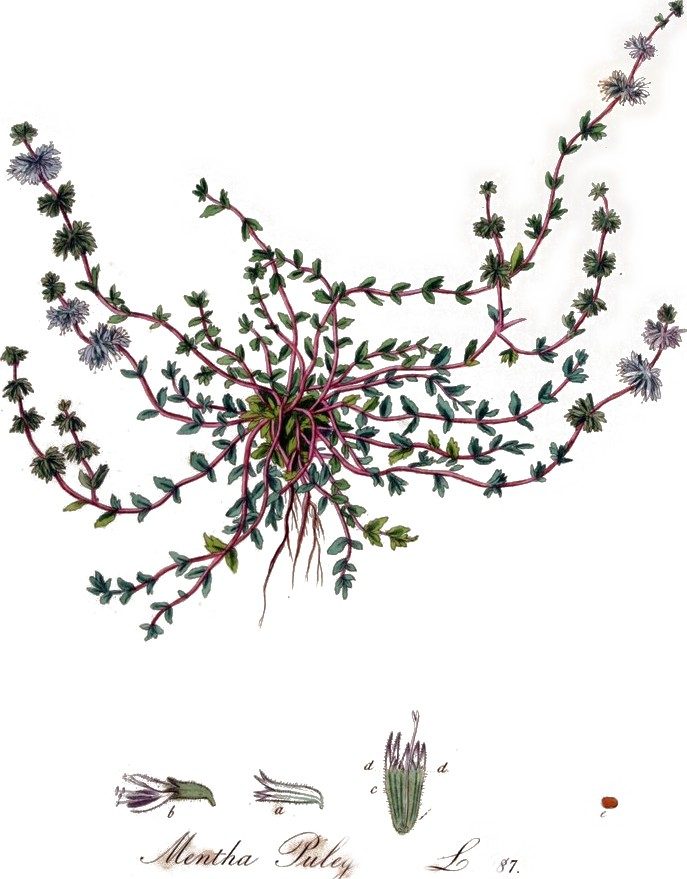
PlantPennyroyalPulegio
Mentha pulegium.CanaleCautionP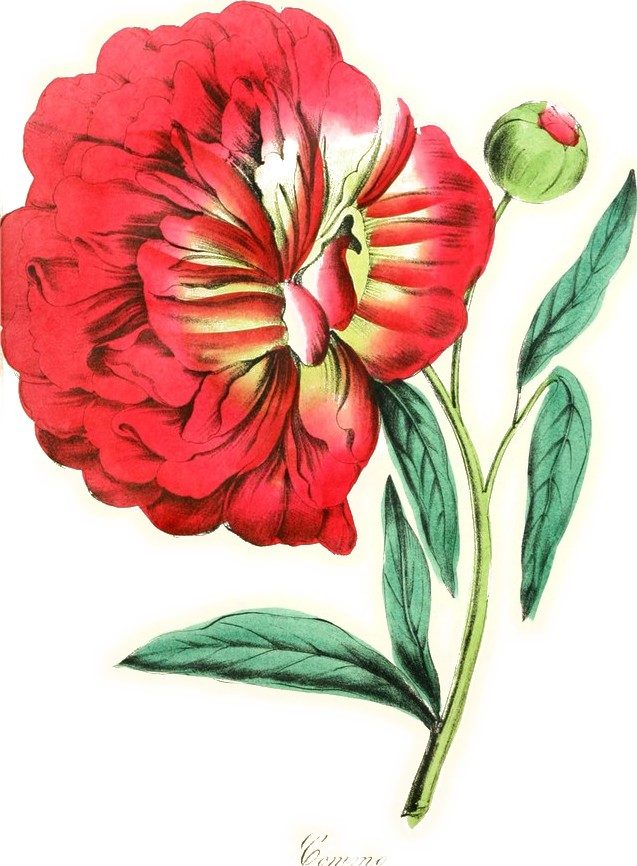
PlantPeonyPeonia
Paeonia officinalis and the “male” peony, the kind formerly grown for its medicinal root.CanaleP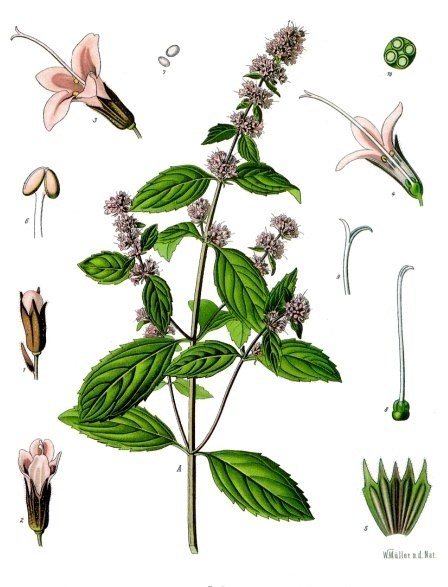
PlantPeppermintBrandy mint; Mentha × piperita of Linnaeus; the Mentha piperitis sapore, pepper-tasting mint, of the London Pharmacopoeia of 1721
Mentha × piperita, a mint of moist places and stream banks across Europe, often escaped from cultivation, with stalked, finely toothed, nearly smooth leaves, square purplish stems two to four feet high, and whorls of small reddish-violet flowers that “rarely bear seeds.” Its oil, in every part of the plant, tastes hot on the tongue and then cold, “caused by the menthol it contains.” Leaf and distilled oil are both medicines.P
PlantPeriwinkleVinca, pervinca; sorcerer’s violet
Vinca minor, the lesser periwinkle, a trailing evergreen with blue flowers.P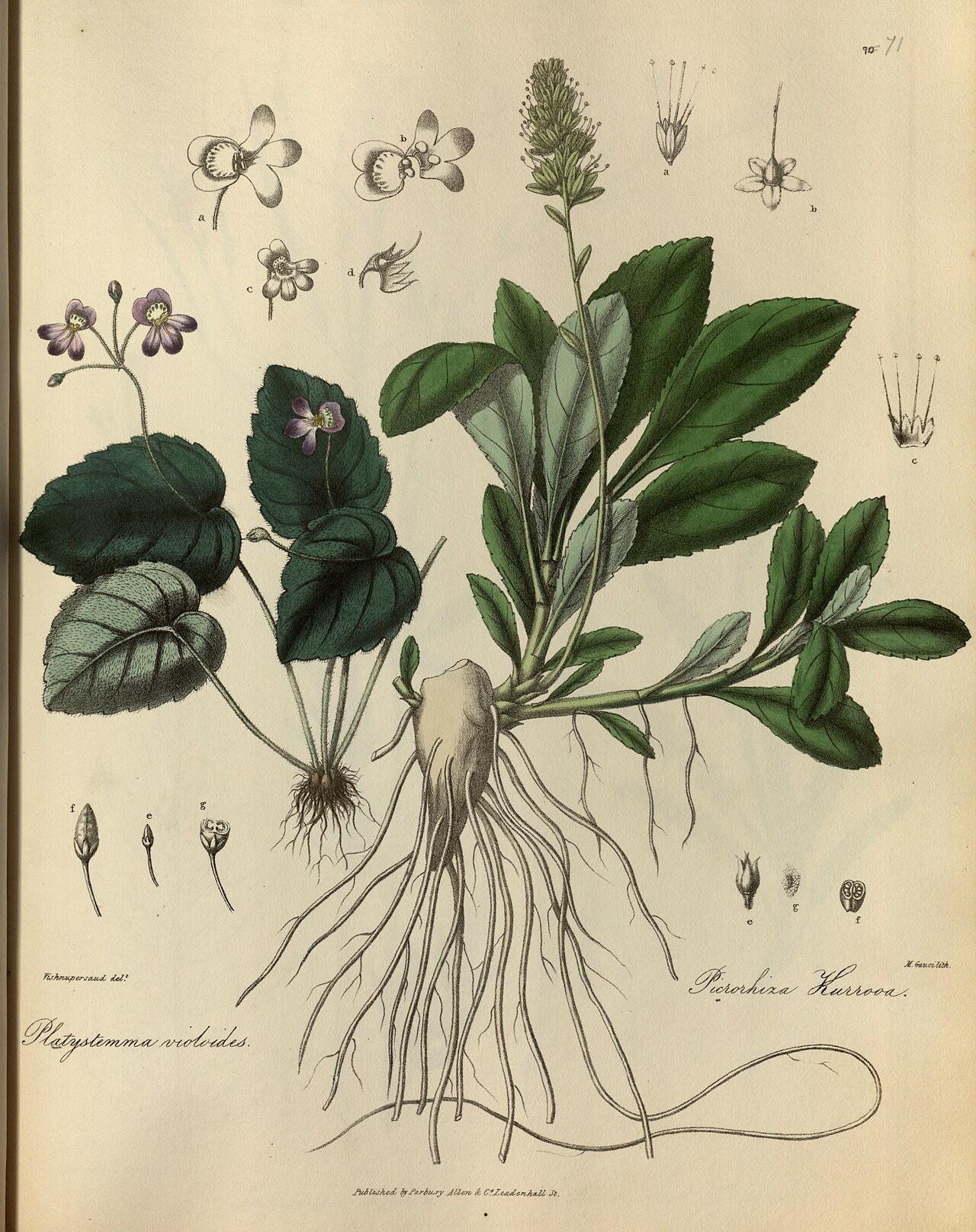
PlantPicrorhizaKutki, katki, katula, bitter root; Sanskrit kutaki, katu-rohini; Marathi bal-kadu, ‘children’s bitter’; Picrorhiza kurroa Royle ex Benth.; in pharmacy Picrorhizae kurroae rhizoma et radix
Picrorhiza kurroa, a plant of the alpine Himalaya from Kashmir to Sikkim, of the family Plantaginaceae (the Scrophulariaceae of the older books), whose root is the drug.P
PlantPilewortLesser celandine; Ficaria
Ficaria verna (Ranunculus ficaria), of the buttercup family, whose glossy yellow stars open in early spring above knobbed roots.CautionP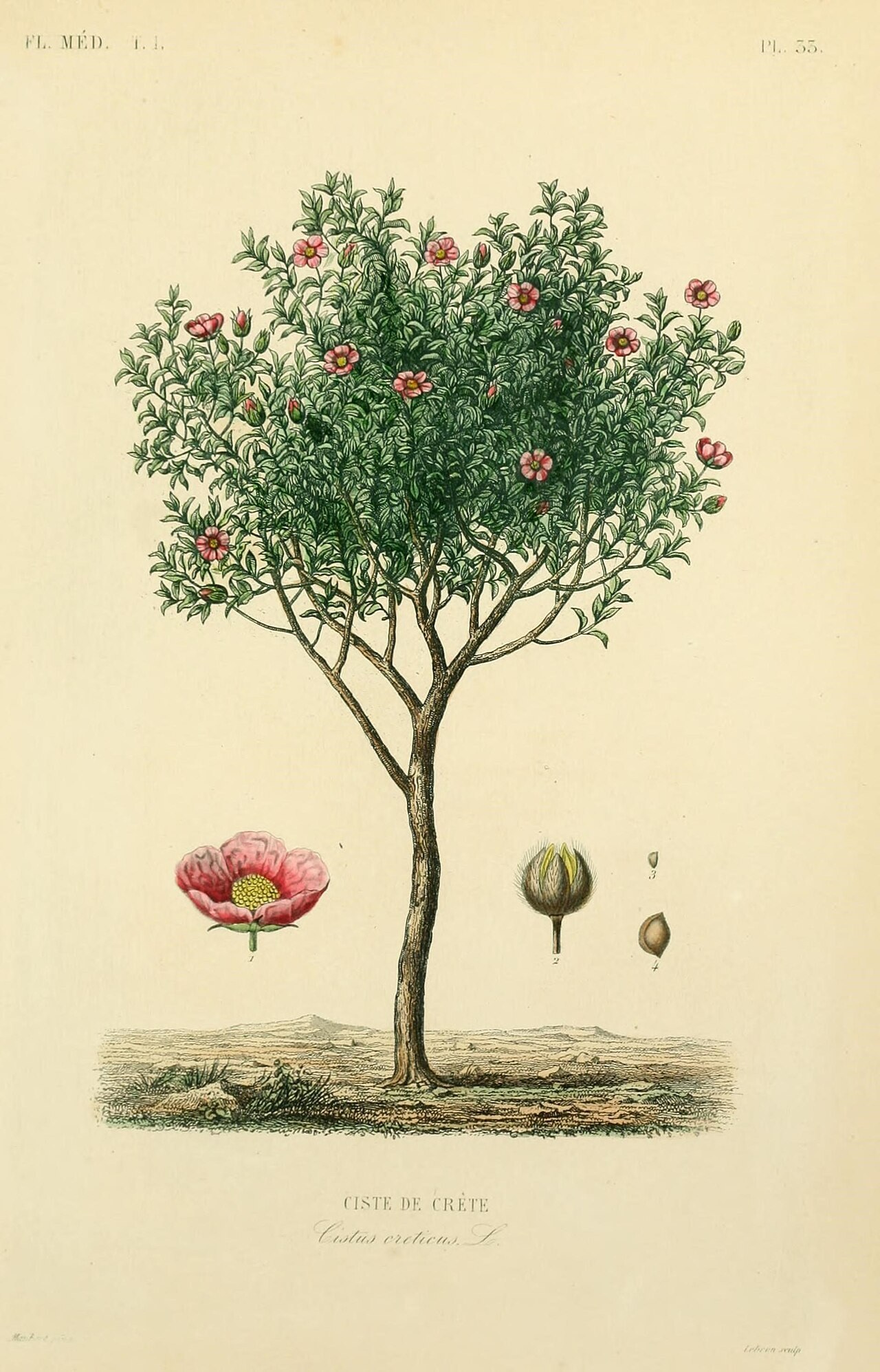
PlantPink rock-roseCretan rock-rose, ladanum cistus; holly rose of Gerard and Parkinson; Cistus creticus of Linnaeus; the Greek kistos and ledon of Dioscorides; in pharmacy Cisti cretici herba
Cistus creticus, a shrub of the family Cistaceae, from whose leaves and other parts, Folkard says, is secreted the resin ladanum, prized as a perfume. The herb is the medicine.P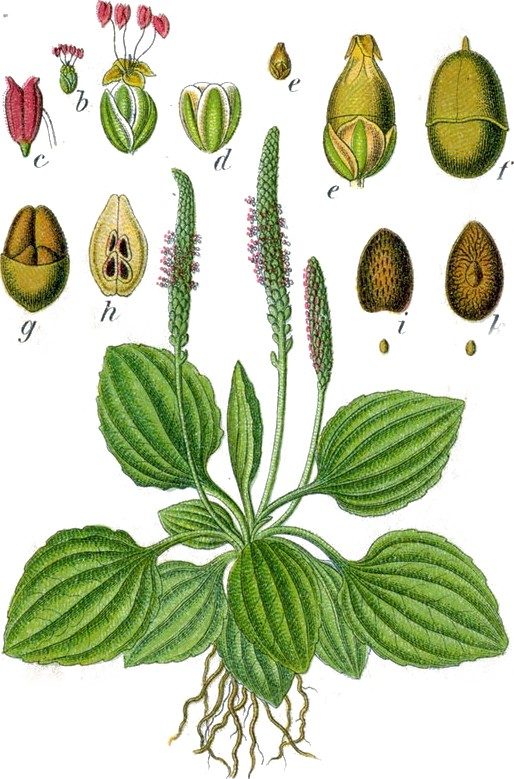
PlantPlantainPiantagine
Plantago major.CanaleP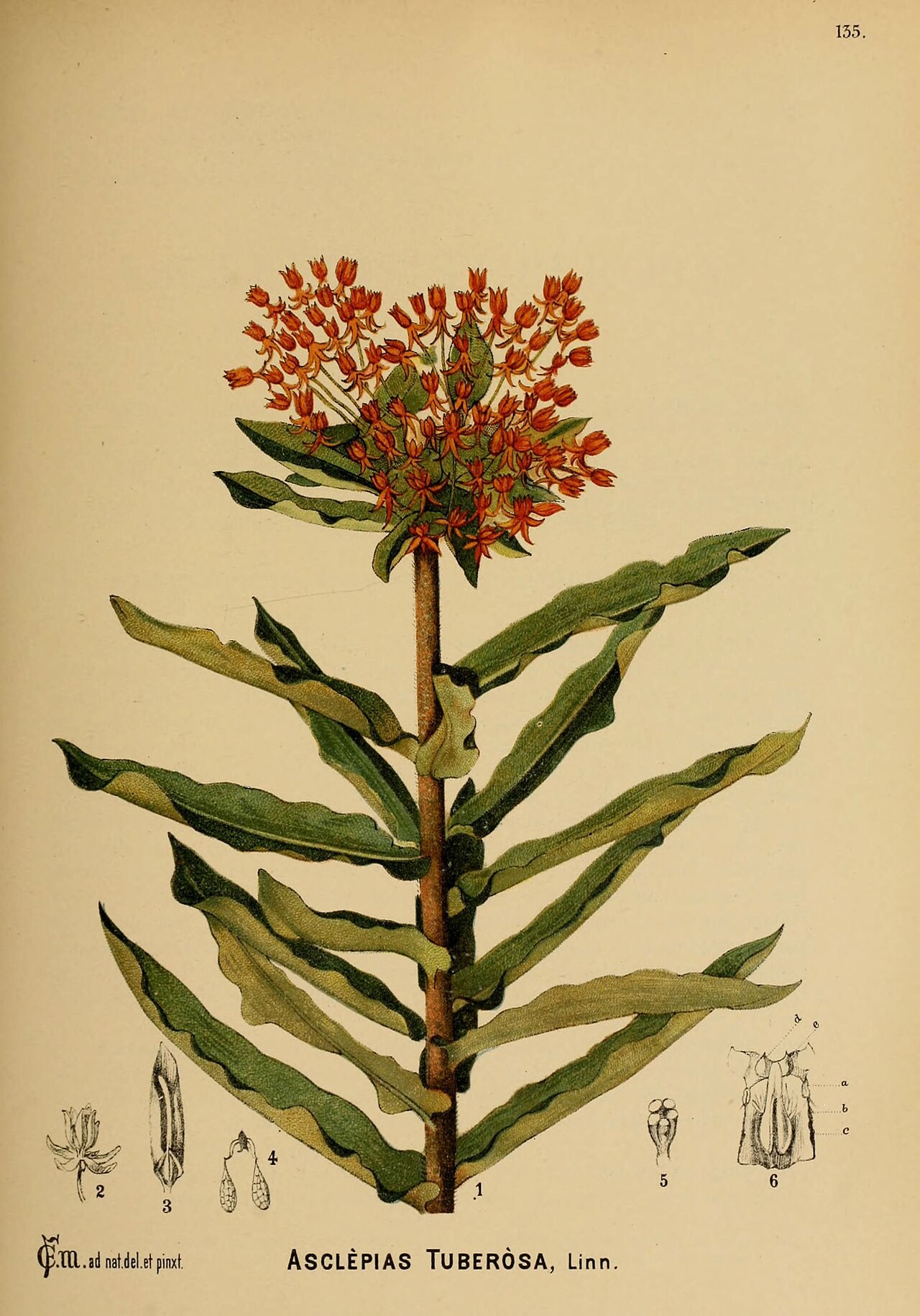
PlantPleurisy rootButterfly weed, orange milkweed, orange swallow-wort, swallow-wort, silkweed, tuber root, wind root, colic root, white root, flux root, Canada root; Asclepias tuberosa L.
Asclepias tuberosa, a handsome perennial of North America from Canada southward, most abundant in the south, one to one and a half feet high, with clusters of bright, deep orange flowers in summer; Grieve placed it in the family Asclepiadaceae. Unlike the other milkweeds it has little or none of their milky juice. The large spindle-shaped root is the drug: orange-brown outside, whitish within, with a bitterish, somewhat acrid taste. King’s traces the genus name to Aesculapius.CautionP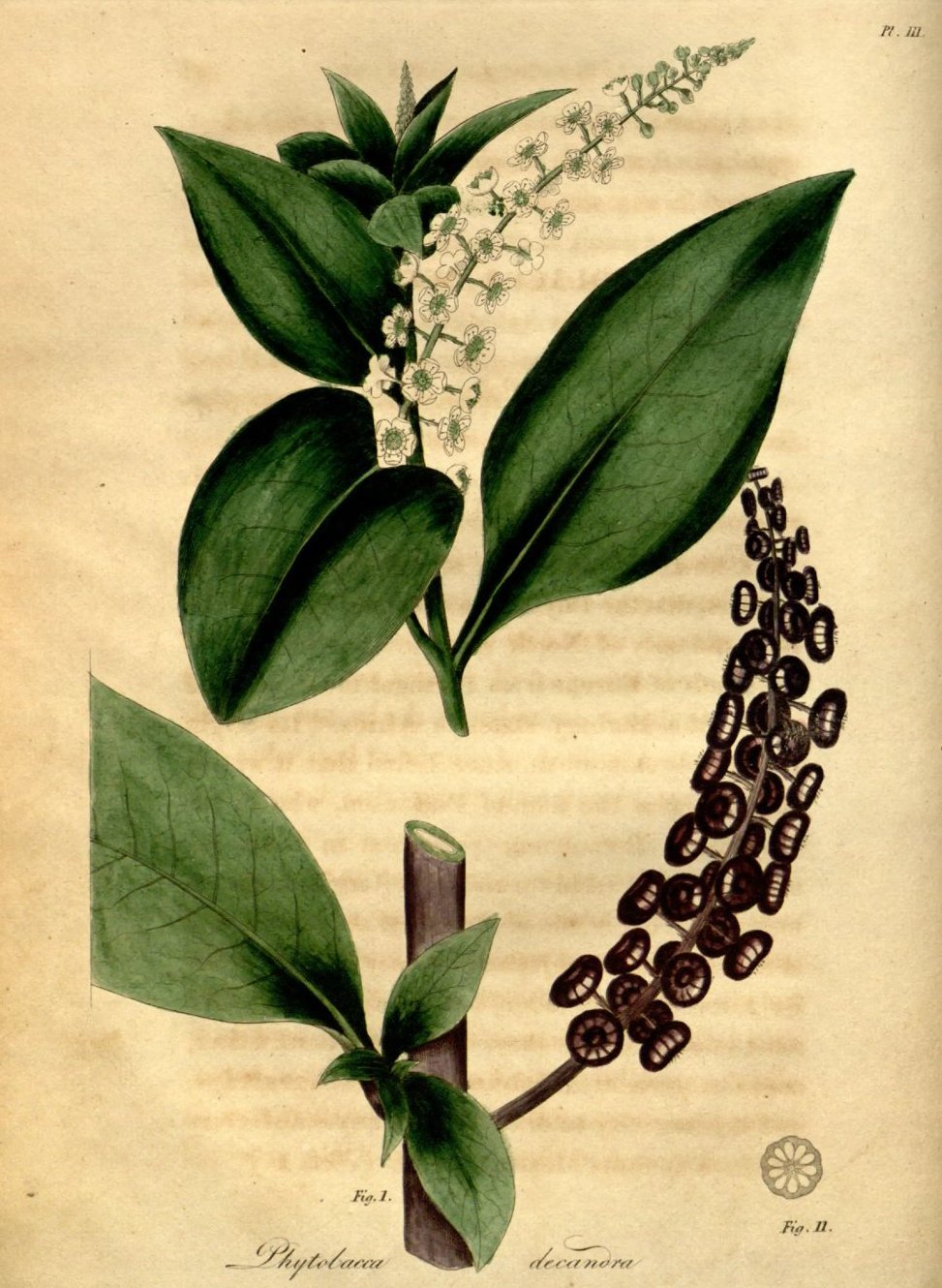
PlantPokeweedPoke, poke root, garget, pigeon-berry, scoke; pocan of the Virginian tribes; Phytolacca decandra of the older books
Phytolacca americana, the American pokeweed: a tall perennial of hedges and roadsides, purple-stemmed, with clusters of black berries full of crimson juice.CautionP
PlantPomegranateMalum punicum, granatum
Punica granatum: fruit, rind, flowers, and root bark.P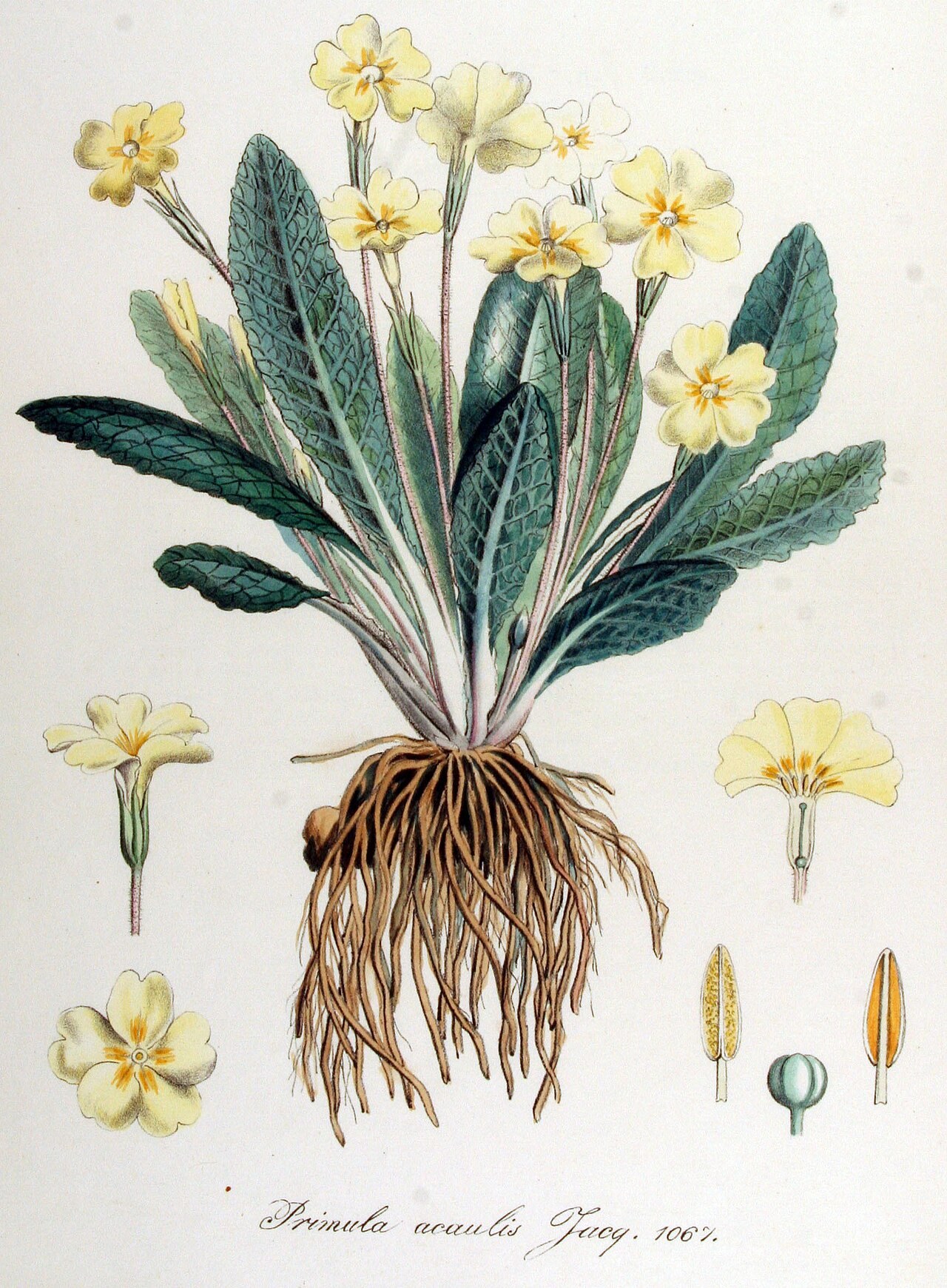
PlantPrimrosePrimrose; anciently Paralisos and, with the cowslip and oxlip, Herba paralysis; German Schlüsselblume, ‘key-flower’; Primula vulgaris Huds.
Primula vulgaris, of the family Primulaceae, abundant in woods, hedgerows, pastures, and railway banks throughout Britain, flowering in April and May and in mild winters from the first days of the year. Its pale yellow flowers come in two forms, on separate plants: ‘pin-eyed,’ with the stigma at the mouth of the tube, and ‘thrum-eyed,’ with the anthers there instead; Darwin showed, Grieve explains, that this ensures cross-pollination by long-tongued bees and moths. The fresh herb in bloom and the dried root-stock are used; Grieve names saponin as their somewhat acrid active principle.P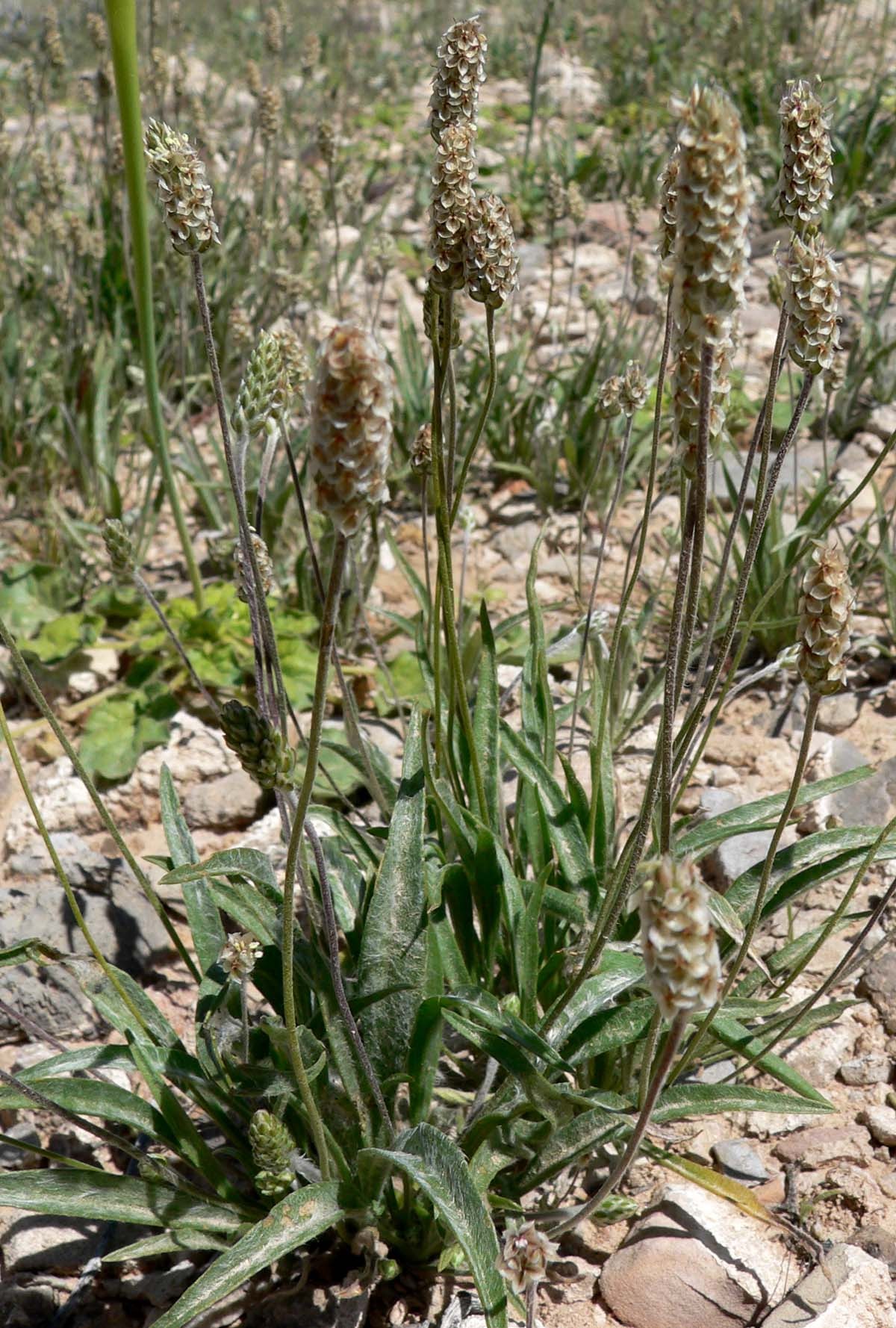
PlantPsylliumIspaghula, ispaghul, spogel seed, flea seed; Plantago ovata Forssk. (Plantago ispaghula); the true psyllium of pharmacy is Plantago afra L. (Plantago psyllium L.) or Plantago indica L. (Plantago arenaria Waldst. & Kit.), the sand plantain; the psullion of Dioscorides; in pharmacy Plantaginis ovatae semen and seminis tegumentum, ispaghula seed and husk, and Psyllii semen, psyllium seed
Seeds of plantains, of the family Plantaginaceae. Ispaghula, Plantago ovata, Grieve gives as a plant of India, Persia, Spain, and the Canary Islands, its seed boat-shaped, pale greenish brown, up to an eighth of an inch long, with no odour or taste; the mucilage is held in the seed coat, which was “sometimes used to stiffen linen.” The European Medicines Agency’s assessment report finds the husk 85 per cent water-soluble fibre. Psyllium seed proper comes from Plantago afra or P. indica, the latter the sand plantain whose smaller, black seeds Grieve says were “used similarly.”P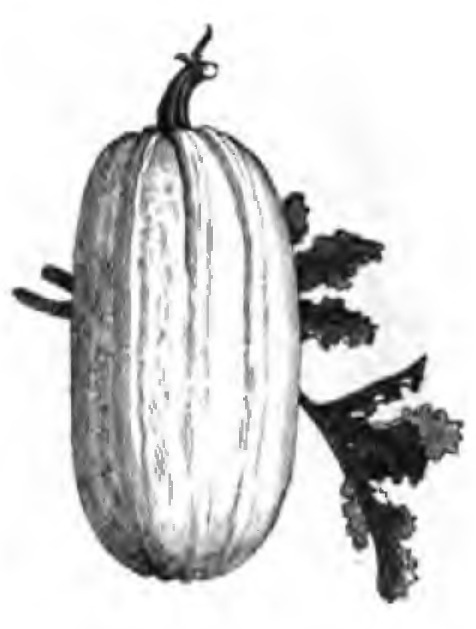
PlantPumpkin seedPumpkin, Pepo of the U.S. Pharmacopoeia; Cucurbita pepo L., for pharmacy usually the Styrian variety, C. pepo convar. citrullina var. styriaca; in pharmacy Cucurbitae semen
The whole, dry, ripe seed of the pumpkin, Cucurbita pepo, of the family Cucurbitaceae, an annual with a trailing, rough-haired stem, branching tendrils, large five-lobed leaves, and large yellow flowers. King’s Dispensatory describes the seeds as about 2 cm long, broadly ovate, flat, white or whitish, “inodorous; taste bland and oily.” The European Medicines Agency’s assessment report notes that the Styrian variety is preferred in pharmacy for its thin seed coat and soft taste, and that the seed is about half fatty oil.P
Plant PurslanePortulaca; Greek andrachne
Portulaca oleracea, a succulent, creeping herb of warm gardens.Q
Plant QuinceCydonia, “the apple of Cydon”
Cydonia oblonga.R
PlantRadishRafano
Garden radish, Raphanus sativus (now classed by Kew as Raphanus raphanistrum subsp. sativus): root, juice, and seed.CanaleR
PlantRagwortCushag (Manx); Stinking Willie
Jacobaea vulgaris (syn. Senecio jacobaea). A tall, weedy, yellow-flowered daisy of pastures and waste ground.CautionR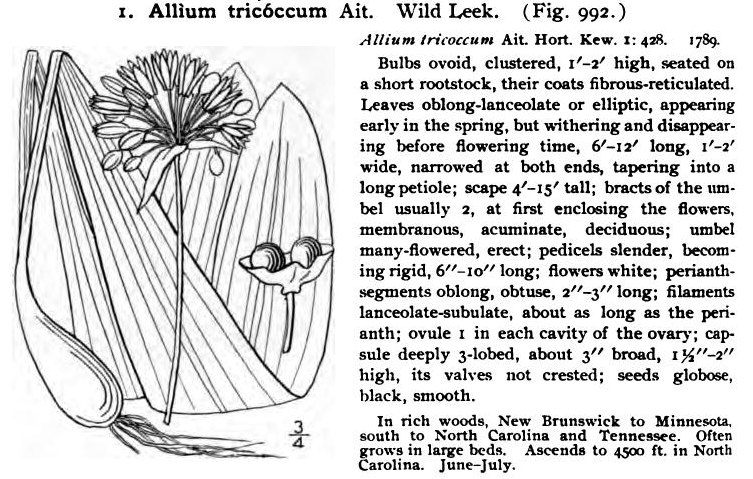
PlantRampsWild leek; Allium tricoccum of Aiton; the Ojibwe bûgwadjijîcagowûnj, the unusual skunk-plant, Winabojo’s onion; the Potawatomi bûgwadjica’gowûnj
Allium tricoccum, the wild leek of the hardwood forests of the Great Lakes and the East: a spring ephemeral that puts up its broad leaves in late winter and early spring from a bulb, feeds through its roots and their fungi even in the leafless months, and is gathered for the bulb and the leaf together. The larger of the two wild onions of Ojibwe country; the smaller, the nodding wild onion Allium cernuum, is the sweeter.R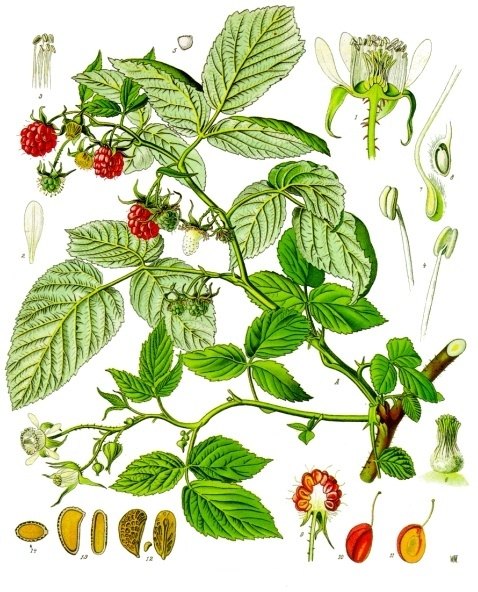
PlantRaspberry leafRubus idaeus; Raspbis, Hindberry, Bramble of Mount Ida; Greek Batos Idaia, Latin Rubus Idaea; Danish Hindebar, Dutch Braamboss, Saxon Hindbeer; Gerard’s Raspis
The leaves of the raspberry, Rubus idaeus: a shrub with erect, biennial stems from creeping perennial roots, native to many parts of Europe and wild in parts of Britain, flowering in May and June.R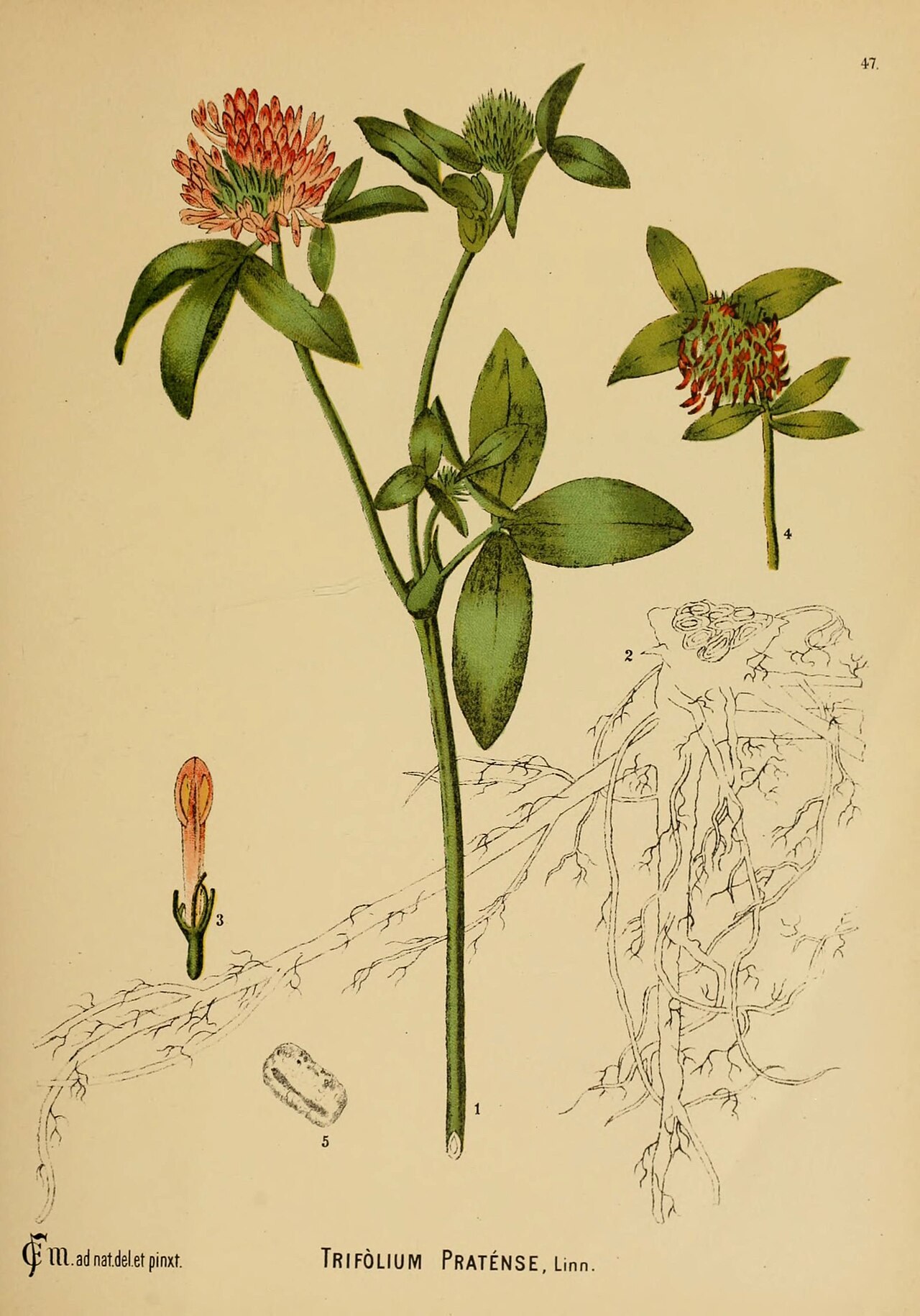
PlantRed cloverTrefoil, purple clover, meadow trefoil, honeysuckles; Trifolium pratense L.
Trifolium pratense, of the family Leguminosae, a short-lived perennial of meadows across Britain, Europe, and northern and central Asia, with leaves of three leaflets and fragrant red to purple flowers in dense round heads; Grieve calls it an excellent mowing crop, though the bees work it less than the white clover. The flowering heads are the drug. The modern trials use preparations of its isoflavones, which one of the reviews calls phytoestrogenic.R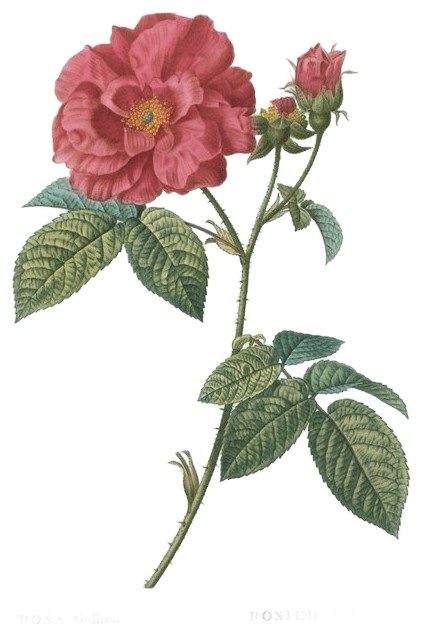
PlantRed rosesRose rosse
Dried petals of Rosa gallica.CanaleR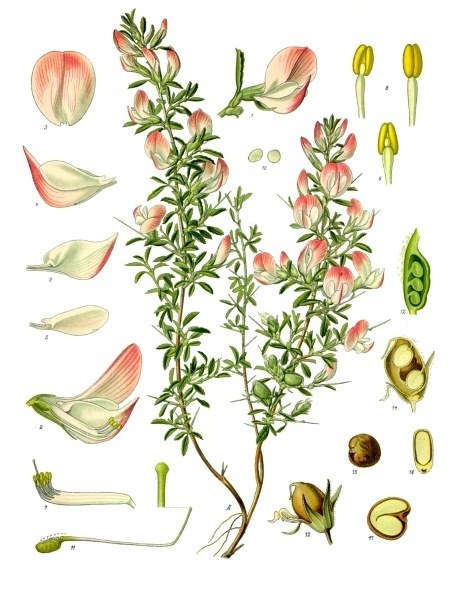
PlantRest-harrowCammock, wild liquorice, stinking Tommy, ground furze, land whin; spiny rest-harrow, Ononis spinosa of Linnaeus, Grieve’s Ononis arvensis; in pharmacy Ononidis radix, the root
Ononis spinosa, a woody plant of the legume family of arable and waste ground, half a yard or a yard high, with small roundish dark-green leaves and twigs that are “without thorns while they are young; but afterwards armed in sundry places, with short and sharp thorns,” as Culpeper describes it, and pale purplish pea-flowers in July. Its root is blackish without and whitish within, “as hard as an horn when it is dried,” and runs deep. The root is the medicine.R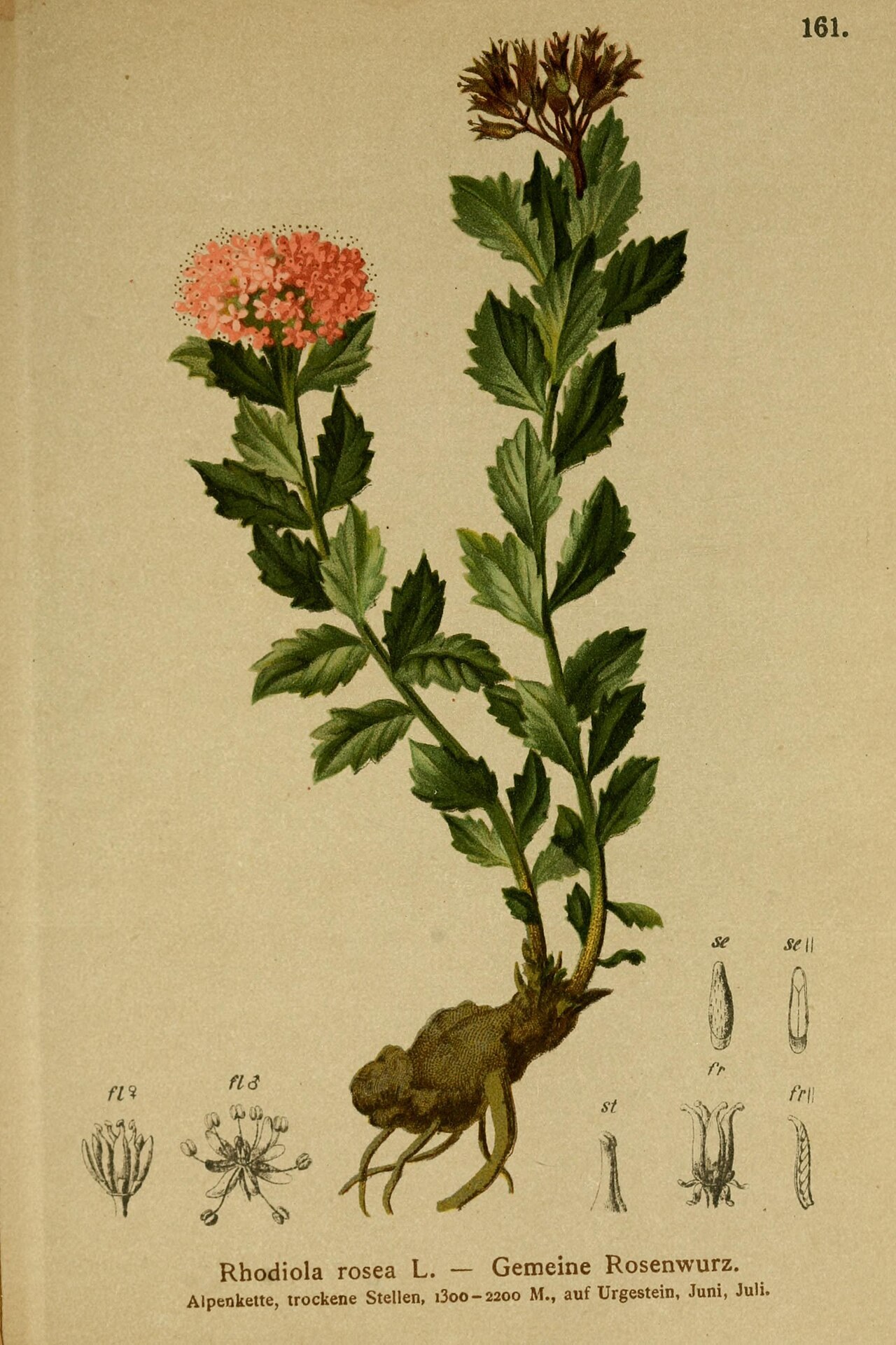
PlantRhodiolaRoseroot, rosenroot, golden root, Arctic root, Rosenwurz; the rhodia radix of Dioscorides, also called rhodida; Rhodiola rosea L.; in pharmacy Rhodiolae roseae rhizoma et radix
Rhodiola rosea, of the family Crassulaceae, native throughout the mountains of the Northern Hemisphere. The drug is the dried root and rhizome, though what is called the root is in fact an underground stem; the name refers, in the words of the European Medicines Agency’s assessment report, “to the rose-like fragrance of the fresh cut underground organs.” A main commercial source of the rhizomes is the Altai region of Asia.R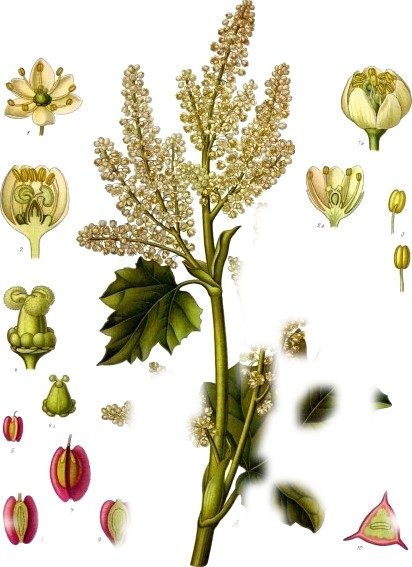
PlantRhubarbRabarbaro
The root of Chinese rhubarb, Rheum officinale and R. palmatum, long brought to Europe overland through the Levant; not the garden rhubarb stalk.CanaleR
PlantRocketRucola
Eruca vesicaria, salad rocket.CanaleR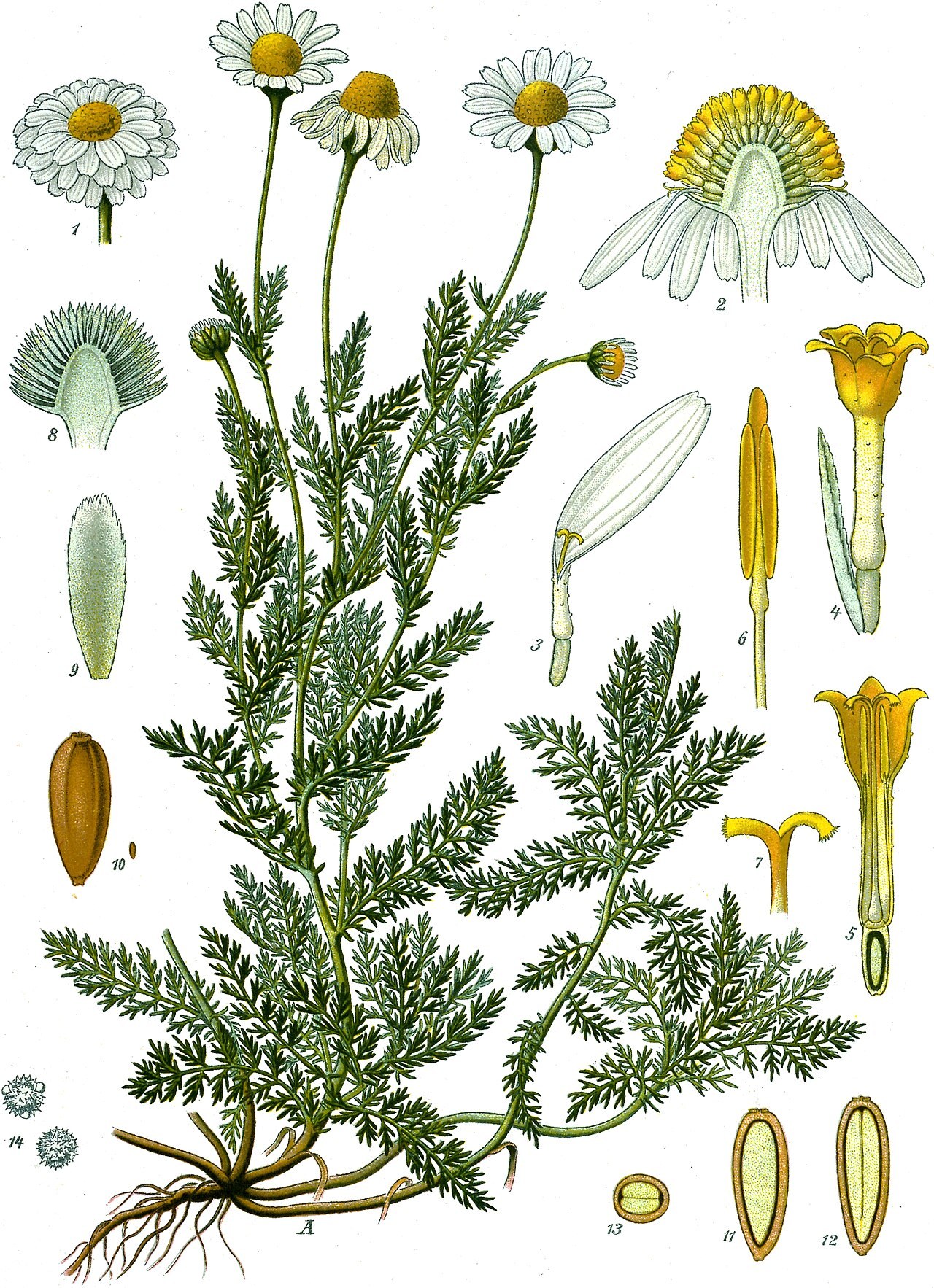
PlantRoman chamomileCommon or true chamomile, English and Scotch chamomile in commerce; Spanish manzanilla, the little apple; Saxon maythen; Chamaemelum nobile, formerly Anthemis nobilis of Linnaeus; in pharmacy Chamomillae romanae flos
Chamaemelum nobile, a low, creeping, downy, greyish-green perennial of dry commons and sandy soil, a foot high in flower, its leaves cut into threads that give the whole plant a feathery look. The flower heads, from late July to September, are like a daisy’s with about eighteen white rays round a conical yellow centre. Grieve distinguishes the single wild form, ‘Scotch chamomile,’ from the double garden form, ‘English chamomile,’ which the British Pharmacopoeia preferred. German chamomile, Matricaria chamomilla, is a different plant with its own entry, Chamomile.R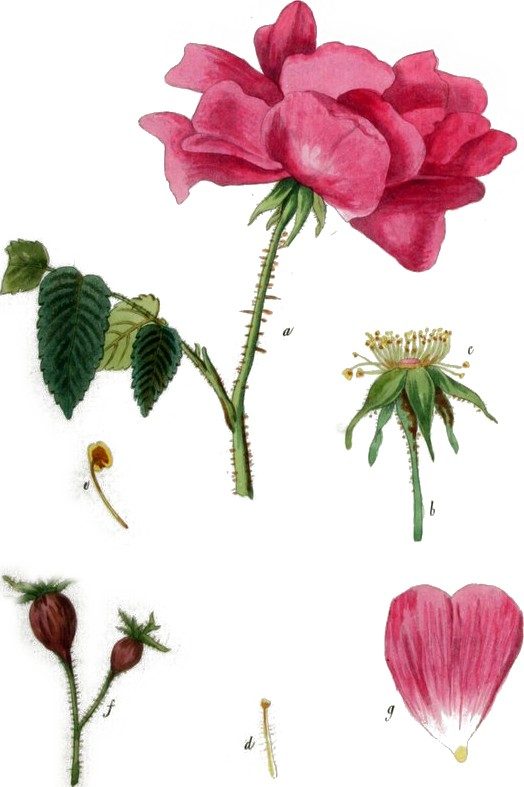
Plant RoseRosa
Chiefly the red or apothecary’s rose, Rosa gallica, and the damask rose, Rosa × damascena, as syrup, honey, sugar, water, and powder.CanaleR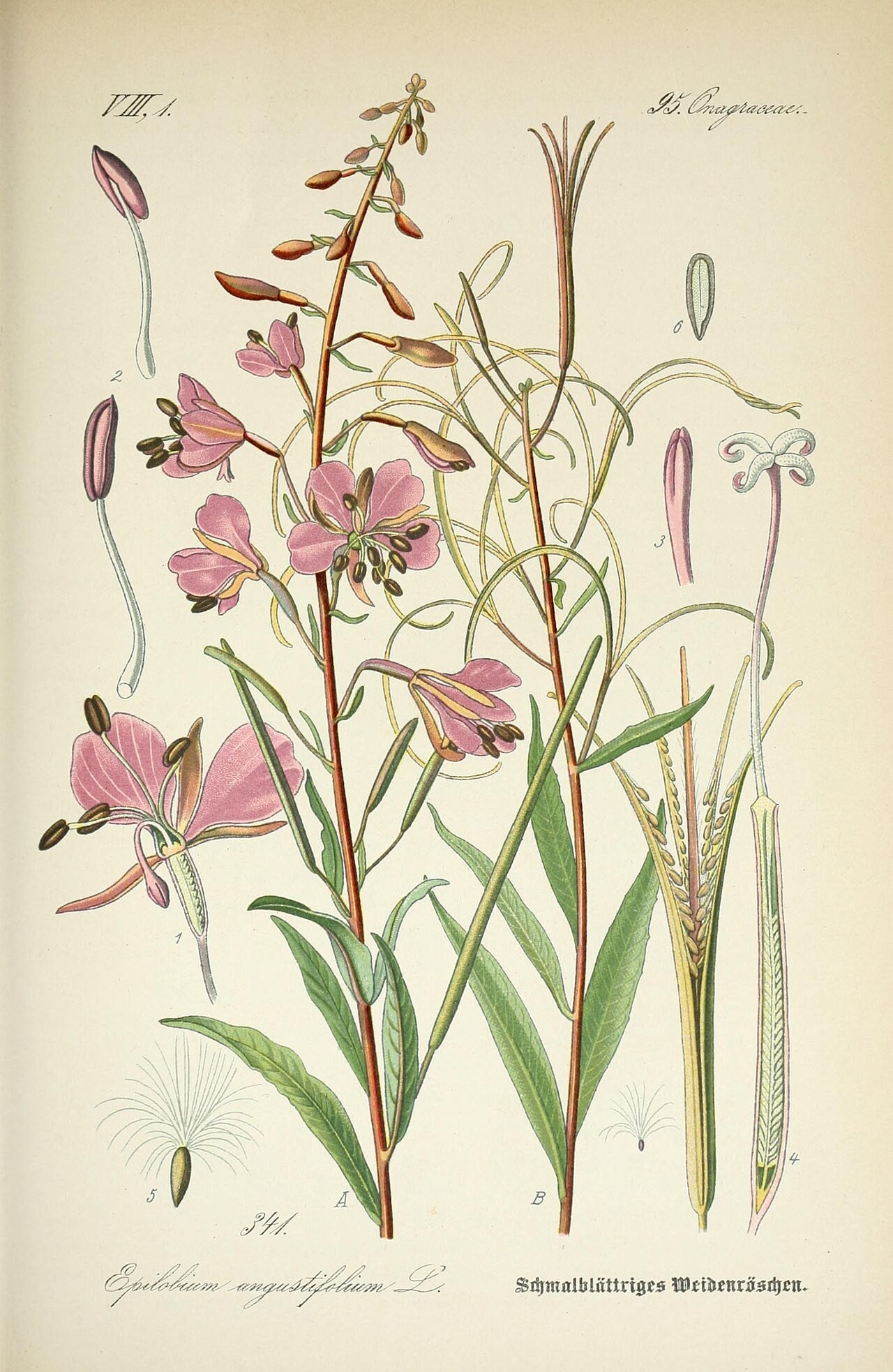
PlantRosebay willowherbRose bay willow, fireweed, great or spiked willow-herb, flowering willow, French willow, Persian willow, blood vine, blooming Sally, purple rocket, wickup, wicopy; Ivan tea, Kapor tea; Epilobium angustifolium L.; Chamaenerion angustifolium (Scop.); in pharmacy Epilobii herba, with the small-flowered Epilobium parviflorum Schreb.
Epilobium angustifolium, of the family Onagraceae, which Grieve calls “one of our handsomest wild flowers”: tall erect stems four to eight feet high, densely clothed with long, narrow leaves, ending in long spikes of light rose-purple flowers. The pods split into four strands to free tiny seeds borne on silky white hairs that the slightest wind scatters. In America, Grieve notes, it springs up on ground cleared by fire, hence ‘fireweed’; in Ireland ‘blooming Sally’ is a corruption of Salix, the willow, for its willow-like leaves.R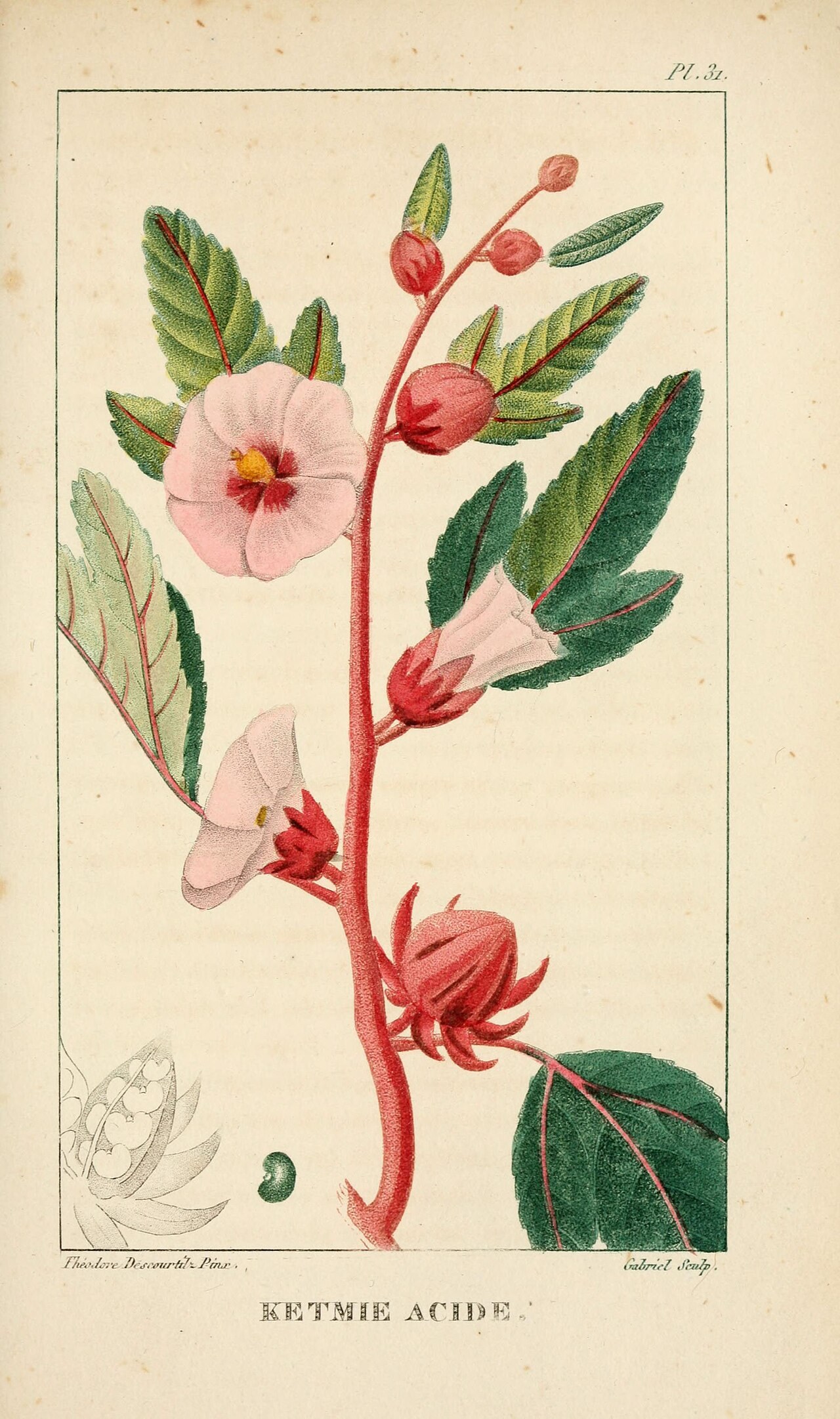
PlantRoselleHibiscus, ‘the Roselle of India or Red Sorrel of the W. Indies’; in Bombay bazaars ‘Rozal’; Hibiscus sabdariffa L.
Hibiscus sabdariffa, of the mallow family, Malvaceae, an erect annual shrub with a purple stem and yellow flowers, cultivated, Kirtikar and Basu write, in the hotter parts of India. After flowering its calyx swells into a purplish fleshy cup, the part chiefly eaten. A note of 1913 that they reprint found its acidity due entirely to malic acid, its composition “very similar to that of the cranberry.”R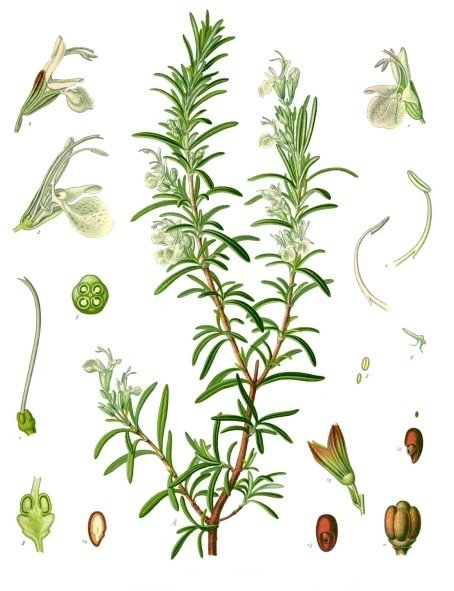
Plant RosemaryRosmarinus, ‘sea-spray’, from its usually growing on the sea-coast (Prior)
Salvia rosmarinus (formerly Rosmarinus officinalis).R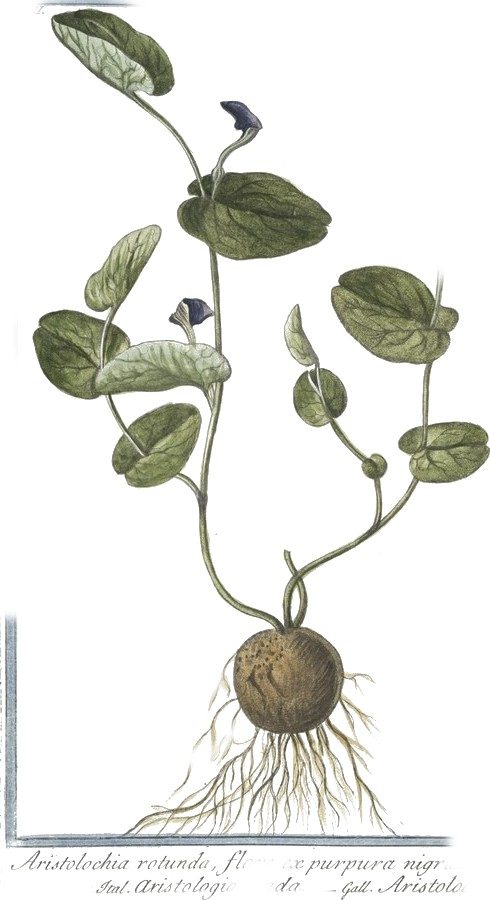
PlantRound birthwortAristolochia rotonda
Aristolochia rotunda.CanaleCautionR
PlantRowanMountain ash, witchen
Sorbus aucuparia.R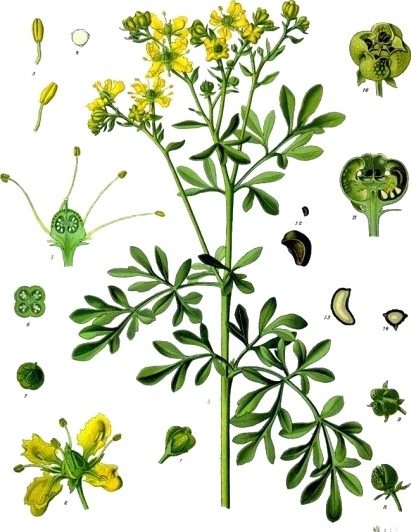
Plant RueRuta
Ruta graveolens, garden rue.CanaleCautionR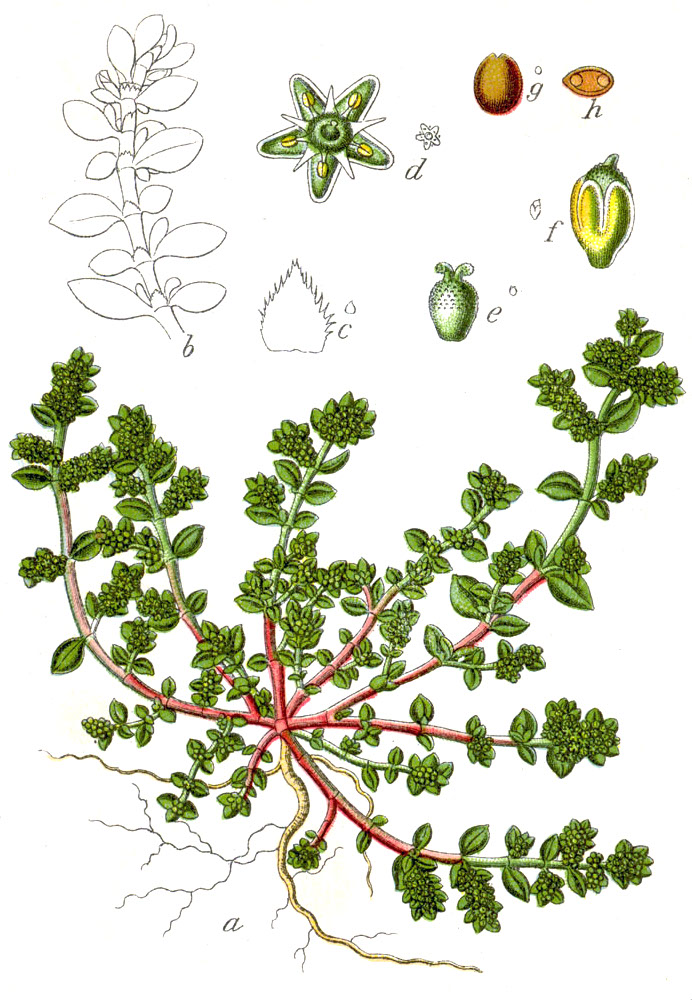
PlantRupturewortSmooth rupturewort; Herniaria glabra of Linnaeus, with the hairy rupturewort, Herniaria hirsuta; in pharmacy Herniariae herba
Herniaria glabra, a small plant of the family Caryophyllaceae that Culpeper saw spreading “very many thready branches round about upon the ground, about a span long,” jointed, with tiny paired leaves and “exceedingly small yellowish flowers, scarce to be discerned from the stalks and leaves.” It grows in dry, sandy, and rocky places through temperate and southern Europe and into Asia, and is native to southern and central England. Grieve found it odourless and insipid.S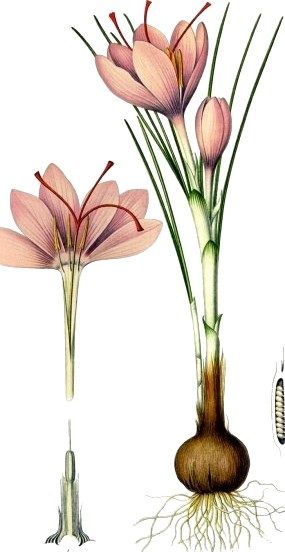
Plant SaffronZafferano
The stigmas of Crocus sativus.CanaleS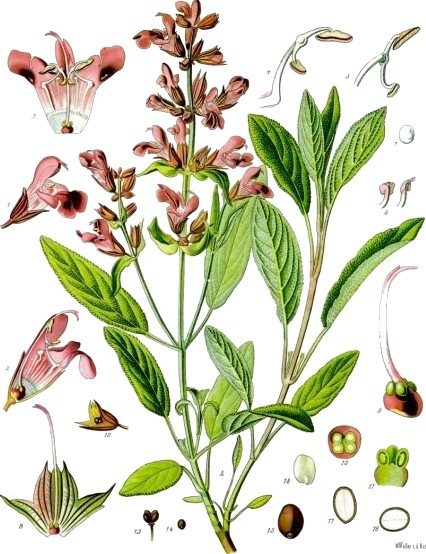
PlantSageSalvia
Salvia officinalis.CanaleS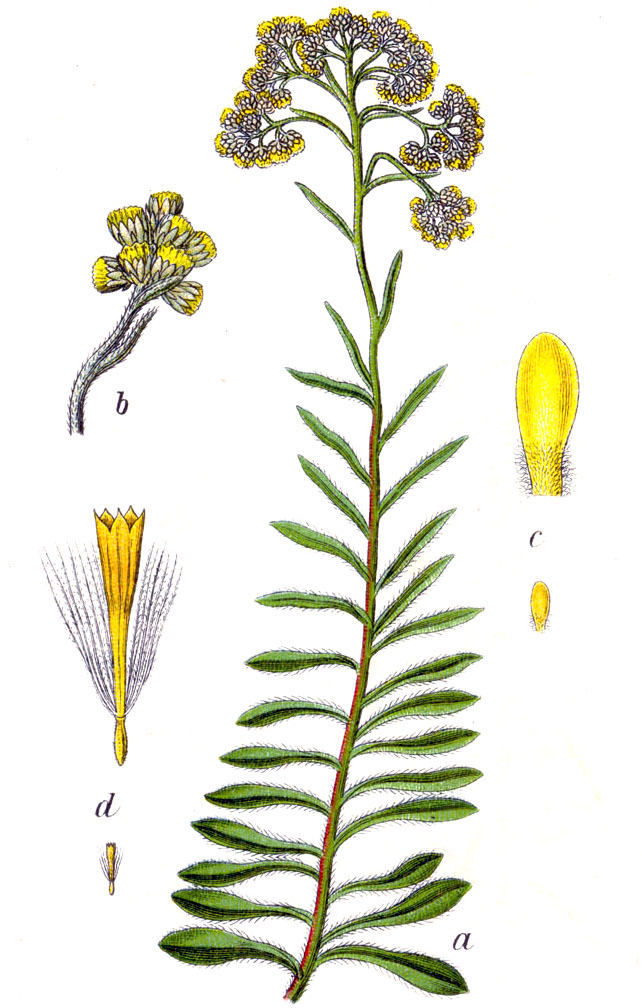
PlantSandy everlastingImmortelle; yellow chaste weed; old pharmacy Flos Stoechados citrini or Flos Stoechados; Gnaphalium arenarium L.; Helichrysum arenarium (L.) Moench; in pharmacy Helichrysi flos
Helichrysum arenarium, a perennial of the family Asteraceae, eight to thirty centimetres high, with erect, greyish-white woolly stems and leaves, growing in dry sandy places from the Netherlands, southern Sweden, and Estonia south to southern Germany, Bulgaria, and western Kazakhstan. Its flower heads are two to five centimetres across, the bracts “yellow to reddish-orange, shining,” and, as Flora Europaea notes, the plant is not sweet-smelling. The dried flower heads are the drug.S
PlantSarsaparillaZarzaparrilla, “little bramble vine”
The roots of Smilax species, thorny climbers of Central and South America.S
PlantSassafrasSassafras; the ague tree
The root bark of Sassafras albidum.CautionS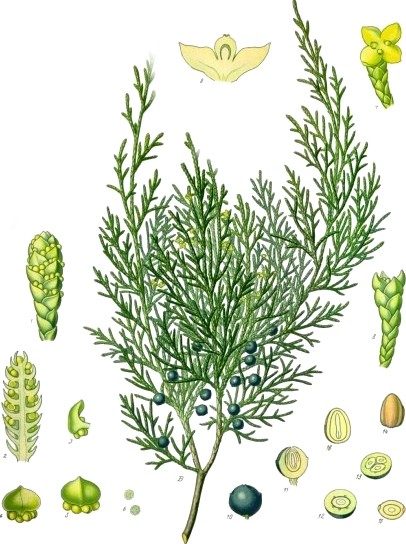
PlantSavinSabina
Juniperus sabina, a low juniper.CanaleCautionS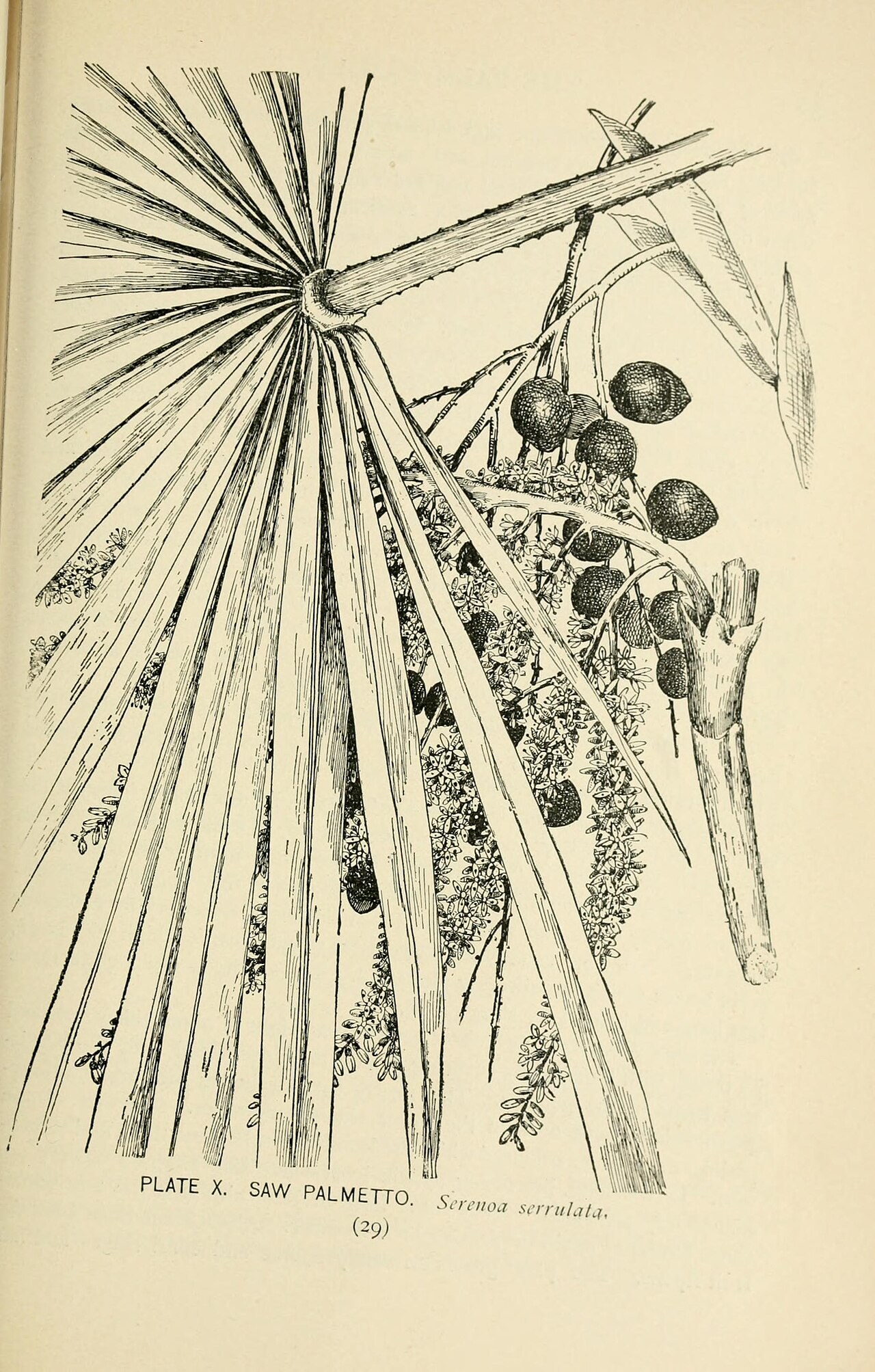
PlantSaw palmettoSabal; Sabal serrulata of Grieve; Serenoa repens (W. Bartram) Small; in pharmacy Sabalis serrulatae fructus
Serenoa repens, a small palm of the family Arecaceae with a creeping, branching stem six to ten feet long and bright-green, fan-shaped leaves on spiny-edged stalks. King’s Dispensatory finds it plentiful along the Atlantic shores from Florida to South Carolina, where it forms the ‘palmetto scrub’ of the coast. The drug is the fruit, a one-seeded, blackish-brown drupe half an inch to an inch long, sweet and edible but, King’s says, not particularly palatable; a single panicle may yield six to eight pounds of berries, and the fresh berries have a characteristic cheesy odour.S
PlantSelf-healPrunella, brunella; heal-all
Prunella vulgaris.S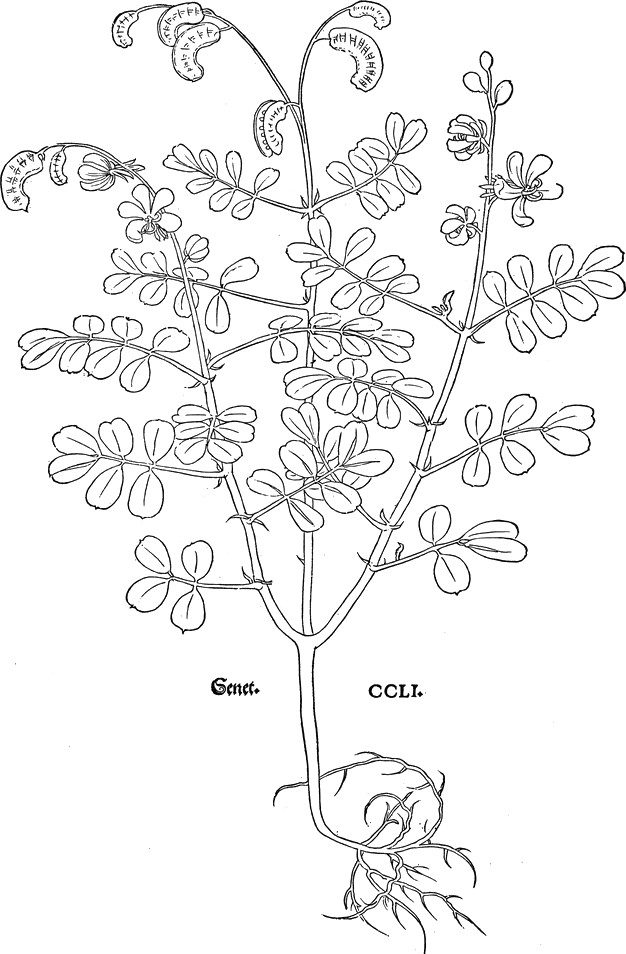
PlantSennaSena
The leaves and pods of Senna alexandrina.CanaleS
PlantShepherd’s purseBursa pastoris; pickpocket, mother’s heart
Capsella bursa-pastoris, of the cabbage family, a weed of every garden, its seed-pods shaped like little heart-shaped purses.S
PlantSilphiumLatin laserpicium; its juice, laser
An extinct plant of Cyrene in Libya, probably a giant fennel (Ferula).S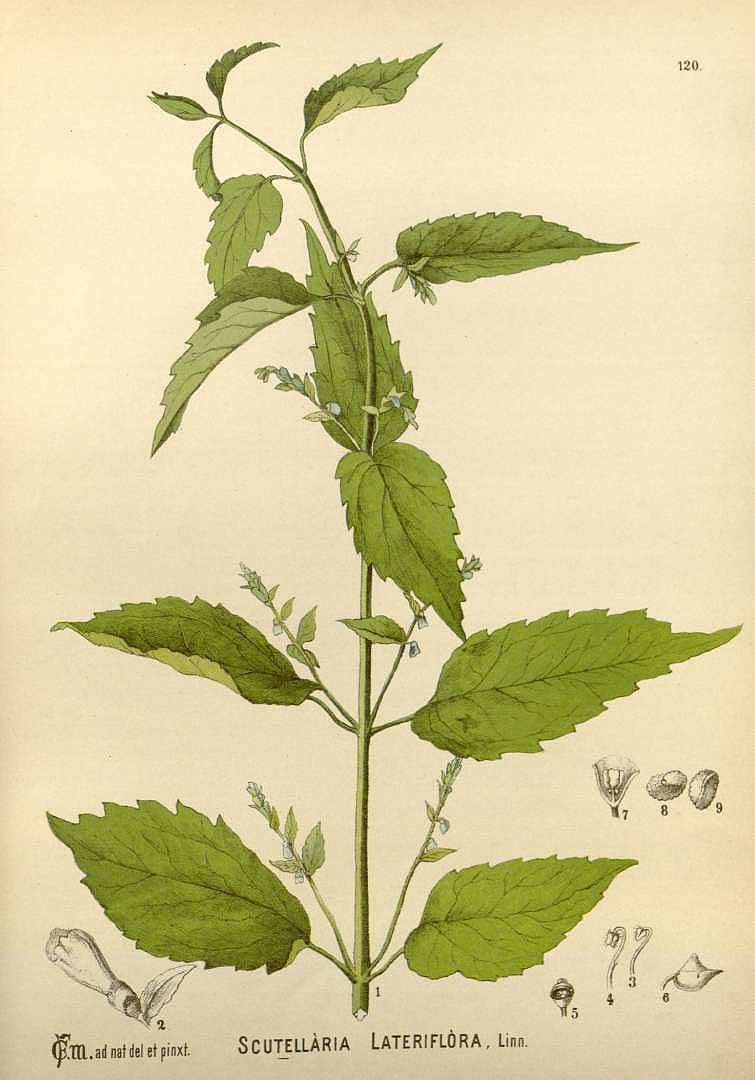
PlantSkullcapScutellaria, Scullcap; Virginian Scullcap, Mad-dog Scullcap, Madweed (S. lateriflora); Common or Greater Scullcap, Helmet Flower, Hoodwort (S. galericulata); Lesser Scullcap (S. minor); French Toque
Virginian or American skullcap, Scutellaria lateriflora, a slender labiate with inconspicuous blue flowers in one-sided racemes, flowering in July; the whole herb is used. Not to be confused with Chinese skullcap, Scutellaria baicalensis, whose root is the chief source of baicalin and baicalein, though American skullcap contains them too. Of about ninety species, Grieve counts two native to Britain, S. galericulata and S. minor, on the banks of rivers and lakes.S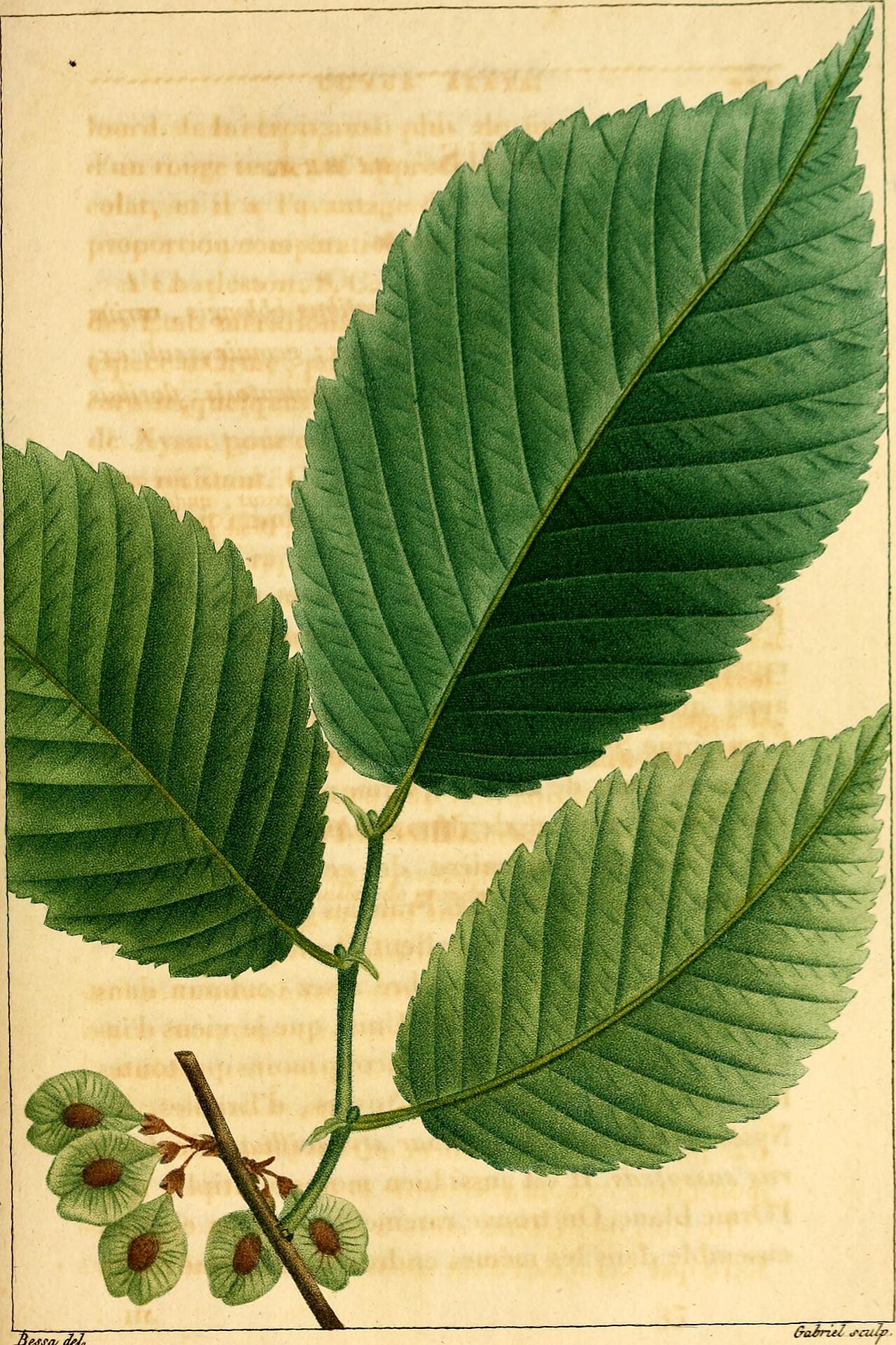
PlantSlippery elmRed elm, moose elm, Indian elm, sweet elm; Ojibwe anib; Ulmus rubra, in the older books Ulmus fulva Michx.
Ulmus rubra, a medium-sized deciduous elm native, LiverTox writes, to the eastern and central United States and Canada, “called slippery because of the slippery texture of the inner bark when it is chewed or mixed with water.” The inner bark is the drug. Grieve describes it in commerce as long, thin, tough, flexible strips that can be bent double without breaking, smelling of fenugreek, and records that, the wood having no commercial value, the tree was fully stripped and died. Its chief constituent is a mucilage, so abundant that a little of the powder makes a thick jelly with water.S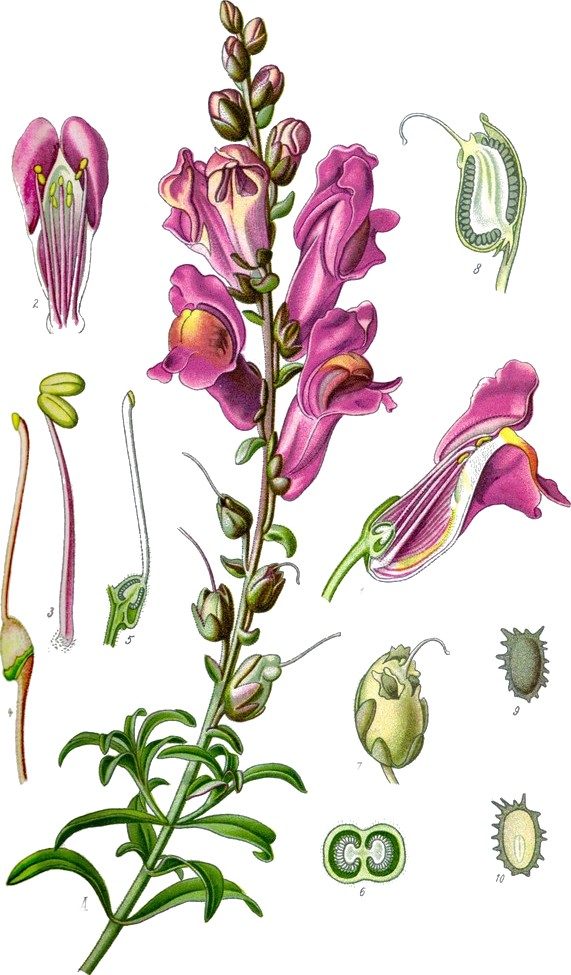
PlantSnapdragonAntirrino
Antirrhinum majus.CanaleS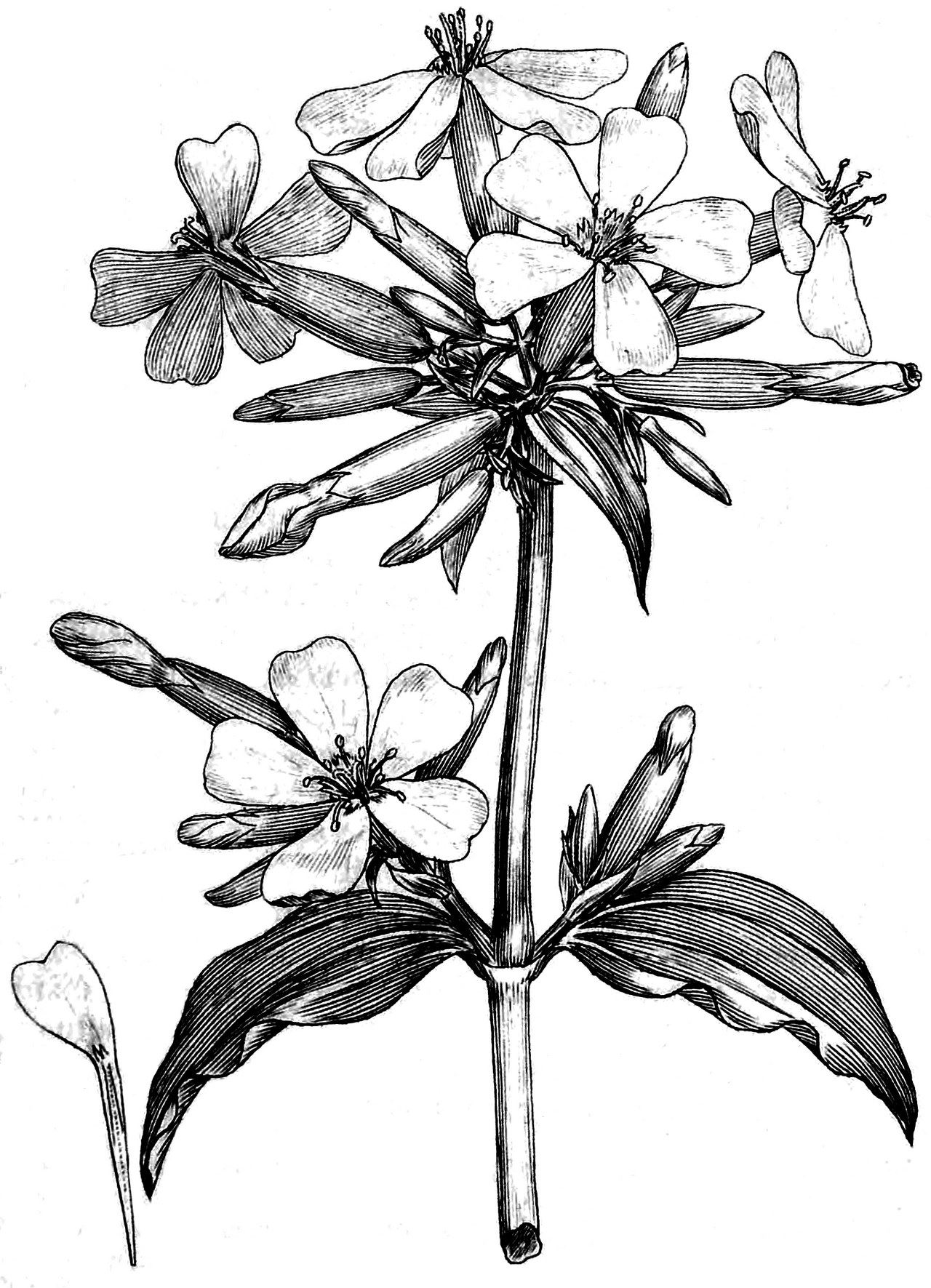
PlantSoapwortSoaproot, bouncing Bet, latherwort, fuller’s herb, bruisewort, sopewort, crow soap, sweet Betty, wild sweet William; Greek strouthion; Latin radix, herba lanaria; Saponaria officinalis L.
Saponaria officinalis, of the family Caryophyllaceae, a stout perennial of central and southern Europe, grown in English gardens, with smooth lance-shaped leaves and loose clusters of large pink flowers, often double, from July to September. The root and leaves are the drug. Grieve gives saponin as the chief constituent of the root, and notes its taste: bitter and slightly sweet, then a persistent pungency and a numbness in the mouth.S
PlantSolomon’s seal
Polygonatum multiflorum and its relatives. A shade-loving woodland perennial with arching stems of paired leaves and small white bell flowers.S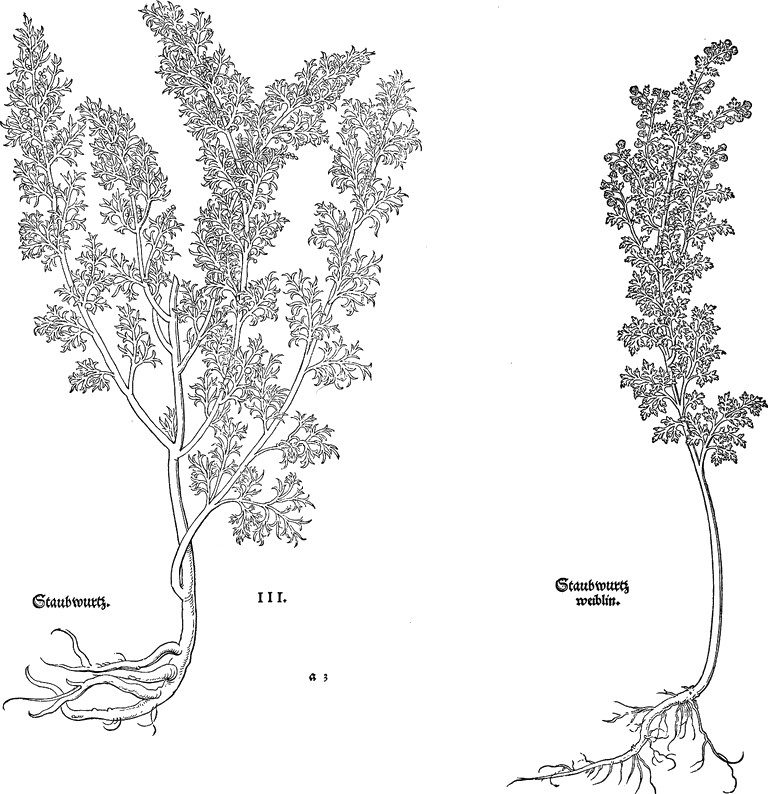
PlantSouthernwoodAbrotano
Artemisia abrotanum, “lad’s love.”CanaleS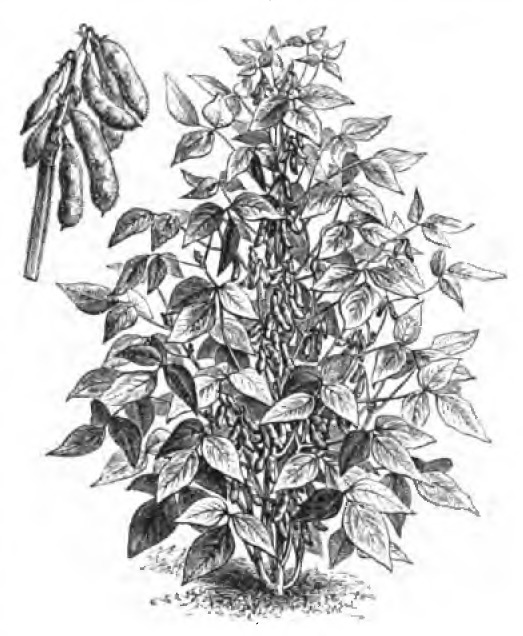
PlantSoyaSoy bean, soja; Glycine max (L.) Merrill, Stuart’s Glycine hispida; Chinese shu, ta-tou, the ‘great bean,’ and hei-tou, the black bean; in pharmacy soya lecithin and refined soya-bean oil
Glycine max, an annual herb of the legume family, cultivated, whose pods hold one to four round seeds of many colours. Stuart, writing in 1911, calls it the Chinese and Japanese soy bean, “known in China from ancient times,” and always considered by the Chinese “the most important of the cultivated leguminous plants.” Its seed is 35 to 40 per cent protein and 15 to 20 per cent fat, the source of the oil and of the lecithin that medicine uses.S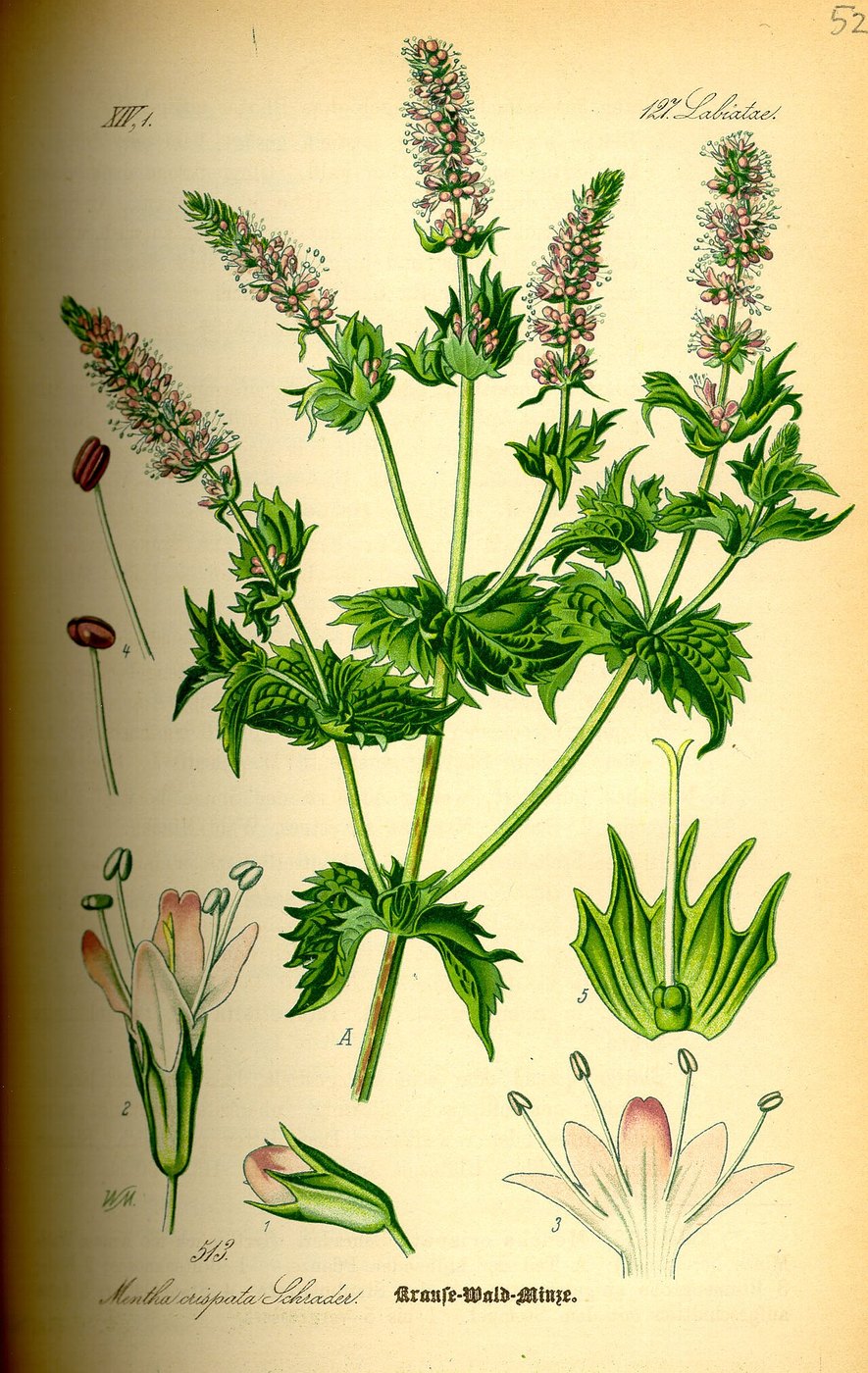
PlantSpearmintMentha spicata, printed by Grieve as Mentha viridis; Garden Mint, Mackerel Mint, Our Lady’s Mint, Green Mint, Spire Mint, Sage of Bethlehem, Fish Mint, Lamb Mint; French Menthe de Notre Dame, Italian Erba Santa Maria, German Frauen Munze; Turner’s “Spere Mynte” (1568)
The common garden mint, Mentha spicata: erect square stems about two feet high from creeping root-stocks, with very short-stalked, pointed, wrinkled, bright green leaves. A native of the Mediterranean, brought to Britain by the Romans; Grieve finds it wild in nearly all the countries to which civilization has extended.S
PlantSpeedwellBird’s eye; Veronica
Veronica chamaedrys and its relatives. A low, spreading plant with small, bright blue, four-petaled flowers, common in grass and hedgerows.S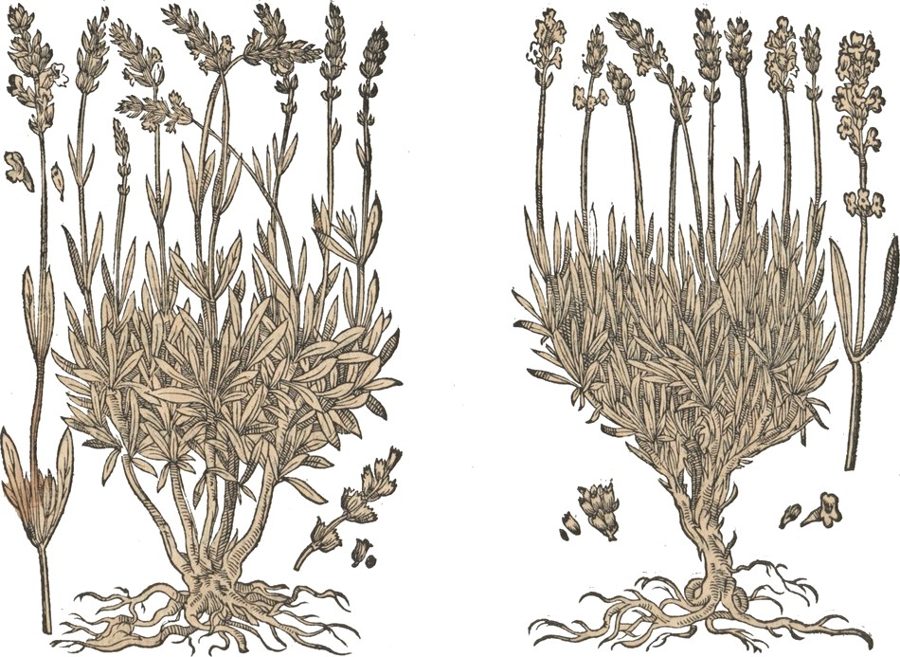
PlantSpikenardSpico nardo
The root of Nardostachys jatamansi, a Himalayan valerian.CanaleS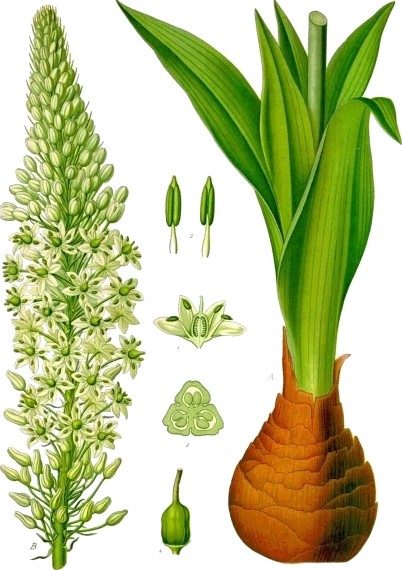
PlantSquillScilla
Sea squill, Drimia maritima and its close relatives, large bulbs of the Mediterranean coasts.CanaleS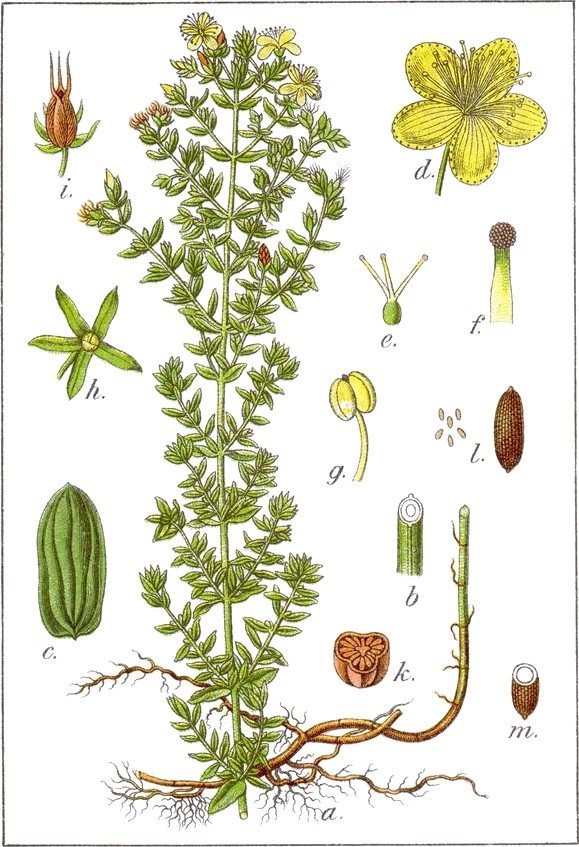
Plant St. John’s wortHiperico; perforata
Hypericum perforatum.CanaleCautionS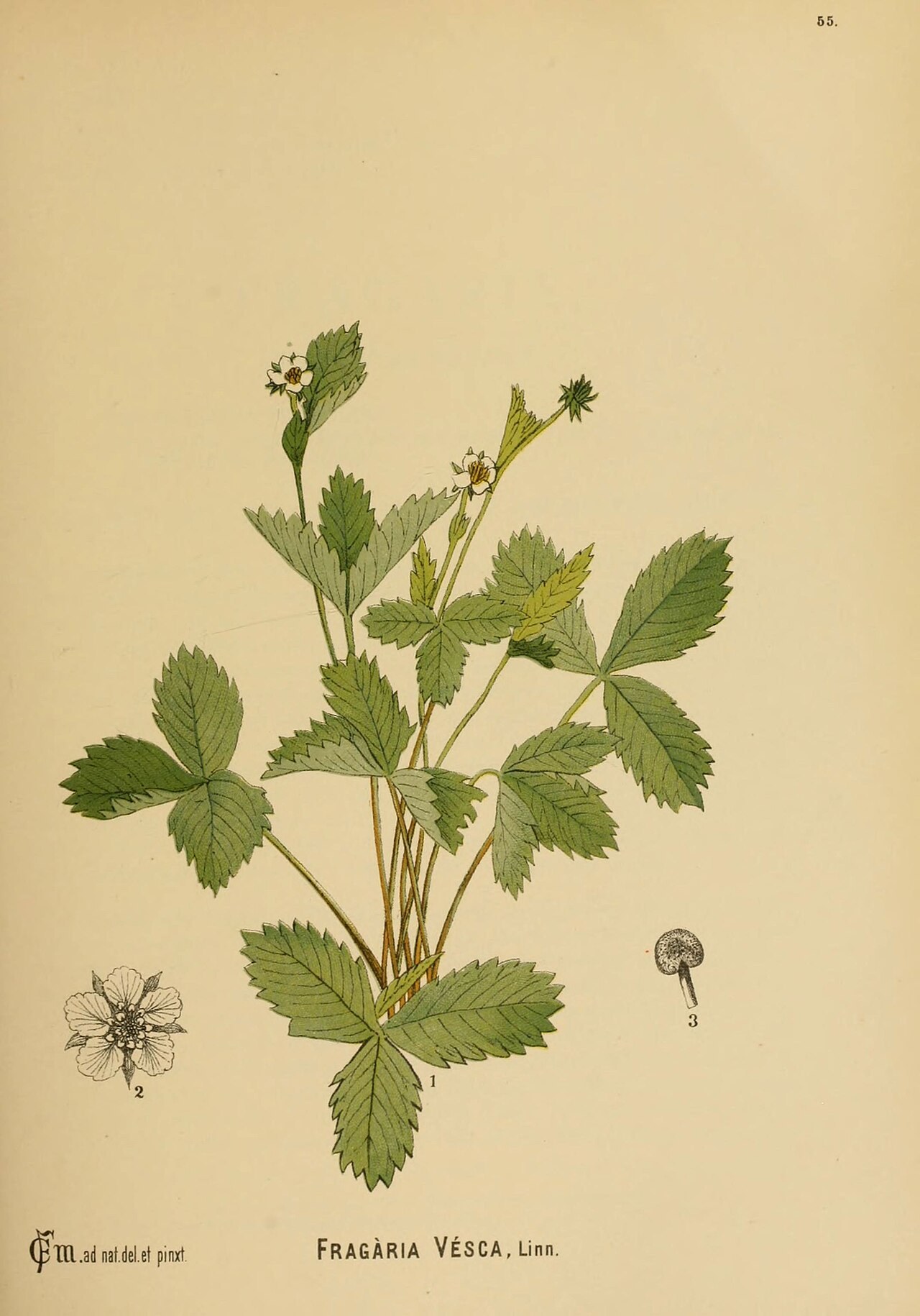
PlantStrawberryWild strawberry, wood strawberry; Fragaria vesca of Linnaeus; the ‘Straberie’ of an English household roll of 1265
Fragaria vesca, the wild strawberry of the rose family: in Grieve’s words “a delicate, thin-leaved plant, with small, scarlet berries, cone-shaped and studded with tiny, brown ‘seeds,’” whose fragrance and flavour are “more delicate even than the cultivated Strawberry.” It grows through the whole of the northern hemisphere outside the tropics. Medicine used the leaves more than the fruit.S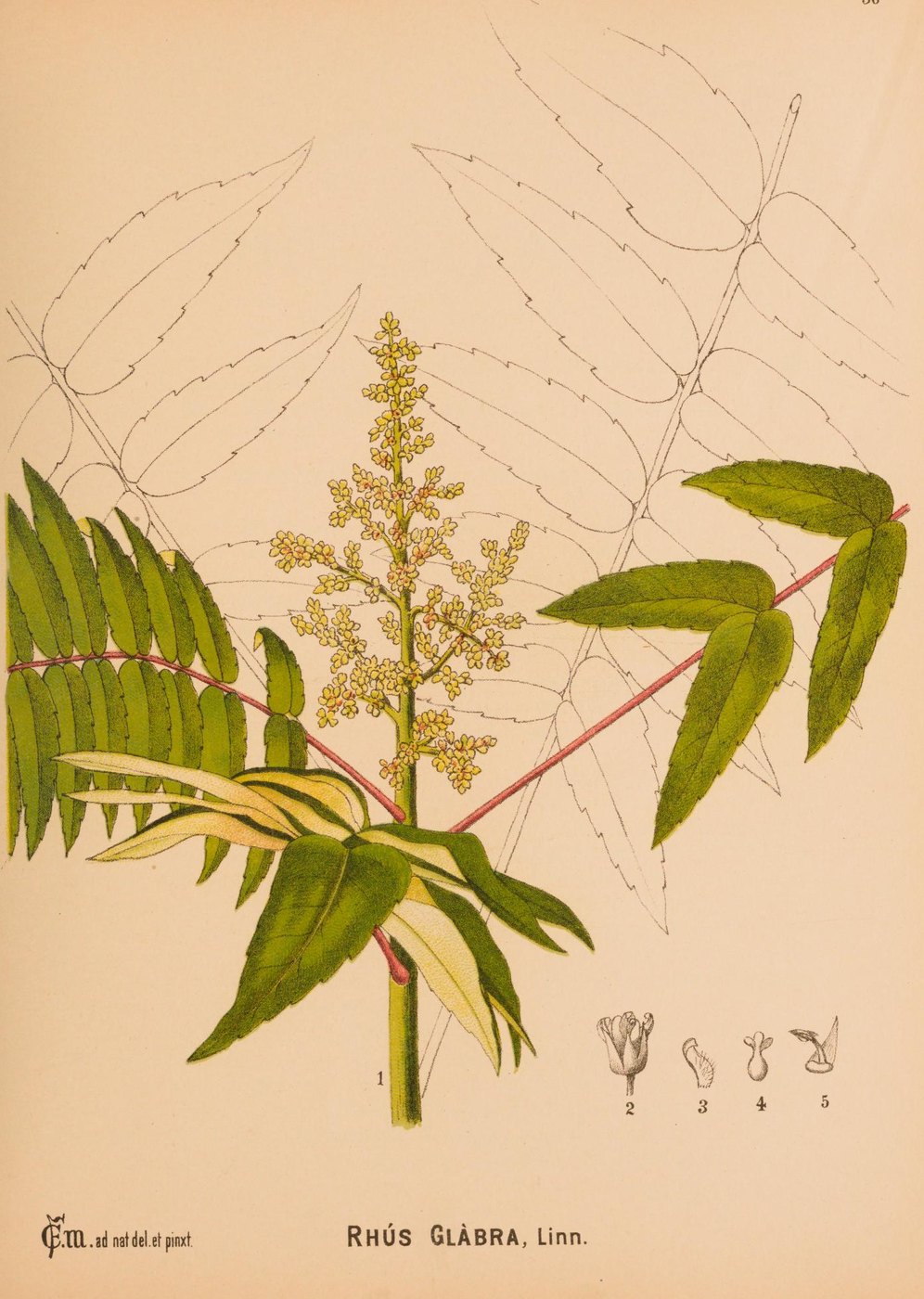
PlantSumacSmooth sumac, Rhus glabra of Linnaeus; staghorn or velvet sumac, Rhus typhina, Rhus hirta; shumake; Rafinesque’s shimiac; the Ojibwe bakwanak, binding tree; the dried berries sacacomi of the Canada trade; not the poison sumac, Rhus vernix
The red-fruited sumacs of the roadsides and rocky barrens, shrubs of five to fifteen feet with long pinnate leaves on crimson stalks and dense upright cones of small fruits clothed in acid crimson hairs: the smooth sumac common throughout North America, and the staghorn, velvet-twigged, of the north-east and the Lake country. The poisonous sumacs, Grieve says, are told from these by their loose axillary panicles and smooth fruit.S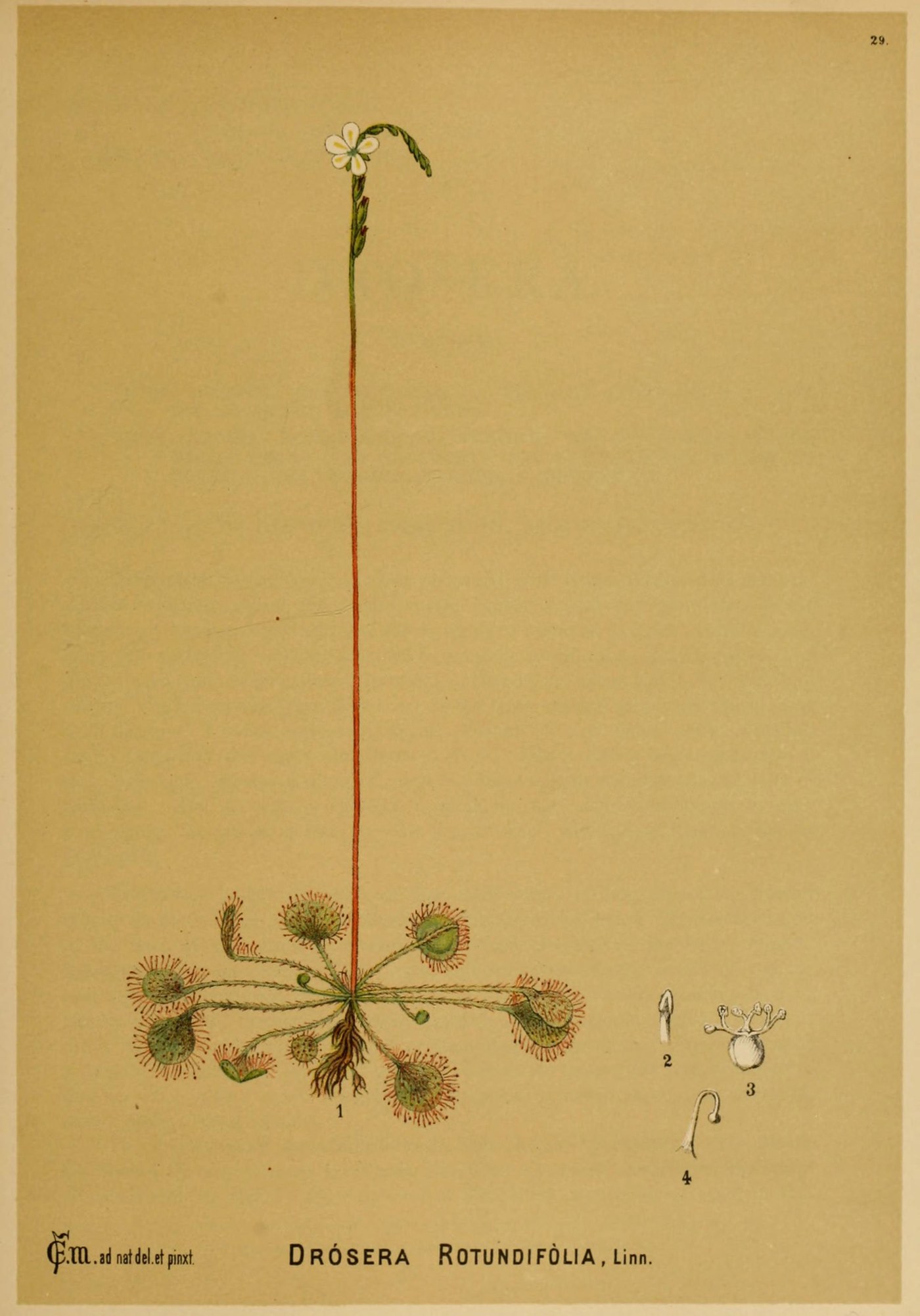
PlantSundewRound-leaved sundew, dew plant, red rot, youth-wort, Rosa Solis; Herba rosellae, Sonnenthau rosollis, Rosée du Soleil; Drosera rotundifolia L.
Drosera rotundifolia, of the family Droseraceae, a small insectivorous perennial of peaty bogs and the muddy edges of ponds and rivers. Its round leaves lie flat on the ground, covered with long red sticky hairs, each tipped with a gland whose fluid “looks like a dewdrop, hence its name,” Grieve writes. The hairs curve slowly inward on any insect that alights, and the glands then secrete a fluid that digests it. The small white flowers open only in sunshine. The flowering plant, dried in the air, is the drug.S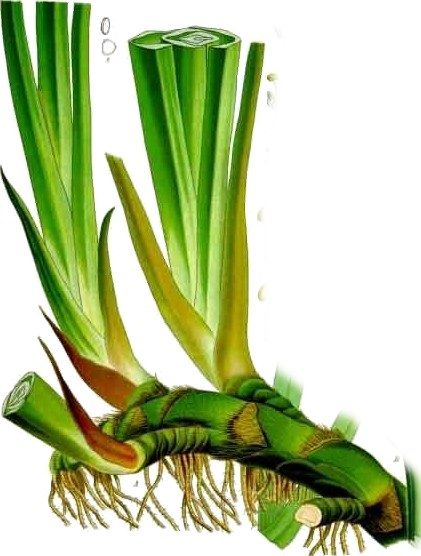
PlantSweet flagCalamo aromatico
Acorus calamus.CanaleCautionS
PlantSweet woodruffAsperula odorata; German Waldmeister
Galium odoratum, a small woodland herb with whorled leaves that smell of new hay only once they are dried.T
PlantTamarindArabic tamr hindī, “Indian date”
The pod pulp of Tamarindus indica.T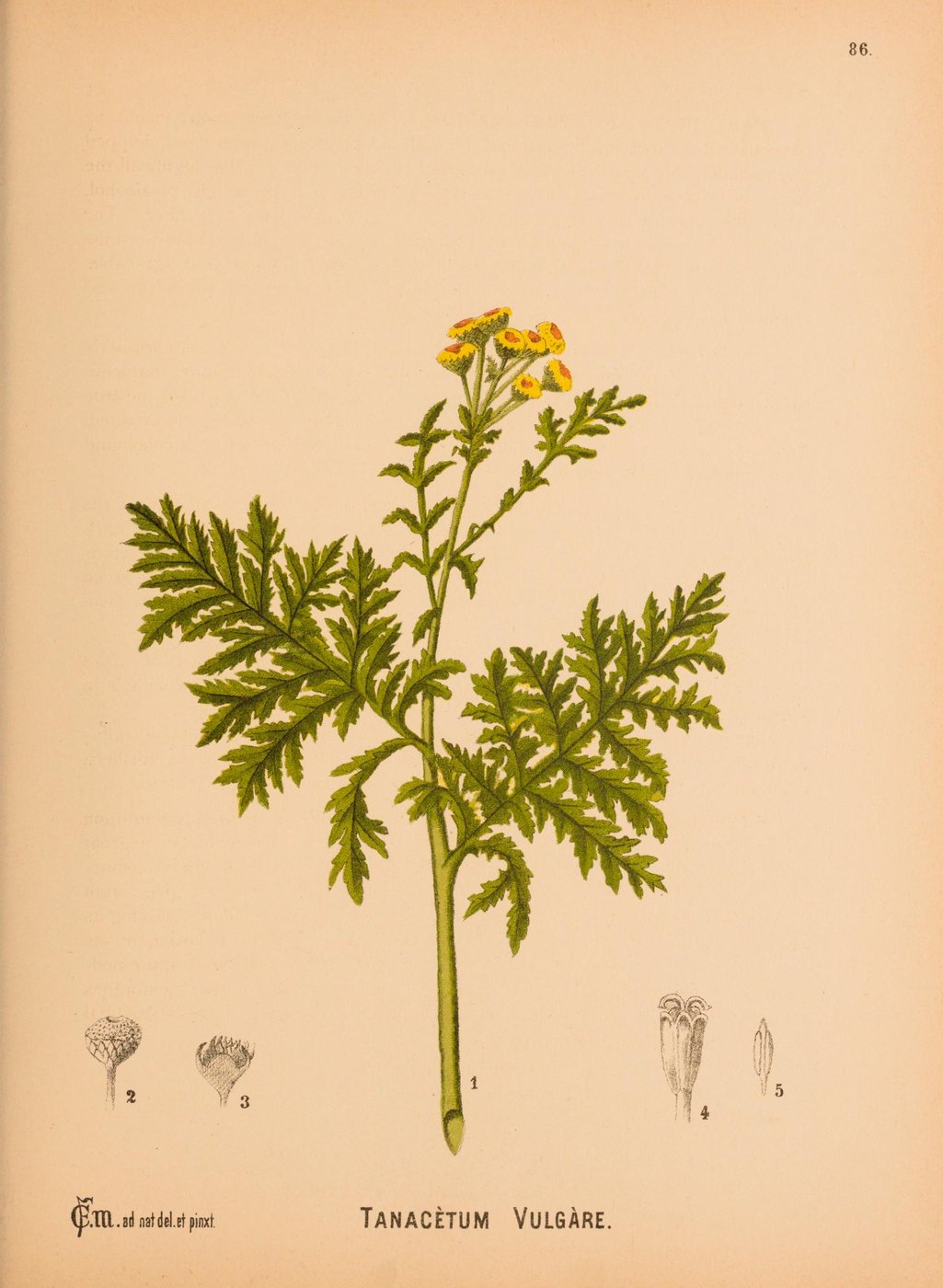
PlantTansyTanacetum
Tanacetum vulgare.CautionT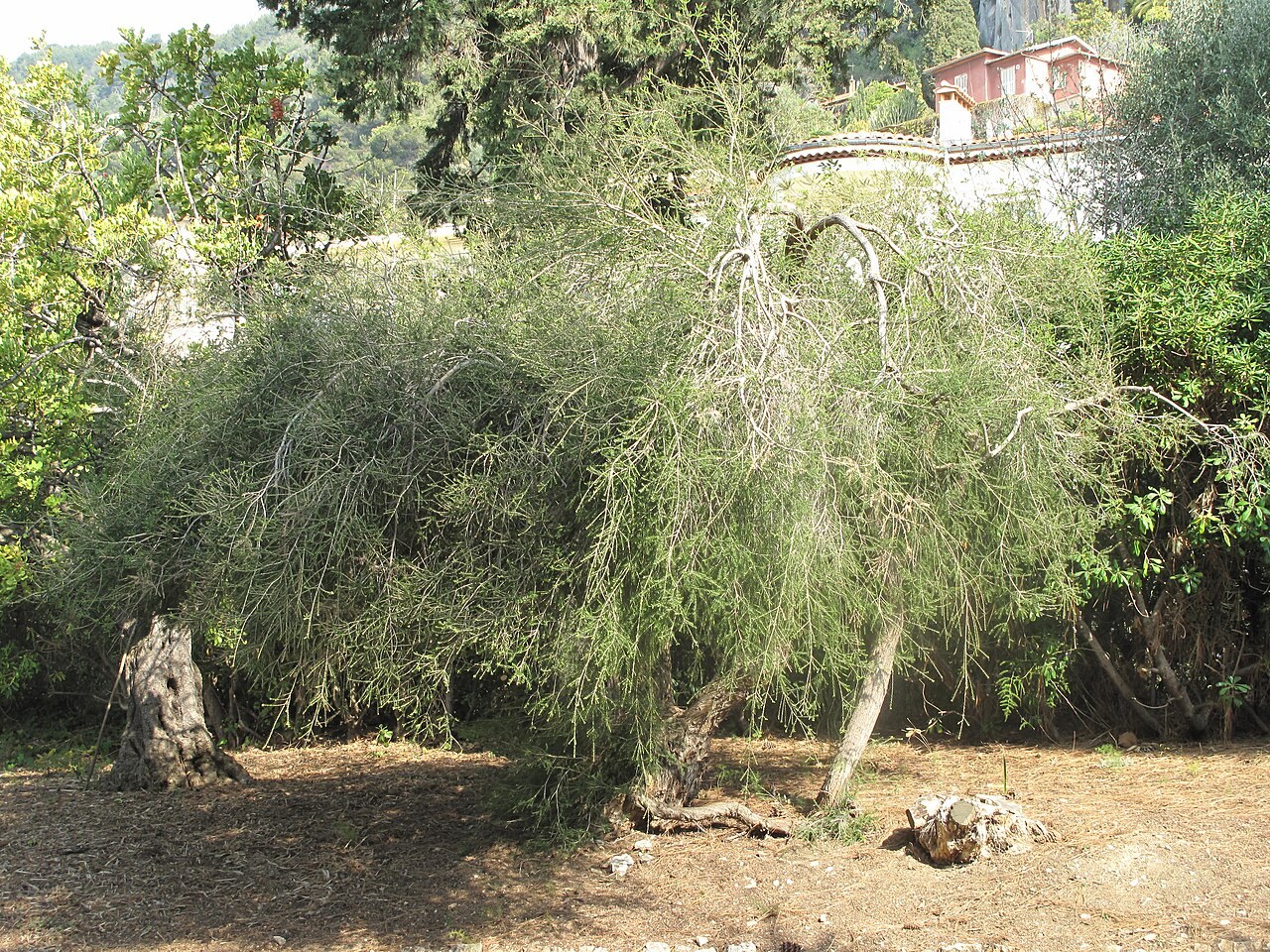
PlantTea tree oilAustralian tea tree; melaleuca oil, the name approved in Australia, and the older ‘ti tree oil’; Melaleuca alternifolia (Maiden and Betch) Cheel, with M. linariifolia Smith and M. dissitiflora F. Mueller; in pharmacy Melaleucae aetheroleum
The essential oil steam-distilled from the leaves and end branchlets of Melaleuca alternifolia, a tree of the family Myrtaceae, which the European Medicines Agency’s assessment report says was named tea tree “because the leaves were used to prepare an aromatic tea.” Before it was cultivated its natural range was limited to the country around the Clarence and Richmond Rivers on the north-eastern coast of New South Wales; the oil now comes mainly from large plantations in New South Wales and Queensland. It is a clear, colourless or pale yellow liquid with “a distinct pleasant odour like turpentine,” about 2 per cent of the leaf.T
PlantTeaselFuller’s teasel; Venus’s basin
Dipsacus fullonum. A tall, prickly biennial whose paired leaves clasp the stem to form a natural cup that fills with rainwater.T
PlantThorn appleStramonium; Jimsonweed
Datura stramonium, of the nightshade family.DeadlyT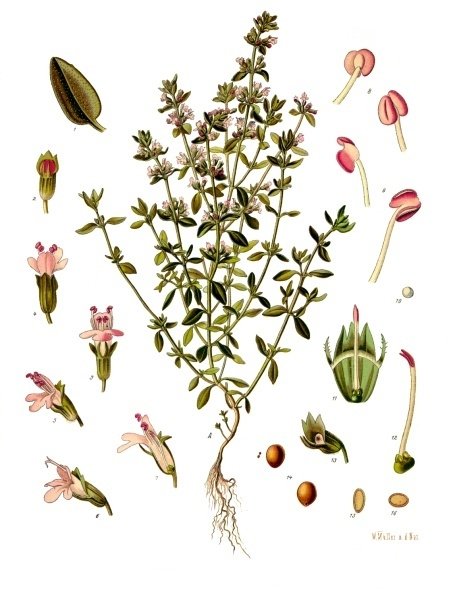
Plant ThymeThymum; Greek thymon
Thymus vulgaris and wild thyme, T. serpyllum.T
PlantToadflaxButter and eggs; bunny mouths, lion’s mouth, impudent lawyer, devil’s flax, wild snapdragon
Linaria vulgaris. “Butter and eggs,” a wild relative of the snapdragon with two-toned yellow, spurred flowers.T
PlantTobaccoNicotiana; herba sancta, herba panacea
Nicotiana tabacum.CautionT
PlantTormentilTormentilla; septfoil, bloodroot
Potentilla erecta, of the rose family, a small yellow four-petalled flower of heaths, with a woody root red within.T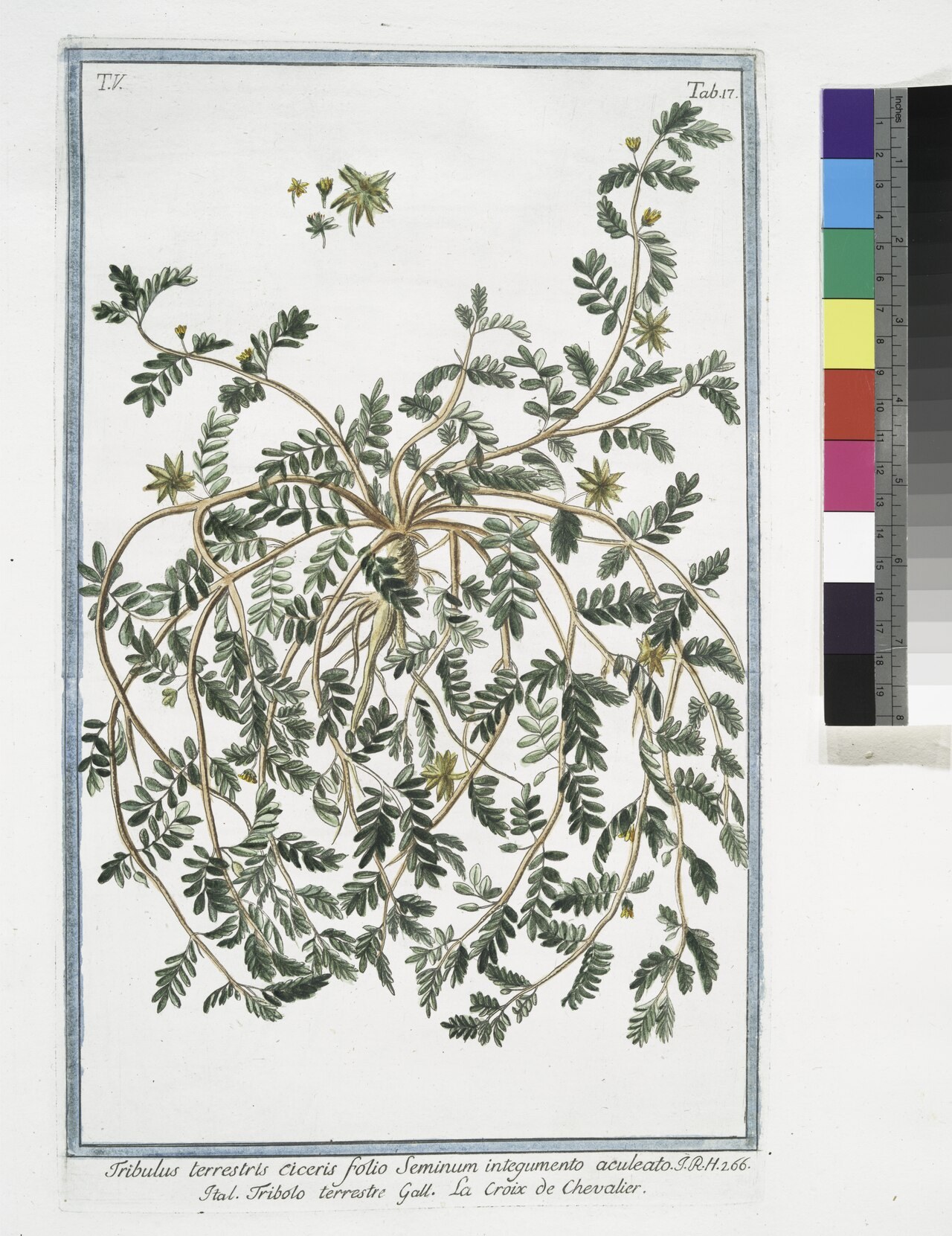
PlantTribulusSanskrit gokshura, cow’s hoof, and kshugandha; Arabic and Persian khasak or hasak; the Greek tribolos of Dioscorides and the tribulus of Pliny; Tribulus terrestris of Linnaeus
Tribulus terrestris, a plant of the family Zygophyllaceae whose four or five delicate, hairy stalks spread flat on the ground up to two and a half feet, with pinnate leaves of five or six pairs of nearly round leaflets and small yellow five-petalled flowers, from a slender, light-brown, faintly aromatic root. Its fruit is made up of cocci.T
PlantTurmericCurcuma; terra merita, Indian saffron
Curcuma longa, of the ginger family, whose root is deep yellow within.V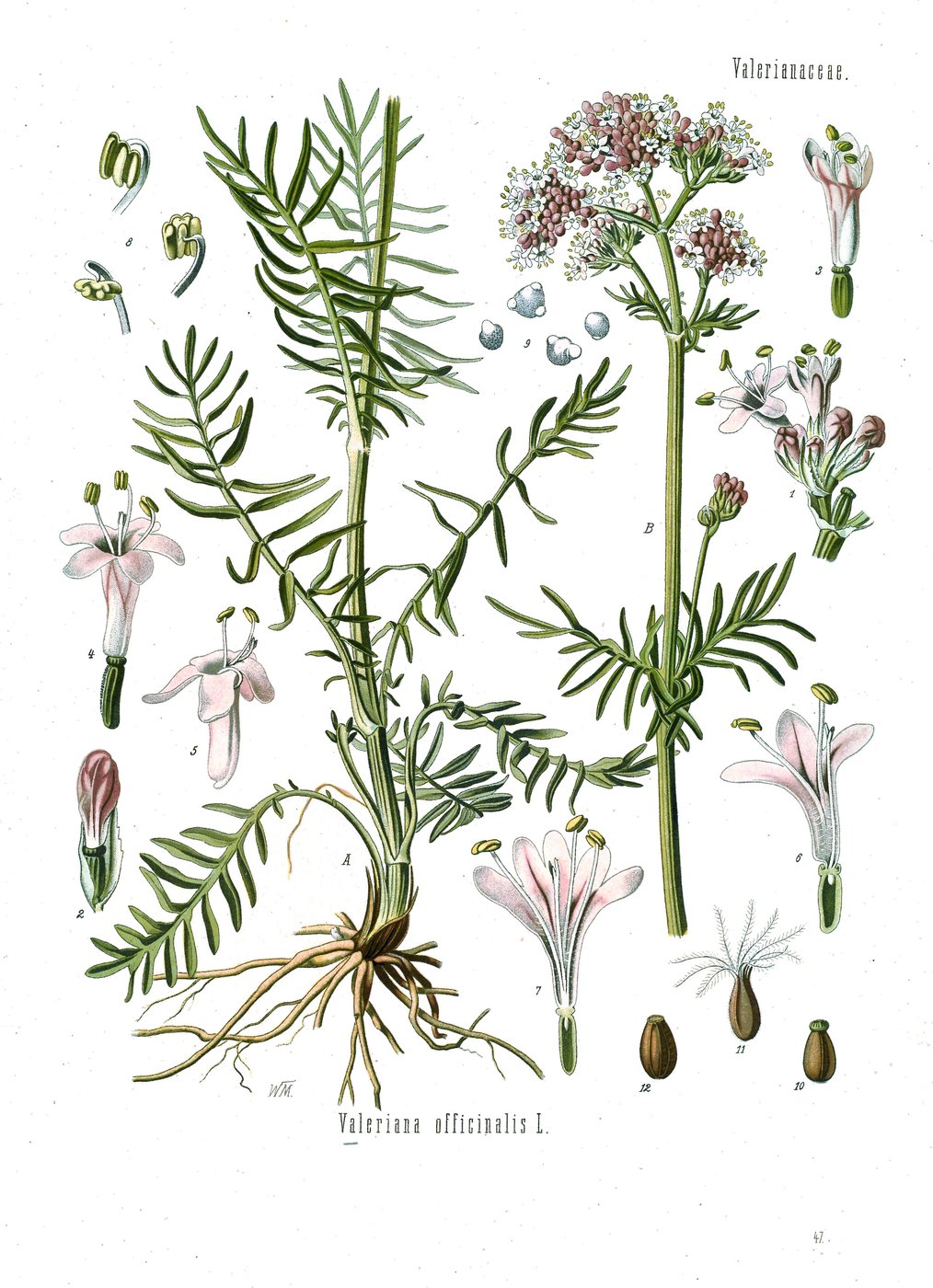
PlantValerianPhu (Dioscorides); Latin valeriana
Valeriana officinalis; the root is used.V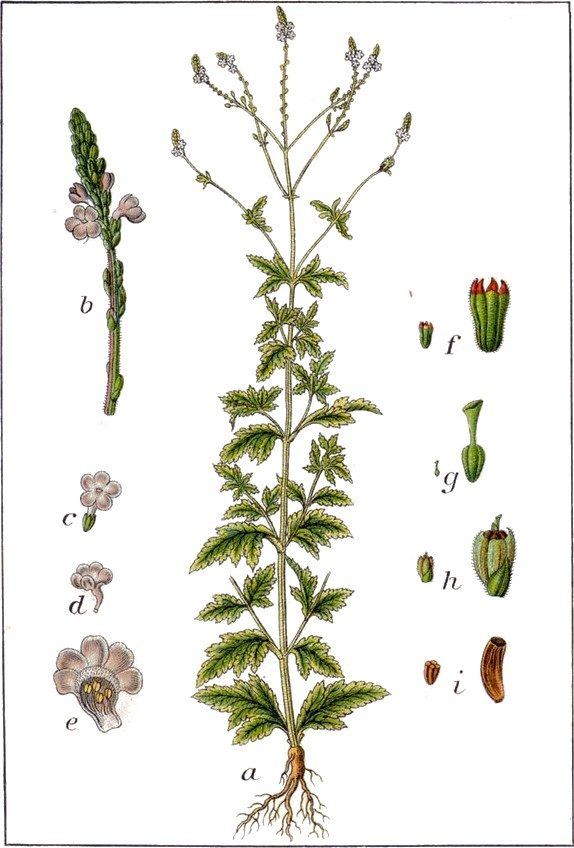
PlantVerbenaVerbena
Vervain, Verbena officinalis.CanaleV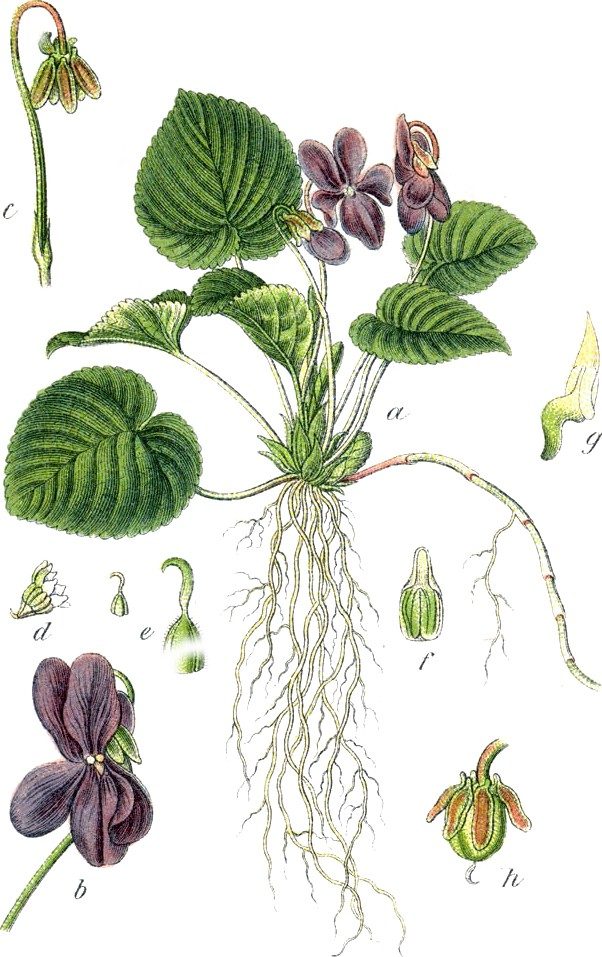
Plant Violet, lettuce, sow-thistleViola; lattuca; sonco
Sweet violet (Viola odorata), garden lettuce (Lactuca sativa), sow-thistle (Sonchus oleraceus).CanaleW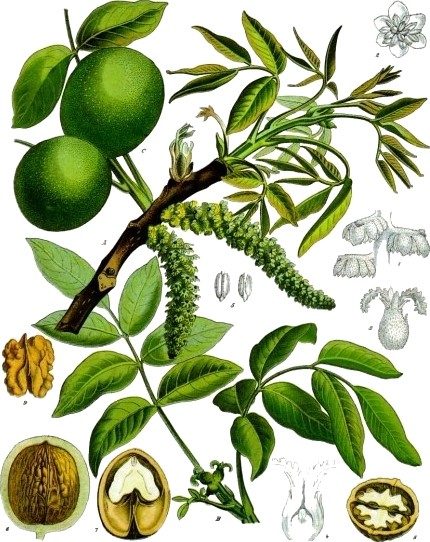
PlantWalnut, middle bark ofScorza mezzana della noce
The inner bark of Juglans regia.CanaleW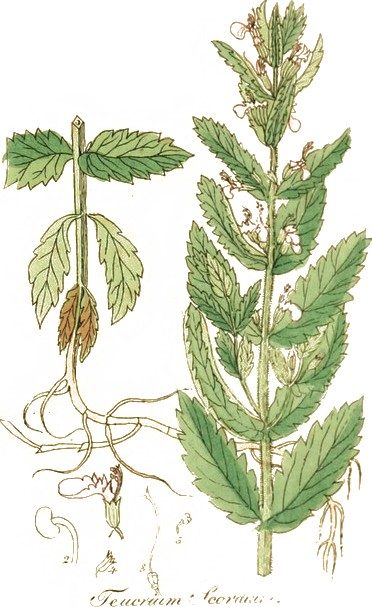
PlantWater germanderScordeo
Teucrium scordium, of the same genus as wall germander, which has caused liver failure in modern herbal preparations.CanaleCautionW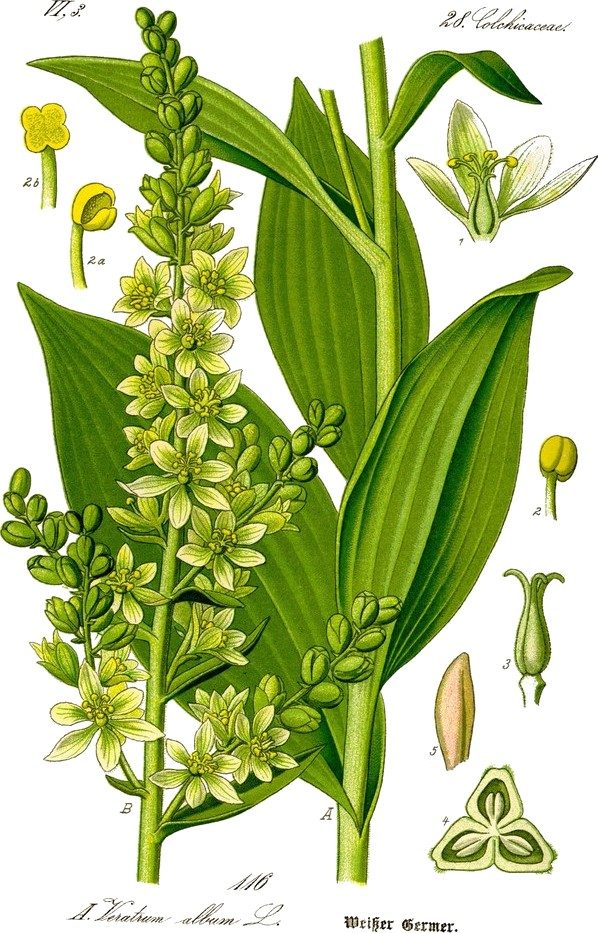
PlantWhite helleboreElleboro bianco
Veratrum album, false hellebore, of the family Melanthiaceae, unrelated to black hellebore (Ranunculaceae).CanaleCautionW
Plant White willowSalix
The bark and leaves of Salix alba.W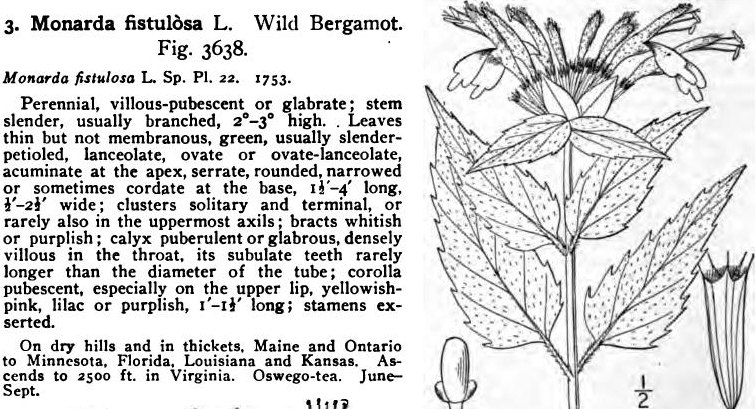
PlantWild bergamotMonarda fistulosa of Linnaeus; horsemint; the Ojibwe weca’wûs wackwî’nek, yellow light; kin of the Oswego tea, Monarda didyma, and of the horsemint Monarda punctata that gave the oil of the old shops
Monarda fistulosa, the lilac-flowered bergamot of the prairies, meadows, and dry open woods of the Midwest, a square-stemmed mint whose whole plant smells of thyme and oregano: its oils are the same carvacrol and thymol.W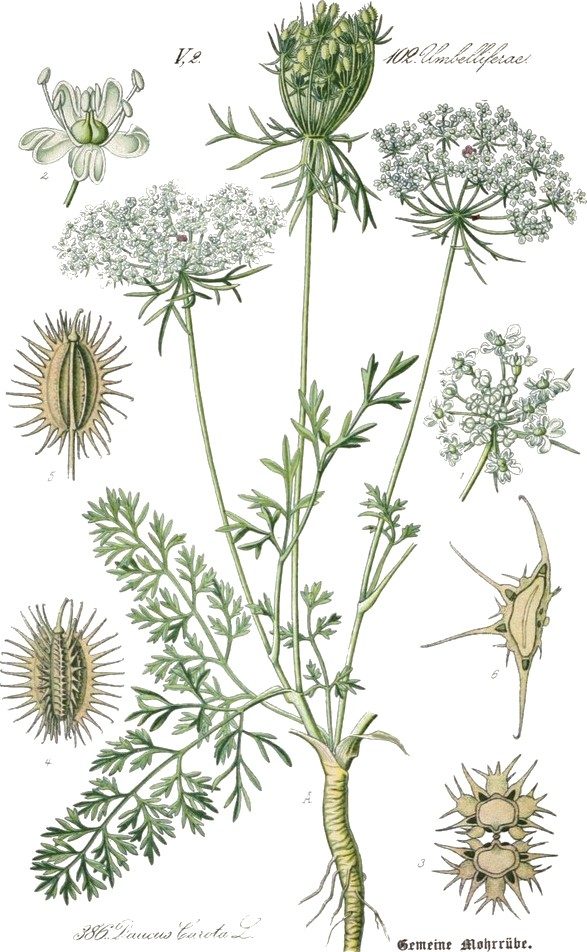
PlantWild carrot, seed ofDauco
Seed of Daucus carota, Queen Anne’s lace.CanaleW
PlantWild garlicRamsons; herba salutaris
Allium ursinum. A broad-leaved, strongly garlic-scented woodland plant that carpets damp ground with white starry flowers each spring.W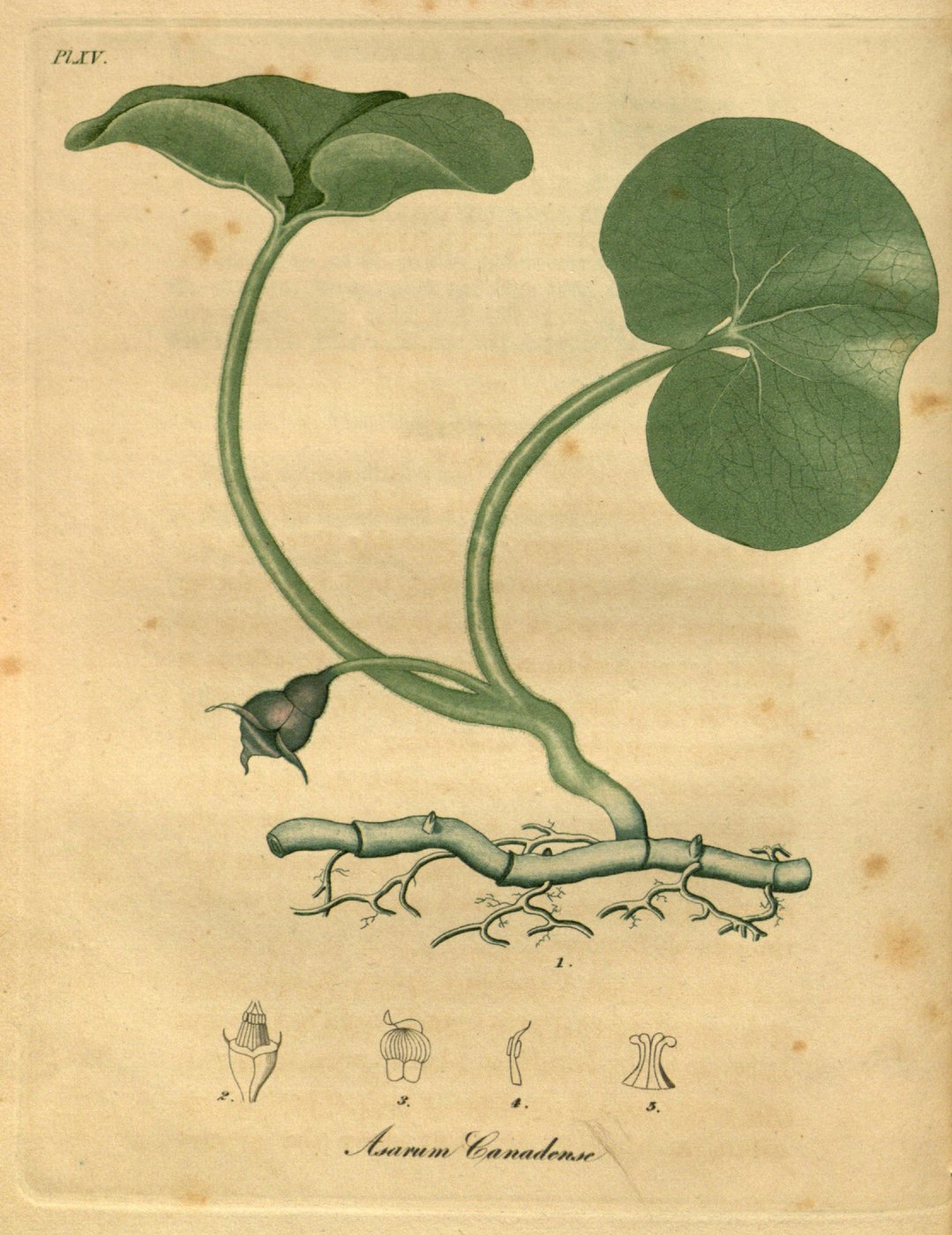
PlantWild gingerCanada snakeroot, heart snakeroot, Indian ginger, coltsfoot, broadleaf asarabacca; Asarum canadense of Linnaeus, Asarum latifolium of Salisbury; the Ojibwe namepîn, sturgeon potato; the Potawatomi ba’boan
Asarum canadense, the humblest plant of the rich shady woods from Canada to Carolina and Missouri: two kidney-shaped hairy leaves on long stalks and, hidden in their fork at the ground, one brownish-purple three-cleft flower in May and June, over a creeping fleshy root that smells and tastes of ginger. Its European kin the asarabacca is an emetic; this is not.CautionW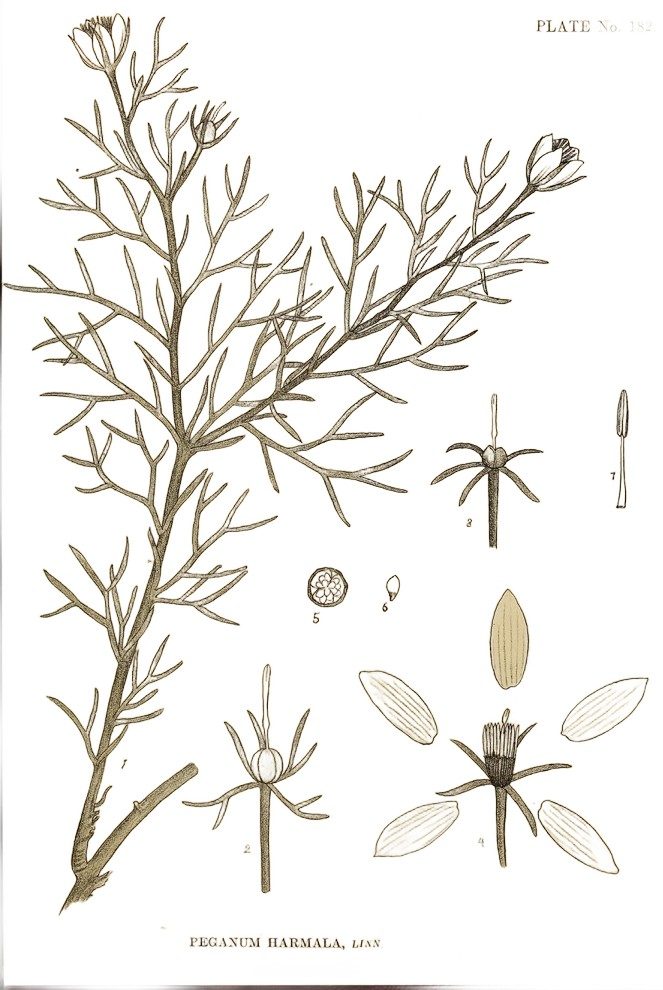
PlantWild rueRuta silvestre
Either the wild form of Ruta graveolens or Syrian rue, Peganum harmala.CanaleCautionW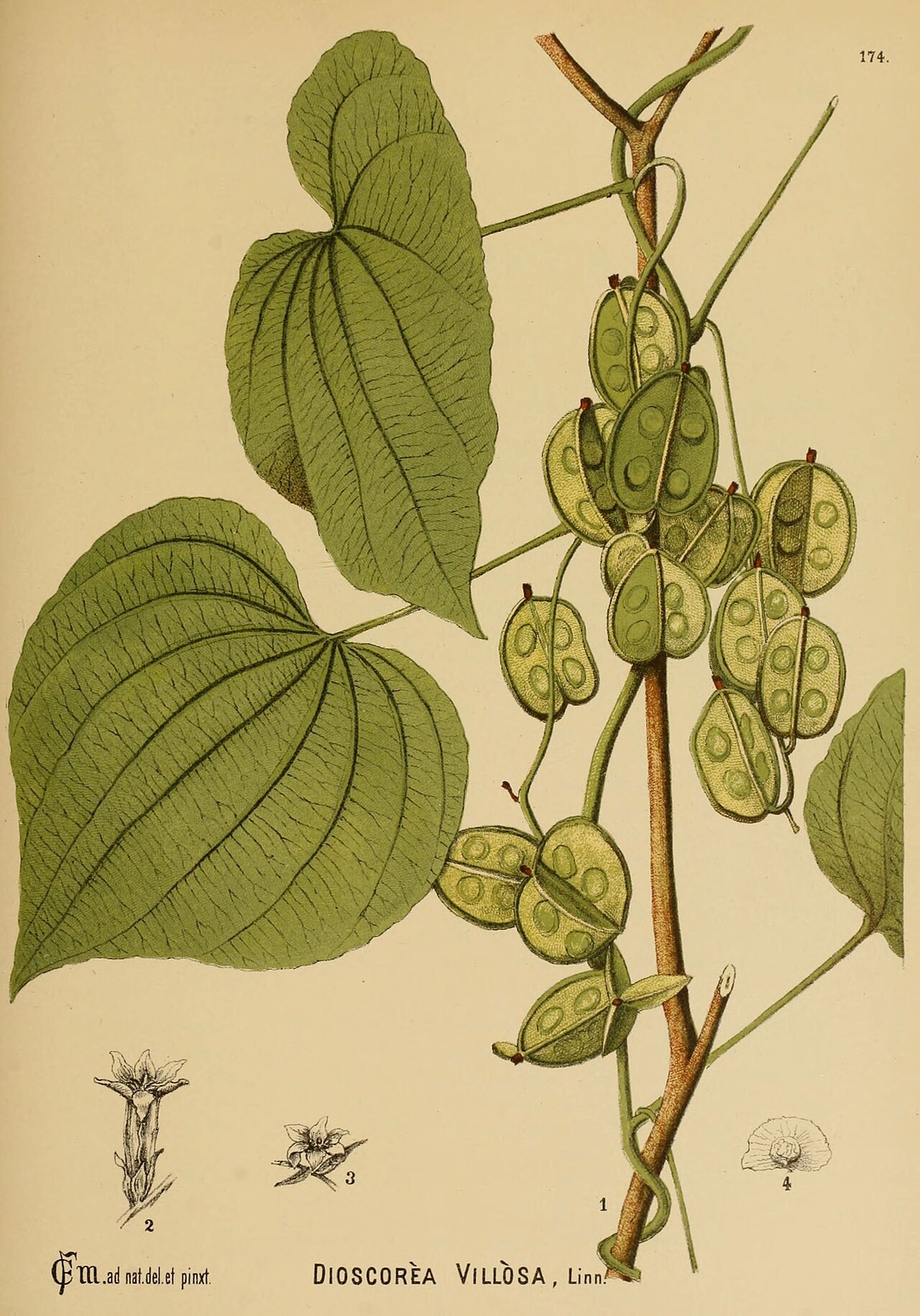
PlantWild yamColic root, rheumatism root, dioscorea; German Wilde Yamwurzel; Dioscorea villosa L.
Dioscorea villosa, of the family Dioscoreaceae, a slender perennial vine of the United States and Canada, twining over fences and bushes, with heart-shaped leaves downy beneath and tiny greenish-yellow flowers. The drug is the hard, woody rhizome, which King’s Dispensatory calls one of the hardest of rhizomes, very difficult to powder or crush, with no odour and little taste beyond a slight acridity. Grieve and King’s both report that it loses its virtue after the first year, so that it should be gathered fresh each year. Grieve records much saponin in the root; King’s that the so-called dioscorein is not a definite principle but simply a dried extract.W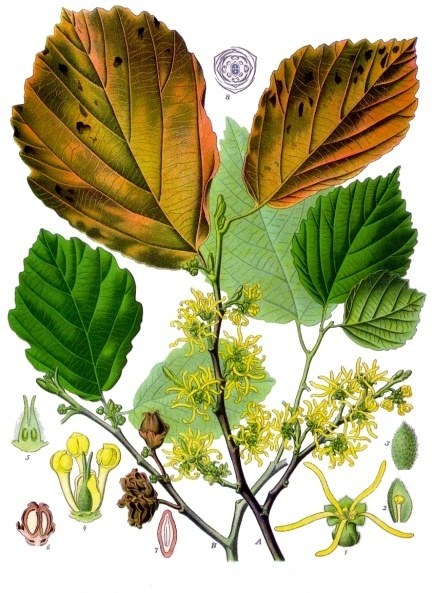
PlantWitch hazelSpotted alder, winterbloom, snapping hazelnut; Hamamelis virginiana of Linnaeus; in pharmacy Hamamelidis folium, cortex, and the distilled water
Hamamelis virginiana, a shrub of the eastern United States and Canada of several crooked trunks from one root, ten to twelve feet high, with smooth grey bark. Its oval leaves fall in autumn and only then do the yellow flowers come, “very late in September and in October,” followed by black nuts whose seeds “are ejected violently when ripe, hence the name Snapping Hazelnut.” The bark and leaves, fresh and dried, are the parts used, and a water distilled from the leaves and young twigs. The common hazel has its own entry.W
PlantWoadIsatis
Isatis tinctoria. A biennial of the mustard family whose fermented leaves yielded Europe’s principal blue dye before indigo.W
PlantWood sorrelOxalis; Irish seamsóg
Oxalis acetosella. A delicate woodland plant with clover-like, sour-tasting leaves of three leaflets and white, veined flowers.W
PlantWoody nightshadeBittersweet; Dulcamara
Solanum dulcamara, a climbing nightshade of hedges, with purple and yellow flowers and scarlet berries.CautionW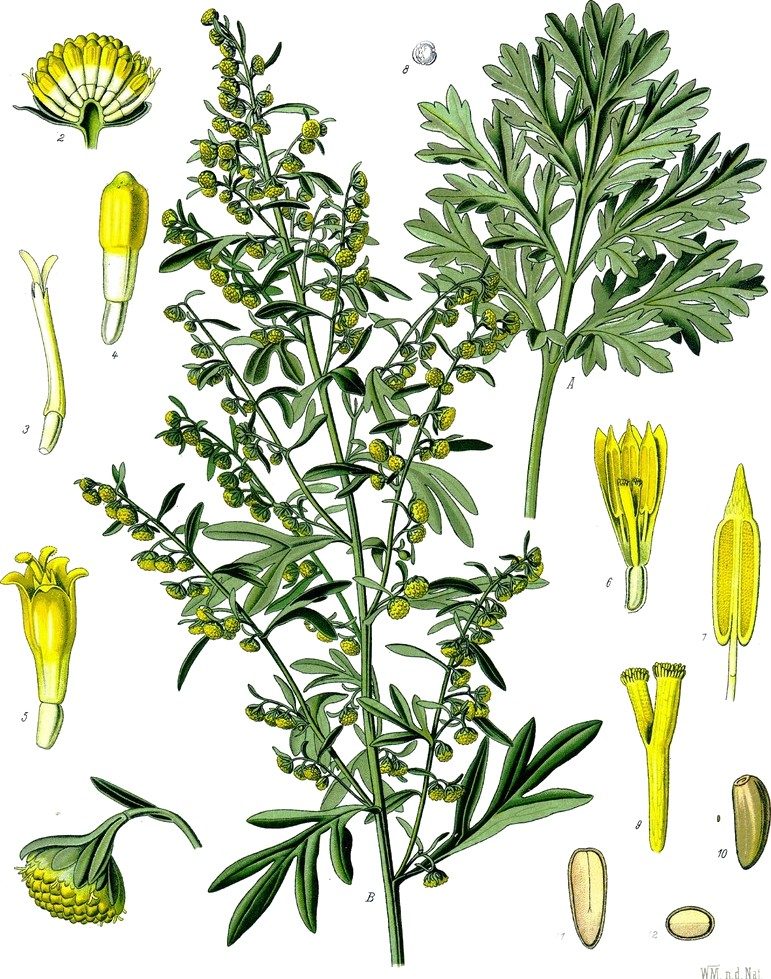
Plant Wormwood, oil ofOglio d’assenzo
Artemisia absinthium.CanaleY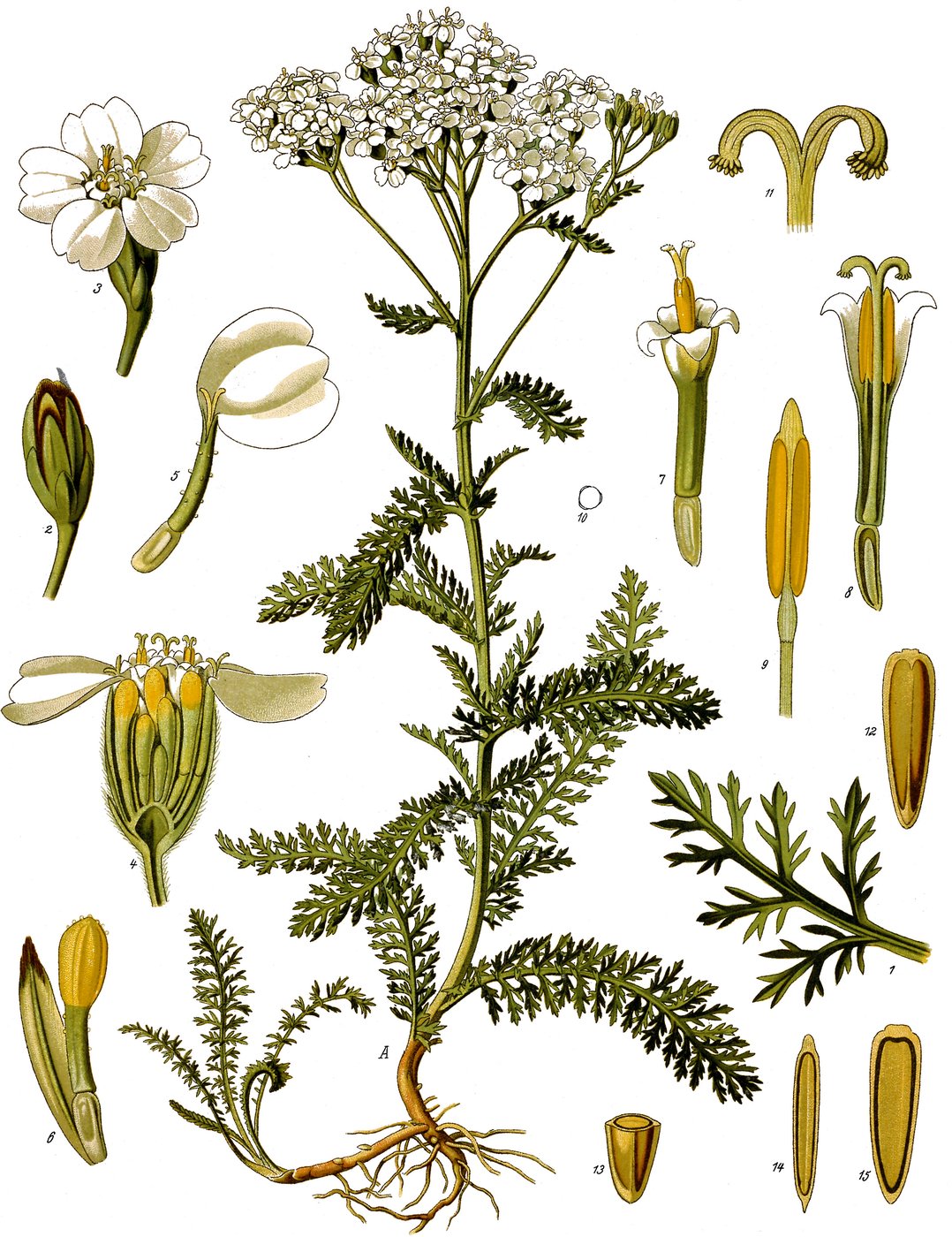
Plant YarrowAchillea; millefolium, “thousand-leaf”
Achillea millefolium.Y
PlantYellow dockCurled dock; dock
Rumex crispus. A tall, coarse weed of waste ground with wavy-edged leaves and a tall spike of rust-brown seeds.Y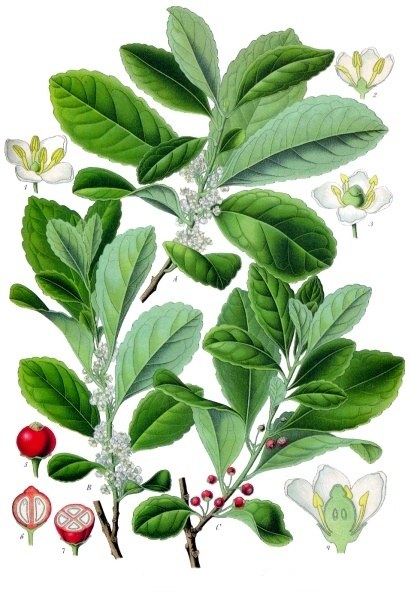
PlantYerba mateMaté, Paraguay tea, Paraguay herb, Jesuit’s tea, Brazil tea, French houx maté; Ilex paraguariensis A. St.-Hil.; in pharmacy Mate folium
Ilex paraguariensis, an evergreen of the family Aquifoliaceae native to Paraguay, Uruguay, and parts of Brazil and Argentina. Grieve describes a large white-flowered shrub growing wild near streams and widely cultivated, with alternate, large, broadly toothed leaves and a red fruit the size of pepper grains. The leaves, dried by heat and powdered, make the drink; LiverTox finds caffeine in it at about the strength of tea or coffee, with theobromine, theophylline, and polyphenols.Y
PlantYewTaxus
Taxus baccata.DeadlyZ
PlantZedoaryZedoaria; setwall, cetewale
Curcuma zedoaria, of the ginger family, a bitter, camphor-scented root from India.Historical description, not medical advice.