Alchemy

The Great Work · the art of transformation

The old art that sought to turn lead into gold, and which, read rightly, was always also the art of turning a divided soul into a whole one.

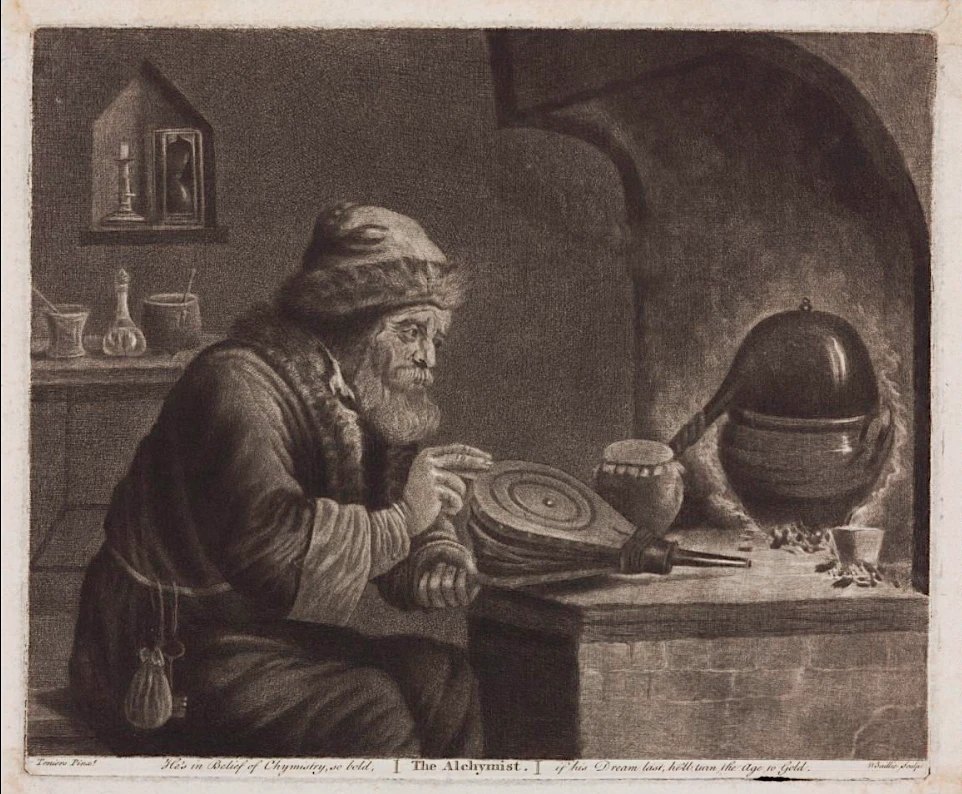
The Alchymist, mezzotint after David Teniers the Younger. Its verse reads: “He’s in Belief of Chymistry so bold, if his Dream last, he’ll turn the Age to Gold.”

“That which is below is like that which is above, and that which is above is like that which is below, to do the miracles of one only thing.”

The Emerald Tablet, in Isaac Newton’s translation

The Great Work

For some two thousand years, in Alexandria, Baghdad, Prague, and Paris, men and women bent over furnaces and glass vessels in search of a single transformation: the perfection of base matter into gold, and of sickness into health. They called their labor the Great Work, the Magnum Opus, and they believed that nature herself was always slowly ripening toward perfection, and that the art could hasten her.

But from its earliest texts, alchemy spoke in two registers at once. Its recipes for metals were written in the language of death and rebirth, marriage and resurrection, and its masters warned again and again that their gold was not the common gold. The furnace was also a heart, the vessel also a soul, and the one who worked the metals was being worked upon in turn.

I

The Art

Egypt, and the Thrice-Great Hermes

Alchemy as the West knew it was born in Hellenistic Egypt, where Greek philosophy met the metal-crafts and temple-mysteries of the Nile. Around the year 300, Zosimos of Panopolis wrote of the art in visions of sacrifice and dismemberment, in which the matter suffers and is transformed, already joining the laboratory to the drama of the soul.

The art took as its patron Hermes Trismegistus, the Thrice-Great, a sage in whom the Greek Hermes and the Egyptian Thoth were joined, and to whom a whole literature of wisdom was attributed. The most famous of its texts, the brief and cryptic Emerald Tablet, first known from Arabic sources, taught that what is below is like what is above: that the small world mirrors the great one, and that one thing works through all.

From Arabic into Latin

After the fall of Alexandria the art passed into the Islamic world, where it grew into a science of distillation, crystallization, and careful experiment. A vast body of writing gathered under the name of Jābir ibn Ḥayyān, and physicians such as al-Rāzī set down procedures that chemists would recognize for centuries.

In 1144 Robert of Chester translated an Arabic treatise into Latin as the Book of the Composition of Alchemy, and the art entered Christian Europe. Through the thirteenth and fourteenth centuries it spread among scholars, monks, and physicians, until nearly every learned library held its manuscripts of symbols, furnaces, and recipes.

Paracelsus and the Renaissance

In 1463 Marsilio Ficino set aside his translation of Plato to render the newly recovered Corpus Hermeticum into Latin for Cosimo de’ Medici, and the Hermetic vision of the human being as a microcosm of the cosmos took hold of Renaissance imagination. It was the same Italy, and the same century, as the texts of the press’s Series C.

The Swiss physician Paracelsus (1493–1541) turned the art toward medicine, teaching that its true purpose was not to make gold but to prepare remedies, and that all things were composed of three principles, salt, sulfur, and mercury. In 1514 Albrecht Dürer engraved Melencolia I, whose brooding figure, crucible, and strange polyhedron have long been read in the light of alchemy and of Saturn’s melancholy, the dark first stage of the Work.

The Stages of the Work

The Work began with the prima materia, the first matter, formless and despised, and passed through a sequence of colors. First came the nigredo, the blackening, in which the matter was dissolved and putrefied in the sealed vessel; then the albedo, the whitening, a washing and purification; in some traditions a citrinitas, a yellowing like dawn; and at last the rubedo, the reddening, in which life returned to the purified matter and the stone was made.

Its motto was solve et coagula: dissolve and bind. And its central mystery was the coniunctio, the marriage of opposites, sun and moon, king and queen, sulfur and mercury, from whose union the new thing was born. The texts show it again and again in the image of the royal pair, and of the hermaphroditic child who unites them.
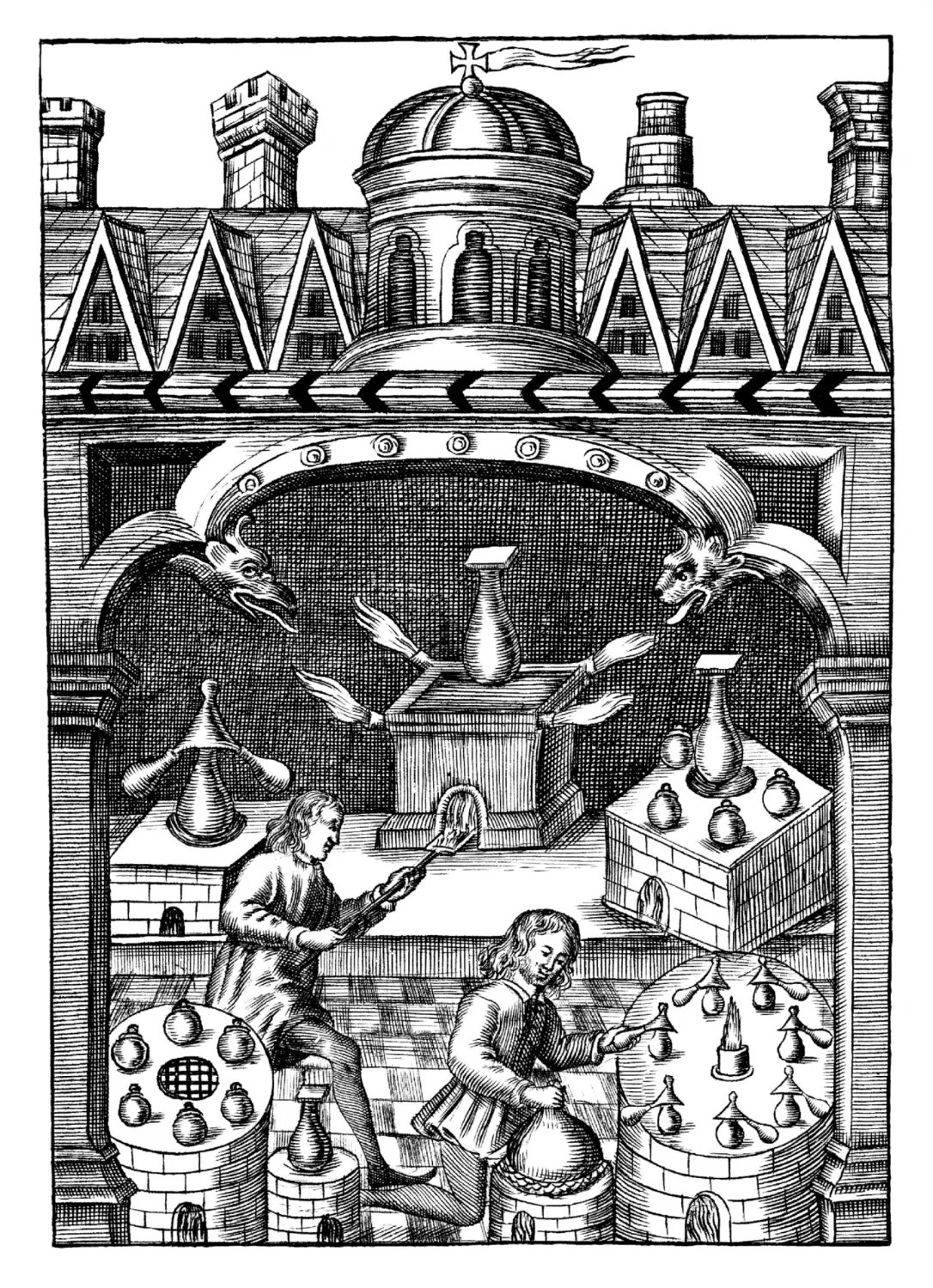
An alchemical laboratory: furnaces, alembics, and bellows at work, early modern woodcut.

The Laboratory and the Apothecary

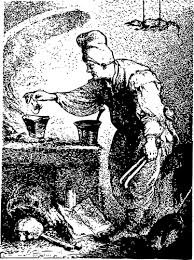
An alchemist at his furnace, engraving.

Behind the symbols stood a real workshop: the athanor, the slow furnace that kept an even heat for weeks; the alembic, in which vapors rose and condensed; the pelican, whose curved arms returned the distillate to the vessel; the bellows, crucibles, and sand-baths of a craft that demanded endless patience.

Much of what the alchemists learned passed straight into the apothecary’s shop: distilled waters, tinctures, and syrups, the same preparations Floriano Canale prescribes in his treatise on the bewitched, whose illustrated glossary sets each one beside a botanical plate and a modern assessment.

The Twilight of the Art

The seventeenth century was alchemy’s last and most splendid flowering. Michael Maier set its emblems to music in Atalanta Fugiens (1617); the Rosicrucian manifestos of 1614–16 spoke of a secret brotherhood of the Work; Isaac Newton filled notebooks with some million words on the art.

Yet in the same years Robert Boyle published The Sceptical Chymist (1661), and chemistry began its long separation from its mother. By the eighteenth century the alchemist had become a figure of satire, the old man at his bellows dreaming, as the verse beneath one print has it, that he will “turn the Age to Gold.” The art survived, but as symbol rather than science, until a Swiss psychiatrist recognized in its images the language of the soul.

II

The Stages of the Work

The colors and operations of the Work, and where each lives in the press’s own books.

Prima Materia The first matter

The formless, despised stuff from which the Work begins, found everywhere and valued by no one; in the soul, the raw and unredeemed material of a life.

Nigredo In An History Beside Time: “the first color of the work is black”

The blackening: putrefaction, dissolution, melancholy. The old form must die before anything new can be made.

Albedo In An History Beside Time: “a mercy”

The whitening: the washing of what the black has broken down, a first clarity and purification, ruled by the moon.

Citrinitas The yellowing

In some traditions a dawning between white and red, when the light of the sun first touches the purified matter.

Rubedo In An History Beside Time: “the seal”

The reddening: life re-entering what was purified, the completion of the Work in the stone, the sun, and the gold.

Solve et Coagula Dissolve and bind

The alchemist’s rhythm: dissolve what is fixed, and bind what is dissolved into a new and stronger form, again and again.

Coniunctio The union of opposites

The sacred marriage of sun and moon, king and queen, sulfur and mercury, from which the new and whole thing is born.

The Philosophers’ Stone Our gold is not the common gold

The end of the Work, able to perfect all it touches; for the philosophical alchemists, a transformed and incorruptible self.

III

Within the Press

Jung and the Alchemists

In 1928 Richard Wilhelm sent C. G. Jung a Chinese alchemical text, The Secret of the Golden Flower, and Jung recognized in it, and then in the Latin treatises he began to collect, the very images that were appearing in his patients’ dreams. The alchemists, he concluded, had projected the unconscious process of transformation into their matter: what they saw in the vessel was the psyche’s own drama.

Psychology and Alchemy (1944) and Mysterium Coniunctionis (1955–56) read the stages of the Work as the stages of individuation: the nigredo as the descent into the shadow, the coniunctio as the union of the conscious personality with its unconscious opposite, and the stone as the Self, the totality a person can become.

The Colors of the Soul: An History Beside Time

An History Beside Time takes the stages of the Work as the seasons of an inner life. “The first color of the work is black.” When the inner law is first heard, the mask darkens and the student trembles: “This blackness is called nigredo, and men fear it as death. Yet it is only the death of false arrangement. Better the blackness that cleanseth than the brightness that deceiveth.”

“After blackness cometh whitening. For when the false hath been humbled, the true may be washed. This washing is not moralism; it is clarity.” And the Work is sealed in red: “Therefore cometh the reddening, when life re-entereth what was purified. And this reddening is not rage, but vitality; not cruelty, but blood returned to the face. Thus is rubedo the seal.” The book insists these are not steps to be finished once: “the colors are not paints upon a wall, but seasons of the soul. They return again and again, for the soul groweth in spirals, not in lines.”

The Heroe’s Art: The Magical World of the Heroes

Cesare della Riviera’s The Magical World of the Heroes (1605) belongs to the Hermetic current of the Renaissance, and addresses its reader not as a sorcerer but as a “Heroe,” one who undertakes the long inward labor of transformation through natural rather than invoked powers. In its pages the furnace and the vessel are figures for the self, and the magic it teaches is the discipline of elevation carried out on one’s own nature.

It is the clearest statement on the press’s list of alchemy read as an inner art, and the reason the press counts it the most direct of its translations on the subject of the will toward the good: not a belief a person holds, but a labor a person undertakes.

The Wound as First Matter

The Wisdom of Catastrophe carries the alchemical idea into catastrophe. Its conviction is that catastrophe, suffered consciously, is the first matter of a transformation: that the collapse of a life’s false arrangements is a blackening rather than an ending, and that the wound itself, held in the vessel and not fled, can be transmuted into meaning.

Renewal, in the treatise as in the Work, is not a return to what was before, but the making of something that could not have existed without the dissolution that preceded it.

The Flask of the Press

The press’s own emblem is a sun-crowned flask: the alchemist’s vessel, crowned with the sun that marks the completion of the Work, reached for by a hand from the clouds and kept by Zarathustra’s eagle and serpent, with the motto Scribere est cogitare, ergo incipe: to write is to think, so begin.

On the site’s longer pages a small flask fills as the reader goes deeper, from gold into red. It is a quiet joke and a serious one: reading, done rightly, is also a Work, and its last color is the reddening.

Toward the Horizon of the Good

The alchemists sought a gold that would not tarnish and a stone that would perfect whatever it touched. The press reads that gold as the will toward the good: not a feeling, not a reward, but a transformed orientation of the whole person, which can still be called good now, in a week, in a year, and forever.

Like the Work, it cannot be reached by skipping the black. A good that has never passed through its own nigredo, never dissolved its false arrangements or faced its own shadow, is only the common gold, bright and brittle. And like the Work, it is never finished once: the colors return, and the vessel must be tended again. An History Beside Time says it in a single line: “Thus the work is without end, and yet it is always now.”