
Hemp
Cannabis
- Known today as
- Cannabis sativa.
- Kind
- Plant, in 2 older authorities
- Constituents
- tetrahydrocannabinol, cannabidiol
- Earliest authority here
- Herodotus (c. 484–c. 425 BC)
- In other databases
- Plants of the World Online search · GBIF search · Wikidata search
Revised October 1, 2026: The mechanism corrected against ChEMBL. Version 1, first published September 25, 2026.
Caution. Psychoactive; a controlled drug in many places.
Hemp: what was it used for?
The seed and its juice for earache and to dry up seed; the fiber for cloth and rope.
Hemp: what does modern science say?
Its cannabinoids are psychoactive; purified cannabidiol is an approved medicine for some childhood epilepsies.
Pharmacognosy & Toxicology
- Constituents
- Mechanism
- THC is a partial agonist at the CB1 receptors of the brain. CBD does not activate CB1 but modulates it negatively, and acts at GPR55 and the capsaicin receptor TRPV1; it is not intoxicating.
- Checked against ChEMBL
- tetrahydrocannabinol: ChEMBL’s curated mechanism: agonist Cannabinoid receptor 1.
- cannabidiol: ChEMBL’s curated mechanism: negative allosteric modulator Cannabinoid receptor 1.
- cannabidiol: The entry once said “acts elsewhere”, and was corrected to what ChEMBL holds: Cannabinoid receptor 1 (human), Ki 151 nM, CHEMBL5523761; G-protein coupled receptor 55 (human), EC50 445 nM, CHEMBL1155461; Transient receptor potential cation channel subfamily V member 1 (human), EC50 1 µM, CHEMBL6078669.
- Toxic dose
- No recorded fatal dose of THC; psychosis in the vulnerable.
- Standing
- Cannabidiol is licensed for two childhood epilepsies; THC preparations for nausea and spasticity in many countries.
- Devinsky, O., et al. (2017). “Trial of cannabidiol for drug-resistant seizures in the Dravet syndrome.” New England Journal of Medicine 376. Verified against its record · doi:10.1056/nejmoa1611618
Constituent names open the compound’s record at PubChem, and “ChEMBL” beside a name opens its record at ChEMBL, the European Bioinformatics Institute’s database of bioactive molecules. Where a mechanism line was checked against ChEMBL (ChEMBL 37, read 1 October 2026), the check is shown with the measured value and its source paper, or says plainly that nothing has been measured. Doses are as the references give them, for description only; this is not medical advice. Each source carries the result of its check against Crossref, PubMed, or the authority’s page: see Verification.
Hemp: what lore surrounds it?
In Hindu tradition cannabis belongs to Shiva, called for this reason the Lord of Bhang; myth holds that he produced the plant from his own body to purify the amrita, the elixir of immortality churned from the cosmic ocean. Bhang is still drunk ritually at Holi and Maha Shivratri and sometimes offered in temples as prasad, on the belief that, taken by proper rite, it cleanses sin rather than causing it.
Hemp: what did the older authorities say?
- Herodotus
- Describes the Scythians throwing hemp seed on hot stones inside their felt tents and howling with joy in the vapor.
- Dioscorides
- Gives the juice of the green seed for earache.
Sources
- Herodotus, Histories IV. Verified against its record · doi:10.1093/oseo/instance.00279190
- Dioscorides, De materia medica. Read in part · the text read
- Wikipedia, “Cannabis and religion.” Book, not indexed
Verification
- Checked
- October 1, 2026
- Passes
- Every sentence read against its sources, in the fifty-entry sample
- The Standing line checked against the authority it names (EMA, WHO, FDA, CITES, Commission E)
- Every dated or regulatory claim checked by category across the database
- The mechanism read against ChEMBL (ChEMBL 37): curated mechanisms and measured activity
- Sources
- 4 cited: 1 read in part, 2 verified against its record, 1 book, not indexed.
- Corrections
- said CBD "acts elsewhere" than THC. ChEMBL curates it as a negative allosteric modulator of CB1 and records it at GPR55 and TRPV1; the mechanism now says so.
What was checked, how, and what was found is set out on the Verification page. A checked source is one whose record was found; it does not make the entry medical advice.
Cite This Entry
Version 1 · first published September 25, 2026 · last revised October 1, 2026
- Chicago
“Hemp.” In Materia Medica, edited by B. C. P. Statema. Version 1. The Thinking Press, 2026–. Last modified October 1, 2026. https://thethinkingpress.org/materia-medica/hemp.
- MLA
“Hemp.” Materia Medica, edited by B. C. P. Statema, version 1, The Thinking Press, 1 Oct. 2026, thethinkingpress.org/materia-medica/hemp. Accessed 8 Oct. 2026.
- APA
Hemp. (2026, October 1). In B. C. P. Statema (Ed.), Materia medica (Version 1). The Thinking Press. Retrieved October 8, 2026, from https://thethinkingpress.org/materia-medica/hemp
Club members keep entries on a shelf with private notes, print the plates as cards, and receive an entry by email each week. Create a free account before January 1, 2027 and all of it is yours for good. About the Club
See Also
Also in Herodotus
Labdanum in Herodotus · Garlic in Herodotus · Myrrh in Herodotus · Frankincense in Herodotus · everything Herodotus names →
Also in Dioscorides
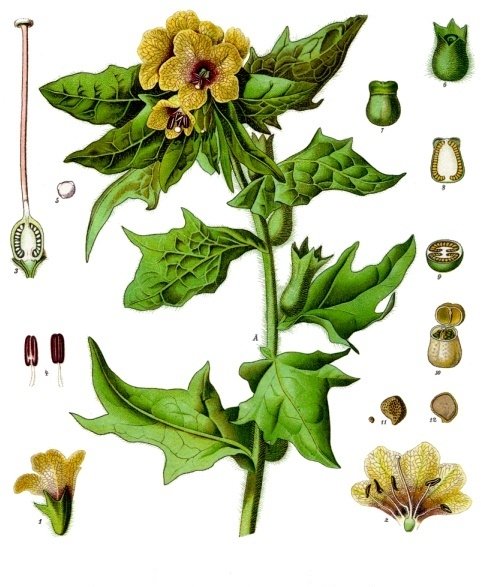
Henbane in Dioscorides · Ginger in Dioscorides · Isinglass in Dioscorides · everything Dioscorides names →
Drawing on the same sources: Herodotus, Dioscorides, Wikipedia
Nearby in the alphabet
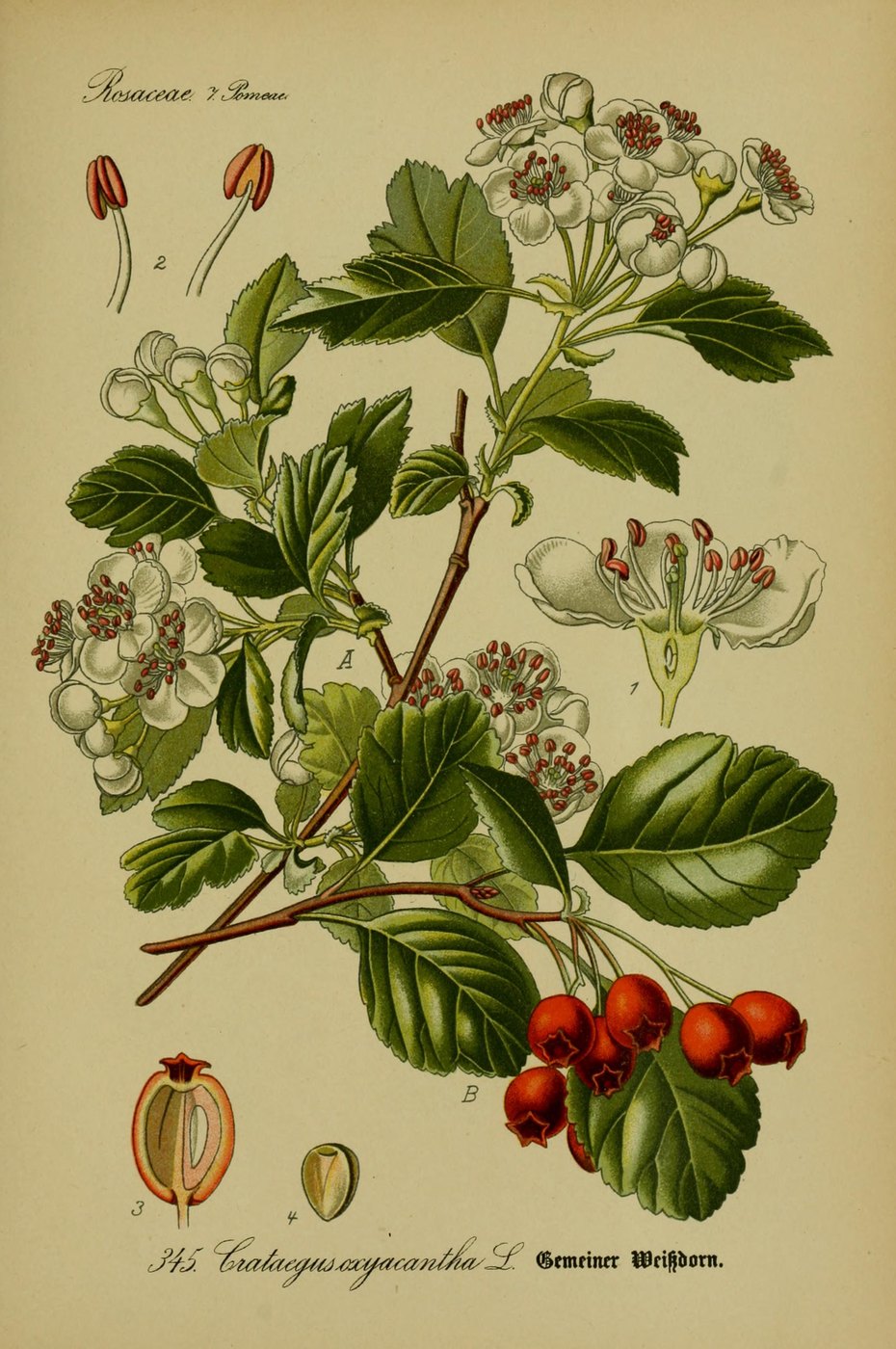
Herb bennet (of the rose family, with a root that smells of cloves) · Heartsease (the wild pansy of fields and banks, purple, white, and yellow) · Herb Paris (true-lover’s knot, a woodland plant with a single black berry) · Hiera of Pacchius · Hawthorn (Crataegus monogyna)
Historical description, not medical advice.