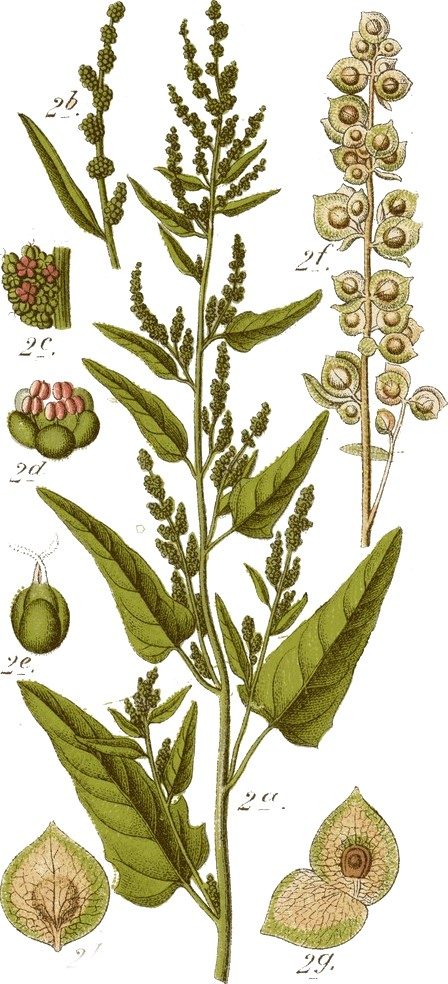
Orache
Atriplice
- Known today as
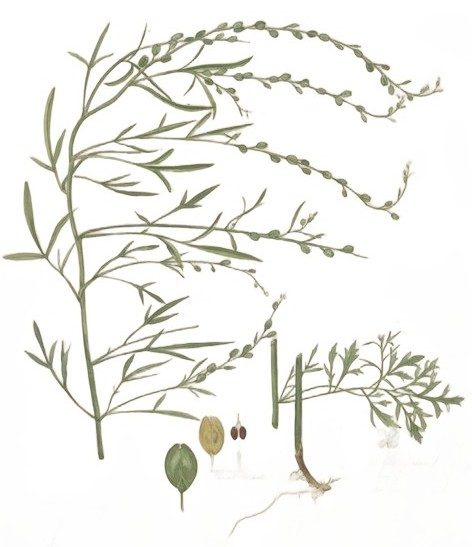
- Atriplex hortensis, garden orache, a spinach-like plant.
- Kind
- Plant, in 2 older authorities
- Earliest authority quoted here
- Pliny (AD 23/24–79)
- In other databases
- Plants of the World Online · GBIF · Wikidata
- In the Canale glossary
- On the Manner of Discerning and Healing the Bewitched, Appendix A: Part Three, Chapter 5: Vomitory Medicines
Revised October 17, 2026: Tradition, lore, modern assessment, and sources extended. Checked against its sources, each read in full, in part, or in its abstract. Version 1, first published September 25, 2026.
Orache: what did Canale use it for?
Root and seed as vomits (ch. 5).
Orache: what does modern science say?
Pliny records the boiled seed as an emetic. Grieve, too, says the seeds “excite vomiting.”
Orache: what did the older authorities say?
- Dioscoridesc. AD 40–90
- Gives atraphaxis, orache, raw or boiled, to soften the bowels, and the seed in honeyed water for the jaundice.
- PlinyAD 23/24–79
- Reports Pythagoras’s charge that it produces dropsy, jaundice, and paleness of the complexion; some, he says, give the seed with honey for jaundice, and use the seed, boiled, as an emetic.
Orache: what lore surrounds it?
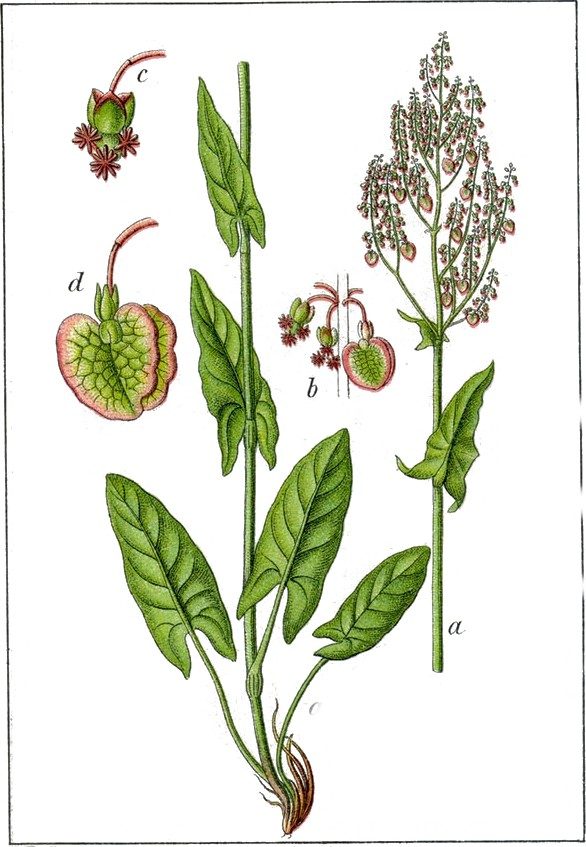
Garden orache, a native of Tartary by Grieve’s account, was brought to England in 1548 and grown much in France, as arroche, for its large leaves, a substitute for spinach; she derives the name orache from aurum, gold, because the seeds in wine were thought to cure the yellow jaundice.
Pharmacognosy
- Standing
- A vegetable; no monograph.
- Grieve, M. (1931). A Modern Herbal, “Orach.” Read in full · the text read
Constituent names open the compound’s record at PubChem, and “ChEMBL” beside a name opens its record at ChEMBL, the European Bioinformatics Institute’s database of bioactive molecules. Where a mechanism line was checked against ChEMBL (ChEMBL 37, read 1 October 2026), the check is shown with the measured value and its source paper, or says plainly that nothing has been measured. Doses are as the references give them, for description only; this is not medical advice. Each source carries the result of its check against Crossref, PubMed, or the authority’s page: see Verification.
Sources
- [98] Pliny the Elder. The Natural History. Trans. J. Bostock and H. T. Riley. London, 1855. Perseus Digital Library, Tufts University. Cited by book and chapter. Read in part · the text read
- Pliny, Natural History XX. Read in part · the text read
- Dioscorides, De materia medica II. Read in part · the text read
Verification
- Checked
- October 1, 2026, October 17, 2026
- Passes
- Read against its sources in the pass over the remaining 343 entries
- Every dated or regulatory claim checked by category across the database
- Every source read, in full, in part, or in its abstract, and every sentence checked against what was read (October 17, 2026)
- Sources
- 4 cited: 1 read in full, 3 read in part.
- Corrections
- None recorded.
What was checked, how, and what was found is set out on the Verification page. A checked source is one whose record was found; it does not make the entry medical advice.
Club members can point at a technical term in this entry, such as a constituent, an action, or a word of Jung’s, to read its definition from the source. The Club.
Cite This Entry
Version 1 · first published September 25, 2026 · last revised October 17, 2026
- Chicago
“Orache.” In Materia Medica, edited by B. C. P. Statema. Version 1. The Thinking Press, 2026–. Last modified October 17, 2026. https://thethinkingpress.org/materia-medica/orache.
- MLA
“Orache.” Materia Medica, edited by B. C. P. Statema, version 1, The Thinking Press, 17 Oct. 2026, thethinkingpress.org/materia-medica/orache. Accessed 22 Nov. 2026.
- APA
Orache. (2026, October 17). In B. C. P. Statema (Ed.), Materia medica (Version 1). The Thinking Press. Retrieved November 22, 2026, from https://thethinkingpress.org/materia-medica/orache
See Also
Also in Dioscorides
Oregano and squinanth in Dioscorides · Opium poppy in Dioscorides · Orris in Dioscorides · Oat in Dioscorides · everything Dioscorides names →
Also in Pliny the Elder
Orpiment and realgar in Pliny the Elder · Olive oil and holy water in Pliny the Elder · Oxymel, and oxymel of squill in Pliny the Elder · Oak galls in Pliny the Elder · everything Pliny the Elder names →
Drawing on the same sources: Pliny, Dioscorides, Grieve
Opopanax · Pennyroyal · Onion · Ox eye · the bibliography →
Nearby in the alphabet
Onycha and stacte (Ingredients of the Temple incense (Exodus 30)
Historical description, not medical advice.
