
Colophon
A note on how this page itself was set, in the old custom of ending a book with one.
Type
Headings and display text are set in Cormorant Garamond, a revival of the sixteenth-century types cut by Claude Garamond and Robert Granjon. Running text is set in Source Serif, a contemporary serif built for long, comfortable reading rather than display. Both are open-source families, served rather than shipped as files.
Palette
The press's colors are drawn narrowly on purpose: an ink ground, a parchment ink, and two golds standing in for gilding and rubrication, with a single oxblood reserved for accent.
Mark
The press's emblem appears throughout the site and on the covers of its physical editions. Within an oval bearing the motto Scribere est cogitare, ergo incipe, “to write is to think, so begin,” a hand reaches down from the clouds to a flask marked T·P and crowned with the sun, the alchemist's vessel at the completion of the Work. Above and below stand an eagle with a serpent coiled about it: Zarathustra's animals, the proudest and the wisest, a mark of the vantage the press tries to write from. An omega closes it at the foot.
Images
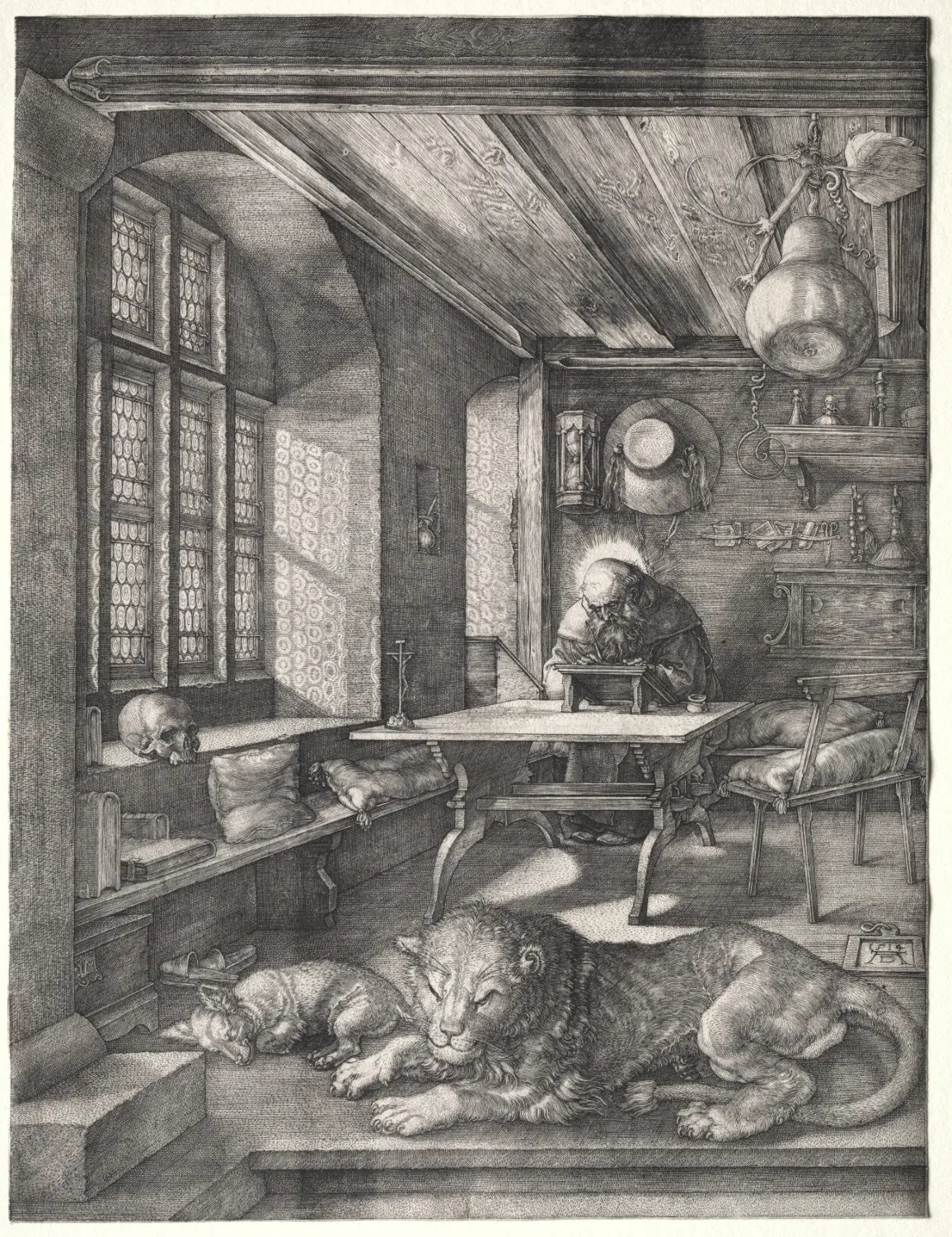
The site is illustrated, where it can be, with old prints rather than new pictures. Albrecht Dürer’s three master engravings of 1513–14 stand behind it: Knight, Death and the Devil on the home page, the resolve that rides on through darkness; Saint Jerome in His Study, the scholar at his patient work, on the pages about writing and sources; and Melencolia I, the brooding first stage of the Great Work, in spirit if not on the page. Goya, the old botanists, and the alchemists’ engravers keep them company.
The small atlas plates on each book page, showing where every work was made, are drawn from Natural Earth’s public-domain outlines, set in the press’s own ink and gold.
Composition
This site is composed and served without a physical press, plate, or ream of paper, a single file of text rendered on request, with its images and downloadable editions held separately and called for by name. It is, itself, a small argument that craft and care are a matter of attention, not of medium.