
Periwinkle
Vinca, pervinca; sorcerer’s violet
- Known today as
- Vinca minor, the lesser periwinkle, a trailing evergreen with blue flowers.
- Kind
- Plant, in 1 older authority
- Constituents
- vincamine, vinpocetine
- Earliest authority quoted here
- Culpeper (1616–1654)
- In other databases
- Plants of the World Online · GBIF · Wikidata
Revised October 17, 2026: Checked against its sources, each read in full, in part, or in its abstract. Version 1, first published September 30, 2026.
Periwinkle: what was it used for?
An astringent, “a great binder,” for bleeding and fluxes, the leaves chewed to stay bleeding at the mouth and nose; Grieve adds that its branches wrapped about the limbs were said to ease cramp.
Periwinkle: what does modern science say?
From Vinca minor comes apovincamine, a vinca alkaloid, and from it the synthetic vinpocetine; a Cochrane review found its benefit in dementia inconclusive. The cancer drugs vincristine and vinblastine come from another plant, the Madagascar periwinkle, Catharanthus roseus.
The toxic dose and the poisoning
- Toxic dose
- Vinpocetine seemed to have few adverse effects at the doses studied, though they were inconsistently reported.
The references for these lines are listed under Pharmacognosy, in Science. Doses are as the references give them, for description only; this is not medical advice. In a poisoning, call a poison centre.
Periwinkle: what did the older authorities say?
- Culpeper1616–1654
- Places it under Venus, and says the leaves eaten together by man and wife cause love between them.
Periwinkle: what lore surrounds it?
In France the “sorcerer’s violet,” violette des sorciers; in 1306, when Simon Fraser rode in irons through London to his execution, a garland of periwinkle was put on his head in mockery; and the book of secrets ascribed to Albertus Magnus, as Grieve quotes it, gives it powdered “with worms of ye earth” and houseleek to induce “love between man and wyfe.”
Pharmacognosy
- Constituents
- vincamine ChEMBL
- vinpocetine ChEMBLits synthetic derivative
- Mechanism
- Vinpocetine, discovered in the late 1960s, has been used in treatment for over twenty years without approval by any regulator for cognitive impairment; the many effects claimed for it in the brain are of unclear clinical relevance. The cancer drugs vincristine and vinblastine come from the Madagascar periwinkle, a different plant.
- Standing
- No regulator has approved vinpocetine for cognitive impairment.
- Szatmári, S. Z., and Whitehouse, P. J. (2003). “Vinpocetine for cognitive impairment and dementia.” Cochrane Database of Systematic Reviews. Abstract read · the text read
The abstract of each source, beneath its citation. For Club members. About the Club or sign in.
Constituent names open the compound’s record at PubChem, and “ChEMBL” beside a name opens its record at ChEMBL, the European Bioinformatics Institute’s database of bioactive molecules. Where a mechanism line was checked against ChEMBL (ChEMBL 37, read 1 October 2026), the check is shown with the measured value and its source paper, or says plainly that nothing has been measured. Doses are as the references give them, for description only; this is not medical advice. Each source carries the result of its check against Crossref, PubMed, or the authority’s page: see Verification.
Sources
- Grieve, M. (1931). A Modern Herbal, “Periwinkle.” Read in full · the text read
- Culpeper, N. (1652). The English Physitian. Read in part · the text read
- Mistry, V., et al. (2026). Genome-wide association studies reveal genetic variants associated with antineoplastic monoterpenoid indole alkaloid accumulation in Catharanthus roseus. Frontiers in Plant Science. Read in part · the text read
Verification
- Checked
- October 1, 2026, October 17, 2026
- Passes
- Read against its sources in the pass over the remaining 343 entries
- Every dated or regulatory claim checked by category across the database
- Every source read, in full, in part, or in its abstract, and every sentence checked against what was read (October 17, 2026)
- Sources
- 4 cited: 1 read in full, 2 read in part, 1 abstract read. 1 with the abstract on file.
- Corrections
- None recorded.
What was checked, how, and what was found is set out on the Verification page. A checked source is one whose record was found; it does not make the entry medical advice.
Club members can point at a technical term in this entry, such as a constituent, an action, or a word of Jung’s, to read its definition from the source. The Club.
Cite This Entry
Version 1 · first published September 30, 2026 · last revised October 17, 2026
- Chicago
“Periwinkle.” In Materia Medica, edited by B. C. P. Statema. Version 1. The Thinking Press, 2026–. Last modified October 17, 2026. https://thethinkingpress.org/materia-medica/periwinkle.
- MLA
“Periwinkle.” Materia Medica, edited by B. C. P. Statema, version 1, The Thinking Press, 17 Oct. 2026, thethinkingpress.org/materia-medica/periwinkle. Accessed 22 Nov. 2026.
- APA
Periwinkle. (2026, October 17). In B. C. P. Statema (Ed.), Materia medica (Version 1). The Thinking Press. Retrieved November 22, 2026, from https://thethinkingpress.org/materia-medica/periwinkle
See Also
Also in Nicholas Culpeper
Ragwort in Nicholas Culpeper · Oak bark in Nicholas Culpeper · Raisins in Nicholas Culpeper · Mouse-ear hawkweed in Nicholas Culpeper · everything Nicholas Culpeper names →
Drawing on the same sources: Grieve, Culpeper
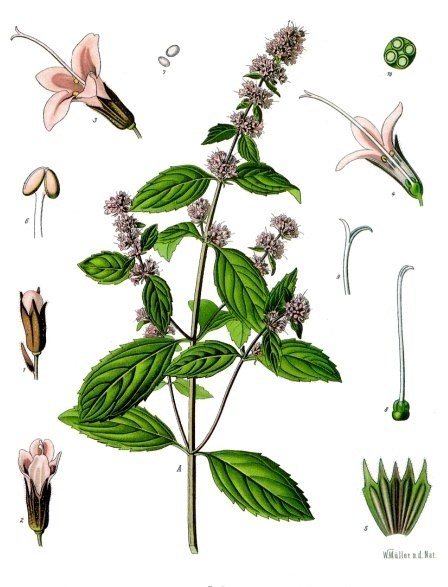
Pilewort · Peppermint · Plantain · The precious stones · the bibliography →
Nearby in the alphabet
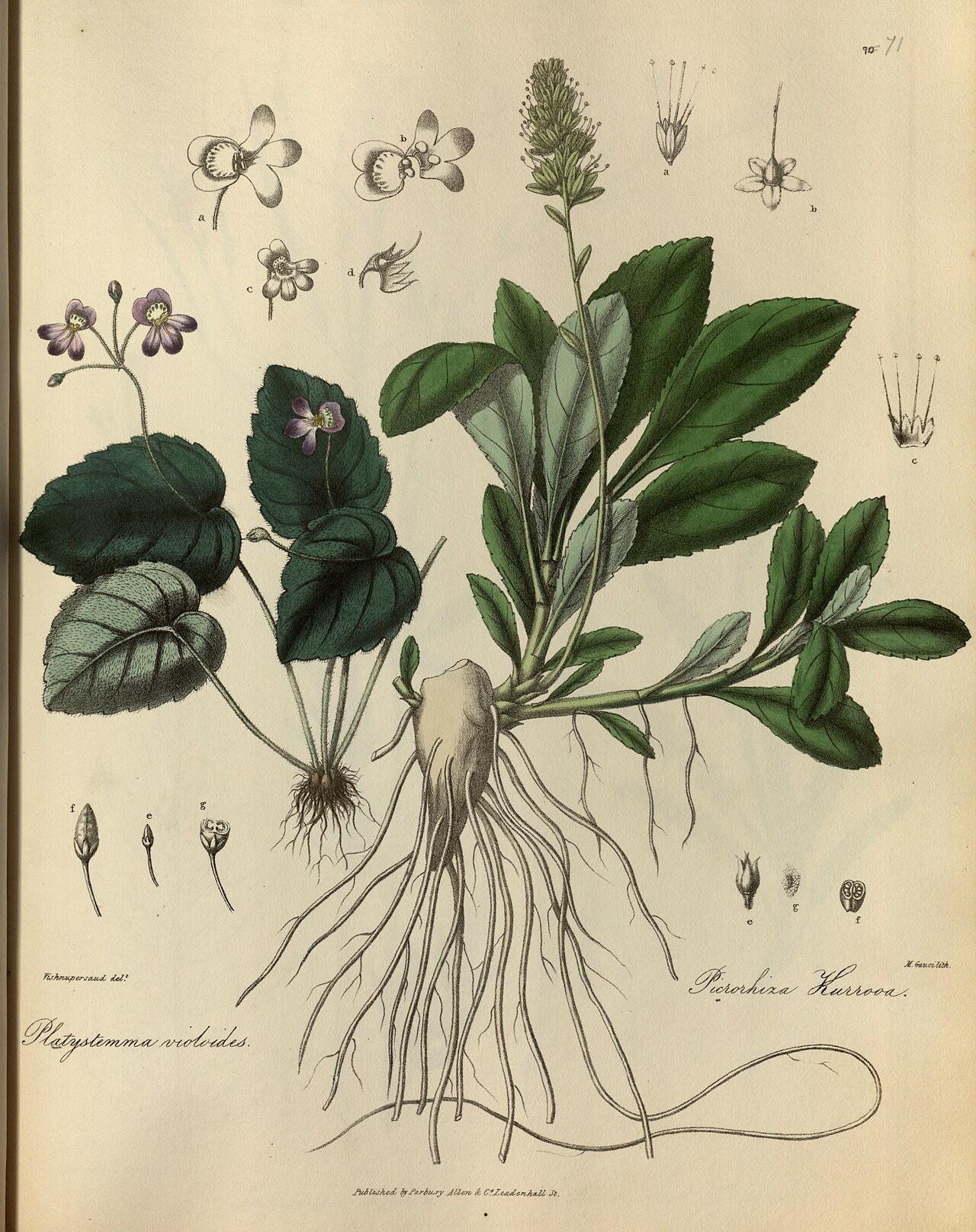
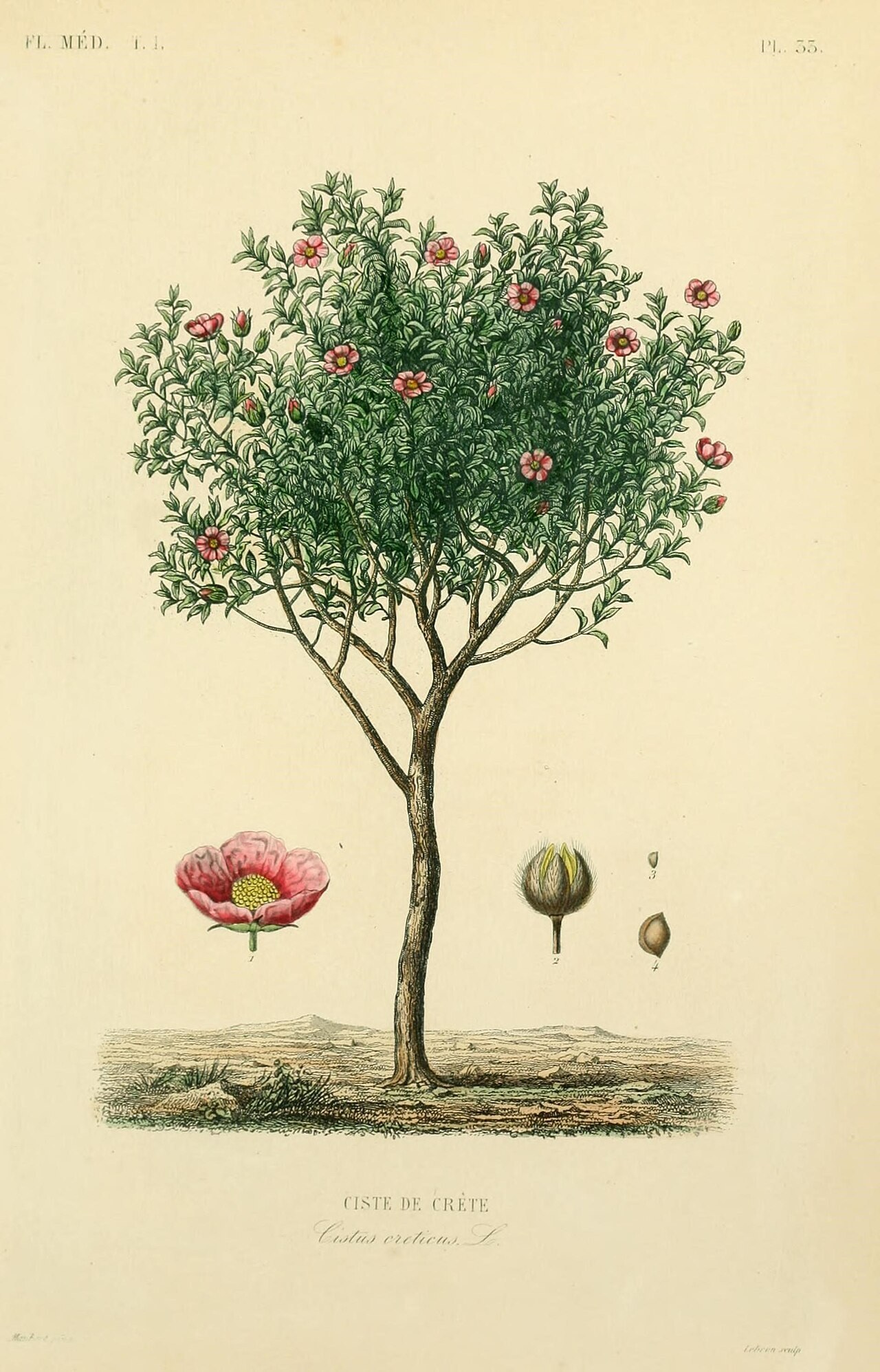
Picrorhiza · Peony (the kind formerly grown for its medicinal root) · Pilgrim badges and ampullae · Pennyroyal (Mentha pulegium) · Pink rock-rose · Penicillin mould (common in damp buildings, house dust, and spoiling food)
Historical description, not medical advice.
