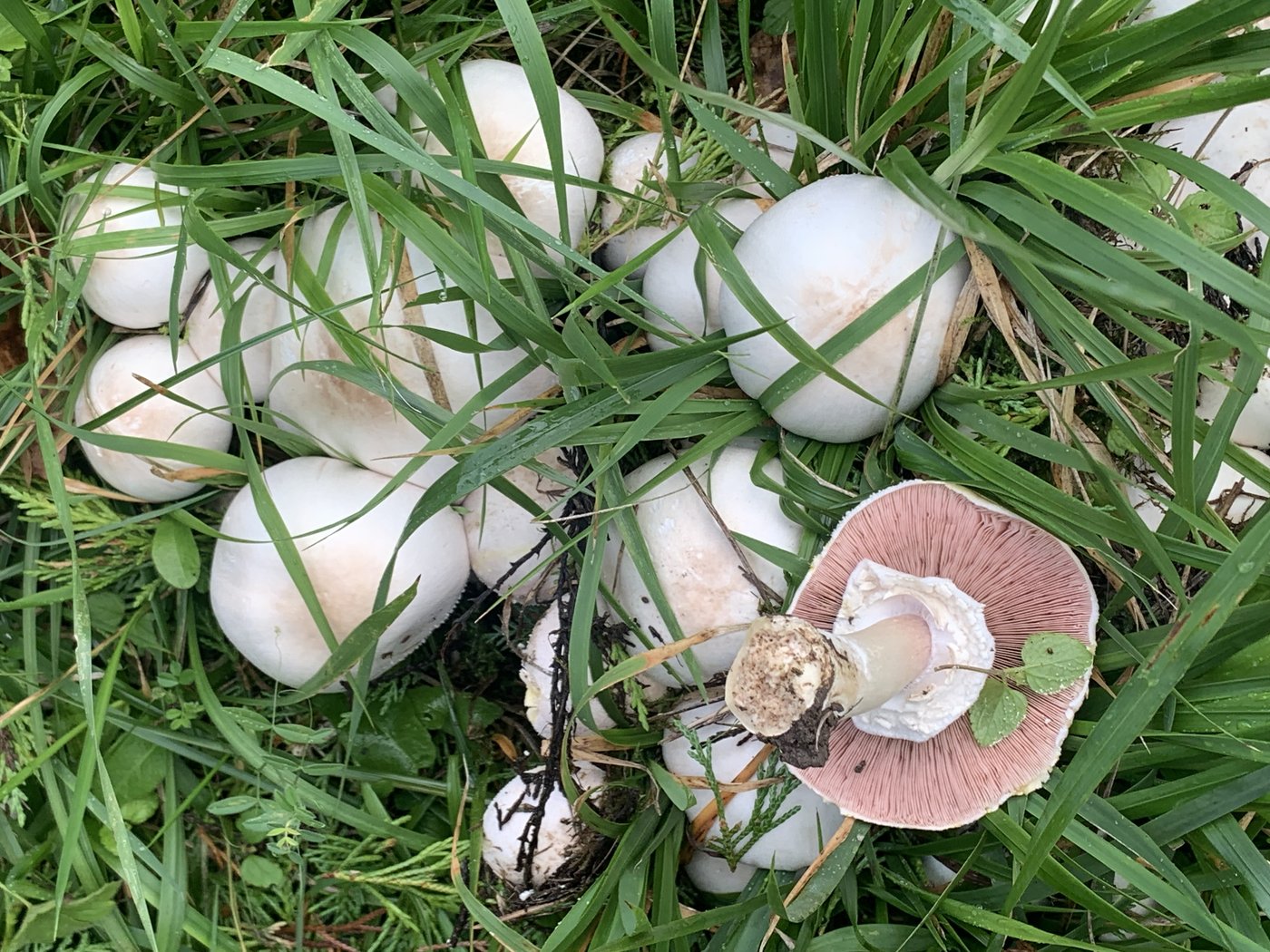
How the poisons of the database act, grouped by the picture they make in the body: what is in them, how soon it shows, how it runs, and what is done for it. Each entry with a known agent names its syndrome under “Pharmacognosy & Toxicology.”
- Agents
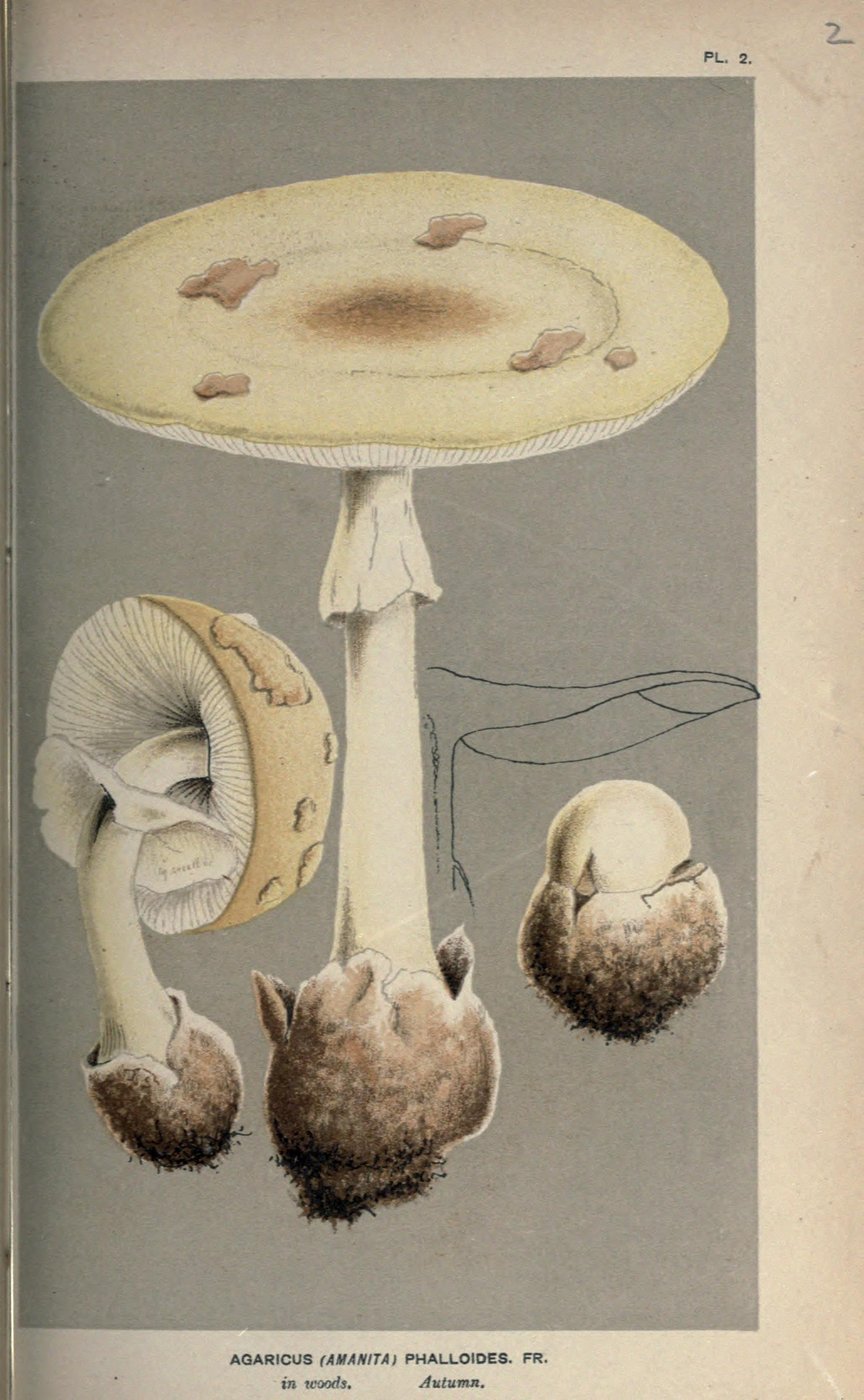
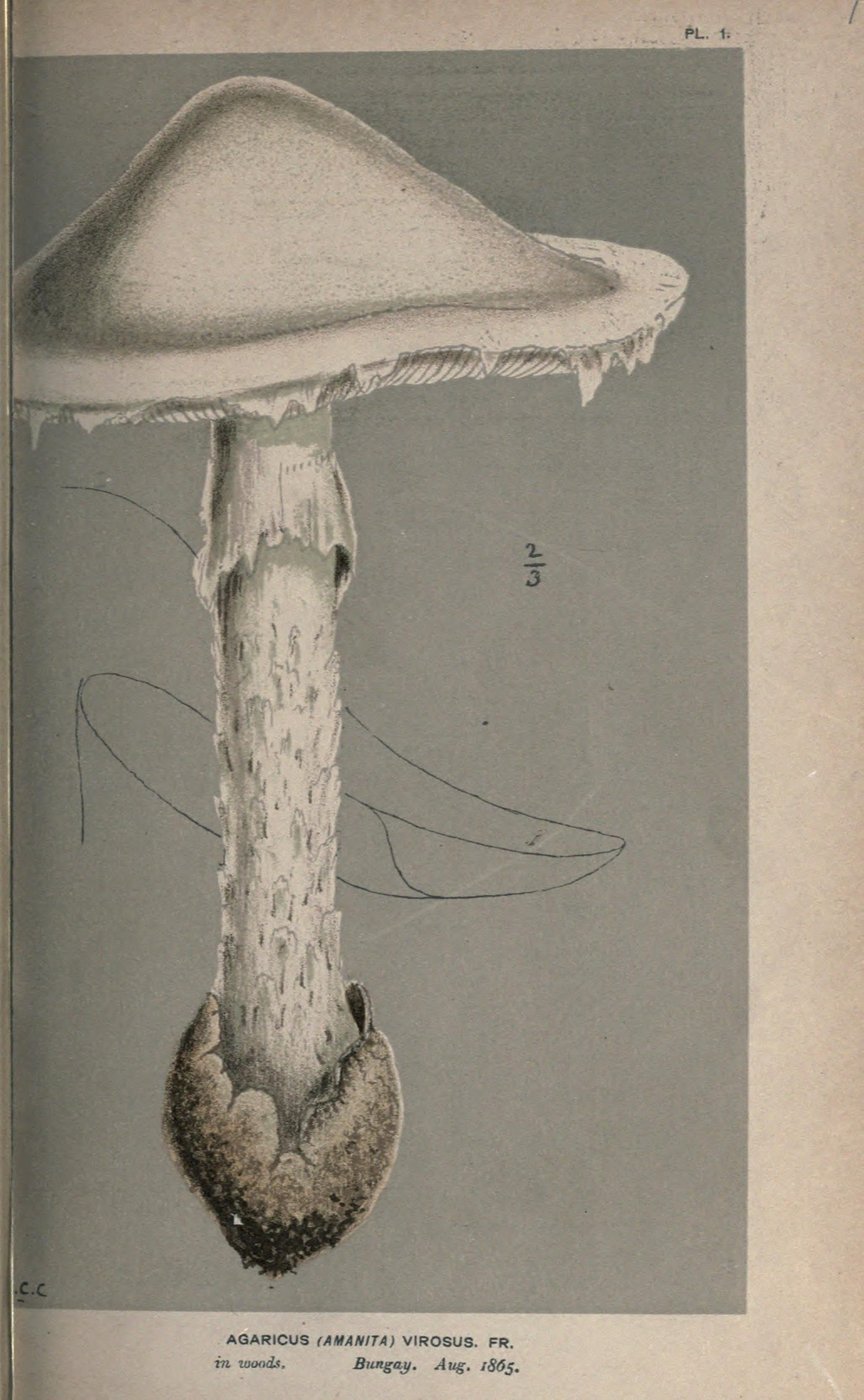
- α-amanitin and its relatives: the death cap, the destroying angels, the deadly webcap’s relatives among the Lepiota and Galerina.
- Onset
- 6 to 24 hours, usually 10 to 12, with no symptoms before: the long latency is the mark of it.
- Course
- A day of violent vomiting and diarrhoea, then an apparent recovery of a day or two while the liver and kidneys fail; death, where it comes, after four to nine days. α-amanitin stops RNA polymerase II, so the cells that take it up can make no protein.
- Treatment
- Fluids; activated charcoal; silibinin from the milk thistle, and penicillin G in some protocols; transplant where the liver is lost. There is no antidote.
In the database: Death cap, Destroying angel, Funeral bell.
- Bresinsky, A., and Besl, H. (1990). A Colour Atlas of Poisonous Fungi.
- Goldfrank’s Toxicologic Emergencies, 11th ed. (2019), “Mushrooms.”
- Agents
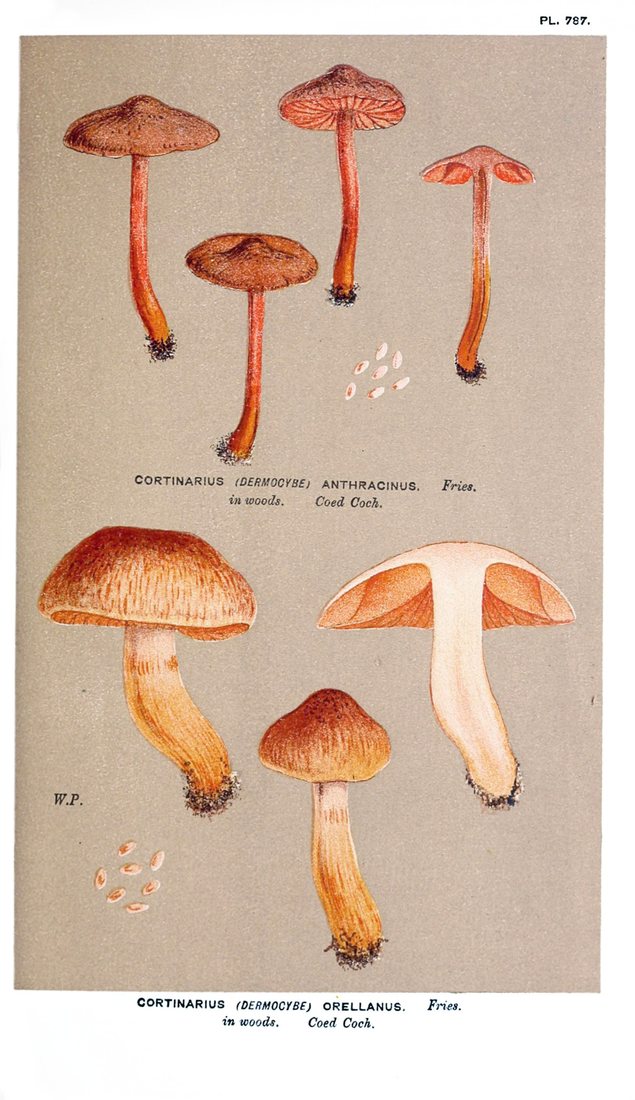
- Orellanine, in the deadly webcap and the fool’s webcap (Cortinarius orellanus and rubellus).
- Onset
- Two to twenty days: the longest latency of any mushroom poison, so the meal is seldom remembered.
- Course
- Thirst, nausea, and flank pain, then kidney failure, which in a third to a half of cases is permanent and needs dialysis or transplant.
- Treatment
- Supportive; dialysis. No antidote.
In the database: Deadly webcap, Fool’s webcap.
- Goldfrank’s Toxicologic Emergencies, 11th ed. (2019).
- Danel, V. C., et al. (2001). “Main features of Cortinarius spp. poisoning.” Toxicon 39.
- Agents
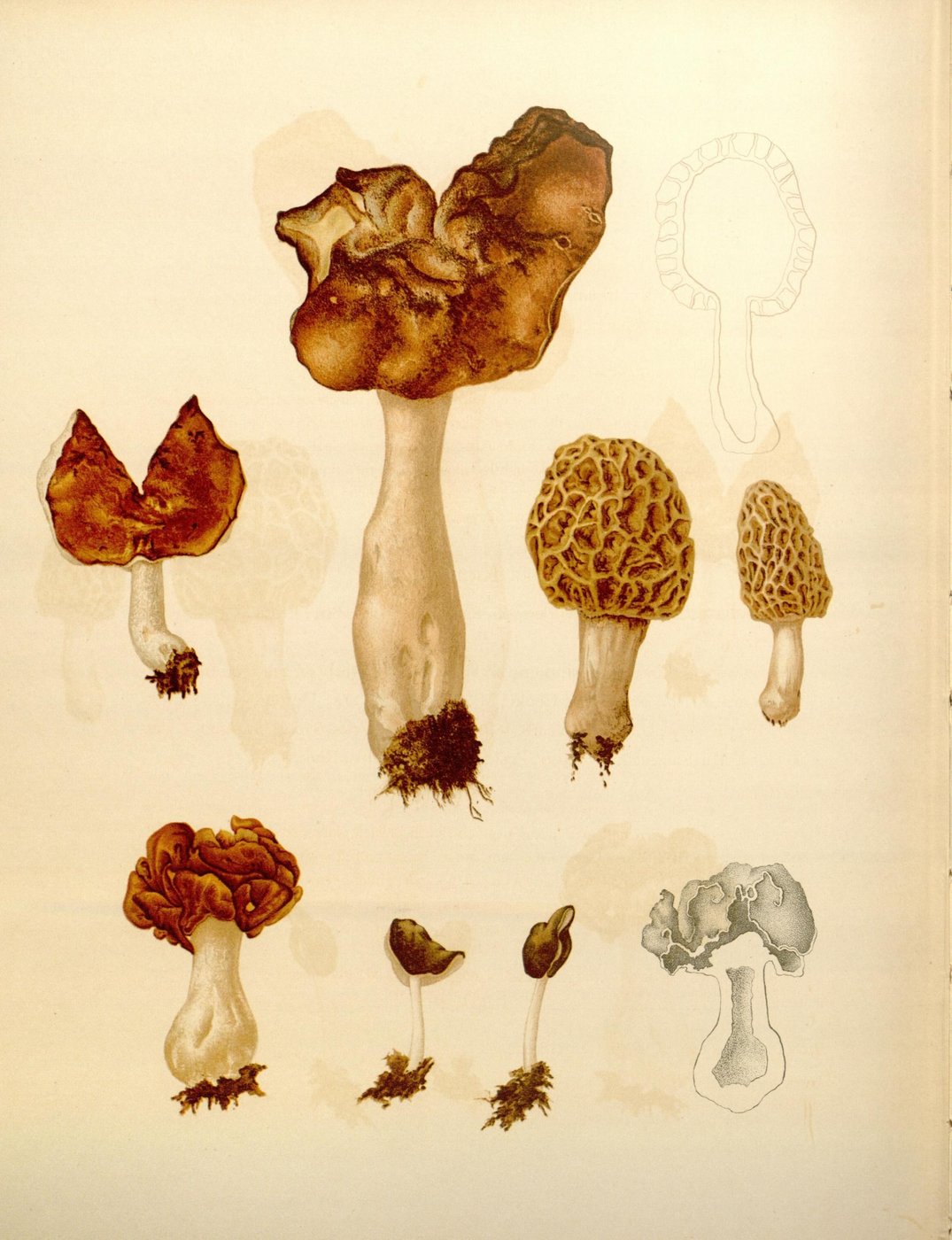
- Gyromitrin, in the false morel, which the body turns into monomethylhydrazine, a rocket fuel.
- Onset
- Six to twelve hours.
- Course
- Vomiting and diarrhoea, then in bad cases delirium, convulsions, and liver damage; the vapour from cooking has poisoned cooks. Parboiling drives off most of it, which is why the fungus is still eaten in Finland.
- Treatment
- Pyridoxine (vitamin B6) in high doses for the convulsions; supportive care.
In the database: False morel.
- Michelot, D., and Toth, B. (1991). “Poisoning by Gyromitra esculenta: a review.” Journal of Applied Toxicology 11.
- Agents
- Muscarine, in the fibrecaps (Inocybe) and the white Clitocybe species; the fly agaric, from which it was named, holds only traces.
- Onset
- Fifteen minutes to two hours.
- Course
- The cholinergic picture: sweating, salivation, tears, a running nose, a slowed heart, and cramps; frightening, rarely fatal.
- Treatment
- Atropine, which is the specific antidote; the only mushroom syndrome with one.
In the database: Deadly fibrecap.
- Goldfrank’s Toxicologic Emergencies, 11th ed. (2019).
- Agents
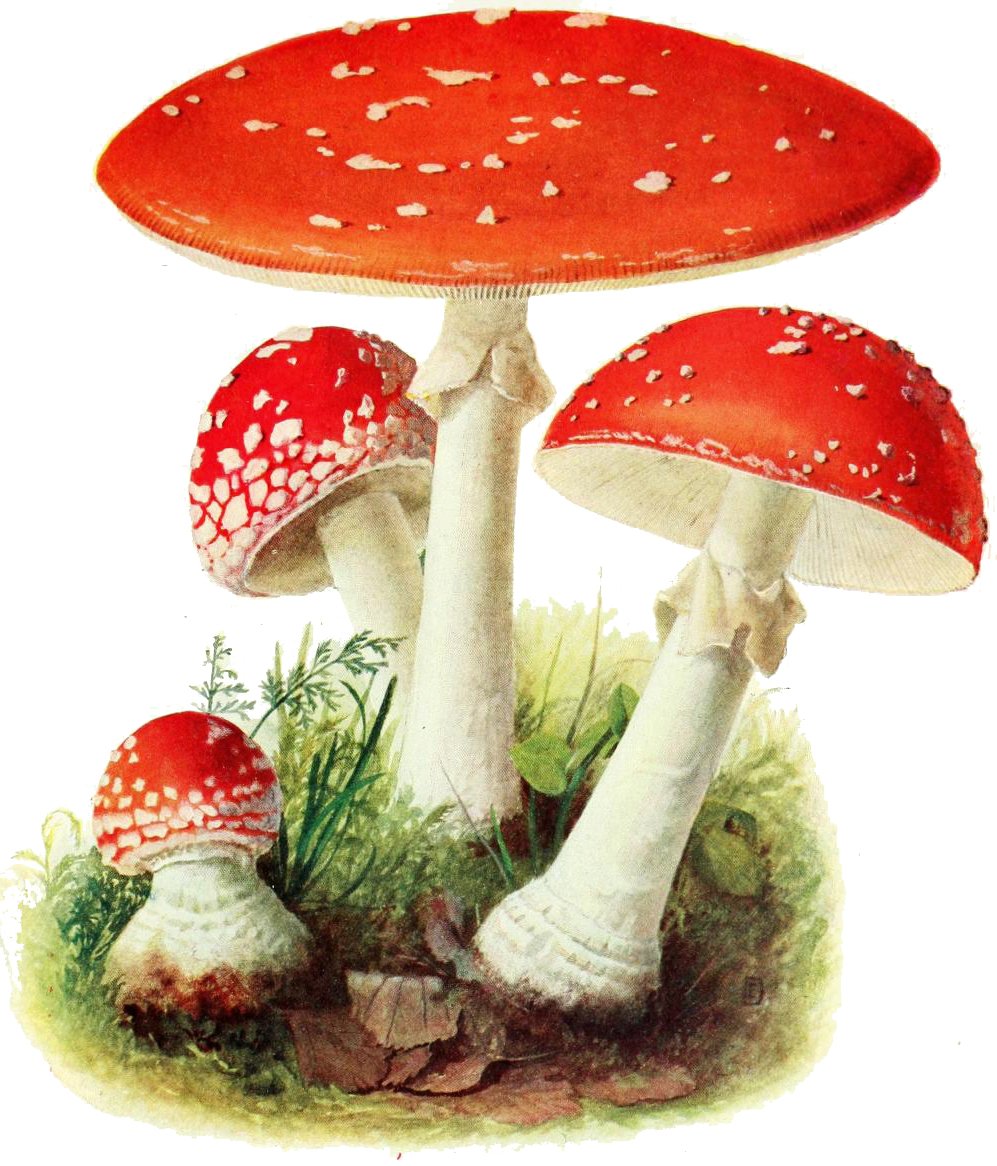
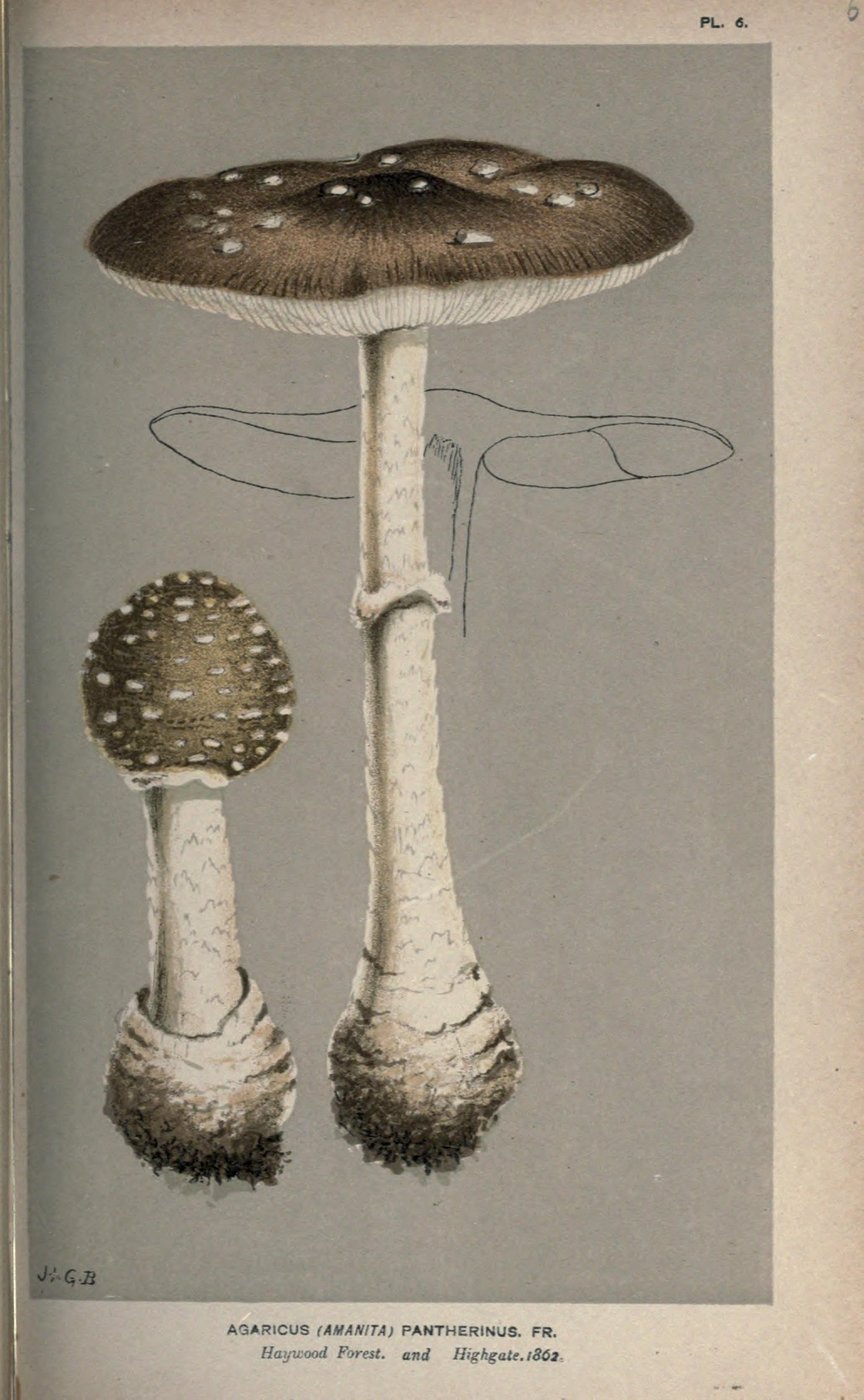
- Ibotenic acid and muscimol, in the fly agaric and the panther cap.
- Onset
- Thirty minutes to two hours.
- Course
- Confusion, dizziness, and a drunken excitement, twitching, then deep sleep with vivid dreams; convulsions in children; recovery in a day. Muscimol acts on the GABA receptors like a strong sedative, ibotenic acid on the glutamate receptors as an excitant.
- Treatment
- Supportive; benzodiazepines for convulsions. Deaths are rare.
In the database: Fly agaric, Panther cap.
- Michelot, D., and Melendez-Howell, L. M. (2003). Mycological Research 107.
- Agents
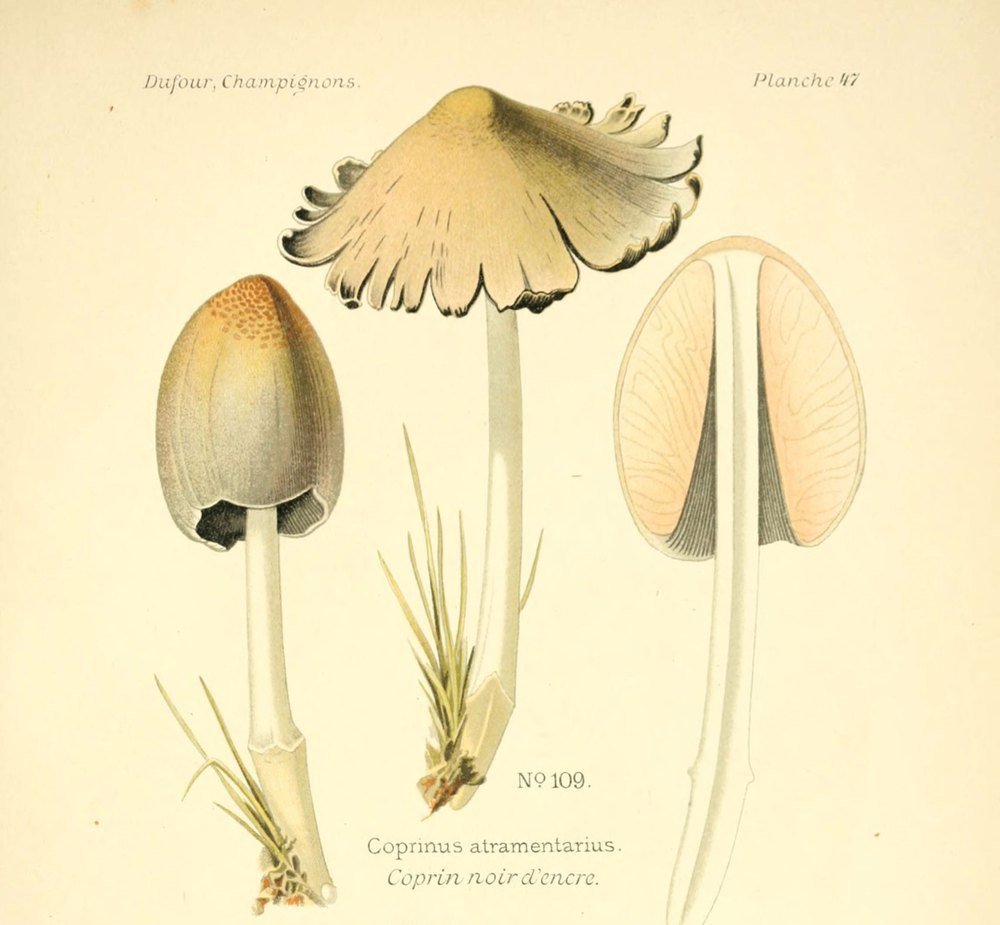
- Coprine, in the common ink cap, which blocks the enzyme that clears acetaldehyde.
- Onset
- Minutes after drinking alcohol, up to three days after the meal.
- Course
- Flushing, a racing heart, nausea, and dread, as with the drug disulfiram; it passes in hours.
- Treatment
- Reassurance; no alcohol for several days after the fungus.
In the database: Common ink cap.
- Goldfrank’s Toxicologic Emergencies, 11th ed. (2019).
- Agents
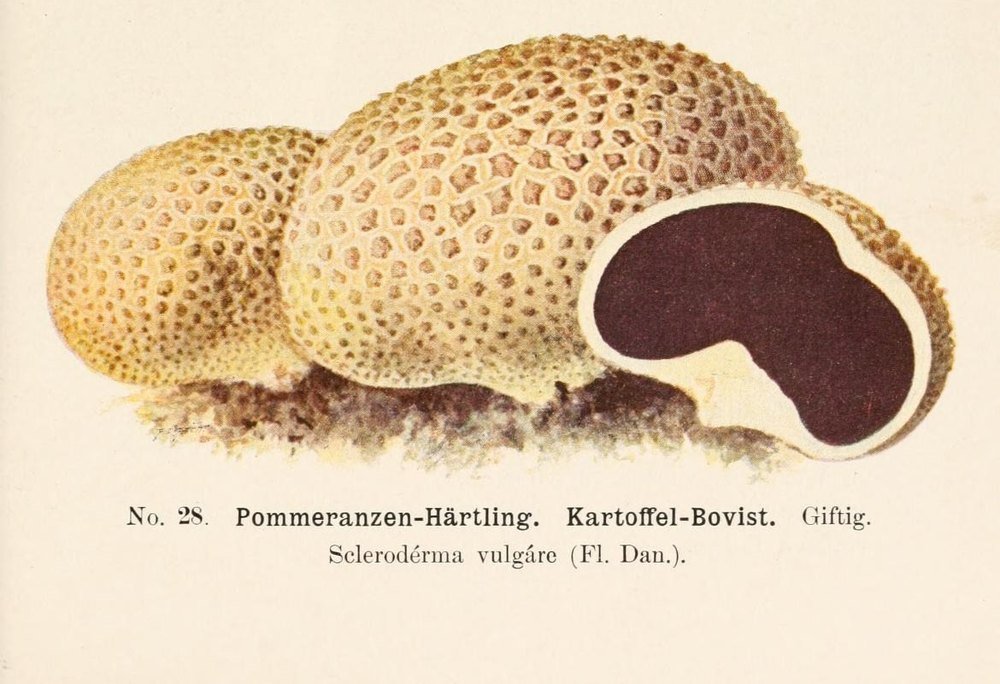
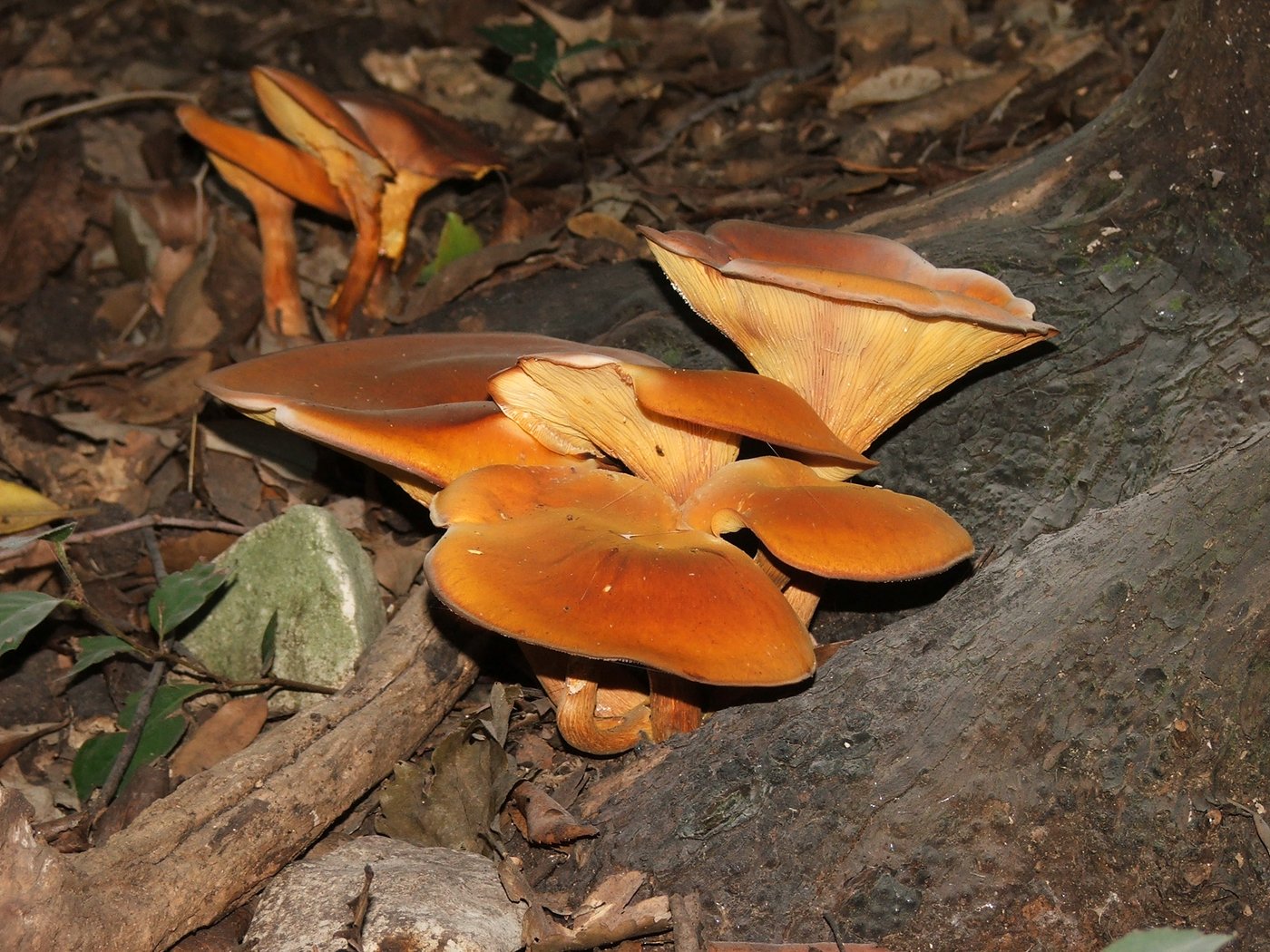
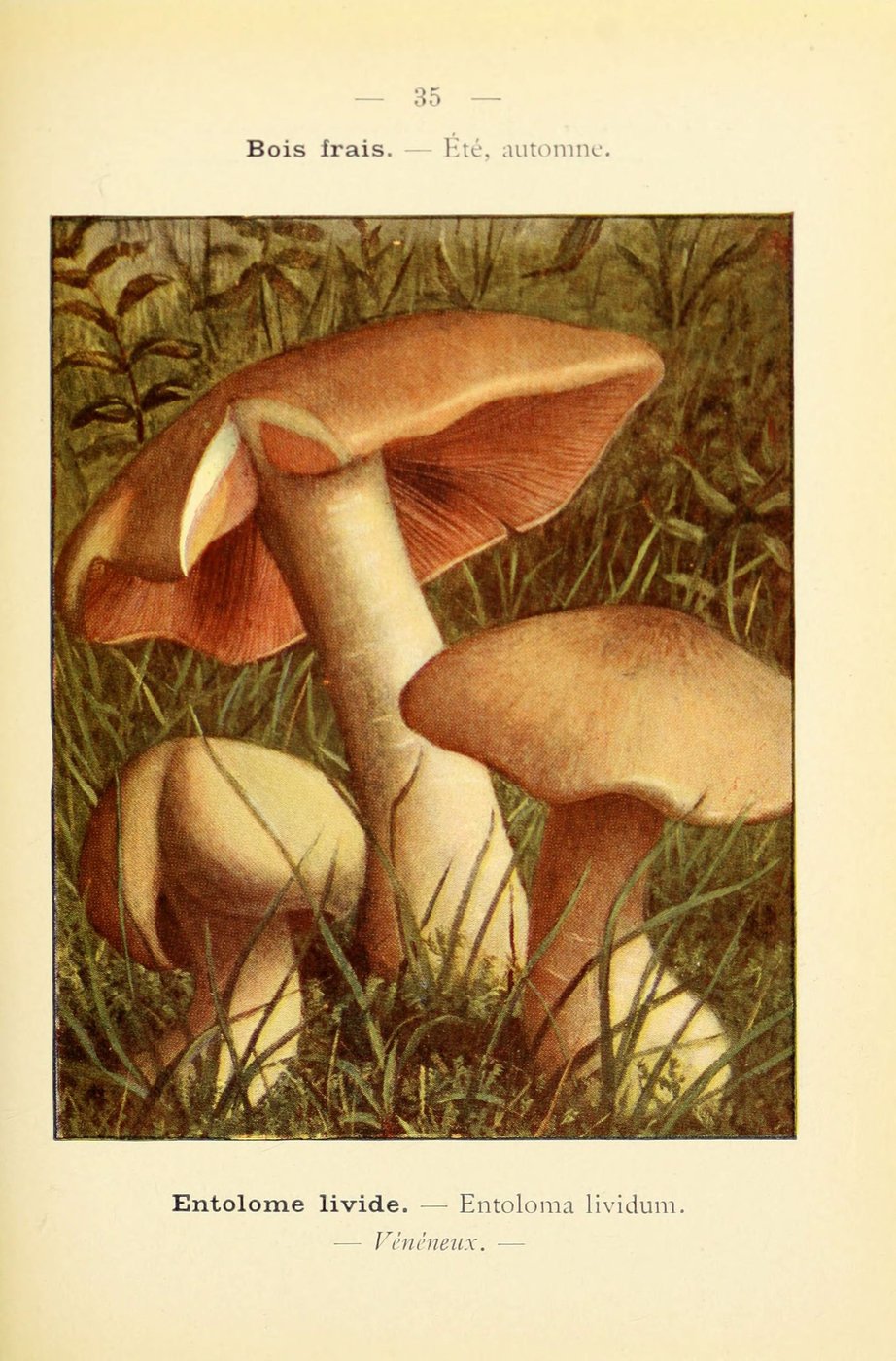
- The commonest mushroom poisoning: the yellow stainer, the sickener, the livid pinkgill, the earthball, the jack-o’-lantern, raw morels and honey fungus, and dozens of others.
- Onset
- Thirty minutes to three hours: the short latency is reassuring, since the deadly syndromes come later.
- Course
- Vomiting, cramps, and diarrhoea for a day; dangerous only through dehydration in the old and the very young.
- Treatment
- Fluids.
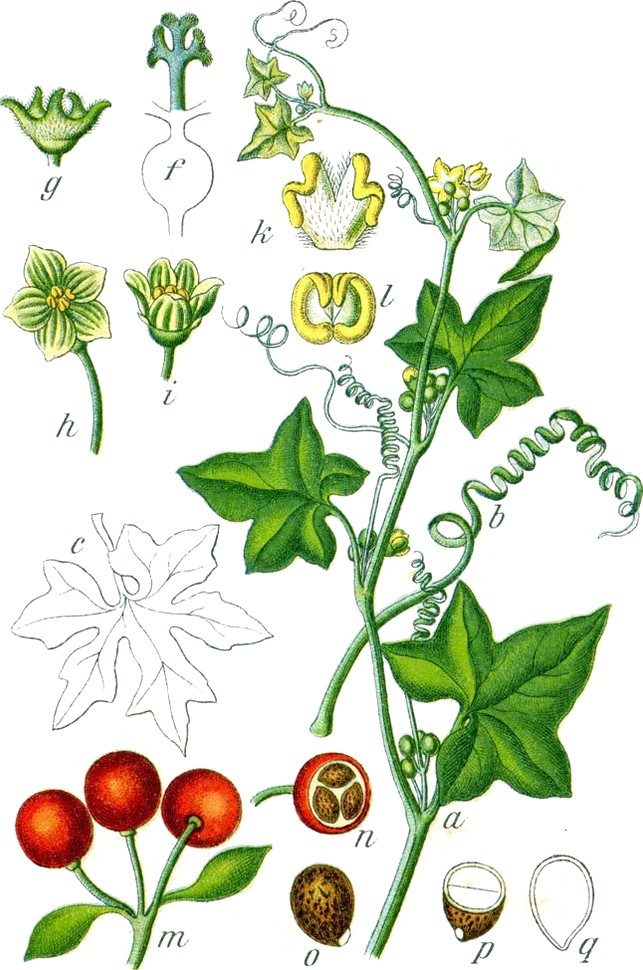
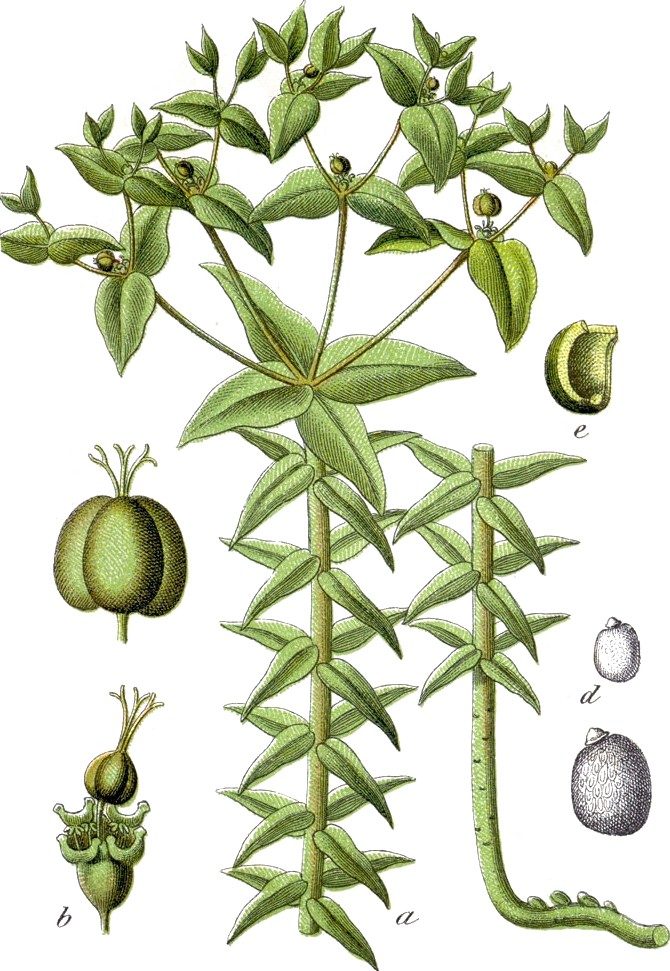
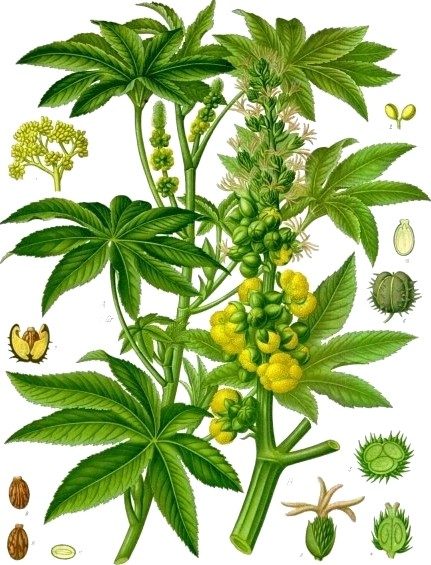
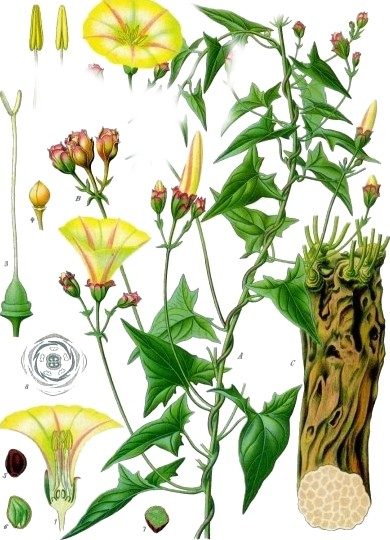
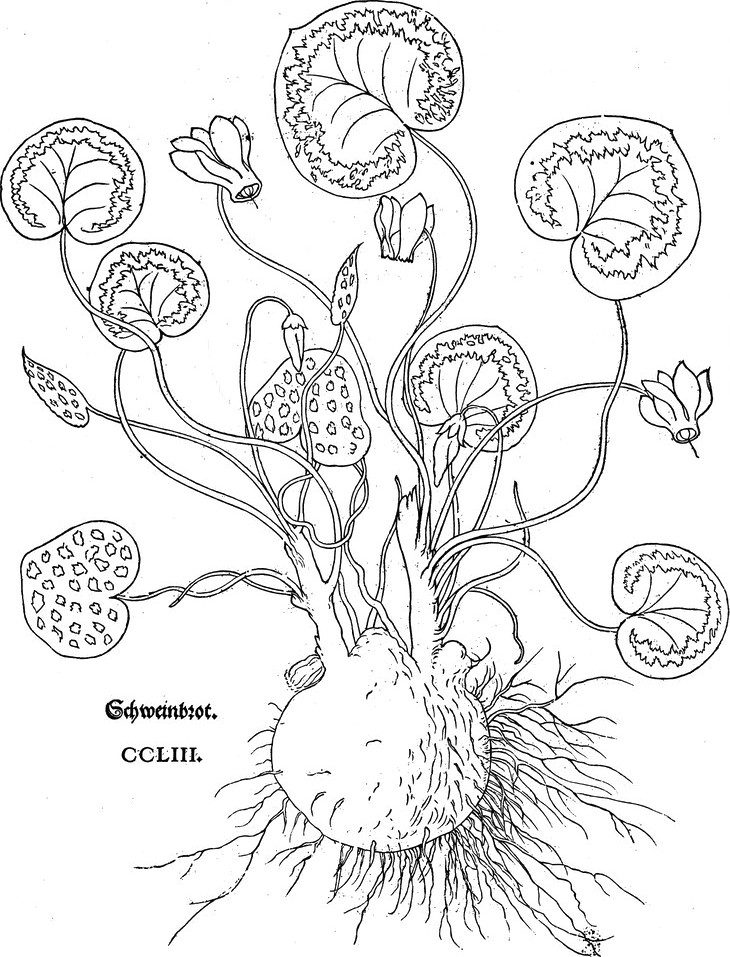
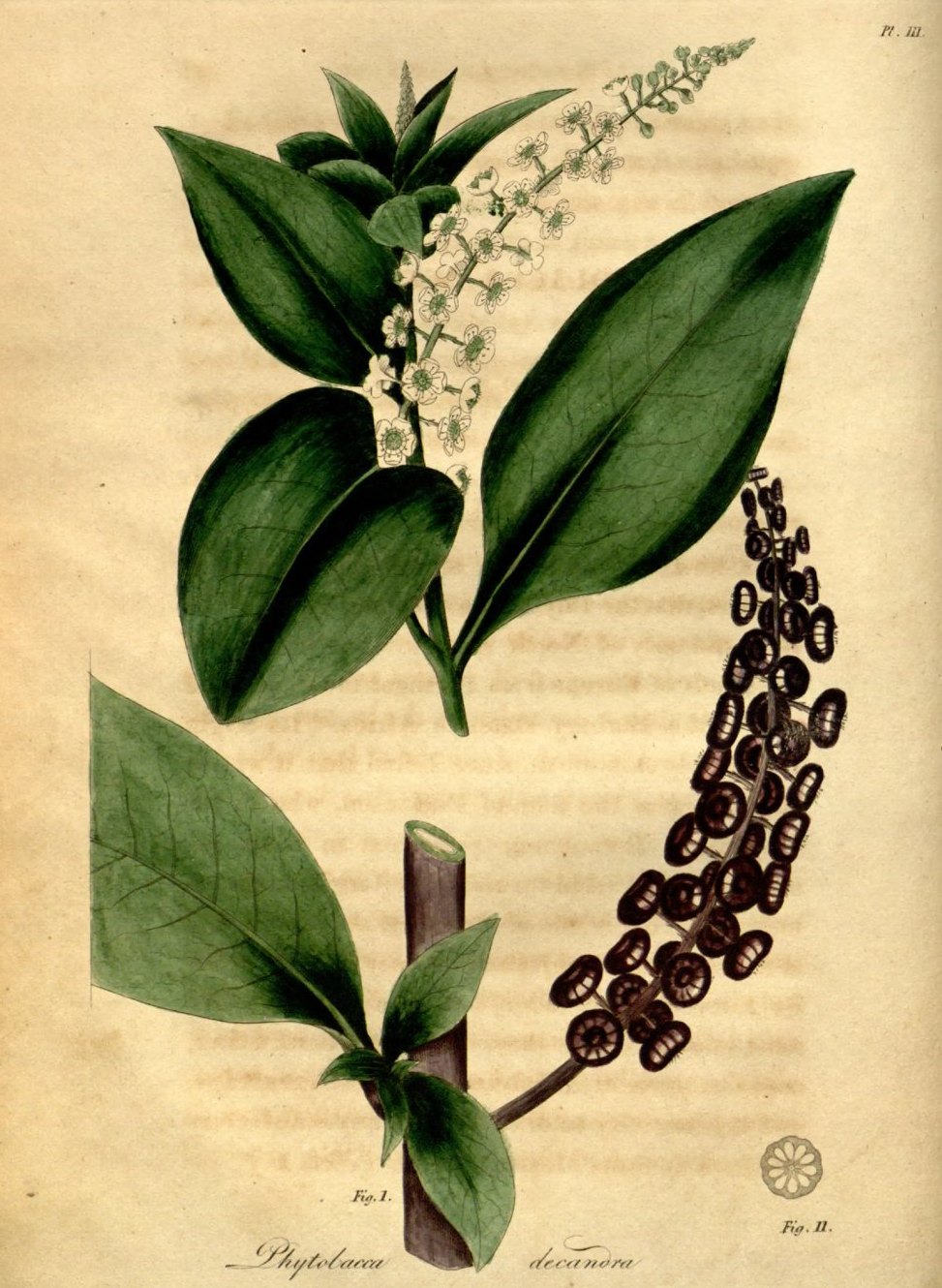
In the database: Bryony, Caper spurge, Castor-oil plant, seeds of, Colocynth, Common earthball, Cyclamen, greater, Honey fungus, Jack-o’-lantern, Jalap, Livid pinkgill, Meadow saffron, Melon root, Mistletoe, Morel, Pokeweed, Scammony, The sickener, Yellow stainer.
- Phillips, R. (2006). Mushrooms.
- Bresinsky, A., and Besl, H. (1990). A Colour Atlas of Poisonous Fungi.
- Agents
- Psilocybin and psilocin, in Psilocybe and related genera: the teonanacatl of Mexico.
- Onset
- Twenty to sixty minutes.
- Course
- Altered perception, mood, and sense of self for four to six hours; panic and accidents are the danger, not the drug, which is of very low physical toxicity.
- Treatment
- A calm room; a benzodiazepine if needed. Under clinical study since 2006 for depression and the distress of the dying.
In the database: Teonanácatl.
- Griffiths, R. R., et al. (2006). “Psilocybin can occasion mystical-type experiences.” Psychopharmacology 187.
- Carhart-Harris, R., et al. (2021). New England Journal of Medicine 384.
- Agents
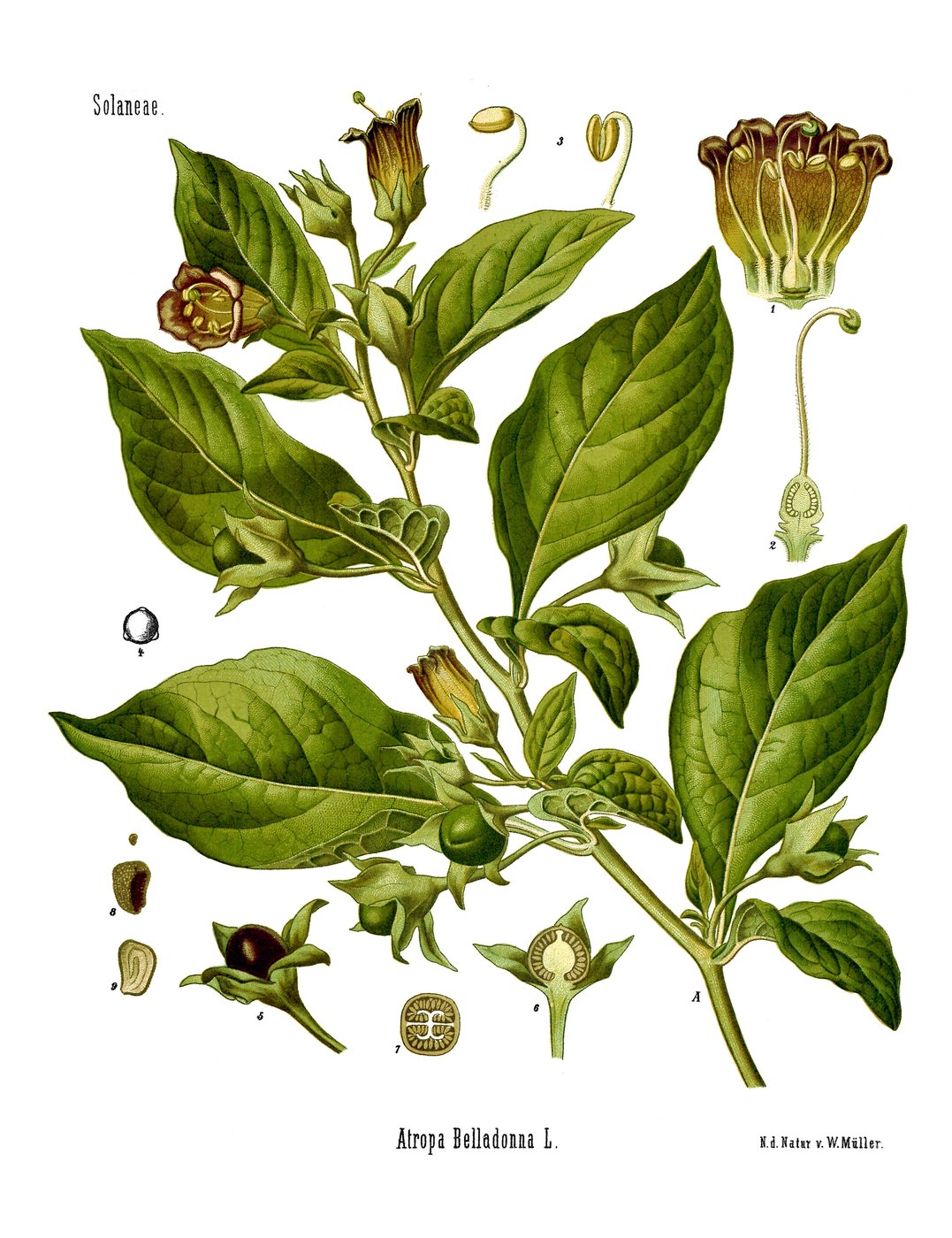
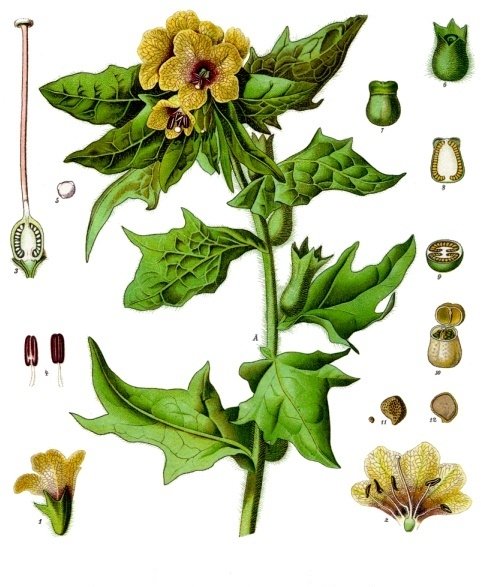
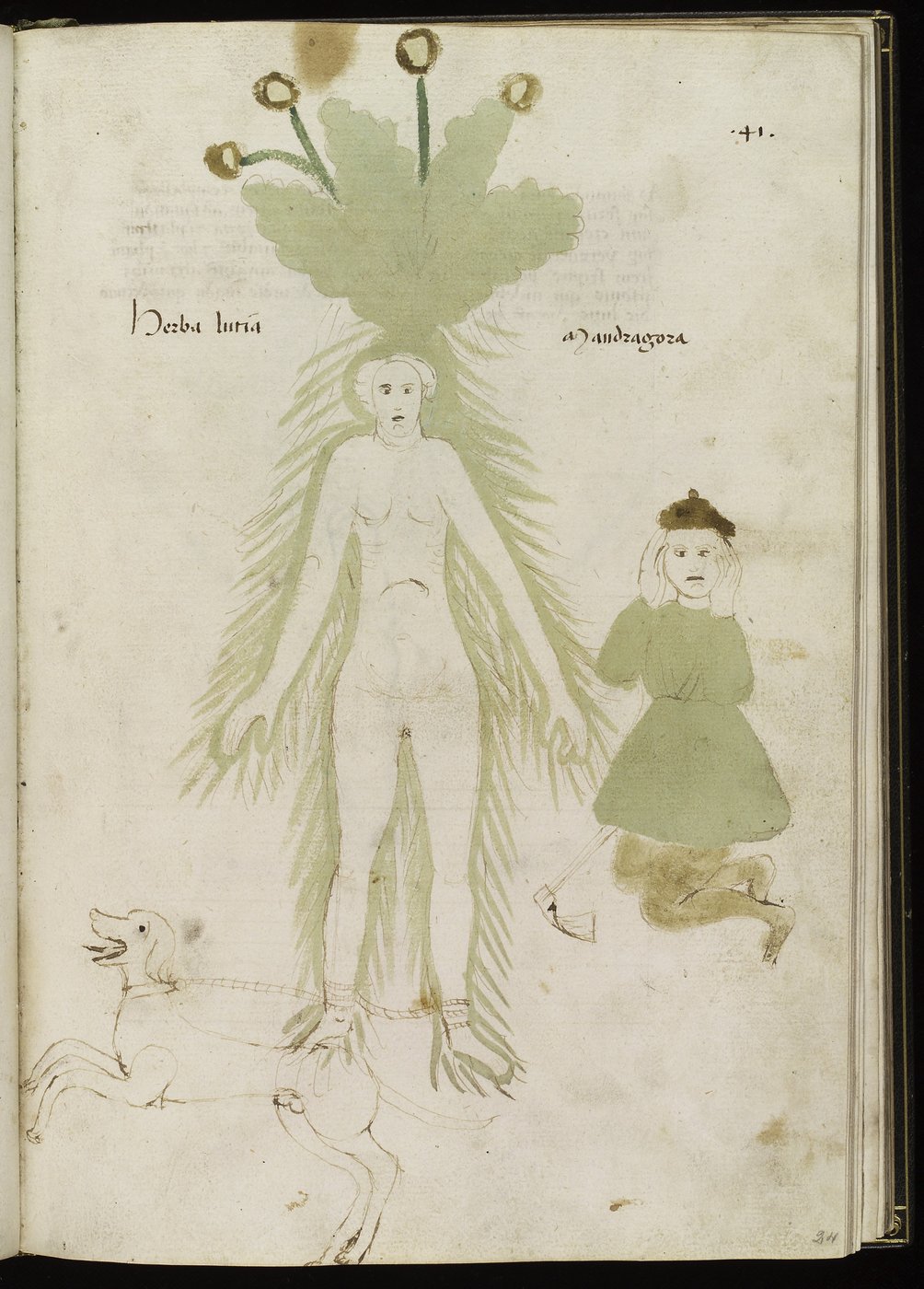
- Atropine, hyoscyamine, and scopolamine: mandrake, henbane, deadly nightshade, thorn-apple.
- Onset
- Thirty minutes to a few hours; longer from the skin.
- Course
- “Red as a beet, dry as a bone, blind as a bat, hot as a hare, mad as a hatter”: flushing, dry mouth, dilated pupils, fever, a fast heart, delirium with vivid hallucination and no memory of it, then coma. The flying ointments of the witches worked by these.
- Treatment
- Physostigmine, the specific antidote, with care; benzodiazepines; cooling.
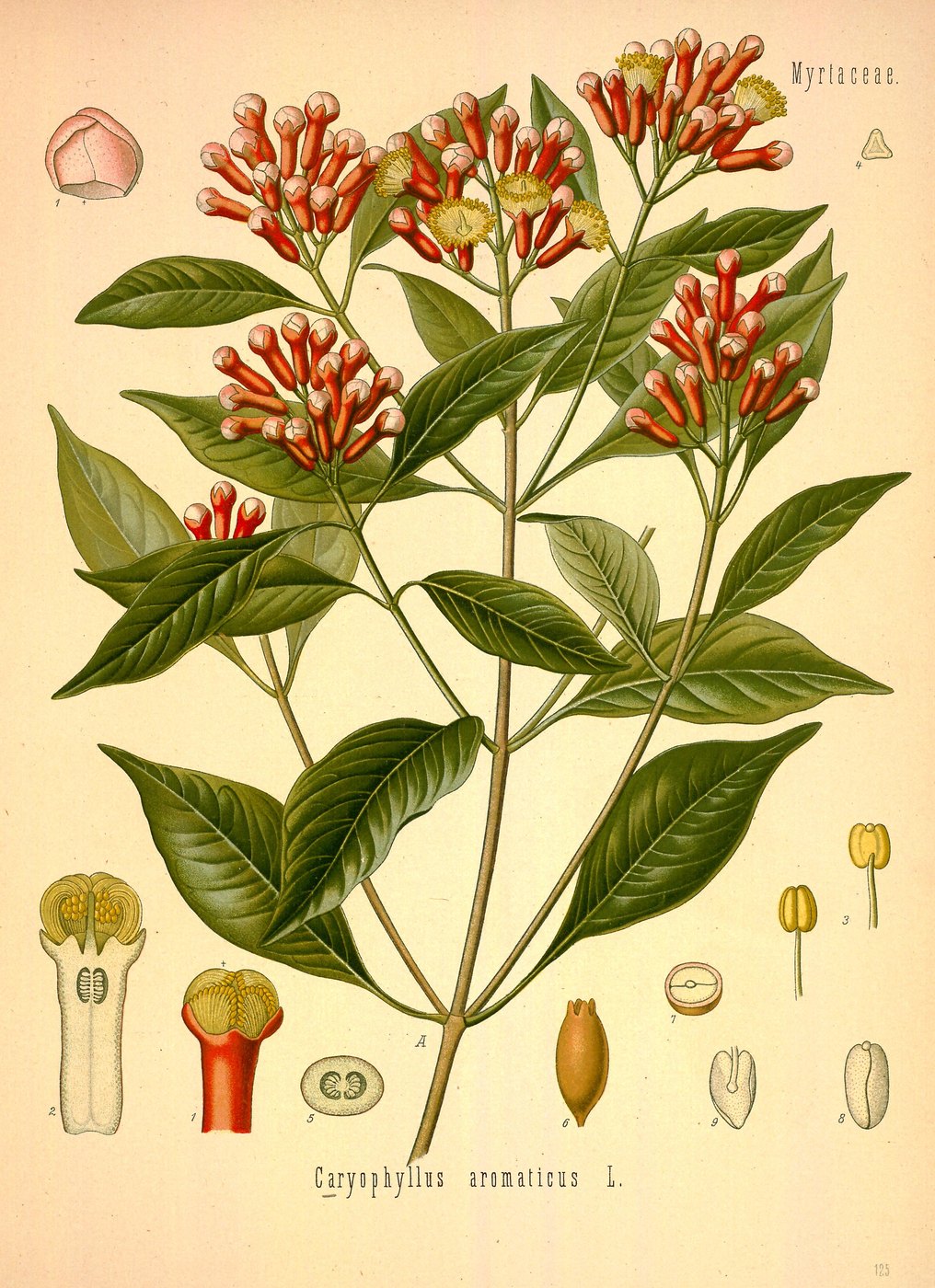
In the database: Deadly nightshade, Henbane, Mandrake, Nutmeg and clove, Thorn apple, Woody nightshade.
- Goldfrank’s Toxicologic Emergencies, 11th ed. (2019), “Anticholinergics.”
- Nelson, L. S., et al. (2007). Handbook of Poisonous and Injurious Plants, 2nd ed.
- Agents
- Digoxin and digitoxin in the foxglove, oleandrin, hellebrin in the hellebores, bufadienolides in the toad, convallatoxin in lily of the valley.
- Onset
- Hours.
- Course
- Nausea, a slowed and irregular heart, confusion, and the yellow-green haloes of vision; death by arrhythmia. The glycosides block the sodium pump of the heart cell.
- Treatment
- Digoxin-specific antibody fragments, which bind the drug; atropine for the slowed heart.
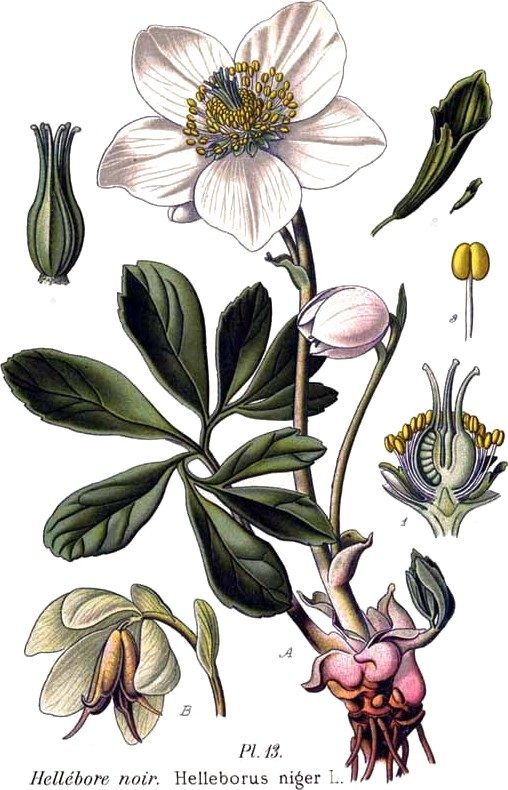
In the database: Black hellebore, Foxglove, Oxymel, and oxymel of squill, Squill, Toad, Yew.
- Goldfrank’s Toxicologic Emergencies, 11th ed. (2019), “Cardioactive Steroids.”
- Agents
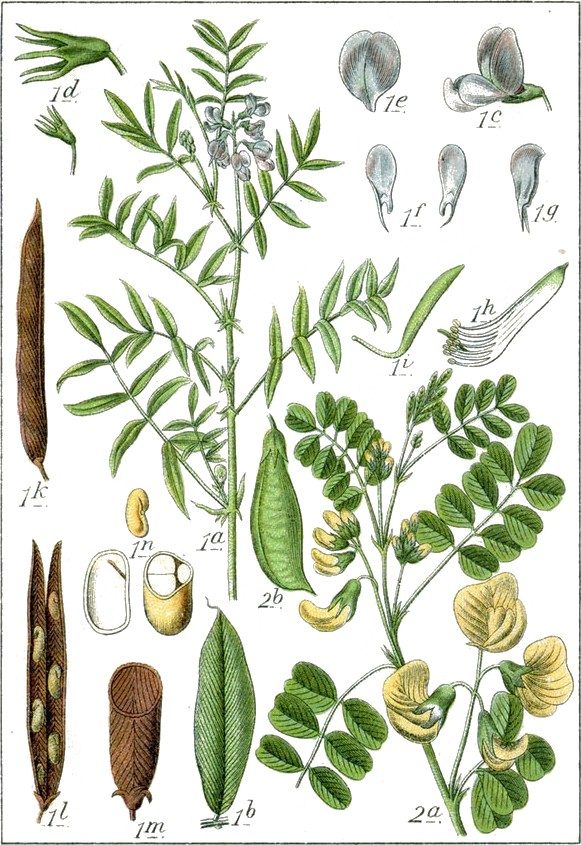
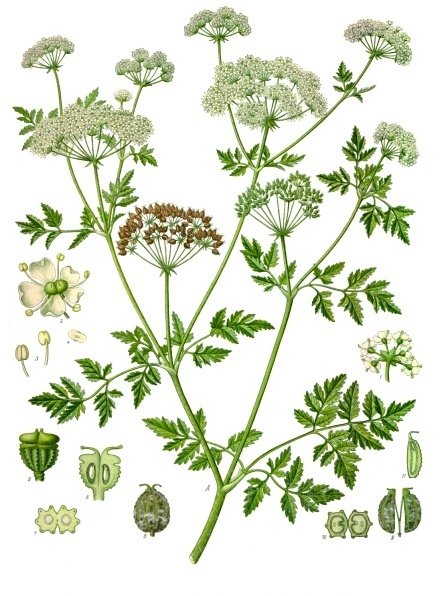
- Coniine in hemlock, nicotine in tobacco, cytisine in laburnum, lobeline.
- Onset
- Minutes to an hour.
- Course
- Salivation, nausea, trembling, then an ascending paralysis of the muscles with the mind clear, and death by the stopping of the breath: the death of Socrates, as Plato describes it.
- Treatment
- Breathing for the patient until the drug is cleared; there is no antidote.
In the database: Broom, Gorse, Hemlock, Lesser bean-trefoil, Tobacco.
- Nelson, L. S., et al. (2007). Handbook of Poisonous and Injurious Plants, 2nd ed.
- Agents
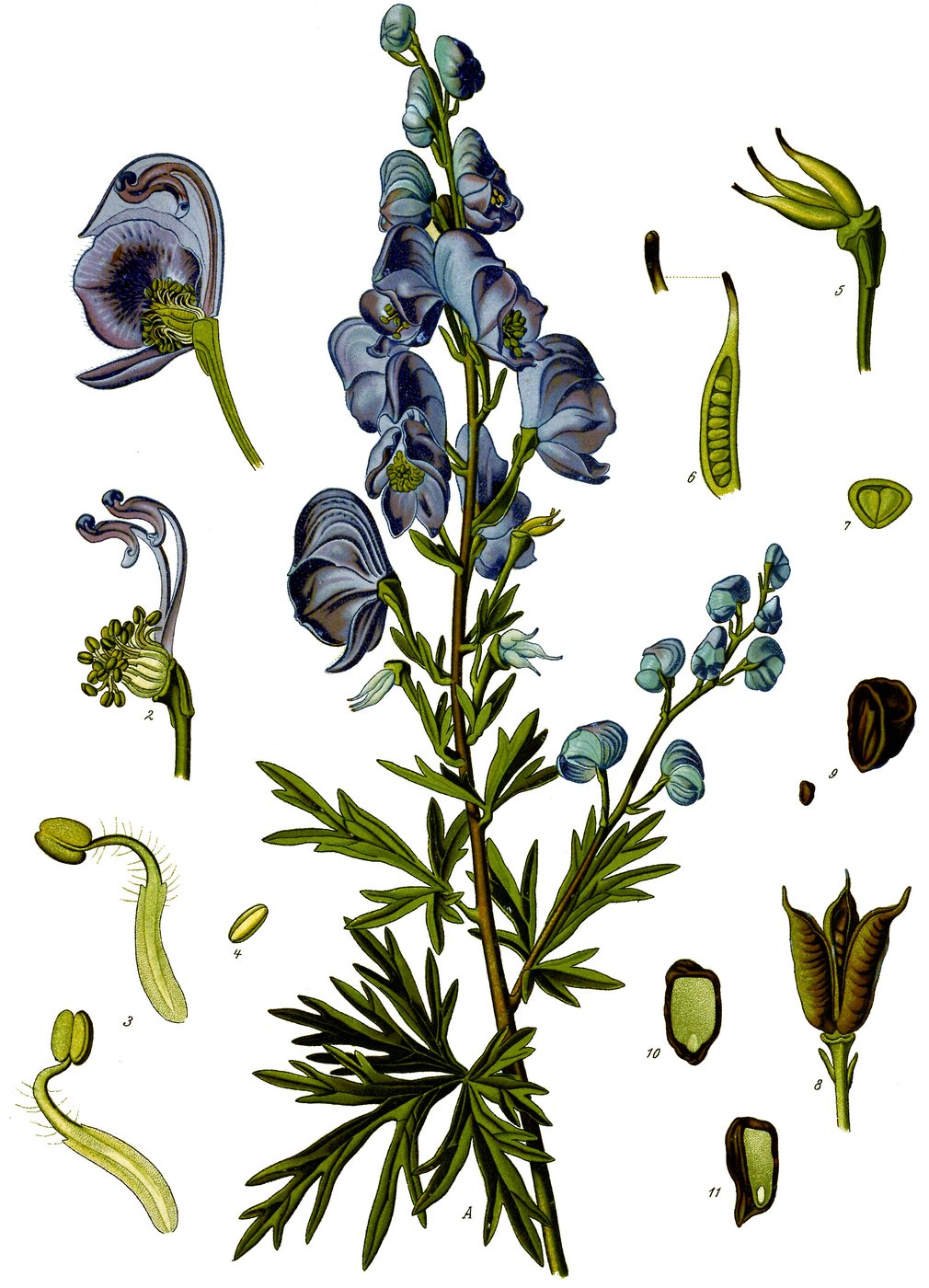
- Aconitine and its relatives, in the aconites.
- Onset
- Minutes to two hours, through the skin too.
- Course
- Tingling and numbness of the mouth and limbs, vomiting, then fatal arrhythmias; the alkaloid holds the sodium channels of nerve and heart open. Among the quickest plant poisons in Europe.
- Treatment
- Supportive; amiodarone or flecainide for the arrhythmia; the heart kept going by machine where it can be.
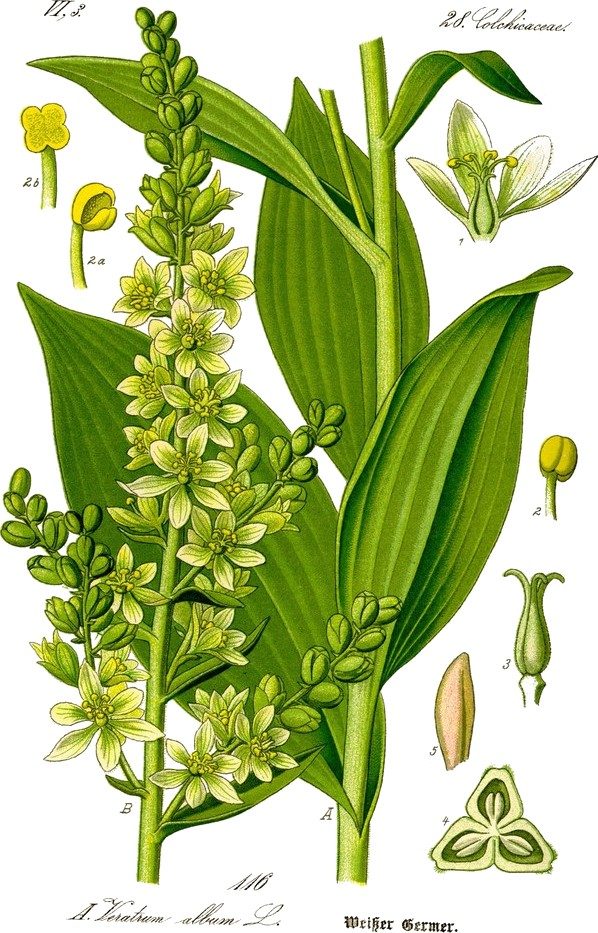
In the database: Aconite, White hellebore.
- Chan, T. Y. K. (2009). “Aconite poisoning.” Clinical Toxicology 47.
- Agents
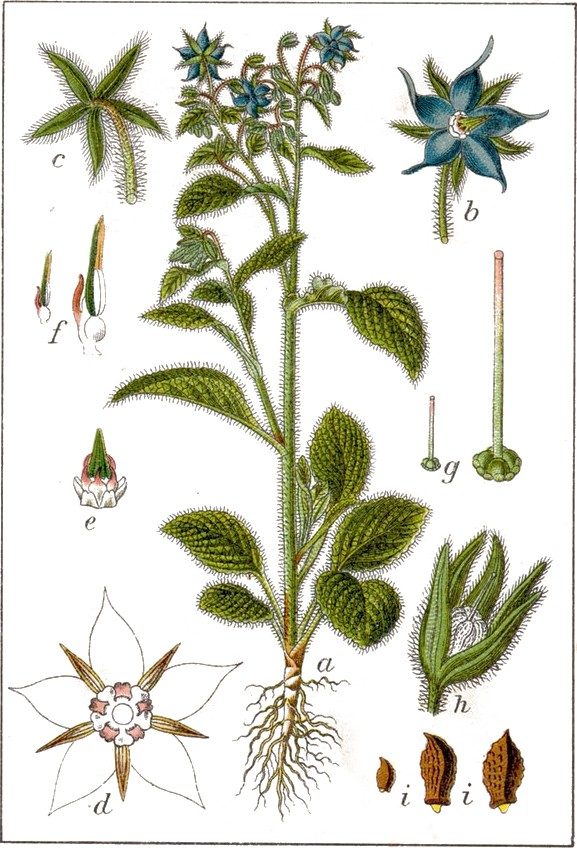
- Comfrey, coltsfoot, butterbur, ragwort, borage leaf, and other herbs of the borage and daisy families.
- Onset
- Weeks to months of use.
- Course
- The small veins of the liver are blocked; swelling, fluid in the belly, and in bad cases liver failure. The alkaloids also cause tumours in animals. Children and the unborn are most at risk.
- Treatment
- Stop the herb; supportive care.
In the database: Alkanet, Borage, Butterbur, Coltsfoot, Comfrey, Houndstongue, Ragwort.
- Stickel, F., and Seitz, H. K. (2000). “The efficacy and safety of comfrey.” Public Health Nutrition 3.
- European Medicines Agency (2014). Public statement on the use of herbal medicinal products containing toxic, unsaturated pyrrolizidine alkaloids.
- Agents
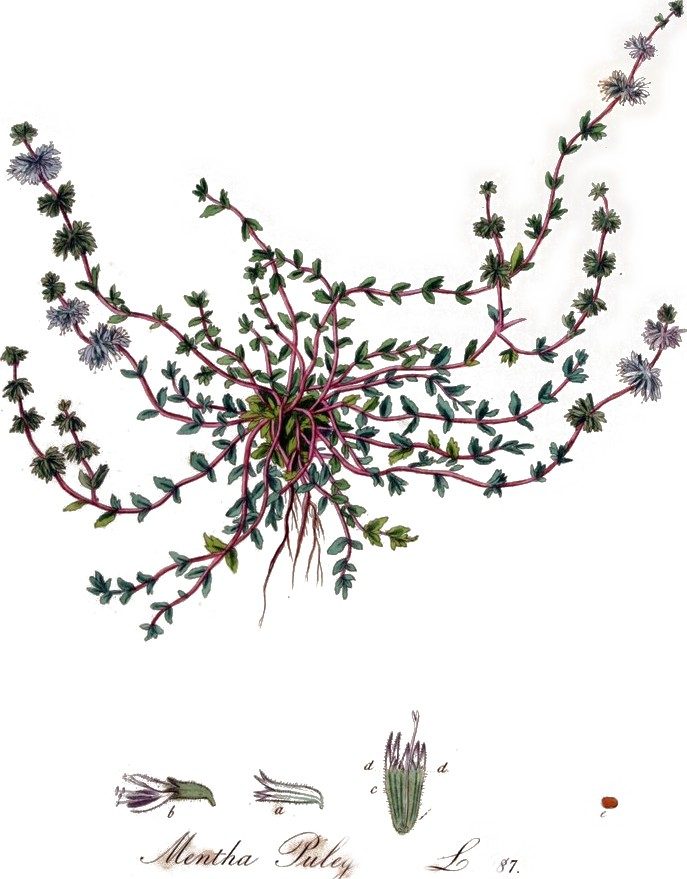
- Pulegone in pennyroyal oil, and in lesser degree the oils of the mints.
- Onset
- Hours.
- Course
- Vomiting, then liver failure, from the metabolite menthofuran; ten millilitres of the oil have killed.
- Treatment
- Acetylcysteine, as for paracetamol; supportive care.
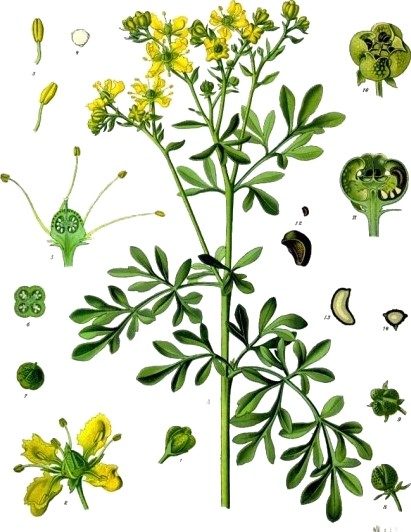
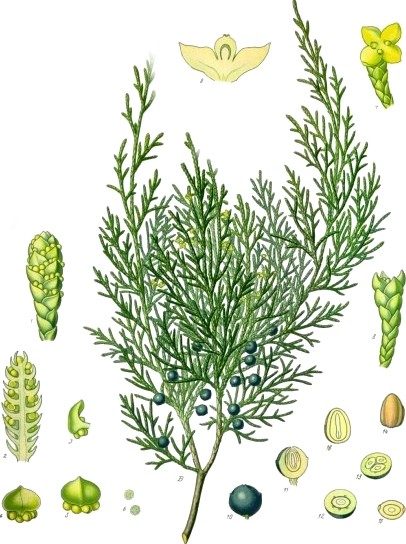
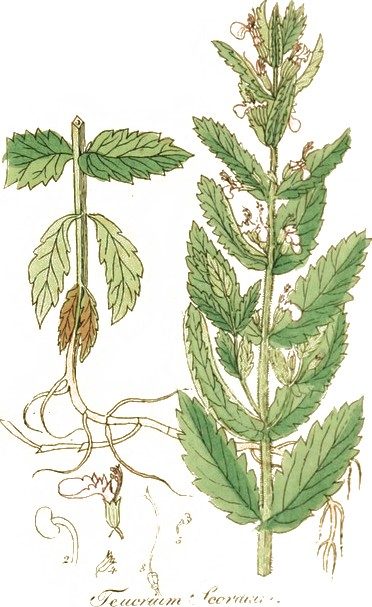
In the database: Parsley, Pennyroyal, Rue, Savin, Water germander.
- Anderson, I. B., et al. (1996). “Pennyroyal toxicity.” Annals of Internal Medicine 124.
- Agents
- Thujone in wormwood, sage, and tansy oils; pinocamphone in hyssop oil; camphor.
- Onset
- Minutes to an hour from the oils.
- Course
- Agitation, then convulsions; the terpenes block the GABA-A receptor. The herbs in a tea are far below the convulsant dose; the distilled oils are not.
- Treatment
- Benzodiazepines; supportive care.
In the database: Camphor, Hungary water, Hyssop, Mint, oil of, Mugwort, Rosemary, Sage, Tansy, Wormwood, oil of.
- Höld, K. M., et al. (2000). “α-Thujone (the active component of absinthe): GABA-A receptor modulation.” PNAS 97.
- Millet, Y., et al. (1981). Clinical Toxicology 18.
- Agents
- Cantharidin, from blister beetles.
- Onset
- Minutes to hours.
- Course
- Burning of the mouth and gut, blood in the urine, kidney failure, and the priapism that gave it its false reputation; as little as ten milligrams has killed.
- Treatment
- Supportive; there is no antidote.
In the database: Cantharides.
- Moed, L., et al. (2001). Archives of Dermatology 137.
- Agents
- Quicksilver and cinnabar, white arsenic and orpiment, white lead and litharge, antimony.
- Onset
- Minutes to hours for a large dose; months or years for the slow poisoning of the trades.
- Course
- Arsenic and antimony: cholera-like purging, then the nerves and the heart. Mercury: salivation, loosened teeth, tremor, and the madness of the hatters. Lead: colic, anaemia, the wrist-drop of painters, and in children the loss of mind. All bind the sulphur of the body’s enzymes.
- Treatment
- Chelation: dimercaprol and its successors, succimer, and for lead EDTA.
In the database: Antimony, Armenian stone, pills of, Aurum potabile, Cinnabar, Iron and steel, James’s powder, Litharge, Orpiment and realgar, Passarino’s white powder, Quicksilver, Verdigris, Vitriol, White arsenic, White lead.
- Emsley, J. (2005). The Elements of Murder. Oxford University Press.
- Goldfrank’s Toxicologic Emergencies, 11th ed. (2019).
- Agents
- Sorrel, rhubarb leaf, and in chronic use the chaga fungus; the raphides of arum.
- Onset
- Hours; or months, for the slow kind.
- Course
- Oxalate binds calcium, so the acute poisoning brings cramps and a stopped heart, and the chronic kind blocks the kidneys with crystals.
- Treatment
- Calcium; fluids; dialysis.
In the database: Chaga, Purslane, Sorrel, syrup of, Wood sorrel.
- Kikuchi, Y., et al. (2014). Clinical Nephrology 81.
- Agents
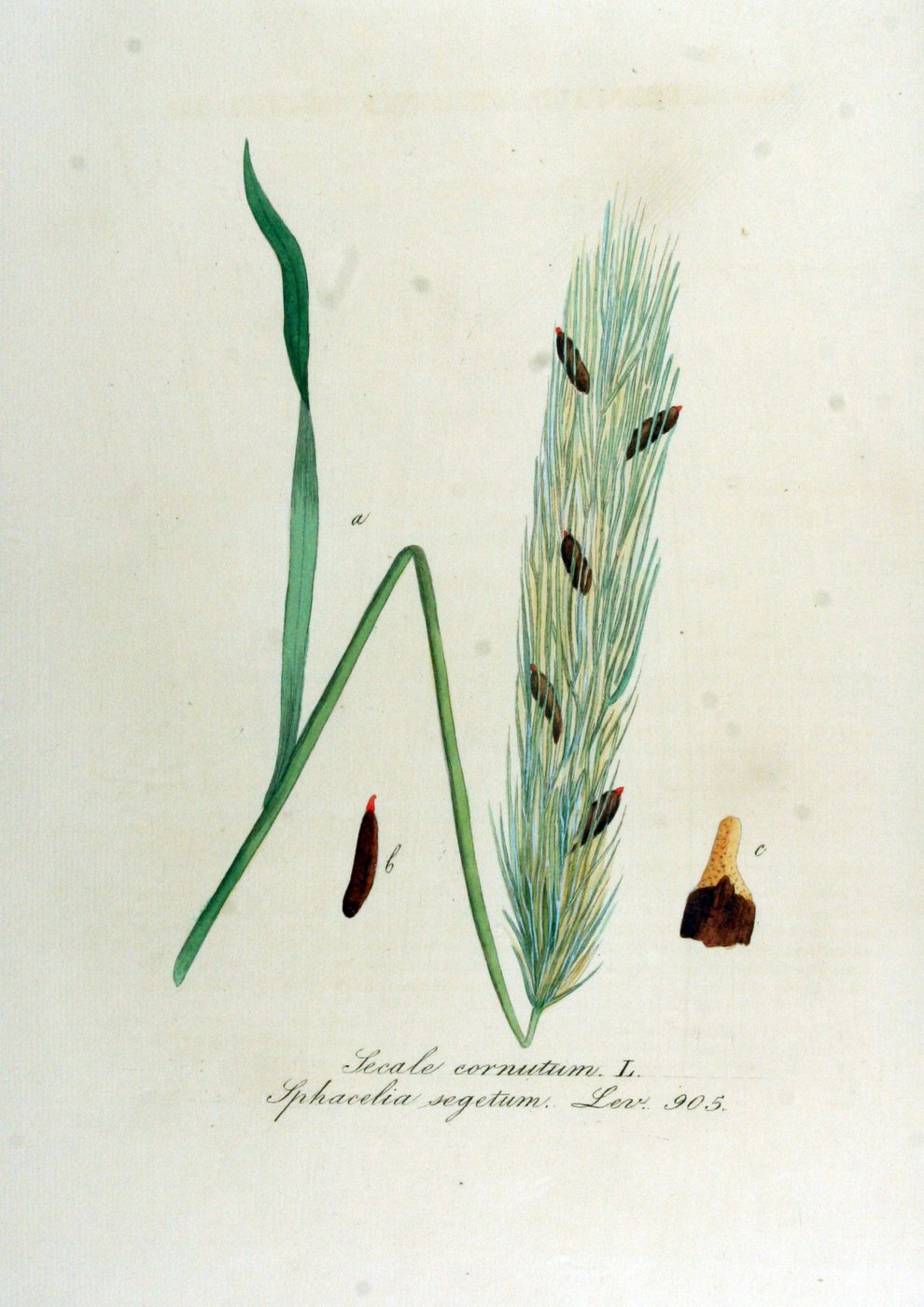
- The ergot alkaloids, from Claviceps purpurea on rye.
- Onset
- Days to weeks of eating the bread.
- Course
- Two forms: the gangrenous, in which the limbs blacken and fall from the constriction of the vessels, the ignis sacer or Saint Anthony’s fire; and the convulsive, with spasms, hallucination, and mania. The last European outbreak was at Pont-Saint-Esprit in 1951.
- Treatment
- Vasodilators; stopping the grain.
In the database: Ergot.
- Matossian, M. K. (1989). Poisons of the Past. Yale University Press.
- Eadie, M. J. (2003). “Convulsive ergotism: epidemics of the serotonin syndrome?” Lancet Neurology 2.
- Agents
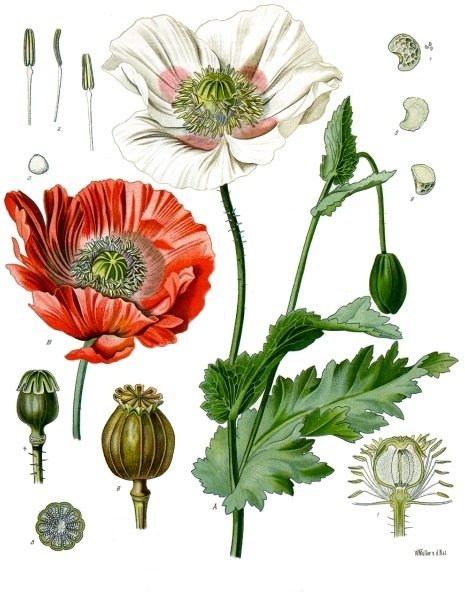
- Morphine, codeine, thebaine, and the rest of the opium poppy’s alkaloids, in opium, laudanum, paregoric, and Dover’s powder.
- Onset
- Minutes to an hour.
- Course
- Drowsiness, pinpoint pupils, and the slowing of the breath until it stops; tolerance and dependence with repeated use.
- Treatment
- Naloxone, which reverses it within minutes; breathing for the patient.
In the database: Diascordium, Dover’s powder, Laudanum, Mithridate, Nepenthe, Opium poppy, Paregoric, Theriac.
- Goldfrank’s Toxicologic Emergencies, 11th ed. (2019), “Opioids.”
- Agents
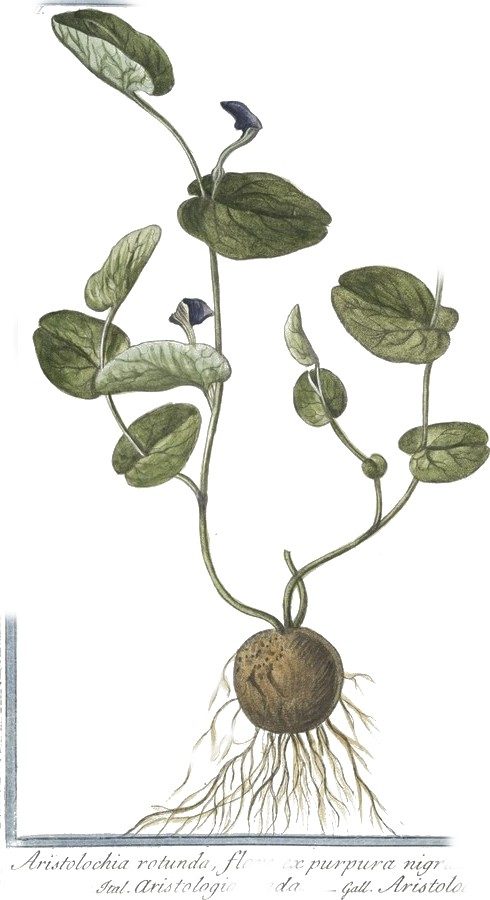
- Aristolochic acids, in the birthworts (Aristolochia), the long and the round.
- Onset
- Months to years of exposure; the kidney damage is cumulative and silent.
- Course
- A scarring of the kidney’s tubules that ends in dialysis, and cancers of the urinary tract years later: the aristolochic acids bind DNA and leave a mutational signature found in those tumours. Recognised in 1993 in nine Belgian women given the herb, in place of another, at a slimming clinic; by the follow-up of the exposed cohort more than a hundred had lost their kidneys (Debelle, Vanherweghem, and Nortier, 2008); Balkan endemic nephropathy, known since the 1950s along the Danube, is the same poison from the seeds of the plant in the wheat.
- Treatment
- None but stopping the exposure; dialysis and transplant; surveillance for cancer.
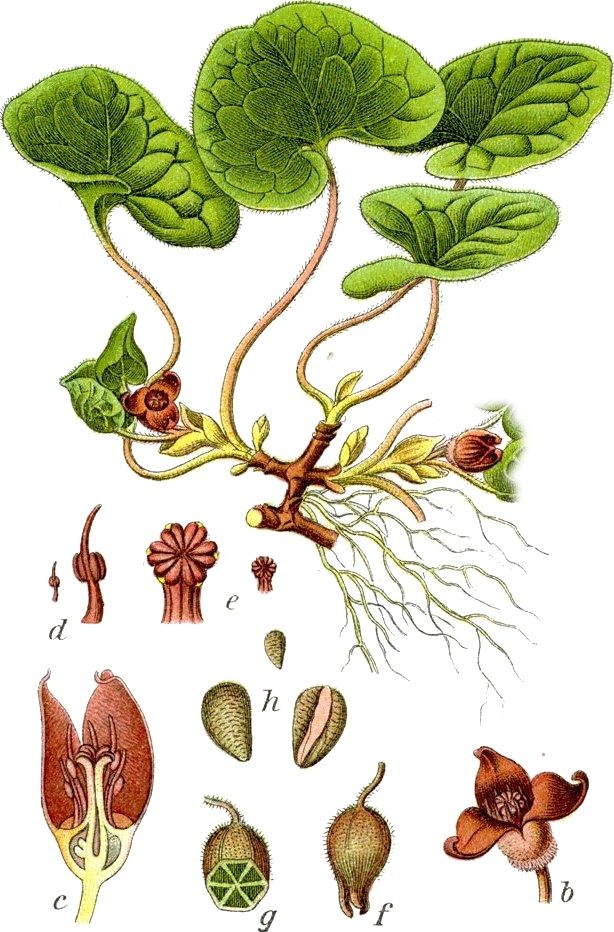
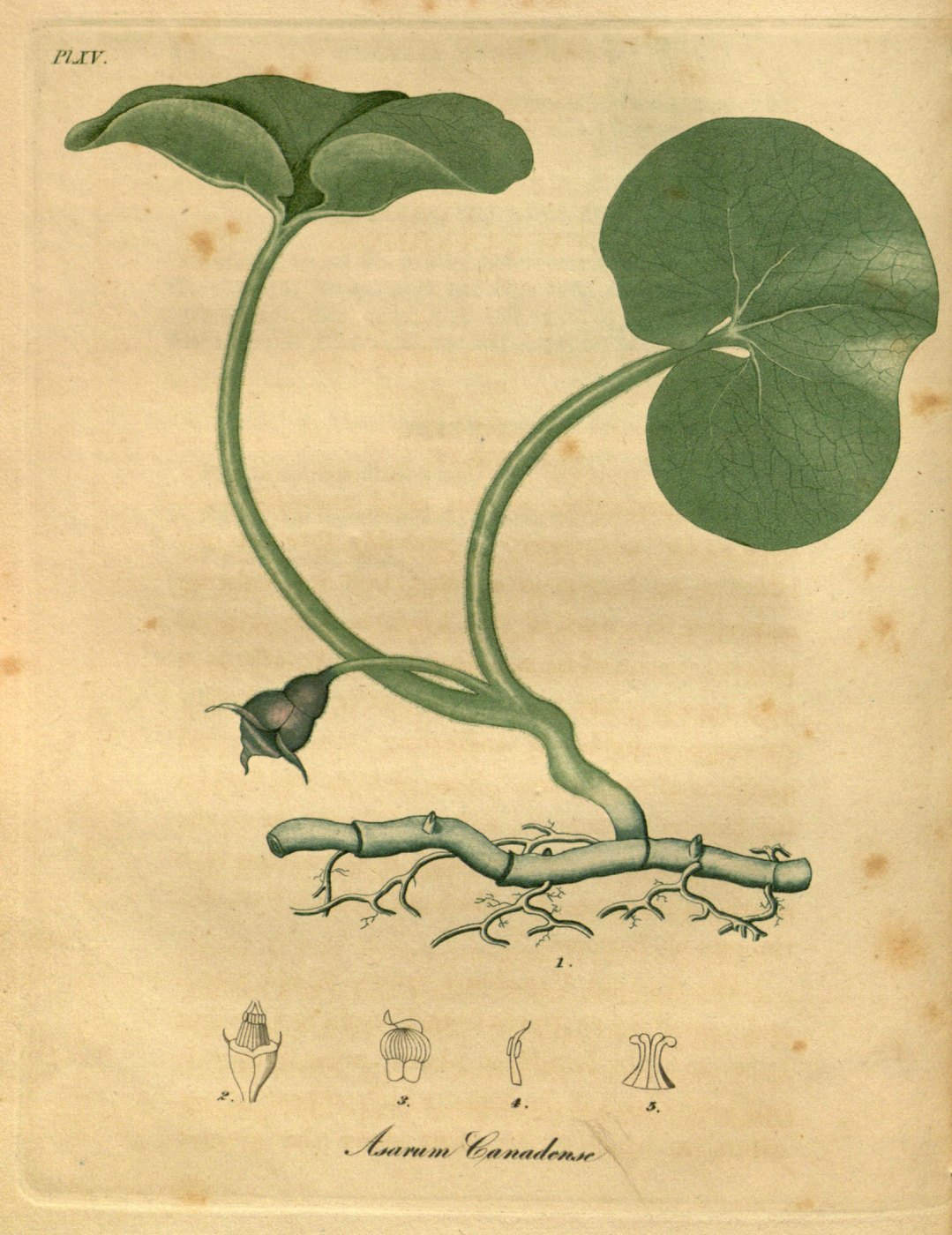
In the database: Asarabacca, Round birthwort.
- Vanherweghem, J.-L., et al. (1993). “Rapidly progressive interstitial renal fibrosis in young women: association with slimming regimen including Chinese herbs.” Lancet 341.
- Debelle, F. D., Vanherweghem, J.-L., and Nortier, J. L. (2008). “Aristolochic acid nephropathy: a worldwide problem.” Kidney International 74.
- Grollman, A. P., et al. (2007). “Aristolochic acid and the etiology of endemic (Balkan) nephropathy.” PNAS 104.
- IARC (2012). Monographs, vol. 100A: aristolochic acids, Group 1.
- Agents
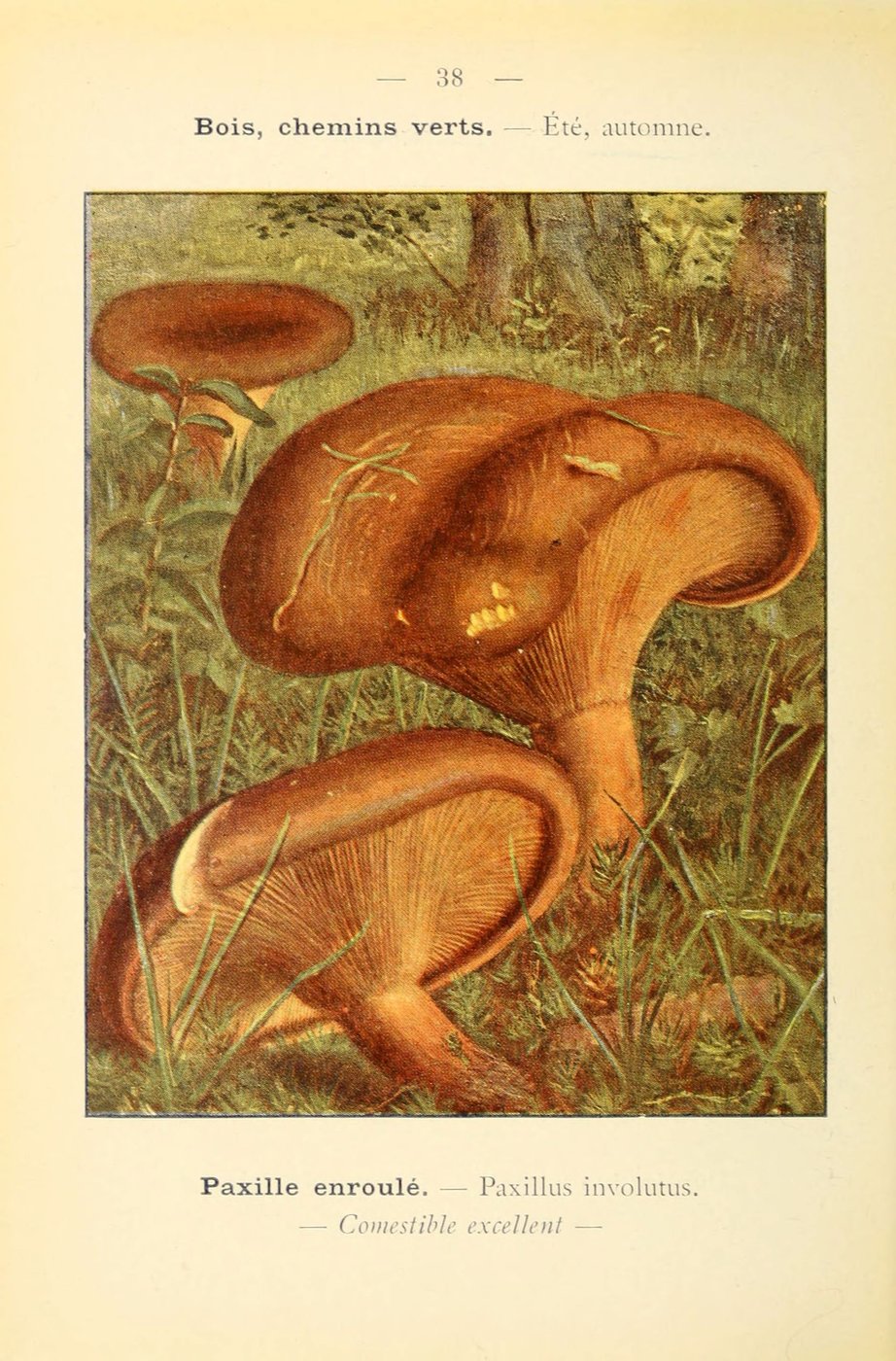
- The brown roll-rim, Paxillus involutus, after repeated meals.
- Onset
- One to three hours after a meal, in someone sensitised by earlier meals, sometimes years before.
- Course
- Vomiting and colic, then the destruction of the red cells by the body’s own antibodies: anaemia, jaundice, kidney failure, and shock. The mycologist Julius Schäffer died of it in 1944; the antigen was identified by René Flammer in the 1980s.
- Treatment
- Plasmapheresis to remove the antibody complexes; dialysis; steroids.
In the database: Brown roll-rim.
- Flammer, R. (1985). “Paxillus-Syndrom: Immunhämolyse nach Pilzgenuss.” Schweizerische Rundschau für Medizin Praxis 74.
- Bresinsky, A., and Besl, H. (1990). A Colour Atlas of Poisonous Fungi.
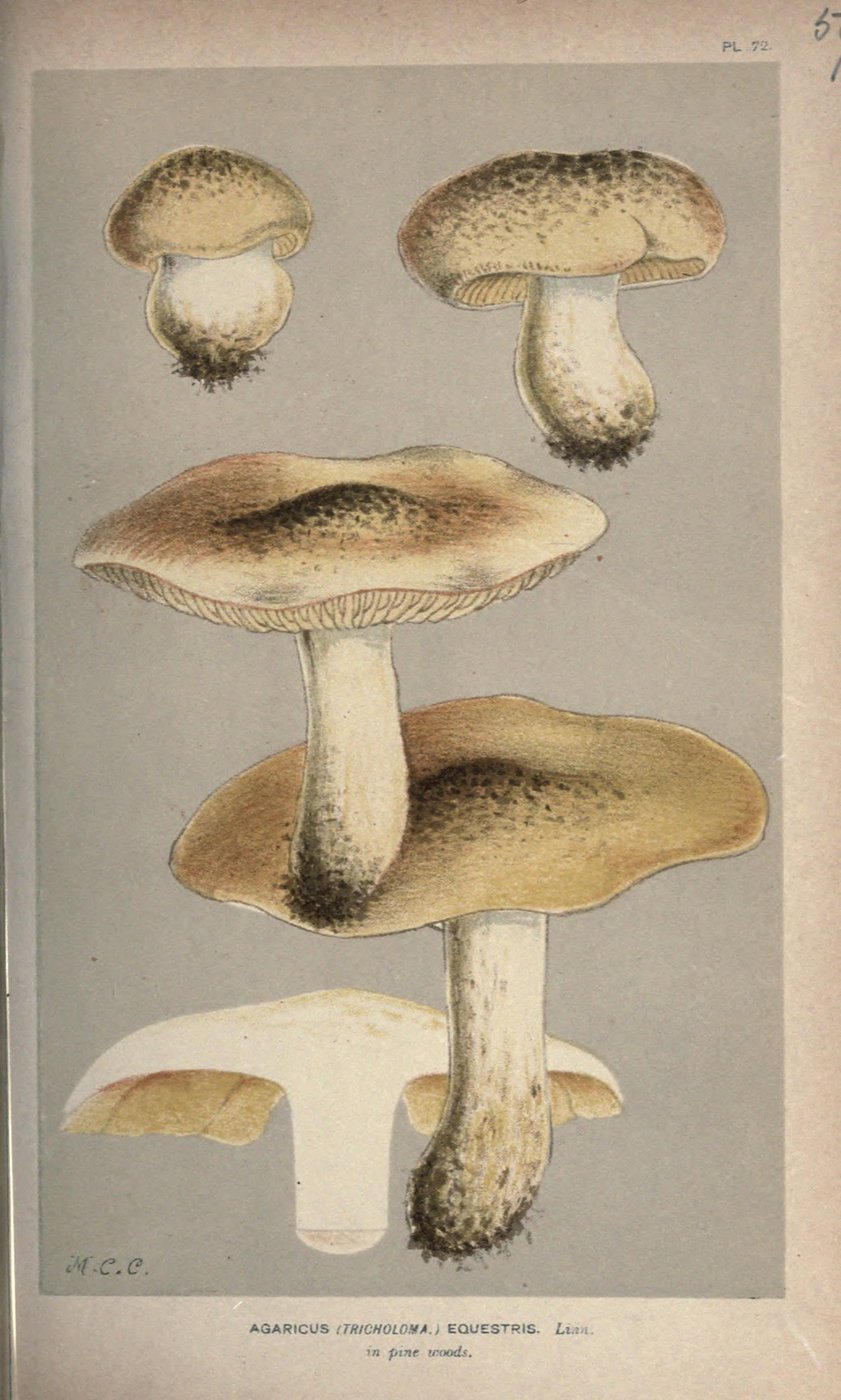
- Agents
- The man on horseback, Tricholoma equestre, after several meals in a week; the agent is unknown.
- Onset
- One to four days after repeated meals.
- Course
- Weakness and pain of the muscles, dark urine from the myoglobin, and in the worst cases the heart muscle and the breathing fail. Bedry reported twelve cases from south-west France in 2001, three of them fatal; cases from Poland followed, and the mushroom, long sold as a delicacy, was banned from sale in France and Italy.
- Treatment
- Fluids to protect the kidneys; supportive care.
In the database: Man on horseback.
- Bedry, R., et al. (2001). “Wild-mushroom intoxication as a cause of rhabdomyolysis.” New England Journal of Medicine 345.
- Nieminen, P., and Mustonen, A.-M. (2020). “Toxic potential of traditionally consumed mushroom species: a controversial continuum with many unanswered questions.” Toxins 12.
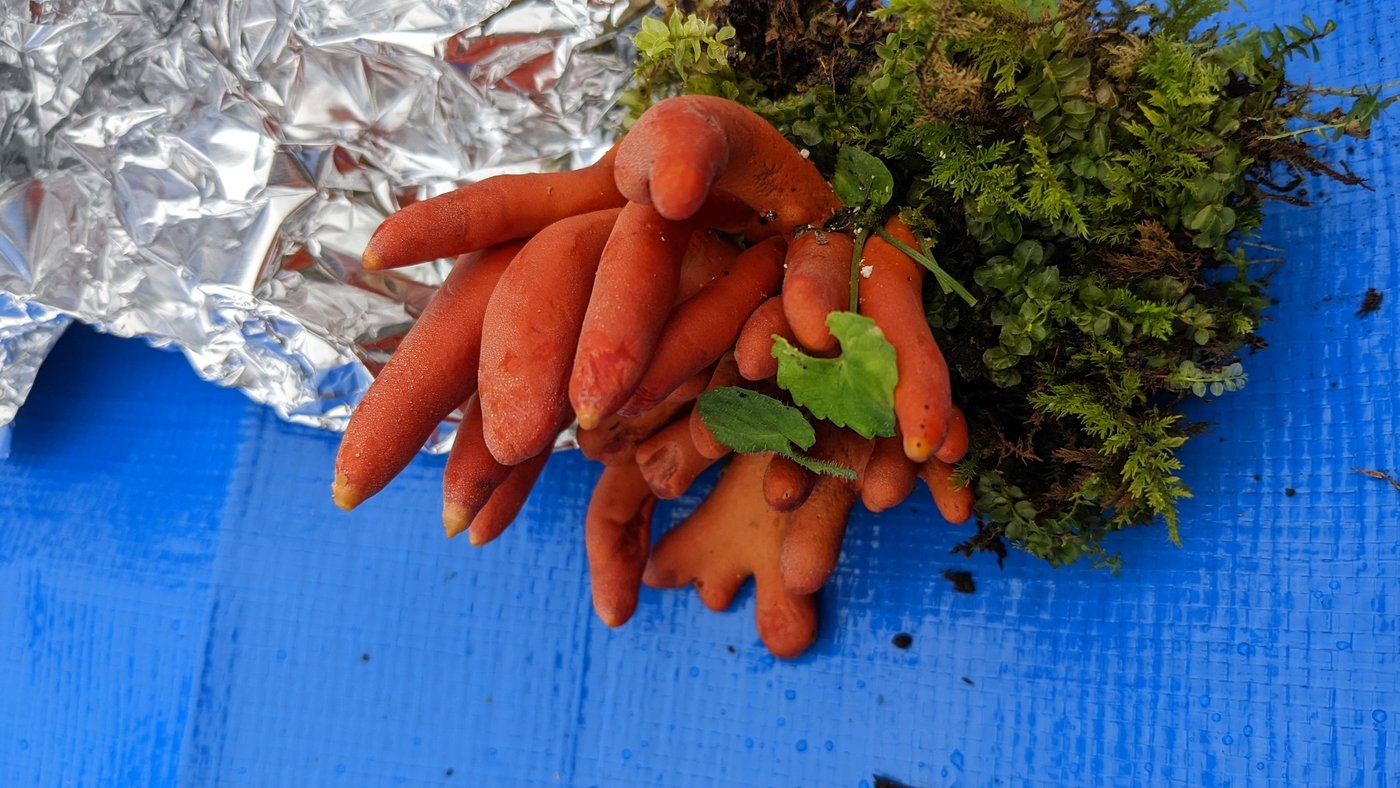
- Agents
- Aflatoxins of Aspergillus flavus on nuts and grain; the trichothecenes of Fusarium, and of the poison fire coral; ochratoxin; the ergot alkaloids, which have their own entry.
- Onset
- Hours for an acute dose; years for the cancers.
- Course
- Aflatoxin B1, the most potent natural carcinogen known, causes liver cancer, above all with hepatitis B, and killed 125 people in Kenya in 2004 from mouldy maize; the trichothecene T-2 destroyed the marrow of thousands in the Orenburg region of Russia in 1942–47 (alimentary toxic aleukia), and the fire coral, Podostroma cornu-damae, has killed in Japan and Korea by the same toxins.
- Treatment
- None specific; the prevention is the storage of the grain.
In the database: Aflatoxin mould, Poison fire coral, Winter-grain mould.
- IARC (2012). Monographs, vol. 100F: aflatoxins, Group 1.
- Joffe, A. Z. (1971). “Fusarium poae and F. sporotrichioides as principal causal agents of alimentary toxic aleukia,” in Mycotoxic Fungi, Mycotoxins, Mycotoxicoses, vol. 3.
- Azziz-Baumgartner, E., et al. (2005). “Case-control study of an acute aflatoxicosis outbreak, Kenya, 2004.” Environmental Health Perspectives 113.
- Agents
- Harmine and harmaline of the wild rue (Peganum harmala), reversible inhibitors of monoamine oxidase A.
- Onset
- One to two hours.
- Course
- Nausea, tremor, visual disturbance, and in large doses convulsions and a slowed heart; with other serotonergic drugs or tyramine-rich food, the serotonin syndrome of fever, rigidity, and agitation. The same alkaloids in the ayahuasca vine are what let the DMT of the brew survive the gut.
- Treatment
- Supportive; benzodiazepines; cyproheptadine for the serotonin syndrome.
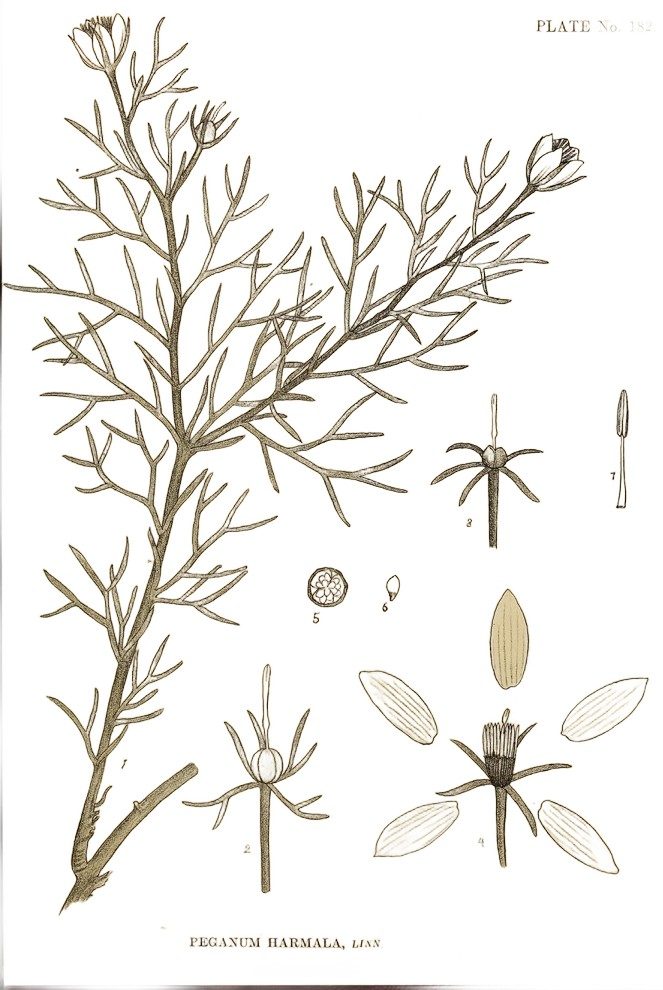
In the database: Wild rue.
- Frison, G., et al. (2008). “A case of β-carboline alkaloid intoxication following ingestion of Peganum harmala seed extract.” Forensic Science International 179.
- Moloudizargari, M., et al. (2013). “Pharmacological and therapeutic effects of Peganum harmala and its main alkaloids.” Pharmacognosy Reviews 7.
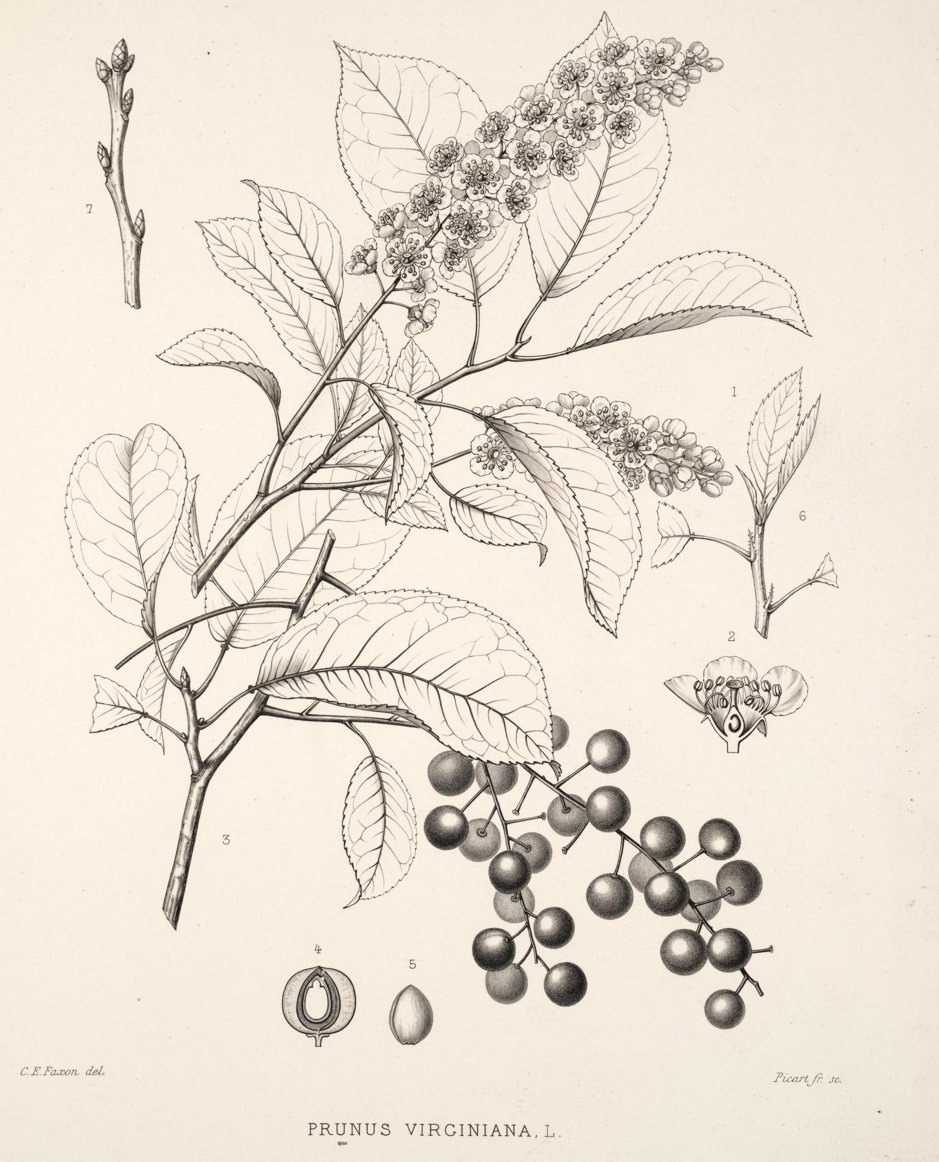
- Agents
- Amygdalin and prunasin in the kernels of blackthorn, bitter almond, apricot, cherry, and apple pips, and linamarin in cassava; the enzyme in the chewed seed frees hydrogen cyanide.
- Onset
- Minutes to a few hours, as the glycoside is hydrolysed in the gut.
- Course
- Headache, dizziness, a racing heart, then confusion, convulsions, and respiratory arrest; cyanide blocks cytochrome oxidase and the cells cannot use oxygen. A few dozen bitter apricot kernels have killed adults, and “laetrile,” the amygdalin sold against cancer, has poisoned its users.
- Treatment
- Hydroxocobalamin, which binds cyanide as cyanocobalamin; oxygen; sodium thiosulfate.
In the database: Blackthorn, Chokecherry.
- Bolarinwa, I. F., et al. (2014). “Amygdalin content of seeds, kernels and food products commercially available in the UK.” Food Chemistry 152.
- Milazzo, S., and Horneber, M. (2015). “Laetrile treatment for cancer.” Cochrane Database of Systematic Reviews 4.
- Goldfrank’s Toxicologic Emergencies, 11th ed. (2019), “Cyanide and hydrogen sulfide.”
- Agents
- The furanocoumarins (psoralen, bergapten, xanthotoxin) of the fig, the rue, the citrus peel, white dittany, angelica, masterwort, lovage, giant hogweed, and the carrot family generally.
- Onset
- Twelve to thirty-six hours after the skin, wet with the sap, meets ultraviolet light.
- Course
- A burn in the shape of the contact, streaks and drips, with blisters in a day and a brown pigmentation that lasts months; the furanocoumarins cross-link DNA under UV-A. Not an allergy: it happens to everyone, which is how the lime-and-sun “margarita dermatitis” of bartenders and the fig-leaf tanning burns are made.
- Treatment
- Cool compresses, steroids for the blistering, and shade; the same chemistry, controlled, is the PUVA treatment of psoriasis.
In the database: Citron, Dittany, Fig, Lovage, Masterwort and angelica.
- Wagner, A. M., et al. (2002). “Bullous phytophotodermatitis associated with high natural concentrations of furanocoumarins in limes.” American Journal of Contact Dermatitis 13.
- Pathak, M. A. (1986). “Phytophotodermatitis.” Clinics in Dermatology 4.
- Agents
- Protoanemonin, released from ranunculin when the fresh tissue of any buttercup is crushed: pilewort, hepatica, anemone, pasque flower, clematis, the meadow buttercups.
- Onset
- Minutes to hours on the skin and mouth.
- Course
- Burning, redness, and blisters where the fresh plant touched; in the mouth and gut, salivation, vomiting, colic, and bloody diarrhoea, with kidney irritation if much is swallowed. Beggars raised sores with it to move pity. Drying polymerises the lactone to inert anemonin, which is why hay with buttercups is safe and the dried herbs of the pharmacopoeia were not blistering.
- Treatment
- Wash; demulcents; it is self-limiting.
In the database: Liverwort, or hepatica, Pilewort.
- Frohne, D., and Pfänder, H. J. (2005). Poisonous Plants, 2nd ed., “Ranunculaceae.”
- Bonora, A., et al. (1985). “Separation and quantitation of protoanemonin in Ranunculaceae by normal- and reversed-phase HPLC.” Planta Medica 51.
- Agents
- Sennosides, aloin, rhein, emodin, and their kin, in senna, aloes, rhubarb, cascara, buckthorn, the purging cassia, yellow dock, madder, and the compound purges built on them (lenitive electuary, diacatholicon, hiera picra).
- Onset
- Eight to twelve hours: the glycosides pass the small bowel and are freed by the colonic bacteria.
- Course
- In a dose, a soft stool with some griping; in excess, watery diarrhoea with colic and loss of potassium, and with months of use the dark-stained colon (melanosis coli, harmless), dependence of the bowel, and low potassium that endangers the heart. The urine turns red or brown. Madder’s anthraquinone lucidin is genotoxic, and aloe-emodin and emodin were listed by the European Union in 2021 as not permitted in food supplements.
- Treatment
- Stopping; potassium; fluids.
In the database: Cassia, flower of, Compound fumitory, Diacatholicon, Hiera picra, Lenitive electuary, Madder, Myrobalans, Rhubarb, Yellow dock.
- EMA/HMPC (2020). European Union herbal monograph on Senna alexandrina Mill., folium (EMA/HMPC/625849/2015).
- European Commission (2021). Regulation (EU) 2021/468 on hydroxyanthracene derivatives in foods.
- Westendorf, J., et al. (1998). “Carcinogenicity and DNA adduct formation observed in ACI rats after long-term treatment with madder root, Rubia tinctorum L.” Carcinogenesis 19.
- Agents
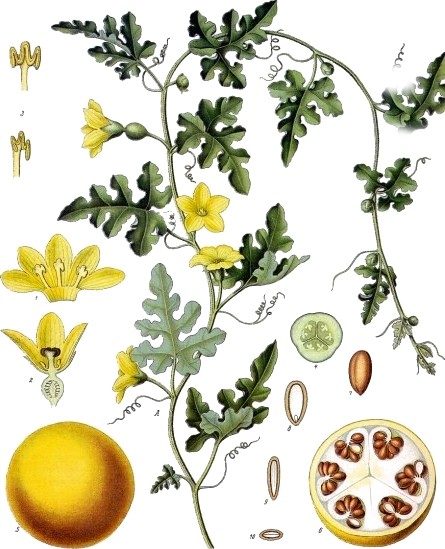
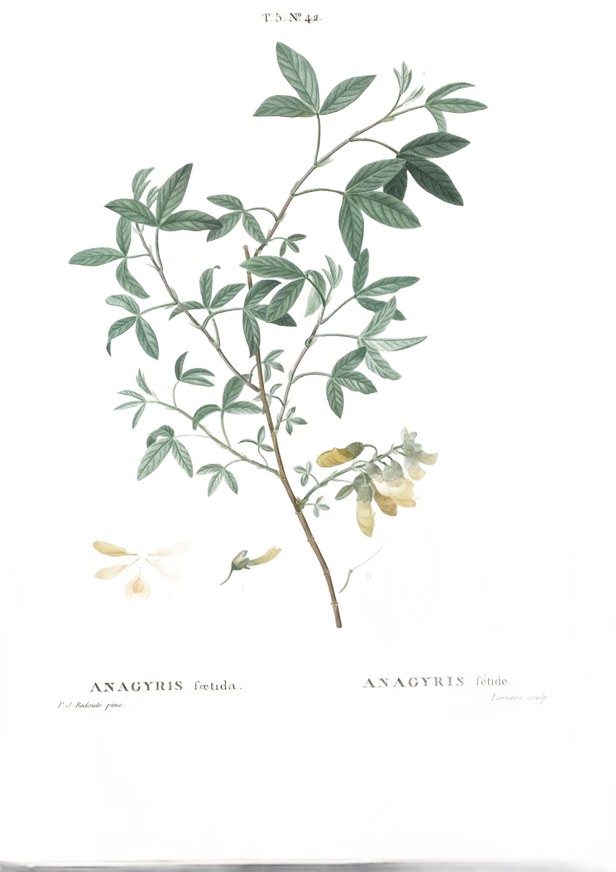
- Scammony, colocynth (cucurbitacins), gamboge (gambogic acid), jalap, turpeth, the larch agaric (agaricic acid), and the Galenic compounds that stacked them: Cochia and golden pills, hamech, diaphenicon, the hieras.
- Onset
- One to four hours.
- Course
- Violent colic, vomiting, and copious watery stools, often bloody, from direct irritation of the whole gut; dehydration, collapse, and in the worst cases death, as in the Morison’s pill cases of the 1830s (gamboge) and the colocynth deaths of the pharmacopoeial era. The Galenists held these drew the deep humours, and read the violence as strength.
- Treatment
- Fluids and salts; demulcents; nothing specific.
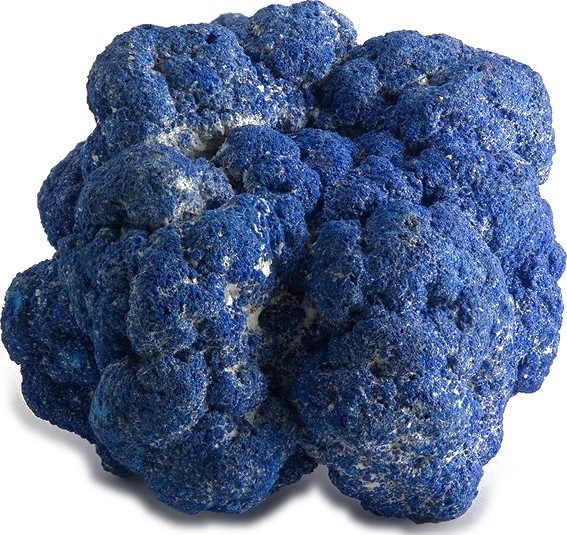
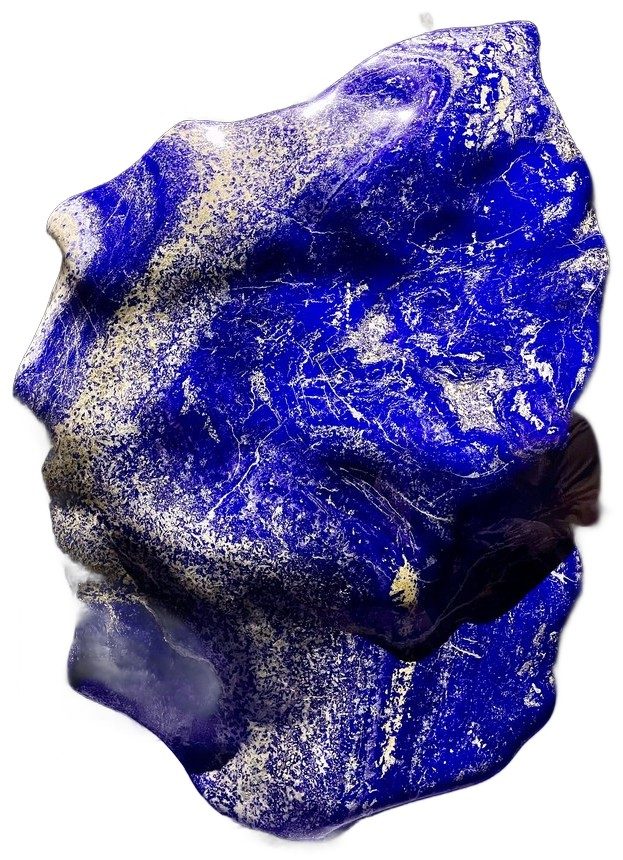
In the database: Cochia pills, Diaphenicon, Foetid pills, Gamboge, Golden pills, Hamech, confection of, Hiera of Pacchius, Hiera with agaric, Indian and Arabian pills, Indian electuary, greater and lesser, Lapis lazuli, pills of, Troche of agaric.
- Goldfrank’s Toxicologic Emergencies, 11th ed. (2019), “Herbal preparations.”
- Helfand, W. H. (1974). “James Morison and his pills.” Transactions of the British Society for the History of Pharmacy 1.
- Chen, J. C., et al. (2005). “Cucurbitacins and cucurbitane glycosides: structures and biological activities.” Natural Product Reports 22.
- Agents
- Coumarin, in sweet woodruff, cassia cinnamon, tonka bean, and sweet clover; and its spoiled-hay product dicoumarol, the first anticoagulant.
- Onset
- Weeks of daily intake for the liver; days for dicoumarol bleeding.
- Course
- Coumarin itself does not thin the blood; in a minority of people, by a slow-metabolising liver enzyme, daily doses above the tolerable 0.1 mg per kilogram raise the liver enzymes and have caused hepatitis, reversible on stopping; the German cassia-cinnamon warnings of 2006 followed. Dicoumarol, formed in mouldy sweet clover, killed cattle by bleeding in the 1920s, was identified by Link in 1940, and gave warfarin.
- Treatment
- Stopping; vitamin K for the anticoagulant.
In the database: Cassia wood, Sweet woodruff.
- Abraham, K., et al. (2010). “Toxicology and risk assessment of coumarin: focus on human data.” Molecular Nutrition and Food Research 54.
- Link, K. P. (1959). “The discovery of dicumarol and its sequels.” Circulation 19.
- Agents
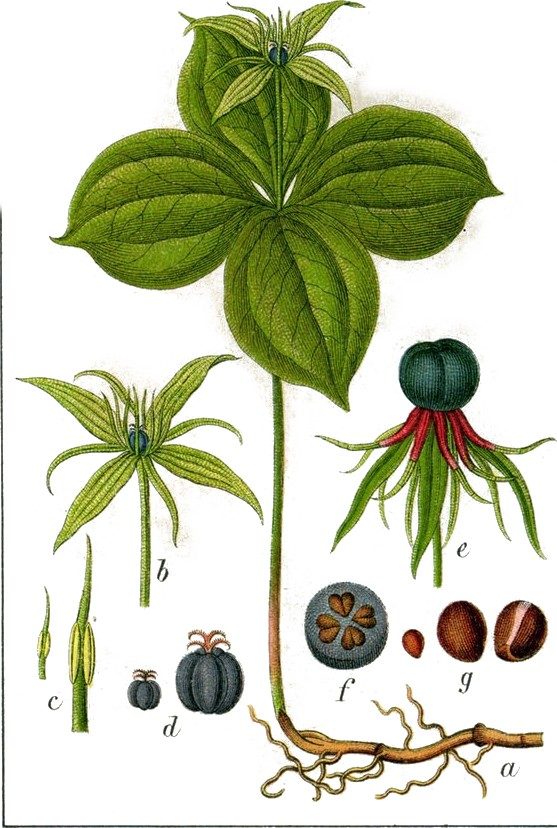
- The triterpene and steroidal saponins of cowslip root, herb Paris, eryngo, sarsaparilla, Solomon’s seal berries, soapwort, horse chestnut, and ivy.
- Onset
- Half an hour to a few hours.
- Course
- Burning of the mouth, nausea, vomiting, and diarrhoea by irritation of the mucous membranes, which is the same action that, at a smaller dose, thins the phlegm by reflex and made them expectorants; absorbed through a damaged gut or injected, saponins dissolve red cells. Fatal poisoning is rare in people and common in fish, which is why the plants were fish poisons.
- Treatment
- Demulcents; fluids; self-limiting.
In the database: Cowslip, Eryngo, Herb Paris, Sarsaparilla, Solomon’s seal.
- Frohne, D., and Pfänder, H. J. (2005). Poisonous Plants, 2nd ed., “Saponins.”
- Bruneton, J. (1999). Pharmacognosy, 2nd ed., “Saponins.”
- Agents
- Potassium nitrate (saltpetre, sal prunella, the pills of niter), sodium nitrite in curing salts, and nitrate-rich well water and vegetables in infants.
- Onset
- An hour or two.
- Course
- Gastritis and vomiting from the salt; then, as the mouth’s bacteria and the gut reduce nitrate to nitrite, the oxidation of haemoglobin to methaemoglobin, which cannot carry oxygen: slate-blue lips and skin, headache, breathlessness, and at levels above half, coma and death. Infants, whose haemoglobin is more easily oxidised, were the victims of well water (“blue baby”). Thirty grams of saltpetre has killed an adult.
- Treatment
- Methylene blue, which reduces the methaemoglobin back; oxygen.
In the database: Niter, pills of, Saltpetre.
- Goldfrank’s Toxicologic Emergencies, 11th ed. (2019), “Methemoglobin inducers.”
- Comly, H. H. (1945). “Cyanosis in infants caused by nitrates in well water.” JAMA 129.
- Agents
- The sesquiterpene lactones of elecampane (alantolactone), arnica, chamomile, feverfew, chrysanthemum, costus, laurel (costunolide), and the ox-eye and other daisies.
- Onset
- Days after the first sensitising contact; hours after the next.
- Course
- An allergic eczema of the hands, face, and eyelids in gardeners, florists, and users of the herbal creams, worst in summer and spreading to the exposed skin like a light eruption; cross-reaction across the whole family, so that the elecampane-sensitised react to chamomile. The lactones are not phototoxic but the pattern mimics it.
- Treatment
- Avoidance; steroids; patch testing with the Compositae mix.
In the database: Elecampane.
- Paulsen, E. (2002). “Contact sensitization from Compositae-containing herbal remedies and cosmetics.” Contact Dermatitis 47.
- Hausen, B. M. (1996). “A 6-year experience with Compositae mix.” American Journal of Contact Dermatitis 7.
- Agents
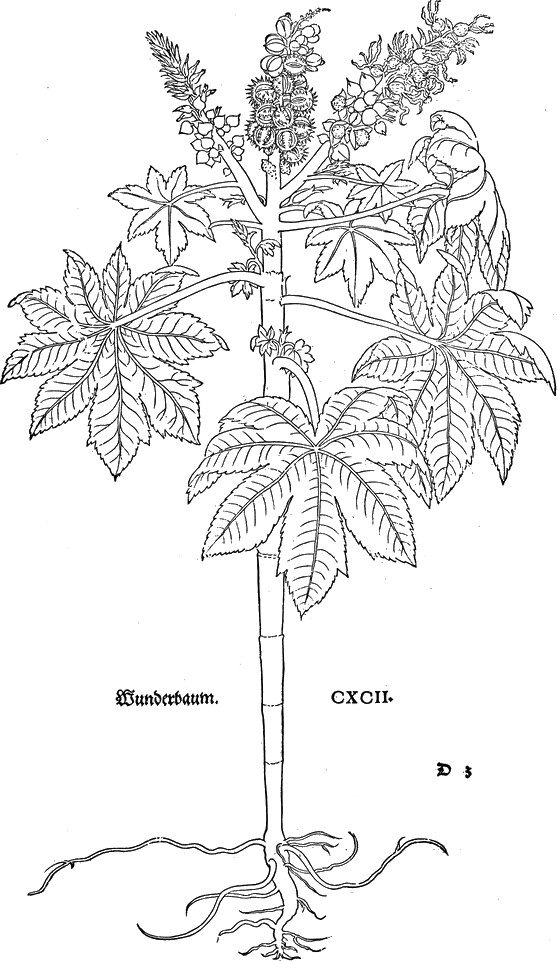
- Ricin of the castor seed (the palm of Christ), abrin of the jequirity bean, and the milder lectins of raw kidney beans.
- Onset
- Four to twelve hours by mouth; the full picture over two to five days.
- Course
- Vomiting, bloody diarrhoea, and collapse from the dying gut lining, then failure of the liver and kidney as the toxin, taken up by cells, cleaves the ribosome and stops protein synthesis; by injection or inhalation a milligram is fatal (the Markov umbrella, 1978), by mouth most survive because the seed coat and the gut protect. Castor oil carries none of it.
- Treatment
- Supportive; no antidote; fluids and the management of each failing organ.
In the database: Palm of Christ.
- Audi, J., et al. (2005). “Ricin poisoning: a comprehensive review.” JAMA 294.
- Crompton, R., and Gall, D. (1980). “Georgi Markov: death in a pellet.” Medico-Legal Journal 48.
Historical and descriptive. In a poisoning, call a poison centre or emergency services.