
Chaste tree
Agnus castus, vitex; monk’s pepper
- Known today as
- Vitex agnus-castus, a Mediterranean shrub with spikes of lilac flowers and peppery fruit.
- Kind
- Plant, in 2 older authorities
- Constituents
- agnuside, casticin, rotundifuran
- Earliest authority here
- Pliny (AD 23/24–79)
- In other databases
- Plants of the World Online search · GBIF search · Wikidata search
Chaste tree: what was it used for?
To cool desire, as its names say; for the womb and to bring on the milk.
Chaste tree: what does modern science say?
One of the few old women’s herbs with trial support: extracts of the fruit have eased premenstrual symptoms in controlled studies, likely by acting on prolactin.
Pharmacognosy & Toxicology
- Constituents
- Mechanism
- Extracts bind dopamine D2 receptors in the pituitary and so lower prolactin, the likeliest basis of the effect on the premenstrual syndrome.
- Checked against ChEMBL
- casticin: No measurement in ChEMBL for “extracts bind dopamine D2 receptors” (22 activities recorded, none against the target named); the line rests on its references.
- Toxic dose
- No serious harm; headache and nausea in a few.
- Standing
- A German trial in 2001 found it better than placebo for premenstrual symptoms; approved in Germany for that use.
- Schellenberg, R. (2001). BMJ 322. Book, not indexed
- Wuttke, W., et al. (2003). “Chaste tree (Vitex agnus-castus): pharmacology and clinical indications.” Phytomedicine 10. Verified against its record · doi:10.1078/094471103322004866
The abstract of each source, beneath its citation. For Club members. About the Club or sign in.
Constituent names open the compound’s record at PubChem, and “ChEMBL” beside a name opens its record at ChEMBL, the European Bioinformatics Institute’s database of bioactive molecules. Where a mechanism line was checked against ChEMBL (ChEMBL 37, read 1 October 2026), the check is shown with the measured value and its source paper, or says plainly that nothing has been measured. Doses are as the references give them, for description only; this is not medical advice. Each source carries the result of its check against Crossref, PubMed, or the authority’s page: see Verification.
What Medicine Makes of It
- Binding, Ligature, and ImpotenceThe knotted cord, and psychogenic impotence.
Chaste tree: what lore surrounds it?
The peppery fruit was said to be eaten in monasteries to keep vows of chastity, hence monk’s pepper.
Chaste tree: what did the older authorities say?
- Pliny
- Reports that the women of Athens, keeping chaste for the festival of the Thesmophoria, strewed their beds with its leaves.
- Dioscorides
- Gives the seed to take away the desire for coition.
Sources
- Pliny the Elder, Natural History. Read in part · the text read
- Dioscorides, De materia medica. Read in part · the text read
- Schellenberg, R. (2001). “Treatment for the premenstrual syndrome with agnus castus fruit extract.” BMJ 322. Verified against its record · doi:10.1136/bmj.322.7279.134
Verification
- Checked
- October 1, 2026
- Passes
- Every sentence read against its sources, in the pass over the remaining 343 entries
- The Standing line checked against the authority it names (EMA, WHO, FDA, CITES, Commission E)
- Every dated or regulatory claim checked by category across the database
- The mechanism read against ChEMBL (ChEMBL 37): curated mechanisms and measured activity
- Sources
- 5 cited: 2 read in part, 2 verified against its record, 1 book, not indexed. 2 with the abstract on file.
- Corrections
- None were needed.
What was checked, how, and what was found is set out on the Verification page. A checked source is one whose record was found; it does not make the entry medical advice.
Cite This Entry
Version 1 · first published September 30, 2026
- Chicago
“Chaste tree.” In Materia Medica, edited by B. C. P. Statema. Version 1. The Thinking Press, 2026–. Last modified September 30, 2026. https://thethinkingpress.org/materia-medica/chaste-tree.
- MLA
“Chaste tree.” Materia Medica, edited by B. C. P. Statema, version 1, The Thinking Press, 30 Sept. 2026, thethinkingpress.org/materia-medica/chaste-tree. Accessed 8 Oct. 2026.
- APA
Chaste tree. (2026, September 30). In B. C. P. Statema (Ed.), Materia medica (Version 1). The Thinking Press. Retrieved October 8, 2026, from https://thethinkingpress.org/materia-medica/chaste-tree
Club members keep entries on a shelf with private notes, print the plates as cards, and receive an entry by email each week. Create a free account before January 1, 2027 and all of it is yours for good. About the Club
See Also
Also in Pliny the Elder
Chicory in Pliny the Elder · Centaury in Pliny the Elder · Cinnabar in Pliny the Elder · Catmint in Pliny the Elder · everything Pliny the Elder names →
Also in Dioscorides
Coltsfoot in Dioscorides · Chamomile in Dioscorides · Comfrey in Dioscorides · Caterpillar fungus in Dioscorides · everything Dioscorides names →
Drawing on the same sources: Dioscorides
Nearby in the alphabet
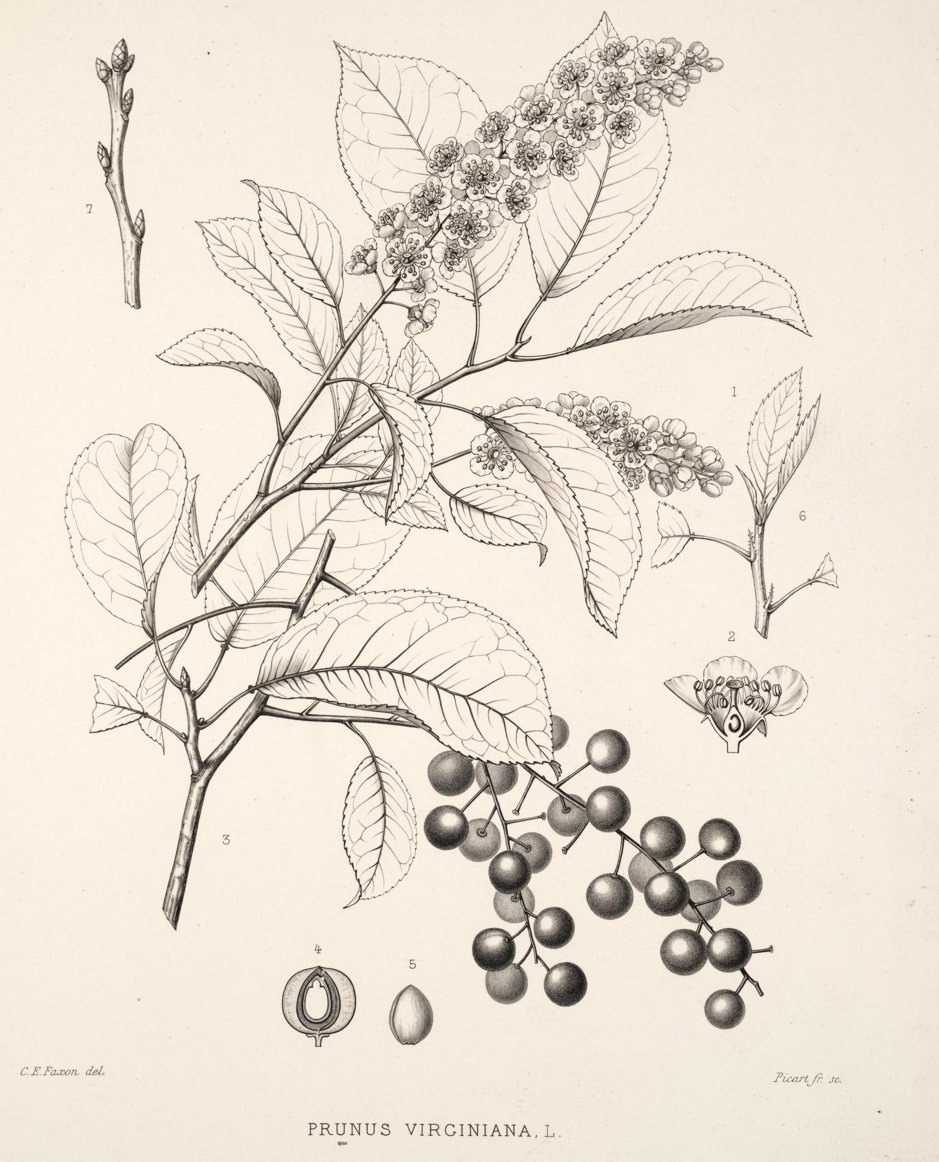
Chanterelle (apricot-scented mushroom with blunt ridges for gills) · Chocolate · Chokecherry (the chokecherry of North America) · Chaga (cracked, charcoal-like growth on living birch) · Chrism (Olive oil mixed with balsam and consecrated by a bishop)
Historical description, not medical advice.