
Sandy everlasting
Immortelle; yellow chaste weed; old pharmacy Flos Stoechados citrini or Flos Stoechados; Gnaphalium arenarium L.; Helichrysum arenarium (L.) Moench; in pharmacy Helichrysi flos
- Known today as
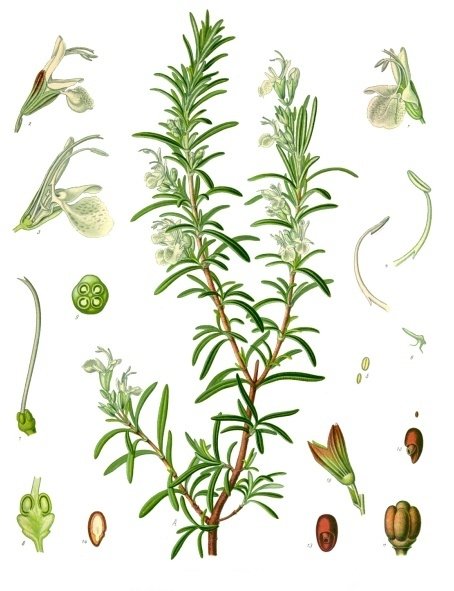
- Helichrysum arenarium, a perennial of the family Asteraceae, eight to thirty centimetres high, with erect, greyish-white woolly stems and leaves, growing in dry sandy places from the Netherlands, southern Sweden, and Estonia south to southern Germany, Bulgaria, and western Kazakhstan. Its flower heads are two to five centimetres across, the bracts “yellow to reddish-orange, shining,” and, as Flora Europaea notes, the plant is not sweet-smelling. The dried flower heads are the drug.
- Kind
- Plant
- Constituents
- naringenin, chlorogenic acid, scopoletin, and 1 more
- In other databases
- Plants of the World Online · GBIF · Wikidata
Caution. Not for those allergic to plants of the Asteraceae (Compositae) family, nor under eighteen. Because it may stimulate the secretion of bile, the European agency does not recommend it in obstruction of the bile duct, cholangitis, liver disease, or gallstones.
Sandy everlasting: what was it used for?
A remedy of the gall bladder. The European Medicines Agency’s assessment report records it in Lithuanian pharmacy regulations of 1904, 1911, and 1914, in the Soviet State Pharmacopoeia from its seventh edition of 1937 to its eleventh of 1990, and in Polish official medicine from the 1930s, where it went into the cholagogue tea, Species Cholagogae, still in the Polish Pharmacopoeia of 2014. A Polish manual of 1955 gave its decoction for gallstones and inflammation of the gall bladder with jaundice, and the German Standard License of 1986 gave the tea “For supportive treatment of non-inflammatory gallbladder complaints.”
Sandy everlasting: what does modern science say?
The European Medicines Agency’s herbal committee accepts the flower as a traditional herbal medicine, “exclusively based upon long-standing use,” in digestive disorders with a feeling of fullness and bloating (monograph of 2016). Its assessment report finds three kinds of flavonoids in the flower heads, among them flavanones such as naringenin and its glucosides, with the phenolic acids caffeic, chlorogenic, and ferulic acid and the coumarins scopoletin, umbelliferone, and aesculetin. It found no clinical trials, only clinical observations in old Russian literature on its use in gall-bladder disease.
Pharmacognosy & Toxicology
- Constituents
- naringeninamong the flavanones, with its glucosides
- chlorogenic acid ChEMBLwith caffeic and ferulic acid
- scopoletina coumarin, with umbelliferone and aesculetin
- aesculetin
- Mechanism
- It may stimulate the secretion of bile, the European agency notes.
- Standing
- European Union herbal monograph (2016): traditional use, “exclusively based upon long-standing use,” in digestive disorders with fullness and bloating.
- European Medicines Agency, Committee on Herbal Medicinal Products. European Union herbal monograph on Helichrysi flos (Sandy everlasting). EMA/HMPC/41108/2015, 5 April 2016. Read in full · the text read
- European Medicines Agency, Committee on Herbal Medicinal Products. Assessment report on Helichrysi flos. EMA/HMPC/41109/2015, 5 April 2016. Read in part · the text read
Constituent names open the compound’s record at PubChem, and “ChEMBL” beside a name opens its record at ChEMBL, the European Bioinformatics Institute’s database of bioactive molecules. Where a mechanism line was checked against ChEMBL (ChEMBL 37, read 1 October 2026), the check is shown with the measured value and its source paper, or says plainly that nothing has been measured. Doses are as the references give them, for description only; this is not medical advice. Each source carries the result of its check against Crossref, PubMed, or the authority’s page: see Verification.
Sandy everlasting: what lore surrounds it?
Its flavonoid glycosides were named helichrysin A and B by Hänsel and Heise, who isolated them; later work showed helichrysin B to be salipurposide and separated helichrysin A into two isomeric forms, the assessment report records.
Sources
- European Medicines Agency, Committee on Herbal Medicinal Products. European Union herbal monograph on Helichrysi flos (Sandy everlasting). EMA/HMPC/41108/2015, 5 April 2016. Read in full · the text read
- European Medicines Agency, Committee on Herbal Medicinal Products. Assessment report on Helichrysi flos. EMA/HMPC/41109/2015, 5 April 2016. Read in part · the text read
Verification
- Checked
- October 1, 2026
- Passes
- Every sentence read against its sources, in the pass over the remaining 343 entries
- The Standing line checked against the authority it names (EMA, WHO, FDA, CITES, Commission E)
- Every dated or regulatory claim checked by category across the database
- Sources
- 2 cited: 1 read in full, 1 read in part.
- Corrections
- None were needed.
What was checked, how, and what was found is set out on the Verification page. A checked source is one whose record was found; it does not make the entry medical advice.
Club members can point at a technical term in this entry, such as a constituent, an action, or a word of Jung’s, to read its definition from the source. The Club.
Cite This Entry
Version 1 · first published October 16, 2026
- Chicago
“Sandy everlasting.” In Materia Medica, edited by B. C. P. Statema. Version 1. The Thinking Press, 2026–. Last modified October 16, 2026. https://thethinkingpress.org/materia-medica/sandy-everlasting.
- MLA
“Sandy everlasting.” Materia Medica, edited by B. C. P. Statema, version 1, The Thinking Press, 16 Oct. 2026, thethinkingpress.org/materia-medica/sandy-everlasting. Accessed 17 Oct. 2026.
- APA
Sandy everlasting. (2026, October 16). In B. C. P. Statema (Ed.), Materia medica (Version 1). The Thinking Press. Retrieved October 17, 2026, from https://thethinkingpress.org/materia-medica/sandy-everlasting
Club members keep entries on a shelf with private notes, print the plates as cards, and receive an entry by email each week. Create a free account before January 1, 2027 and all of it is yours for good. About the Club
See Also
Sharing chlorogenic acid
Birch leaf · Pilosella officinarum · Coffea arabica · Tilia cordata
Nearby in the alphabet
Sarsaparilla (thorny climbers of Central and South America) · Sandalwood (The heartwood of Santalum album) · Sassafras (The root bark of Sassafras albidum) · Saltpetre · The SATOR square (A five-line Latin word square that can be read in four directions) · Salt · Savin (a low juniper) · Sal ammoniac (from volcanic vents and later made from soot and urine)
Historical description, not medical advice.
