
Andrographis
Kalmegh, Bengali kalmeg, Hindi kiryat; Chinese chuan xin lian; Andrographis paniculata Nees; in pharmacy Andrographidis paniculatae folium
- Known today as
- Andrographis paniculata, a bitter herb of the family Acanthaceae found wild or cultivated throughout India. The European Medicines Agency’s assessment report names its diterpene lactones, andrographolide chief among them and considered the most active, as its major constituents.
- Kind
- Plant, in 1 older authority
- Constituents
- andrographolide
- Earliest authority here
- Dutt, The Materia Medica of the Hindus (1877)
- In other databases
- Plants of the World Online · GBIF · Wikidata
Caution. A 2021 meta-analysis of its safety found serious adverse events very rare but non-serious ones very common, chiefly of the gut and the skin, and advised that users be closely monitored. Its safety has not been evaluated in children and adolescents, nor studied in pregnancy and breast-feeding, the European assessment report notes.
Andrographis: what was it used for?
A bitter for the bowels in Bengal, and in modern use a remedy for colds. Dutt, in 1877, found it “well-known in Bengal under the name of kalmeg” as the principal ingredient of a domestic medicine for infants called alui, the juice of the leaves with powdered cardamoms, cloves, and cinnamon, given for griping, irregular stools, and loss of appetite.
Andrographis: what does modern science say?
The European Medicines Agency’s herbal committee declined to adopt a monograph on the leaf (public statement of 2013): appropriate studies for well-established use were lacking, and no single-herb preparation had fifteen years of medicinal use in the European Union. A 2017 meta-analysis of thirty-three randomised trials in 7,175 patients, most of commercial preparations seldom described in detail, found that andrographis improved cough and sore throat against placebo and shortened the duration of symptoms, but warned that the findings “should be interpreted cautiously owing to poor study quality and heterogeneity.”
Pharmacognosy & Toxicology
- Constituents
- andrographolidethe chief diterpene lactone, considered the most active
- Mechanism
- Not established in the sources read for this entry.
- Standing
- There is no European monograph: the European Medicines Agency’s herbal committee declined to adopt one (public statement of 2013). A 2017 meta-analysis of thirty-three randomised trials found benefit for cough and sore throat, from studies of poor quality.
- European Medicines Agency, Committee on Herbal Medicinal Products. Public statement on Andrographidis paniculatae folium (Kalmegh). EMA/HMPC/709282/2012, 17 September 2013. Read in full · the text read
- European Medicines Agency, Committee on Herbal Medicinal Products. Assessment report on Andrographidis paniculatae folium. EMA/HMPC/320433/2012, 27 August 2014. Read in part · the text read
- Hu XY, et al. (2017). Andrographis paniculata (Chuān Xīn Lián) for symptomatic relief of acute respiratory tract infections in adults and children: A systematic review and meta-analysis. PloS one. PMID 28783743. Abstract read · the text read
- Worakunphanich W, et al. (2021). Safety of Andrographis paniculata: A systematic review and meta-analysis. Pharmacoepidemiology and drug safety. PMID 33372366. Abstract read · the text read
The abstract of each source, beneath its citation. For Club members. About the Club or sign in.
Constituent names open the compound’s record at PubChem, and “ChEMBL” beside a name opens its record at ChEMBL, the European Bioinformatics Institute’s database of bioactive molecules. Where a mechanism line was checked against ChEMBL (ChEMBL 37, read 1 October 2026), the check is shown with the measured value and its source paper, or says plainly that nothing has been measured. Doses are as the references give them, for description only; this is not medical advice. Each source carries the result of its check against Crossref, PubMed, or the authority’s page: see Verification.
Andrographis: what did the older authorities say?
- Dutt, The Materia Medica of the Hindus (1877)
- There was some doubt about its Sanskrit name: a plant called yavatikta was said by some to be this herb, but Dutt had never met that name in a prescription, and the synonym usually meant another plant, “so that I am inclined to think Andrographis paniculata was not used in Sanskrit medicine.” Dymock, Warden, and Hooper add that both Hindu and Muslim writers seem to have confused it with chiretta.
Sources
- Dutt, U. C. (1877). The Materia Medica of the Hindus, “Andrographis paniculata.” Internet Archive, materiamedicaofh00duttuoft. Read in part · the text read
- Dymock, W., Warden, C. J. H., & Hooper, D. (1893). Pharmacographia Indica, vol. 3, “Andrographis paniculata.” Internet Archive, b20413415_003. Read in part · the text read
- European Medicines Agency, Committee on Herbal Medicinal Products. Public statement on Andrographidis paniculatae folium (Kalmegh). EMA/HMPC/709282/2012, 17 September 2013. Read in full · the text read
- European Medicines Agency, Committee on Herbal Medicinal Products. Assessment report on Andrographidis paniculatae folium. EMA/HMPC/320433/2012, 27 August 2014. Read in part · the text read
- Hu XY, et al. (2017). Andrographis paniculata (Chuān Xīn Lián) for symptomatic relief of acute respiratory tract infections in adults and children: A systematic review and meta-analysis. PloS one. PMID 28783743. Abstract read · the text read
- Worakunphanich W, et al. (2021). Safety of Andrographis paniculata: A systematic review and meta-analysis. Pharmacoepidemiology and drug safety. PMID 33372366. Abstract read · the text read
Verification
- Checked
- October 1, 2026
- Passes
- Every sentence read against its sources, in the pass over the remaining 343 entries
- The Standing line checked against the authority it names (EMA, WHO, FDA, CITES, Commission E)
- Every dated or regulatory claim checked by category across the database
- Sources
- 6 cited: 1 read in full, 3 read in part, 2 abstract read. 2 with the abstract on file.
- Corrections
- None were needed.
What was checked, how, and what was found is set out on the Verification page. A checked source is one whose record was found; it does not make the entry medical advice.
Club members can point at a technical term in this entry, such as a constituent, an action, or a word of Jung’s, to read its definition from the source. The Club.
Cite This Entry
Version 1 · first published October 17, 2026
- Chicago
“Andrographis.” In Materia Medica, edited by B. C. P. Statema. Version 1. The Thinking Press, 2026–. Last modified October 17, 2026. https://thethinkingpress.org/materia-medica/andrographis.
- MLA
“Andrographis.” Materia Medica, edited by B. C. P. Statema, version 1, The Thinking Press, 17 Oct. 2026, thethinkingpress.org/materia-medica/andrographis. Accessed 17 Oct. 2026.
- APA
Andrographis. (2026, October 17). In B. C. P. Statema (Ed.), Materia medica (Version 1). The Thinking Press. Retrieved October 17, 2026, from https://thethinkingpress.org/materia-medica/andrographis
Club members keep entries on a shelf with private notes, print the plates as cards, and receive an entry by email each week. Create a free account before January 1, 2027 and all of it is yours for good. About the Club
See Also
Drawing on the same sources: Dutt, Dymock
Nearby in the alphabet
Angel’s wings (fan-shaped fungus that rots conifer wood) · The amulet herbs (See each above) · Aniseed (Pimpinella anisum) · Ambergris (A waxy substance formed in the gut of the sperm whale) · Antimony (The metallic element and its compounds) · Amber (chiefly from the Baltic coast) · Apples, syrup of (A syrup of sweet apples) · Alum (potassium or ammonium)
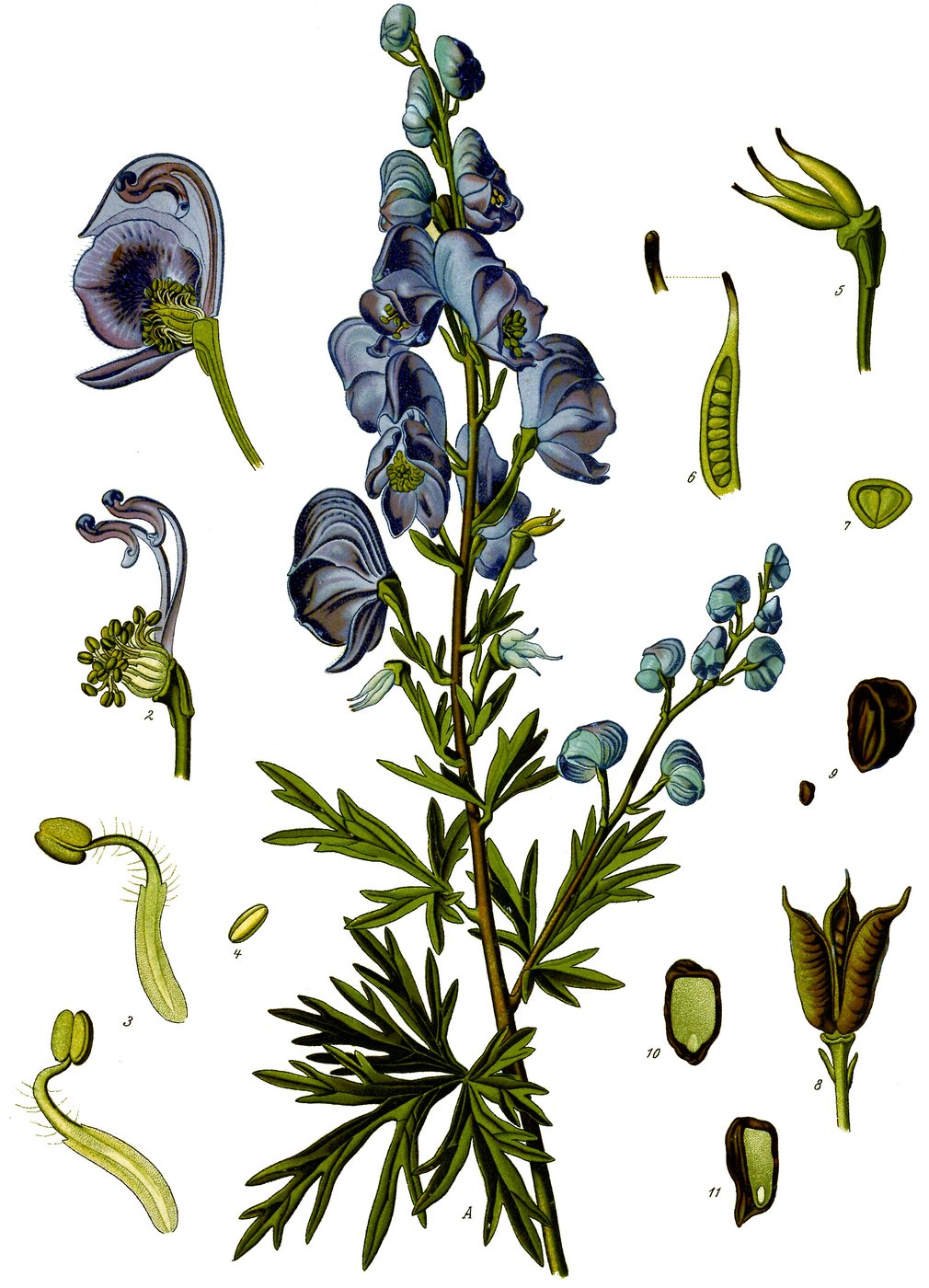
Historical description, not medical advice.
