
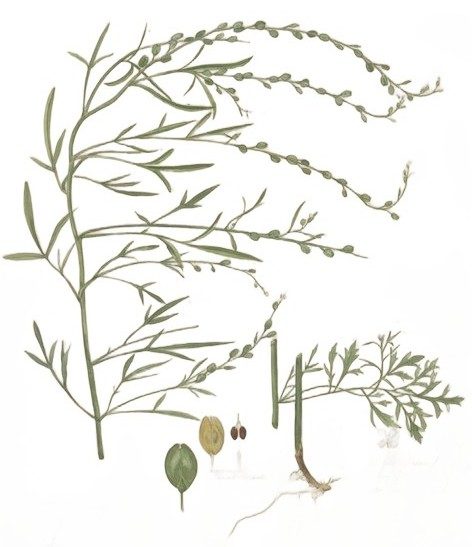
Nasturtium, that is, garden cress
Nasturtio
- Known today as
- Garden cress, Lepidium sativum. Not the flowering nasturtium (Tropaeolum) of modern gardens, a genus native to the Andes.
- Kind
- Plant, in 1 older authority
- Constituents
- glucotropaeolin, benzyl isothiocyanate, vitamin C
- Earliest authority here
- Pliny (AD 23/24–79)
- In other databases
- Plants of the World Online search · GBIF search · Wikidata search
- In the Canale glossary
- On the Manner of Discerning and Healing the Bewitched, Appendix A: Part Three, Chapter 5: Vomitory Medicines
Revised October 1, 2026: An older authority added from a text read in full. Lore added from texts read in full. Version 1, first published September 25, 2026.
Nasturtium, that is, garden cress: what did Canale use it for?
Its seed among the milder vomits (ch. 5).
Nasturtium, that is, garden cress: what does modern science say?
Pungent in the leaf, like its relatives in the mustard family.
Pharmacognosy & Toxicology
- Constituents
- glucotropaeolin ChEMBLa glucosinolate releasing benzyl isothiocyanate
- benzyl isothiocyanate ChEMBLthe mustard-oil pungency
- vitamin C ChEMBL
- Mechanism
- The seed’s mustard oil irritates the stomach, which is the mild vomit of Canale, and is antibacterial in the urine, the basis of a licensed German combination (Angocin) of cress and horseradish for urinary and respiratory infection.
- Toxic dose
- Safe as a salad; the seed oil in quantity irritates.
- Standing
- A food; the isothiocyanate combination has German trials for recurrent urinary infection (Albrecht, 2007).
- Albrecht, U., et al. (2007). “A randomised, double-blind, placebo-controlled trial of a herbal medicinal product containing Tropaeoli majoris herba and Armoraciae rusticanae radix for the prophylactic treatment of patients with chronically recurrent lower urinary tract infections.” Current Medical Research and Opinion 23. Verified against its record · doi:10.1185/030079907x233089
The abstract of each source, beneath its citation. For Club members. About the Club or sign in.
Constituent names open the compound’s record at PubChem, and “ChEMBL” beside a name opens its record at ChEMBL, the European Bioinformatics Institute’s database of bioactive molecules. Where a mechanism line was checked against ChEMBL (ChEMBL 37, read 1 October 2026), the check is shown with the measured value and its source paper, or says plainly that nothing has been measured. Doses are as the references give them, for description only; this is not medical advice. Each source carries the result of its check against Crossref, PubMed, or the authority’s page: see Verification.
Nasturtium, that is, garden cress: what lore surrounds it?
Of the cress Folkard says Chaucer “calls the Cress by its old Saxon name of Kers, which may possibly have been the origin of the vulgar saying of not caring a ‘curse’ for anything,” and that the Spartans ate cresses with their bread “on account of an opinion held very generally among the ancients that those who ate Cress became firm and decided.” Of the nasturtium that borrowed the name, its shield-like leaves and helmet-shaped flowers earned it the Latin Tropæolum, “trophy,” its seed “according to Macer Floridus, possess a great power to repel serpents,” and Linnæus recorded his daughter's observation that its flowers “emit spontaneously, at certain intervals, sparks like electric ones, visible only in the evening.”
Nasturtium, that is, garden cress: what did the older authorities say?
- Pliny
- Says nasturtium may be grown with the greatest ease in summer or winter, and that it “has received that name from the smarting sensation which its pungency causes to the nostrils,” whence the proverb “that a sluggish man should eat nasturtium, to arouse him from his torpidity”; in Arabia, it is said, it grows to a marvellous size.
Sources
- [38] Encyclopaedia Britannica, online edition, britannica.com. Articles: Ambergris; Aristolochiaceae; Asafetida; Azurite; Castor-oil plant; Civet; Dragon’s blood; Garden cress; Jet; Kermes; Laudanum; Lye; Monemvasía; Musk; Precious coral; Saltpetre; Sulfur dioxide; Tartar emetic; Tropaeolum. Book, seen in reviews
- Pliny the Elder, Natural History 19.44, trans. J. Bostock & H. T. Riley (1855), Perseus Digital Library. Primary text
- Folkard, R. (1884). Plant Lore, Legends, and Lyrics, “Cress.” Project Gutenberg #44638. Primary text
- Folkard, R. (1884). Plant Lore, Legends, and Lyrics, “Leek.” Project Gutenberg #44638. Primary text
- Folkard, R. (1884). Plant Lore, Legends, and Lyrics, “Nasturtium.” Project Gutenberg #44638. Primary text
Verification
- Checked
- October 1, 2026
- Passes
- Every sentence read against its sources, in the pass over the remaining 343 entries
- The Standing line checked against the authority it names (EMA, WHO, FDA, CITES, Commission E)
- Every dated or regulatory claim checked by category across the database
- Each quotation from the older authorities checked word for word against the text, read in full
- Sources
- 6 cited: 1 verified against its record, 4 primary text, 1 book, seen in reviews. 1 with the abstract on file.
- Corrections
- None were needed.
What was checked, how, and what was found is set out on the Verification page. A checked source is one whose record was found; it does not make the entry medical advice.
Cite This Entry
Version 1 · first published September 25, 2026 · last revised October 1, 2026
- Chicago
“Nasturtium, that is, garden cress.” In Materia Medica, edited by B. C. P. Statema. Version 1. The Thinking Press, 2026–. Last modified October 1, 2026. https://thethinkingpress.org/materia-medica/nasturtium-that-is-garden-cress.
- MLA
“Nasturtium, that is, garden cress.” Materia Medica, edited by B. C. P. Statema, version 1, The Thinking Press, 1 Oct. 2026, thethinkingpress.org/materia-medica/nasturtium-that-is-garden-cress. Accessed 8 Oct. 2026.
- APA
Nasturtium, that is, garden cress. (2026, October 1). In B. C. P. Statema (Ed.), Materia medica (Version 1). The Thinking Press. Retrieved October 8, 2026, from https://thethinkingpress.org/materia-medica/nasturtium-that-is-garden-cress
Club members keep entries on a shelf with private notes, print the plates as cards, and receive an entry by email each week. Create a free account before January 1, 2027 and all of it is yours for good. About the Club
See Also
Sharing vitamin C
Also in Pliny the Elder
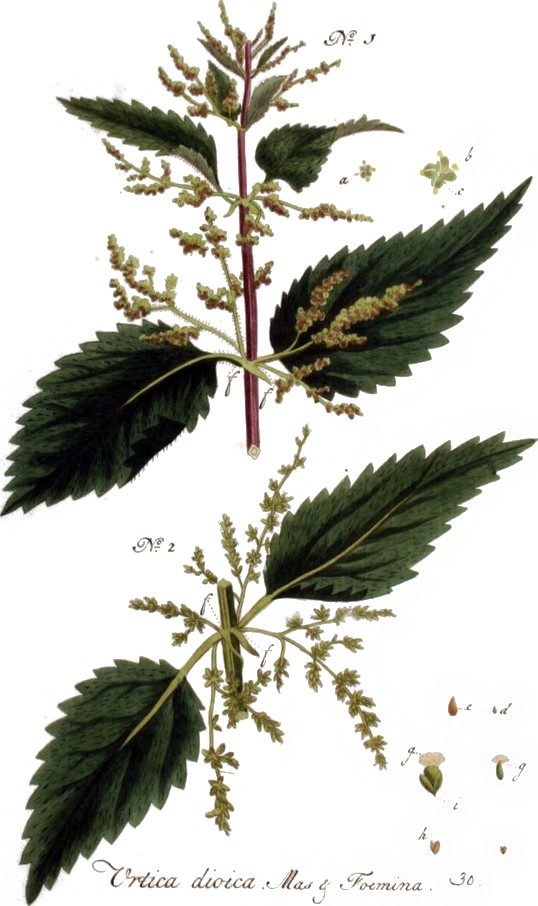
Nettle seed in Pliny the Elder · Mullein in Pliny the Elder · Niter, pills of in Pliny the Elder · Mugwort in Pliny the Elder · everything Pliny the Elder names →
Drawing on the same sources: Folkard
Olive oil and holy water · Myrobalans · Olive-wood ash lye · the bibliography →
Nearby in the alphabet
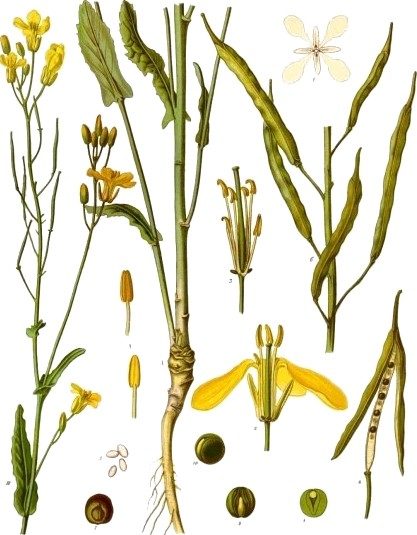
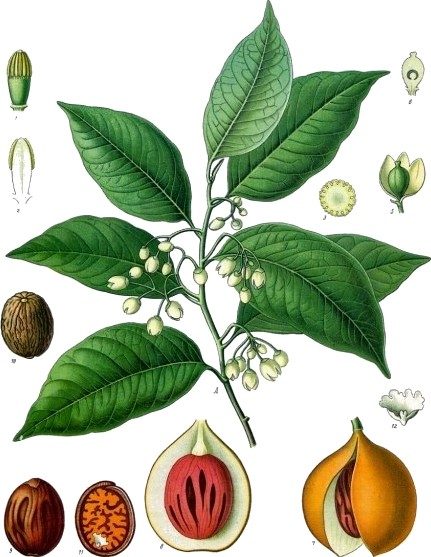
Nepenthe (Unidentified) · Myrrh (The resin of Commiphora myrrha) · Mustard seed (The English follows the 1674 text as “mustard”) · Nutmeg and clove (Myristica fragrans and Syzygium aromaticum) · Musk (The secretion of the musk deer’s gland)
Historical description, not medical advice.