
Long pepper
Piper longum; in India pippali
- Known today as
- The dried unripe fruit spikes of Piper longum.
- Kind
- Plant, in 1 older authority
- Constituents
- piperine, piperlongumine, pipernonaline
- Earliest authority quoted here
- Pliny (AD 23/24–79)
- Qualities
- Hot: “all pepper in general is warming” (Dioscorides). What the degrees mean
- In other databases
- Plants of the World Online search · GBIF search · Wikidata search
Revised October 17, 2026: Checked against its sources, each read in full, in part, or in its abstract. Version 1, first published September 25, 2026.
Long pepper: what was it used for?
Dearer than white or black pepper in Pliny’s Rome; with the other peppers in warming powders and electuaries; see diatrion piperion.
Long pepper: what does modern science say?
Its constituents are almost the same as black pepper’s, Grieve says.
The toxic dose and the poisoning
- Toxic dose
- A spice; 20 mg of piperine raised the bioavailability of curcumin in volunteers by 2000 per cent (Shoba, 1998), and piperine can raise the blood levels of drugs.
The references for these lines are listed under Pharmacognosy, in Science. Doses are as the references give them, for description only; this is not medical advice. In a poisoning, call a poison centre.
Long pepper: what did the older authorities say?
- PlinyAD 23/24–79
- Gives the prices at Rome: long pepper fifteen denarii a pound, white pepper seven, black four.
Used in These Compounds
Long pepper is an ingredient of 2 compound medicines in the database. For Club members. Create a free account or sign in.
Pharmacognosy
- Constituents
- piperine ChEMBLthe pungent alkaloid
- piperlongumine ChEMBLan amide of research interest
- pipernonaline ChEMBL
- Mechanism
- Piperine activates TRPV1, the capsaicin receptor; it also inhibits CYP3A4, the drug transporter P-glycoprotein and glucuronidation, and can raise the blood levels of drugs taken with it, the “bioenhancer” role claimed for the peppers of Ayurvedic formulas such as Trikatu. Piperlongumine is studied as an anticancer lead, though the Nature paper reporting that it killed cancer cells selectively (Raj et al., 2011) was retracted in 2018 over the integrity of its figures.
- Checked against ChEMBL
- piperine: Measured, as the entry says (“activates TRPV1”): Transient receptor potential cation channel subfamily V member 1 (human), EC50 3.2 µM, CHEMBL1158557.
- Standing
- A key ingredient of more than a hundred classical Ayurvedic formulas, Trikatu and Chyawanprash among them; piperlongumine is in preclinical cancer work.
- Shoba, G., et al. (1998). “Influence of piperine on the pharmacokinetics of curcumin in animals and human volunteers.” Planta Medica 64. Abstract read · the text read
- Raj, L., et al. (2011). “Selective killing of cancer cells by a small molecule targeting the stress response to ROS.” Nature 475; retracted 2018 (Nature 561). Read in full · the text read
The abstract of each source, beneath its citation. For Club members. About the Club or sign in.
Constituent names open the compound’s record at PubChem, and “ChEMBL” beside a name opens its record at ChEMBL, the European Bioinformatics Institute’s database of bioactive molecules. Where a mechanism line was checked against ChEMBL (ChEMBL 37, read 1 October 2026), the check is shown with the measured value and its source paper, or says plainly that nothing has been measured. Doses are as the references give them, for description only; this is not medical advice. Each source carries the result of its check against Crossref, PubMed, or the authority’s page: see Verification.
Sources
- Pliny, Natural History XII. Read in part · the text read
- Culpeper, N. (1653). Pharmacopoeia Londinensis: or the London Dispensatory. London: Peter Cole. Text Creation Partnership A35381. Read in part · the text read
- Dioscorides. De materia medica, trans. T. A. Osbaldeston (2000). Johannesburg: Ibidis Press. Read in part · the text read
- Raj, L., et al. (2018). Retraction Note: Selective killing of cancer cells by a small molecule targeting the stress response to ROS. Nature 561: 420. doi:10.1038/s41586-018-0284-y Read in full · the text read
- Grieve, M. (1931). A Modern Herbal, “Pepper.” botanical.com/botanical/mgmh/p/pepper24.html Read in full · the text read
- Bhatia, A., et al. (2026). From ancient spice to advanced science: therapeutic, nutraceutical and nanotechnological insights into the fruits of Piper longum L. Drug Design, Development and Therapy. doi:10.2147/DDDT.S556602 Read in full · the text read
- McNamara, F. N., Randall, A., & Gunthorpe, M. J. (2005). Effects of piperine, the pungent component of black pepper, at the human vanilloid receptor (TRPV1). British Journal of Pharmacology 144(6): 781–790. Abstract read · the text read
- Bhardwaj, R. K., Glaeser, H., Becquemont, L., Klotz, U., Gupta, S. K., & Fromm, M. F. (2002). Piperine, a major constituent of black pepper, inhibits human P-glycoprotein and CYP3A4. Journal of Pharmacology and Experimental Therapeutics 302(2): 645–650. Abstract read · the text read
Verification
- Checked
- October 1, 2026, October 17, 2026
- Passes
- Read against its sources in the pass over the remaining 343 entries
- Every dated or regulatory claim checked by category across the database
- The mechanism read against ChEMBL (ChEMBL 37): curated mechanisms and measured activity
- Every source read, in full, in part, or in its abstract, and every sentence checked against what was read (October 17, 2026)
- Sources
- 10 cited: 4 read in full, 3 read in part, 3 abstract read. 3 with the abstract on file.
- Corrections
- None recorded.
What was checked, how, and what was found is set out on the Verification page. A checked source is one whose record was found; it does not make the entry medical advice.
Club members can point at a technical term in this entry, such as a constituent, an action, or a word of Jung’s, to read its definition from the source. The Club.
Cite This Entry
Version 1 · first published September 25, 2026 · last revised October 17, 2026
- Chicago
“Long pepper.” In Materia Medica, edited by B. C. P. Statema. Version 1. The Thinking Press, 2026–. Last modified October 17, 2026. https://thethinkingpress.org/materia-medica/long-pepper.
- MLA
“Long pepper.” Materia Medica, edited by B. C. P. Statema, version 1, The Thinking Press, 17 Oct. 2026, thethinkingpress.org/materia-medica/long-pepper. Accessed 22 Nov. 2026.
- APA
Long pepper. (2026, October 17). In B. C. P. Statema (Ed.), Materia medica (Version 1). The Thinking Press. Retrieved November 22, 2026, from https://thethinkingpress.org/materia-medica/long-pepper
See Also
Sharing piperine
Also in Pliny the Elder
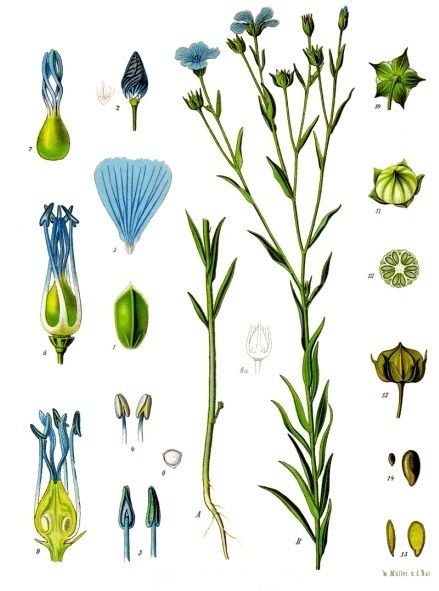
Madder in Pliny the Elder · Linseed in Pliny the Elder · Madonna lily in Pliny the Elder · Lesser bean-trefoil in Pliny the Elder · everything Pliny the Elder names →
Drawing on the same sources: Pliny, Culpeper, Grieve, McNamara
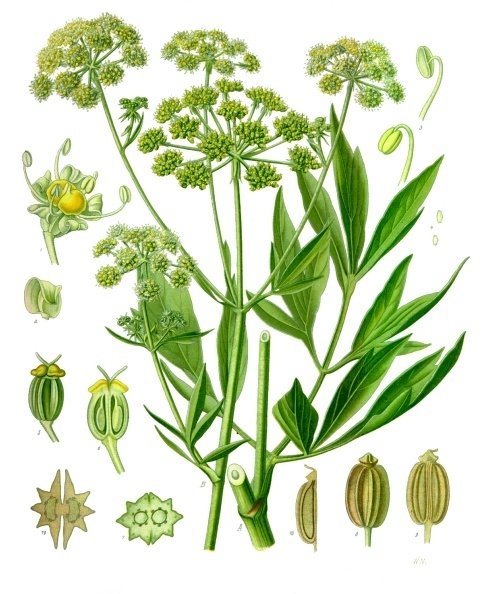
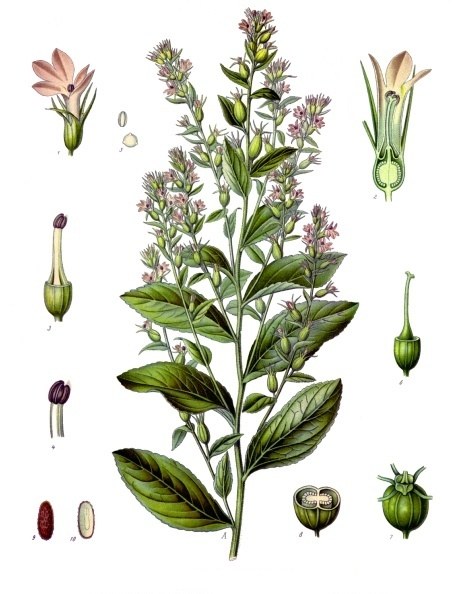
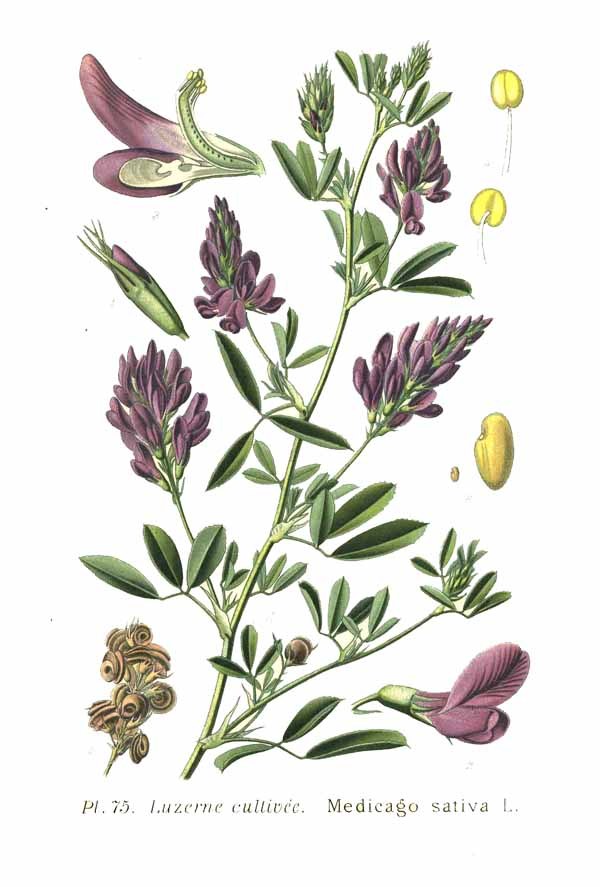
Melon root · Honeyed wine and honeyed water · Mistletoe · Lovage · Litharge · Lobelia · Lucerne · the bibliography →
Of the same qualities: hot and dry
Myrrh · Lavender · Onion · Juniper · Parsley · Hyssop · what the degrees mean →
Nearby in the alphabet
Lourdes water · Lodestone (naturally magnetic iron ore) · Livid pinkgill (of broadleaf woods) · Lungwort (Pulmonaria officinalis) · Liverwort, or hepatica (Hepatica nobilis (syn)
Historical description, not medical advice.
