
The amulet herbs
Betony, goat’s rue, savin, sage, horehound, cyclamen, laurel, masterwort, and angelica
- Known today as
- See each above.
- Kind
- Plant, in 1 older authority
- Constituents
- thujone, stachydrine, galegine
- Earliest authority here
- Culpeper (1616–1654)
- In the Canale glossary
- On the Manner of Discerning and Healing the Bewitched, Appendix A: Part Three, Chapter 10: Amulets
Revised October 1, 2026: An older authority added from a text read in full. Lore added from texts read in full. Version 1, first published September 25, 2026.
The amulet herbs: what did Canale use it for?
Hung about the neck, and used in fumigations, drinks, washes, and baths, always with regard to complexion, “for which reason it is well, indeed necessary, always to use the counsel of some skilled physician” (ch. 10).
The amulet herbs: what does modern science say?
Canale’s closing principle deserves notice: the illnesses caused by demons “are nonetheless natural,” and once the demon’s action is removed “may be cured with natural medicines alone.” He adds blessings to the medicines because “the effect, even if natural, always partakes of the conditions of the cause.”
Pharmacognosy & Toxicology
- Constituents
- Mechanism
- A list, not a drug: each herb has its own entry and its own pharmacology. Worn at the neck none of them delivers a dose; the savin and the goat’s rue are the ones that would harm if drunk.
- Toxic dose
- See the several entries; savin is the dangerous one.
- Standing
- Canale’s own principle, that demonic illnesses are “nonetheless natural” and yield to natural medicine, is the one modern medicine would keep.
- Canale, F. (1622). Discerning and Healing the Bewitched, ch. 10. Read in part · the text read
Constituent names open the compound’s record at PubChem, and “ChEMBL” beside a name opens its record at ChEMBL, the European Bioinformatics Institute’s database of bioactive molecules. Where a mechanism line was checked against ChEMBL (ChEMBL 37, read 1 October 2026), the check is shown with the measured value and its source paper, or says plainly that nothing has been measured. Doses are as the references give them, for description only; this is not medical advice. Each source carries the result of its check against Crossref, PubMed, or the authority’s page: see Verification.
What Medicine Makes of It
- The Nightmare and the HagThe incubus that sits on the chest, and sleep paralysis.
- The Evil EyeEnvy, the glance, and the anthropology of misfortune.
- Amulets, Blessed Objects, and the Meaning ResponseWhy what cannot work sometimes works.
The amulet herbs: what lore surrounds it?
Of betony Folkard says that of all the simples “none (the Vervain excepted) was awarded a higher place,” quoting Turner, “Some write it will cure those that are possessed with devils, or frantic, being stamped and applied to the forehead,” and the old manuscript line, “More than all this have been proved of Betony.” Pliny “affirmed that serpents would kill one another if surrounded by a ring composed of Betonica,” and “it was generally understood that the house where Herba Betonica was sown, was free from all mischief.” Horehound “is the Herb which the Egyptians dedicated to their god Horus, and which the priests called the Seed of Horus,” and “to dream of Horehound indicates that you will suffer imprisonment.”
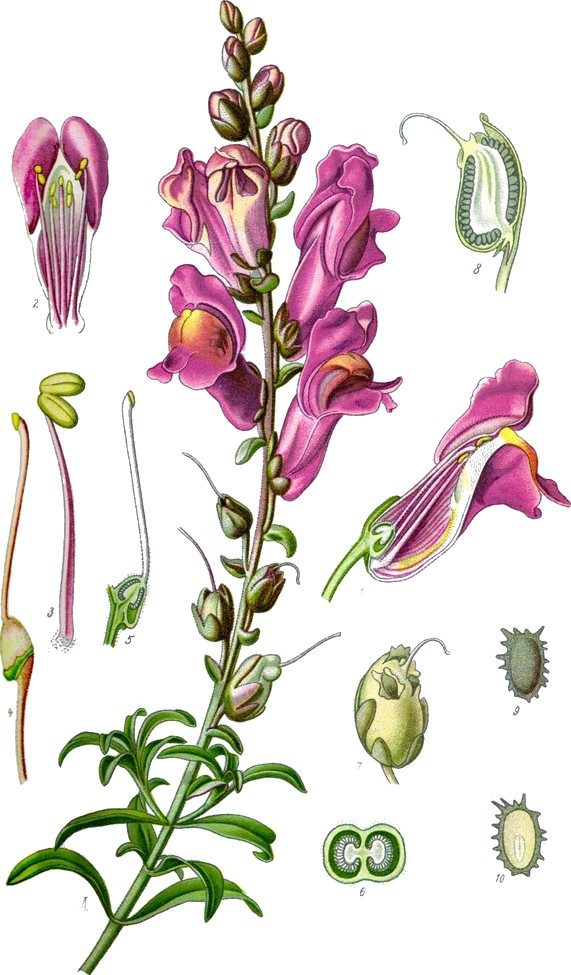
Thiselton-Dyer sets betony with the snapdragon as having “the reputation of averting the most subtle forms of witchcraft,” and gives the old saying “which recommends a person when ill ‘to sell his coat and buy betony.’” Of the angelica he says it “was thought to be specially noisome to witches,” and “in olden times used as an antidote for poisons.”
The amulet herbs: what did the older authorities say?
- Culpeper
- Of betony, the first of the amulet herbs, he repeats Antonius Musa, physician to the Emperor Augustus, who wrote a whole book on it and “saith of it, that it preserves the liver and bodies of men from the danger of epidemical diseases, and from witchcraft also.”
Sources
- Culpeper, N. (1653). The Complete Herbal, “Wood Betony.” Project Gutenberg #49513. Primary text
- Folkard, R. (1884). Plant Lore, Legends, and Lyrics, “Betony.” Project Gutenberg #44638. Primary text
- Folkard, R. (1884). Plant Lore, Legends, and Lyrics, “Horehound.” Project Gutenberg #44638. Primary text
- Thiselton-Dyer, T. F. (1889). The Folk-lore of Plants. Project Gutenberg #10118. Read in part · the text read
Verification
- Checked
- October 1, 2026
- Passes
- Every sentence read against its sources, in the pass over the remaining 343 entries
- The Standing line checked against the authority it names (EMA, WHO, FDA, CITES, Commission E)
- Every dated or regulatory claim checked by category across the database
- Each quotation from the older authorities checked word for word against the text, read in full
- Sources
- 5 cited: 2 read in part, 3 primary text.
- Corrections
- None were needed.
What was checked, how, and what was found is set out on the Verification page. A checked source is one whose record was found; it does not make the entry medical advice.
Cite This Entry
Version 1 · first published September 25, 2026 · last revised October 1, 2026
- Chicago
“The amulet herbs.” In Materia Medica, edited by B. C. P. Statema. Version 1. The Thinking Press, 2026–. Last modified October 1, 2026. https://thethinkingpress.org/materia-medica/the-amulet-herbs.
- MLA
“The amulet herbs.” Materia Medica, edited by B. C. P. Statema, version 1, The Thinking Press, 1 Oct. 2026, thethinkingpress.org/materia-medica/the-amulet-herbs. Accessed 8 Oct. 2026.
- APA
The amulet herbs. (2026, October 1). In B. C. P. Statema (Ed.), Materia medica (Version 1). The Thinking Press. Retrieved October 8, 2026, from https://thethinkingpress.org/materia-medica/the-amulet-herbs
Club members keep entries on a shelf with private notes, print the plates as cards, and receive an entry by email each week. Create a free account before January 1, 2027 and all of it is yours for good. About the Club
See Also
Sharing thujone, stachydrine, galegine
Blessed herbs · Artemisia absinthium · Artemisia vulgaris · Tanacetum vulgare · Betonica officinalis · Leonurus cardiaca · Galega officinalis
Also in Nicholas Culpeper
Asarabacca in Nicholas Culpeper · Alkanet in Nicholas Culpeper · Bistort in Nicholas Culpeper · Agrimony in Nicholas Culpeper · everything Nicholas Culpeper names →
Drawing on the same sources: Culpeper, Folkard, Thiselton-Dyer, Canale
Apples, syrup of · Aloe · Borage · Wild rue · Caper spurge · Barley water · the bibliography →
Nearby in the alphabet
Angel’s wings (fan-shaped fungus that rots conifer wood) · Ambergris (A waxy substance formed in the gut of the sperm whale) · Aniseed (Pimpinella anisum) · Amber (chiefly from the Baltic coast) · Antimony (The metallic element and its compounds) · Alum (Potassium aluminum sulfate)

Historical description, not medical advice.