
Chickweed
Starweed, star chickweed, Passerina; French stellaire; German Augentrosgräs; Stellaria media Cyrill., Alsine media Linn.
- Known today as
- Stellaria media, of the family Caryophyllaceae, the ubiquitous garden weed: native, Grieve writes, to all temperate and north Arctic regions and naturalised wherever settlers went. Its weak, juicy stems trail on the ground and carry a single line of hairs that switches sides at each pair of leaves; the small white flowers have deeply cleft petals, like stars. The whole herb, fresh or dried, is the drug, and the young leaves can be boiled like spinach or eaten raw in salad.
- Kind
- Plant, in 1 older authority
- Earliest authority here
- Culpeper, The Complete Herbal (1653) (1616–1654)
- In other databases
- Plants of the World Online · GBIF · Wikidata
Caution. None of the sources read for this entry reports poisoning or side effects; its safety as a medicine has not been studied in the sources read.
Chickweed: what was it used for?
A cooling application for the skin. Grieve calls it demulcent and refrigerant, “held in great repute among herbalists, used mostly in the form of an ointment”: boiled in lard it made a green cooling ointment for piles, sores, and skin diseases, and the fresh leaves made poultices for inflammations, indolent ulcers, carbuncles, and abscesses. An infusion of the dried herb was given for coughs and hoarseness.
Chickweed: what does modern science say?
No European monograph covers it. The searches of Europe PMC made for this entry found laboratory and formulation studies of its extracts but no clinical trial in people.
Pharmacognosy & Toxicology
- Mechanism
- Not established in the sources read for this entry.
- Standing
- There is no European monograph, and no clinical trial of it was found for this entry.
- Grieve, M. A Modern Herbal, “Chickweed.” As published on botanical.com. Read in full · the text read
Constituent names open the compound’s record at PubChem, and “ChEMBL” beside a name opens its record at ChEMBL, the European Bioinformatics Institute’s database of bioactive molecules. Where a mechanism line was checked against ChEMBL (ChEMBL 37, read 1 October 2026), the check is shown with the measured value and its source paper, or says plainly that nothing has been measured. Doses are as the references give them, for description only; this is not medical advice. Each source carries the result of its check against Crossref, PubMed, or the authority’s page: see Verification.
Chickweed: what lore surrounds it?
Gerard, as Grieve quotes him, wrote that “little birds in cadges (especially Linnets) are refreshed with the lesser Chickweed when they loath their meat,” whence its old name Passerina; caged birds and chickens still get it. Its flowers are said to open about nine in the morning and stay open twelve hours in bright weather, and at night its leaves fold over the young shoots, an instance of what Grieve calls “the Sleep of Plants.” Thiselton-Dyer records it as a weather sign: it spreads its leaves fully before fine weather, but “if it should shut up, then the traveller is to put on his greatcoat.” Grieve notes too that “Chickweed water is an old wives’ remedy for obesity.”
Chickweed: what did the older authorities say?
- Culpeper, The Complete Herbal (1653)
- “A fine soft pleasing herb under the dominion of the Moon,” Culpeper writes, as effectual as purslane for all its purposes “except for meat only.” The bruised herb or its juice, laid on the region of the liver and renewed as it dried, cooled the heat of the liver, and it served for swellings, redness of the face, itch, hot eyes, and earache. Grieve quotes his cure for shrunken sinews: chickweed and red-rose leaves boiled in muscadine with oil of sheep’s feet, rubbed in warm, which “with God’s blessing” would help in three dressings.
Sources
- Grieve, M. A Modern Herbal, “Chickweed.” As published on botanical.com. Read in full · the text read
- Culpeper, N. The Complete Herbal, “CHICKWEED.” Project Gutenberg, 49513. Read in part · the text read
- Thiselton-Dyer, T. F. (1889). The Folk-lore of Plants, ch. 10, “Plants and the Weather”. Project Gutenberg, 10118. Read in part · the text read
Verification
- Checked
- October 1, 2026
- Passes
- Every sentence read against its sources, in the pass over the remaining 343 entries
- The Standing line checked against the authority it names (EMA, WHO, FDA, CITES, Commission E)
- Every dated or regulatory claim checked by category across the database
- Sources
- 3 cited: 1 read in full, 2 read in part.
- Corrections
- None were needed.
What was checked, how, and what was found is set out on the Verification page. A checked source is one whose record was found; it does not make the entry medical advice.
Club members can point at a technical term in this entry, such as a constituent, an action, or a word of Jung’s, to read its definition from the source. The Club.
Cite This Entry
Version 1 · first published October 17, 2026
- Chicago
“Chickweed.” In Materia Medica, edited by B. C. P. Statema. Version 1. The Thinking Press, 2026–. Last modified October 17, 2026. https://thethinkingpress.org/materia-medica/chickweed.
- MLA
“Chickweed.” Materia Medica, edited by B. C. P. Statema, version 1, The Thinking Press, 17 Oct. 2026, thethinkingpress.org/materia-medica/chickweed. Accessed 17 Oct. 2026.
- APA
Chickweed. (2026, October 17). In B. C. P. Statema (Ed.), Materia medica (Version 1). The Thinking Press. Retrieved October 17, 2026, from https://thethinkingpress.org/materia-medica/chickweed
Club members keep entries on a shelf with private notes, print the plates as cards, and receive an entry by email each week. Create a free account before January 1, 2027 and all of it is yours for good. About the Club
See Also
Also in Nicholas Culpeper
Chicory in Nicholas Culpeper · Cherry stalks in Nicholas Culpeper · Cleavers in Nicholas Culpeper · Chamomile in Nicholas Culpeper · everything Nicholas Culpeper names →
Drawing on the same sources: Grieve, Culpeper, Thiselton-Dyer
Cinnamon · Cinquefoil · Caper spurge · Colocynth · the bibliography →
Nearby in the alphabet
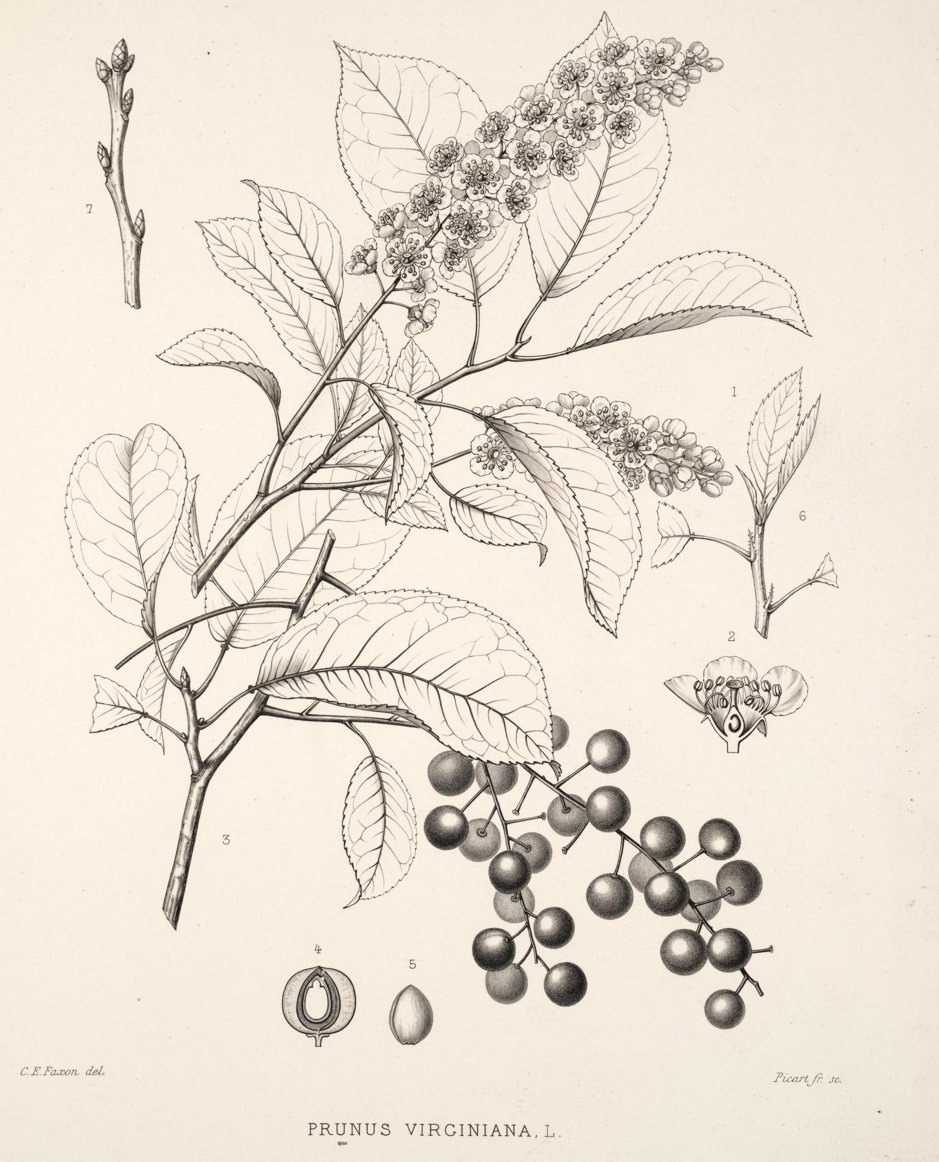
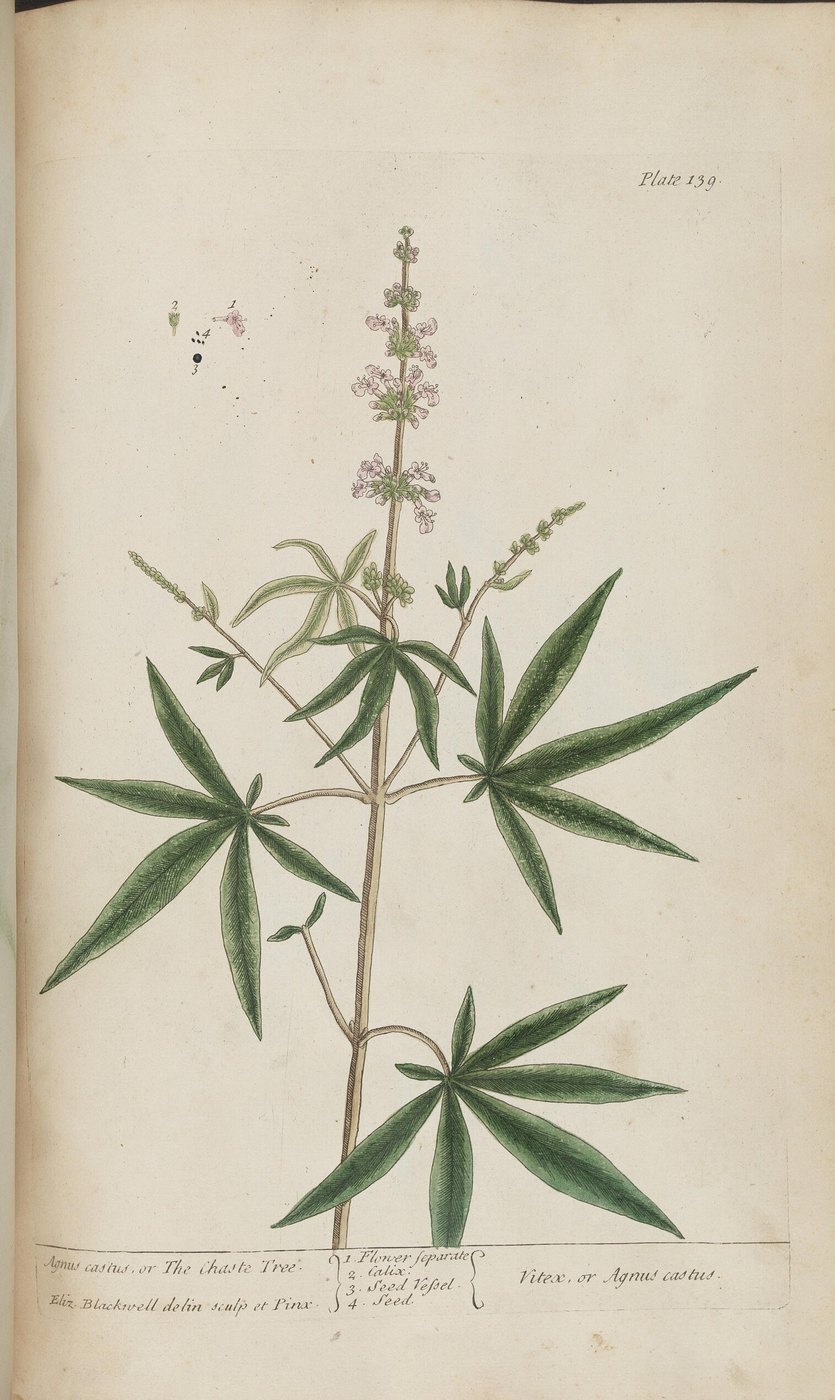
Chocolate · Chaste tree · Chokecherry (the chokecherry of North America) · Chanterelle (apricot-scented mushroom with blunt ridges for gills) · Chrism (Olive oil mixed with balsam and consecrated by a bishop)
Historical description, not medical advice.
