
On the Manner of Discerning and Healing the Bewitched
Del modo di conoscer et sanare i maleficiati · Floriano Canale, 1614
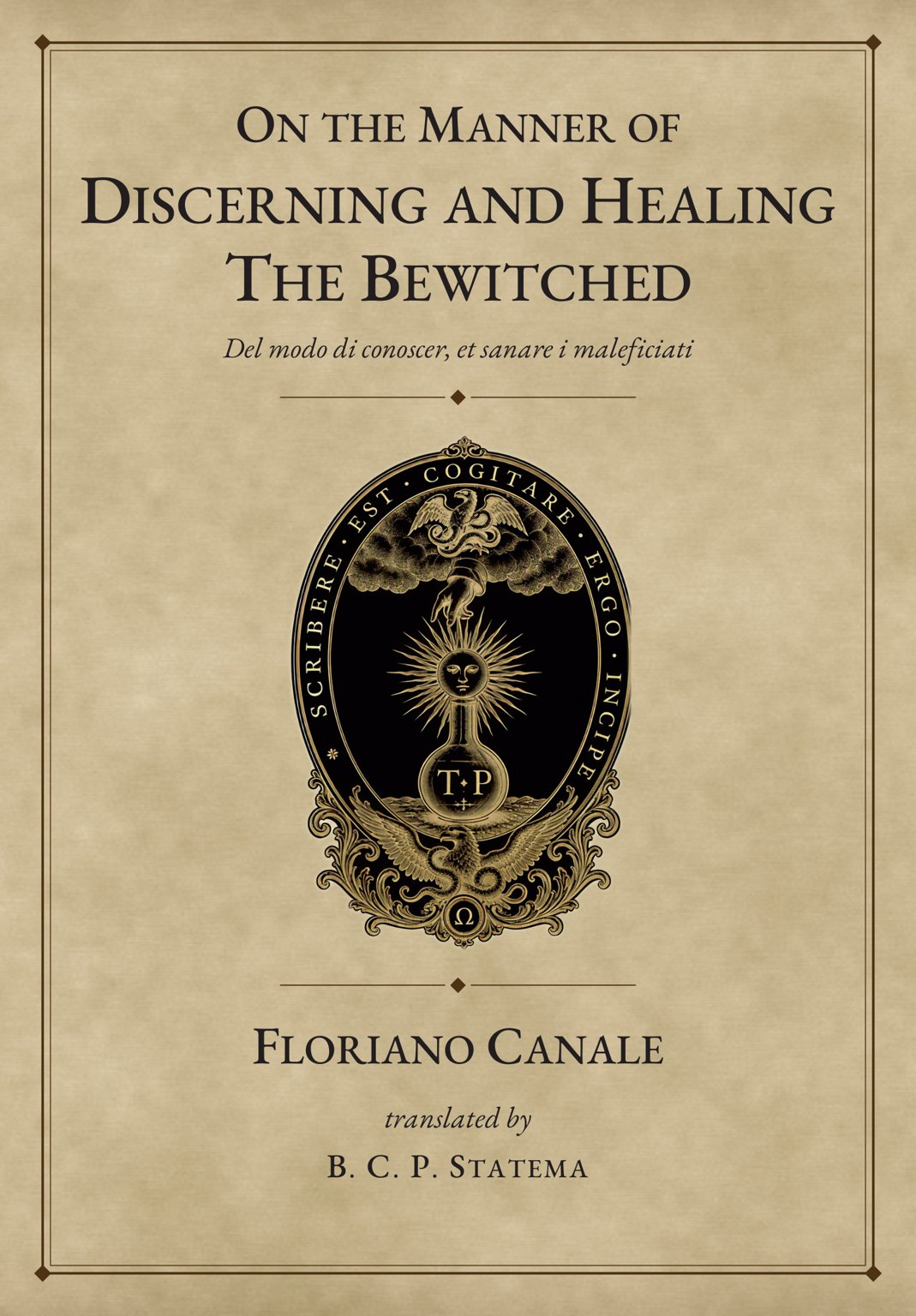
Floriano Canale's 1614 treatise reads less like a grimoire than a pastoralWritten from the tradition of care of souls: the practical, face-to-face guidance a priest gave a struggling parishioner, as distinct from formal theology written for other scholars. handbook. Its concern is diagnosis before treatment: how to recognize genuine affliction, how to tell its true cause from its false ones, and how to walk a sufferer back toward health once the cause is known.
This edition presents Canale's own text on its own terms, uninterrupted by modern commentary until it concludes. Endnotes and appendices follow afterward rather than sitting layered on top of his words — among them a set of unsigned Latin passages, written by an eighteenth-century hand on the flyleaves of a 1663 Milan printing of the work, including a rite that has never before been published, here transcribed and translated for the first time.
The edition is released October 15, 2026, at all major booksellers, as a 6 by 9 inch hardcover with dust jacket at $64.99 (ISBN 979-8-9982139-0-8). The ebook comes first, on October 5, 2026, at $19.99 on Kindle and at major booksellers (ISBN 979-8-9982139-2-2). No trade paperback edition is planned.
Its diagnosis-before-treatment structure offers a working model of the will toward the good in practice: seeing a situation clearly before acting on it, and choosing the good only once it is true.
Alongside Canale's text, the volume carries a translator's introduction and note, and three appendices: Appendix A, a 92-page illustrated glossary printed in full color, setting every Galenic and medieval ingredient Canale prescribes beside a period botanical plate and a modern assessment; Appendix B, an essay reading the text through analytical psychology; and Appendix C, the Flyleaf Passages.
Read an Excerpt · Part One ▾
The devil enters into human bodies through despair, or through some other sin, or else it is granted him for trial. The first two ways are ordained to the vengeance of the Majesty of God, according to St. Jerome upon Joel, as is recalled in the Decretum, Causa 23, Question 5, where he says that not only men are ministers of the Divine wrath against those who do evil, whence not without cause do they bear arms, but the demons also. The third way is for the health of souls, as we read of certain saints who, even to the end of their life, were afflicted by evil spirits.
When the devil enters into human bodies, he first appears to them in the likeness of some man who has died an evil death, or else he represents to them some kinsman of theirs, or he appears in the form of some dreadful beast, and seems at once to vanish, but forthwith enters upon them; and this occurs almost always by night, or in stony places; whence afterward in those thus oppressed there appear the signs which we shall speak of below. He enters also into some by the mouth, or by the ears, or as though he were a mouse, according to what various afflicted persons have related to me; to some of whom, in sleeping, and in dream, it has seemed that the demons ran behind them, and, being awakened, they have given the underwritten signs of the entrance of evil spirits into their bodies, as afterward became manifestly apparent. Into some he has entered by striking them upon the neck, or upon their other limbs. Finally they enter in a thousand other manners, according to the disposition of the subject, which for brevity’s sake I here omit.
Read an Excerpt · The Flyleaf Passages ▾
After Canale’s treatises conclude, the copy of the Milan 1663 printing from Giuseppe Marelli’s press, in part the copy from which this volume was prepared, carries several flyleaves written over by hand in Latin. This was an interesting bit of provenance, but the most interesting thing about the passages is that they are unsigned. If the writing was made near the time of the Index decrees of 1706 and 1707, whether before or after, it would make sense for the writer to leave his name out of it; an unsigned leaf leaves no paper trail of ownership in that legal and ecclesiastical climate. I saw no harm in including an English translation of these passages as the concluding appendix of this volume. Had they not found their way here, the words on these flyleaves might never have found the readers, or the appreciation, I believe they deserve, surviving as they do in a single copy of a work that is now nearly extinct. I am glad to have spared them that fate.
An Exorcism for Those Hindered from Marriage by the Maleficia of the Devil
Let the priest, laying his hand upon the head of the bewitched person, say: Let every diabolical power be extinguished in thee, N., through the laying-on of my hands, and yet more through the invocation of all the Saints: the Angels, the Archangels, the Patriarchs, the Prophets, the Apostles, the Martyrs, the Confessors, and the Virgins, and of all the Blessed together. In the name of the Father, and of the Son, and of the Holy Spirit. Amen.
Club members are reading the ebook now, ahead of its release on October 15, 2026.
Milan
Lombardy, Italy
Canale’s book was first printed in 1614. The press translates the Milan printing of Giuseppe Marelli, 1663, made when Milan was a duchy under the Spanish crown, and follows the Brescia printing of 1674 where the two differ.
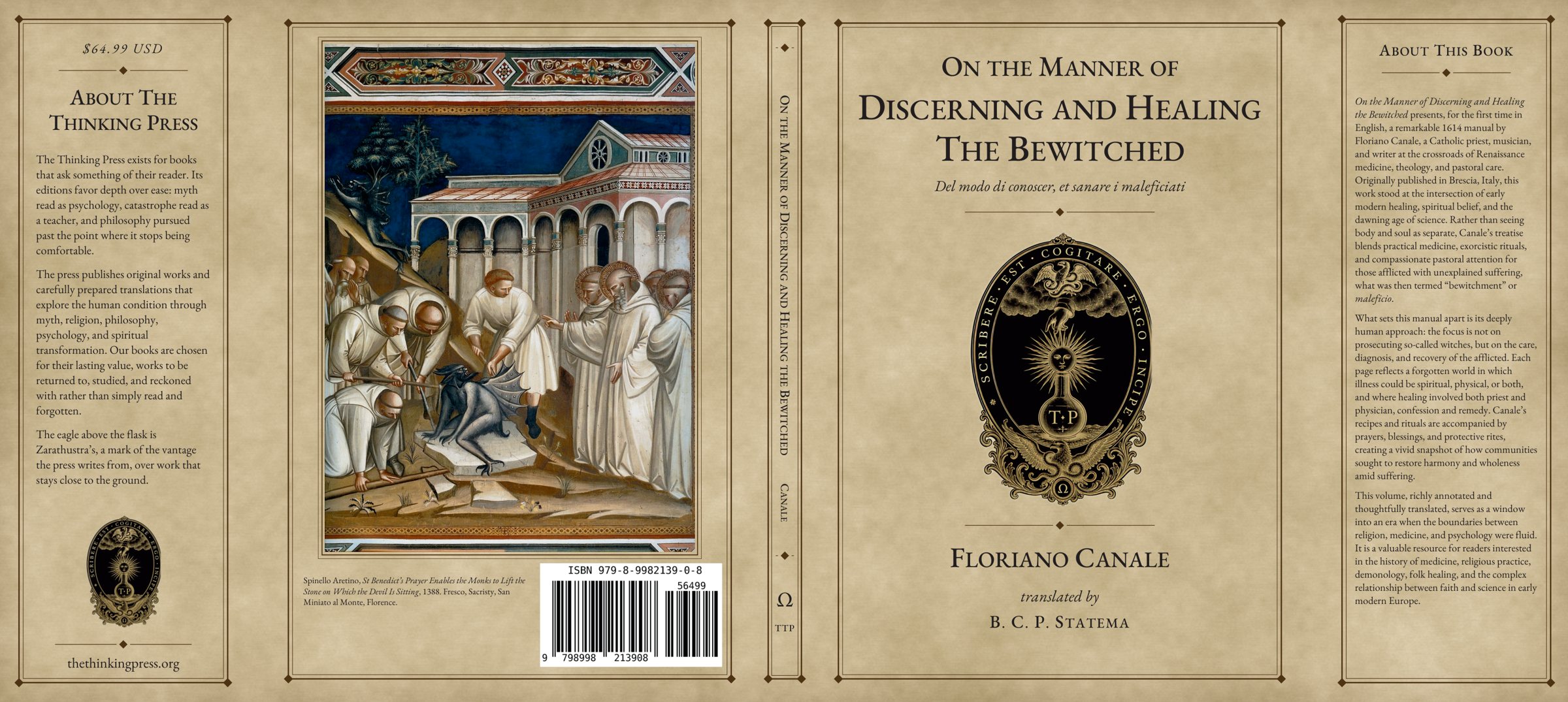
On the Manner of Discerning and Healing the Bewitched presents, for the first time in English, a remarkable 1614 manual by Floriano Canale, a Catholic priest, musician, and writer at the crossroads of Renaissance medicine, theology, and pastoral care. Originally published in Brescia, Italy, this work stood at the intersection of early modern healing, spiritual belief, and the dawning age of science. Rather than seeing body and soul as separate, Canale’s treatise blends practical medicine, exorcistic rituals, and compassionate pastoral attention for those afflicted with unexplained suffering, what was then termed “bewitchment” or maleficio.
What sets this manual apart is its deeply human approach: the focus is not on prosecuting so-called witches, but on the care, diagnosis, and recovery of the afflicted. Each page reflects a forgotten world in which illness could be spiritual, physical, or both, and where healing involved both priest and physician, confession and remedy. Canale’s recipes and rituals are accompanied by prayers, blessings, and protective rites, creating a vivid snapshot of how communities sought to restore harmony and wholeness amid suffering.
This volume, richly annotated and thoughtfully translated, serves as a window into an era when the boundaries between religion, medicine, and psychology were fluid. It is a valuable resource for readers interested in the history of medicine, religious practice, demonology, folk healing, and the complex relationship between faith and science in early modern Europe.
On the back, Spinello Aretino, St Benedict’s Prayer Enables the Monks to Lift the Stone on Which the Devil Is Sitting, 1388. Fresco, Sacristy, San Miniato al Monte, Florence.
Released in 8 Days
Released October 15, 2026, at all major booksellers, in hardcover with dust jacket at $64.99, and as an ebook on Kindle at $19.99 (ISBN 979-8-9982139-2-2). Any bookseller or library can order it by ISBN 979-8-9982139-0-8.
Reviewing this book, or writing about it? Request a review copy.
Use ← → to browse titles, next: The Magical World of the Heroes
Ninety-Two Pages in Full Color
Ninety-two pages, printed in full color, set every Galenic and medieval ingredient Canale prescribes beside a period botanical plate: what he called it, what it is known as today, what he used it for, and what modern evidence says of it. Four entries from the glossary follow.
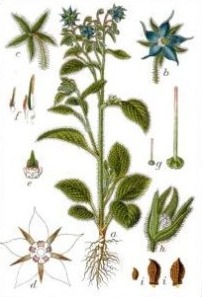
Borage (Boragine)
- Known today as
- Borago officinalis.
- Canale’s stated use
- Juice, water, syrup, and flowers in the preparatives, a “cordial” to cheer the melancholic (chs. 3–4, 7).
- Modern assessment
- The old saying “borage for courage” has no clinical support. The plant contains liver-toxic pyrrolizidine alkaloids, and regular internal use is now discouraged.
Jacob Sturm, in J. G. Sturm, Deutschlands Flora in Abbildungen (1796 onward).
The full entry in the Materia Medica →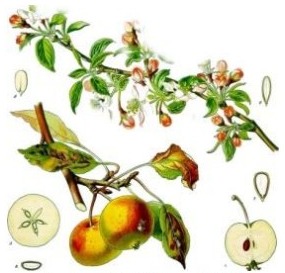
Apples, syrup of (Siroppo di pomi)
- Known today as
- A syrup of sweet apples.
- Canale’s stated use
- A preparative for phlegmatic patients (ch. 3). An apple also serves as a vessel for hellebore root (ch. 5).
- Modern assessment
- A pleasant vehicle; no medicinal effect.
F. E. Köhler, Köhler’s Medizinal-Pflanzen (1887–98).
The full entry in the Materia Medica →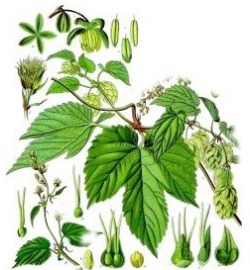
Hop (Lupoli)
- Known today as
- Humulus lupulus.
- Canale’s stated use
- Syrup of hops in the preparative for the melancholic (ch. 3).
- Modern assessment
- Hops are mildly sedative, which suits the calming purpose; the effect is modest.
F. E. Köhler, Köhler’s Medizinal-Pflanzen (1887–98).
The full entry in the Materia Medica →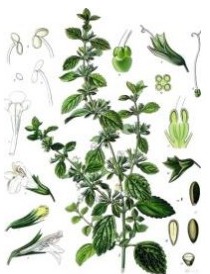
Balm (Melissa)
- Known today as
- Lemon balm, Melissa officinalis.
- Canale’s stated use
- Its distilled water in the melancholic preparative (ch. 3).
- Modern assessment
- Lemon balm has mild calming effects supported by small modern trials. It was the classic Renaissance remedy for melancholy.
F. E. Köhler, Köhler’s Medizinal-Pflanzen (1887–98).
The full entry in the Materia Medica →