
Java tea
Orthosiphon stamineus Benth. of Kirtikar and Basu; Ocimum grandiflorum Blume; Orthosiphon aristatus (Blume) Miq.; in pharmacy Orthosiphonis folium
- Known today as
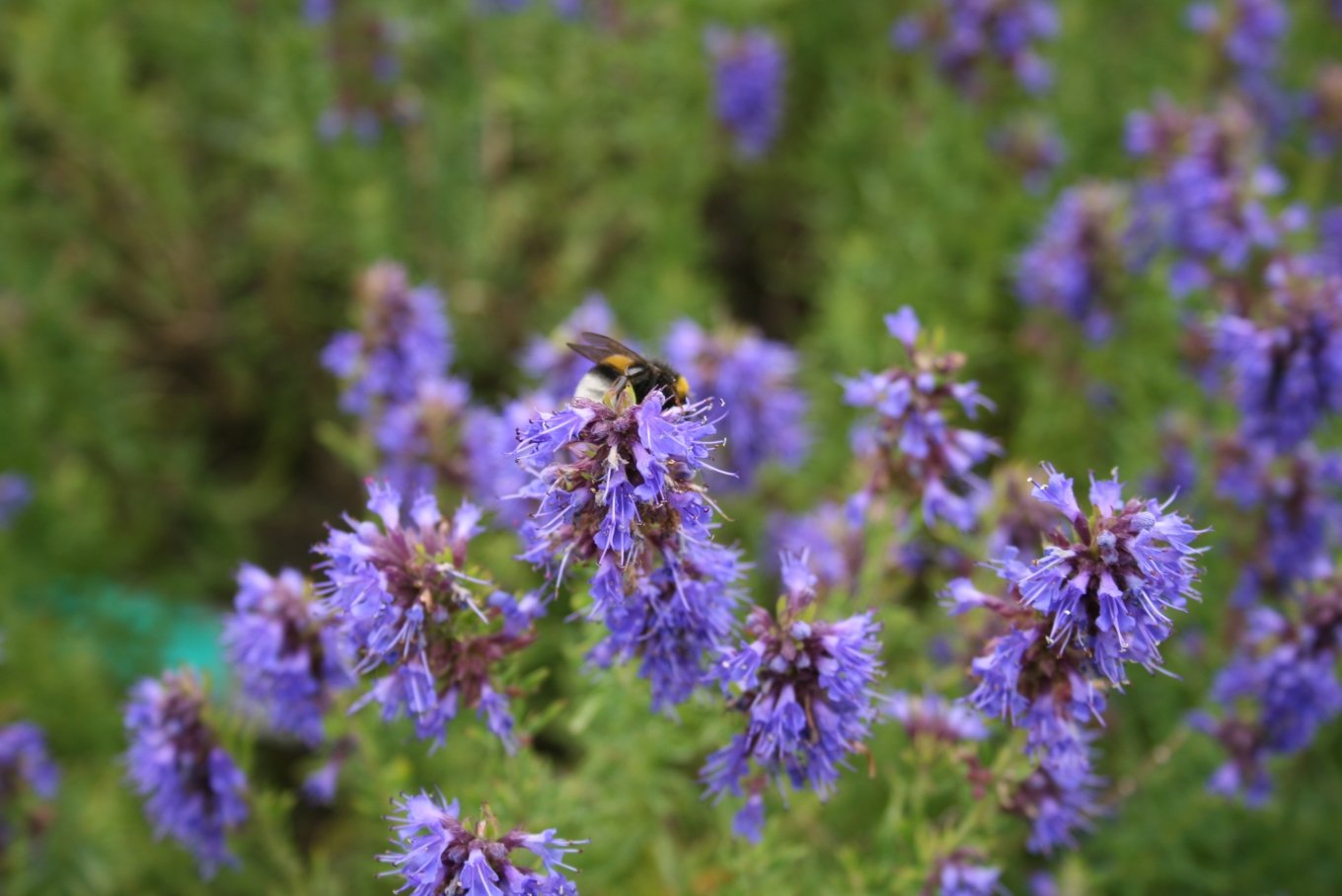
- Orthosiphon aristatus, a herb of the family Lamiaceae forty to eighty centimetres high, found from tropical Asia to tropical Australia. Kirtikar and Basu describe slender undershrubs with four-angled stems, leaves in distant pairs, and white or purplish flowers with slender stamens twice as long as the corolla, and quote Hooker in 1870 on its range, “from Assam and Burma to the Philippine islands, and from the Nicobars and Siam to Java, Borneo” and north-east Australia: “It is a stone plant, a profuse flowerer, and of very pretty appearance.” The drug is the leaves and stem tips gathered in flower.
- Kind
- Plant, in 1 older authority
- Constituents
- potassium, orthosiphols, sinensetin, and 1 more
- Earliest authority here
- The European Medicines Agency’s assessment report (2021)
- In other databases
- Plants of the World Online · GBIF · Wikidata
Caution. Not where a reduced fluid intake is advised, as in severe heart or kidney disease, nor under eighteen, nor in pregnancy or breast-feeding. See a doctor if fever, painful urination, spasms, or blood in the urine appear.
Java tea: what was it used for?
A tea for the kidneys and bladder. Kirtikar and Basu record that “In Java, the leaves are made into a tea and used in the treatment of diseases of the kidneys and bladder,” that Dr Van Itallie used them for gout and kidney disorders, and that in Holland and France they had been used successfully for diseases of the urinary organs. The European Medicines Agency’s assessment report adds its traditional use in Java for high blood pressure and diabetes.
Java tea: what does modern science say?
The European Medicines Agency’s herbal committee accepts the leaf as a traditional herbal medicine, “exclusively based upon long-standing use,” to increase the amount of urine and flush the urinary tract as an adjuvant in minor urinary complaints (monograph of 2021). Its assessment report finds potassium at about 3 per cent, diterpenes (the orthosiphols), lipophilic flavones such as sinensetin, and rosmarinic acid. It found the clinical evidence for the very effect claimed thin: of two clinical studies of its diuretic action, one found it weaker than horsetail and the other found no significant difference from placebo, and two pharmacological studies showed no significant change in urine volume. The use rests on long-standing use.
Pharmacognosy & Toxicology
- Constituents
- potassium ChEMBLabout 3 per cent
- orthosipholsthe diterpenes
- sinensetina lipophilic flavone
- rosmarinic acid ChEMBL
- Mechanism
- Not established in the sources read for this entry.
- Standing
- European Union herbal monograph (2021): traditional use, “exclusively based upon long-standing use,” to flush the urinary tract in minor urinary complaints.
- European Medicines Agency, Committee on Herbal Medicinal Products. European Union herbal monograph on Orthosiphonis folium (Java Tea). EMA/HMPC/486551/2020, 22 September 2021. Read in full · the text read
- European Medicines Agency, Committee on Herbal Medicinal Products. Assessment report on Orthosiphonis folium. EMA/HMPC/486549/2020, 22 September 2021. Read in part · the text read
Constituent names open the compound’s record at PubChem, and “ChEMBL” beside a name opens its record at ChEMBL, the European Bioinformatics Institute’s database of bioactive molecules. Where a mechanism line was checked against ChEMBL (ChEMBL 37, read 1 October 2026), the check is shown with the measured value and its source paper, or says plainly that nothing has been measured. Doses are as the references give them, for description only; this is not medical advice. Each source carries the result of its check against Crossref, PubMed, or the authority’s page: see Verification.
Java tea: what did the older authorities say?
- The European Medicines Agency’s assessment report (2021)
- European interest began with the scientific work of the Dutchman Van Itallie in 1886. Java tea entered the Dutch Pharmacopoeia in 1926 and the French in 1974, and has been used as a herbal substance in France since 1965 and in Germany since 1976.
Sources
- Kirtikar, K. R., & Basu, B. D. (1918). Indian Medicinal Plants, vol. 2, “Orthosiphon stamineus.” Internet Archive, b31359644_0002. Read in part · the text read
- European Medicines Agency, Committee on Herbal Medicinal Products. European Union herbal monograph on Orthosiphonis folium (Java Tea). EMA/HMPC/486551/2020, 22 September 2021. Read in full · the text read
- European Medicines Agency, Committee on Herbal Medicinal Products. Assessment report on Orthosiphonis folium. EMA/HMPC/486549/2020, 22 September 2021. Read in part · the text read
Verification
- Checked
- October 1, 2026
- Passes
- Every sentence read against its sources, in the pass over the remaining 343 entries
- The Standing line checked against the authority it names (EMA, WHO, FDA, CITES, Commission E)
- Every dated or regulatory claim checked by category across the database
- Sources
- 3 cited: 1 read in full, 2 read in part.
- Corrections
- None were needed.
What was checked, how, and what was found is set out on the Verification page. A checked source is one whose record was found; it does not make the entry medical advice.
Club members can point at a technical term in this entry, such as a constituent, an action, or a word of Jung’s, to read its definition from the source. The Club.
Cite This Entry
Version 1 · first published October 17, 2026
- Chicago
“Java tea.” In Materia Medica, edited by B. C. P. Statema. Version 1. The Thinking Press, 2026–. Last modified October 17, 2026. https://thethinkingpress.org/materia-medica/java-tea.
- MLA
“Java tea.” Materia Medica, edited by B. C. P. Statema, version 1, The Thinking Press, 17 Oct. 2026, thethinkingpress.org/materia-medica/java-tea. Accessed 17 Oct. 2026.
- APA
Java tea. (2026, October 17). In B. C. P. Statema (Ed.), Materia medica (Version 1). The Thinking Press. Retrieved October 17, 2026, from https://thethinkingpress.org/materia-medica/java-tea
Club members keep entries on a shelf with private notes, print the plates as cards, and receive an entry by email each week. Create a free account before January 1, 2027 and all of it is yours for good. About the Club
See Also
Sharing potassium, rosmarinic acid
Raisins · Cichorium endivia · Taraxacum officinale · Pulmonaria officinalis · Glechoma hederacea · Salvia rosmarinus · Salvia fruticosa
Drawing on the same sources: Kirtikar
Nearby in the alphabet
Javanese turmeric · James’s powder (secret in its making) · Jelly ear (rubbery, ear-shaped fungus, chiefly on elder) · Jalap · Jet, oil of (Jet is a brown coal formed from fossilized wood) · Jack-o’-lantern · Jewelweed · Ivy leaf
Historical description, not medical advice.
