
Strawberry
Wild strawberry, wood strawberry; Fragaria vesca of Linnaeus; the ‘Straberie’ of an English household roll of 1265
- Known today as
- Fragaria vesca, the wild strawberry of the rose family: in Grieve’s words “a delicate, thin-leaved plant, with small, scarlet berries, cone-shaped and studded with tiny, brown ‘seeds,’” whose fragrance and flavour are “more delicate even than the cultivated Strawberry.” It grows through the whole of the northern hemisphere outside the tropics. Medicine used the leaves more than the fruit.
- Kind
- Plant, in 2 older authorities
- Constituents
- tannins, ellagic acid, gallic acid
- Earliest authority here
- Nicholas Culpeper (1616–1654)
- In other databases
- Plants of the World Online · GBIF · Wikidata
Caution. The European agency advises against strawberry leaf where a reduced fluid intake is recommended, as in severe heart or kidney disease, and against its use in children under twelve, in pregnancy, and while breast-feeding, for want of data. Fever, painful urination, spasms, or blood in the urine call for a doctor, as do recurrent diarrhoea or bloody stools.
Strawberry: what was it used for?
Both leaves and fruit stood in the early pharmacopoeias, Grieve says, the leaves the more used: laxative, diuretic, and astringent, the root and a tea of the leaves given for diarrhoea and dysentery. Culpeper made the ripe berries cooling, “excellently good to cool the liver, the blood, and the spleen, or an hot choleric stomach,” and the leaves and roots boiled in wine and water a drink to provoke urine and stay the bloody flux. Grieve calls the fruit “invaluable” in feverish conditions and recommended for stone, and a cut strawberry rubbed on the face after washing a way to whiten the skin and take off slight sunburn.
Strawberry: what does modern science say?
The European Medicines Agency’s herbal committee accepts the leaf as a traditional herbal medicine for two uses: to increase the amount of urine and so flush the urinary tract, as an adjuvant in minor urinary complaints, and for the symptomatic treatment of mild diarrhoea. It grants these, as it grants every traditional use, “exclusively based upon long-standing use,” not on trials (monograph of 2018). Its assessment report of 2026 finds the leaves rich in tannins, put at 5 to 10 per cent in the reference works it cites, with phenolic acids including ellagic and gallic acid, and soluble sugars as the main matter of a hot-water extract. The first trial of the leaf in people, published in 2026, gave 109 older adults with memory complaints an extract or a placebo for twelve weeks; on its main measures the two groups did not differ, and only exploratory comparisons favoured the extract.
Pharmacognosy & Toxicology
- Constituents
- tannins5 to 10 per cent of the leaves
- ellagic acid ChEMBLwith gallic acid among the phenolic acids
- gallic acid ChEMBL
- Mechanism
- Not established in the sources read for this entry.
- Standing
- European Union herbal monograph (2018): traditional use, “exclusively based upon long-standing use,” to flush the urinary tract in minor urinary complaints and for mild diarrhoea.
- European Medicines Agency, Committee on Herbal Medicinal Products. European Union herbal monograph on Fragariae folium (Wild Strawberry Leaf). EMA/HMPC/432278/2015, 20 November 2018. Read in full · the text read
- European Medicines Agency, Committee on Herbal Medicinal Products. Assessment report on Fragariae folium. EMA/HMPC/10132/2024, 6 May 2026. Read in part · the text read
- Dormal V, et al. (2026). Enhanced memory function and reduced perceived stress in older adults with self-reported memory complaints following strawberry leaf extract supplementation: a randomized, double-blind, placebo-controlled study. The journal of nutrition, health & aging. PMID 42508219. Abstract read · the text read
The abstract of each source, beneath its citation. For Club members. About the Club or sign in.
Constituent names open the compound’s record at PubChem, and “ChEMBL” beside a name opens its record at ChEMBL, the European Bioinformatics Institute’s database of bioactive molecules. Where a mechanism line was checked against ChEMBL (ChEMBL 37, read 1 October 2026), the check is shown with the measured value and its source paper, or says plainly that nothing has been measured. Doses are as the references give them, for description only; this is not medical advice. Each source carries the result of its check against Crossref, PubMed, or the authority’s page: see Verification.
Strawberry: what lore surrounds it?
The name, Grieve insists, has nothing to do with the straw laid under garden plants: it is older than that custom, and keeps the old past tense ‘straw’ of the verb ‘to strew,’ for the tangle of runners the plant strews over the ground. The strawberry is in a Saxon plant list of the tenth century; Lydgate heard ‘Strabery ripe’ among the cries of fifteenth-century London; and Ben Jonson in 1603 wrote of “A pot of Strawberries gathered in the wood To mingle with your cream.” Folkard gathers the legends. It was held the favourite fruit of the goddess Frigg, who presided over marriages; in German tradition strawberries stand for children who died young, and mothers who had lost a child would eat none before St. John’s Day, “because they think that young children ascend to heaven concealed in Strawberries,” and a mother who ate them was thought to have robbed the Virgin, to whom the fruit is dedicated. The leaf is set in the coronets of English dukes, earls, and marquises; Shakespeare’s Gloucester, plotting the death of Hastings, asks the Bishop of Ely for the good strawberries in his Holborn garden; and to dream of strawberries was a good omen.
Strawberry: what did the older authorities say?
- Nicholas Culpeper
- “Strawberries, when they are green, are cool and dry; but when they are ripe, they are cool and moist.” He would have them cool the liver and quench thirst, yet keep them from the fevered, “lest by their putrifying in the stomach they increase the fits.” The distilled water of the berries he calls “a sovereign remedy and cordial in the panting and beating of the heart,” and good for the yellow jaundice; the juice cleanses foul ulcers.
- Mrs. M. Grieve
- Culpeper, she notes, declared the plant “singularly good for the healing of many ills,” but she gives Linnaeus the credit as “the first to discover and prove the efficacy of the berries as a cure for rheumatic gout.” Bacon found in the odour of the dying leaves “a most excellent cordial smell.”
Sources
- Grieve, M. A Modern Herbal, “Strawberry.” As published on botanical.com. Read in full · the text read
- Culpeper, N. The Complete Herbal, “Strawberries.” Project Gutenberg, 49513. Read in part · the text read
- Folkard, R. (1884). Plant Lore, Legends, and Lyrics, “Strawberry.” Project Gutenberg, 44638. Read in part · the text read
- European Medicines Agency, Committee on Herbal Medicinal Products. European Union herbal monograph on Fragariae folium (Wild Strawberry Leaf). EMA/HMPC/432278/2015, 20 November 2018. Read in full · the text read
- European Medicines Agency, Committee on Herbal Medicinal Products. Assessment report on Fragariae folium. EMA/HMPC/10132/2024, 6 May 2026. Read in part · the text read
- Dormal V, et al. (2026). Enhanced memory function and reduced perceived stress in older adults with self-reported memory complaints following strawberry leaf extract supplementation: a randomized, double-blind, placebo-controlled study. The journal of nutrition, health & aging. PMID 42508219. Abstract read · the text read
Verification
- Checked
- October 1, 2026
- Passes
- Every sentence read against its sources, in the pass over the remaining 343 entries
- The Standing line checked against the authority it names (EMA, WHO, FDA, CITES, Commission E)
- Every dated or regulatory claim checked by category across the database
- Sources
- 6 cited: 2 read in full, 3 read in part, 1 abstract read. 1 with the abstract on file.
- Corrections
- None were needed.
What was checked, how, and what was found is set out on the Verification page. A checked source is one whose record was found; it does not make the entry medical advice.
Club members can point at a technical term in this entry, such as a constituent, an action, or a word of Jung’s, to read its definition from the source. The Club.
Cite This Entry
Version 1 · first published October 16, 2026
- Chicago
“Strawberry.” In Materia Medica, edited by B. C. P. Statema. Version 1. The Thinking Press, 2026–. Last modified October 16, 2026. https://thethinkingpress.org/materia-medica/strawberry.
- MLA
“Strawberry.” Materia Medica, edited by B. C. P. Statema, version 1, The Thinking Press, 16 Oct. 2026, thethinkingpress.org/materia-medica/strawberry. Accessed 17 Oct. 2026.
- APA
Strawberry. (2026, October 16). In B. C. P. Statema (Ed.), Materia medica (Version 1). The Thinking Press. Retrieved October 17, 2026, from https://thethinkingpress.org/materia-medica/strawberry
Club members keep entries on a shelf with private notes, print the plates as cards, and receive an entry by email each week. Create a free account before January 1, 2027 and all of it is yours for good. About the Club
See Also
Sharing tannins, ellagic acid, gallic acid
Galium odoratum · Ulmus rubra · Juglans regia · Prunella vulgaris · Punica granatum · Bezoar stone · Oak bark · Bistorta officinalis
Also in Nicholas Culpeper
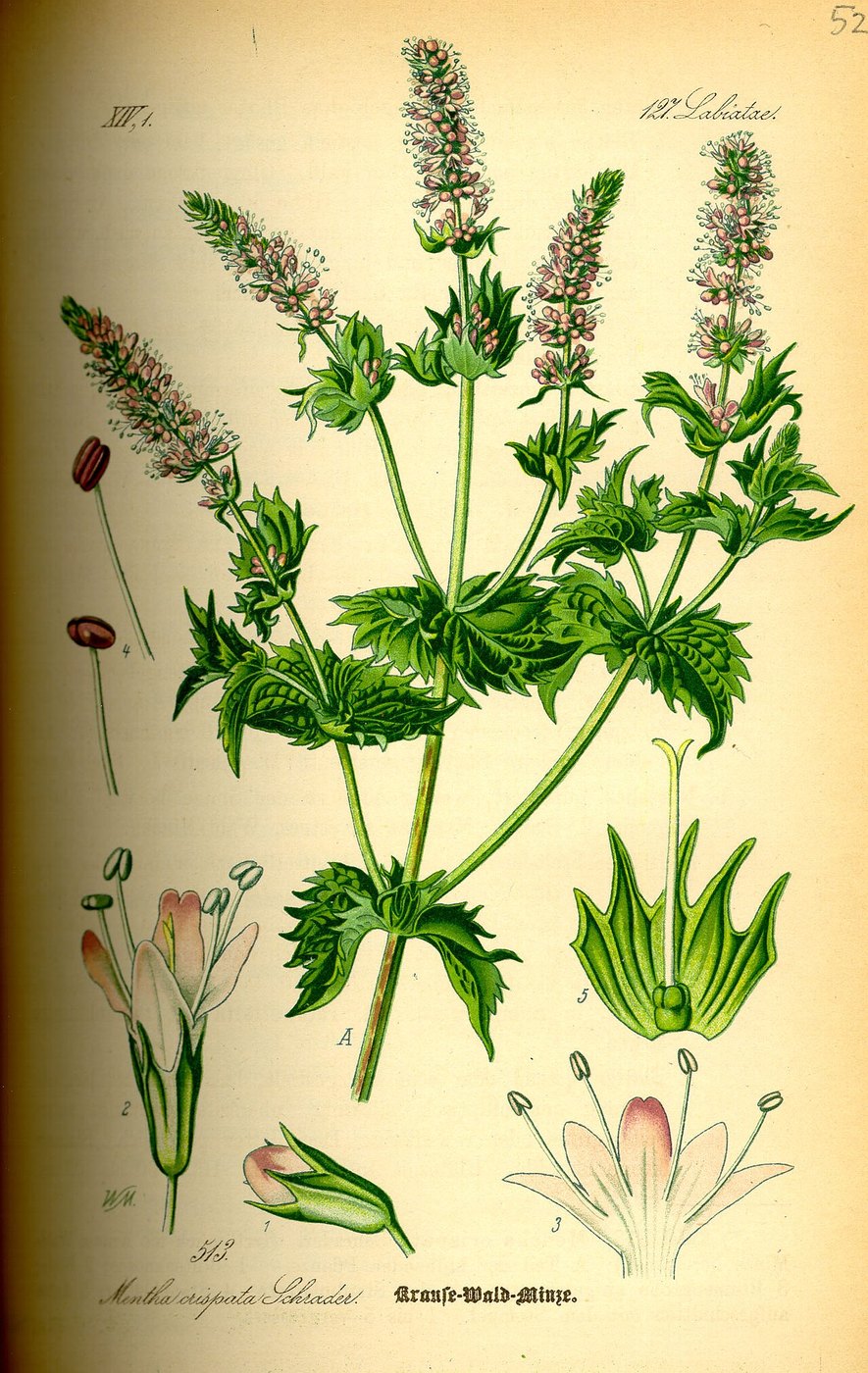
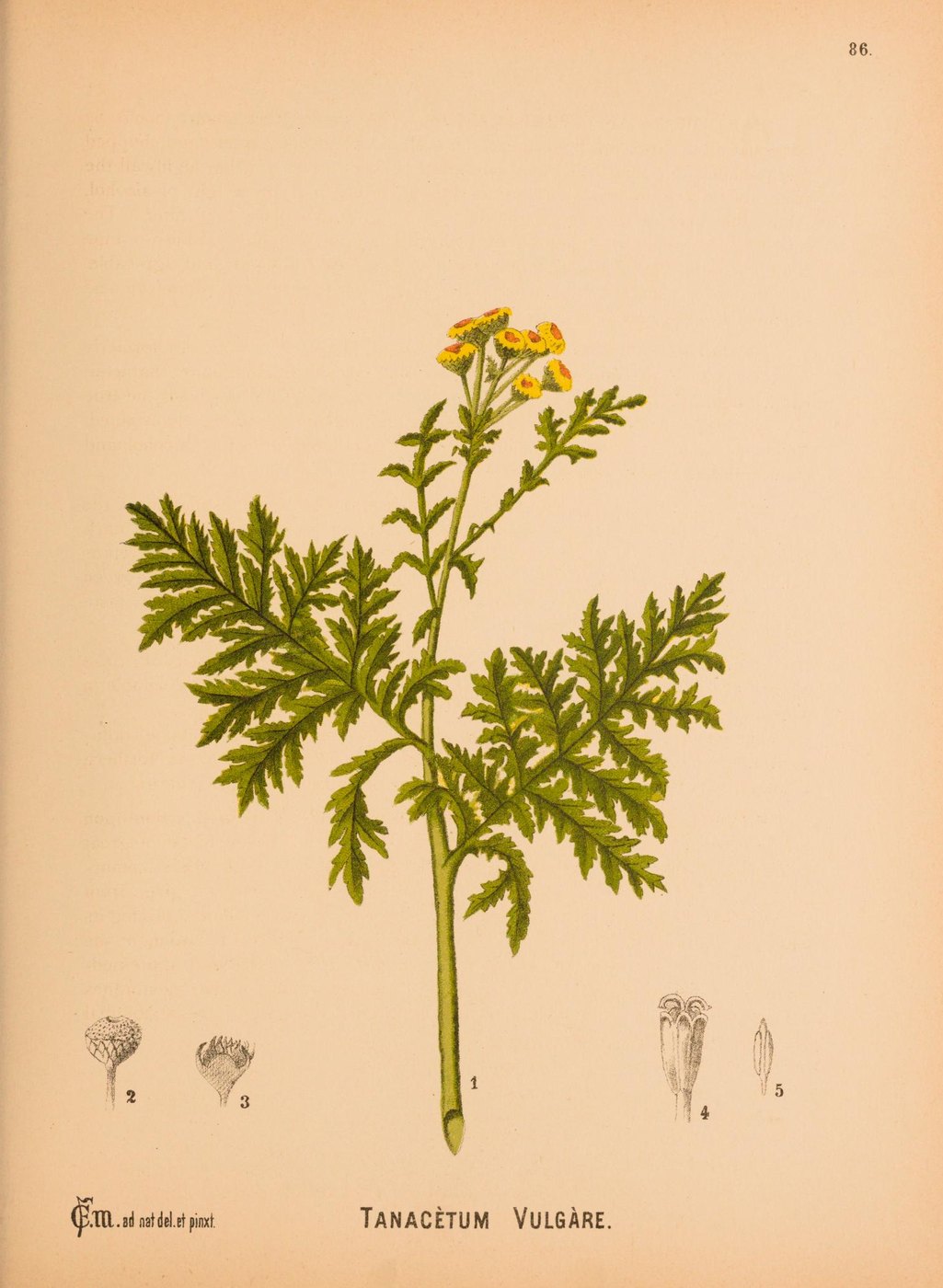
Sundew in Nicholas Culpeper · Spearmint in Nicholas Culpeper · Tansy in Nicholas Culpeper · Southernwood in Nicholas Culpeper · everything Nicholas Culpeper names →
Also in M. Grieve
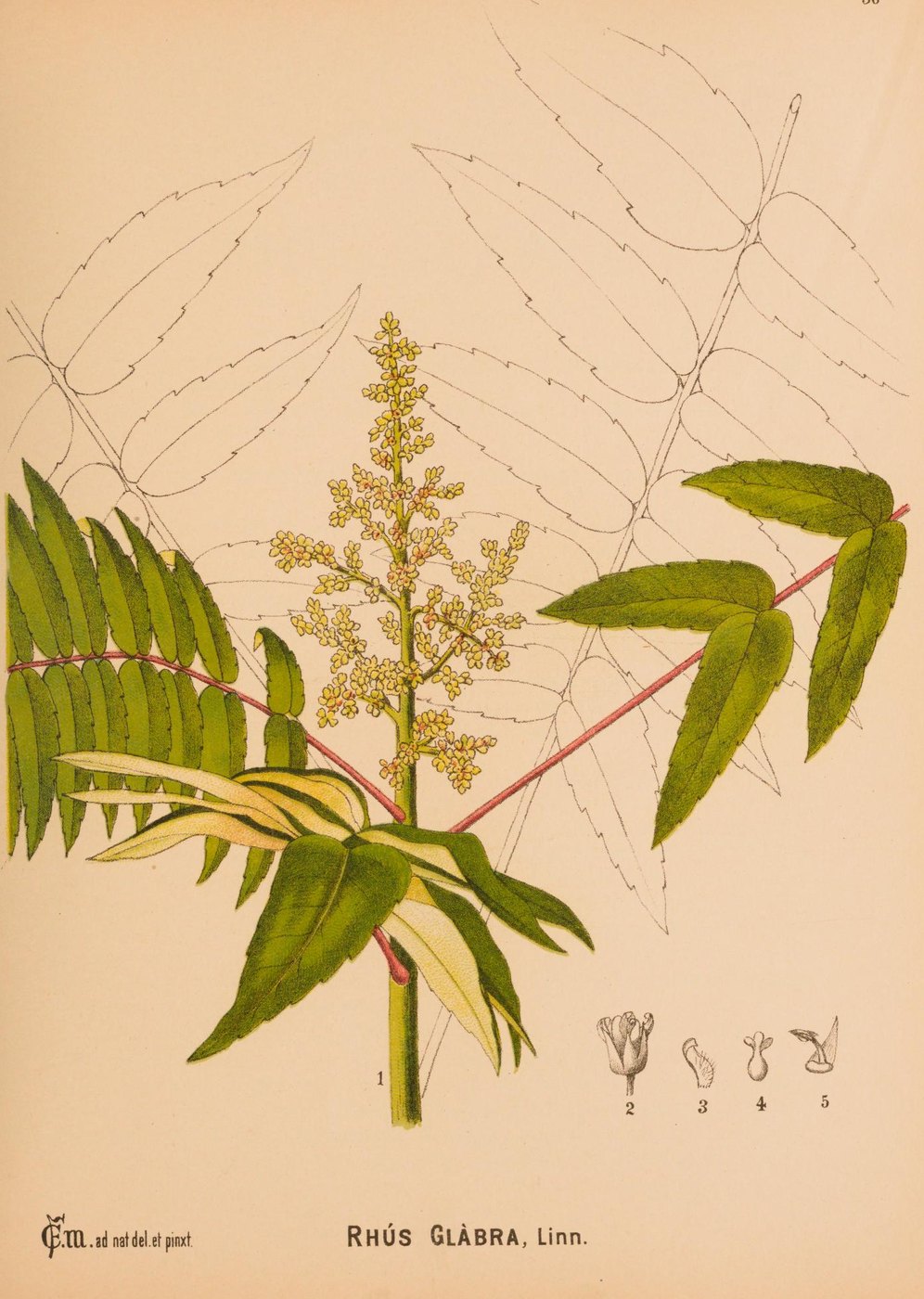
Sumac in M. Grieve · Witch hazel in M. Grieve · Skullcap in M. Grieve · everything M. Grieve names →
Drawing on the same sources: Grieve, Culpeper, Folkard
St. John’s wort · Species Pleris Archonticon · Tamarind · Sweet almond, oil of · Storax calamite · Sweet flag · the bibliography →
Nearby in the alphabet
Sugar (Saccharum officinarum) · Sulfur (Brimstone) · The stole (the sign of his sacred office) · Stinkhorn · St. Zacharias cross (each standing for a Latin invocation against the plague)
Historical description, not medical advice.
