
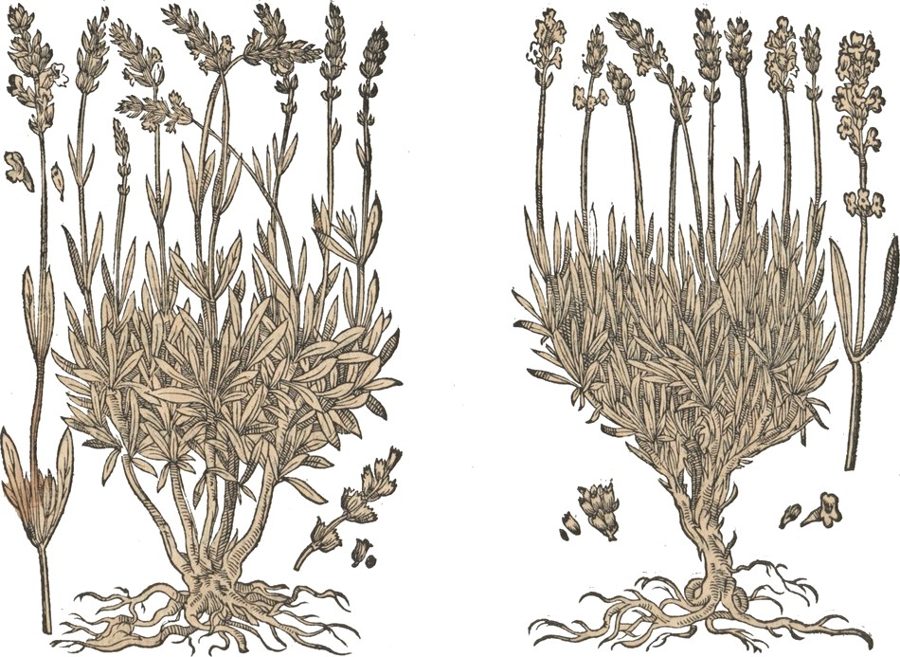
Spikenard
Spico nardo
- Known today as
- The root of Nardostachys jatamansi, a Himalayan valerian.
- Kind
- Plant, in 1 older authority
- Constituents
- jatamansone (valeranone), nardosinone, calarene, and 1 more
- Earliest authority quoted here
- The Song of Songs (the Hebrew Bible)
- In other databases
- Plants of the World Online · GBIF · Wikidata
- In the Canale glossary
- On the Manner of Discerning and Healing the Bewitched, Appendix A: Part Three, Chapter 9: Anointings
Revised November 1, 2026: Lore added from texts read in full. Checked against its sources, each read in full, in part, or in its abstract. Corrected from the press's evidence dossier on the entry, every change checked in the sources read. Version 1, first published September 25, 2026.
Spikenard: what did Canale use it for?
In the oil for the bewitched; blessed “by Christ, whose feet were anointed with your ointment by Magdalene” (ch. 9; Treatise Two).
Before anyone takes it
- Warnings
- Ploughman’s spikenard is a different plant, Inula conyza (Folkard); the names are easily confused. Folkard, 1884
Spikenard: what does modern science say?
Aromatic; breathed as a vapour, an extract rich in calarene sedated mice (Takemoto, 2008). In mice, an extract given by mouth for seven days acted on tests of anxiety like diazepam, an effect blocked by flumazenil (Razack and colleagues, 2018).
Before anyone takes it
- Warnings
- Ploughman’s spikenard is a different plant, Inula conyza (Folkard); the names are easily confused. Folkard, 1884
- With other medicines
- In mice, the extract acted on anxiety tests like diazepam, through the GABA-benzodiazepine receptor complex; no human interaction study was found. Razack and colleagues, 2018
- In a small four-week trial it lowered blood pressure in people with stage 1 hypertension who were taking up to two blood-pressure drugs. Bhat and Malik, 2020
- Toxic dose
- No human overdose or safety study was found; animal and laboratory studies of the genus found little or no toxicity except at high doses. Wang and colleagues, 2021
- With the regulators
- No EMA monograph; a monograph in the Ayurvedic Pharmacopoeia of India; CITES Appendix II since 1997. Species+, 2026
The toxic dose and the poisoning
- Toxic dose
- No human safety study was found; animal and laboratory studies of the genus found little or no toxicity except at high doses (Wang and colleagues, 2021). Its safety in pregnancy is unknown. The plant is endangered by collection.
The references for these lines are listed under Pharmacognosy, in Science. Doses are as the references give them, for description only; this is not medical advice. In a poisoning, call a poison centre.
The claims on its safety, checked
The evidence beneath each verdict here, in the words of the sources read, is for members. One verdict’s is open, as a sample. Join free
Plausible, untestedToxic dose: safe at pharmacopoeial doses.
Little or no toxicity in animal and laboratory studies of the genus, by a 2021 review’s abstract; the pharmacopoeia gives doses but no safety statement; no human safety study found.
The evidence: 2 sources read
Further, in vivo and in vitro toxicological studies demonstrated that Nardostachys plants showed either no or low toxicities, except at high doses.
Wang, M., Yang, T.-T., Rao, Y., et al. (2021). A review on traditional uses, phytochemistry, pharmacology, toxicology and the analytical methods of the genus Nardostachys. Journal of Ethnopharmacology 280: 114446. Abstract read · the text read
THERAPEUTIC USES - Kustha, Daha, Visarpa, Manasaroga, Anidra
Government of India, Ministry of Health and Family Welfare, Department of AYUSH. The Ayurvedic Pharmacopoeia of India, Part I, Volume I (with later volumes), as digitised on the Internet Archive, AyurvedicPharmacopoeiaOfIndiaAllVolume. Read in part · the text read
This verdict’s evidence is open to every reader, as a sample of what members read under each.
Each verdict is on the press’s scale, from confirmed to never documented, and rests on the sources read, in full, in part or in their abstracts. How the press checks. A summary of what was read, not medical advice.
Spikenard: what did the older authorities say?
- Mark 14:3the New Testament
- The woman at Bethany breaks an alabaster jar of costly spikenard over the head of Christ.
- The Song of Songsthe Hebrew Bible
- “While the king sitteth at his table, my spikenard sendeth forth the smell thereof.”
Spikenard: what lore surrounds it?
Folkard quotes the Canticles, “While the king sitteth at his table, my Spikenard sendeth forth the smell thereof,” and Pliny's twelve varieties, the Indian best, at “one hundred denarii per pound.” He follows Rimmel on the ancients confounding spikenard with the fragrant grasses of India, “which would account for the report that Alexander the Great, when he invaded Gedrosia, could smell from the back of his elephant the fragrance of the Nard as it was trod upon by the horses feet,” and Sir William Jones's identification of the true plant as the Valerian the Arabs call Sumbul, “spike,” and the Hindus Jatamansi, “locks of hair.”
Used in These Compounds
Spikenard is an ingredient of 2 compound medicines in the database. For Club members. Create a free account or sign in.
Its history and lore, checked
The evidence beneath each verdict here, in the words of the sources read, is for members. Join free
History and names14 claims
Partly confirmedThe ointment of Magdalene was a perfume in an oil base.
Pliny’s unguent of nard had a base of omphacium or oil of balanus; the Gospels name Mary of Bethany or an unnamed woman, not Magdalene, and do not give the base.
ConfirmedStanding: in the Ayurvedic pharmacopoeia (jatamansi).
The Ayurvedic Pharmacopoeia of India, Part I, Volume I: Jatamamsi, the rhizome.
ConfirmedStanding: listed on CITES Appendix II since 1997.
Species+: Appendix II from 18 September 1997, as Nardostachys grandiflora, for roots; from 13 September 2007 for all parts and derivatives with exceptions.
ConfirmedFolkard quotes the Canticles: ‘While the king sitteth at his table, my Spikenard sendeth forth the smell thereof.’
Folkard, and the Song of Solomon 1:12 in the King James Version.
ConfirmedFolkard gives Pliny’s twelve varieties of nard, the Indian the best.
Folkard, and Pliny XII.26 in Bostock and Riley.
ConfirmedGenuine spikenard sold at one hundred denarii per pound.
Folkard, and Pliny XII.26.
ConfirmedFolkard follows Rimmel: the ancients confounded spikenard with the fragrant grasses of India.
Folkard quoting Rimmel’s Book of Perfumes.
ConfirmedRimmel, by Folkard: Alexander, invading Gedrosia, could smell from the back of his elephant the nard trodden by the horses.
Folkard quoting Rimmel.
Partly confirmedThe report behind Rimmel’s story: nard trodden on Alexander’s march through Gedrosia gave off its scent.
Arrian, after Aristobulus: the Gadrosian desert bore many roots of nard, trampled by the army, and the scent spread far; no elephant in Arrian.
ConfirmedSir William Jones identified the true spikenard as the valerian the Arabs call Sumbul, ‘spike,’ and the Hindus Jatamansi, ‘locks of hair.’
Folkard quoting Rimmel; Bostock and Riley’s note to Pliny XII.26 also credits Jones.
ConfirmedMark 14:3: the woman at Bethany breaks an alabaster jar of costly spikenard over the head of Christ.
Mark 14:3, King James Version: an alabaster box of ointment of spikenard.
ConfirmedThe Song of Songs: ‘While the king sitteth at his table, my spikenard sendeth forth the smell thereof.’
Song of Solomon 1:12, King James Version.
ConfirmedCanale puts spikenard in the oil for the bewitched (Part Three, chapter 9).
Canale 1622, the oil for the bewitched, read in a garbled OCR.
ConfirmedCanale blesses the nard ‘by Christ, whose feet were anointed with your ointment by Magdalene’ (Treatise Two).
Canale 1622, Treatise Two, read in a garbled OCR; the formula is an exorcism of the nard within the blessings.
Belief1 claim
Not testable, but explainedThe blessed oil with spikenard helps the bewitched.
Why it was believed: Canale’s oil is drawn partly from Scripture: each fragrant ingredient is exorcised by the sacred event it recalls, the nard by the ointment poured on Christ’s feet, so that the oil carries the blessing against the maleficium. Bewitchment has no test; the oil’s own effects are those of its ingredients.
Each verdict is on the press’s scale, from confirmed to never documented, and rests on the sources read, in full, in part or in their abstracts. How the press checks. A summary of what was read, not medical advice.
Spikenard: what does the evidence say?
The press read 22 sources for this entry and checked 29 of its claims against them (November 1, 2026). The claims are given as they stood when checked; where the reading found the entry wrong, the entry was corrected that day. Of the verdicts in this entry, 20 confirmed, 5 partly confirmed, 1 plausible but untested and 1 beliefs explained rather than tested. The verdicts on 2 medical and safety claims wait until a named pharmacologist or physician has read them.
The evidence beneath each verdict here, in the words of the sources read, is for members. Join free
The plant11 claims
ConfirmedKnown today as the root of Nardostachys jatamansi.
The Ayurvedic Pharmacopoeia of India: the dried rhizome; its English name there is Nardus root.
ConfirmedNardostachys jatamansi is a Himalayan valerian, a relative of valerian.
Valerianaceae in the pharmacopoeia, Species+ and the 2024 review; newer works place the family in Caprifoliaceae.
ConfirmedJatamansone is valeranone.
PubChem lists Jatamansone as a name of (-)-valeranone.
ConfirmedJatamansone (valeranone) is a constituent of spikenard.
In the root extracts and the root oil, laboratory analyses.
Partly confirmedJatamansone is a sesquiterpene ketone shared with valerian.
A sesquiterpenoid, by ChEBI; valeranone is found in Himalayan valerians; ‘ketone’ is not stated in the records read.
ConfirmedNardosinone is a constituent of spikenard.
In the roots and rhizomes, Feng 2022.
ConfirmedCalarene is a constituent of spikenard.
A hexane extract contained a lot of it; it is among the largest volatile constituents of the root.
Partly confirmedValerenic acid analogues are constituents of spikenard.
Valerenol, valerenal and valerena-4,7(11)-diene are reported; no source read calls them valerenic acid analogues.
ConfirmedSpikenard is aromatic.
The pharmacopoeia’s description of the rhizome.
ConfirmedThe plant is endangered by collection.
Overharvesting from the wild is the major threat; harvests in western Nepal are unsustainable.
Partly confirmedStanding: listed as critically endangered in India.
Critically endangered by the IUCN, known only through Feng and colleagues’ account; nothing read makes it an Indian listing; India bans commercial harvest.
The verdicts on its safety under Safety and on its history and lore under History.
What no one yet knows
- Does spikenard calm, lift the mood or bring sleep in people? Only a small comparison with Tagara in insomnia (no placebo) and a small trial in hypertension were read; a 2026 review of Ayurvedic insomnia treatments found small studies without comparators; a 2025 trial in depression has no abstract to read.
- Is spikenard safe in pregnancy, in breastfeeding, or taken with sedatives or blood-pressure drugs? No study was found; the mouse work points to the benzodiazepine receptor and a small trial lowered blood pressure, but nothing tests the combinations.
- Was the nard of the Bible, of Pliny and of Alexander’s march the Himalayan Nardostachys jatamansi? Jones’s identification is reported by Folkard and by Pliny’s translators, but Rimmel thought the word was used for every perfume, and Arrian’s nard grew in the Gadrosian desert, far from the Himalaya; no source read settles it.
- Does the calarene effect in mice matter at the amounts in a perfume or anointing oil? Takemoto found the most effective dose of calarene lower than its share of the extract; no study measures what a person breathes from the oil.
- What is the IUCN assessment, and when was it made? The critically endangered status is known only through Feng and colleagues’ account; the IUCN assessment itself was not read.
Each verdict is on the press’s scale, from confirmed to never documented, and rests on the sources read, in full, in part or in their abstracts. How the press checks. A summary of what was read, not medical advice.
Pharmacognosy
- Constituents
- jatamansone (valeranone)a sesquiterpenoid (ChEBI), also found in Himalayan valerians (Mathela and colleagues, 2005)
- nardosinone ChEMBL
- calarene
- valerenol, valerenal and valerena-4,7(11)-diene
- Mechanism
- Nardostachys jatamansi of the Himalaya, a valerian relative: breathed as a vapour, its calarene sedated mice; the ointment of the anointing at Bethany (Mark 14:3; John 12:3), which Canale gives to Magdalene, was an unguent: Pliny’s unguent of nard was nard with other aromatics in omphacium or oil of balanus.
- Standing
- A monograph in the Ayurvedic Pharmacopoeia of India (Jatamamsi, the rhizome). On CITES Appendix II since 18 September 1997 (listed as Nardostachys grandiflora, for the roots; since 2007 all parts and derivatives but seeds, pollen and packaged retail products). Classed critically endangered by the IUCN (Feng and colleagues, 2022); India bans its commercial harvest (Smith-Hall and colleagues, 2023).
- Lyle, N., et al. (2009). “The role of antioxidant properties of Nardostachys jatamansi in alleviation of the symptoms of the chronic fatigue syndrome.” Behavioural Brain Research 202: 285–290. doi:10.1016/j.bbr.2009.04.005. Abstract read · the text read
- Takemoto, H., et al. (2008). “Sedative effects of vapor inhalation of agarwood oil and spikenard extract.” Journal of Natural Medicines 62. Abstract read · the text read
- Wang, M., Yang, T.-T., Rao, Y., et al. (2021). A review on traditional uses, phytochemistry, pharmacology, toxicology and the analytical methods of the genus Nardostachys. Journal of Ethnopharmacology 280: 114446. Abstract read · the text read
- Species+ (UNEP-WCMC and the CITES Secretariat). Nardostachys jatamansi (D.Don) DC., taxon concept 68467: CITES and EU listings, synonyms, common names, distribution, quotas and trade measures. Read in full · the text read
- Government of India, Ministry of Health and Family Welfare, Department of AYUSH. The Ayurvedic Pharmacopoeia of India, Part I, Volume I (with later volumes), as digitised on the Internet Archive, AyurvedicPharmacopoeiaOfIndiaAllVolume. Read in part · the text read
- Feng, M., Chen, C., Qu-Bie, J., et al. (2022). Metabolome and transcriptome associated analysis of sesquiterpenoid metabolism in Nardostachys jatamansi. Frontiers in Plant Science 13: 1041321. Read in part · the text read
- Smith-Hall, C., Pyakurel, D., Meilby, H., et al. (2023). The sustainability of trade in wild plants: a data-integration approach tested on critically endangered Nardostachys jatamansi. PNAS Nexus 2: pgad328. Read in full · the text read
- Pliny the Elder. The Natural History, trans. J. Bostock and H. T. Riley, vol. III (Books XI to XVII). London: Henry G. Bohn, 1855. Internet Archive, naturalhistoryof03plin. Read in part · the text read
- The Bible, King James Version. Project Gutenberg #10. Read in part · the text read
- Canale, F. (1622). Del modo di conoscer et sanare i maleficiati, et dell’antichissimo, et ottimo uso del benedire: trattati due. Brescia: Bartolomeo Fontana. Internet Archive, bub_gb_0kwtt7zDrz4C. Read in part · the text read
- PubChem (National Library of Medicine). Description of valeranone (CID 171455), from ChEBI. Read in full · the text read
- Mathela, C. S., Chanotiya, C. S., Sammal, S. S., Pant, A. K., and Pandey, S. (2005). Compositional diversity of terpenoids in the Himalayan Valeriana genera. Chemistry and Biodiversity 2: 1174–1182. Abstract read · the text read
The abstract of each source, beneath its citation. For Club members. About the Club or sign in.
Constituent names open the compound’s record at PubChem, and “ChEMBL” beside a name opens its record at ChEMBL, the European Bioinformatics Institute’s database of bioactive molecules. Where a mechanism line was checked against ChEMBL (ChEMBL 37, read 1 October 2026), the check is shown with the measured value and its source paper, or says plainly that nothing has been measured. Doses are as the references give them, for description only; this is not medical advice. Each source carries the result of its check against Crossref, PubMed, or the authority’s page: see Verification.
Sources
- [103] Razack, S., Kandikattu, H. K., Venuprasad, M. P., Amruta, N., Khanum, F., Chuttani, K., & Mishra, A. K. (2018). Anxiolytic actions of Nardostachys jatamansi via GABA benzodiazepine channel complex mechanism and its biodistribution studies. Metabolic Brain Disease 33(5): 1533–1549. doi:10.1007/s11011-018-0261-z Verified against its record · doi:10.1007/s11011-018-0261-z
- Folkard, R. (1884). Plant Lore, Legends, and Lyrics, “Spikenard.” Project Gutenberg #44638. Primary text
Verification
- Checked
- October 1, 2026, October 17, 2026
- Passes
- Read against its sources in the pass over the remaining 343 entries
- The Standing line checked against CITES, among the sources below
- Every dated or regulatory claim checked by category across the database
- Each quotation from the older authorities checked word for word against the text, read in full
- Every source read, in full, in part, or in its abstract, and every sentence checked against what was read (October 17, 2026)
- Sources
- 14 cited: 3 read in full, 5 read in part, 4 abstract read, 1 verified against its record, 1 primary text. 5 with the abstract on file.
- Corrections
- None recorded.
What was checked, how, and what was found is set out on the Verification page. A checked source is one whose record was found; it does not make the entry medical advice.
Club members can point at a technical term in this entry, such as a constituent, an action, or a word of Jung’s, to read its definition from the source. The Club.
Cite This Entry
Version 1 · first published September 25, 2026 · last revised November 1, 2026
- Chicago
“Spikenard.” In Materia Medica, edited by B. C. P. Statema. Version 1. The Thinking Press, 2026–. Last modified November 1, 2026. https://thethinkingpress.org/materia-medica/spikenard.
- MLA
“Spikenard.” Materia Medica, edited by B. C. P. Statema, version 1, The Thinking Press, 1 Nov. 2026, thethinkingpress.org/materia-medica/spikenard. Accessed 22 Nov. 2026.
- APA
Spikenard. (2026, November 1). In B. C. P. Statema (Ed.), Materia medica (Version 1). The Thinking Press. Retrieved November 22, 2026, from https://thethinkingpress.org/materia-medica/spikenard
See Also
Also in Scripture
Myrrh in Scripture · Wormwood, oil of in Scripture · Mustard seed in Scripture · Cumin in Scripture · everything Scripture names →
Drawing on the same sources: Folkard, Takemoto, Wang, Feng
Storax calamite · Savin · Strawberry · Agarwood · Aloe · Eryngo · Skullcap · Ghost pipe · the bibliography →
Nearby in the alphabet
Spirit of wine (Distilled alcohol) · Spermaceti (A white wax from the head of the sperm whale) · Squill · Speedwell (Veronica chamaedrys and its relatives) · St. Agatha’s bread (the feast of St) · Species Pleris Archonticon · St. Benedict medal (A medal of St) · Spearmint (Mentha spicata)
Historical description, not medical advice.
