
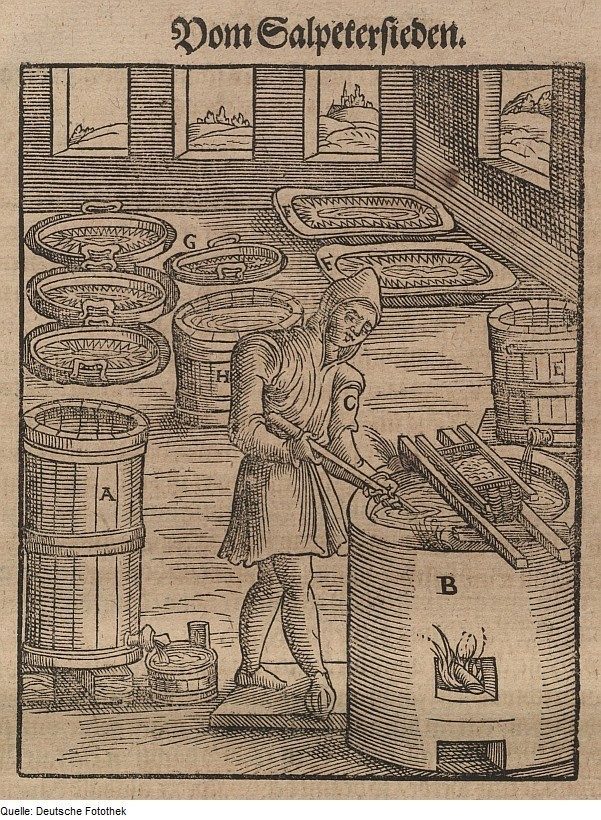
Niter, pills of
Pillole di nitro
- Known today as
- Saltpeter, potassium nitrate.
- Kind
- Mineral, in 2 older authorities
- Constituents
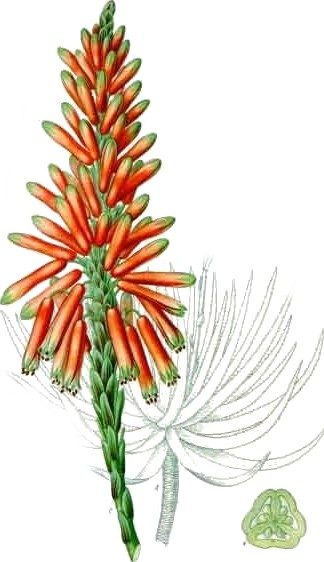
- potassium nitrate, aloes and other purgatives
- Poisoning
- Nitrate and the blue blood
- Earliest authority here
- The antidotaries
- In other databases
- Wikidata search
- In the Canale glossary
- On the Manner of Discerning and Healing the Bewitched, Appendix A: Part Three, Chapter 4: Stronger Purgatives and Compound Medicines
Revised October 1, 2026: Tradition, lore, modern assessment, and sources extended. Version 1, first published September 25, 2026.
Niter, pills of: what did Canale use it for?
Among the pills commended for all complexions (ch. 4).
Niter, pills of: what does modern science say?
Once given for many conditions, it survived in medicine chiefly as a diuretic. Potassium nitrate is a mild diuretic and was given for fevers into the nineteenth century; in grams it irritates the stomach and in larger amounts poisons the blood. The purging in the pill came from the aloes and scammony.
Pharmacognosy & Toxicology
- Constituents
- potassium nitrate ChEMBL
- aloes and other purgativesin the pill mass
- Mechanism
- Nitrate is a mild diuretic and, reduced to nitrite by the mouth’s bacteria, a vasodilator that lowers blood pressure, the mechanism behind the modern beetroot-juice trials; in grams it irritates the stomach, and nitrite oxidises haemoglobin to methaemoglobin, the blue poisoning of infants from well water. The purging in the pill was the aloes.
- Toxic dose
- A few grams of saltpetre give gastritis; 30 g has killed by methaemoglobinaemia and collapse.
- Syndrome
- Nitrate and the blue blood
- Standing
- Obsolete; nitrate’s cardiovascular action is under active study.
- Lundberg, J. O., et al. (2008). “The nitrate–nitrite–nitric oxide pathway in physiology and therapeutics.” Nature Reviews Drug Discovery 7. Verified against its record · doi:10.1038/nrd2466
Constituent names open the compound’s record at PubChem, and “ChEMBL” beside a name opens its record at ChEMBL, the European Bioinformatics Institute’s database of bioactive molecules. Where a mechanism line was checked against ChEMBL (ChEMBL 37, read 1 October 2026), the check is shown with the measured value and its source paper, or says plainly that nothing has been measured. Doses are as the references give them, for description only; this is not medical advice. Each source carries the result of its check against Crossref, PubMed, or the authority’s page: see Verification.
Niter, pills of: what lore surrounds it?
The alchemists called saltpetre the dragon, since it devoured metals in aqua fortis, and the sal petrae was the salt that grew from the stone of damp walls; its explosive marriage with sulphur and charcoal was the other end of its history. See Saltpetre.
Niter, pills of: what did the older authorities say?
- The antidotaries
- Pills of niter, pilulae de nitro, were a purging pill of the Salernitan tradition: niter with aloes, scammony, and bitter seeds, for the head and the stomach, and for the stone, which niter was thought to dissolve.
- Pliny
- Gives nitrum, which for him is natron, for the stomach, the eyes, and the skin, and the medieval pharmacy carried his uses across to saltpetre when the names were confused.
Sources
- [38] Encyclopaedia Britannica, online edition, britannica.com. Articles: Ambergris; Aristolochiaceae; Asafetida; Azurite; Castor-oil plant; Civet; Dragon’s blood; Garden cress; Jet; Kermes; Laudanum; Lye; Monemvasía; Musk; Precious coral; Saltpetre; Sulfur dioxide; Tartar emetic; Tropaeolum. Book, seen in reviews
- Pliny, Natural History XXXI. Primary text
- Antidotarium Nicolai. Read in part · the text read
Verification
- Checked
- October 1, 2026
- Passes
- Every sentence read against its sources, in the pass over the remaining 343 entries
- The Standing line checked against the authority it names (EMA, WHO, FDA, CITES, Commission E)
- Every dated or regulatory claim checked by category across the database
- Sources
- 4 cited: 1 read in part, 1 verified against its record, 1 primary text, 1 book, seen in reviews.
- Corrections
- None were needed.
What was checked, how, and what was found is set out on the Verification page. A checked source is one whose record was found; it does not make the entry medical advice.
Cite This Entry
Version 1 · first published September 25, 2026 · last revised October 1, 2026
- Chicago
“Niter, pills of.” In Materia Medica, edited by B. C. P. Statema. Version 1. The Thinking Press, 2026–. Last modified October 1, 2026. https://thethinkingpress.org/materia-medica/niter-pills-of.
- MLA
“Niter, pills of.” Materia Medica, edited by B. C. P. Statema, version 1, The Thinking Press, 1 Oct. 2026, thethinkingpress.org/materia-medica/niter-pills-of. Accessed 8 Oct. 2026.
- APA
Niter, pills of. (2026, October 1). In B. C. P. Statema (Ed.), Materia medica (Version 1). The Thinking Press. Retrieved October 8, 2026, from https://thethinkingpress.org/materia-medica/niter-pills-of
Club members keep entries on a shelf with private notes, print the plates as cards, and receive an entry by email each week. Create a free account before January 1, 2027 and all of it is yours for good. About the Club
See Also
Poisoned alike: nitrate and the blue blood
Sharing potassium nitrate
Also in Pliny the Elder
Nutmeg and clove in Pliny the Elder · Nettle seed in Pliny the Elder · Oak galls in Pliny the Elder · Nasturtium, that is, garden cress in Pliny the Elder · everything Pliny the Elder names →
Drawing on the same sources: Pliny, Lundberg
Nearby in the alphabet
Nepenthe (Unidentified) · Oil of bricks · Oil of catechumens · Myrrh (The resin of Commiphora myrrha)
Historical description, not medical advice.