
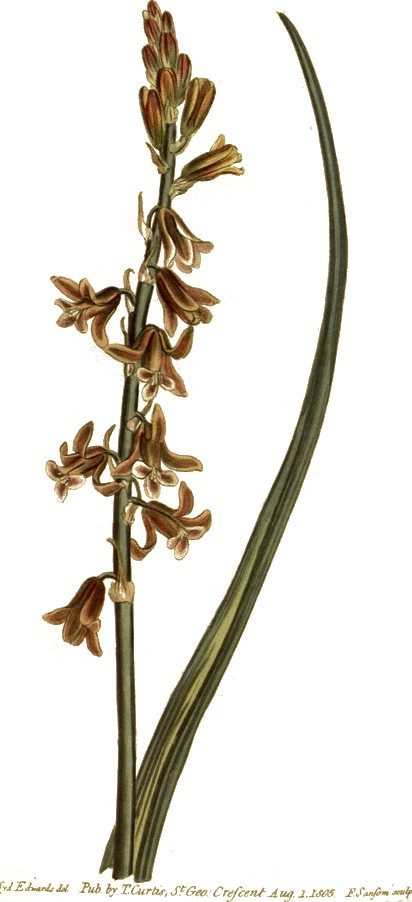
Oxymel, and oxymel of squill
Ossimele; ossimele scillitico
- Known today as
- Honey boiled with vinegar; the squill version adds the bulb of sea squill.
- Kind
- Compound, in 1 older authority
- Constituents
- acetic acid, honey sugars, scillaren A and proscillaridin
- Poisoning
- Cardiac glycoside poisoning
- Earliest authority here
- Pliny (AD 23/24–79)
- In the Canale glossary
- On the Manner of Discerning and Healing the Bewitched, Appendix A: Part Three, Chapter 5: Vomitory Medicines
Revised October 3, 2026: An older authority added from a text read in full. Lore added from texts read in full. Checked against its sources, each read in full, in part, or in its abstract. Version 1, first published September 25, 2026.
Oxymel, and oxymel of squill: what did Canale use it for?
To cut viscous humors and to strengthen vomits (ch. 5).
Oxymel, and oxymel of squill: what does modern science say?
Simple oxymel, says Culpeper, cuts phlegm and is a good preparative for a vomit. Squill in large doses produces nausea and vomiting and was at one time used as an emetic (see Squill).
Pharmacognosy & Toxicology
- Constituents
- acetic acid ChEMBLthe vinegar
- honey sugars
- scillaren A and proscillaridinthe cardiac glycosides of squill, in the oxymel of squill
- Mechanism
- Simple oxymel is honey and vinegar, which Culpeper says cuts phlegm; the oxymel of squill adds the squill’s cardiac glycosides, bufadienolides that act on the heart like digitalis and, in the small doses of a cough mixture, mildly irritate the stomach and bring a reflex secretion from the bronchioles, while large doses vomit, which is why it strengthened the vomits. Poisoning by the bulb gives digitalis-like signs.
- Toxic dose
- The British Pharmaceutical Codex of 1911 gives 2 to 4 mils (half to one fluid drachm) of the oxymel of squill for coughs and colds; large doses of squill vomit, and the bulb has poisoned with digitalis-like signs.
- Syndrome
- Cardiac glycoside poisoning
- Standing
- Oxymel of squill was official in the British Pharmacopoeia in 1911 and went into cough linctuses; a small trial in 2022 tested a Persian squill oxymel as an add-on treatment for COPD, with preliminary results.
Constituent names open the compound’s record at PubChem, and “ChEMBL” beside a name opens its record at ChEMBL, the European Bioinformatics Institute’s database of bioactive molecules. Where a mechanism line was checked against ChEMBL (ChEMBL 37, read 1 October 2026), the check is shown with the measured value and its source paper, or says plainly that nothing has been measured. Doses are as the references give them, for description only; this is not medical advice. Each source carries the result of its check against Crossref, PubMed, or the authority’s page: see Verification.
What Medicine Makes of It
- The Purge, the Vomit, and the BathWhat the regimen did to the body.
Oxymel, and oxymel of squill: what lore surrounds it?
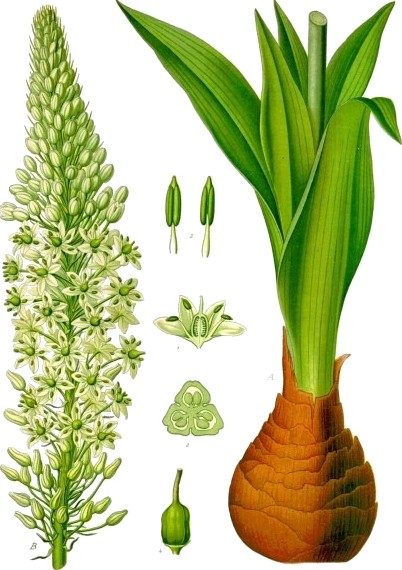
Of the squill that gives the oxymel its name Folkard writes: “The Scilla maritima, or Sea Onion, was of old consecrated in Egypt to the god Typhon. The mummies of Egyptian women often hold the Squill in one hand, probably as an emblem of generation. The Egyptians planted the Squill in groves, and hung it in their houses to preserve them from evil spirits. In Arcadia, at the festival of the god Pan, the statue of the deity was decorated with Squills.”
Grieve notes that the squill “is mentioned by Theophrastus in the third century before Christ,” that Dioscorides “describes the different varieties of the bulb and the method of making vinegar of Squills,” and that while the white squill is more mentioned in mediæval literature, “the medical school of Salerno preferred the red variety of the drug.” It was first recorded as cultivated in England in 1648, in the Oxford Botanic Gardens.
The Recipe
The recipe: 5 ingredients, each linked to its entry. For Club members. Create a free account or sign in.
Oxymel, and oxymel of squill: what did the older authorities say?
- Pliny
- Gives the squill “the very highest rank” among bulbs, “although by nature it is medicinal, and is employed for imparting an additional sharpness to vinegar”: no bulb grows larger or more pungent; two kinds serve in medicine, the male with white leaves and the female with black, and a third, the Epimenidian, is good to eat; a wine was also made from the roots of squills.
Sources
- [16] The British Pharmaceutical Codex (1911). London: Pharmaceutical Society of Great Britain. Monographs as transcribed at Henriette’s Herbal Homepage, henriettes-herb.com. Read in full · the text read
- [28] Culpeper, N. (1653). Pharmacopœia Londinensis, or, The London Dispensatory [the Royal College of Physicians’ pharmacopoeia in English, with Culpeper’s commentary]. London: Peter Cole. Text Creation Partnership edition A35381. Read in part · the text read
- Pliny the Elder, Natural History 19.30, 14.19, trans. J. Bostock & H. T. Riley (1855), Perseus Digital Library. Read in full · the text read
- Folkard, R. (1884). Plant Lore, Legends, and Lyrics, “Squill.” Project Gutenberg #44638. Read in part · the text read
- Grieve, M. (1931). A Modern Herbal, “Squill.” botanical.com/botanical/mgmh/s/squill86.html Read in full · the text read
- Manganyi, M. C., et al. (2021). Bulbous plants Drimia: “a thin line between poisonous and healing compounds” with biological activities. Pharmaceutics 13: 1385. Read in full · the text read
- Mohammadi-Araghi, M., et al. (2022). An add-on treatment for moderate COPD with squill-oxymel (a traditional formulation from Drimia maritima (L.) Stearn): a pilot randomized triple-blinded placebo-controlled clinical trial. Evidence-Based Complementary and Alternative Medicine 2022. Read in full · the text read
Verification
- Checked
- October 1, 2026, and October 3, 2026
- Passes
- Every sentence read against its sources, in the pass over the remaining 343 entries
- The Standing line checked against the authority it names (EMA, WHO, FDA, CITES, Commission E)
- Every dated or regulatory claim checked by category across the database
- Each quotation from the older authorities checked word for word against the text, read in full
- Every source read, in full, in part, or in its abstract, and every sentence checked against what was read (October 3, 2026)
- Sources
- 7 cited: 5 read in full, 2 read in part.
- Corrections
- None were needed.
What was checked, how, and what was found is set out on the Verification page. A checked source is one whose record was found; it does not make the entry medical advice.
Cite This Entry
Version 1 · first published September 25, 2026 · last revised October 3, 2026
- Chicago
“Oxymel, and oxymel of squill.” In Materia Medica, edited by B. C. P. Statema. Version 1. The Thinking Press, 2026–. Last modified October 3, 2026. https://thethinkingpress.org/materia-medica/oxymel-and-oxymel-of-squill.
- MLA
“Oxymel, and oxymel of squill.” Materia Medica, edited by B. C. P. Statema, version 1, The Thinking Press, 3 Oct. 2026, thethinkingpress.org/materia-medica/oxymel-and-oxymel-of-squill. Accessed 8 Oct. 2026.
- APA
Oxymel, and oxymel of squill. (2026, October 3). In B. C. P. Statema (Ed.), Materia medica (Version 1). The Thinking Press. Retrieved October 8, 2026, from https://thethinkingpress.org/materia-medica/oxymel-and-oxymel-of-squill
Club members keep entries on a shelf with private notes, print the plates as cards, and receive an entry by email each week. Create a free account before January 1, 2027 and all of it is yours for good. About the Club
See Also
Poisoned alike: cardiac glycoside poisoning
Squill · Foxglove · Toad · Black hellebore · Yew · the syndrome, with all of them →
Sharing acetic acid
Also in Pliny the Elder
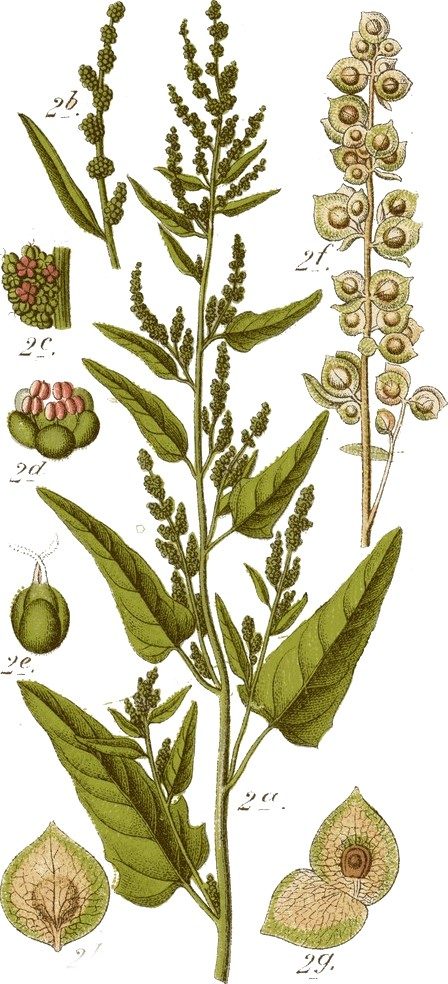
Palm of Christ in Pliny the Elder · Orpiment and realgar in Pliny the Elder · Pearls, prepared in Pliny the Elder · Orache in Pliny the Elder · everything Pliny the Elder names →
Drawing on the same sources: Folkard, Grieve, Manganyi
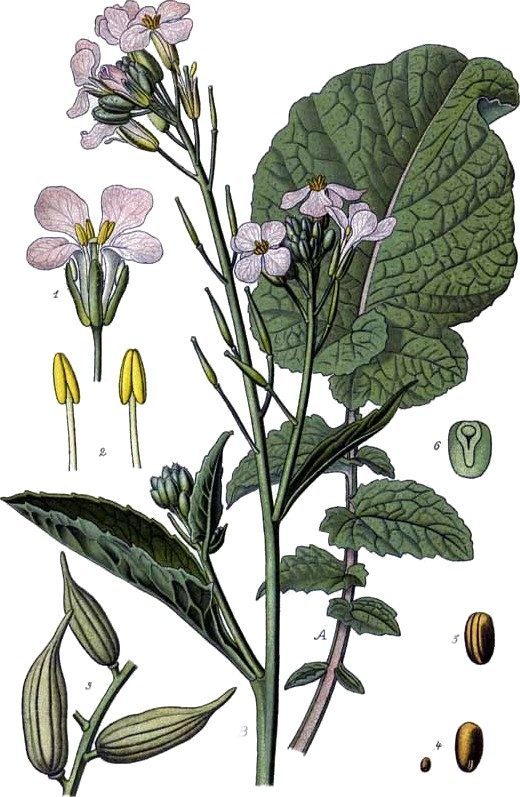
Purslane · Olive-wood ash lye · Radish · Pawpaw · Pennyroyal · Theriac · the bibliography →
Nearby in the alphabet
Oyster mushroom (A shell-shaped mushroom of dead hardwood) · Ox eye (yellow ox-eye) · Palm and olive branches (Branches blessed on Palm Sunday) · Orris (The dried root of Iris germanica ‘Florentina’ and I) · Panther cap (white-spotted amanita of European woods) · Oregano and squinanth (Origanum vulgare)
Historical description, not medical advice.