
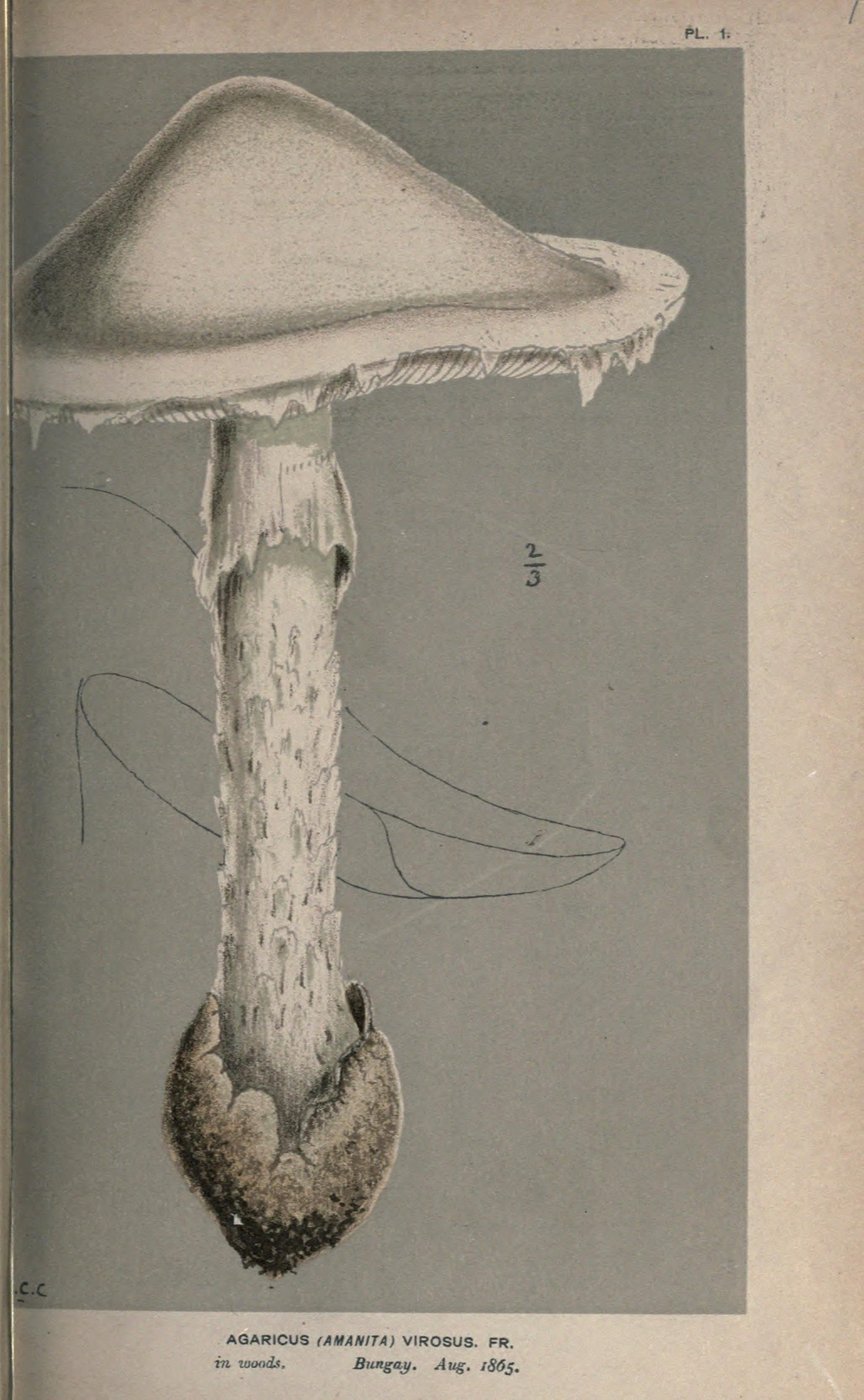
Destroying angel
Amanita virosa, A. bisporigera, A. ocreata
- Known today as
- Pure white amanitas of Europe and North America.
- Kind
- Fungus
- Constituents
- alpha-amanitin, phallacidin
- Poisoning
- Amatoxin poisoning
- In other databases
- GBIF search · Wikidata search
Revised October 3, 2026: Tradition, lore, modern assessment, and sources extended. Checked against its sources, each read in full, in part, or in its abstract. Version 1, first published September 25, 2026.
Deadly. Historical description only.
Destroying angel: what was it used for?
None.
Destroying angel: what does modern science say?
Carries the same amatoxins as the death cap, with the same delayed, deceptive course. A single cap holds ten milligrams of alpha-amanitin, enough to kill; the toxin shuts down the enzyme that copies genes into messages, and the liver, which takes it up, dies first. Six to twelve hours of calm follow the meal, then up to a day of explosive vomiting and diarrhoea, then an apparent improvement while the liver fails; death, if it comes, is after four days or more. Silibinin from the milk thistle is among the most promising treatments; when the liver fails, a transplant is often the only hope.
Destroying angel: is it poisonous?
Yes, and it can kill. Its poisoning is amatoxin poisoning: 6 to 24 hours, usually 10 to 12, with no symptoms before: the long latency is the mark of it. Historical description, not medical advice; in a poisoning, call a poison centre.
Pharmacognosy & Toxicology
- Constituents
- Mechanism
- As the death cap.
- Toxic dose
- One cap.
- Syndrome
- Amatoxin poisoning
- Standing
- None.
Constituent names open the compound’s record at PubChem, and “ChEMBL” beside a name opens its record at ChEMBL, the European Bioinformatics Institute’s database of bioactive molecules. Where a mechanism line was checked against ChEMBL (ChEMBL 37, read 1 October 2026), the check is shown with the measured value and its source paper, or says plainly that nothing has been measured. Doses are as the references give them, for description only; this is not medical advice. Each source carries the result of its check against Crossref, PubMed, or the authority’s page: see Verification.
Destroying angel: what lore surrounds it?
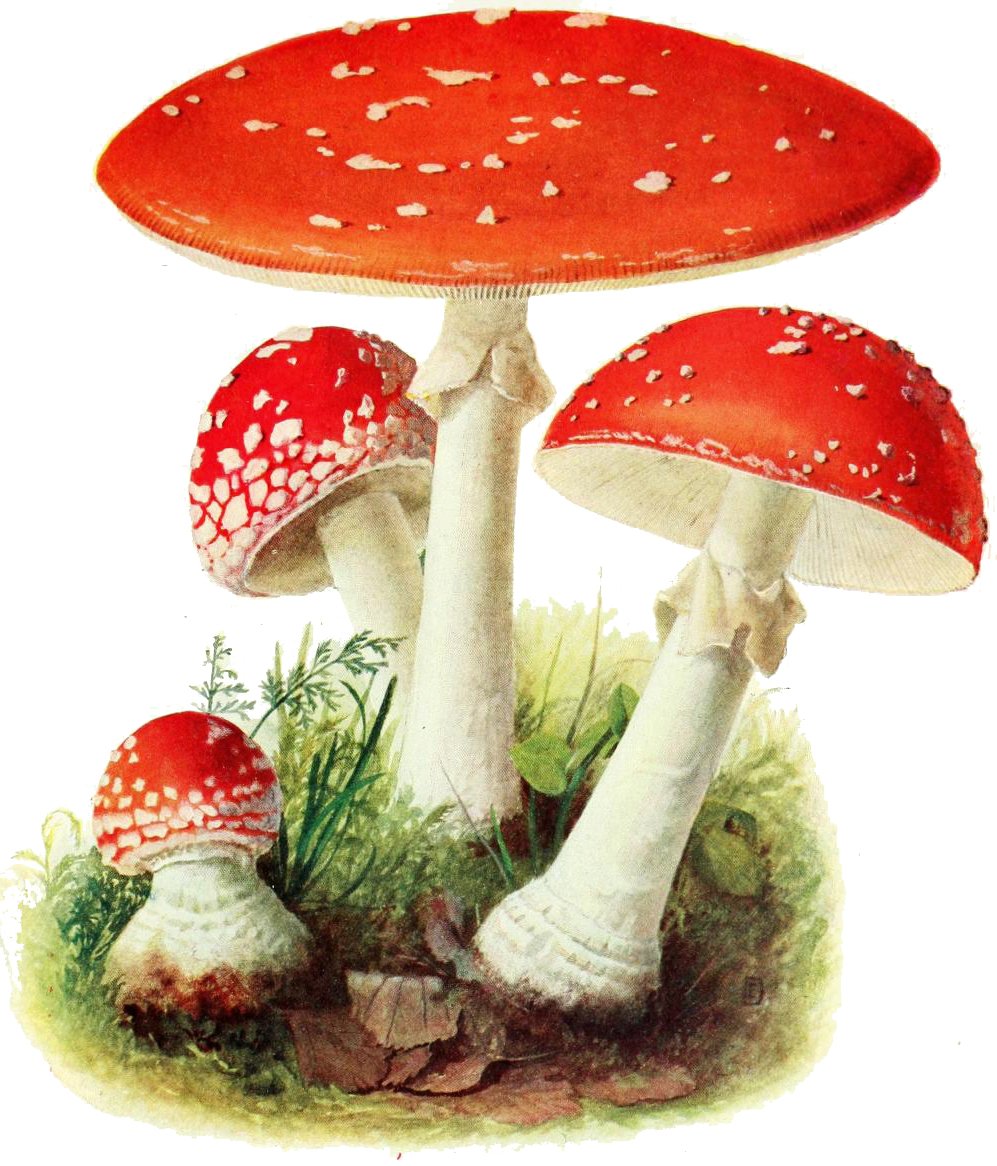
Its beauty is the danger: a white, clean-looking mushroom easily taken for a young field mushroom or puffball.
In 2006 seven members of the Hmong community in Minnesota were poisoned after taking it for the paddy-straw mushroom of Southeast Asia. The whole white cap, white gills, ring, and the cup at the base, sometimes underground, are its signs.
In Their Own Words
Atkinson says that Amanita verna, thought by some only a white form of A. phalloides, is pure white, and that this and its very poisonous nature earned it the name 'destroying angel'.
“The Amanita verna is by some considered as only a white form of the Amanita phalloides. It is of a pure white color, and this in addition to its very poisonous property has led to its designation as the "destroying angel."”
George Francis Atkinson, Studies of American Fungi. Mushrooms, Edible, Poisonous, etc., Chapter VI (The White-Spored Agarics), Amanita verna. Second edition; New York: Henry Holt and Company, 1903 (Project Gutenberg eBook #26492). The text, read in part
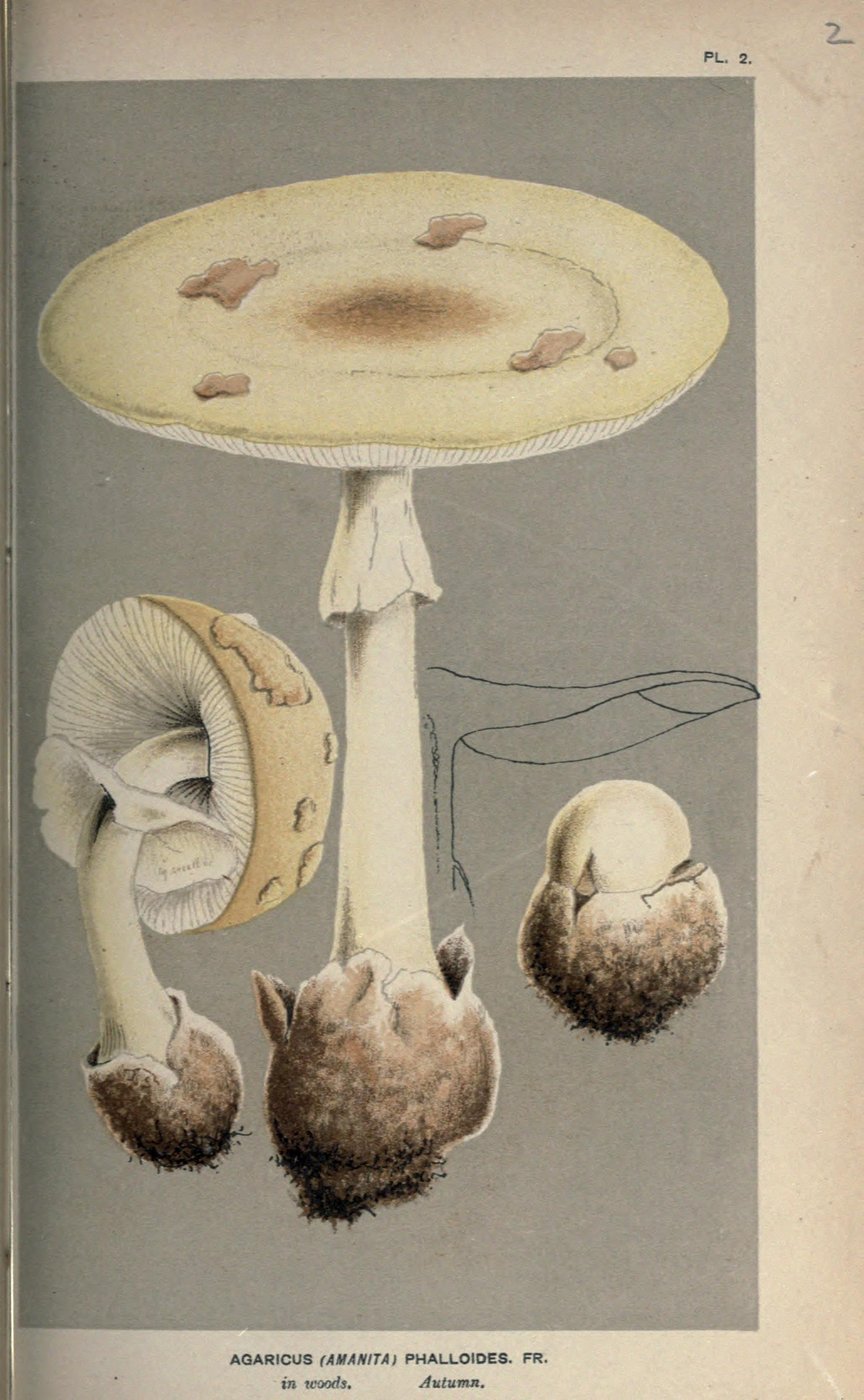
Atkinson describes Amanita virosa, also regarded by some as only a form of A. phalloides, as a pure white plant with a viscid cap like that of A. verna and A. phalloides.
“This plant also by some is regarded as only a form of Amanita phalloides. It is a pure white plant and the pileus is viscid as in the A. verna and A. phalloides.”
George Francis Atkinson, Studies of American Fungi. Mushrooms, Edible, Poisonous, etc., Chapter VI (The White-Spored Agarics), Amanita virosa. Second edition; New York: Henry Holt and Company, 1903 (Project Gutenberg eBook #26492). The text, read in part
Each passage is quoted from the text named, which the press fetched and read, and was checked word for word against a fresh copy of it; the link opens that copy. Passages are given as printed, without the editors’ footnote numbers, and with words broken across lines joined.
Sources
- Wikipedia, “Destroying angel,” en.wikipedia.org (read 2 October 2026). Read in full · the text read
- Wikipedia, “Amanita virosa,” en.wikipedia.org (read 2 October 2026). Read in full · the text read
- Wikipedia, “Amanita bisporigera,” en.wikipedia.org (read 2 October 2026). Read in full · the text read
Verification
- Checked
- October 1, 2026, and October 3, 2026
- Passes
- Every sentence read against its sources, in the pass over the remaining 343 entries
- The Standing line checked against the authority it names (EMA, WHO, FDA, CITES, Commission E)
- Every dated or regulatory claim checked by category across the database
- Every source read, in full, in part, or in its abstract, and every sentence checked against what was read (October 3, 2026)
- Sources
- 3 cited: 3 read in full.
- Corrections
- None were needed.
What was checked, how, and what was found is set out on the Verification page. A checked source is one whose record was found; it does not make the entry medical advice.
Cite This Entry
Version 1 · first published September 25, 2026 · last revised October 3, 2026
- Chicago
“Destroying angel.” In Materia Medica, edited by B. C. P. Statema. Version 1. The Thinking Press, 2026–. Last modified October 3, 2026. https://thethinkingpress.org/materia-medica/destroying-angel.
- MLA
“Destroying angel.” Materia Medica, edited by B. C. P. Statema, version 1, The Thinking Press, 3 Oct. 2026, thethinkingpress.org/materia-medica/destroying-angel. Accessed 8 Oct. 2026.
- APA
Destroying angel. (2026, October 3). In B. C. P. Statema (Ed.), Materia medica (Version 1). The Thinking Press. Retrieved October 8, 2026, from https://thethinkingpress.org/materia-medica/destroying-angel
Club members keep entries on a shelf with private notes, print the plates as cards, and receive an entry by email each week. Create a free account before January 1, 2027 and all of it is yours for good. About the Club
See Also
Poisoned alike: amatoxin poisoning
Drawing on the same sources: Wikipedia
Nearby in the alphabet
Deadly webcap · Diamoschu, sweet (aloeswood, coral, pearls, and spices) · Deadly nightshade (of the nightshade family) · Diaphenicon (with turpeth, scammony, and spices) · Deadly fibrecap (of spring and summer woods)
,_to_serve_as_an_atlas_to_the_%22Handbook_of_British_Fungi%22_(Pl._1)_(8163858169).jpg)
Historical description, not medical advice.