
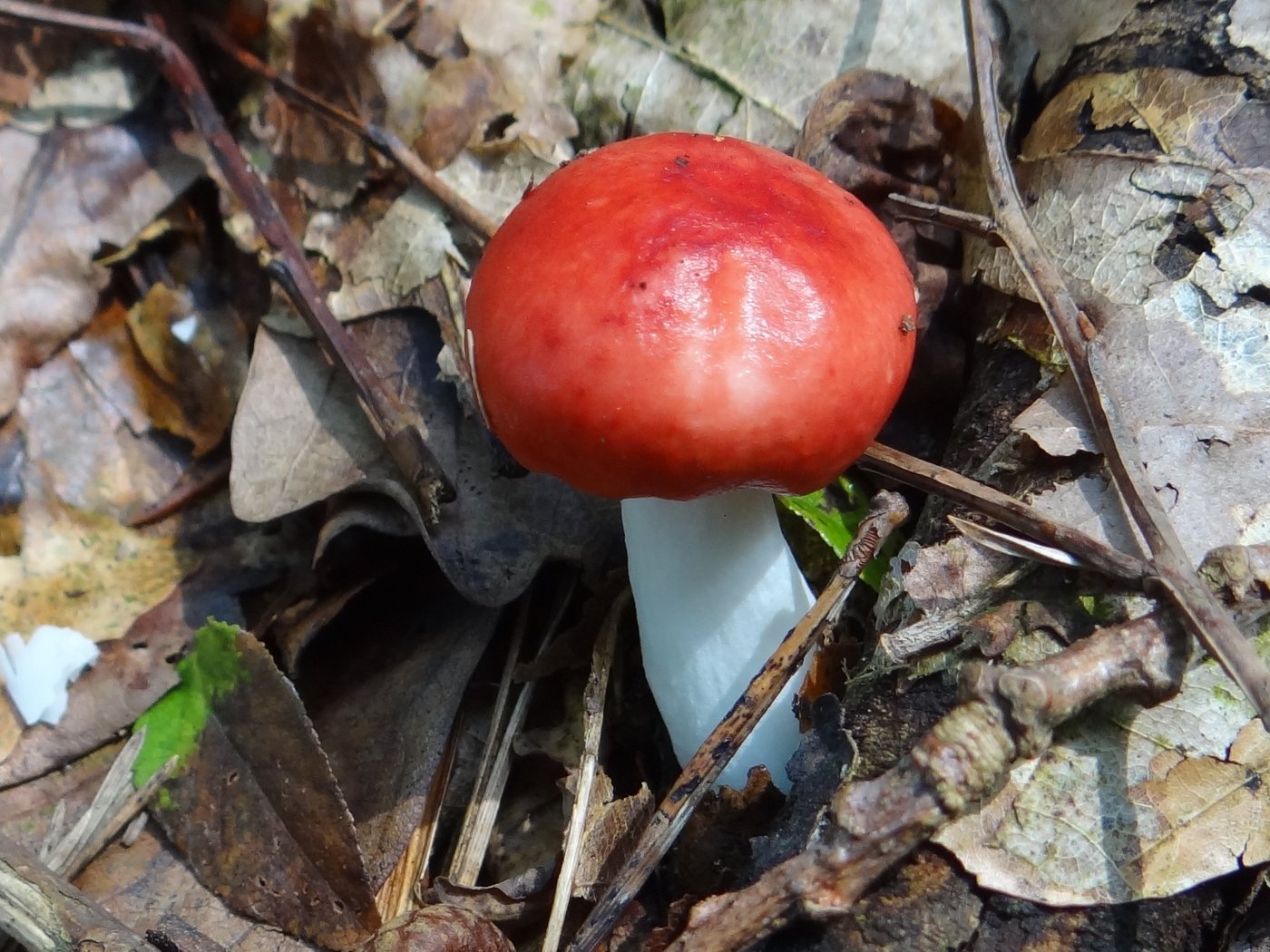
The sickener
Russula emetica
- Known today as
- A bright red, brittle mushroom of wet pine woods.
- Kind
- Fungus
- Constituents
- unknown sesquiterpenes
- Poisoning
- Gastrointestinal irritants
- In other databases
- GBIF search · Wikidata search
Caution. Poisonous.
The sickener: what was it used for?
None, though its name is its use.
The sickener: what does modern science say?
A sharp-tasting emetic that causes vomiting and diarrhea; not dangerous to life in the healthy.
The sickener: is it poisonous?
Yes, in some form or dose. Poisonous. Its poisoning is gastrointestinal irritants: Thirty minutes to three hours: the short latency is reassuring, since the deadly syndromes come later. Historical description, not medical advice; in a poisoning, call a poison centre.
Pharmacognosy & Toxicology
- Constituents
- unknown sesquiterpenesthe burning taste
- Mechanism
- Irritant to the gut; the peppery taste that gives the name is the warning.
- Toxic dose
- A meal brings an hour or two of vomiting.
- Syndrome
- Gastrointestinal irritants
- Standing
- None; eaten salted in Russia after boiling.
- Phillips, R. (2006). Mushrooms. Verified against its record · doi:10.5325/j.ctt7v3rx.7
Constituent names open the compound’s record at PubChem, and “ChEMBL” beside a name opens its record at ChEMBL, the European Bioinformatics Institute’s database of bioactive molecules. Where a mechanism line was checked against ChEMBL (ChEMBL 37, read 1 October 2026), the check is shown with the measured value and its source paper, or says plainly that nothing has been measured. Doses are as the references give them, for description only; this is not medical advice. Each source carries the result of its check against Crossref, PubMed, or the authority’s page: see Verification.
The sickener: what lore surrounds it?
Named for exactly what it does.
In Their Own Words
Badham says reports of Agaricus emeticus differed widely, some calling it deleterious even after cooking, others declaring it harmless on the evidence of dogs that had been persuaded to eat it.
“Reports concerning the qualities of this fungus differ widely, some asserting it to be a most deleterious species, of which the mischief was not to be removed by cooking, whilst others, on the authority of dogs whom they persuaded to eat some, pronounced it innoxious”
Charles David Badham, M.D., A Treatise on the Esculent Funguses of England, Agaricus emeticus, p. 103. London: Reeve, Brothers, King William Street, Strand, 1847 (Internet Archive OCR text). The text, read in part
M. C. Cooke writes of the Emetic Agaric that many disasters are recorded from eating it, that a small fragment is said to cause unpleasant sensations and so justify its name.
“Many are the stories of disasters recorded from the inadvertent indulgence in the Emetic Agaric, as it is sometimes termed, only a small fragment of which is said to occasion unpleasant sensations, and establish its claims to its specific name.”
M. C. Cooke, A Plain and Easy Account of British Fungi, Russula: the Emetic Agaric, p. 61. London: Robert Hardwicke, 192, Piccadilly, 1862 (Internet Archive OCR text). The text, read in part
Each passage is quoted from the text named, which the press fetched and read, and was checked word for word against a fresh copy of it; the link opens that copy. Passages are given as printed, without the editors’ footnote numbers, and with words broken across lines joined.
Sources
- Phillips, R. (2006). Mushrooms. Verified against its record · doi:10.5325/j.ctt7v3rx.7
Verification
- Checked
- October 1, 2026
- Passes
- Every sentence read against its sources, in the pass over the remaining 343 entries
- The Standing line checked against the authority it names (EMA, WHO, FDA, CITES, Commission E)
- Every dated or regulatory claim checked by category across the database
- Sources
- 1 cited: 1 verified against its record.
- Corrections
- None were needed.
What was checked, how, and what was found is set out on the Verification page. A checked source is one whose record was found; it does not make the entry medical advice.
Cite This Entry
Version 1 · first published September 25, 2026
- Chicago
“The sickener.” In Materia Medica, edited by B. C. P. Statema. Version 1. The Thinking Press, 2026–. Last modified September 25, 2026. https://thethinkingpress.org/materia-medica/sickener.
- MLA
“The sickener.” Materia Medica, edited by B. C. P. Statema, version 1, The Thinking Press, 25 Sept. 2026, thethinkingpress.org/materia-medica/sickener. Accessed 8 Oct. 2026.
- APA
The sickener. (2026, September 25). In B. C. P. Statema (Ed.), Materia medica (Version 1). The Thinking Press. Retrieved October 8, 2026, from https://thethinkingpress.org/materia-medica/sickener
Club members keep entries on a shelf with private notes, print the plates as cards, and receive an entry by email each week. Create a free account before January 1, 2027 and all of it is yours for good. About the Club
See Also
Poisoned alike: gastrointestinal irritants
Yellow stainer · Scammony · Bryony · Pokeweed · Caper spurge · Morel · Castor-oil plant, seeds of · Mistletoe · the syndrome, with all of them →
Drawing on the same sources: Phillips
Nearby in the alphabet
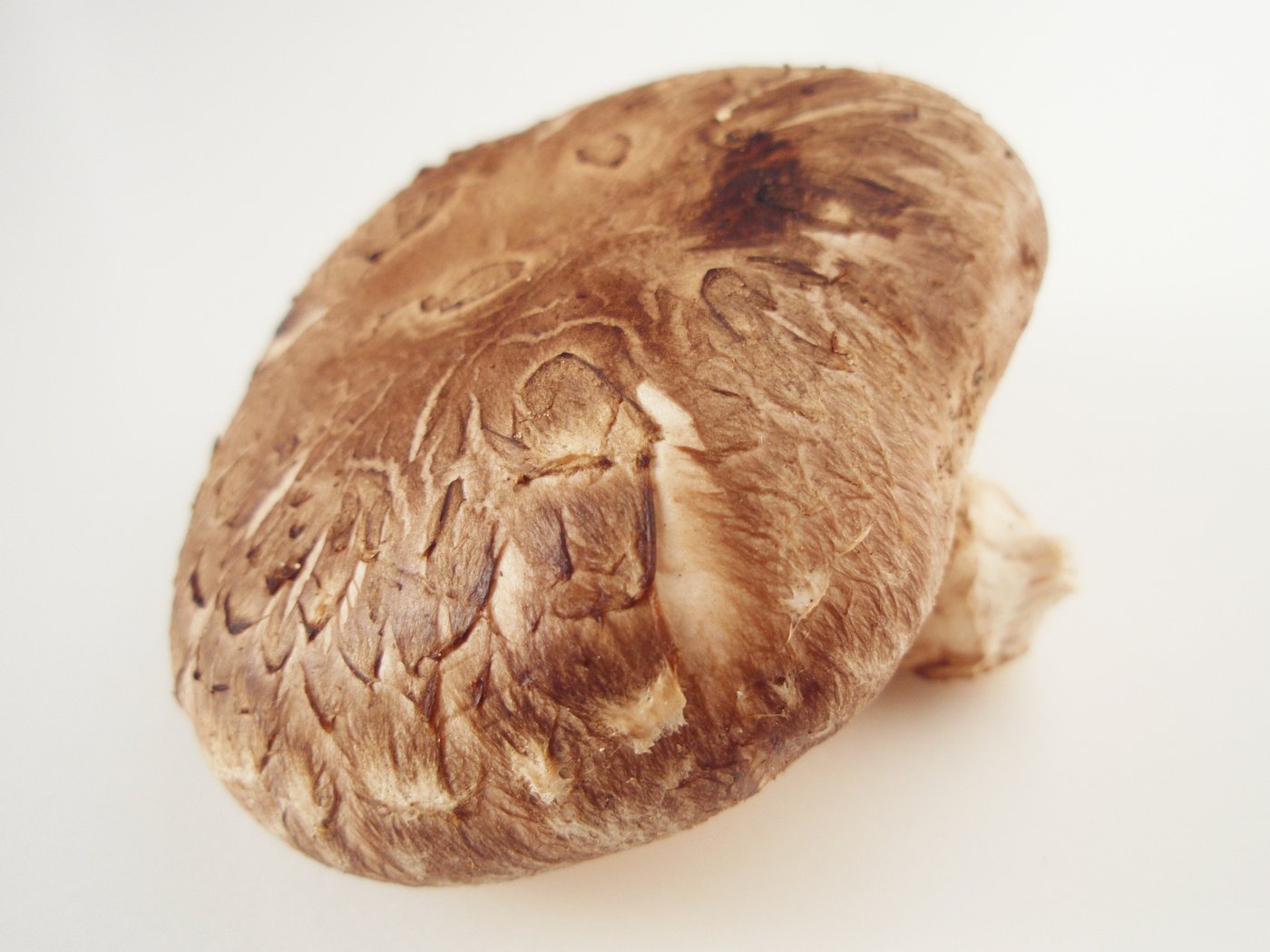
Silphium (probably a giant fennel (Ferula)) · Shiitake (cultivated in China and Japan for about a thousand years) · Silver · Shepherd’s purse · Snail (shelled and boiled, distilled, or eaten) · Senna (The leaves and pods of Senna alexandrina) · Snapdragon (Antirrhinum majus) · Self-heal (Prunella vulgaris)

Historical description, not medical advice.