Convulsant terpenes: how soon does it show? Minutes to an hour from the oils.
How does it run? Agitation, then convulsions; the terpenes block the GABA-A receptor. The herbs in a tea are far below the convulsant dose; the distilled oils are not.
What is done for it? Benzodiazepines; supportive care.
Historical and descriptive, not medical advice. In a poisoning, call a poison centre or emergency services.
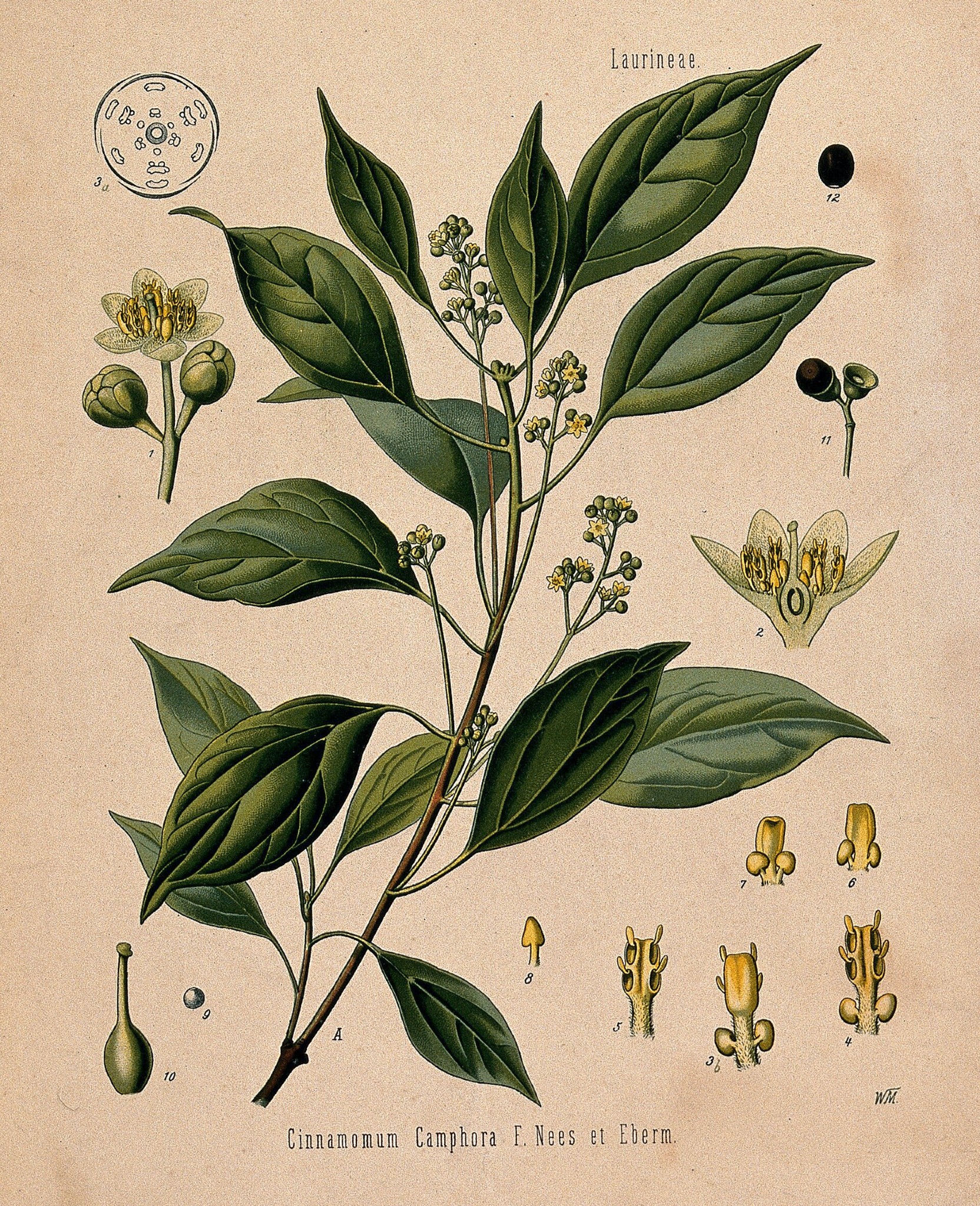
Which substances in the database cause it? C Resin & Wood Camphor Arabic kāfūr
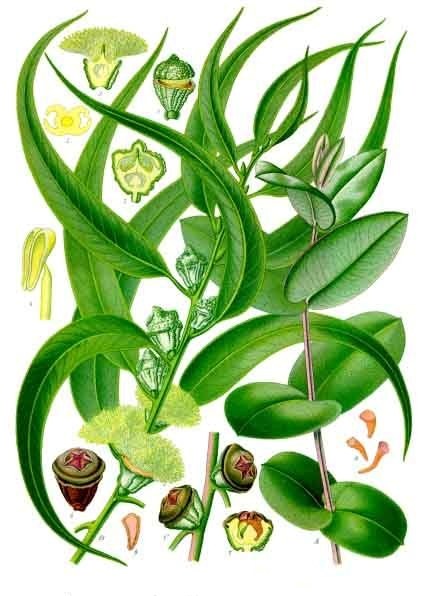
The crystalline gum of Cinnamomum camphora . Caution E Plant Eucalyptus Blue gum, fever tree, stringy bark tree; Eucalyptus globulus Labill.; in pharmacy Eucalypti folium , the leaf, and Eucalypti aetheroleum , the oil
Eucalyptus globulus , the blue gum of Victoria and Tasmania, which Grieve says reaches 375 feet and ranks among the largest trees in the world. Young trees have broad, stalkless, whitish-green leaves set opposite and flat; after four or five years come sword-shaped, bluish leaves, “alternate and vertical, i.e. with the edges turned towards the sky and earth.” The flower bud wears a cap thrown off as a lid when it opens, whence the Greek name, well-covered. The leaves and the oil distilled from them are the medicines.Caution H
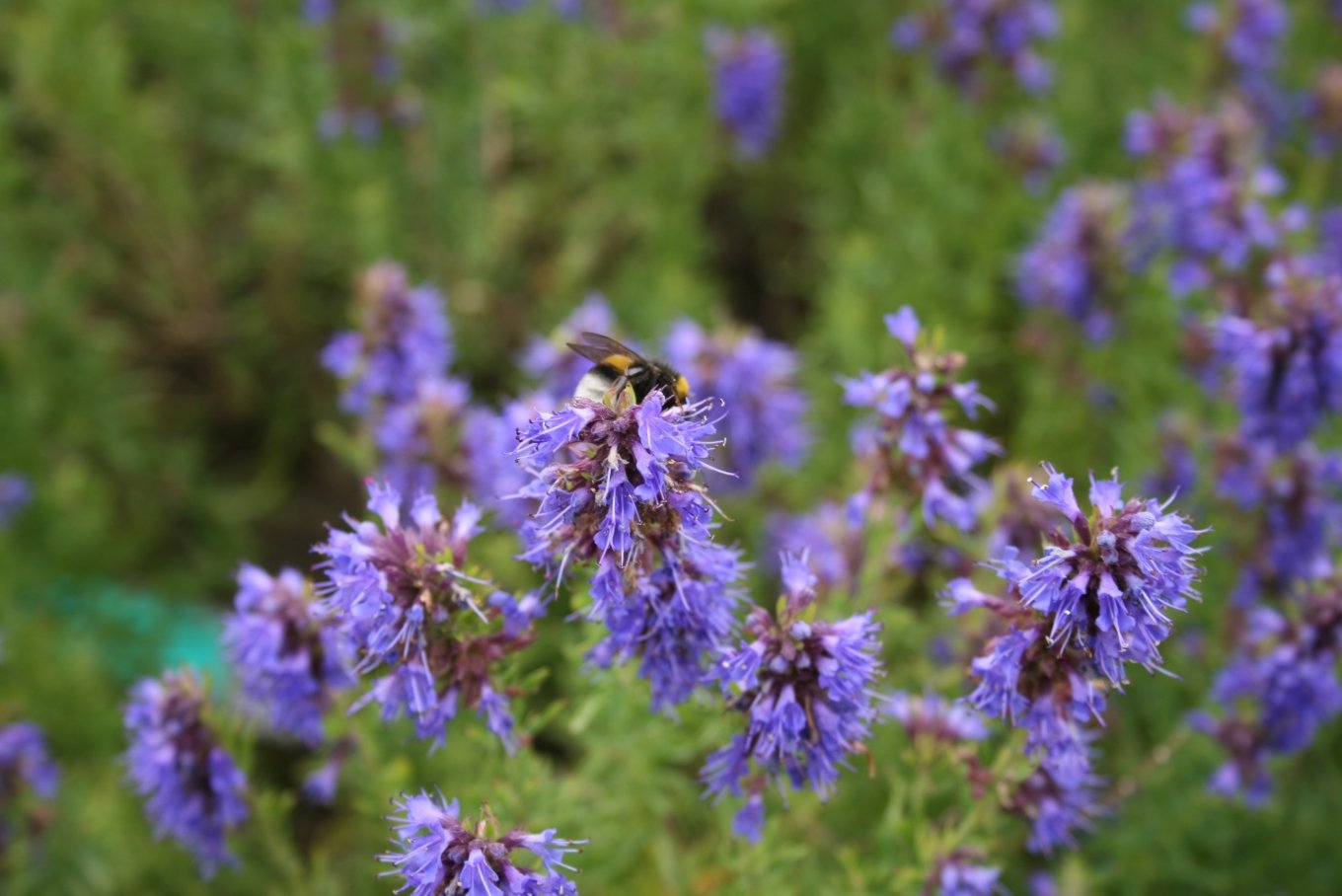
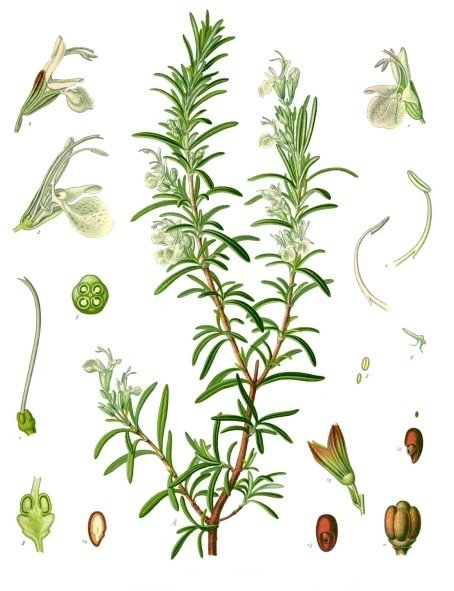
Compound Hungary water Aqua Hungarica Bateana , renamed spiritus rorismarini in 1746Fresh rosemary tops in flower, steeped in spirit of wine and distilled. H Plant Hyssop Greek hyssopos ; Hebrew azob , “a holy herb,” in Grieve’s account
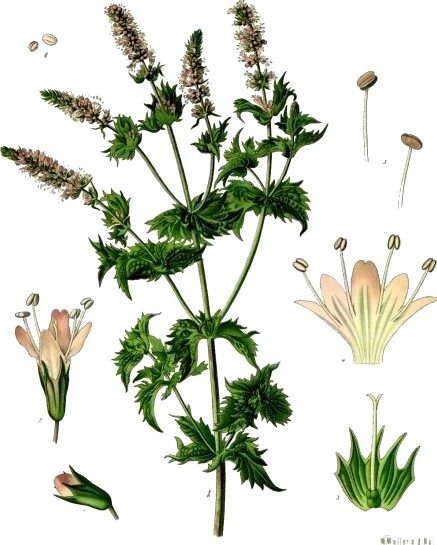
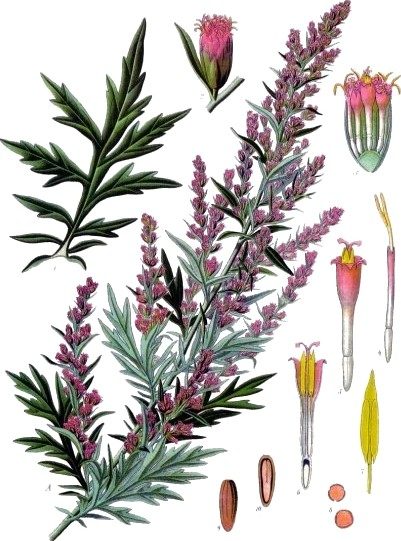
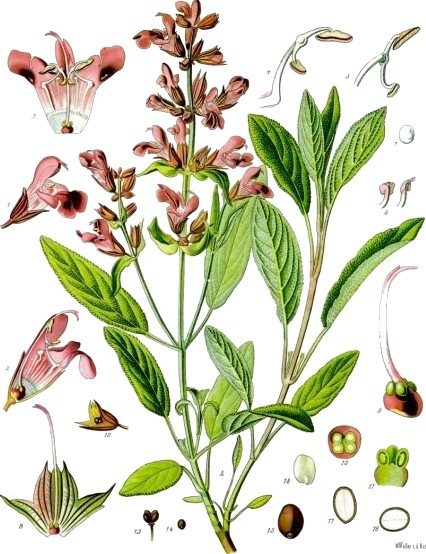
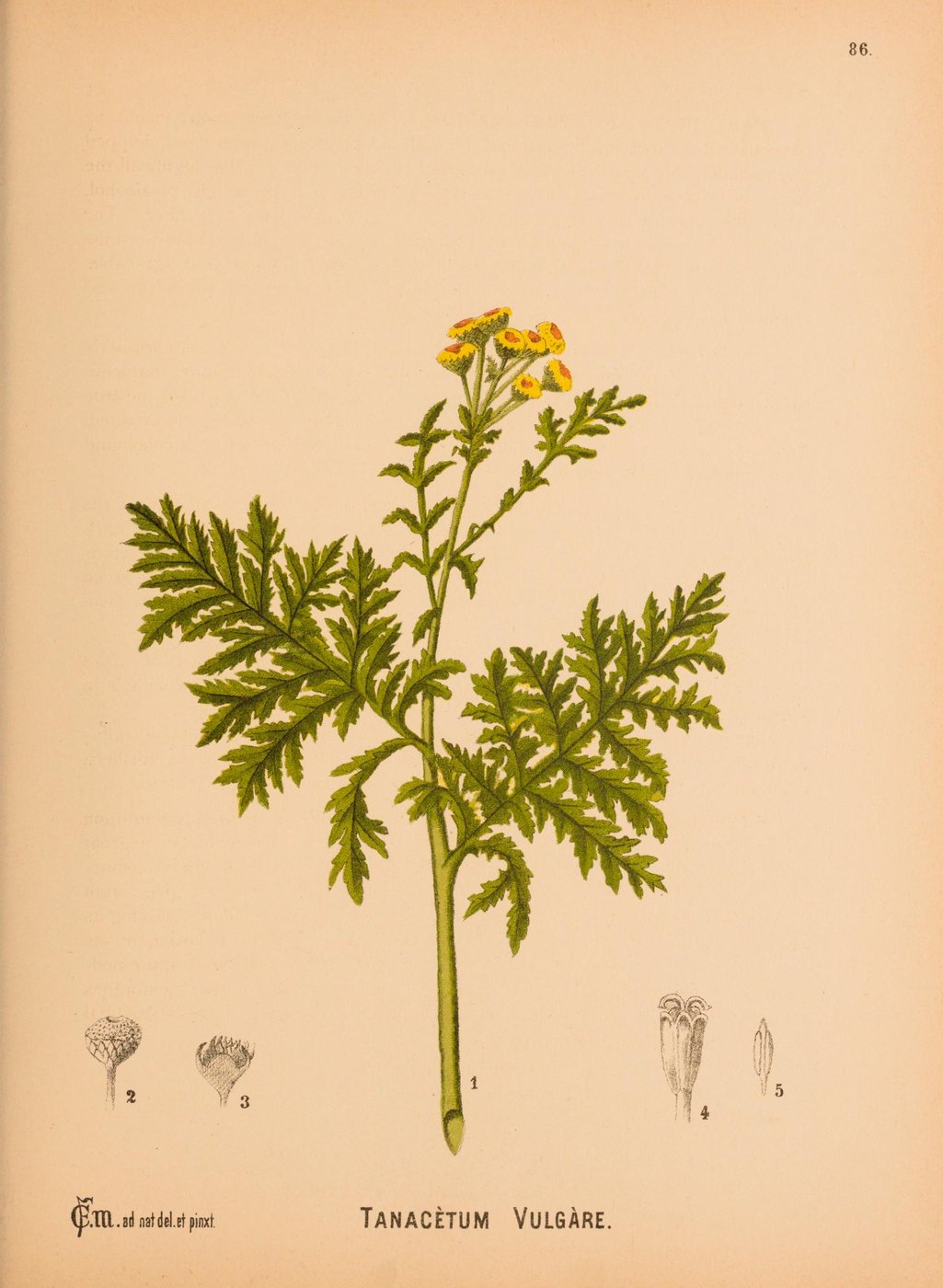
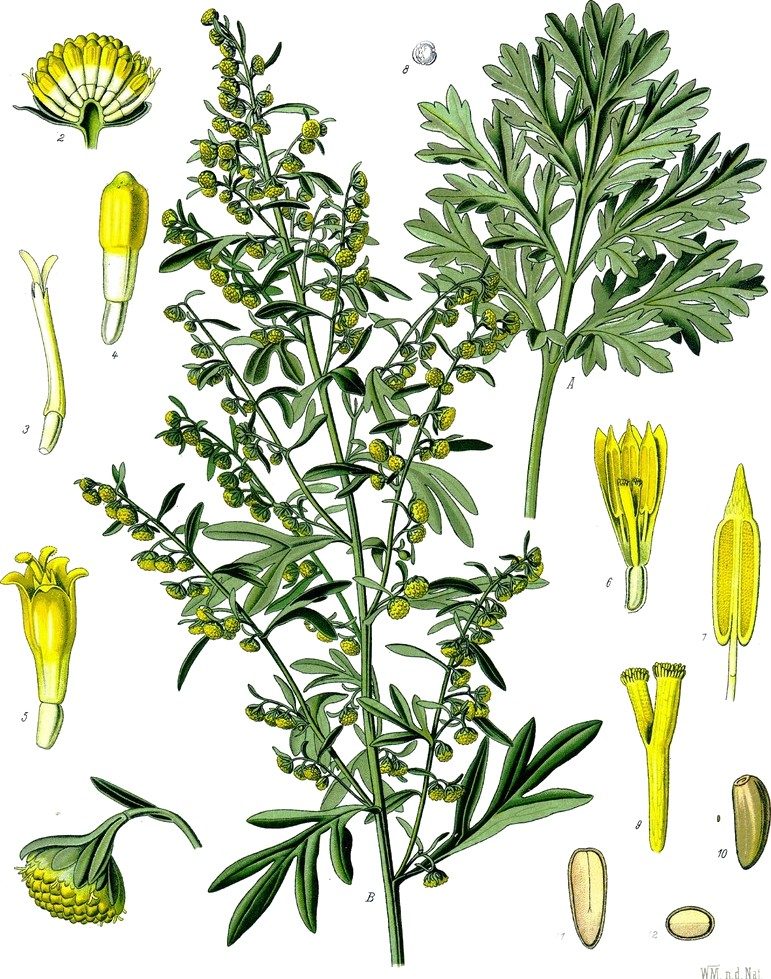
Hyssopus officinalis ; the hyssop of Scripture was probably a wild marjoram, Origanum syriacum .M Plant Mint, oil of Oglio di menta Oil of garden or spear mint. Canale M Plant Mugwort Artemisia Artemisia vulgaris .Canale R Plant Rosemary Rosmarinus , ‘sea-spray’, from its usually growing on the sea-coast (Prior)Salvia rosmarinus (formerly Rosmarinus officinalis ).S Plant Sage Salvia Salvia officinalis .Canale T Plant Tansy Tanacetum Tanacetum vulgare .Caution W Plant Wormwood, oil of Oglio d’assenzo Artemisia absinthium .Canale Sources Höld, K. M., et al. (2000). “α-Thujone (the active component of absinthe): GABA-A receptor modulation.” PNAS 97. Verified against its record · doi:10.1073/pnas.070042397 Millet, Y., et al. (1981). Clinical Toxicology 18. Book, seen in reviews