
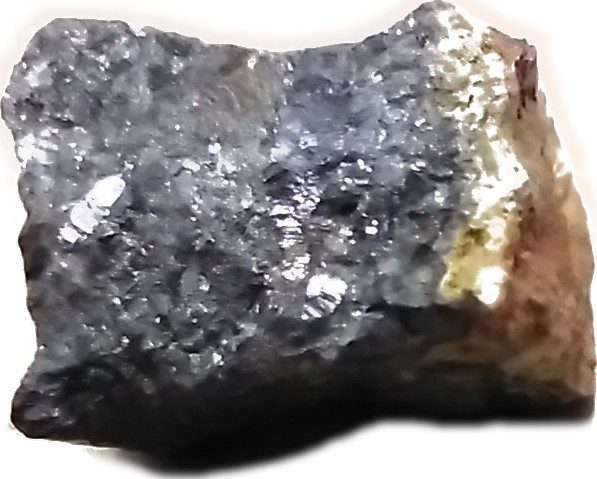
Antimony
Antimonio
- Known today as
- The metallic element and its compounds.
- Kind
- Mineral, in 3 older authorities
- Constituents
- antimony potassium tartrate, antimony trisulfide
- Poisoning
- Mercury, arsenic, lead, and antimony
- Earliest authority here
- Antiquity
- In other databases
- Wikidata search
- In the Canale glossary
- On the Manner of Discerning and Healing the Bewitched, Appendix A: Part Three, Chapter 5: Vomitory Medicines
Caution. Hazardous in some form or dose; see the modern assessment below.
Antimony: what did Canale use it for?
Well prepared, safer than hellebore, four to eight grains in wine or conserve (chs. 2, 5).
Antimony: what does modern science say?
A strong emetic, and toxic. Its use was the great controversy of Paracelsian medicine: banned by the Paris Faculty in 1566, it was made lawful again by the Parlement of Paris in 1666. Its salt tartar emetic long served as an emetic and expectorant, and antimony compounds were used against parasitic disease into the 1970s.
Antimony: is it poisonous?
Yes, in some form or dose. Its poisoning is mercury, arsenic, lead, and antimony: Minutes to hours for a large dose; months or years for the slow poisoning of the trades. Historical description, not medical advice; in a poisoning, call a poison centre.
Pharmacognosy & Toxicology
- Constituents
- antimony potassium tartratetartar emetic
- antimony trisulfidestibnite, the ore
- Mechanism
- Antimony binds thiols as arsenic does, and tartar emetic irritates the stomach to vomiting.
- Toxic dose
- About 100 mg of tartar emetic has killed; the “everlasting pill” of metallic antimony was swallowed, recovered, and reused.
- Syndrome
- Mercury, arsenic, lead, and antimony
- Standing
- Antimonials remain in use against leishmaniasis in some countries; none in the West.
- Emsley, J. (2005). The Elements of Murder. Verified against its record · doi:10.1093/oso/9780192805997.001.0001
The abstract of each source, beneath its citation. For Club members. About the Club or sign in.
Constituent names open the compound’s record at PubChem, and “ChEMBL” beside a name opens its record at ChEMBL, the European Bioinformatics Institute’s database of bioactive molecules. Where a mechanism line was checked against ChEMBL (ChEMBL 37, read 1 October 2026), the check is shown with the measured value and its source paper, or says plainly that nothing has been measured. Doses are as the references give them, for description only; this is not medical advice. Each source carries the result of its check against Crossref, PubMed, or the authority’s page: see Verification.
Antimony: what lore surrounds it?
Kohl, of which powdered antimony (stibium) was a chief ingredient, was worn in ancient Egypt not only as adornment but as a believed protection for the eyes against the glare of the sun and against infection, and was applied to infants as well as adults. Its association with Cleopatra in particular belongs to modern popular retelling rather than to documented practice.
Antimony: what did the older authorities say?
- Antiquity
- As stibium, powdered stibnite was the kohl that darkened eyes from Egypt to Rome.
- Basil Valentine
- The Triumphal Chariot of Antimony (1604) made it the emblem of the new chemical medicine.
- Paris
- The Parlement banned it as a medicine in 1566 at the Faculty’s urging, and the ban was lifted a century later, after it was credited with curing the young Louis XIV.
Sources
- [38] Encyclopaedia Britannica, online edition, britannica.com. Articles: Ambergris; Aristolochiaceae; Asafetida; Azurite; Castor-oil plant; Civet; Dragon’s blood; Garden cress; Jet; Kermes; Laudanum; Lye; Monemvasía; Musk; Precious coral; Saltpetre; Sulfur dioxide; Tartar emetic; Tropaeolum. Book, seen in reviews
- [55] Guerriaud, M. (2026). L’antimoine : un remède anticlérical ? VIDAL, 17 February 2026. vidal.fr. Book, not indexed
- [63] Hussey, K. (2018). “May God protect us from such drugs and physicians!”: a 17th century antimony cup. Royal College of Physicians Museum blog, 27 July 2018. Book, not indexed
- [117] Victoria and Albert Museum. Antimonial cup with case and box, museum no. 1370A to D-1900. collections.vam.ac.uk. Book, not indexed
Verification
- Checked
- October 1, 2026
- Passes
- Every sentence read against its sources, in the pass over the remaining 343 entries
- The Standing line checked against the authority it names (EMA, WHO, FDA, CITES, Commission E)
- Every dated or regulatory claim checked by category across the database
- Sources
- 5 cited: 1 verified against its record, 1 book, seen in reviews, 3 book, not indexed. 1 with the abstract on file.
- Corrections
- None were needed.
What was checked, how, and what was found is set out on the Verification page. A checked source is one whose record was found; it does not make the entry medical advice.
Cite This Entry
Version 1 · first published September 25, 2026
- Chicago
“Antimony.” In Materia Medica, edited by B. C. P. Statema. Version 1. The Thinking Press, 2026–. Last modified September 25, 2026. https://thethinkingpress.org/materia-medica/antimony.
- MLA
“Antimony.” Materia Medica, edited by B. C. P. Statema, version 1, The Thinking Press, 25 Sept. 2026, thethinkingpress.org/materia-medica/antimony. Accessed 8 Oct. 2026.
- APA
Antimony. (2026, September 25). In B. C. P. Statema (Ed.), Materia medica (Version 1). The Thinking Press. Retrieved October 8, 2026, from https://thethinkingpress.org/materia-medica/antimony
Club members keep entries on a shelf with private notes, print the plates as cards, and receive an entry by email each week. Create a free account before January 1, 2027 and all of it is yours for good. About the Club
See Also
Poisoned alike: mercury, arsenic, lead, and antimony
Armenian stone, pills of · White lead · Aurum potabile · White arsenic · Cinnabar · Vitriol · Iron and steel · Verdigris · the syndrome, with all of them →
Nearby in the alphabet
Apples, syrup of (A syrup of sweet apples) · Aniseed (Pimpinella anisum) · Armenian bole (colored by iron oxide) · Angel’s wings (fan-shaped fungus that rots conifer wood) · The amulet herbs (See each above) · Arthritica (named for its use against gout (note XLIX)) · Ambergris (A waxy substance formed in the gut of the sperm whale)
Historical description, not medical advice.