
Funeral bell
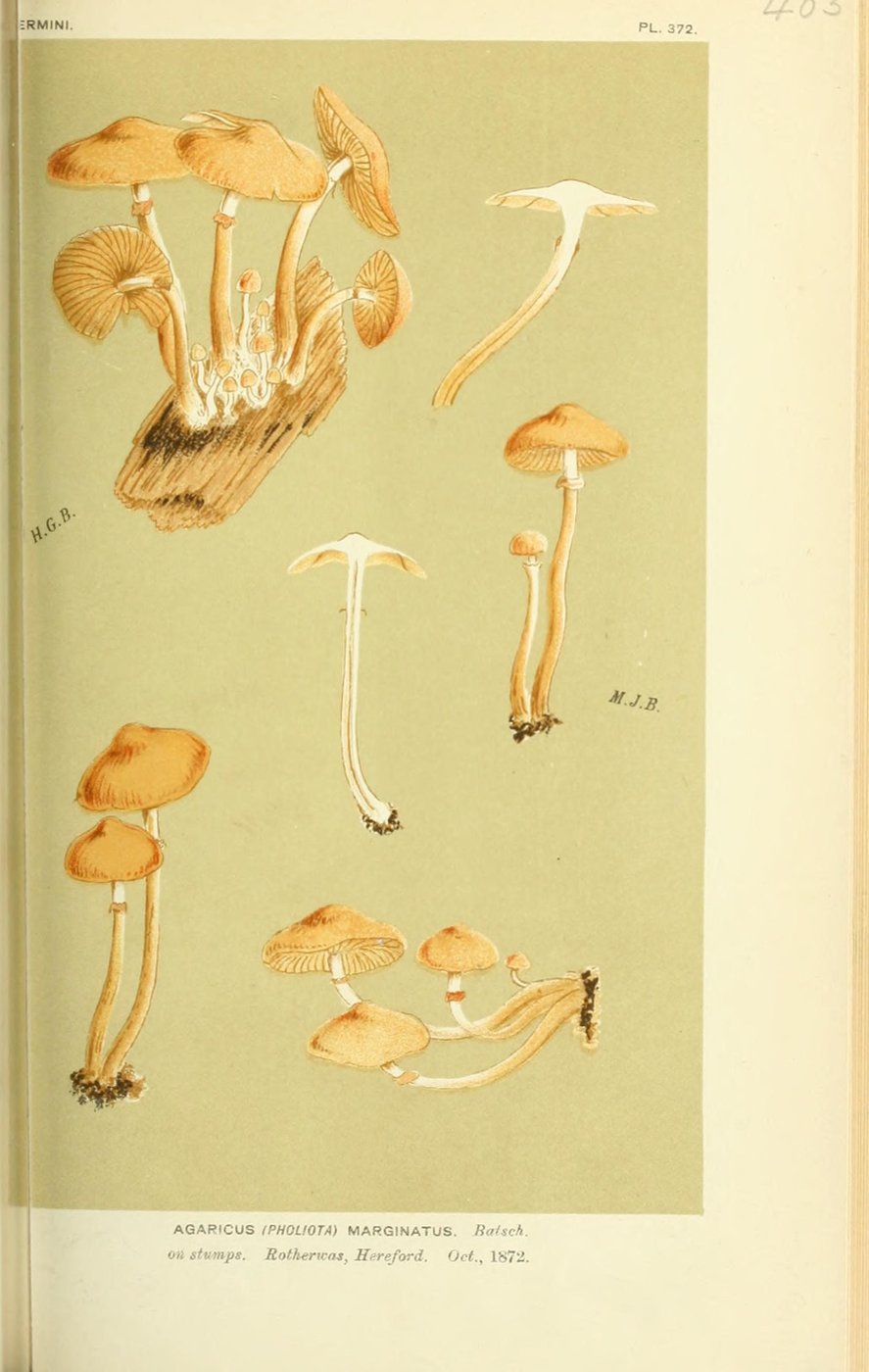
Galerina marginata
- Known today as
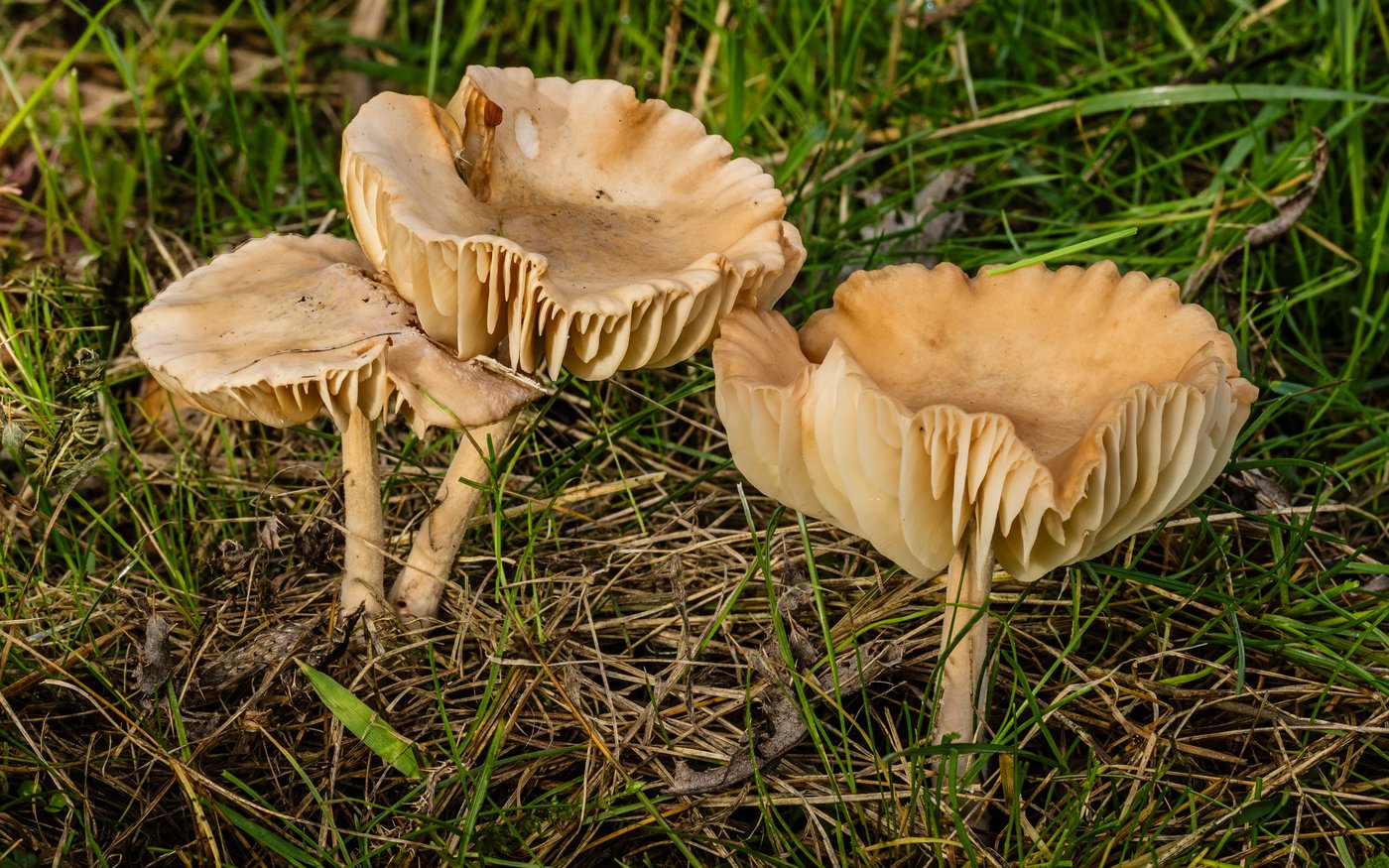
- A small brown mushroom of rotting wood.
- Kind
- Fungus
- Constituents
- alpha-amanitin
- Poisoning
- Amatoxin poisoning
- In other databases
- GBIF search · Wikidata search
Revised October 3, 2026: Checked against its sources, each read in full, in part, or in its abstract. Version 1, first published September 25, 2026.
Deadly. Historical description only.
Funeral bell: what was it used for?
None.
Funeral bell: what does modern science say?
Contains the amatoxins of the death cap.
Funeral bell: is it poisonous?
Yes, and it can kill. Its poisoning is amatoxin poisoning: 6 to 24 hours, usually 10 to 12, with no symptoms before: the long latency is the mark of it. Historical description, not medical advice; in a poisoning, call a poison centre.
Pharmacognosy & Toxicology
- Constituents
- Mechanism
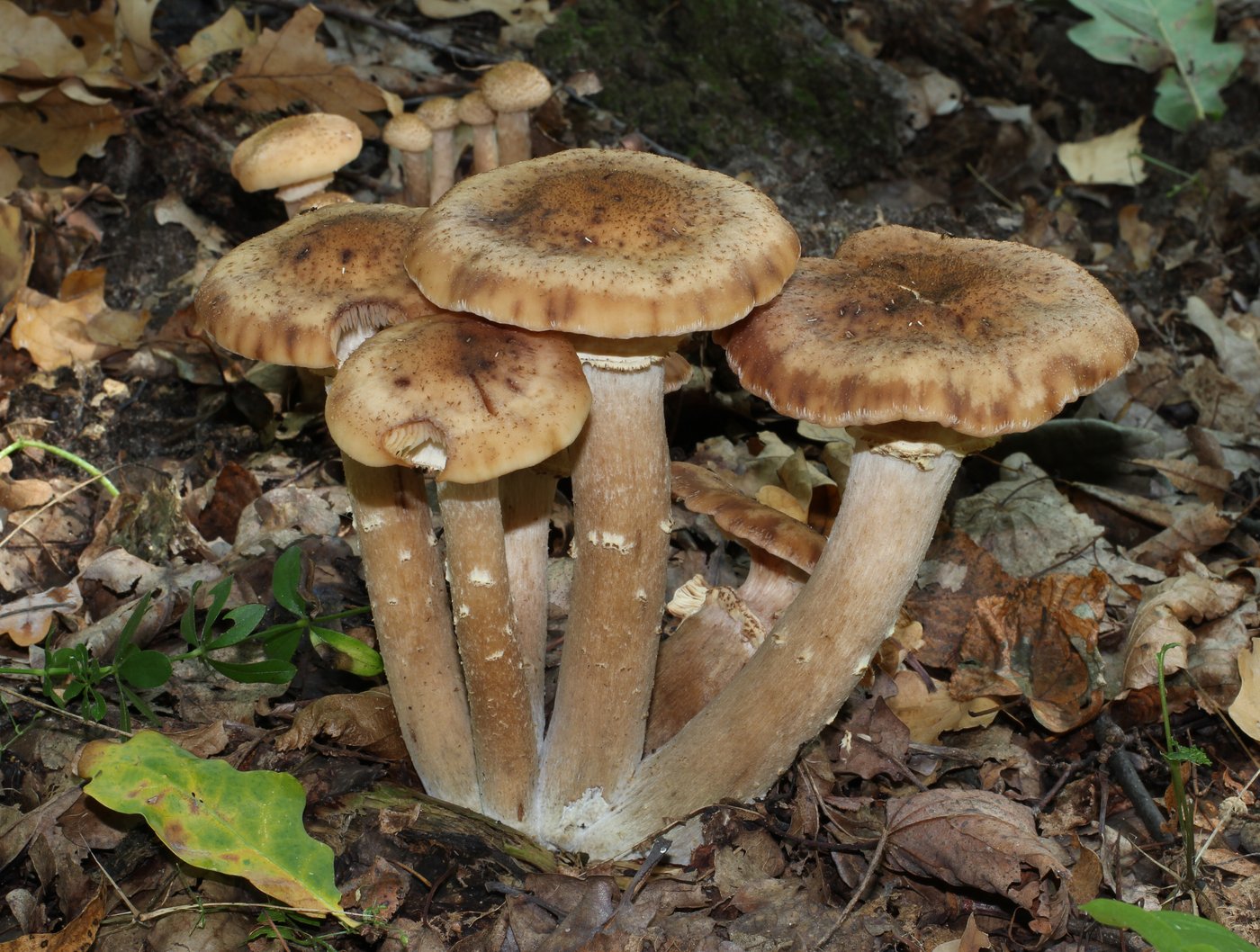
- As the death cap: the amatoxins of Galerina marginata are the same, in a small brown mushroom mistaken for the honey fungus and the hallucinogenic Psilocybe.
- Toxic dose
- Not established; several poisonings have followed when it was gathered in mistake for the hallucinogenic Psilocybe stuntzii.
- Syndrome
- Amatoxin poisoning
- Standing
- None.
Constituent names open the compound’s record at PubChem, and “ChEMBL” beside a name opens its record at ChEMBL, the European Bioinformatics Institute’s database of bioactive molecules. Where a mechanism line was checked against ChEMBL (ChEMBL 37, read 1 October 2026), the check is shown with the measured value and its source paper, or says plainly that nothing has been measured. Doses are as the references give them, for description only; this is not medical advice. Each source carries the result of its check against Crossref, PubMed, or the authority’s page: see Verification.
Funeral bell: what lore surrounds it?
A plain little brown mushroom, which may be mistaken for the edible honey fungus and for some Psilocybe species.
In Their Own Words
Atkinson describes Pholiota marginata as a very common small species found throughout the autumn on decaying trunks in woods; he says nothing of eating it.
“This is one of the very common species, a small one, occurring all during the autumn, on decaying trunks, etc., in the woods. The plants are usually clustered, though appearing also singly.”
George Francis Atkinson, Studies of American Fungi. Mushrooms, Edible, Poisonous, etc., Chapter VIII (The Ochre-Spored Agarics), Pholiota marginata. Second edition; New York: Henry Holt and Company, 1903 (Project Gutenberg eBook #26492). The text, read in part
Each passage is quoted from the text named, which the press fetched and read, and was checked word for word against a fresh copy of it; the link opens that copy. Passages are given as printed, without the editors’ footnote numbers, and with words broken across lines joined.
Sources
- Wikipedia contributors. “Galerina marginata.” Wikipedia, The Free Encyclopedia. en.wikipedia.org/wiki/Galerina_marginata (read 2 October 2026). Read in full · the text read
Verification
- Checked
- October 1, 2026, and October 3, 2026
- Passes
- Every sentence read against its sources, in the pass over the remaining 343 entries
- The Standing line checked against the authority it names (EMA, WHO, FDA, CITES, Commission E)
- Every dated or regulatory claim checked by category across the database
- Every source read, in full, in part, or in its abstract, and every sentence checked against what was read (October 3, 2026)
- Sources
- 1 cited: 1 read in full.
- Corrections
- None were needed.
What was checked, how, and what was found is set out on the Verification page. A checked source is one whose record was found; it does not make the entry medical advice.
Cite This Entry
Version 1 · first published September 25, 2026 · last revised October 3, 2026
- Chicago
“Funeral bell.” In Materia Medica, edited by B. C. P. Statema. Version 1. The Thinking Press, 2026–. Last modified October 3, 2026. https://thethinkingpress.org/materia-medica/funeral-bell.
- MLA
“Funeral bell.” Materia Medica, edited by B. C. P. Statema, version 1, The Thinking Press, 3 Oct. 2026, thethinkingpress.org/materia-medica/funeral-bell. Accessed 8 Oct. 2026.
- APA
Funeral bell. (2026, October 3). In B. C. P. Statema (Ed.), Materia medica (Version 1). The Thinking Press. Retrieved October 8, 2026, from https://thethinkingpress.org/materia-medica/funeral-bell
Club members keep entries on a shelf with private notes, print the plates as cards, and receive an entry by email each week. Create a free account before January 1, 2027 and all of it is yours for good. About the Club
See Also
Poisoned alike: amatoxin poisoning
Death cap · Destroying angel · the syndrome, with all of them →
Nearby in the alphabet
Galangal (Alpinia officinarum) · Fu ling (the sclerotium of a fungus that grows on pines) · Galbanum (Gum resin of Ferula gummosa) · Friar’s balsam (storax, balsam of tolu, and aloes, in spirit) · Gallia moschata (made into troches of aloeswood, ambergris, and musk) · Frankincense (The resin of Boswellia sacra and related trees) · Gamboge (yellow as egg yolk) · Fox’s heart (The dried heart of a fox)
,_to_serve_as_an_atlas_to_the_%22Handbook_of_British_Fungi%22_(Pl._403)_(8722267857).jpg)
Historical description, not medical advice.