
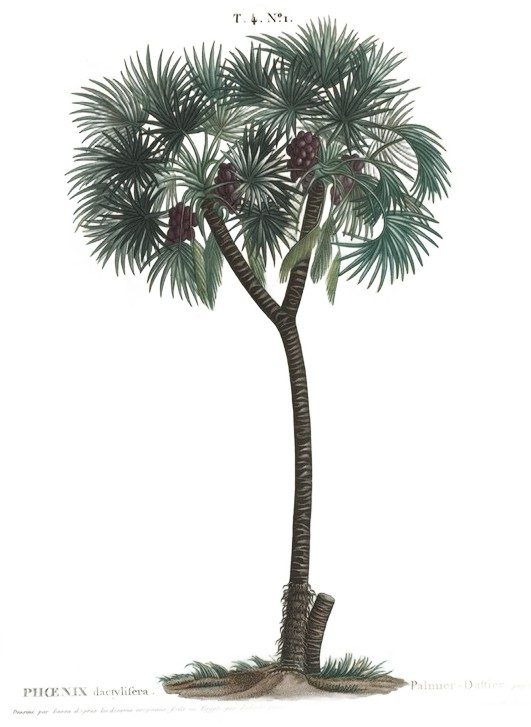
Diaphenicon
- Known today as
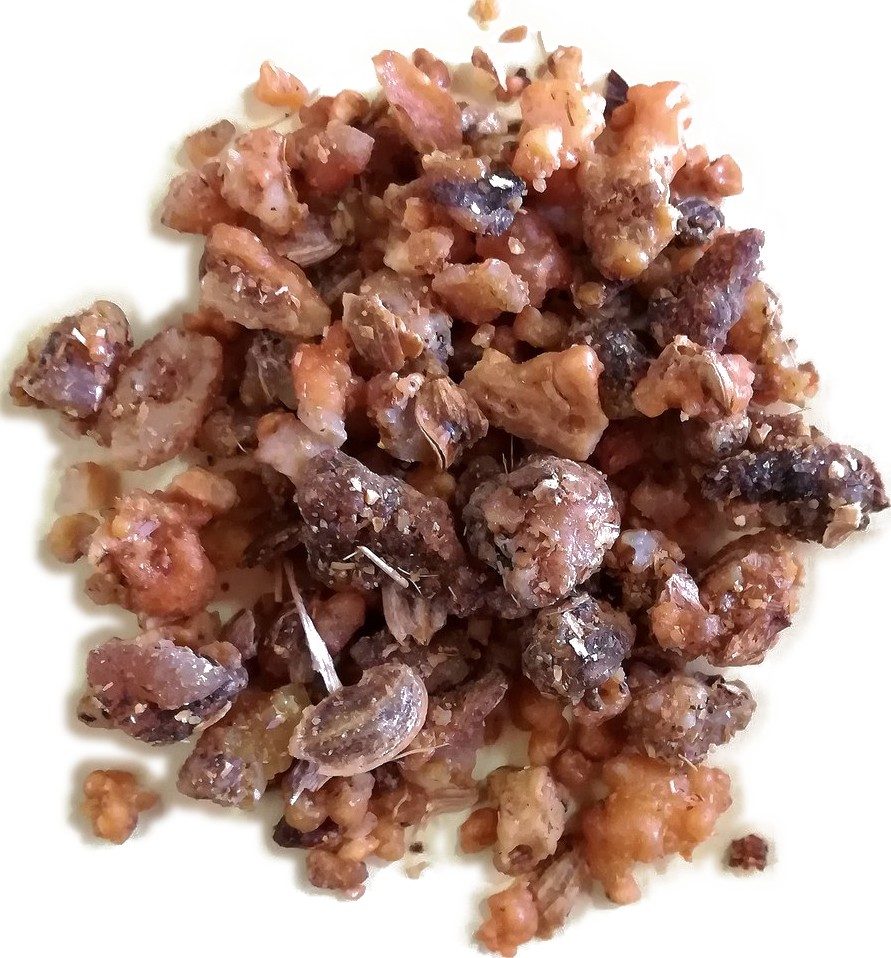
- A purgative electuary of dates, with turpeth, scammony, and spices.
- Kind
- Compound
- Constituents
- scammonin, turpeth resin, dates, almonds, and penids, and 1 more
- Poisoning
- The drastic resins
- In the Canale glossary
- On the Manner of Discerning and Healing the Bewitched, Appendix A: Part Three, Chapter 4: Stronger Purgatives and Compound Medicines
Revised October 3, 2026: Checked against its sources, each read in full, in part, or in its abstract. Version 1, first published September 25, 2026.
Diaphenicon: what did Canale use it for?
In the purge for phlegmatic patients (ch. 4; see note XXXI).
Diaphenicon: what does modern science say?
Its scammony and turbith made it effective and harsh.
Pharmacognosy & Toxicology
- Constituents
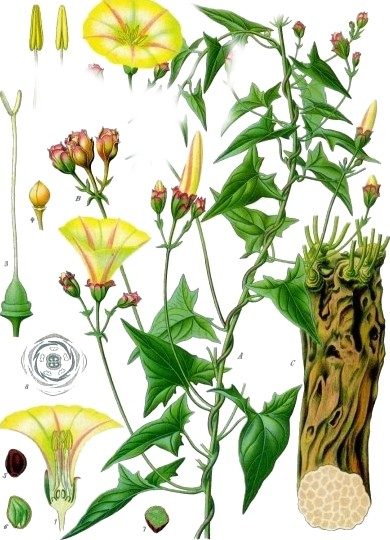
- scammonin ChEMBLthe resin of scammony, the purge
- turpeth resin
- dates, almonds, and penidsthe bulk
- pepper, ginger, and ruethe warming correctives
- Mechanism
- An electuary of dates with scammony and turpeth: two resin purgatives, scammony drastic and quick, turpeth like jalap but slower, given to phlegmatic patients because turpeth was held to purge more phlegm than choler. The dates and penids, Mesue’s annotator says, went into purgatives for their viscosity, and the spices corrected the scammony.
- Toxic dose
- Culpeper gave half an ounce, chiefly in clysters; the dose of scammony resin in 1911 was 3 to 8 grains, and large doses set up acute irritation of the gut.
- Syndrome
- The drastic resins
- Standing
- In the London Pharmacopoeia of 1653.
- Culpeper, N. (1653). Pharmacopoeia Londinensis, “Diaphoenicon.” Read in part · the text read
Constituent names open the compound’s record at PubChem, and “ChEMBL” beside a name opens its record at ChEMBL, the European Bioinformatics Institute’s database of bioactive molecules. Where a mechanism line was checked against ChEMBL (ChEMBL 37, read 1 October 2026), the check is shown with the measured value and its source paper, or says plainly that nothing has been measured. Doses are as the references give them, for description only; this is not medical advice. Each source carries the result of its check against Crossref, PubMed, or the authority’s page: see Verification.
In Their Own Words
In the London College's recipe as Culpeper gives it, Diaphœnicon begins with the pulp of dates boiled in hydromel, penids and blanched sweet almonds.
“Take of the pulp of Dates boiled in Hydromel, Penids, of each half a pound, sweet Almonds blanched, three ounces and an half”
Nicholas Culpeper, The Complete Herbal, The College's electuaries, 'Diaphœnicon'. London: Thomas Kelly, 17, Paternoster Row, MDCCCL (Project Gutenberg eBook #49513). The text, read in part
Culpeper doubts that it is as useful in fevers as authors claim, because it is a very violent purge.
“I cannot believe this is so profitable in fevers taken downwards as authors say, for it is a very violent purge.”
Nicholas Culpeper, The Complete Herbal, The College's electuaries, 'Diaphœnicon', Culpeper's remark. London: Thomas Kelly, 17, Paternoster Row, MDCCCL (Project Gutenberg eBook #49513). The text, read in part
Each passage is quoted from the text named, which the press fetched and read, and was checked word for word against a fresh copy of it; the link opens that copy. Passages are given as printed, without the editors’ footnote numbers, and with words broken across lines joined.
The Recipe
The recipe: 3 ingredients, each linked to its entry. For Club members. Create a free account or sign in.
Sources
- [28] Culpeper, N. (1653). Pharmacopœia Londinensis, or, The London Dispensatory [the Royal College of Physicians’ pharmacopoeia in English, with Culpeper’s commentary]. London: Peter Cole. Text Creation Partnership edition A35381. Read in part · the text read
- Mesue (1589). I libri di Gio. Mesue de i semplici purgativi, et delle medicine composte, ed. G. Rossetto. Venice. Read in part · the text read
Verification
- Checked
- October 1, 2026, and October 3, 2026
- Passes
- Every sentence read against its sources, in the pass over the remaining 343 entries
- The Standing line checked against the authority it names (EMA, WHO, FDA, CITES, Commission E)
- Every dated or regulatory claim checked by category across the database
- Every source read, in full, in part, or in its abstract, and every sentence checked against what was read (October 3, 2026)
- Sources
- 3 cited: 3 read in part.
- Corrections
- None were needed.
What was checked, how, and what was found is set out on the Verification page. A checked source is one whose record was found; it does not make the entry medical advice.
Cite This Entry
Version 1 · first published September 25, 2026 · last revised October 3, 2026
- Chicago
“Diaphenicon.” In Materia Medica, edited by B. C. P. Statema. Version 1. The Thinking Press, 2026–. Last modified October 3, 2026. https://thethinkingpress.org/materia-medica/diaphenicon.
- MLA
“Diaphenicon.” Materia Medica, edited by B. C. P. Statema, version 1, The Thinking Press, 3 Oct. 2026, thethinkingpress.org/materia-medica/diaphenicon. Accessed 8 Oct. 2026.
- APA
Diaphenicon. (2026, October 3). In B. C. P. Statema (Ed.), Materia medica (Version 1). The Thinking Press. Retrieved October 8, 2026, from https://thethinkingpress.org/materia-medica/diaphenicon
Club members keep entries on a shelf with private notes, print the plates as cards, and receive an entry by email each week. Create a free account before January 1, 2027 and all of it is yours for good. About the Club
See Also
Poisoned alike: the drastic resins
Foetid pills · Cochia pills · Gamboge · Troche of agaric · Golden pills · Lapis lazuli, pills of · Hamech, confection of · Indian electuary, greater and lesser · the syndrome, with all of them →
Drawing on the same sources: Culpeper
Nearby in the alphabet
Diascordium (cinnamon, bole, and other drugs) · Diatrion piperion (with aniseed and ginger) · Diacatholicon (based on senna, rhubarb, cassia, and tamarind with various seeds) · Dill (Anethum graveolens) · Devil’s-bit scabious (Succisa pratensis) · Dittany (Origanum dictamnus, famous in antiquity for drawing out arrows) · Destroying angel (Pure white amanitas of Europe and North America)
Historical description, not medical advice.