
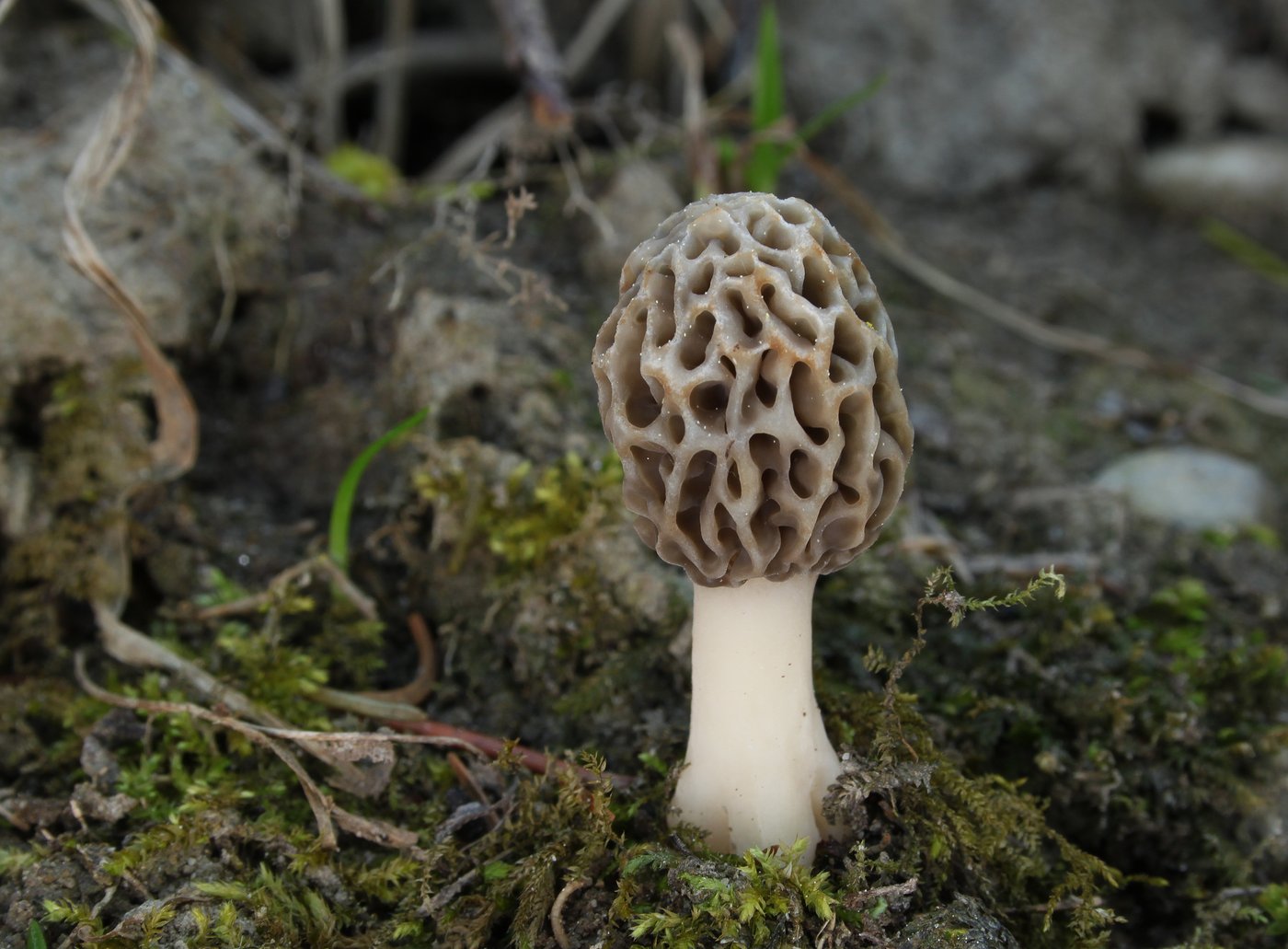
Morel
Morchella esculenta and relatives
- Known today as
- A honeycombed, hollow spring mushroom.
- Kind
- Fungus, in 1 older authority
- Constituents
- a heat-labile haemolysin, small amounts of hydrazines, unidentified neurotoxin
- Poisoning
- Gastrointestinal irritants
- Earliest authority here
- Its name
- In other databases
- GBIF search · Wikidata search
Revised October 1, 2026: Tradition, lore, modern assessment, and sources extended. Version 1, first published September 25, 2026.
Caution. Never eat raw.
Morel: what was it used for?
One of the most prized edible fungi.
Morel: what does modern science say?
Must be cooked: raw or undercooked morels cause illness, and they are easily confused with the false morel (see False morel). The sickness from raw morels is from hydrazine compounds destroyed by cooking, and from a sensitivity in some people even to the cooked fungus. In 2023 undercooked morels in a Montana sushi restaurant made fifty-one people ill and killed two.
Pharmacognosy & Toxicology
- Constituents
- a heat-labile haemolysindestroyed by cooking
- small amounts of hydrazinesdisputed
- unidentified neurotoxinin the morel neurological syndrome
- Mechanism
- Raw or undercooked, morels give gastroenteritis; eaten in quantity even cooked they have caused, in a French series of 129 cases (Saviuc, 2010), a syndrome of tremor, dizziness, and unsteadiness twelve hours after the meal, resolving in a day, from an unknown agent. The false morel with its gyromitrin is the deadly lookalike.
- Toxic dose
- A food when cooked and eaten in moderation; the neurological cases followed large meals.
- Syndrome
- Gastrointestinal irritants
- Standing
- A prized edible with a documented syndrome.
- Saviuc, P., et al. (2010). “Can morels (Morchella sp.) induce a toxic neurological syndrome?” Clinical Toxicology 48. Verified against its record · doi:10.3109/15563651003698034
Constituent names open the compound’s record at PubChem, and “ChEMBL” beside a name opens its record at ChEMBL, the European Bioinformatics Institute’s database of bioactive molecules. Where a mechanism line was checked against ChEMBL (ChEMBL 37, read 1 October 2026), the check is shown with the measured value and its source paper, or says plainly that nothing has been measured. Doses are as the references give them, for description only; this is not medical advice. Each source carries the result of its check against Crossref, PubMed, or the authority’s page: see Verification.
Morel: what lore surrounds it?
Often found after forest fires, and in old orchards.
Morels come up in the ash of a burned forest in the spring after the fire, and the hunters of the American West follow the previous summer’s burns; Boyne City, Michigan, has held a morel festival for over sixty years. Cultivation defeated growers from the first French attempts of the 1880s until Chinese field methods and a Danish indoor method of 2021 at last made it pay.
Morel: what did the older authorities say?
- Its name
- From the German Morchel, perhaps for its likeness to a carrot; in the Appalachian country it is “dryland fish,” “hickory chicken,” and “molly moocher.”
Sources
- Phillips, R. (2006). Mushrooms. Verified against its record · doi:10.5325/j.ctt7v3rx.7
- Centers for Disease Control and Prevention (2024), on the Montana morel outbreak. Verified against its record · doi:10.15585/mmwr.mm7310a1
Verification
- Checked
- October 1, 2026
- Passes
- Every sentence read against its sources, in the pass over the remaining 343 entries
- The Standing line checked against the authority it names (EMA, WHO, FDA, CITES, Commission E)
- Every dated or regulatory claim checked by category across the database
- Sources
- 3 cited: 3 verified against its record.
- Corrections
- "first attempts in Paris caves in 1901" replaced with the documented first French attempts of the 1880s (Roze, 1882).
What was checked, how, and what was found is set out on the Verification page. A checked source is one whose record was found; it does not make the entry medical advice.
Cite This Entry
Version 1 · first published September 25, 2026 · last revised October 1, 2026
- Chicago
“Morel.” In Materia Medica, edited by B. C. P. Statema. Version 1. The Thinking Press, 2026–. Last modified October 1, 2026. https://thethinkingpress.org/materia-medica/morel.
- MLA
“Morel.” Materia Medica, edited by B. C. P. Statema, version 1, The Thinking Press, 1 Oct. 2026, thethinkingpress.org/materia-medica/morel. Accessed 8 Oct. 2026.
- APA
Morel. (2026, October 1). In B. C. P. Statema (Ed.), Materia medica (Version 1). The Thinking Press. Retrieved October 8, 2026, from https://thethinkingpress.org/materia-medica/morel
Club members keep entries on a shelf with private notes, print the plates as cards, and receive an entry by email each week. Create a free account before January 1, 2027 and all of it is yours for good. About the Club
See Also
Poisoned alike: gastrointestinal irritants
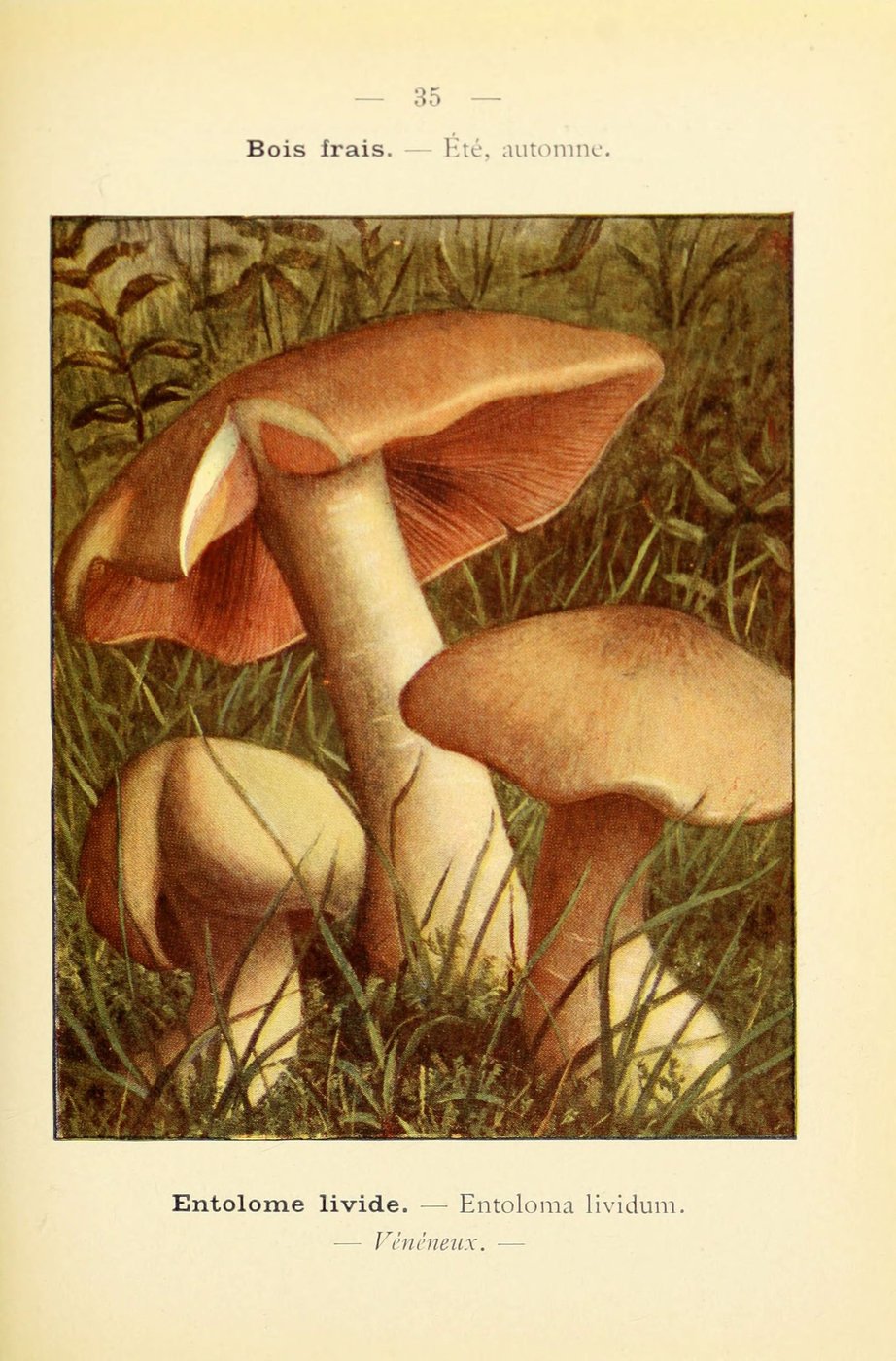
Pokeweed · Mistletoe · Scammony · Melon root · The sickener · Meadow saffron · Yellow stainer · Livid pinkgill · the syndrome, with all of them →
Drawing on the same sources: Phillips
Nearby in the alphabet
Motherwort (of the mint family, a tall, prickly-calyxed herb of waste ground) · Moonwort (The small fern Botrychium lunaria) · Mugwort (Artemisia vulgaris) · Moly (Unidentified) · Mullein (Verbascum thapsus) · Mithridate (the forerunner of theriac) · Mummy (sold by the apothecaries)

Historical description, not medical advice.