
Lenitive electuary
Elettuario lenitivo
- Known today as
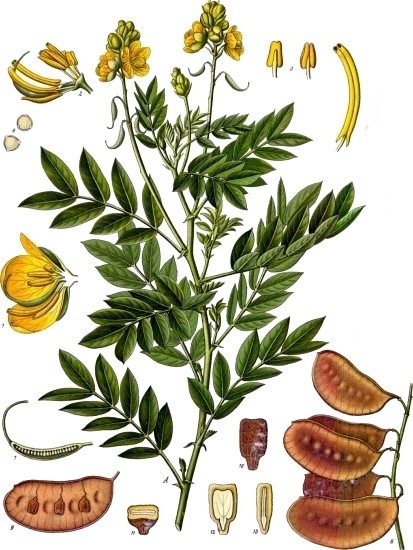
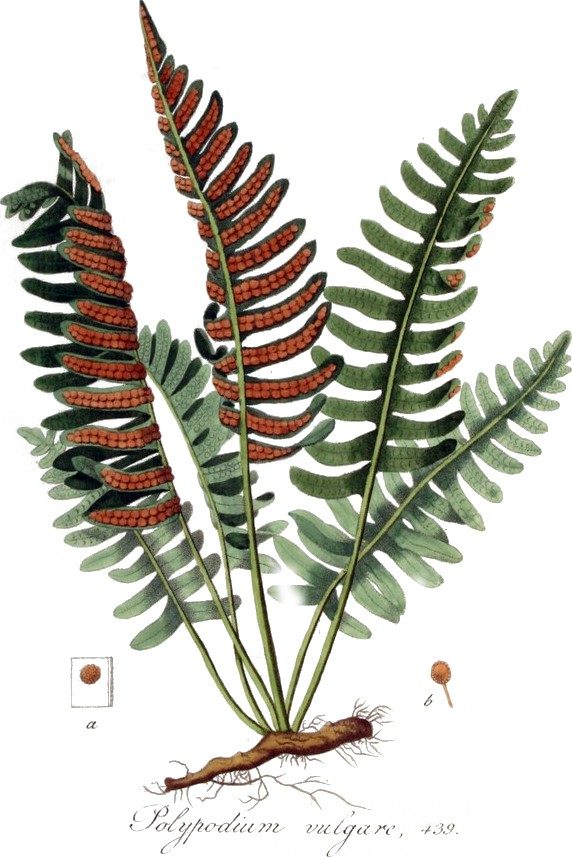
- A mild compound laxative paste of the Galenic pharmacopoeia, typically of senna, polypody, tamarind, cassia pulp, prunes, raisins, and violets, made up with sugar.
- Kind
- Compound
- Constituents
- sennosides, cassia pulp and tamarind, prunes, raisins, jujubes, sebestens, and 2 more
- Poisoning
- The anthranoid purgatives
- In the Canale glossary
- On the Manner of Discerning and Healing the Bewitched, Appendix A: Treatise One, Part Three, Chapters 2–3: Purgative and Preparative Medicines
Revised October 3, 2026: Checked against its sources, each read in full, in part, or in its abstract. Version 1, first published September 25, 2026.
Lenitive electuary: what did Canale use it for?
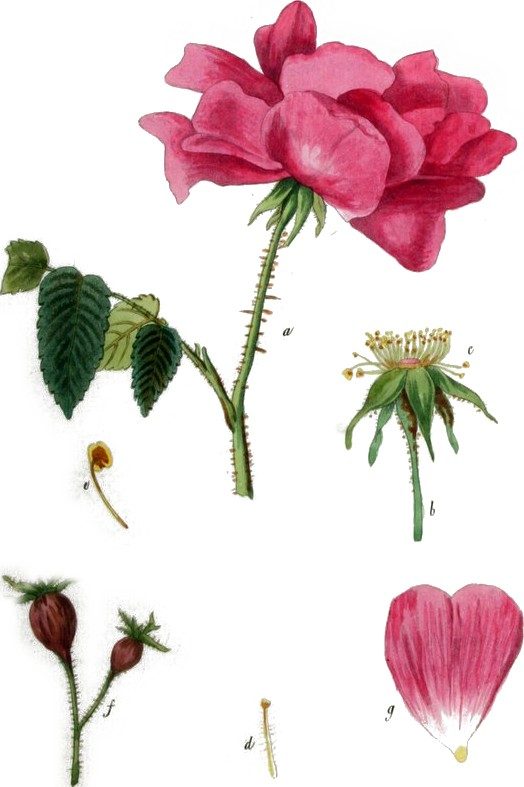
Among the light purges with which the cure begins: for the choleric with syrup of roses, in a draught taken at dawn, and for the phlegmatic with honey of roses (ch. 2).
Lenitive electuary: what does modern science say?
Its senna made it a genuine laxative: senna leaf has a European Union monograph for the short-term treatment of occasional constipation. Culpeper says it “gently opens and mollifies the bowels.”
Pharmacognosy & Toxicology
- Constituents
- Mechanism
- The senna is the laxative: its sennosides pass unabsorbed to the large intestine, where bacteria turn them into rhein anthrone, which quickens the colon and draws water and salts into it, so that the bowels move some eight to twelve hours later. Canale starts his choleric and phlegmatic patients with it.
- Toxic dose
- Culpeper allows a man of reasonable strength an ounce at bedtime; senna is not to be taken for more than a week, and in high doses for too long it has injured the liver.
- Syndrome
- The anthranoid purgatives
- Standing
- Senna leaf has a European Union monograph as a laxative for occasional constipation.
- EMA/HMPC (2020). European Union herbal monograph on Senna alexandrina Mill., folium (EMA/HMPC/625849/2015). Read in full · the text read
- Culpeper, N. (1653). Pharmacopoeia Londinensis, “Electuarium Lenitivum.” Read in part · the text read
Constituent names open the compound’s record at PubChem, and “ChEMBL” beside a name opens its record at ChEMBL, the European Bioinformatics Institute’s database of bioactive molecules. Where a mechanism line was checked against ChEMBL (ChEMBL 37, read 1 October 2026), the check is shown with the measured value and its source paper, or says plainly that nothing has been measured. Doses are as the references give them, for description only; this is not medical advice. Each source carries the result of its check against Crossref, PubMed, or the authority’s page: see Verification.
In Their Own Words
Culpeper says lenitive electuary gently opens the bowels and brings away choler, phlegm and melancholy without trouble, and being cooling is good in pleurisies and for the wounded.
“It gently opens and molifies the bowels, brings forth choler, flegm, and melancholy, and that without trouble, it is cooling, and therefore is profitable in pleurisies, and for wounded people:”
Nicholas Culpeper, The Complete Herbal, The College's electuaries, 'Electuarium Lenitivum', Culpeper's remark. London: Thomas Kelly, 17, Paternoster Row, MDCCCL (Project Gutenberg eBook #49513). The text, read in part
Buchan says a teaspoonful of lenitive electuary two or three times a day generally proves an agreeable laxative, and that it also serves as a vehicle for stronger medicines such as jalap and scammony.
“A tea-spoonful of this electuary, taken two or three times a day, generally proves an agreeable laxative. It likewise serves as a convenient vehicle for exhibiting more active medicines, as jalaps, scammony, and such like.”
William Buchan, M.D., Domestic Medicine: or, a Treatise on the Prevention and Cure of Diseases by Regimen and Simple Medicines. With an Appendix, containing a Dispensatory for the Use of Private Practitioners, Dispensatory, Electuaries: 'Lenitive Electuary'. London: printed for A. Strahan, T. Cadell, 1791 (Project Gutenberg eBook #74359). The text, read in part
Each passage is quoted from the text named, which the press fetched and read, and was checked word for word against a fresh copy of it; the link opens that copy. Passages are given as printed, without the editors’ footnote numbers, and with words broken across lines joined.
The Recipe
The recipe: 8 ingredients, each linked to its entry. For Club members. Create a free account or sign in.
Sources
- [28] Culpeper, N. (1653). Pharmacopœia Londinensis, or, The London Dispensatory [the Royal College of Physicians’ pharmacopoeia in English, with Culpeper’s commentary]. London: Peter Cole. Text Creation Partnership edition A35381. Read in part · the text read
- [80] LiverTox: Clinical and Research Information on Drug-Induced Liver Injury. Bethesda (MD): National Institute of Diabetes and Digestive and Kidney Diseases. Entries: Germander (updated 12 March 2018); Pennyroyal Oil (updated 28 March 2020); Senna (updated 1 April 2020). Abstract read · the text read
- [90] Mwangi, R. W., Macharia, J. M., Wagara, I. N., & Bence, R. L. (2021). The medicinal properties of Cassia fistula L.: a review. Biomedicine & Pharmacotherapy 144: 112240. doi:10.1016/j.biopha.2021.112240 Verified against its record · doi:10.1016/j.biopha.2021.112240
Verification
- Checked
- October 1, 2026, and October 3, 2026
- Passes
- Every sentence read against its sources, in the pass over the remaining 343 entries
- The Standing line checked against the authority it names (EMA, WHO, FDA, CITES, Commission E)
- Every dated or regulatory claim checked by category across the database
- Every source read, in full, in part, or in its abstract, and every sentence checked against what was read (October 3, 2026)
- Sources
- 5 cited: 1 read in full, 2 read in part, 1 abstract read, 1 verified against its record. 2 with the abstract on file.
- Corrections
- None were needed.
What was checked, how, and what was found is set out on the Verification page. A checked source is one whose record was found; it does not make the entry medical advice.
Cite This Entry
Version 1 · first published September 25, 2026 · last revised October 3, 2026
- Chicago
“Lenitive electuary.” In Materia Medica, edited by B. C. P. Statema. Version 1. The Thinking Press, 2026–. Last modified October 3, 2026. https://thethinkingpress.org/materia-medica/lenitive-electuary.
- MLA
“Lenitive electuary.” Materia Medica, edited by B. C. P. Statema, version 1, The Thinking Press, 3 Oct. 2026, thethinkingpress.org/materia-medica/lenitive-electuary. Accessed 8 Oct. 2026.
- APA
Lenitive electuary. (2026, October 3). In B. C. P. Statema (Ed.), Materia medica (Version 1). The Thinking Press. Retrieved October 8, 2026, from https://thethinkingpress.org/materia-medica/lenitive-electuary
Club members keep entries on a shelf with private notes, print the plates as cards, and receive an entry by email each week. Create a free account before January 1, 2027 and all of it is yours for good. About the Club
See Also
Poisoned alike: the anthranoid purgatives
Madder · Hiera picra · Myrobalans · Diacatholicon · Rhubarb · Compound fumitory · Yellow dock · Cassia, flower of · the syndrome, with all of them →
Sharing sennosides, cassia pulp and tamarind, sugar
Drawing on the same sources: Culpeper
Lapis lazuli, pills of · Masterwort and angelica · the bibliography →
Nearby in the alphabet
Lesser bean-trefoil (Anagyris foetida, a Mediterranean shrub) · Leech (Hirudo medicinalis) · Letters from Heaven · Lavender (L) · Licorice (The root of Glycyrrhiza glabra) · Laurel (Laurus nobilis) · Lion’s mane (A single clump of hanging spines on hardwood trees) · Laudanum (with saffron, cinnamon, and cloves)
Historical description, not medical advice.