
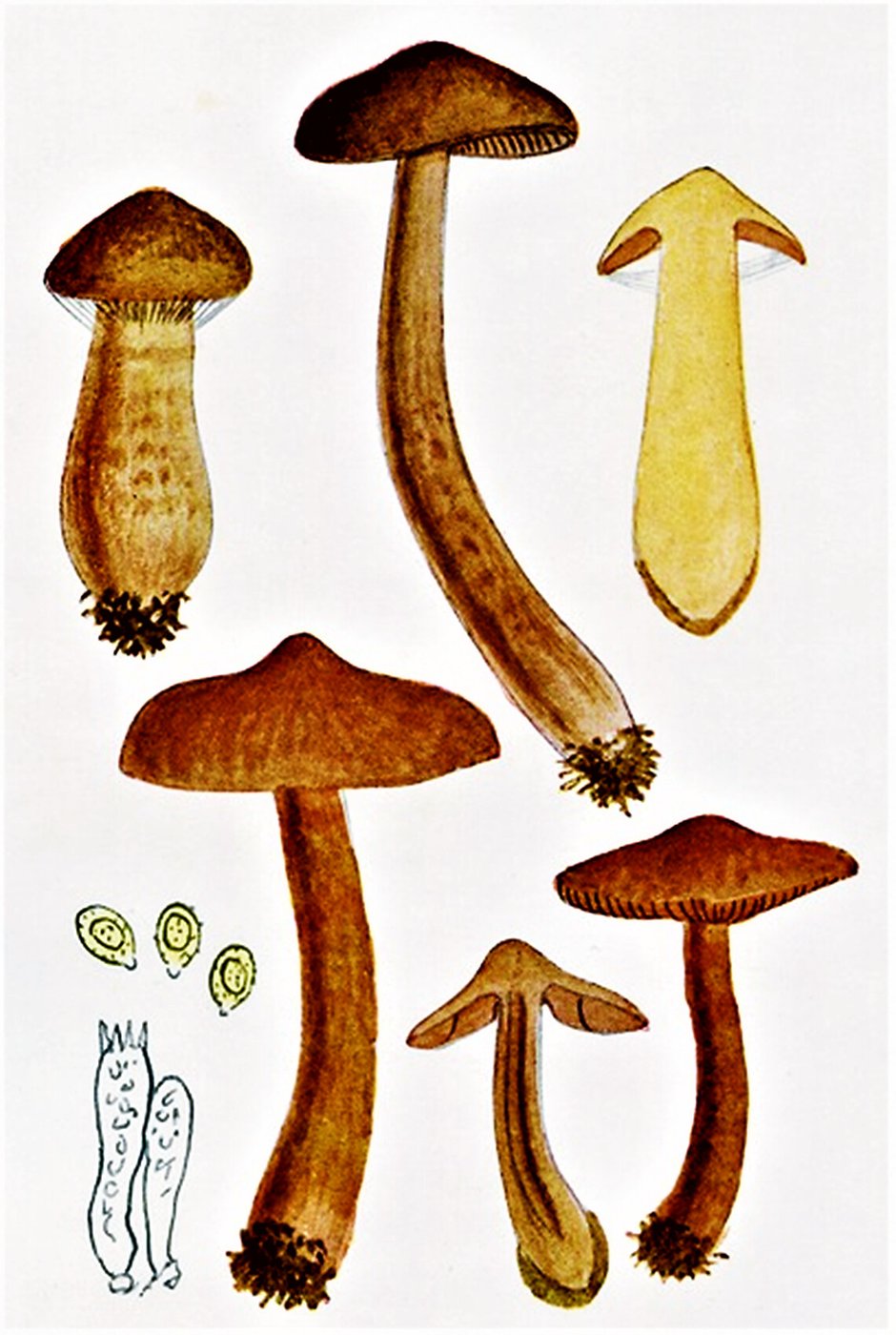
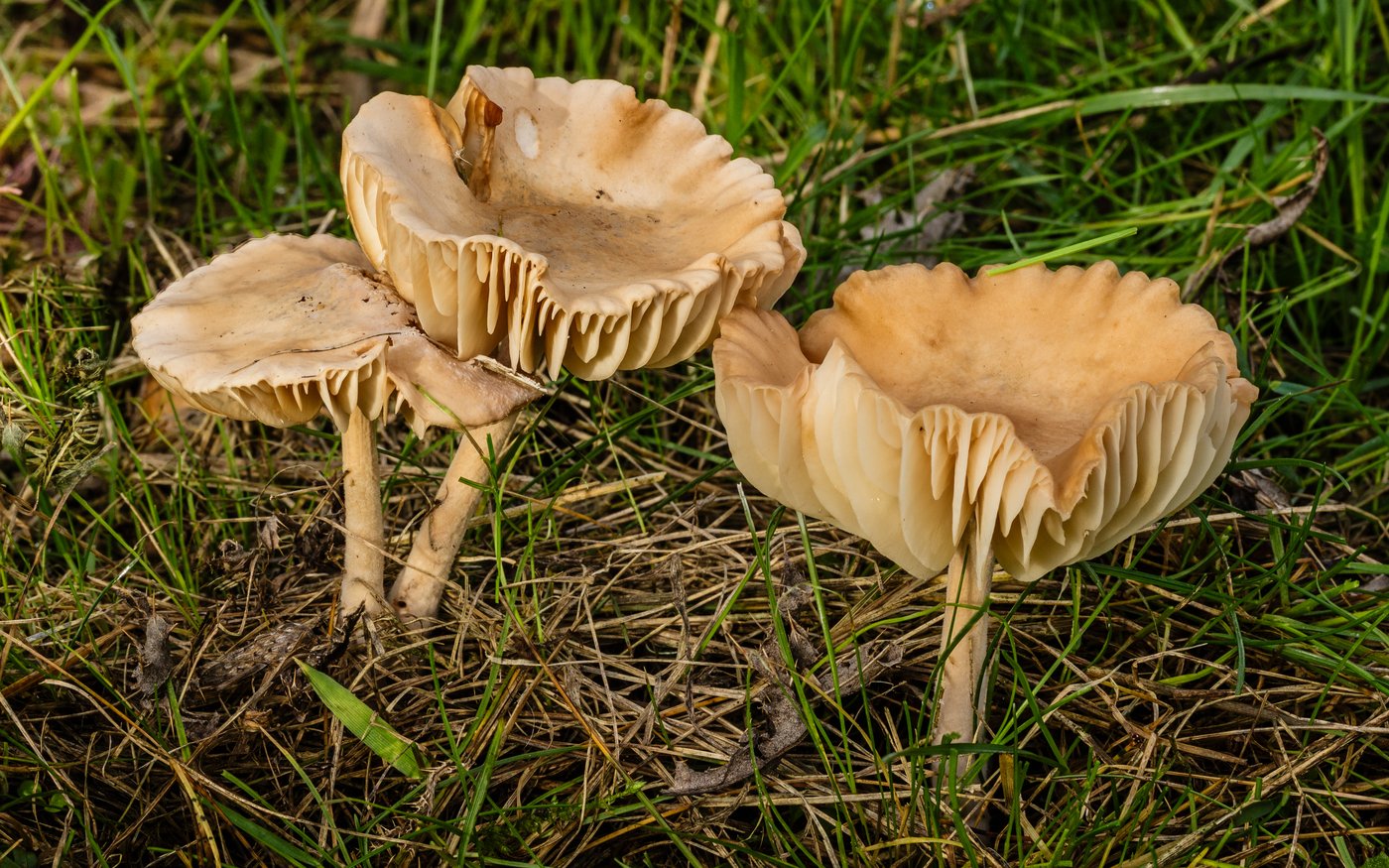
Deadly webcap
Cortinarius rubellus
- Known today as
- Not settled
- Kind
- Fungus
- Constituents
- orellanine
- Poisoning
- Orellanine poisoning
- In other databases
- GBIF search · Wikidata search
Revised October 17, 2026: Checked against its sources, each read in full, in part, or in its abstract. Version 1, first published September 25, 2026.
Deadly. Symptoms appear days or weeks after eating.
Deadly webcap: what was it used for?
None.
Deadly webcap: what does modern science say?
Its orellanine destroys the kidneys. The first signs may take from two days to two weeks, by which time the damage is done; many survivors need dialysis or a transplant.
Deadly webcap: is it poisonous?
Yes, and it can kill. Symptoms appear days or weeks after eating. Its poisoning is orellanine poisoning: Two to twenty days: the longest latency of any mushroom poison, so the meal is seldom remembered. Historical description, not medical advice; in a poisoning, call a poison centre.
The toxic dose and the poisoning
- Syndrome
- Orellanine poisoning
The references for these lines are listed under Pharmacognosy, in Science. Doses are as the references give them, for description only; this is not medical advice. In a poisoning, call a poison centre.
Deadly webcap: what lore surrounds it?
Mistaken for chanterelles by foragers;
Pharmacognosy
- Constituents
- orellanine ChEMBLa bipyridine
- Mechanism
- Orellanine injures the kidneys, causing a tubulo-interstitial nephritis.
- Standing
- None.
- Danel, V. C., et al. (2001). Toxicon 39. Abstract read · the text read
The abstract of each source, beneath its citation. For Club members. About the Club or sign in.
Constituent names open the compound’s record at PubChem, and “ChEMBL” beside a name opens its record at ChEMBL, the European Bioinformatics Institute’s database of bioactive molecules. Where a mechanism line was checked against ChEMBL (ChEMBL 37, read 1 October 2026), the check is shown with the measured value and its source paper, or says plainly that nothing has been measured. Doses are as the references give them, for description only; this is not medical advice. Each source carries the result of its check against Crossref, PubMed, or the authority’s page: see Verification.
Sources
- Danel, V. C., Saviuc, P. F., & Garon, D. (2001). Main features of Cortinarius spp. poisoning: a literature review. Toxicon 39: 1053–1060. Abstract read · the text read
- Wikipedia, “Orellanine,” en.wikipedia.org (read 2 October 2026). Read in full · the text read
Verification
- Checked
- October 1, 2026, October 17, 2026
- Passes
- Read against its sources in the pass over the remaining 343 entries
- Every dated or regulatory claim checked by category across the database
- Every source read, in full, in part, or in its abstract, and every sentence checked against what was read (October 17, 2026)
- Sources
- 3 cited: 1 read in full, 2 abstract read. 2 with the abstract on file.
- Corrections
- None recorded.
What was checked, how, and what was found is set out on the Verification page. A checked source is one whose record was found; it does not make the entry medical advice.
Club members can point at a technical term in this entry, such as a constituent, an action, or a word of Jung’s, to read its definition from the source. The Club.
Cite This Entry
Version 1 · first published September 25, 2026 · last revised October 17, 2026
- Chicago
“Deadly webcap.” In Materia Medica, edited by B. C. P. Statema. Version 1. The Thinking Press, 2026–. Last modified October 17, 2026. https://thethinkingpress.org/materia-medica/deadly-webcap.
- MLA
“Deadly webcap.” Materia Medica, edited by B. C. P. Statema, version 1, The Thinking Press, 17 Oct. 2026, thethinkingpress.org/materia-medica/deadly-webcap. Accessed 22 Nov. 2026.
- APA
Deadly webcap. (2026, October 17). In B. C. P. Statema (Ed.), Materia medica (Version 1). The Thinking Press. Retrieved November 22, 2026, from https://thethinkingpress.org/materia-medica/deadly-webcap
See Also
Poisoned alike: orellanine poisoning
Drawing on the same sources: Danel, Wikipedia
Death cap · Deadly fibrecap · Destroying angel · the bibliography →
Nearby in the alphabet
Deadly nightshade (of the nightshade family) · Devil’s claw (a plant of the family Pedaliaceae, whose root is the medicine) · Danshen · Devil’s-bit scabious (Succisa pratensis) · Dandelion (of the daisy family)
Historical description, not medical advice.

