
Cyanide from the kernels
Amygdalin and prunasin in the kernels of blackthorn, bitter almond, apricot, cherry, and apple pips, and linamarin in cassava; the enzyme in the chewed seed frees hydrogen cyanide.
Cyanide from the kernels: how soon does it show?
Minutes to a few hours, as the glycoside is hydrolysed in the gut.
How does it run?
Headache, dizziness, a racing heart, then confusion, convulsions, and respiratory arrest; cyanide blocks cytochrome oxidase and the cells cannot use oxygen. A few dozen bitter apricot kernels have killed adults, and “laetrile,” the amygdalin sold against cancer, has poisoned its users.
What is done for it?
Hydroxocobalamin, which binds cyanide as cyanocobalamin; oxygen; sodium thiosulfate.
Historical and descriptive, not medical advice. In a poisoning, call a poison centre or emergency services.
Which substances in the database cause it?
PlantBlackthornSloe
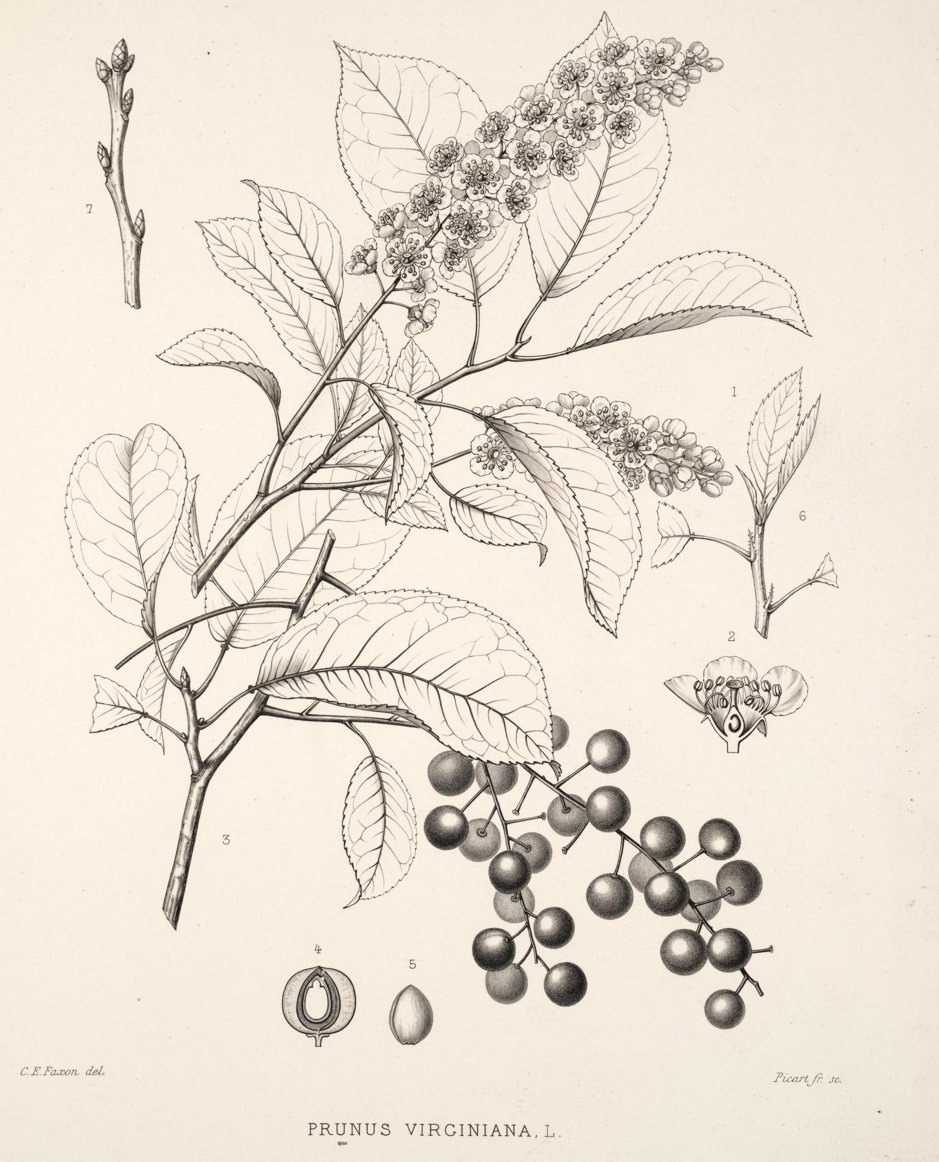
Prunus spinosa. A thorny hedgerow shrub bearing small, bitter, blue-black plums, sloes, after the first frost.
Sources
- Bolarinwa, I. F., et al. (2014). “Amygdalin content of seeds, kernels and food products commercially available in the UK.” Food Chemistry 152. Verified against its record · doi:10.1016/j.foodchem.2013.11.002
- Milazzo, S., and Horneber, M. (2015). “Laetrile treatment for cancer.” Cochrane Database of Systematic Reviews 4. Verified against its record · doi:10.1002/14651858.cd005476
- Goldfrank’s Toxicologic Emergencies, 11th ed. (2019), “Cyanide and hydrogen sulfide.” Standard reference work