
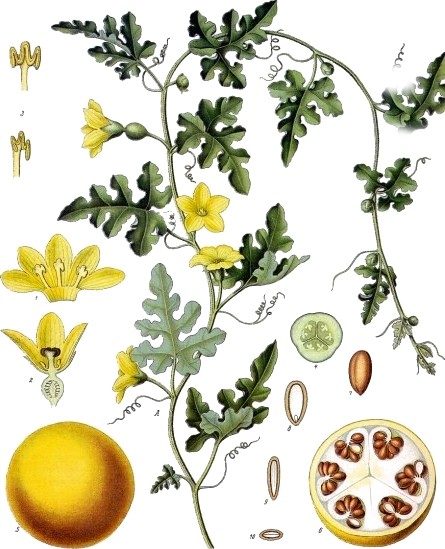
Hiera of Pacchius
Hiera Pacchii
- Known today as
- A bitter purgative compound, the “holy antidote” of Paccius Antiochus, a pupil of Philonides of Catina; Scribonius Largus recorded it after the recipe reached Tiberius Caesar on Paccius’s death, and says some called it picra, because it is bitter, and others diacolocynthidos. It has no aloes, unlike Hiera picra.
- Kind
- Compound
- Constituents
- cucurbitacins, opopanax and sagapenum, agaric acid (agaricin), and 2 more
- Poisoning
- The drastic resins
- In the Canale glossary
- On the Manner of Discerning and Healing the Bewitched, Appendix A: Part Three, Chapter 4: Stronger Purgatives and Compound Medicines
Revised October 3, 2026: Checked against its sources, each read in full, in part, or in its abstract. Version 1, first published September 25, 2026.
Caution. Hazardous in some form or dose; see the modern assessment below.
Hiera of Pacchius: what did Canale use it for?
Among the commended purges (ch. 4).
Hiera of Pacchius: what does modern science say?
One of the named purges of the old pharmacy; Canale does not give its recipe. The London Dispensatory of 1653 has a Hiera Diacolocynthidos of much the same drugs: colocynth, agaric, germander, horehound, stoechas, opopanax, sagapenum, parsley seed, birthwort, spikenard, cinnamon, myrrh, and saffron.
Hiera of Pacchius: is it poisonous?
Yes, in some form or dose. Its poisoning is the drastic resins: One to four hours. Historical description, not medical advice; in a poisoning, call a poison centre.
Pharmacognosy & Toxicology
- Constituents
- Mechanism
- The “holy” antidote of Paccius: colocynth and agaric with French lavender, horehound, germander, gums, and spices in honey; Scribonius says that after it the patients pass “a frothy and viscous matter two or three times.”
- Toxic dose
- A purge, given by the drachm: two drachms in four cyathi of hydromel for headache and vertigo.
- Syndrome
- The drastic resins
- Standing
- Obsolete.
Constituent names open the compound’s record at PubChem, and “ChEMBL” beside a name opens its record at ChEMBL, the European Bioinformatics Institute’s database of bioactive molecules. Where a mechanism line was checked against ChEMBL (ChEMBL 37, read 1 October 2026), the check is shown with the measured value and its source paper, or says plainly that nothing has been measured. Doses are as the references give them, for description only; this is not medical advice. Each source carries the result of its check against Crossref, PubMed, or the authority’s page: see Verification.
Sources
- [28] Culpeper, N. (1653). Pharmacopœia Londinensis, or, The London Dispensatory [the Royal College of Physicians’ pharmacopoeia in English, with Culpeper’s commentary]. London: Peter Cole. Text Creation Partnership edition A35381. Read in part · the text read
- [69] Jocks, I. T. (2020). Scribonius Largus’ Compounding of Drugs (Compositiones medicamentorum): Introduction, Translation, and Medico-historical Comments, vol. II. PhD thesis, University of Glasgow. Read in part · the text read
- The British Pharmaceutical Codex (1911). London: Pharmaceutical Society of Great Britain. Monographs as transcribed at Henriette’s Herbal Homepage, henriettes-herb.com. Read in full · the text read
- Li, Q. Y., et al. (2021). Citrullus colocynthis (L.) Schrad (bitter apple fruit): promising traditional uses, pharmacological effects, aspects, and potential applications. Frontiers in Pharmacology 12: 791049. Read in part · the text read
Verification
- Checked
- October 1, 2026, and October 3, 2026
- Passes
- Every sentence read against its sources, in the pass over the remaining 343 entries
- The Standing line checked against the authority it names (EMA, WHO, FDA, CITES, Commission E)
- Every dated or regulatory claim checked by category across the database
- Every source read, in full, in part, or in its abstract, and every sentence checked against what was read (October 3, 2026)
- Sources
- 4 cited: 1 read in full, 3 read in part.
- Corrections
- None were needed.
What was checked, how, and what was found is set out on the Verification page. A checked source is one whose record was found; it does not make the entry medical advice.
Cite This Entry
Version 1 · first published September 25, 2026 · last revised October 3, 2026
- Chicago
“Hiera of Pacchius.” In Materia Medica, edited by B. C. P. Statema. Version 1. The Thinking Press, 2026–. Last modified October 3, 2026. https://thethinkingpress.org/materia-medica/hiera-of-pacchius.
- MLA
“Hiera of Pacchius.” Materia Medica, edited by B. C. P. Statema, version 1, The Thinking Press, 3 Oct. 2026, thethinkingpress.org/materia-medica/hiera-of-pacchius. Accessed 8 Oct. 2026.
- APA
Hiera of Pacchius. (2026, October 3). In B. C. P. Statema (Ed.), Materia medica (Version 1). The Thinking Press. Retrieved October 8, 2026, from https://thethinkingpress.org/materia-medica/hiera-of-pacchius
Club members keep entries on a shelf with private notes, print the plates as cards, and receive an entry by email each week. Create a free account before January 1, 2027 and all of it is yours for good. About the Club
See Also
Poisoned alike: the drastic resins
Hiera with agaric · Hamech, confection of · Indian and Arabian pills · Golden pills · Indian electuary, greater and lesser · Gamboge · Lapis lazuli, pills of · Foetid pills · the syndrome, with all of them →
Sharing cucurbitacins, agaric acid (agaricin)
Drawing on the same sources: Li
Nearby in the alphabet
Hiera picra (mastic, saffron, and other aromatics) · Herb Paris (true-lover’s knot, a woodland plant with a single black berry) · Herb bennet (of the rose family, with a root that smells of cloves) · The Holy Name, IHS (the first three letters of Jesus in Greek, often within a sunburst) · Henbane (of the nightshade family) · Holy water (usually with exorcized salt mixed in) · Hemp (Cannabis sativa)
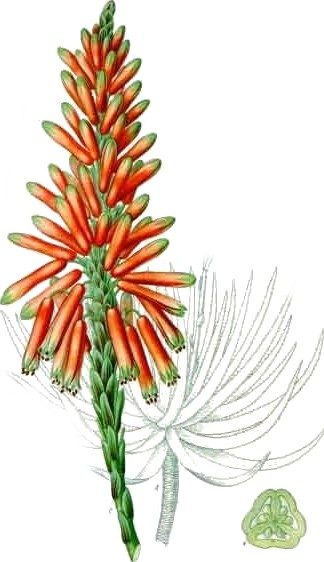
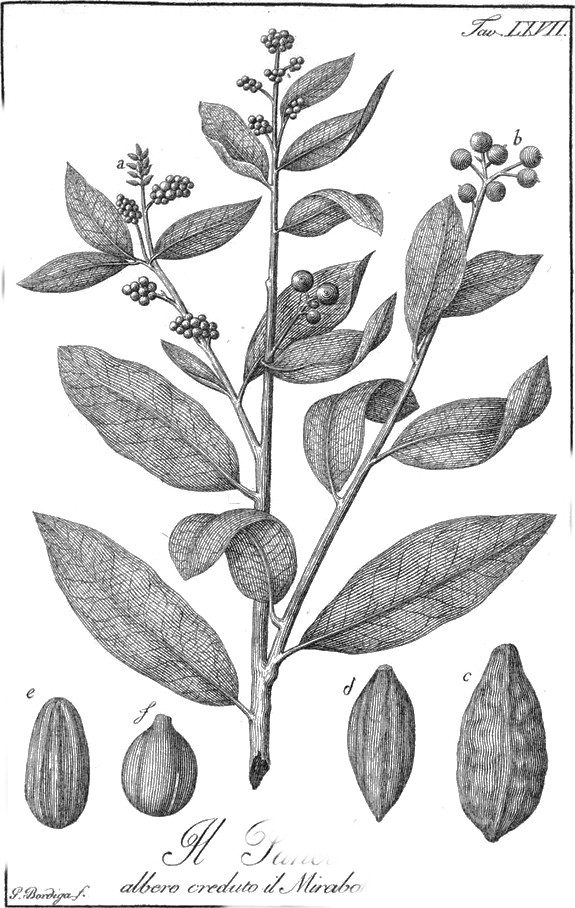
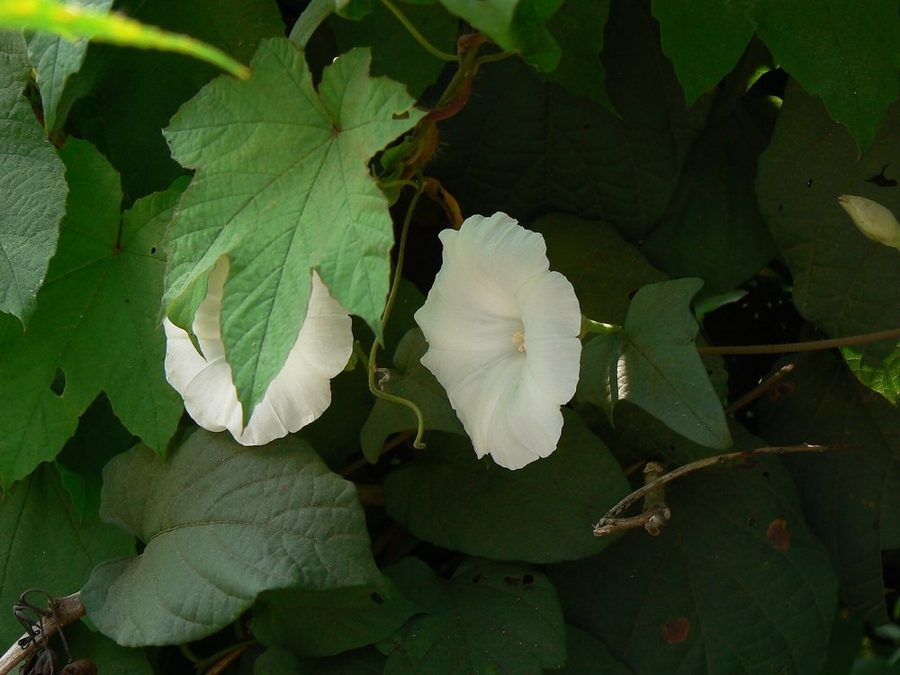
Historical description, not medical advice.