
Paxillus syndrome (immune haemolysis)
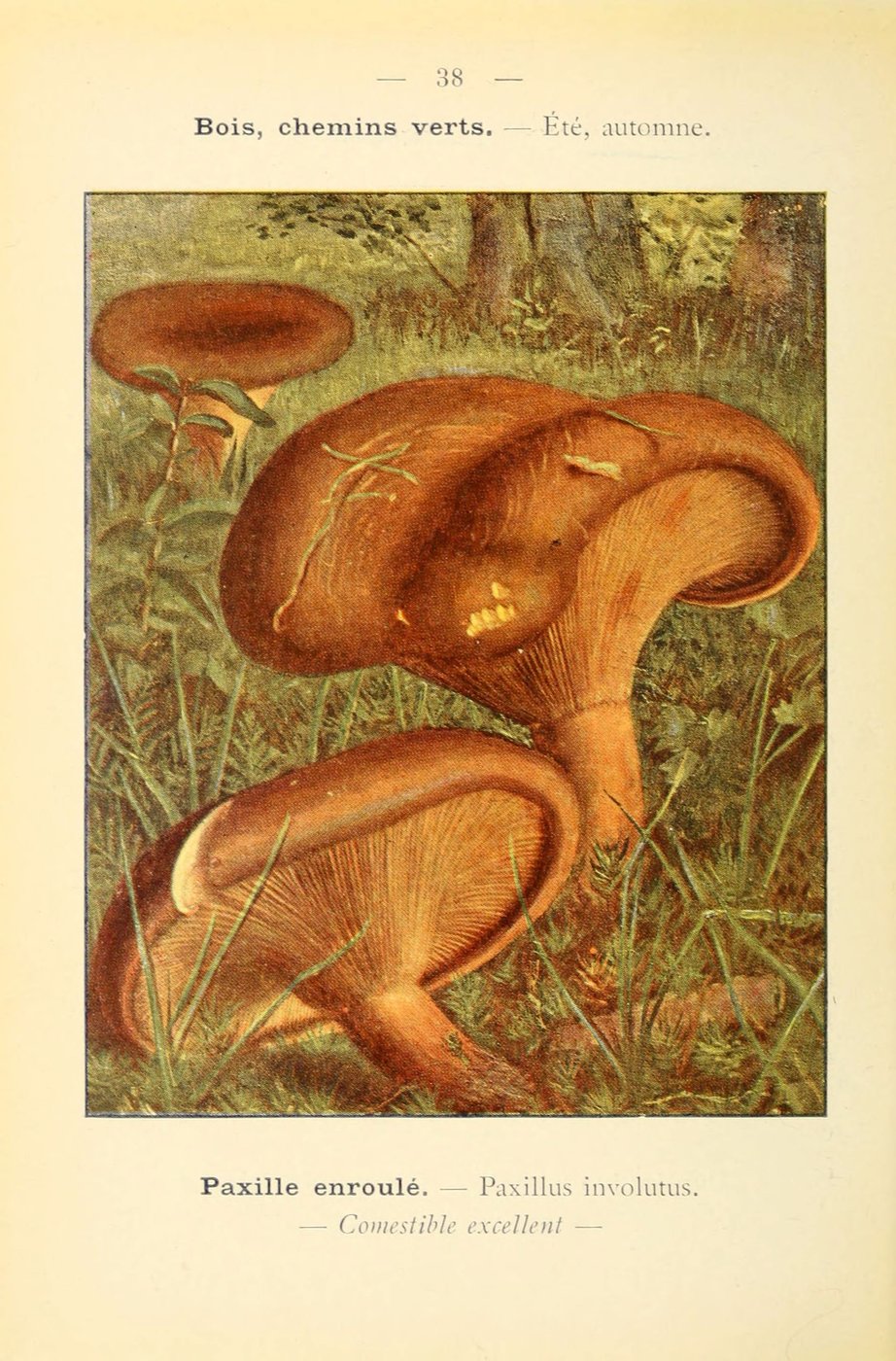
The brown roll-rim, Paxillus involutus, after repeated meals.
Paxillus syndrome (immune haemolysis): how soon does it show?
One to three hours after a meal, in someone sensitised by earlier meals, sometimes years before.
How does it run?
Vomiting and colic, then the destruction of the red cells by the body’s own antibodies: anaemia, jaundice, kidney failure, and shock. The mycologist Julius Schäffer died of it in 1944; the antigen was identified by René Flammer in the 1980s.
What is done for it?
Plasmapheresis to remove the antibody complexes; dialysis; steroids.
Historical and descriptive, not medical advice. In a poisoning, call a poison centre or emergency services.
Which substances in the database cause it?
Sources
- Flammer, R. (1985). “Paxillus-Syndrom: Immunhämolyse nach Pilzgenuss.” Schweizerische Rundschau für Medizin Praxis 74. Not indexed
- Bresinsky, A., and Besl, H. (1990). A Colour Atlas of Poisonous Fungi. Book, seen in reviews