
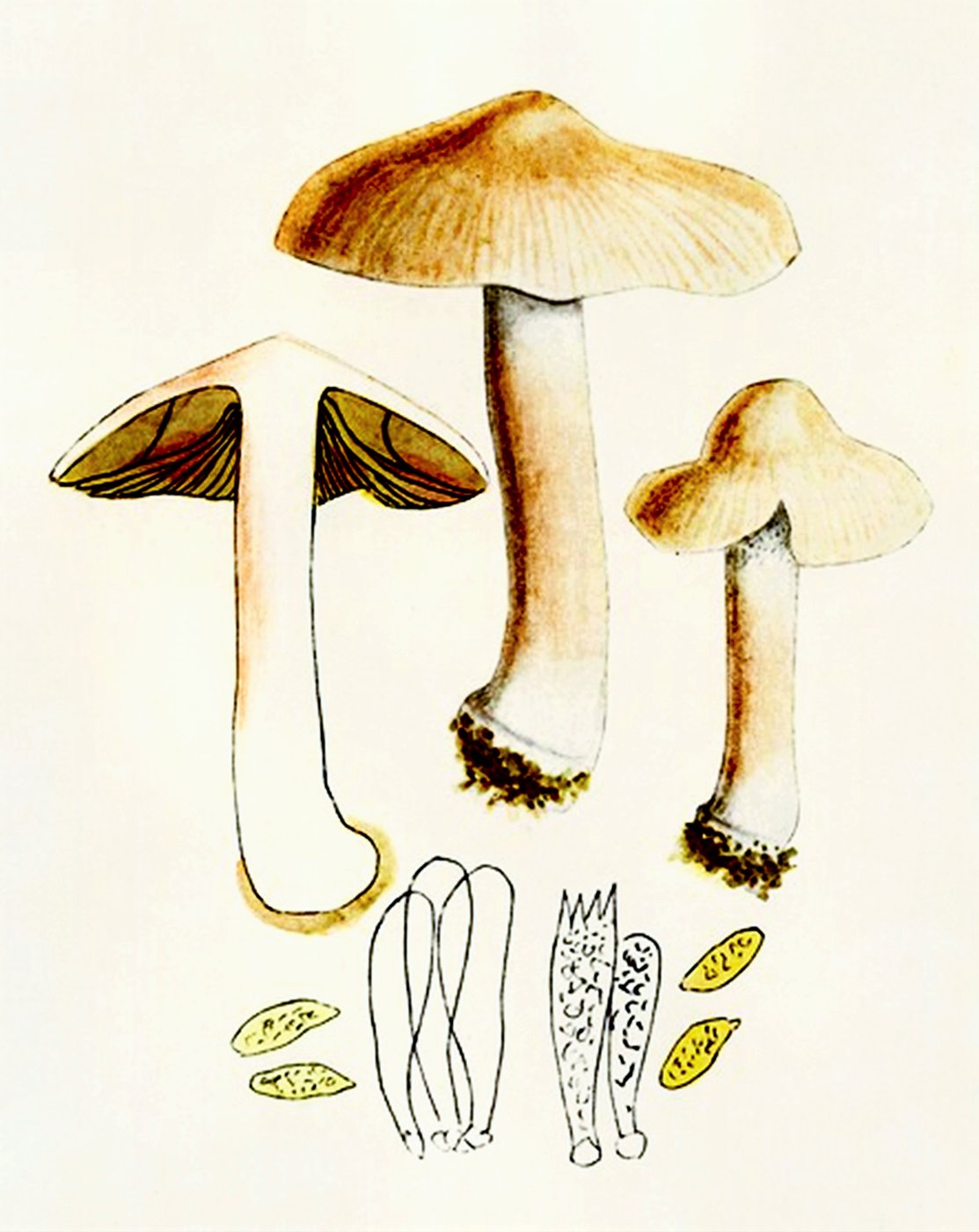
Deadly fibrecap
Inocybe erubescens
- Known today as
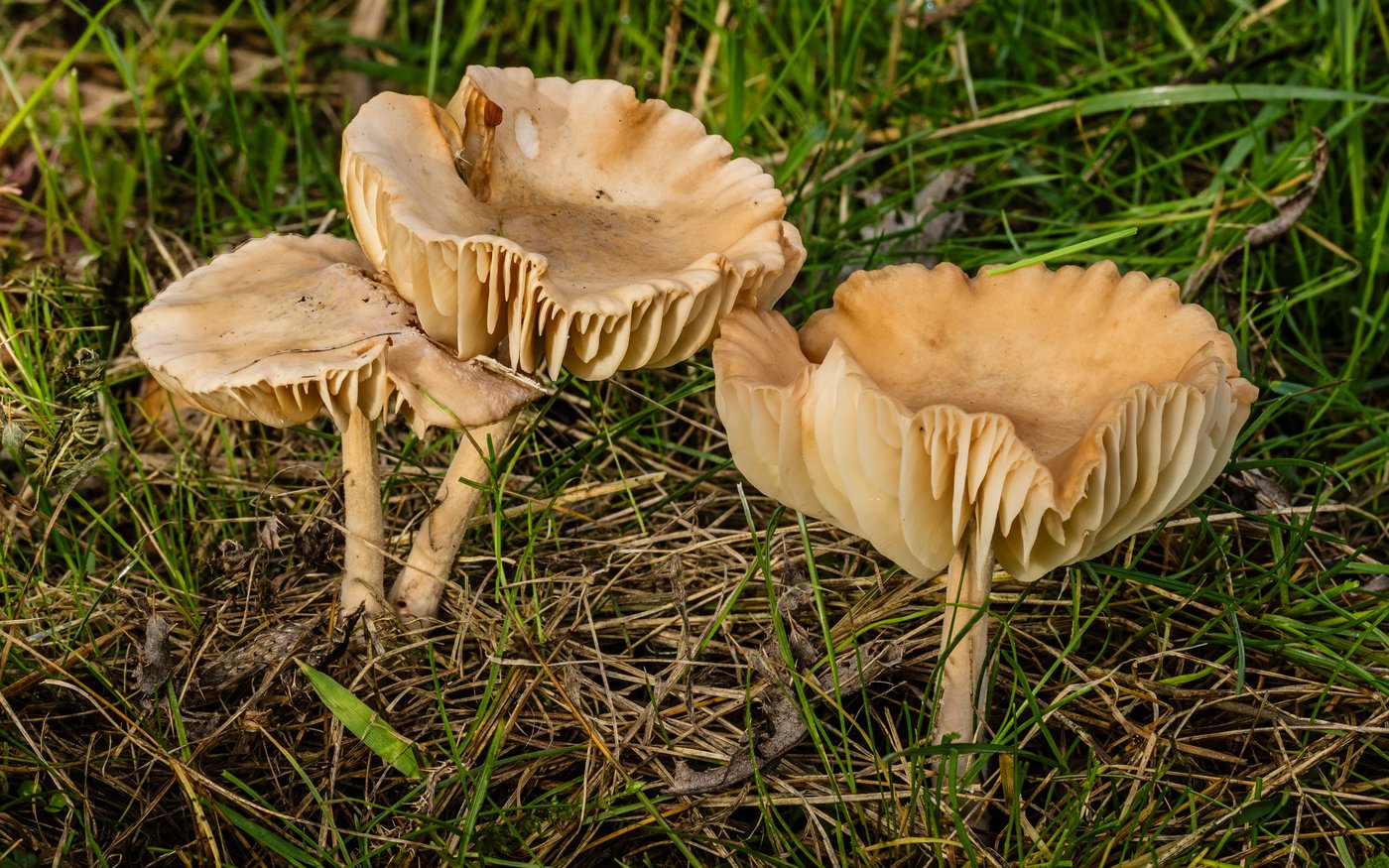
- A pale fibrecap that bruises red, of spring and summer woods.
- Kind
- Fungus
- Constituents
- muscarine
- Poisoning
- Muscarine poisoning
- In other databases
- GBIF search · Wikidata search
Revised October 3, 2026: Checked against its sources, each read in full, in part, or in its abstract. Version 1, first published September 25, 2026.
Caution. Poisonous, and has killed.
Deadly fibrecap: what was it used for?
None.
Deadly fibrecap: what does modern science say?
Its muscarine floods the body: sweating, weeping, salivation, a slowed heart. Atropine, from the deadly nightshade, is the antidote (see Deadly nightshade).
Deadly fibrecap: is it poisonous?
Yes, in some form or dose. Poisonous, and has killed. Its poisoning is muscarine poisoning: Fifteen minutes to two hours. Historical description, not medical advice; in a poisoning, call a poison centre.
Pharmacognosy & Toxicology
- Constituents
- Mechanism
- Muscarine is a muscarinic agonist that cannot be broken down by the body’s cholinesterase.
- Checked against ChEMBL
- muscarine: Measured, as the entry says (“a muscarinic agonist”): Muscarinic acetylcholine receptor (rat), Ki 8.3 nM, CHEMBL1133759; Muscarinic acetylcholine receptor M1 (rat), Ki 12 nM, CHEMBL1126214.
- Toxic dose
- It holds a possibly fatal dose of muscarine; atropine is its antidote.
- Syndrome
- Muscarine poisoning
- Standing
- None.
Constituent names open the compound’s record at PubChem, and “ChEMBL” beside a name opens its record at ChEMBL, the European Bioinformatics Institute’s database of bioactive molecules. Where a mechanism line was checked against ChEMBL (ChEMBL 37, read 1 October 2026), the check is shown with the measured value and its source paper, or says plainly that nothing has been measured. Doses are as the references give them, for description only; this is not medical advice. Each source carries the result of its check against Crossref, PubMed, or the authority’s page: see Verification.
Deadly fibrecap: what lore surrounds it?
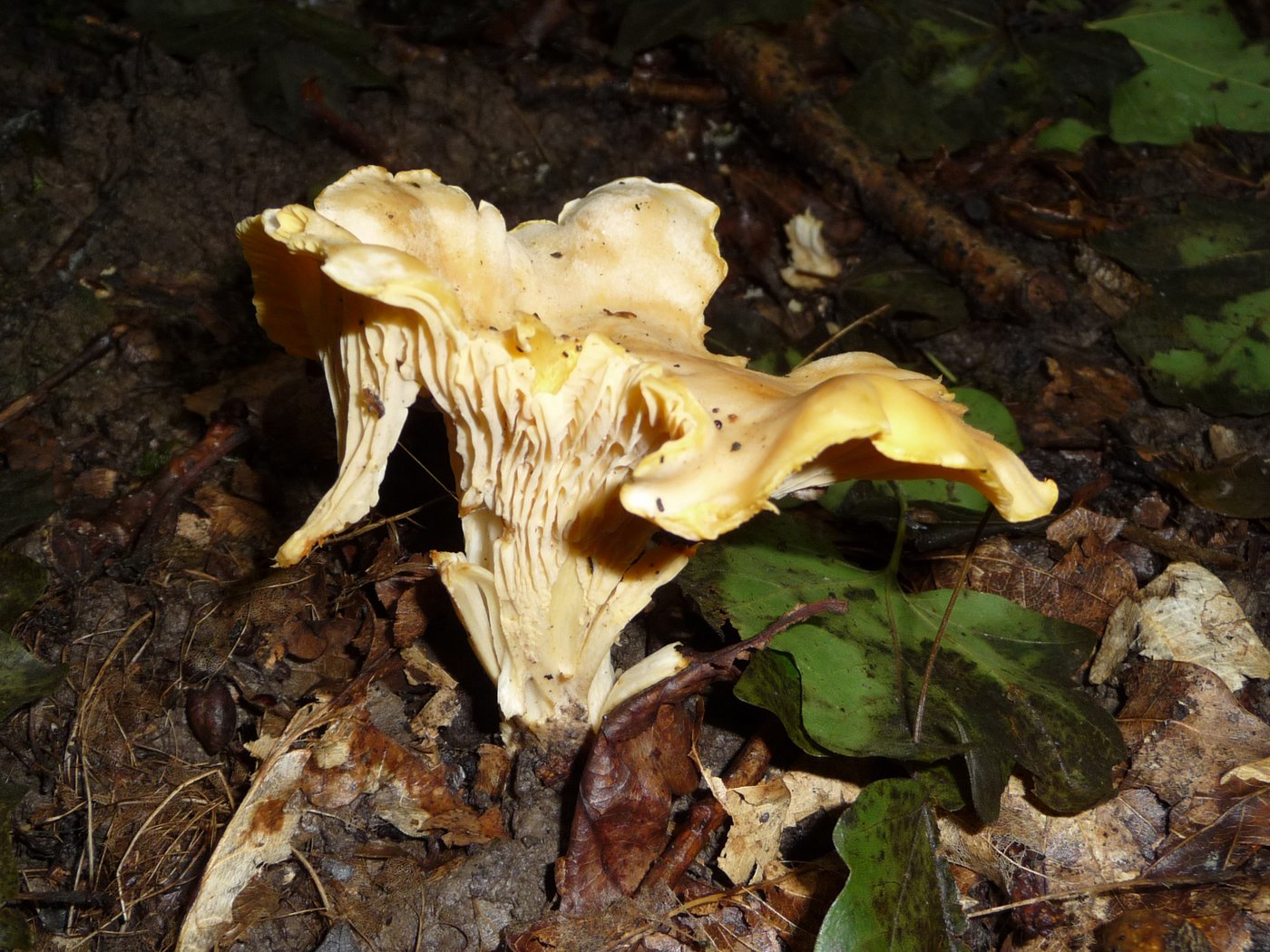
Taken for the St. George’s mushroom, which grows at the same season.
The edible mushroom it is mistaken for carries a real tradition of its own: St. George’s mushroom takes its name from fruiting around the saint’s day, 23 April, and has seasonal names across Europe, Maipilz in Germany, marzolino in Italy; in the Basque Country it is traditionally eaten with snails on the feast of St. Prudentius. None of this belongs to the poisonous fibrecap except as the reason foragers confuse the two.
Sources
- “Calocybe gambosa” (reference article). Read in full · the text read
- Wikipedia, “Inosperma erubescens,” en.wikipedia.org (read 2 October 2026). Read in full · the text read
- Wikipedia, “Muscarine,” en.wikipedia.org (read 2 October 2026). Read in full · the text read
- Wikipedia, “Atropine,” en.wikipedia.org (read 2 October 2026). Read in full · the text read
Verification
- Checked
- October 1, 2026, and October 3, 2026
- Passes
- Every sentence read against its sources, in the pass over the remaining 343 entries
- The Standing line checked against the authority it names (EMA, WHO, FDA, CITES, Commission E)
- Every dated or regulatory claim checked by category across the database
- The mechanism read against ChEMBL (ChEMBL 37): curated mechanisms and measured activity
- Every source read, in full, in part, or in its abstract, and every sentence checked against what was read (October 3, 2026)
- Sources
- 4 cited: 4 read in full.
- Corrections
- now "one of the few European mushrooms whose poison has a true antidote," not "the only."
What was checked, how, and what was found is set out on the Verification page. A checked source is one whose record was found; it does not make the entry medical advice.
Cite This Entry
Version 1 · first published September 25, 2026 · last revised October 3, 2026
- Chicago
“Deadly fibrecap.” In Materia Medica, edited by B. C. P. Statema. Version 1. The Thinking Press, 2026–. Last modified October 3, 2026. https://thethinkingpress.org/materia-medica/deadly-fibrecap.
- MLA
“Deadly fibrecap.” Materia Medica, edited by B. C. P. Statema, version 1, The Thinking Press, 3 Oct. 2026, thethinkingpress.org/materia-medica/deadly-fibrecap. Accessed 8 Oct. 2026.
- APA
Deadly fibrecap. (2026, October 3). In B. C. P. Statema (Ed.), Materia medica (Version 1). The Thinking Press. Retrieved October 8, 2026, from https://thethinkingpress.org/materia-medica/deadly-fibrecap
Club members keep entries on a shelf with private notes, print the plates as cards, and receive an entry by email each week. Create a free account before January 1, 2027 and all of it is yours for good. About the Club
See Also
Sharing muscarine
Drawing on the same sources: Wikipedia
Deadly webcap · Cyprus powder · Death cap · the bibliography →
Nearby in the alphabet
Deadly nightshade (of the nightshade family) · Dandelion (of the daisy family) · Damascus prunes (Prunus insititia, dried) · Destroying angel (Pure white amanitas of Europe and North America) · Cypress (Cupressus sempervirens)

Historical description, not medical advice.