
Sodium-channel activator poisoning (aconitine, veratrum alkaloids)
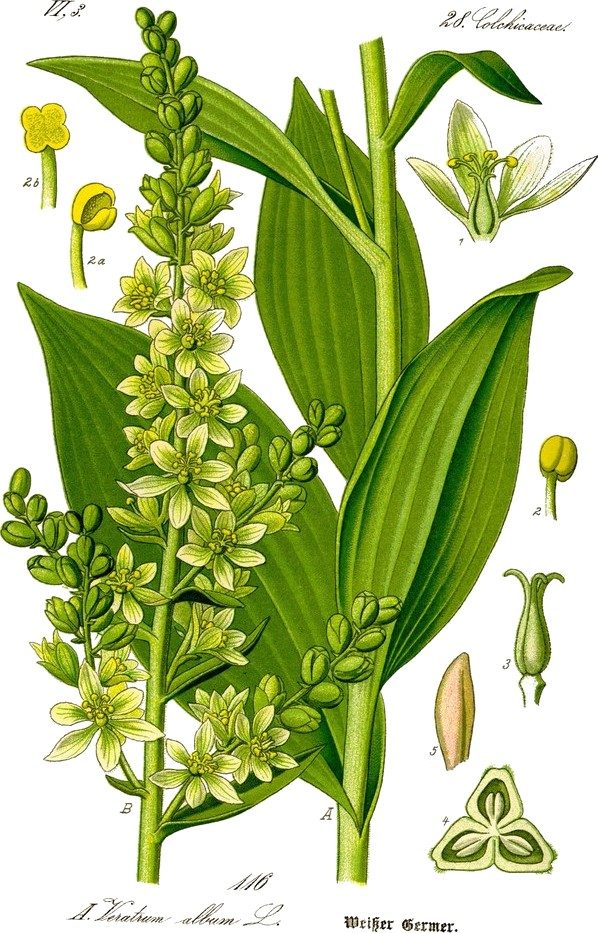
Aconitine, mesaconitine, hypaconitine and their relatives, in the aconites; the steroid alkaloids of the veratrums, among them white hellebore.
Sodium-channel activator poisoning (aconitine, veratrum alkaloids): how soon does it show?
Within hours. In one aconite case, numbness of the tongue and limbs began an hour after the decoction; the symptoms of veratrum begin between thirty minutes and four hours after it is swallowed.
How does it run?
Both hold the sodium channels of nerve and heart muscle open. Aconite: numbness of the face, mouth and limbs, weakness, vomiting, then low blood pressure, a slow heart and ventricular arrhythmias; arrhythmias that resist treatment and asystole are the main causes of death, and in-hospital mortality is 5.5%. Veratrum: vomiting and abdominal pain, then the Bezold-Jarisch reflex (low blood pressure, a slow heart, stopped breathing) and faults of the heart's conduction; with prompt care most recover within a day.
What is done for it?
Supportive. Aconite: atropine for the slow heart, amiodarone or flecainide first for the arrhythmias, and cardiopulmonary bypass where they resist. Veratrum: fluids, atropine and vasopressors.
Historical and descriptive, not medical advice. In a poisoning, call a poison centre or emergency services.
Which substances in the database cause it?

Sources
- Chan, T. Y. K. (2009). “Aconite poisoning.” Clinical Toxicology 47(4): 279–285 (abstract read, pubmed.ncbi.nlm.nih.gov/19514874).
- Chan, T. Y. K. (2009). “Aconite poisoning presenting as hypotension and bradycardia.” Human & Experimental Toxicology 28(12): 795–797 (abstract read, pubmed.ncbi.nlm.nih.gov/19880659).
- Schep, L. J., Schmierer, D. M., and Fountain, J. S. (2006). “Veratrum poisoning.” Toxicological Reviews 25(2): 73–78 (abstract read, pubmed.ncbi.nlm.nih.gov/16958554).
