
Cassia wood
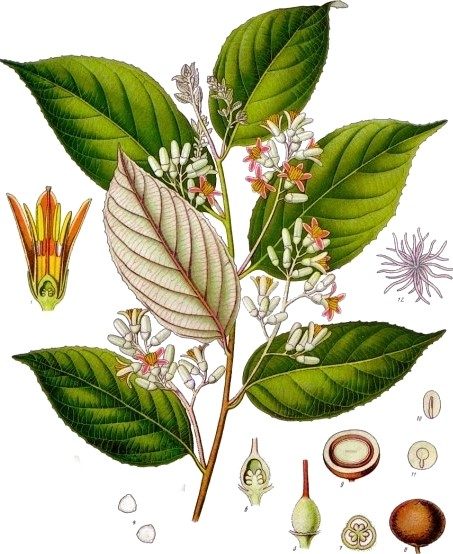
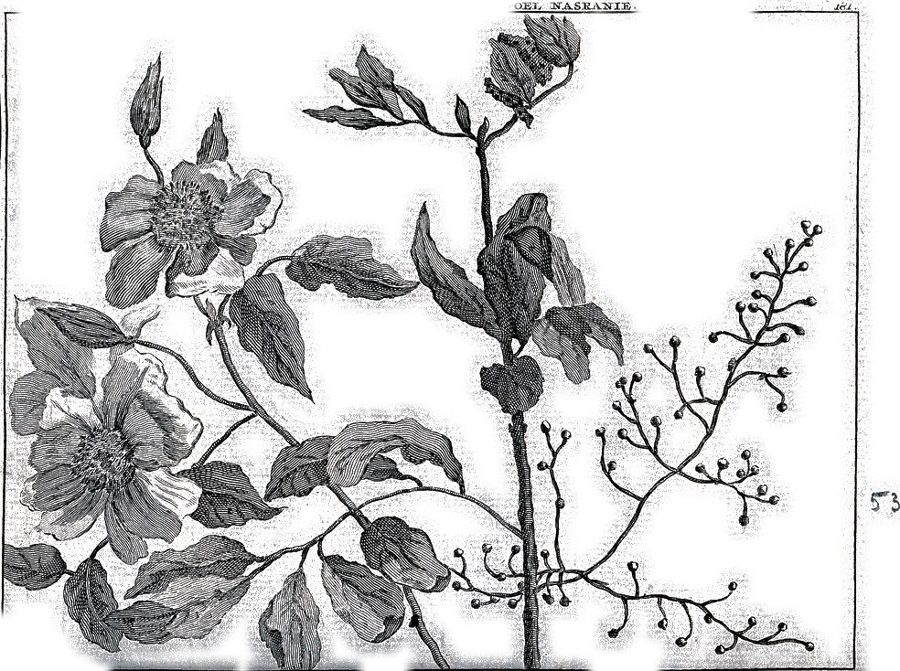
Cassia lignea
- Known today as
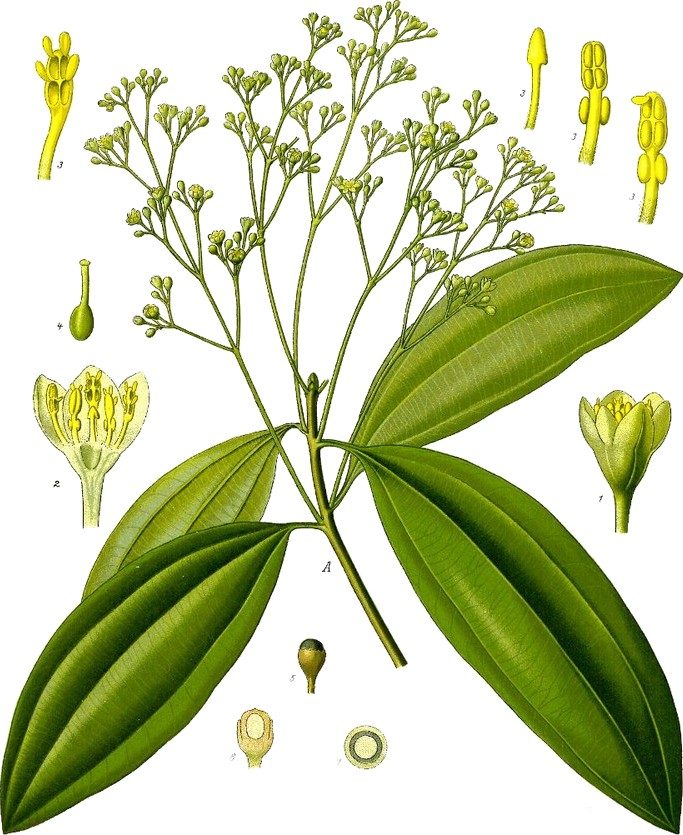
- The bark of Chinese cassia, Cinnamomum aromaticum (long known as Cinnamomum cassia); distinct from flower of cassia.
- Kind
- Resin & Wood, in 1 older authority
- Constituents
- cinnamaldehyde, coumarin, cinnamyl acetate
- Poisoning
- Coumarin and the liver
- Earliest authority here
- Pliny (AD 23/24–79)
- In other databases
- Plants of the World Online search · GBIF search · Wikidata search
- In the Canale glossary
- On the Manner of Discerning and Healing the Bewitched, Appendix A: Part Three, Chapter 9: Anointings
Revised October 1, 2026: An older authority added from a text read in full. Lore added from texts read in full. Version 1, first published September 25, 2026.
Cassia wood: what did Canale use it for?
In the oil for the bewitched; in Scripture’s anointing oil (ch. 9; Treatise Two; Exodus 30:24).
Cassia wood: what does modern science say?
Aromatic. Cassia contains more coumarin than true cinnamon, which is harmful to the liver in quantity.
Pharmacognosy & Toxicology
- Constituents
- cinnamaldehyde ChEMBL70–90 per cent of the oil
- coumarin ChEMBLup to 1 per cent in cassia, a hundredfold more than in Ceylon cinnamon
- cinnamyl acetate ChEMBL
- Mechanism
- Cinnamaldehyde activates the TRPA1 receptor, the warmth and the sting, and is antimicrobial; cassia’s coumarin, at the levels in heavy daily use, is hepatotoxic in sensitive people, which is why the German authorities warn about cinnamon rolls. Small trials of cassia for blood sugar in diabetes have been inconsistent.
- Checked against ChEMBL
- cinnamaldehyde: Measured, as the entry says (“activates the TRPA1 receptor”): Transient receptor potential cation channel subfamily A member 1 (mouse), EC50 3.4 µM, CHEMBL5705895; Transient receptor potential cation channel subfamily A member 1 (rat), EC50 5.4 µM, CHEMBL5705895.
- Toxic dose
- The tolerable daily intake of coumarin is 0.1 mg per kilogram; a teaspoon of cassia a day can exceed it in a child.
- Syndrome
- Coumarin and the liver
- Standing
- A spice; the EMA monograph (2011) is for Ceylon cinnamon bark; the Cochrane review (2012) found no benefit of cinnamon in diabetes.
- Abraham, K., et al. (2010). “Toxicology and risk assessment of coumarin: focus on human data.” Molecular Nutrition and Food Research 54. Verified against its record · doi:10.1002/mnfr.200900281
- Leach, M. J., and Kumar, S. (2012). “Cinnamon for diabetes mellitus.” Cochrane Database of Systematic Reviews 9. Verified against its record · doi:10.1002/14651858.cd007170.pub2
The abstract of each source, beneath its citation. For Club members. About the Club or sign in.
Constituent names open the compound’s record at PubChem, and “ChEMBL” beside a name opens its record at ChEMBL, the European Bioinformatics Institute’s database of bioactive molecules. Where a mechanism line was checked against ChEMBL (ChEMBL 37, read 1 October 2026), the check is shown with the measured value and its source paper, or says plainly that nothing has been measured. Doses are as the references give them, for description only; this is not medical advice. Each source carries the result of its check against Crossref, PubMed, or the authority’s page: see Verification.
Cassia wood: what lore surrounds it?
Folkard takes the cassia of Exodus, “called in Hebrew Kidda, the bark,” to be “a sweet spice commanded to be used in the composition of the holy oil employed in the consecration of the sacred vessels of the Tabernacle,” and supposes it the bark of the tree the ancients knew as Costus, “preparations of the bark and root of which were sometimes burnt on the pagan altars.”
Cassia wood: what did the older authorities say?
- Pliny
- “Arabia produces neither cinnamon nor cassia; and this is the country styled Happy Arabia!” Cassia, he says, is a shrub growing in the mountains near the cinnamon plains, with thicker branches and a thin skin rather than a bark, most valued when the bark crumbles; the choice kind “may be said to burn the tongue,” is purple, and is called lada by the barbarians; the bitter balsamodes serves medicine and the black kind the unguents; and “there is no substance known that is subject to greater variations in price,” fifty denarii the pound for the best and five for the rest. He repeats Herodotus’s tale that cassia and cinnamon are taken from the nests of the phoenix.
Sources
- [3] Ahnfelt, N.-O., Fors, H., & Wendin, K. (2022). Making and taking theriac: an experimental and sensory approach to the history of medicine. BJHS Themes 7: 39–62. doi:10.1017/bjt.2022.6 Verified against its record · doi:10.1017/bjt.2022.6
- [50] German Federal Institute for Risk Assessment (BfR) (2012). FAQ on coumarin in cinnamon and other foods. Updated 27 September 2012. bfr.bund.de. Book, seen in reviews
- Pliny the Elder, Natural History 12.41–43, trans. J. Bostock & H. T. Riley (1855), Perseus Digital Library. Primary text
- Folkard, R. (1884). Plant Lore, Legends, and Lyrics, “Cassia.” Project Gutenberg #44638. Primary text
Verification
- Checked
- October 1, 2026
- Passes
- Every sentence read against its sources, in the pass over the remaining 343 entries
- The Standing line checked against the authority it names (EMA, WHO, FDA, CITES, Commission E)
- Every dated or regulatory claim checked by category across the database
- The mechanism read against ChEMBL (ChEMBL 37): curated mechanisms and measured activity
- Each quotation from the older authorities checked word for word against the text, read in full
- Sources
- 6 cited: 3 verified against its record, 2 primary text, 1 book, seen in reviews. 2 with the abstract on file.
- Corrections
- None were needed.
What was checked, how, and what was found is set out on the Verification page. A checked source is one whose record was found; it does not make the entry medical advice.
Cite This Entry
Version 1 · first published September 25, 2026 · last revised October 1, 2026
- Chicago
“Cassia wood.” In Materia Medica, edited by B. C. P. Statema. Version 1. The Thinking Press, 2026–. Last modified October 1, 2026. https://thethinkingpress.org/materia-medica/cassia-wood.
- MLA
“Cassia wood.” Materia Medica, edited by B. C. P. Statema, version 1, The Thinking Press, 1 Oct. 2026, thethinkingpress.org/materia-medica/cassia-wood. Accessed 8 Oct. 2026.
- APA
Cassia wood. (2026, October 1). In B. C. P. Statema (Ed.), Materia medica (Version 1). The Thinking Press. Retrieved October 8, 2026, from https://thethinkingpress.org/materia-medica/cassia-wood
Club members keep entries on a shelf with private notes, print the plates as cards, and receive an entry by email each week. Create a free account before January 1, 2027 and all of it is yours for good. About the Club
See Also
Poisoned alike: coumarin and the liver
Sharing cinnamaldehyde, coumarin
Also in Pliny the Elder
Castoreum in Pliny the Elder · Caper spurge in Pliny the Elder · Catmint in Pliny the Elder · Bryony in Pliny the Elder · everything Pliny the Elder names →
Drawing on the same sources: Folkard, Abraham
Nearby in the alphabet
Carmelite water (with lemon peel, nutmeg, coriander, and angelica, distilled in spirit) · Castor-oil plant, seeds of (Ricinus communis) · Cardamom · Caraway broth (Carum carvi) · Caterpillar fungus (sending up a slender stalk) · The Caravaca cross
Historical description, not medical advice.