
Passarino’s white powder
- Known today as
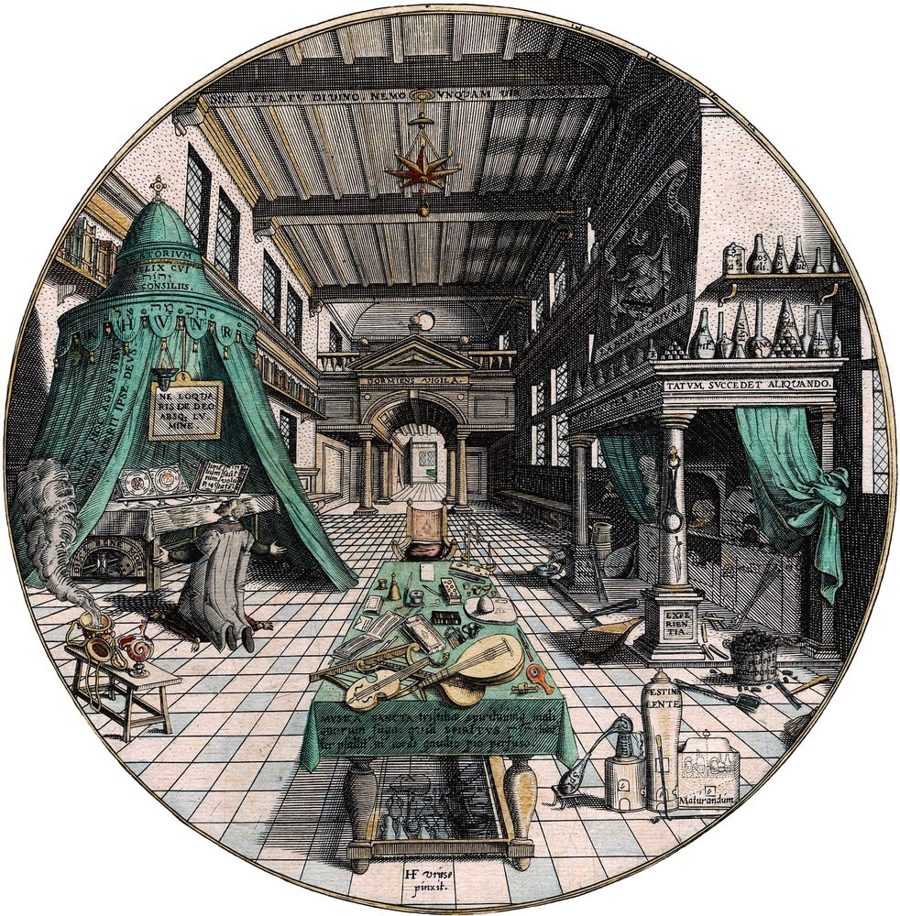
- A very white powder prepared in Brescia “with great mastery” by Signor Giovanni Antonio Passarino, a man skilled in the spagyric (chemical) art (note XXXIX). Canale does not give its composition; it makes one vomit and purge, and he names it just after advising that well-prepared antimony is safer than hellebore, but what it was is not recorded.
- Kind
- Compound
- Constituents
- unknown, antimony oxide or mercurous chloride
- Poisoning
- Mercury, arsenic, lead, and antimony
- In the Canale glossary
- On the Manner of Discerning and Healing the Bewitched, Appendix A: Part Three, Chapter 5: Vomitory Medicines
Revised October 3, 2026: Checked against its sources, each read in full, in part, or in its abstract. Version 1, first published September 25, 2026.
Passarino’s white powder: what did Canale use it for?
A safe and powerful vomit, by which difficult cases were healed (ch. 5).
Passarino’s white powder: what does modern science say?
Its nature is unknown. Antimony, which Canale recommends just before it, caused more debate than any other chemical medicine of the sixteenth and seventeenth centuries, a reviewer of McCallum’s history notes.
Pharmacognosy & Toxicology
- Constituents
- unknownCanale does not give the recipe
- antimony oxide or mercurous chloridea guess only: Canale recommends prepared antimony as a vomit just before naming the powder
- Mechanism
- A “safe and powerful vomit” by a named maker skilled in the spagyric art, the language of the chemical medicines then in dispute; Canale places it right after his advice that well-prepared antimony is a safer vomit than hellebore. Without the recipe the identification is a guess, not a fact.
- Toxic dose
- Canale gives his prepared antimony at four to eight grains, in powder or infusion; the dose of the powder itself is not legible in the read copy.
- Syndrome
- Mercury, arsenic, lead, and antimony
- Standing
- Unidentified; it belongs to the century from about 1560 to 1660 that has been called the “Antimony War,” between Galenists and iatrochemists.
- Canale, F. (1622). Discerning and Healing the Bewitched, ch. 5. Read in part · the text read
Constituent names open the compound’s record at PubChem, and “ChEMBL” beside a name opens its record at ChEMBL, the European Bioinformatics Institute’s database of bioactive molecules. Where a mechanism line was checked against ChEMBL (ChEMBL 37, read 1 October 2026), the check is shown with the measured value and its source paper, or says plainly that nothing has been measured. Doses are as the references give them, for description only; this is not medical advice. Each source carries the result of its check against Crossref, PubMed, or the authority’s page: see Verification.
Sources
- Review of R. I. McCallum, Antimony in Medical History (Pentland Press, 1999). Bulletin of the History of Medicine (2000). doi:10.1353/bhm.2000.0064 Abstract read · the text read
Verification
- Checked
- October 1, 2026, and October 3, 2026
- Passes
- Every sentence read against its sources, in the pass over the remaining 343 entries
- The Standing line checked against the authority it names (EMA, WHO, FDA, CITES, Commission E)
- Every dated or regulatory claim checked by category across the database
- Every source read, in full, in part, or in its abstract, and every sentence checked against what was read (October 3, 2026)
- Sources
- 2 cited: 1 read in part, 1 abstract read. 1 with the abstract on file.
- Corrections
- None were needed.
What was checked, how, and what was found is set out on the Verification page. A checked source is one whose record was found; it does not make the entry medical advice.
Cite This Entry
Version 1 · first published September 25, 2026 · last revised October 3, 2026
- Chicago
“Passarino’s white powder.” In Materia Medica, edited by B. C. P. Statema. Version 1. The Thinking Press, 2026–. Last modified October 3, 2026. https://thethinkingpress.org/materia-medica/passarinos-white-powder.
- MLA
“Passarino’s white powder.” Materia Medica, edited by B. C. P. Statema, version 1, The Thinking Press, 3 Oct. 2026, thethinkingpress.org/materia-medica/passarinos-white-powder. Accessed 8 Oct. 2026.
- APA
Passarino’s white powder. (2026, October 3). In B. C. P. Statema (Ed.), Materia medica (Version 1). The Thinking Press. Retrieved October 8, 2026, from https://thethinkingpress.org/materia-medica/passarinos-white-powder
Club members keep entries on a shelf with private notes, print the plates as cards, and receive an entry by email each week. Create a free account before January 1, 2027 and all of it is yours for good. About the Club
See Also
Poisoned alike: mercury, arsenic, lead, and antimony
Quicksilver · Orpiment and realgar · Verdigris · Litharge · Vitriol · James’s powder · White arsenic · Iron and steel · the syndrome, with all of them →
Sharing unknown
Ferula · Tricholoma equestre · Armillaria · Entoloma sinuatum
Drawing on the same sources: Canale
Nearby in the alphabet
Pawpaw (the one temperate tree of the custard-apple family) · Paschal candle · Pearls, prepared (Pearls ground to a fine powder) · Parsley (Petroselinum crispum) · Penicillin mould (fruit, and damp) · Paregoric (camphor, benzoic acid, and anise oil in spirit) · Pennyroyal (Mentha pulegium) · Panther cap (white-spotted amanita of European woods)
Historical description, not medical advice.