
Pyrrolizidine alkaloids (veno-occlusive disease)
Comfrey, coltsfoot, butterbur, ragwort, borage leaf, and other herbs of the borage and daisy families.
Pyrrolizidine alkaloids (veno-occlusive disease): how soon does it show?
Weeks to months of use.
How does it run?
The small veins of the liver are blocked; swelling, fluid in the belly, and in bad cases liver failure. The alkaloids also cause tumours in animals. Children and the unborn are most at risk.
What is done for it?
Stop the herb; supportive care.
Historical and descriptive, not medical advice. In a poisoning, call a poison centre or emergency services.
Which substances in the database cause it?
PlantAlkanetAnchusa; Greek anchousa, “paint”
Alkanna tinctoria (syn. Anchusa tinctoria). A Mediterranean relative of borage, grown for the red dye in its root.
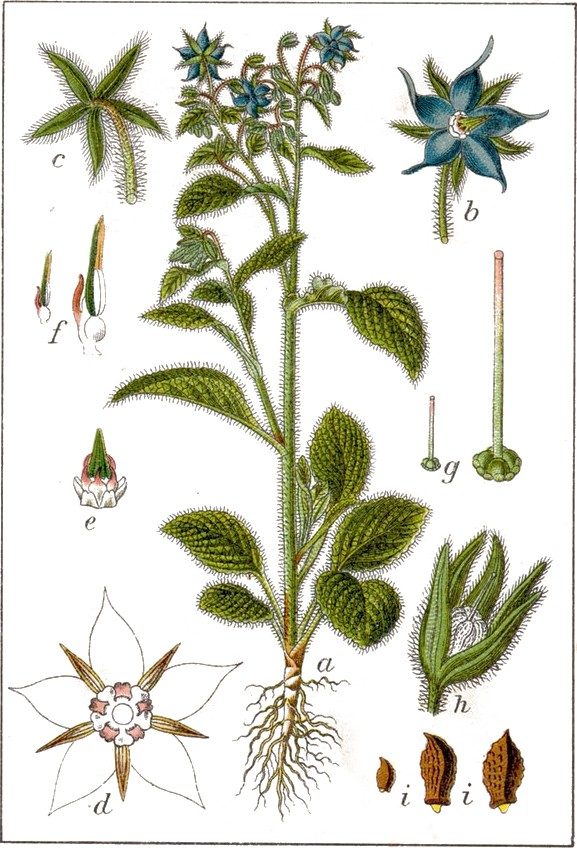
PlantButterburPetasites; pestilence wort, German Pestwurz
Petasites hybridus, of the daisy family, with huge rhubarb-like leaves in damp places.Caution
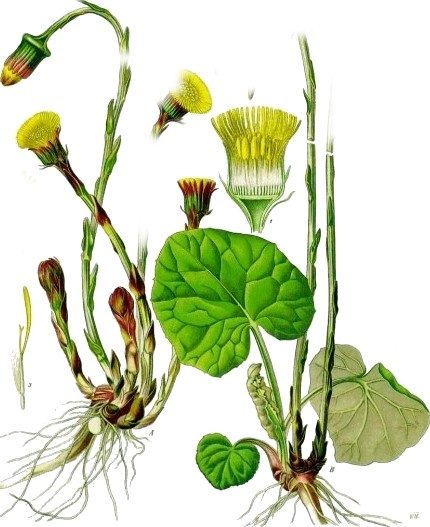
PlantComfreySymphytum, “grow together”; knitbone
Symphytum officinale.Caution
PlantHoundstongueCynoglossum, “dog’s tongue”
Cynoglossum officinale. A coarse, grey-leaved biennial of waste ground, named for its long, tongue-shaped, softly hairy leaves.Caution
PlantRagwortCushag (Manx); Stinking Willie
Jacobaea vulgaris (syn. Senecio jacobaea). A tall, weedy, yellow-flowered daisy of pastures and waste ground.Caution
Sources
- Stickel, F., and Seitz, H. K. (2000). “The efficacy and safety of comfrey.” Public Health Nutrition 3. Verified against its record · doi:10.1017/s1368980000000586
- European Medicines Agency (2014). Public statement on the use of herbal medicinal products containing toxic, unsaturated pyrrolizidine alkaloids. Book, seen in reviews