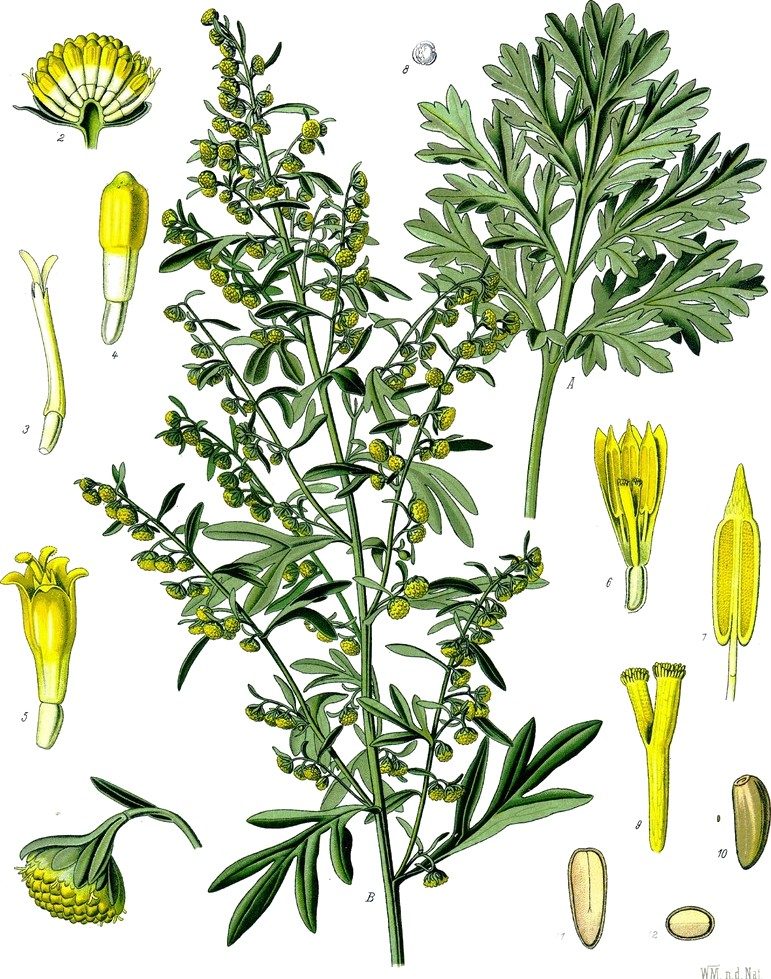
Pedanius Dioscorides of Anazarbus in Cilicia, a Greek physician who traveled widely, perhaps with the Roman army. His five books On Medical Material describe some six hundred plants and many animal and mineral drugs, each with its names, appearance, preparation, and uses. Copied, illustrated, translated, and commented on without a break, it remained the foundation of pharmacy into the seventeenth century, and gives this database its name.
89 Entries in the Materia Medica
The Thinking Press Club
Read What Dioscorides Says
Each passage in which the database cites Dioscorides, entry by entry.
For Club Members. Create a free account before January 1, 2027 and confirm your email: you become a Charter Member, and it is yours for good.
- AlkanetAlkanna tinctoria (syn. Lithospermum tinctorium). A relative of borage, of southern Europe
- Armenian boleA fine red clay; in a museum sample presumed to be Armenian bole, the red came from goethi
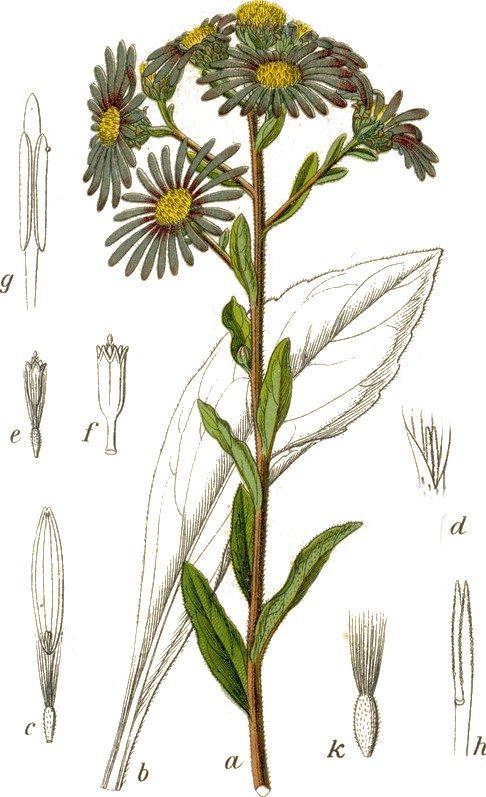
- AsterAster amellus.
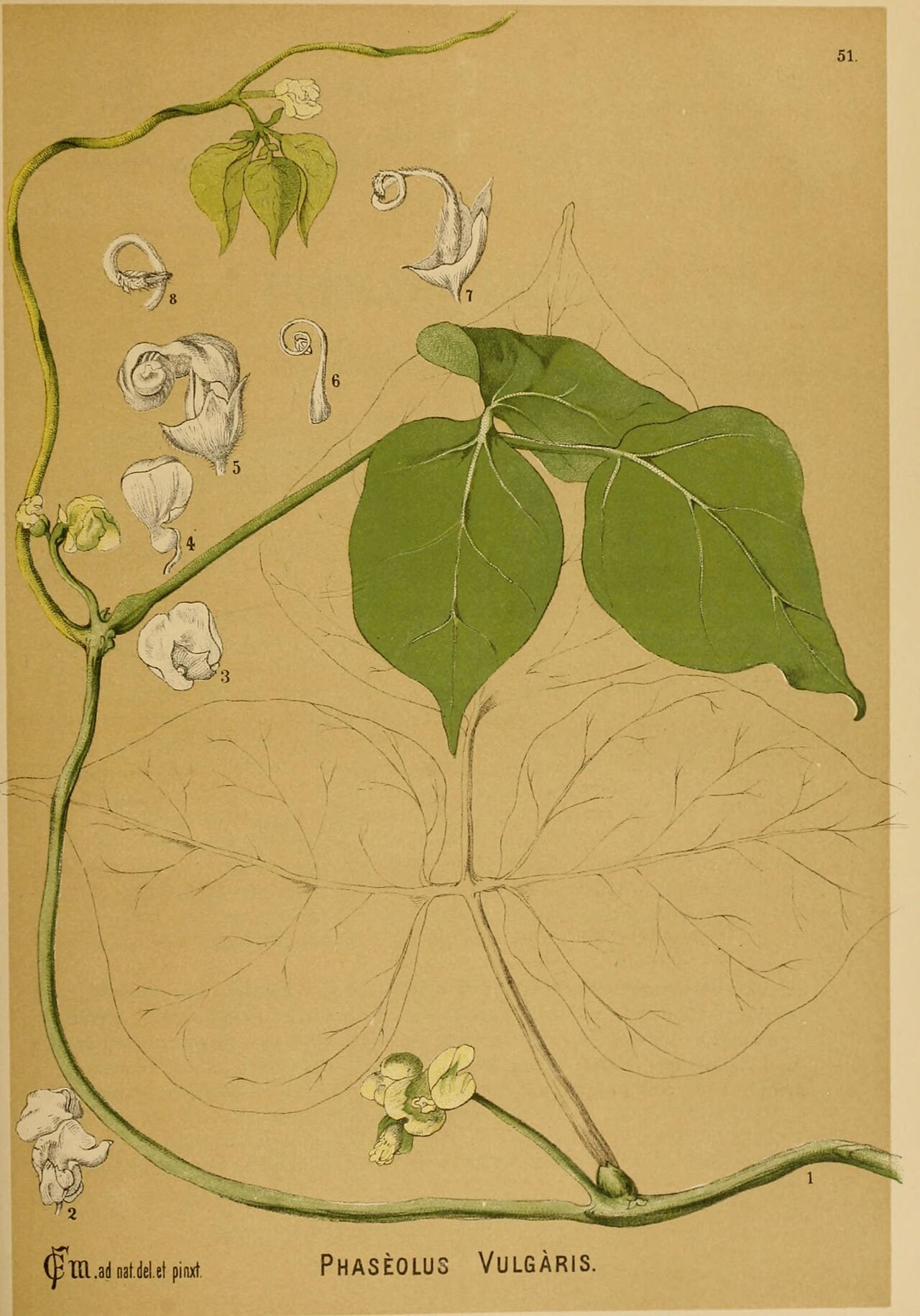
- Bean podThe pod, without its seeds, of the common French or kidney bean, Phaseolus vulgaris. Culpe
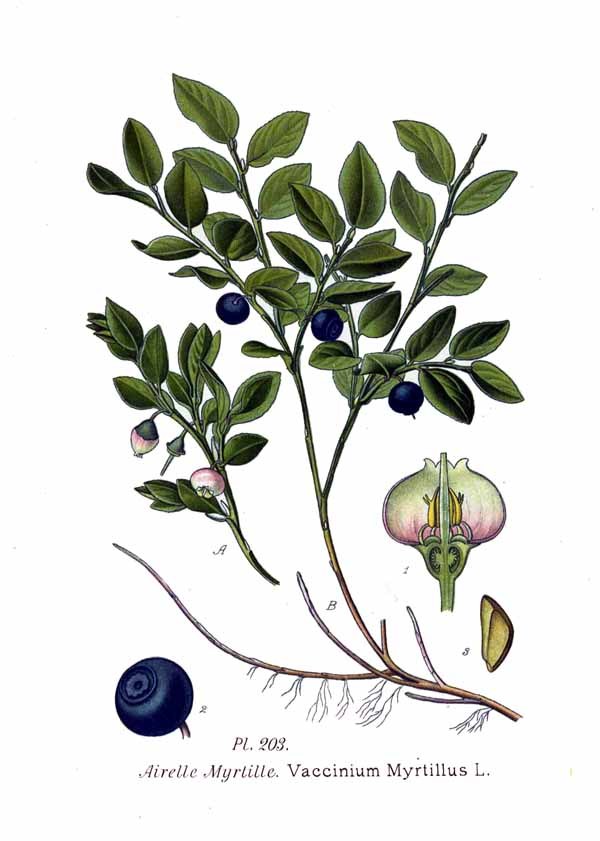
- BilberryVaccinium myrtillus, a small branched shrub of heaths and mountains, rarely over a foot hi
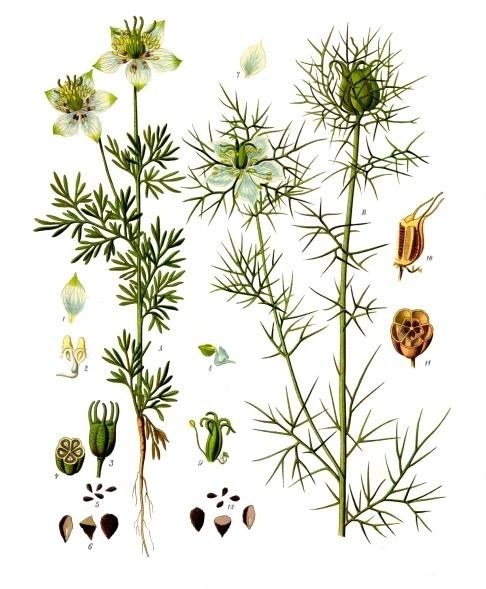
- Black seedNigella sativa, a small annual of the buttercup family, Ranunculaceae, which Grieve calls
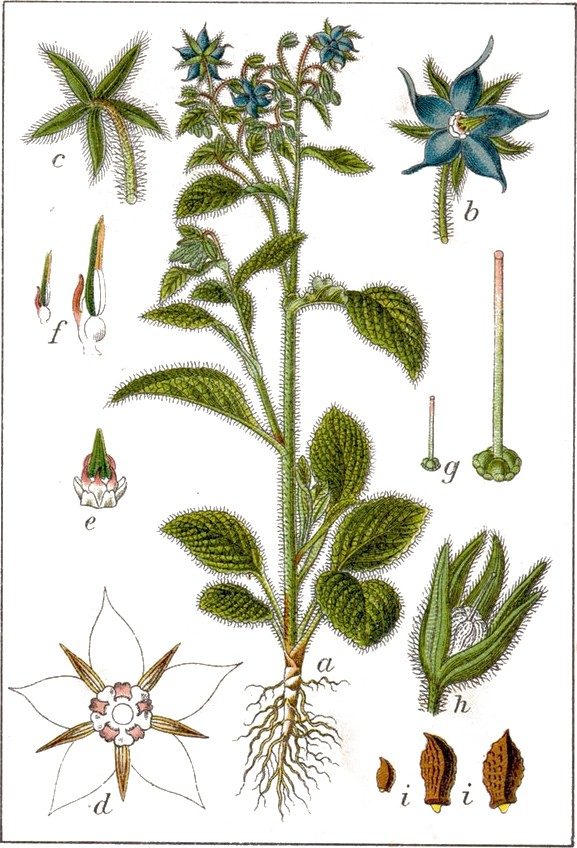
- BorageBorago officinalis.
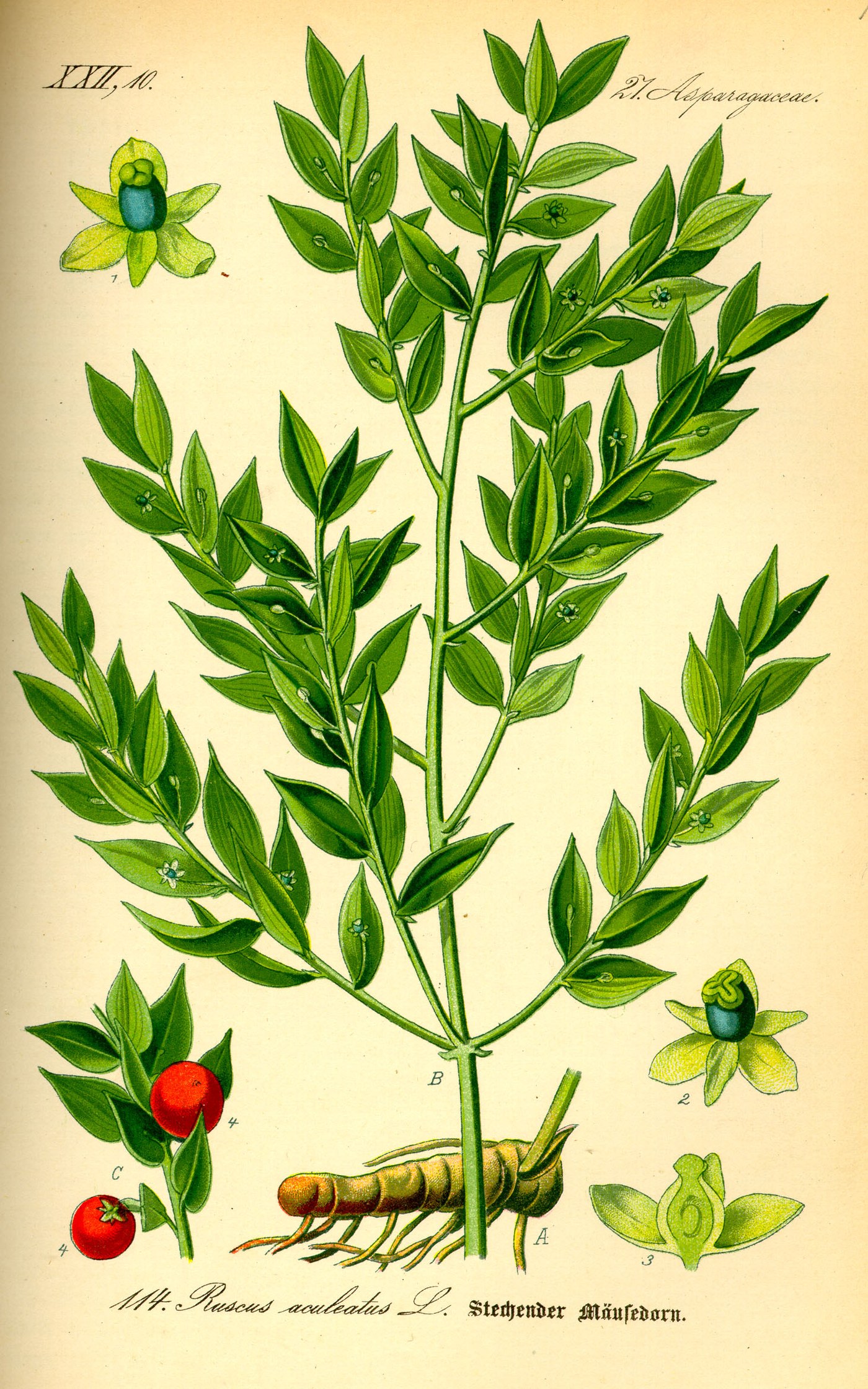
- Butcher’s broomRuscus aculeatus, a low, stiff evergreen of woods and waste places, especially in the sout
- CalamineZinc carbonate, an ore of zinc; the name was long used too for the hydrous silicate of zin
- CantharidesThe dried blister beetle Lytta vesicatoria.
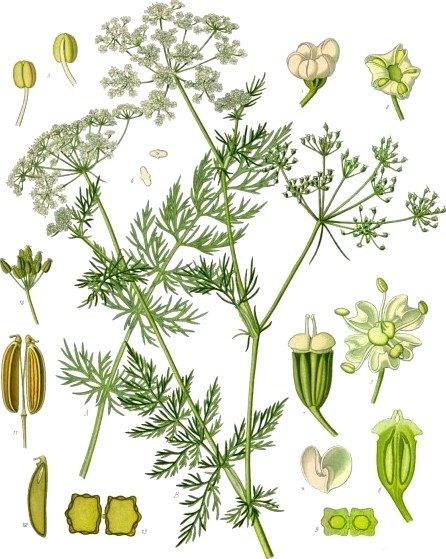
- Caraway brothA broth of caraway seed, Carum carvi.
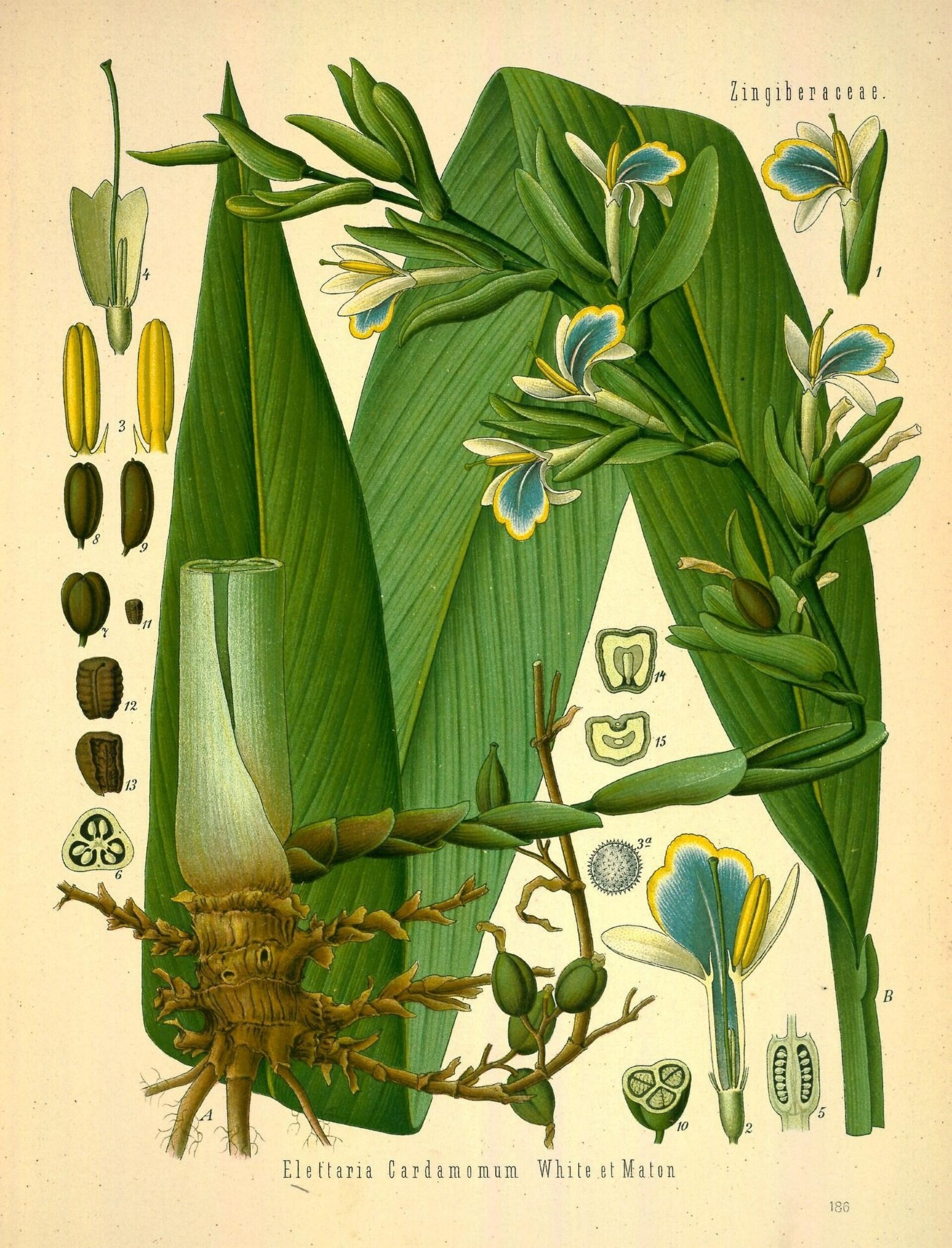
- CardamomElettaria cardamomum, of the family Zingiberaceae, whose seeds come in pale three-sided po
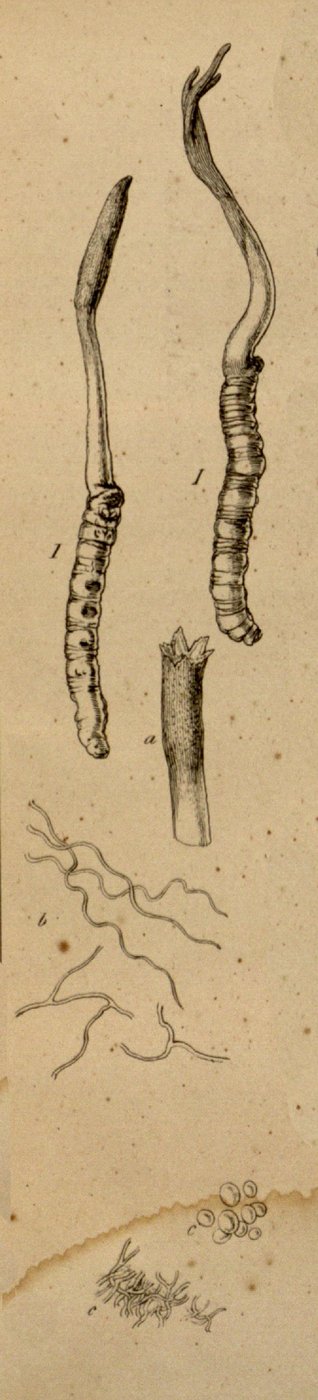
- Caterpillar fungusA fungus that fills and kills the buried larvae of ghost moths on the Tibetan plateau, sen
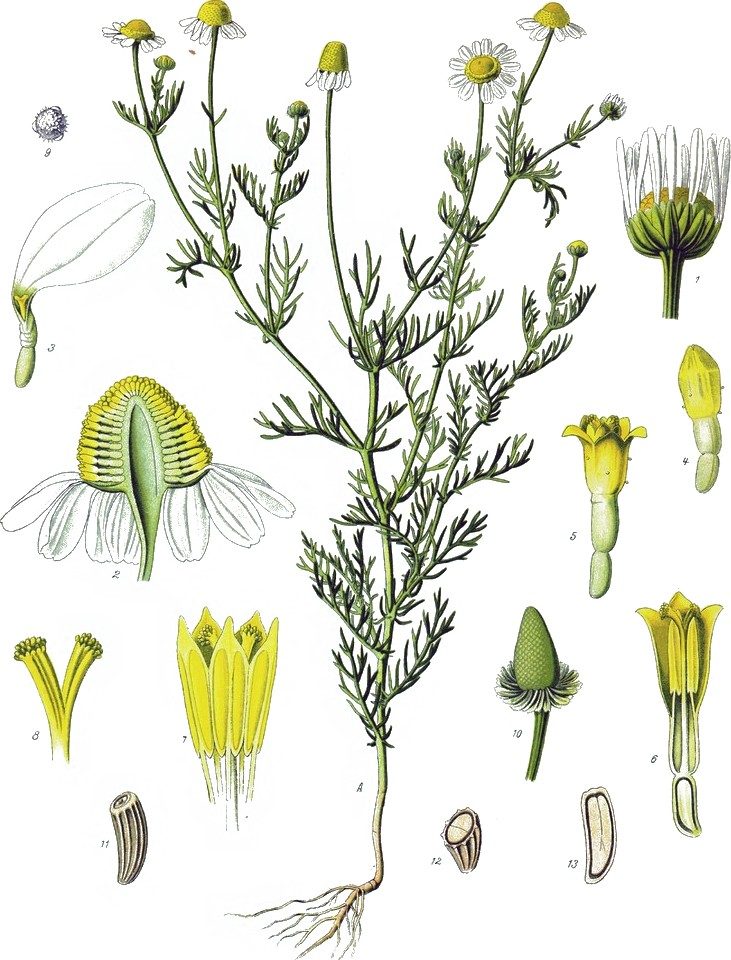
- ChamomileMatricaria chamomilla.
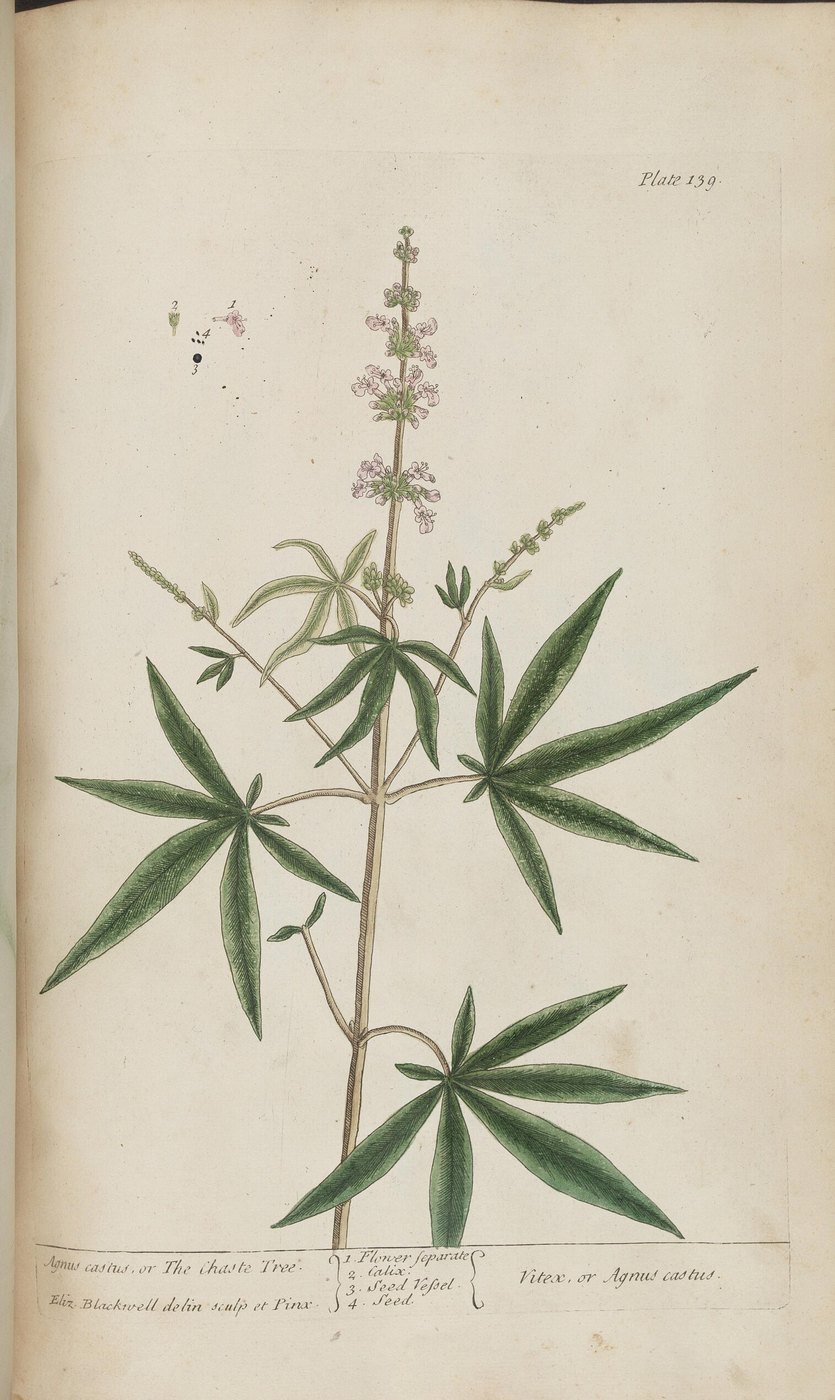
- Chaste treeVitex agnus-castus, a Mediterranean shrub with blue-violet flowers and a seed “like
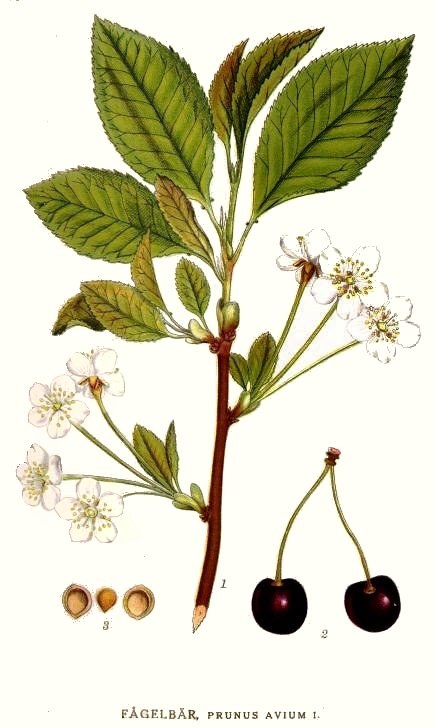
- Cherry stalksThe dried fruit stalks of the sweet and sour cherries. Grieve gives their marks as “
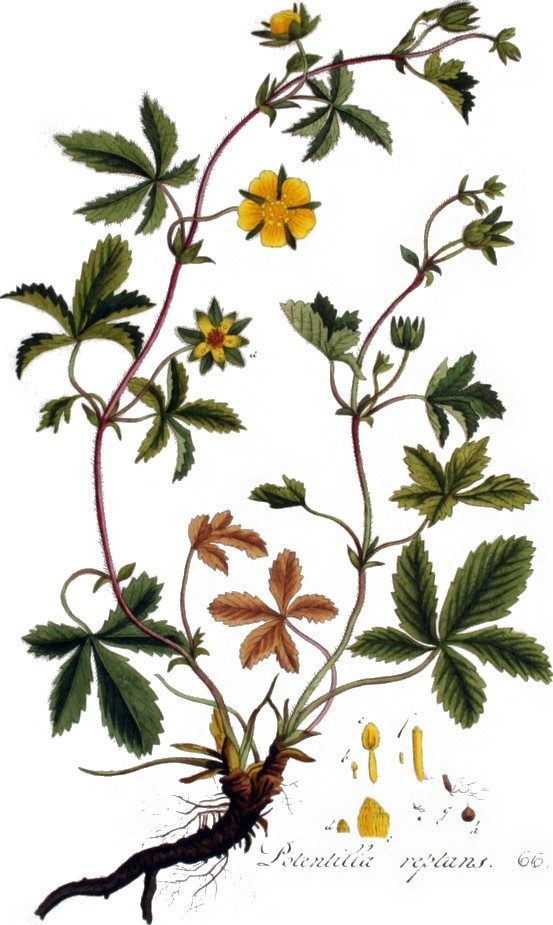
- CinquefoilPotentilla reptans.
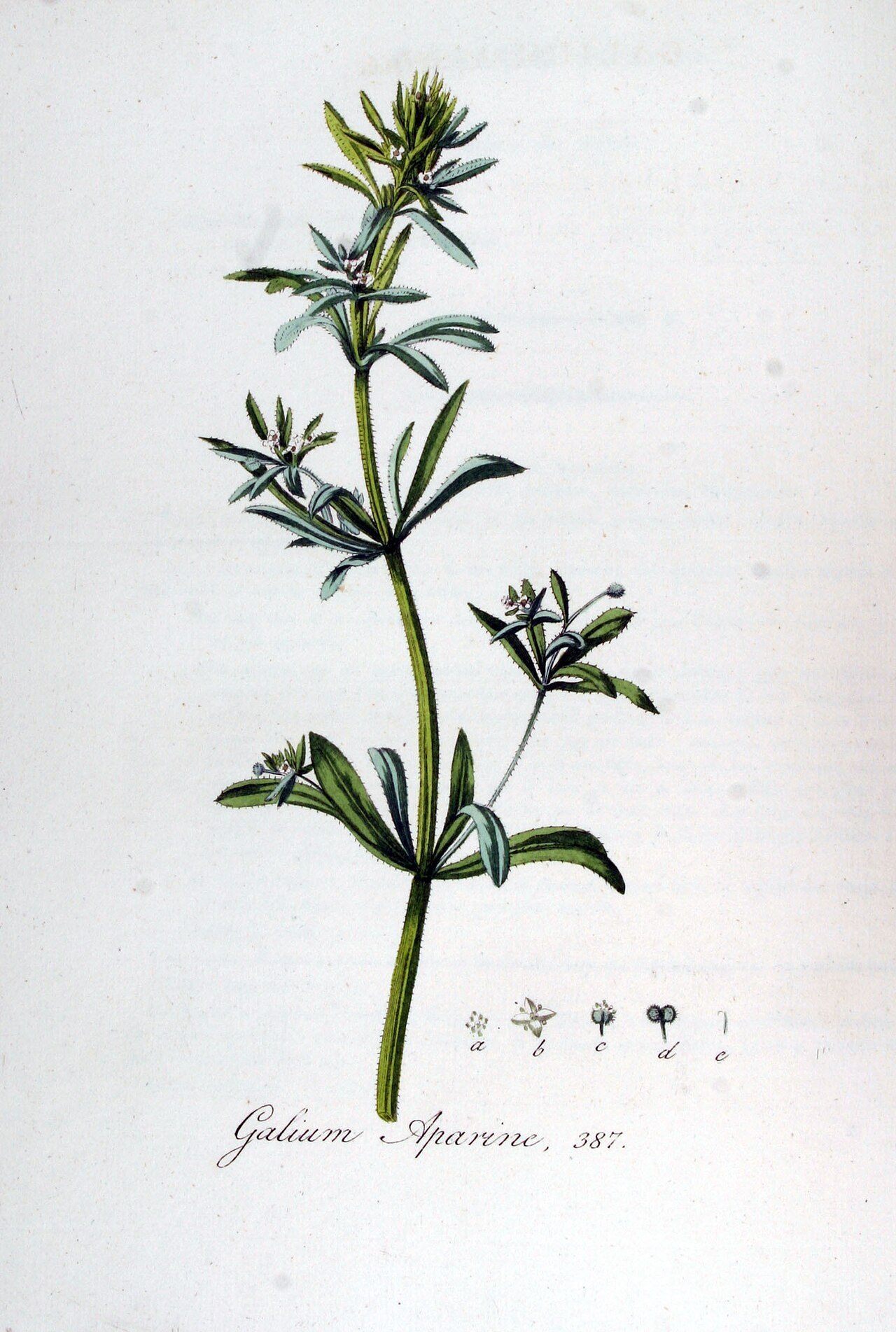
- CleaversGalium aparine, an annual hedgerow weed of the madder family, Rubiaceae, common throughout
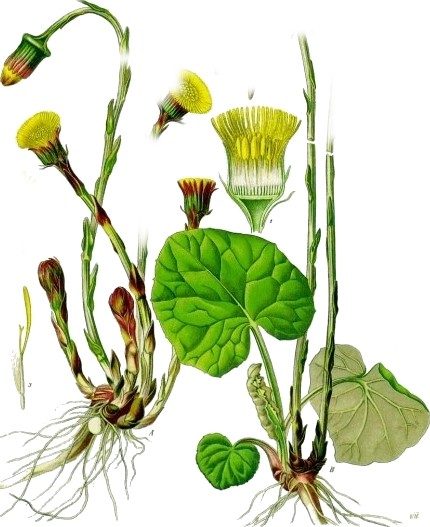
- ColtsfootTussilago farfara.
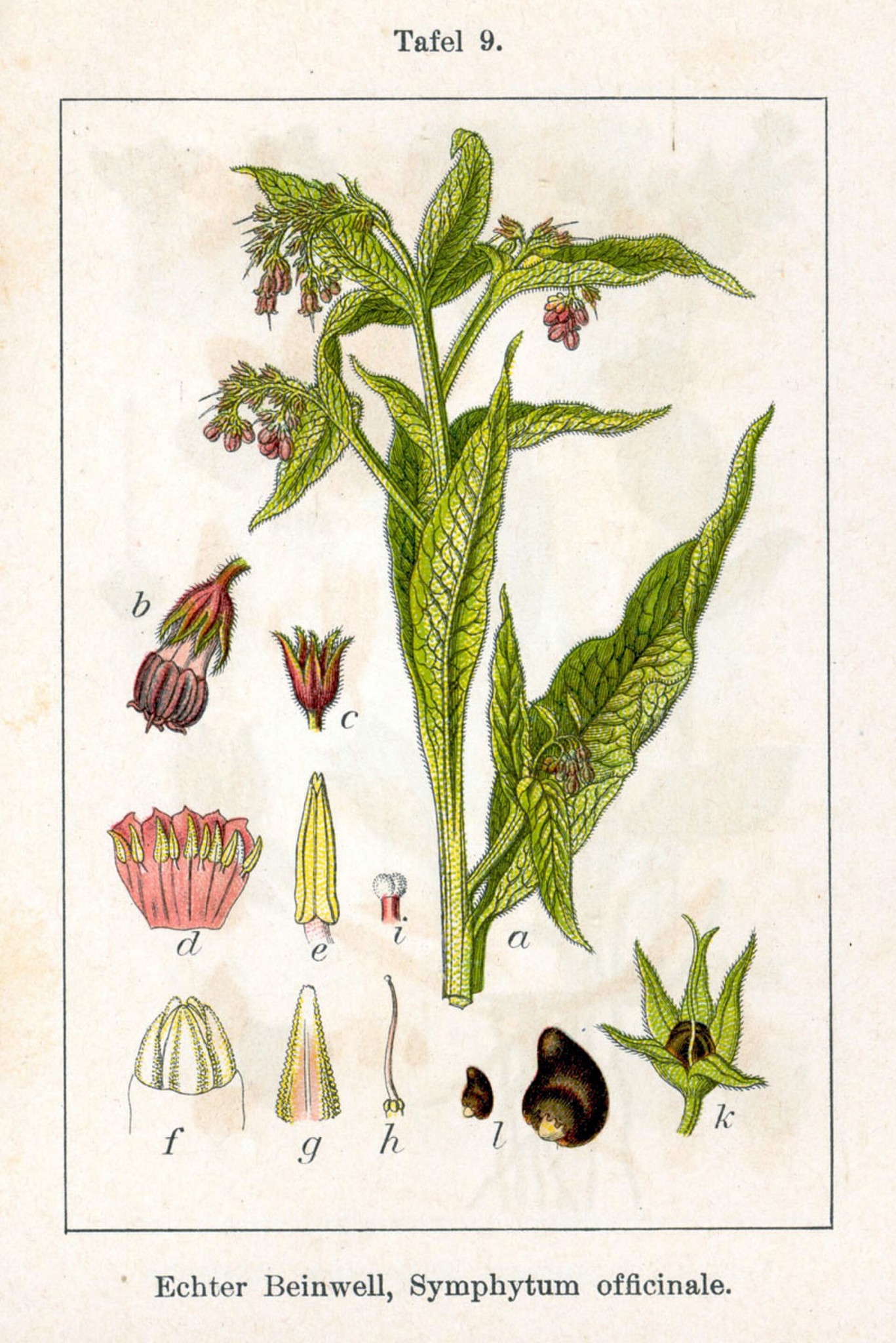
- ComfreySymphytum officinale.
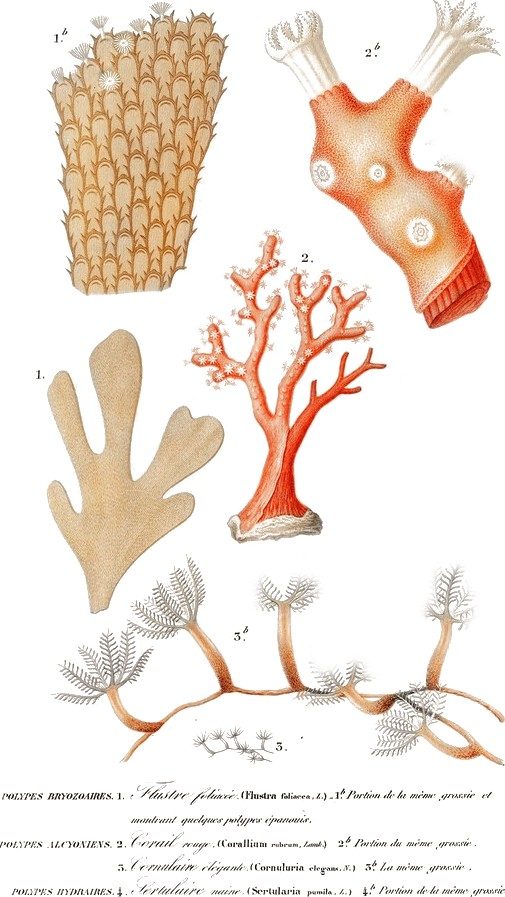
- Coral, redPrecious red coral, Corallium rubrum, of the western Mediterranean, prepared as powder.
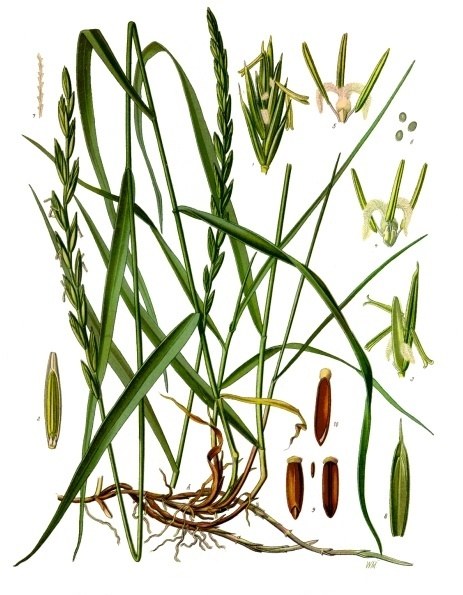
- Couch grassA grass of fields and waste places across Europe, northern Asia, Australia, and the Americ
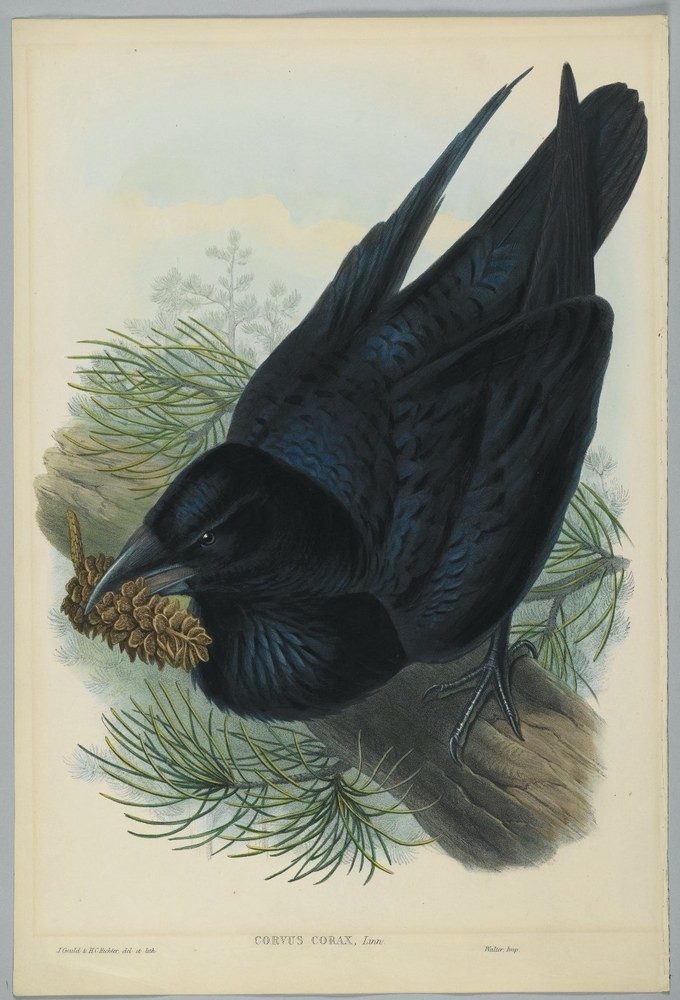
- Crow’s gallThe bile of a crow.
- CuminCuminum cyminum.
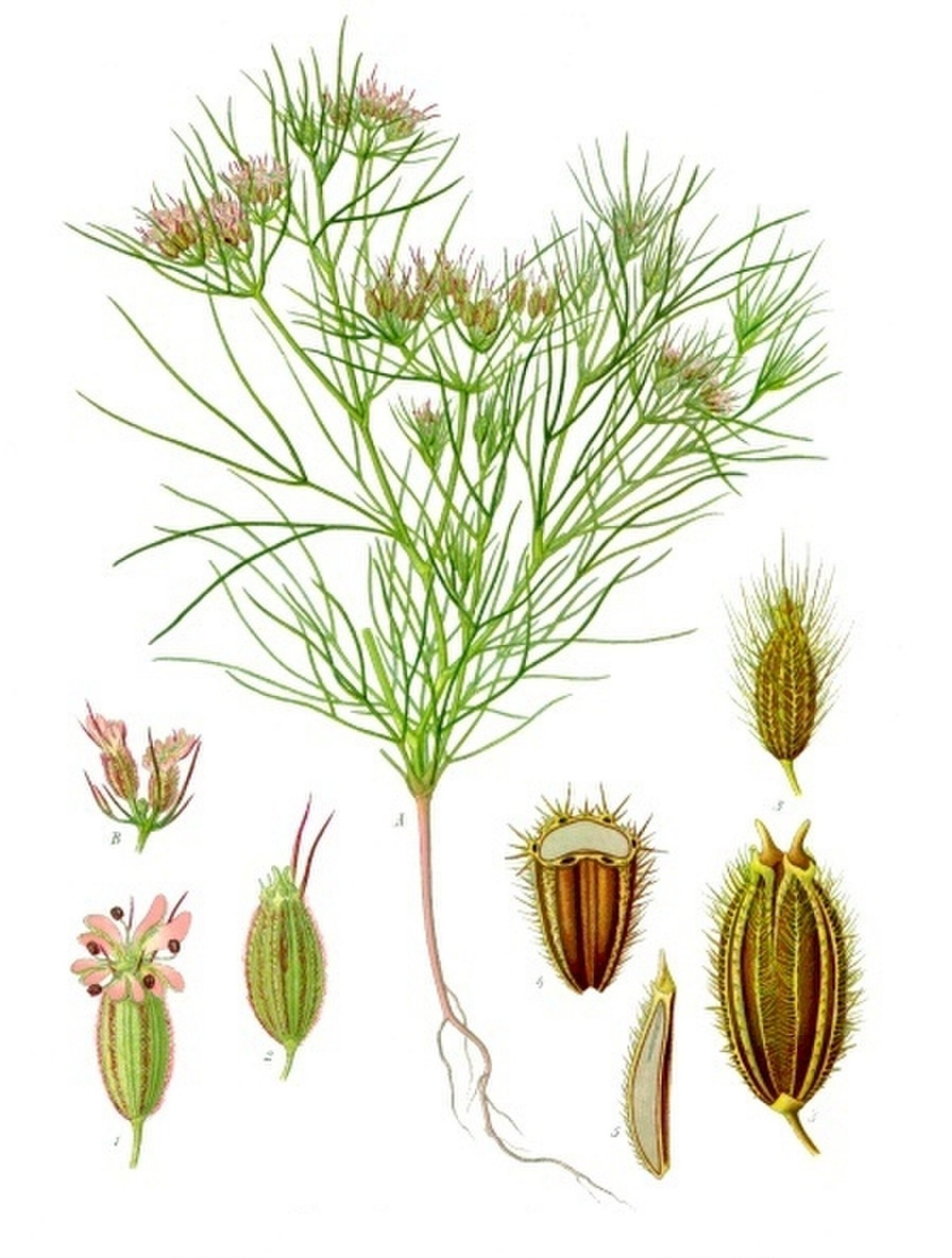
- Cuttlefish boneThe chalky internal shell of the cuttlefish, washed up on beaches.
- CypressCupressus sempervirens: cones, leaves, and wood.
- Eagle-stoneA hollow nodule of iron oxide with a loose stone rattling inside.
- EyebrightEuphrasia officinalis and relatives.
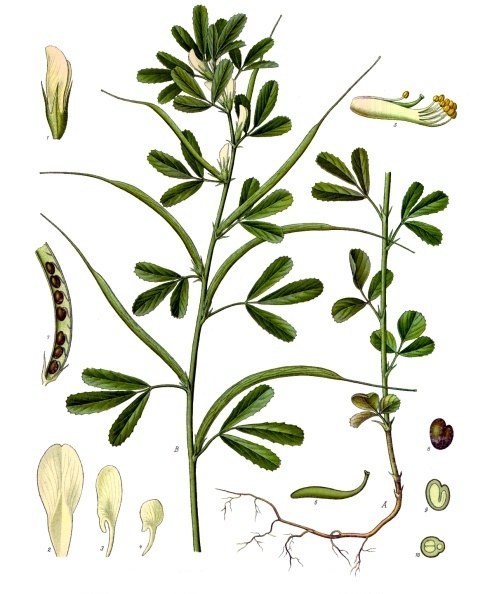
- FenugreekTrigonella foenum-graecum, an erect annual of the legume family about two feet high, like
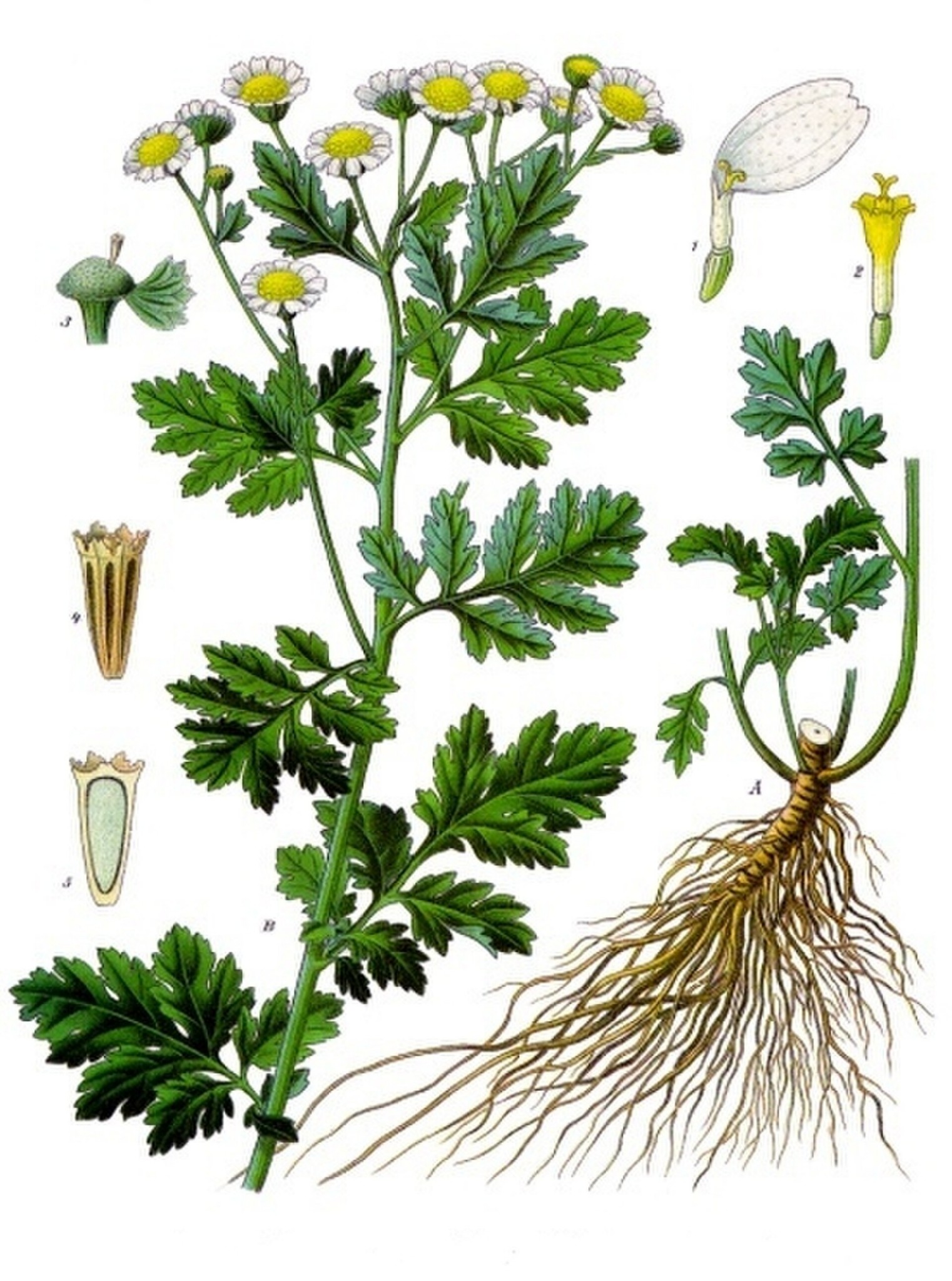
- FeverfewTanacetum parthenium.
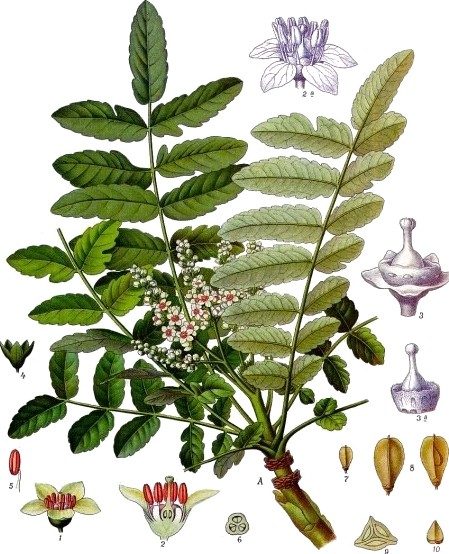
- FrankincenseThe resin of Boswellia sacra and related trees.
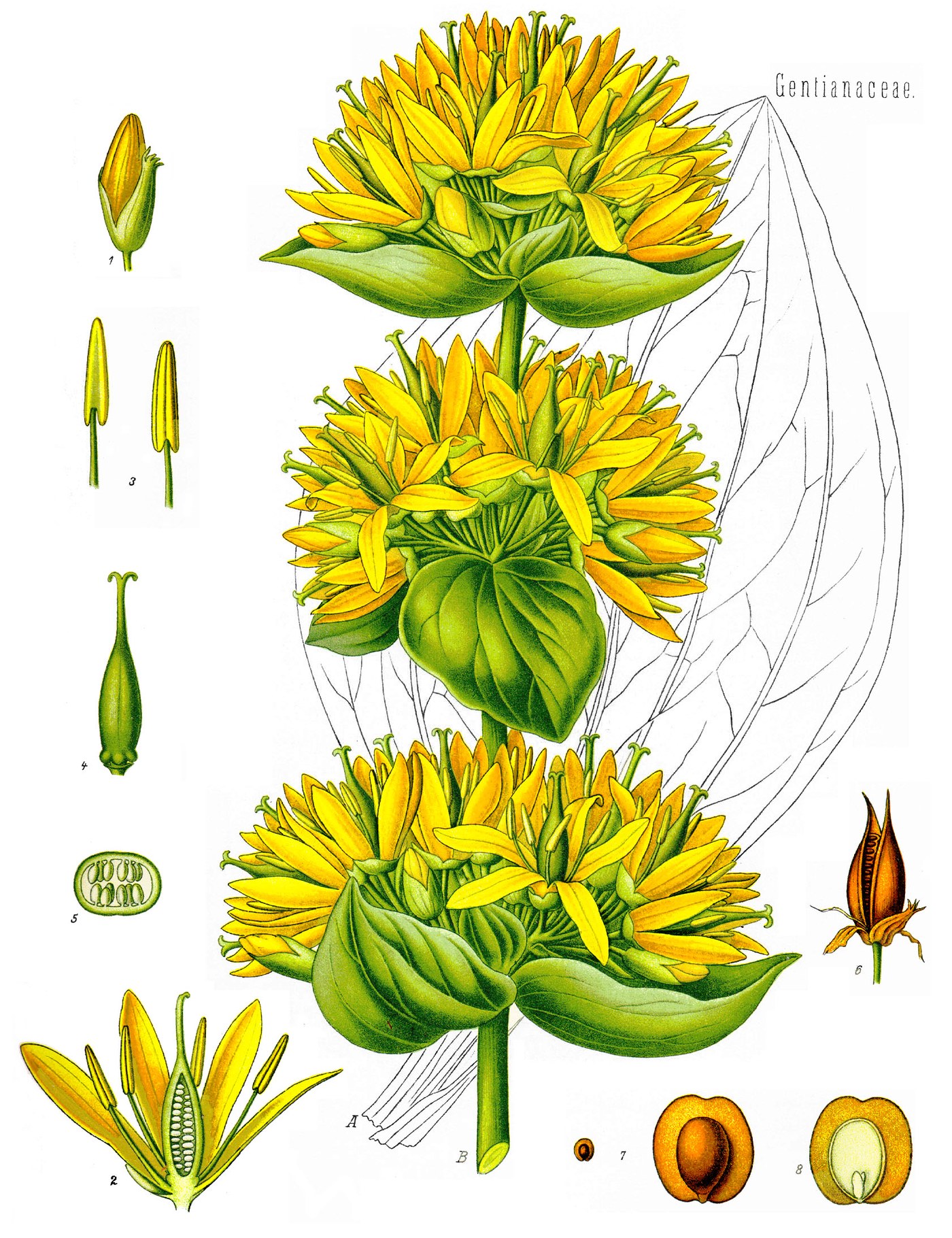
- GentianGentiana lutea, a stately perennial of the alpine and subalpine pastures of central and so
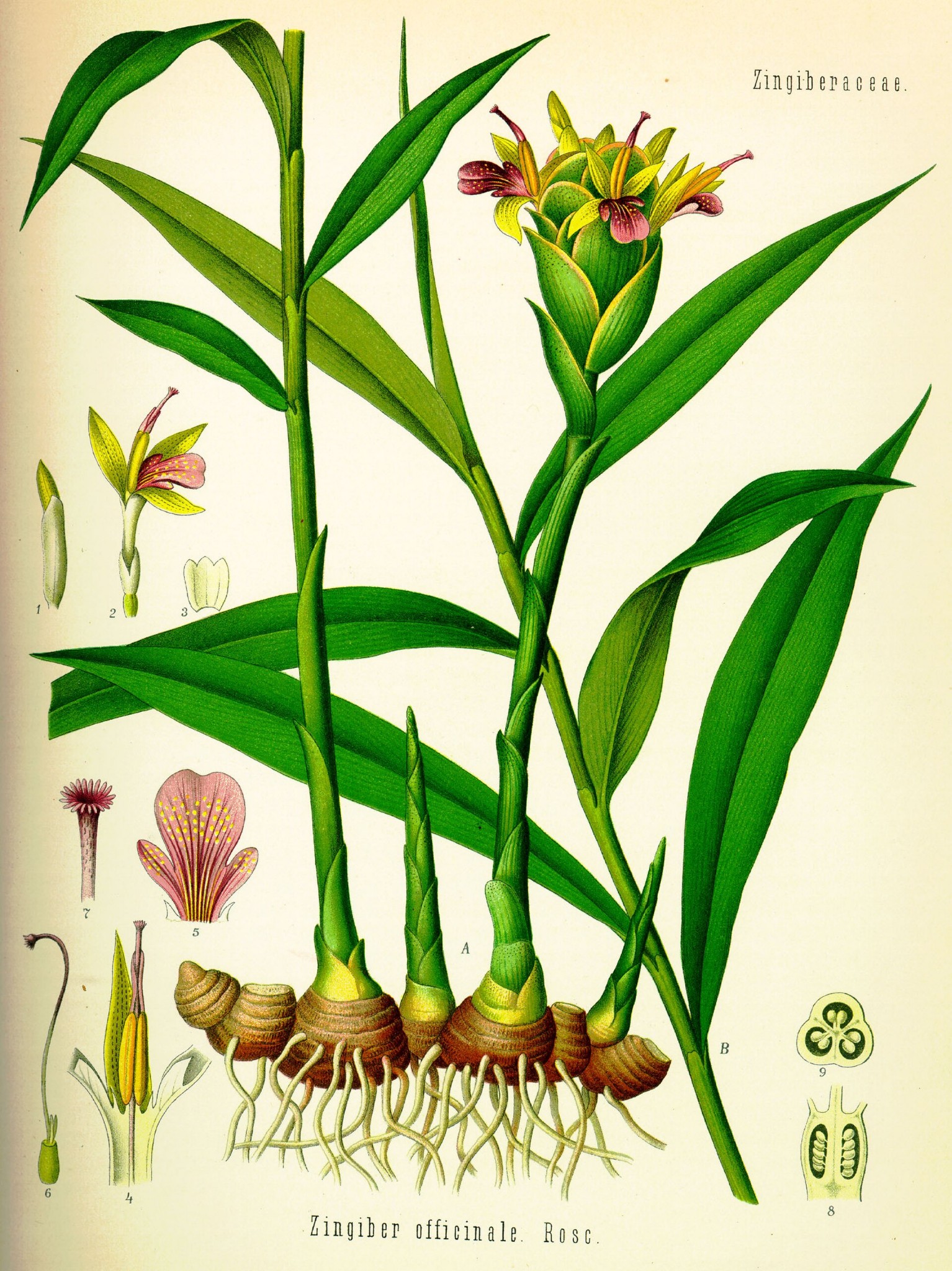
- GingerThe rhizome of Zingiber officinale.
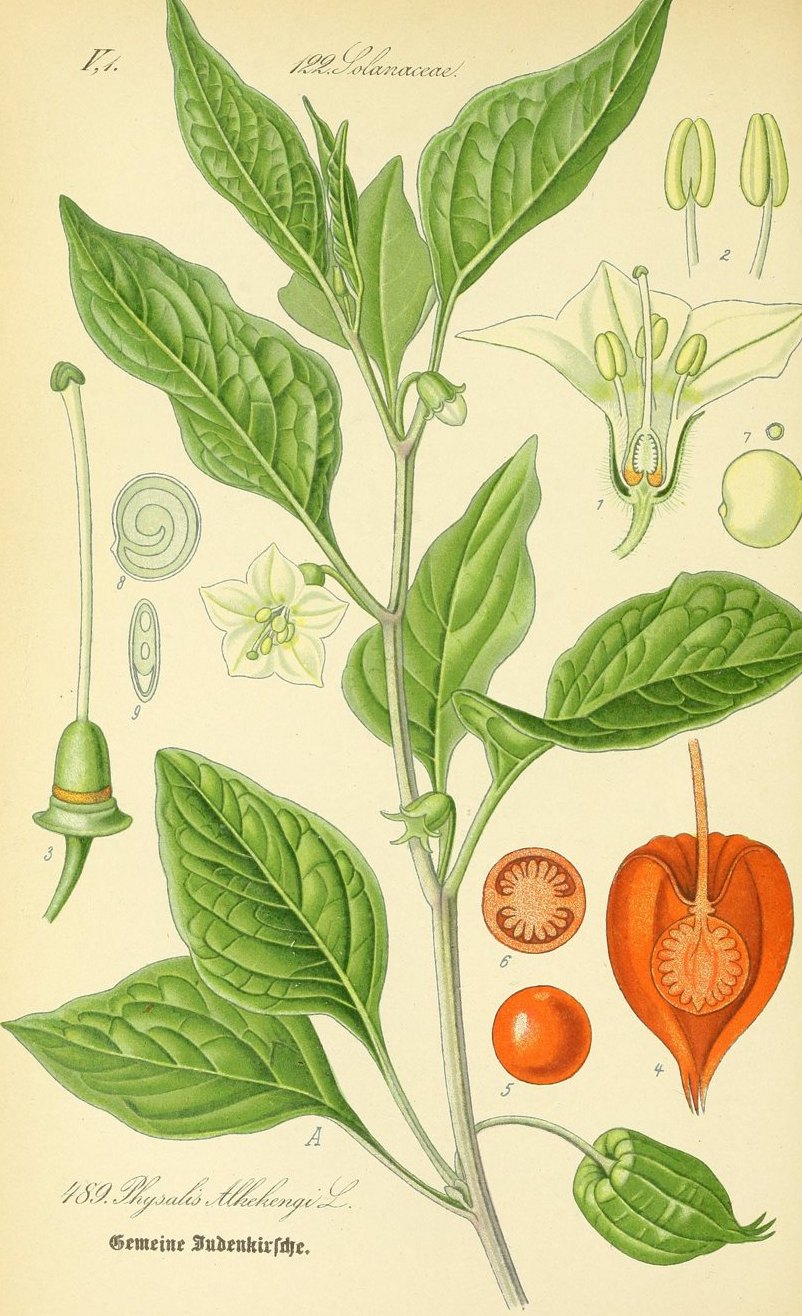
- Ground cherryPhysalis, the ground cherries: nightshades whose five-cleft calyx swells after the flower
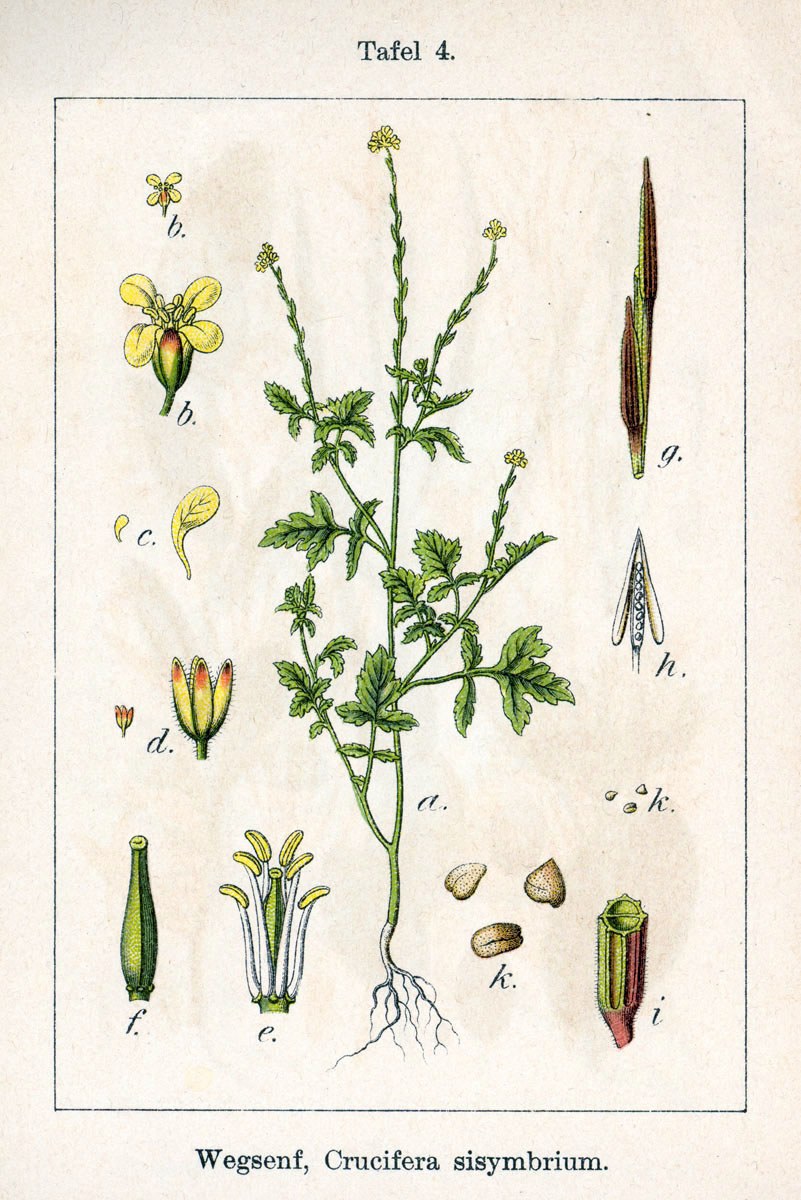
- Hedge mustardSisymbrium officinale, an annual of the family Brassicaceae, of Eurasian origin, growing b
- HempCannabis sativa.
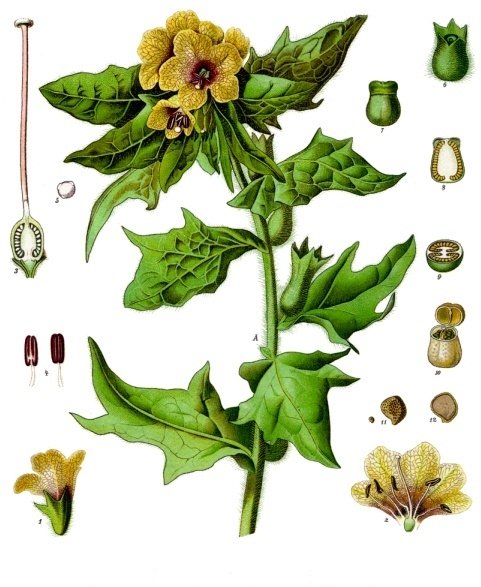
- HenbaneHyoscyamus niger, of the nightshade family.
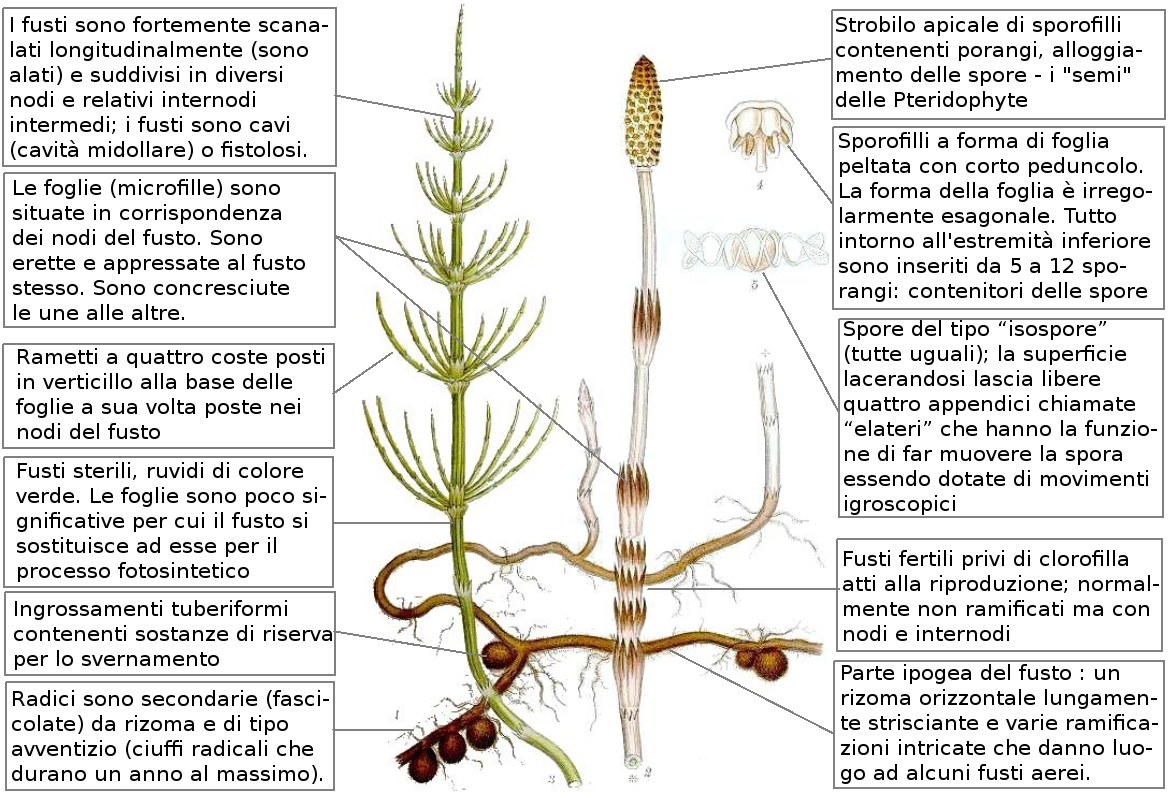
- HorsetailEquisetum arvense, the commonest British horsetail, a rush-like plant of cornfields and we
- HoundstongueCynoglossum officinale, of the borage family. A rough, bristly plant of waste ground and p
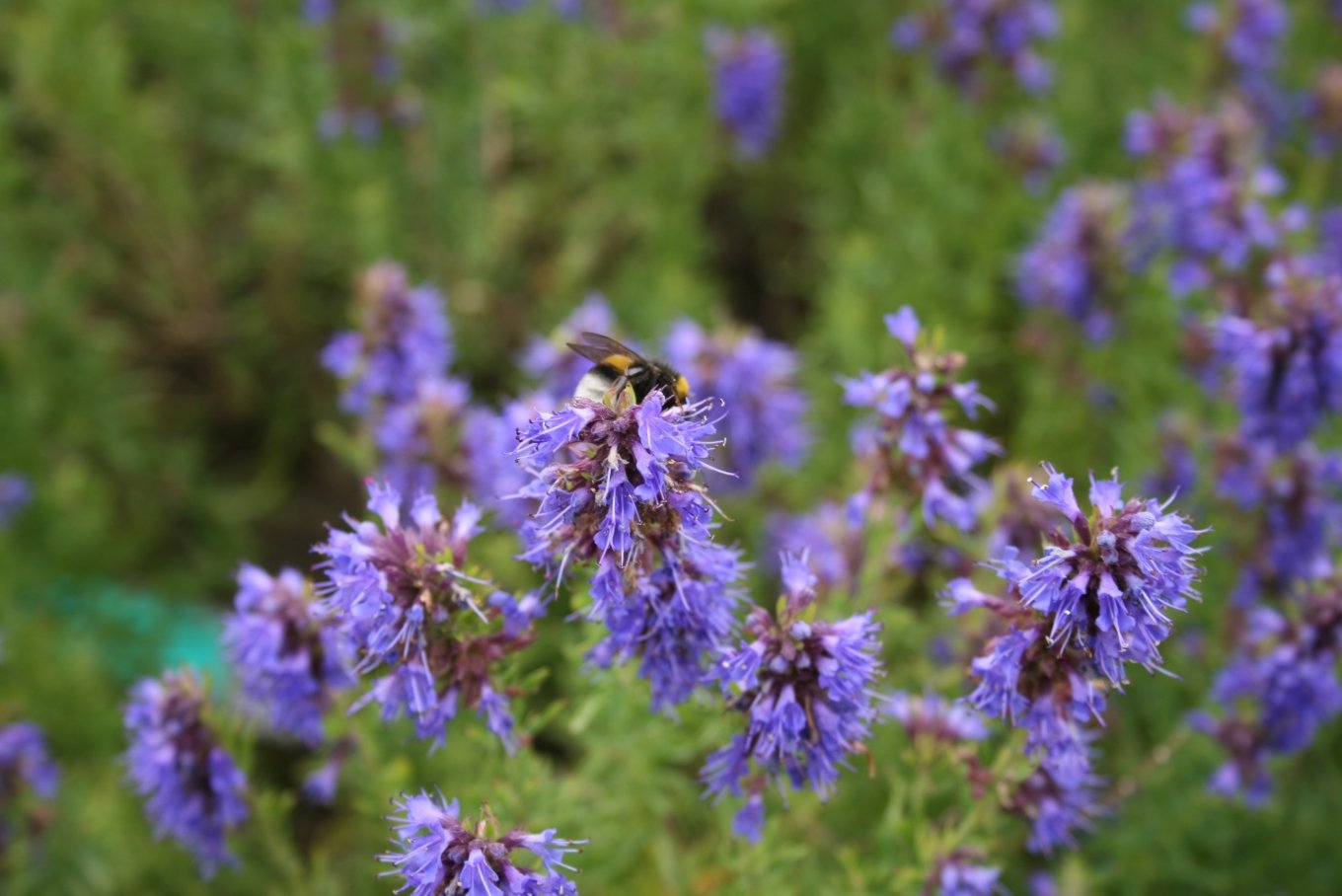
- HyssopHyssopus officinalis; the hyssop of Scripture was probably a wild marjoram, Origanum syria
- Isinglass
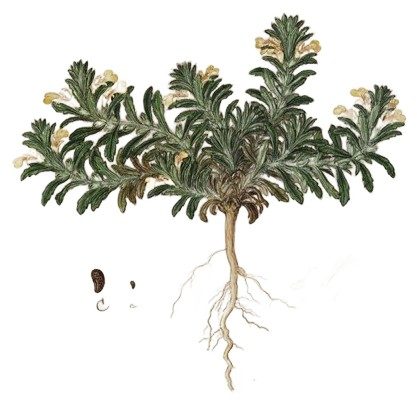
- IvaAjuga iva; see Arthritica.
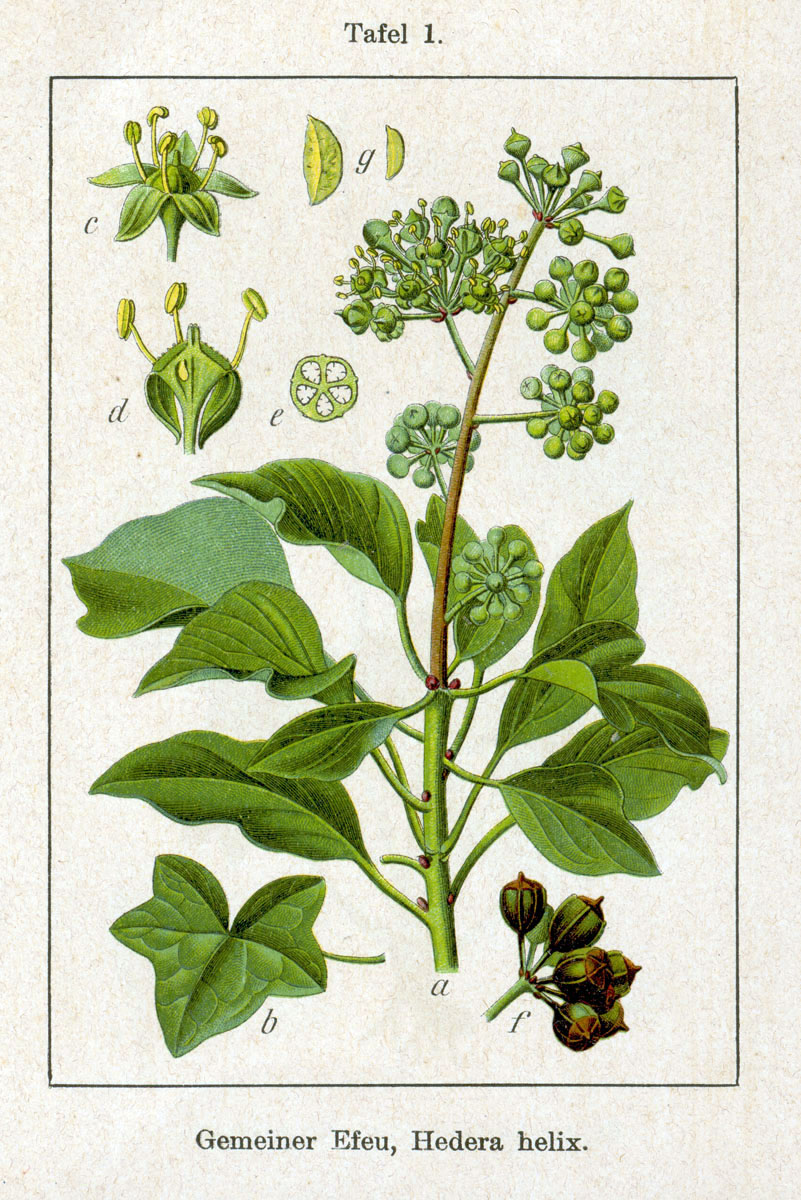
- Ivy leafHedera helix, the evergreen climber of Europe and northern and central Asia, with dark, gl
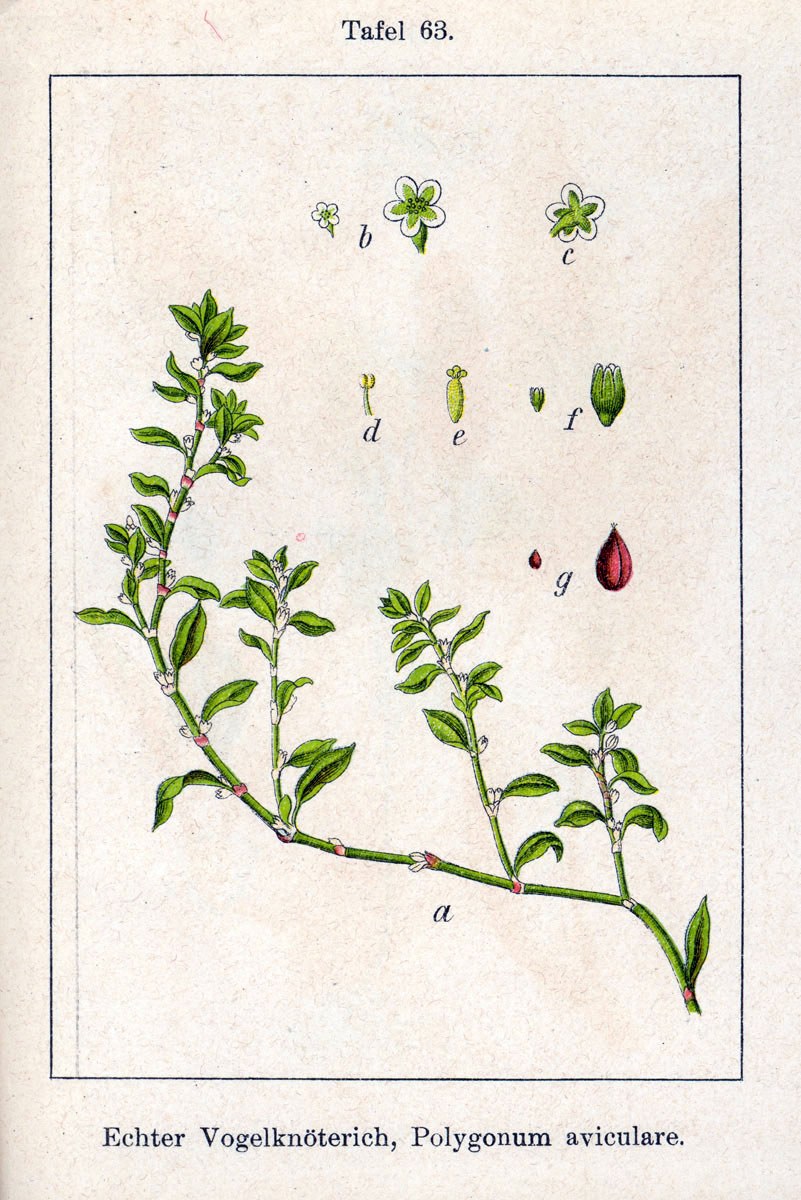
- KnotgrassPolygonum aviculare, of the family Polygonaceae, a common weed of arable land, waste groun
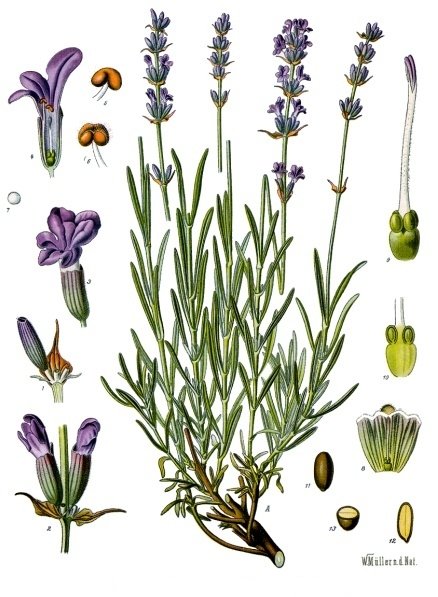
- LavenderLavandula angustifolia and French lavender, L. stoechas.
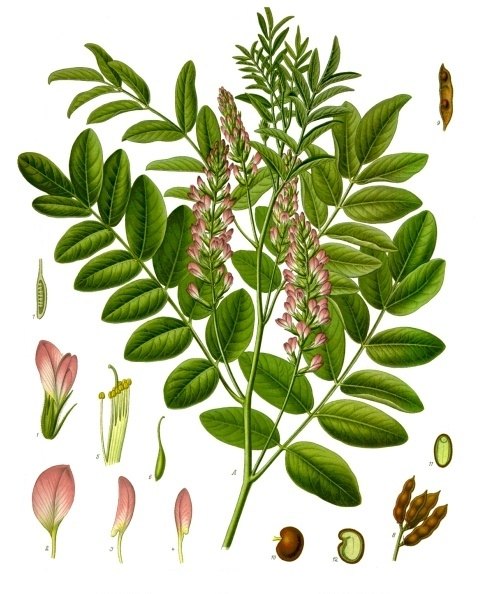
- LicoriceThe root of Glycyrrhiza glabra.
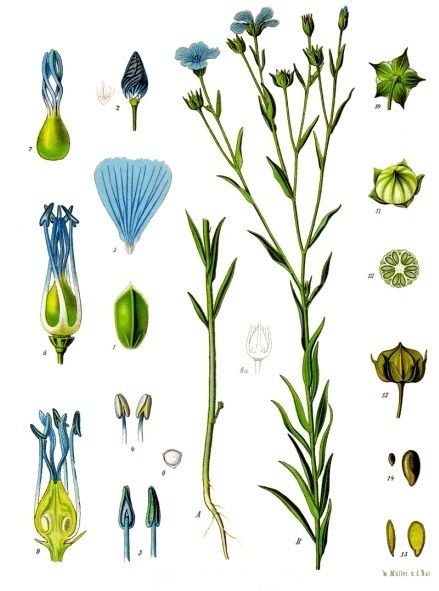
- LinseedThe seed of Linum usitatissimum, flax, “a graceful little plant with turquoise blue
- LodestoneMagnetite, naturally magnetic iron ore.
- Long pepperThe dried unripe fruit spikes of Piper longum.
- MadderRubia tinctorum. A prickly perennial whose weak stalks often lie along the ground, sown si
- Madonna lilyLilium candidum.
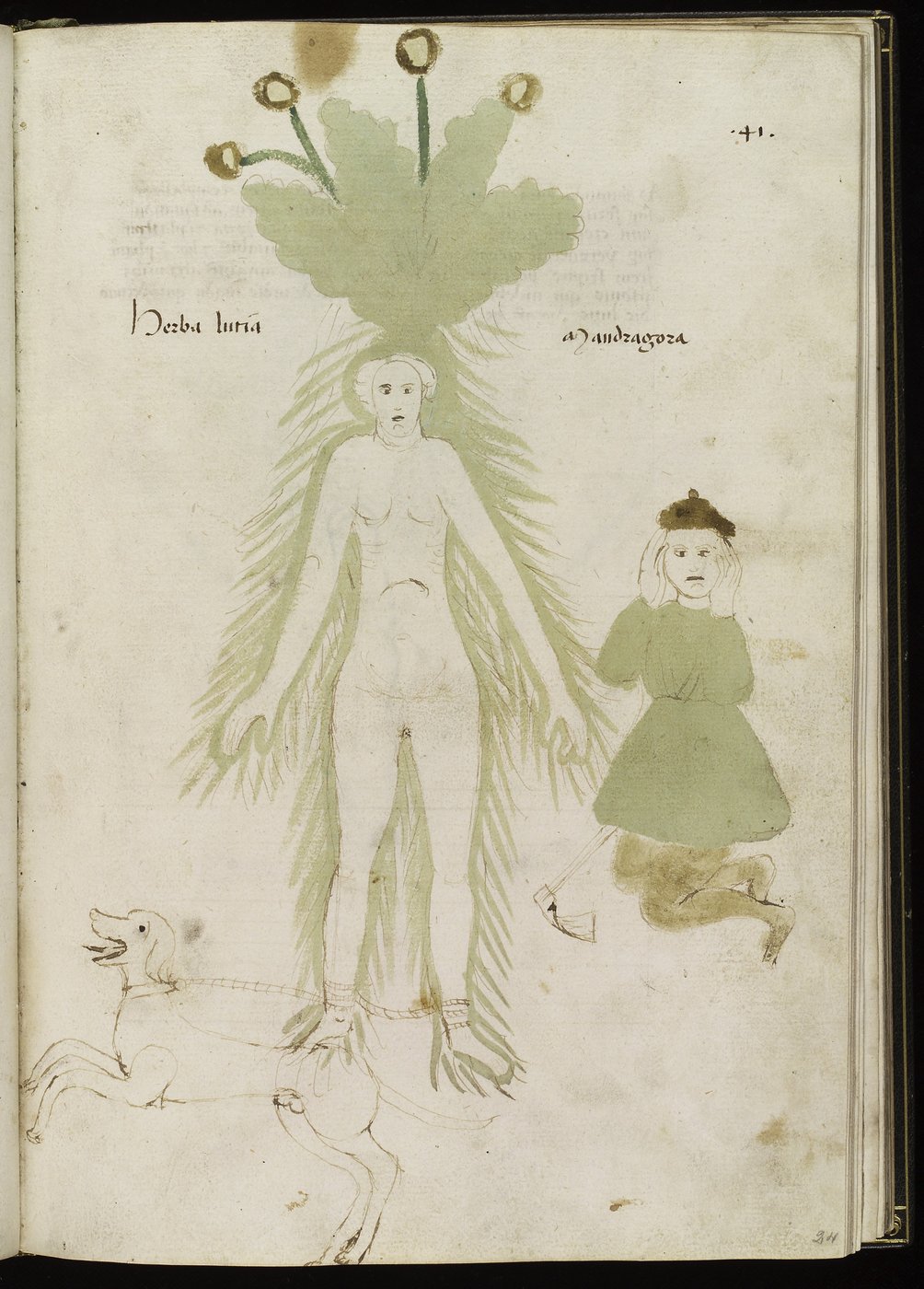
- MandrakeMandragora officinarum and its relatives, of the nightshade family.
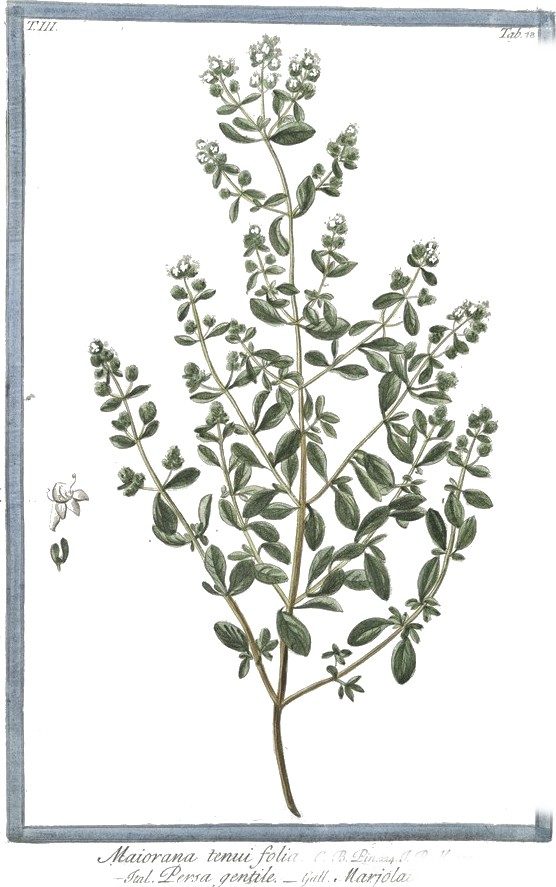
- Marjoram and jasmineSweet marjoram, Origanum majorana; jasmine, Jasminum officinale.
- MasticThe resin of Pistacia lentiscus, gathered almost only on the Greek island of Chios, in pal
- Meadow saffronColchicum autumnale.
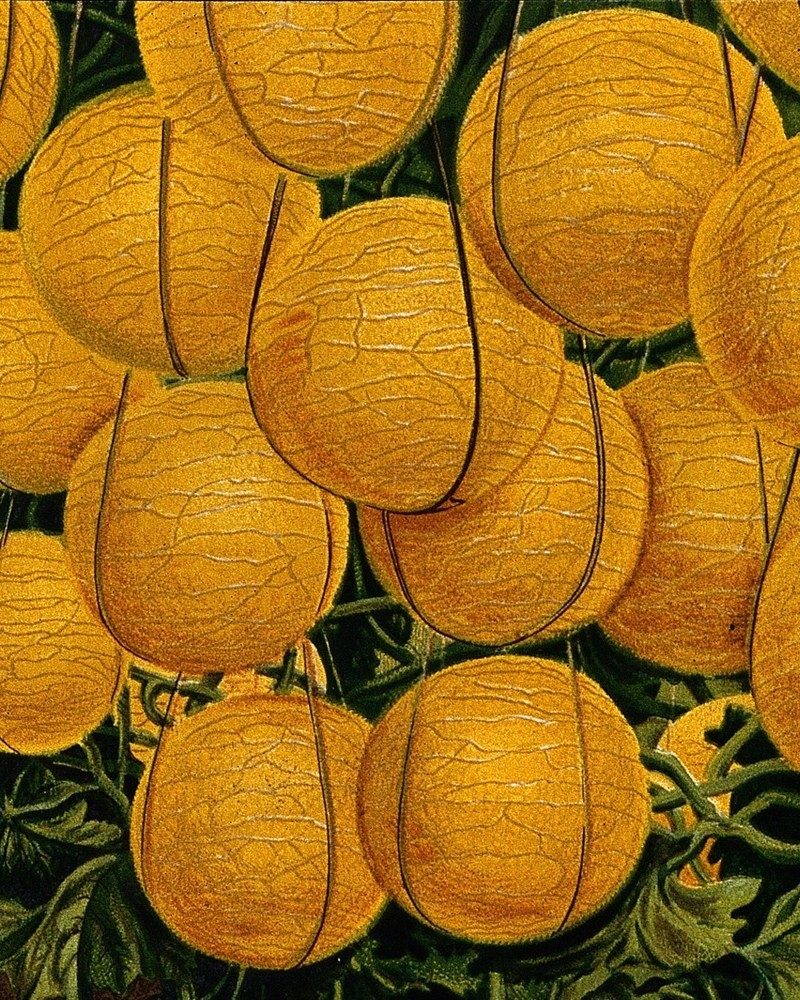
- Melon rootRoot of the melon plant, Cucumis melo.
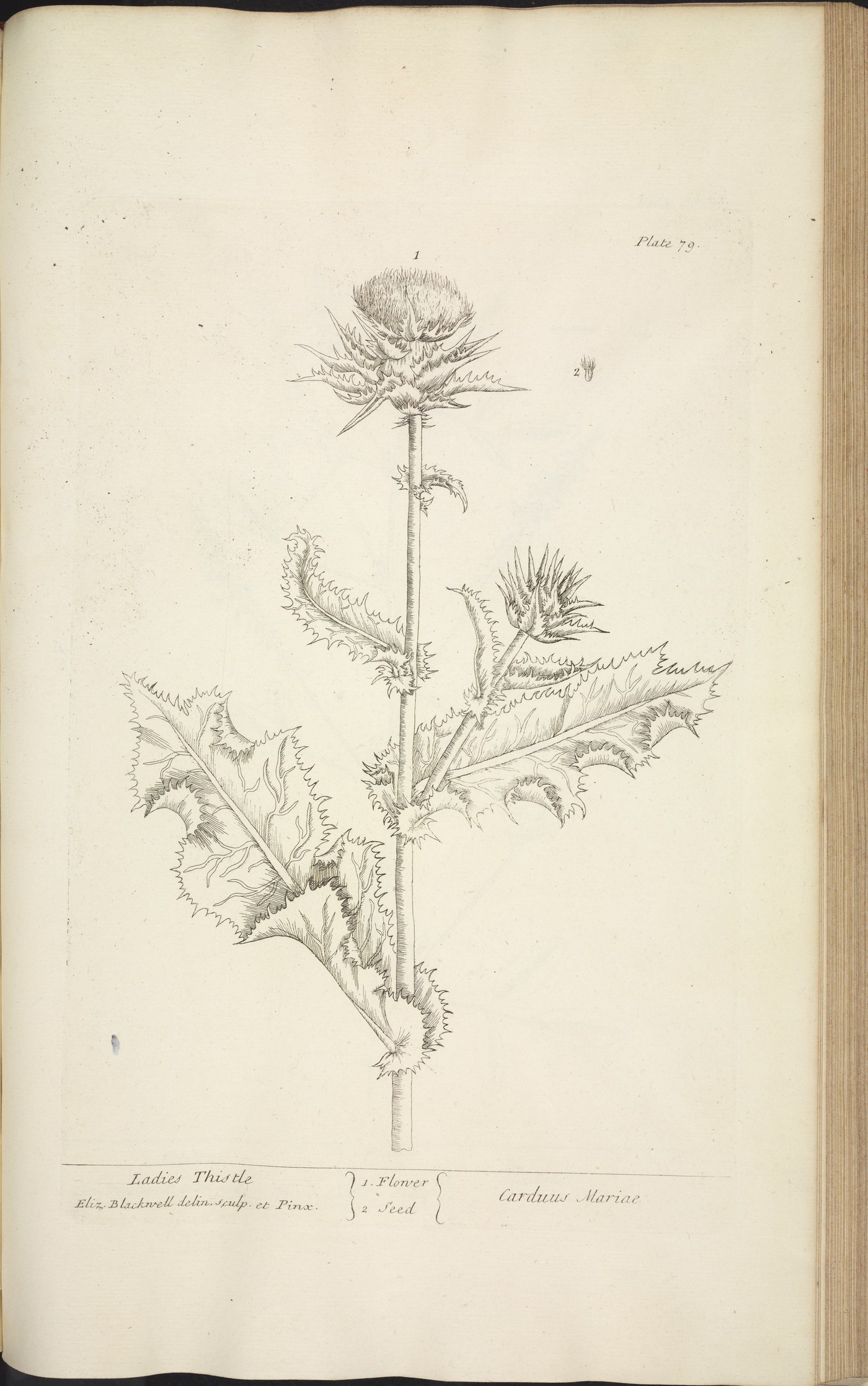
- Milk thistleSilybum marianum, an annual or biennial thistle of the family Asteraceae, native to Europe
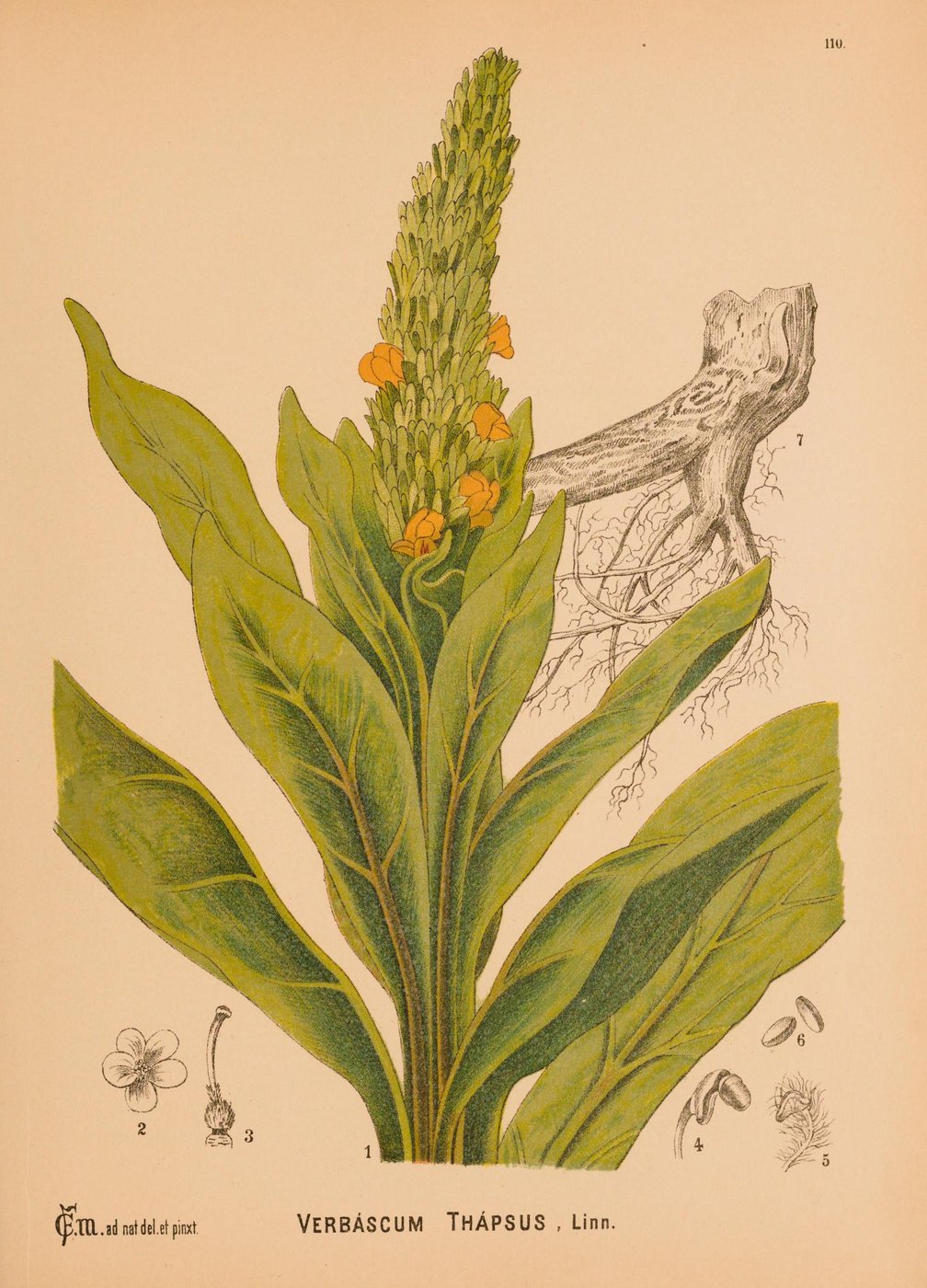
- MulleinVerbascum thapsus.
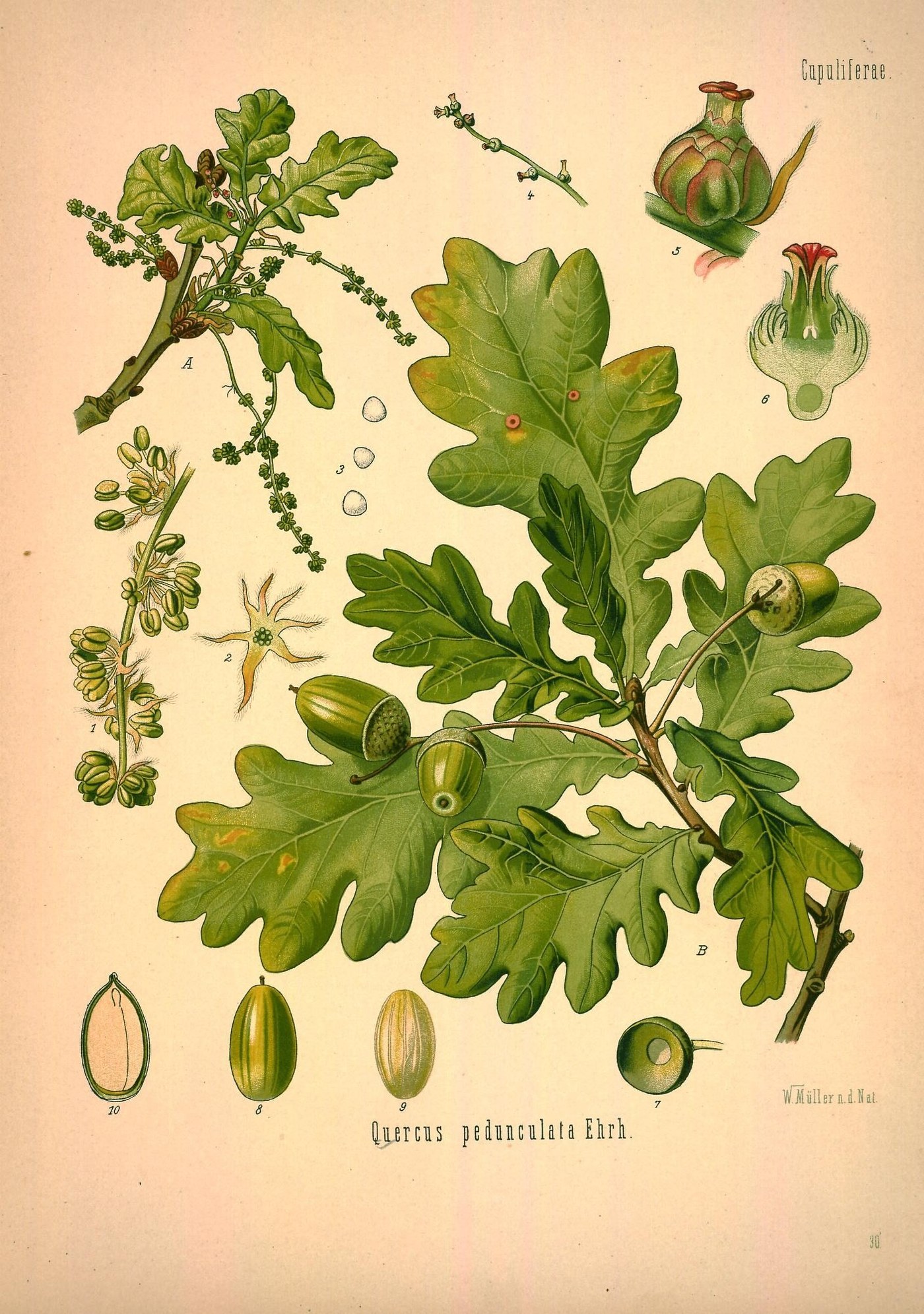
- Oak barkThe bark of the common oak, collected in spring from young trees, dried in the sun, greyis
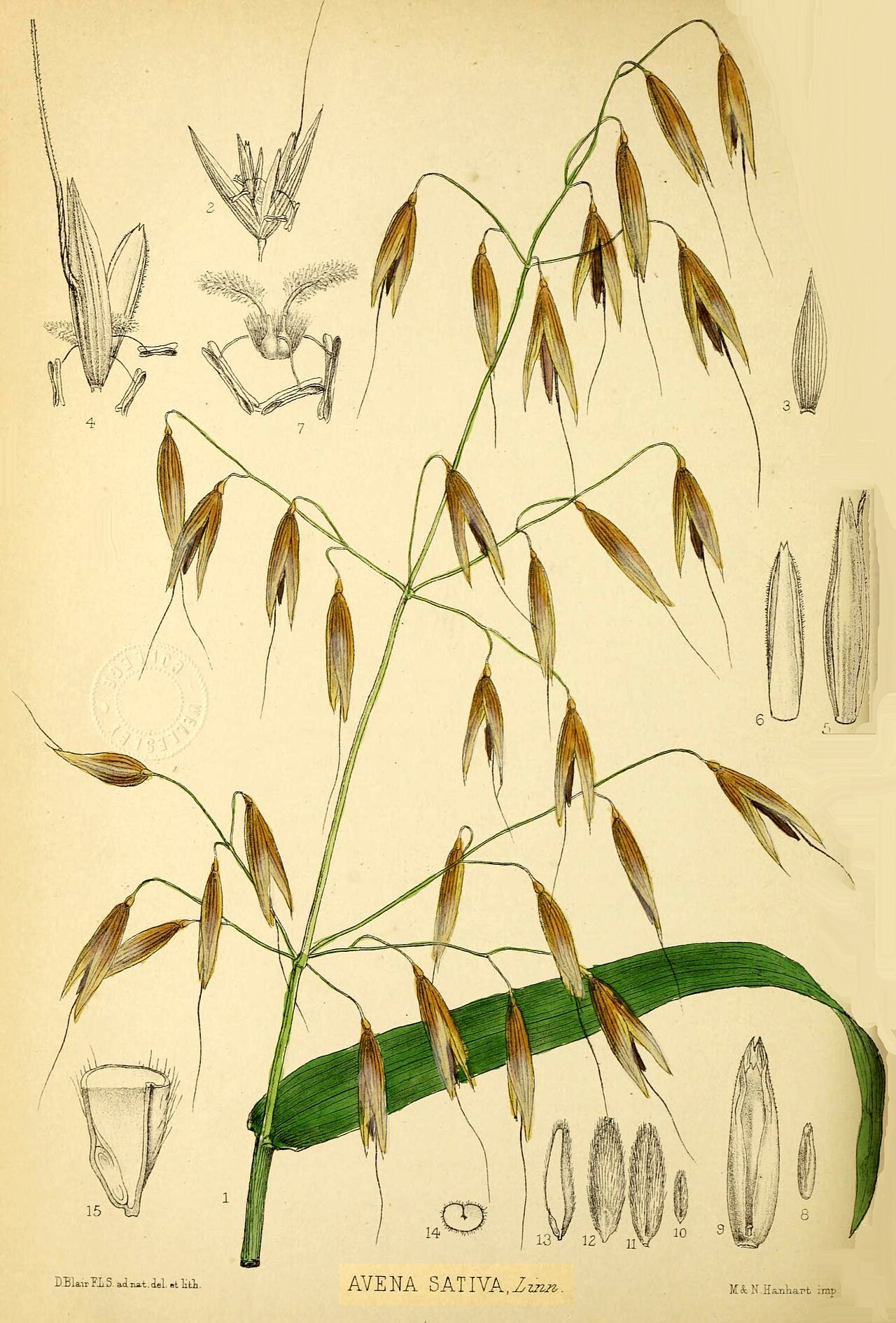
- OatAvena sativa, the common oat, a cereal grass up to four feet high with rough, veined leave
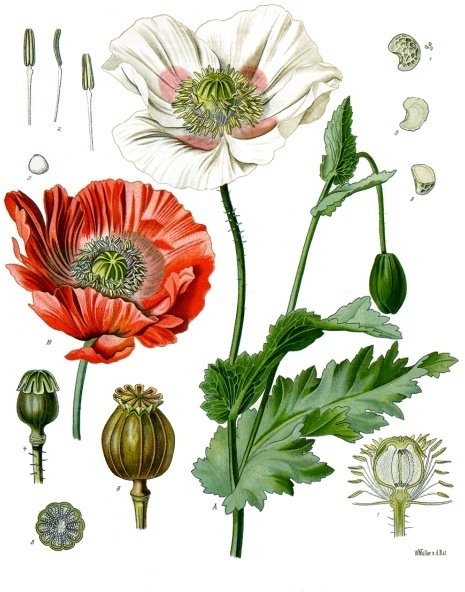
- Opium poppyPapaver somniferum; opium is the dried latex of its unripe seed heads.
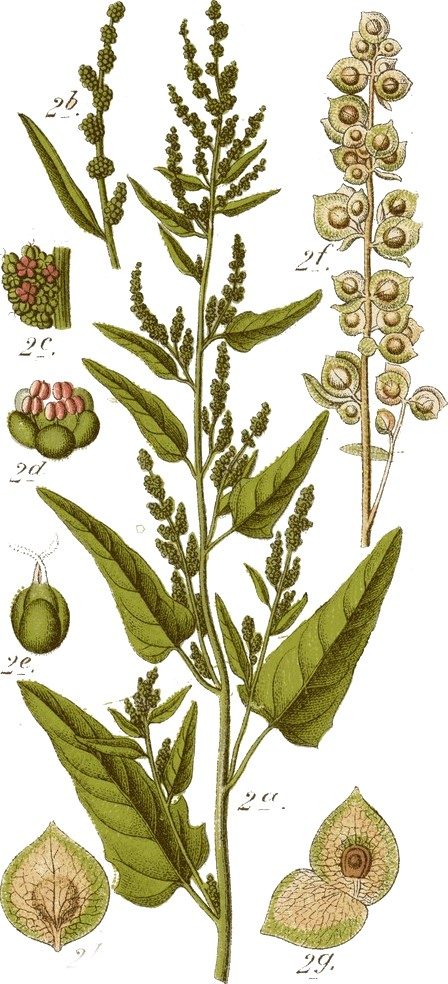
- OracheAtriplex hortensis, garden orache, a spinach-like plant.
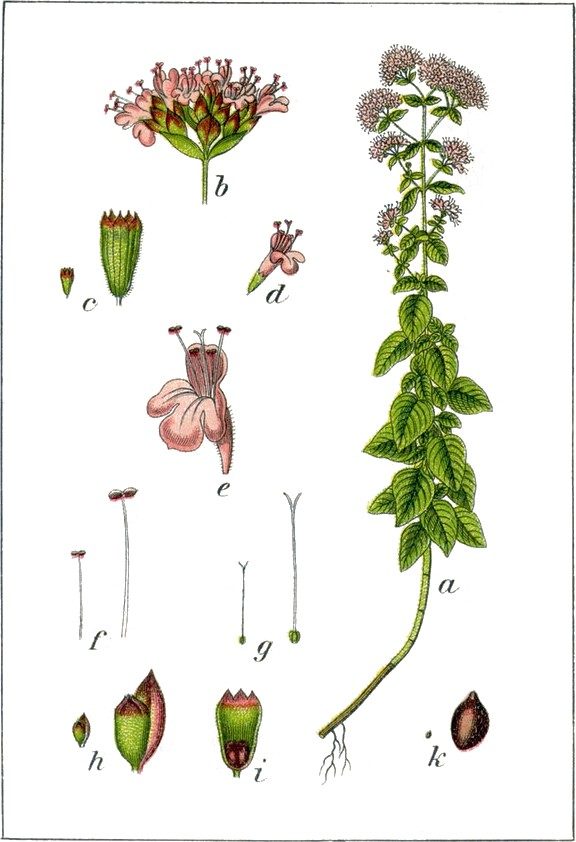
- Oregano and squinanthOregano, Origanum vulgare; squinanth, the schoinos or juncus odoratus of Dioscorides, a sw
- OrrisThe dried root of Iris germanica ‘Florentina’ and I. pallida.
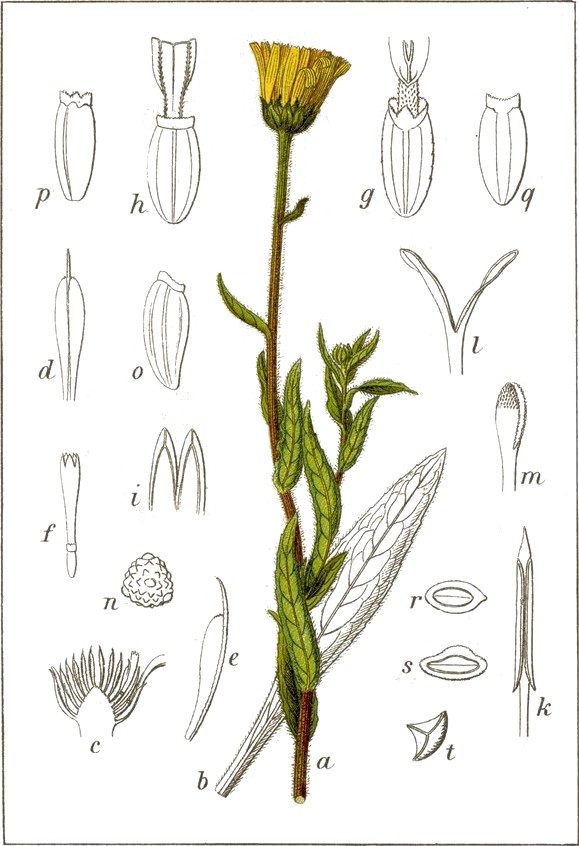
- Ox eyeProbably Buphthalmum salicifolium, yellow ox-eye; some read it as the ox-eye daisy, Leucan
- Oxymel, and oxymel of squillHoney boiled with vinegar; the squill version adds the bulb of sea squill.
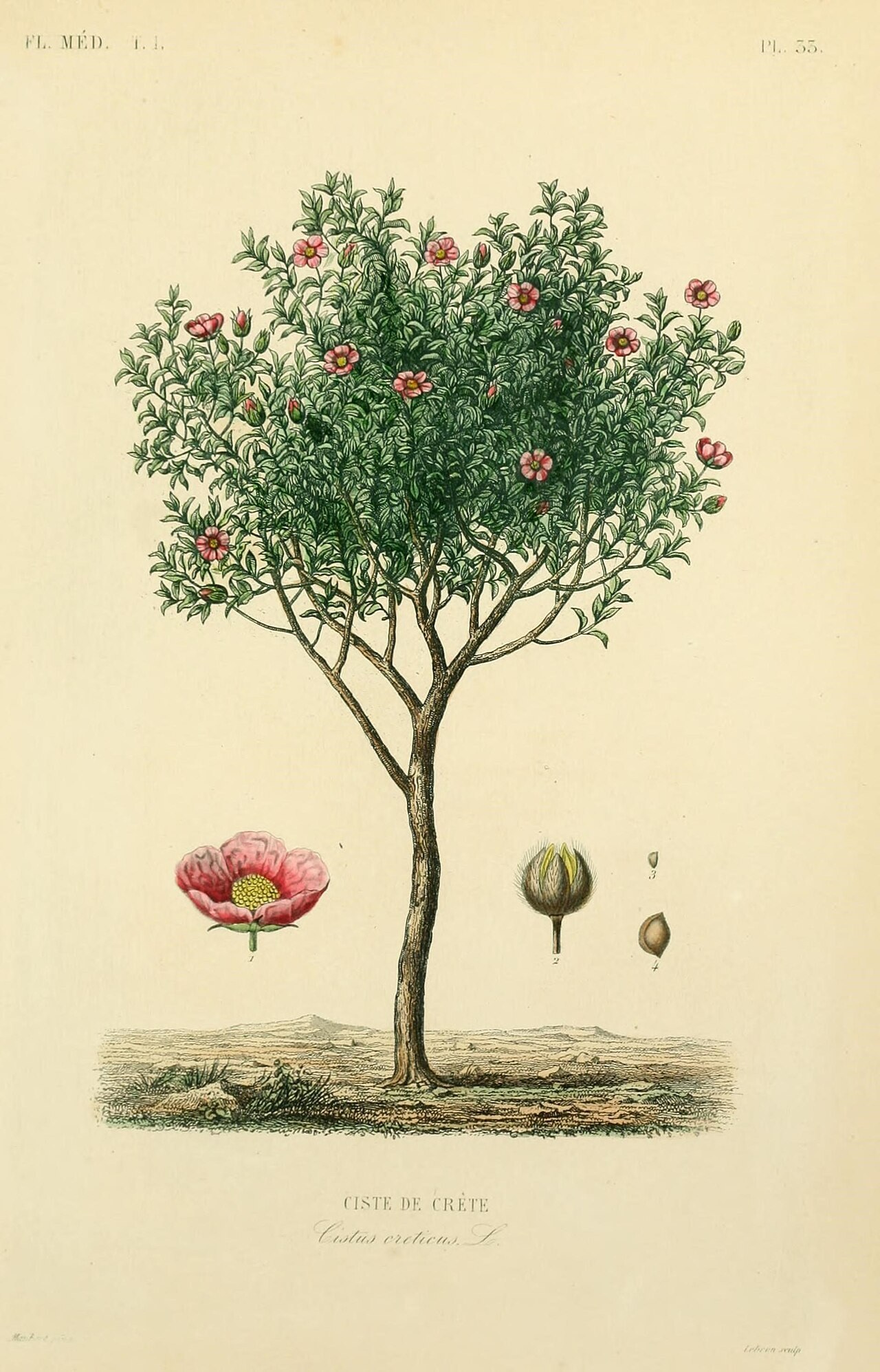
- Pink rock-roseCistus creticus, a shrub of the family Cistaceae, from whose leaves and other parts, Folka
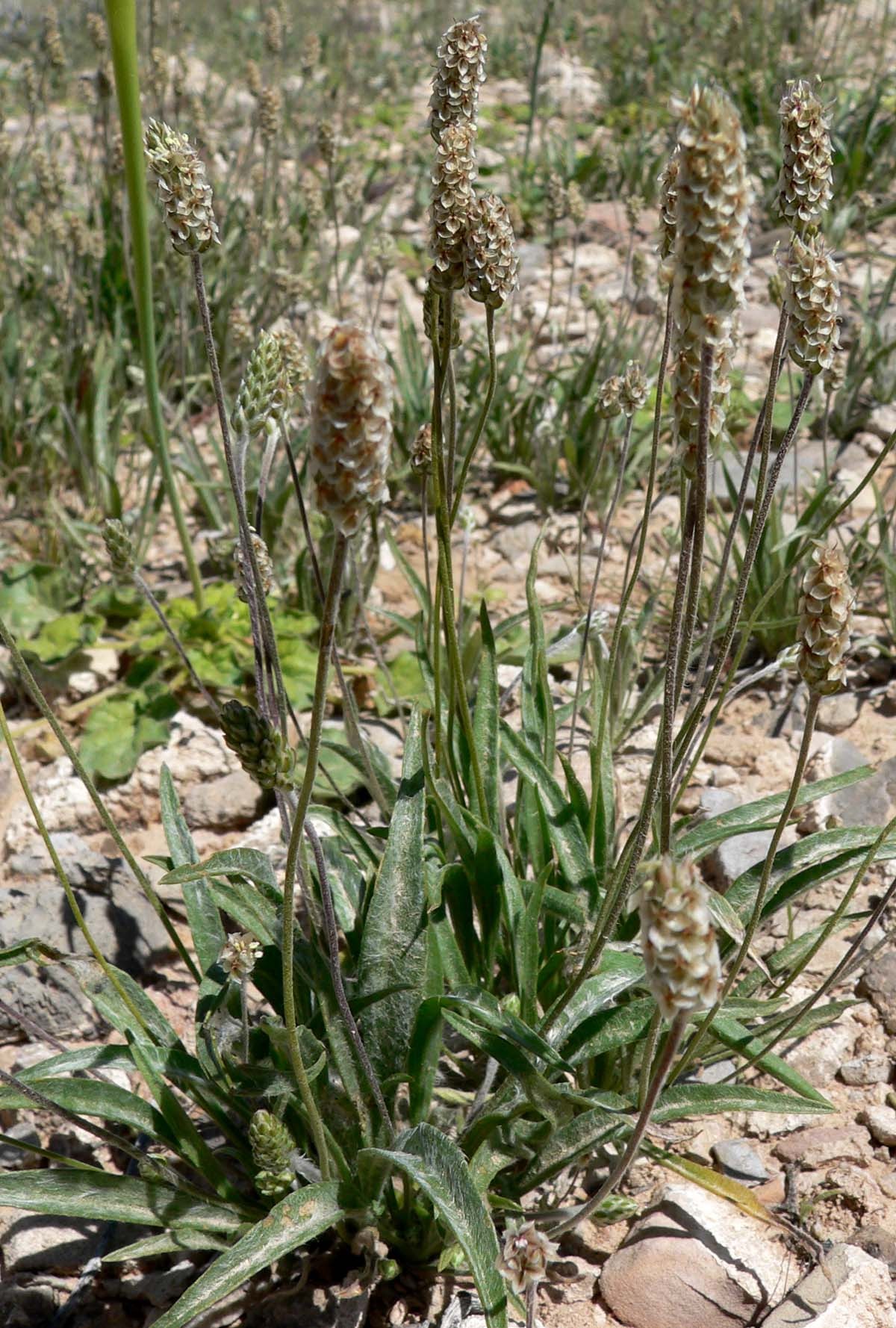
- PsylliumSeeds of plantains, of the family Plantaginaceae. Ispaghula, Plantago ovata, Grieve gives
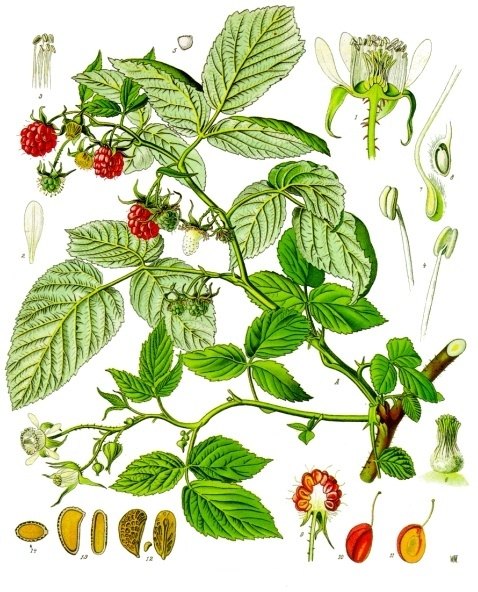
- Raspberry leafThe leaves of the raspberry, Rubus idaeus: a shrub with erect, biennial stems from creepin
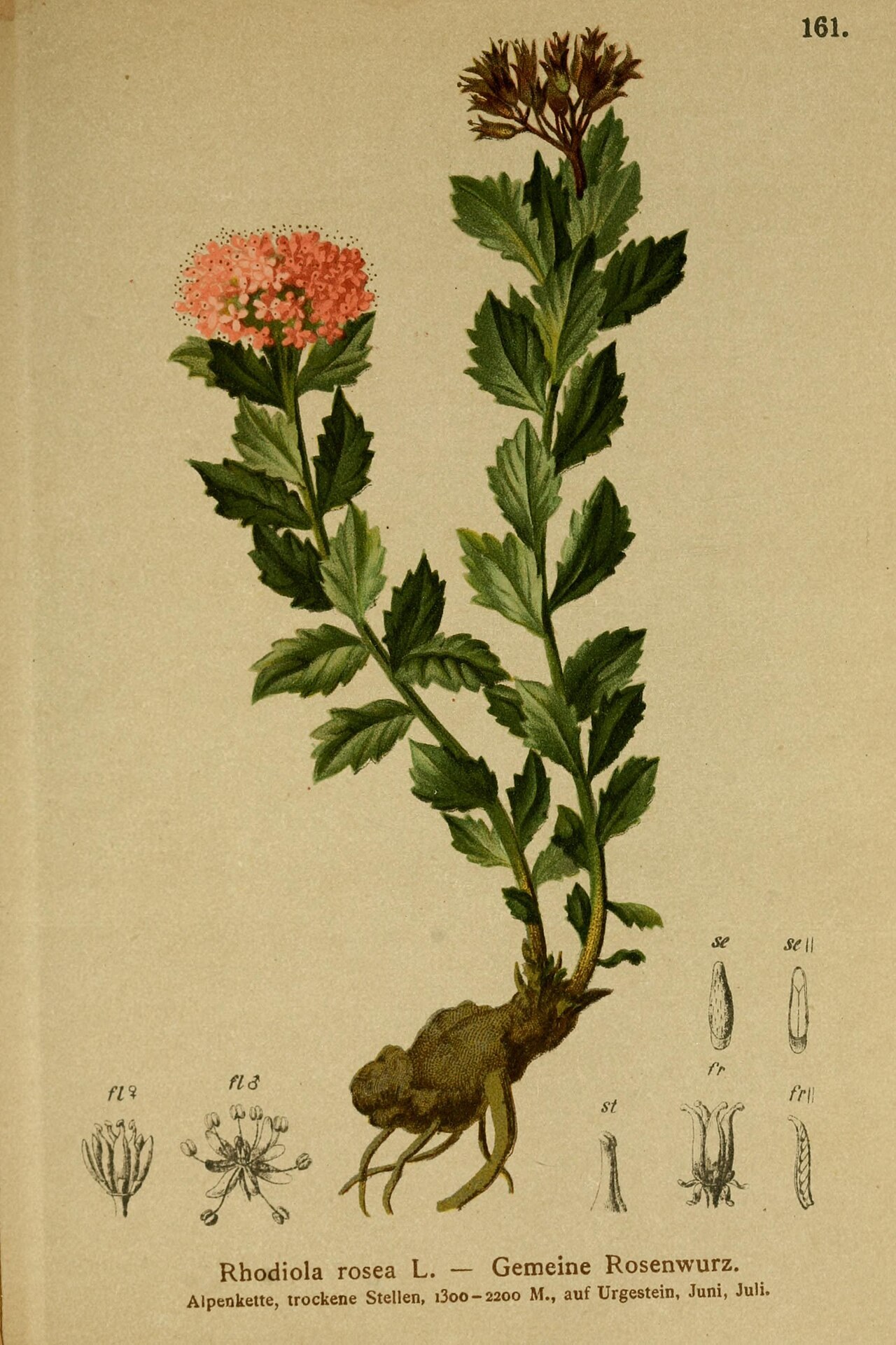
- RhodiolaRhodiola rosea, of the family Crassulaceae, native throughout the mountains of the Norther
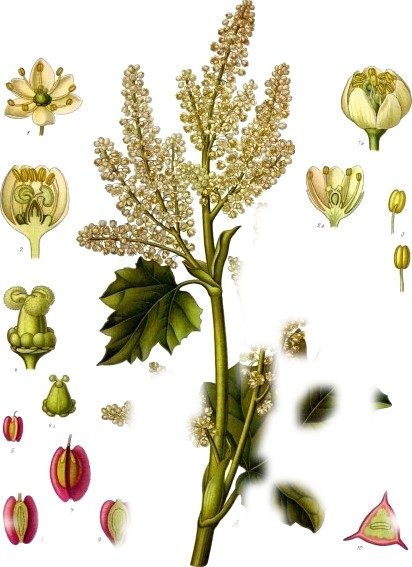
- RhubarbThe root of Chinese rhubarb, Rheum officinale and R. palmatum, long brought to Europe over
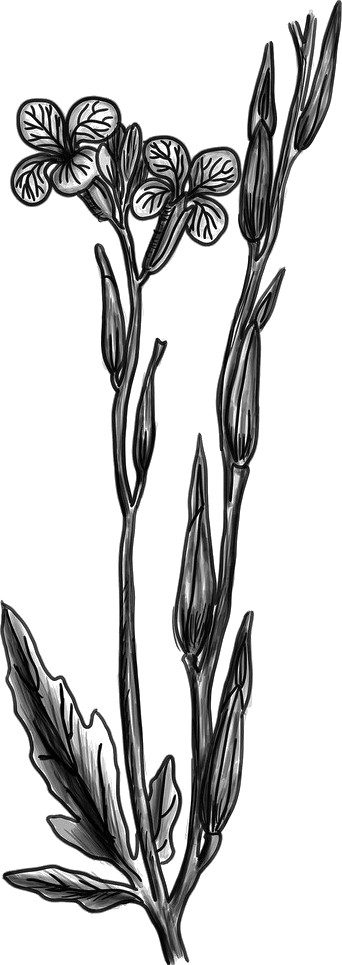
- RocketEruca vesicaria, salad rocket.
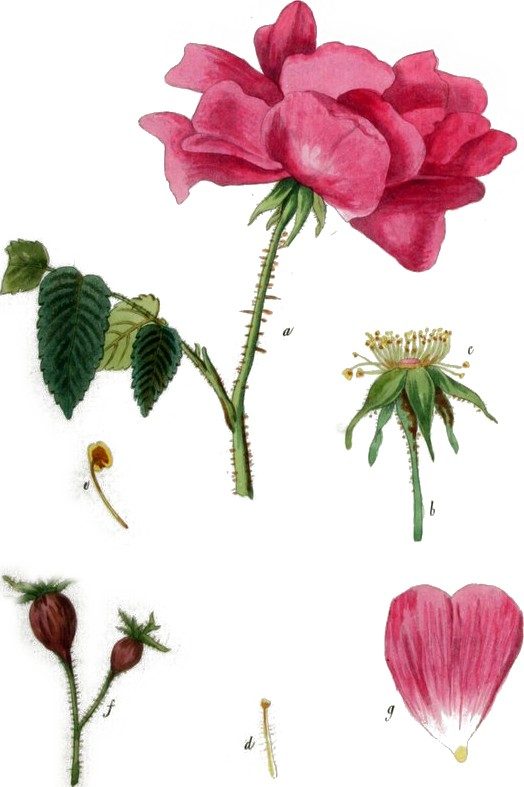
- RoseChiefly the red or apothecary’s rose, Rosa gallica, and the damask rose, Rosa × damascena,
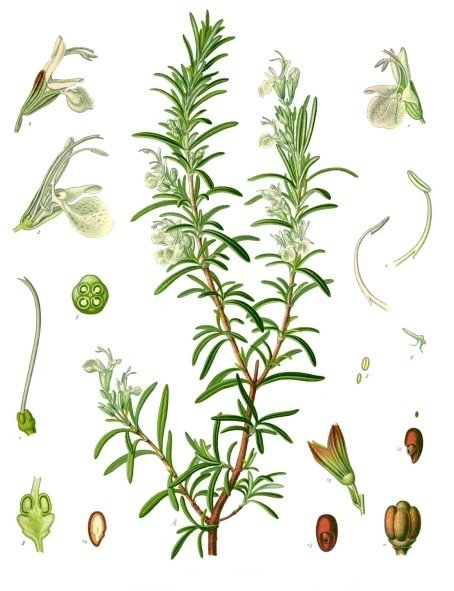
- RosemarySalvia rosmarinus (formerly Rosmarinus officinalis).
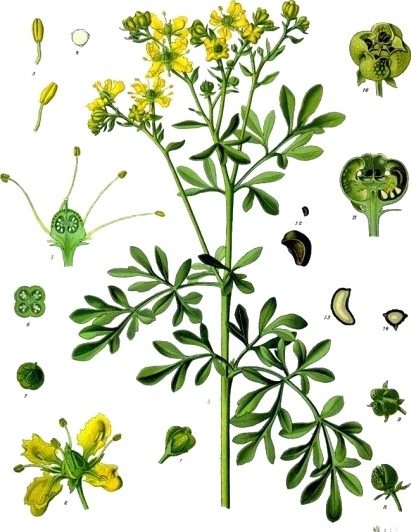
- RueRuta graveolens, garden rue.
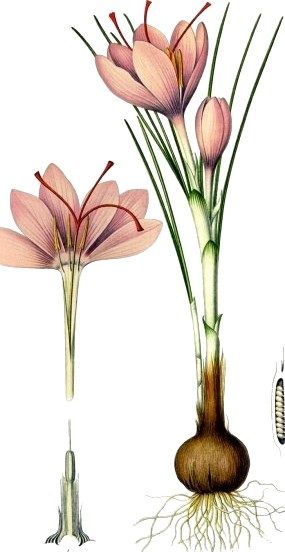
- SaffronThe stigmas of Crocus sativus.
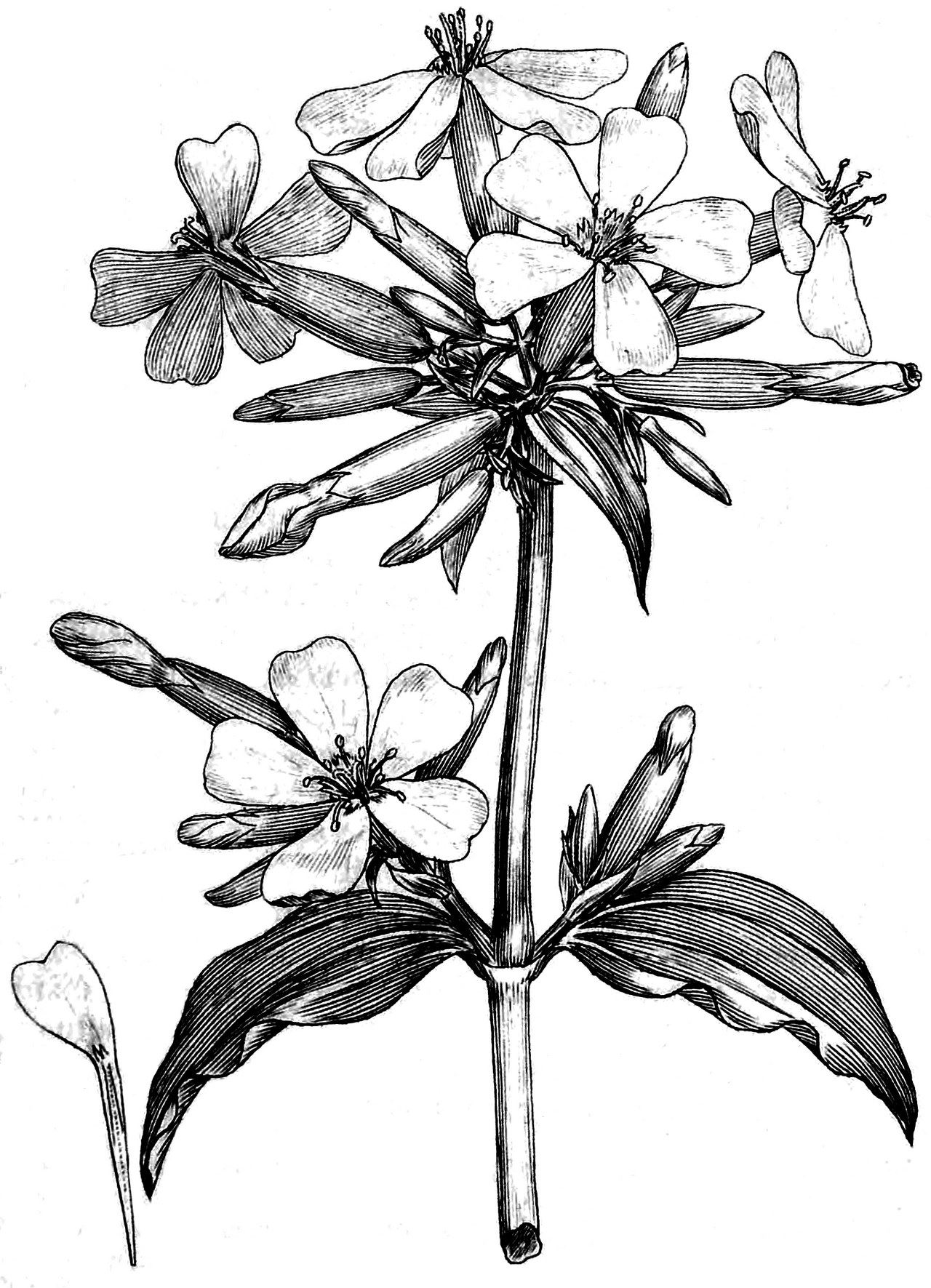
- SoapwortSaponaria officinalis, of the family Caryophyllaceae, a stout perennial of central and sou
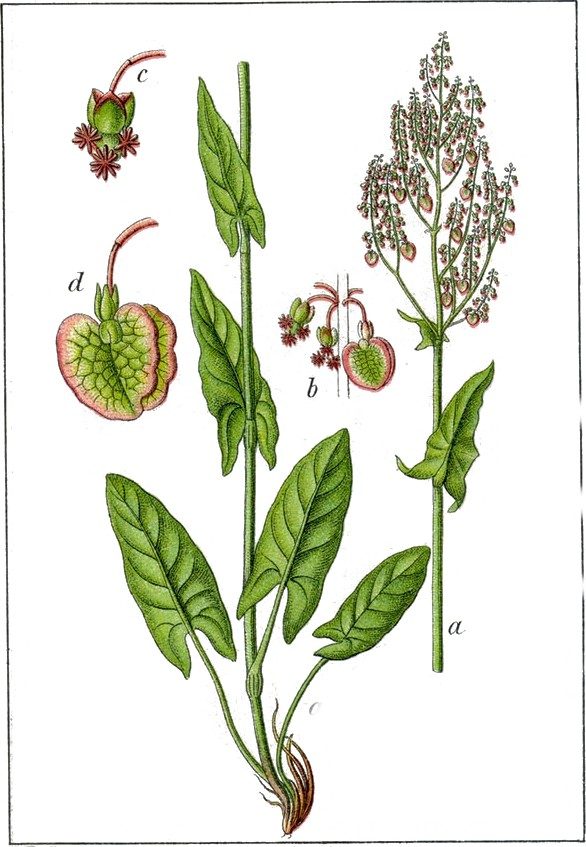
- Sorrel, syrup ofProbably the syrupus acetosus of the pharmacopoeias, syrup of vinegar, which the London Di
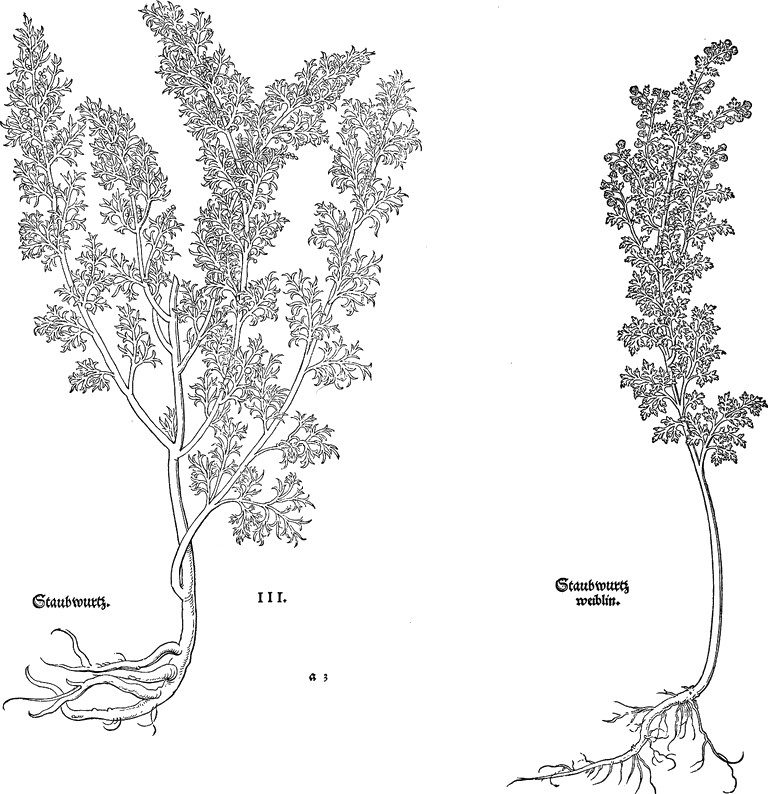
- SouthernwoodArtemisia abrotanum, “lad’s love.”
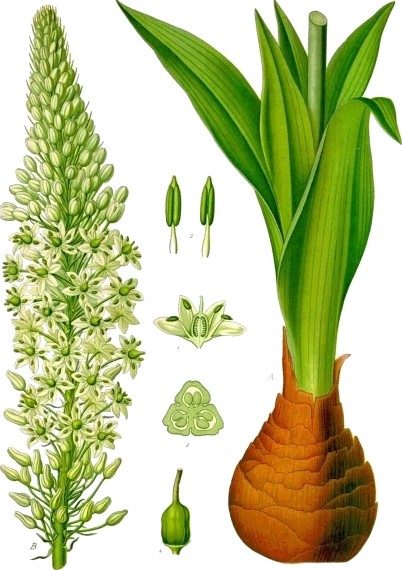
- SquillSea squill, Drimia maritima and its close relatives, large bulbs of the Mediterranean coas
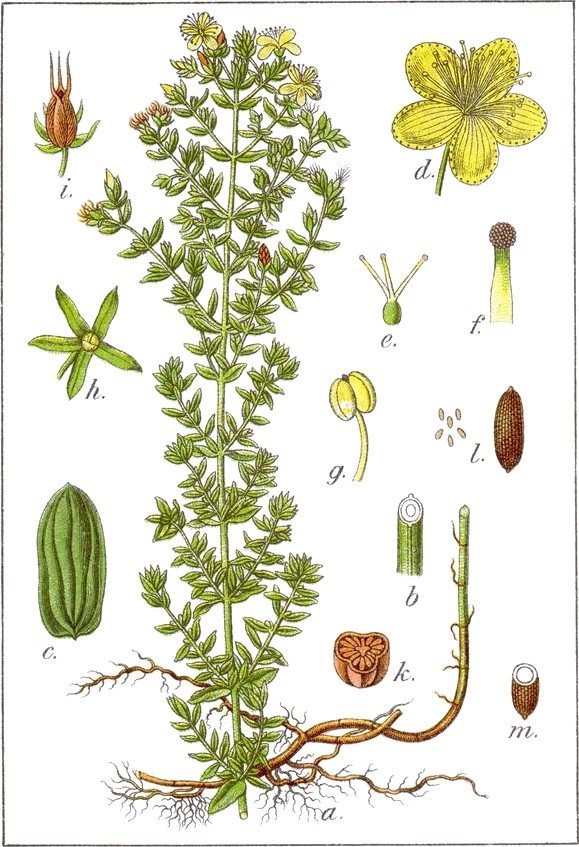
- St. John’s wortHypericum perforatum.
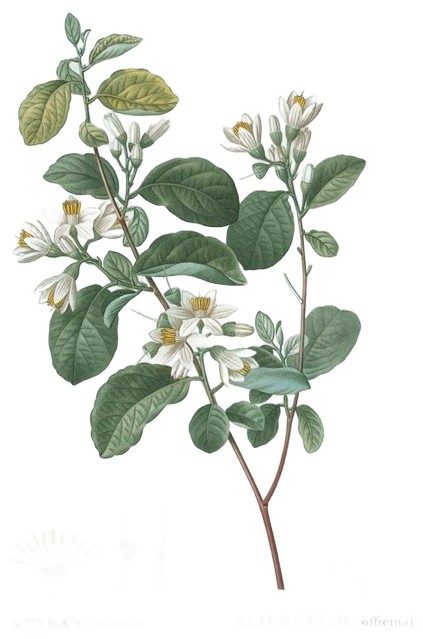
- Storax calamiteThe resin of Styrax officinalis, packed in reeds (calami) for export.
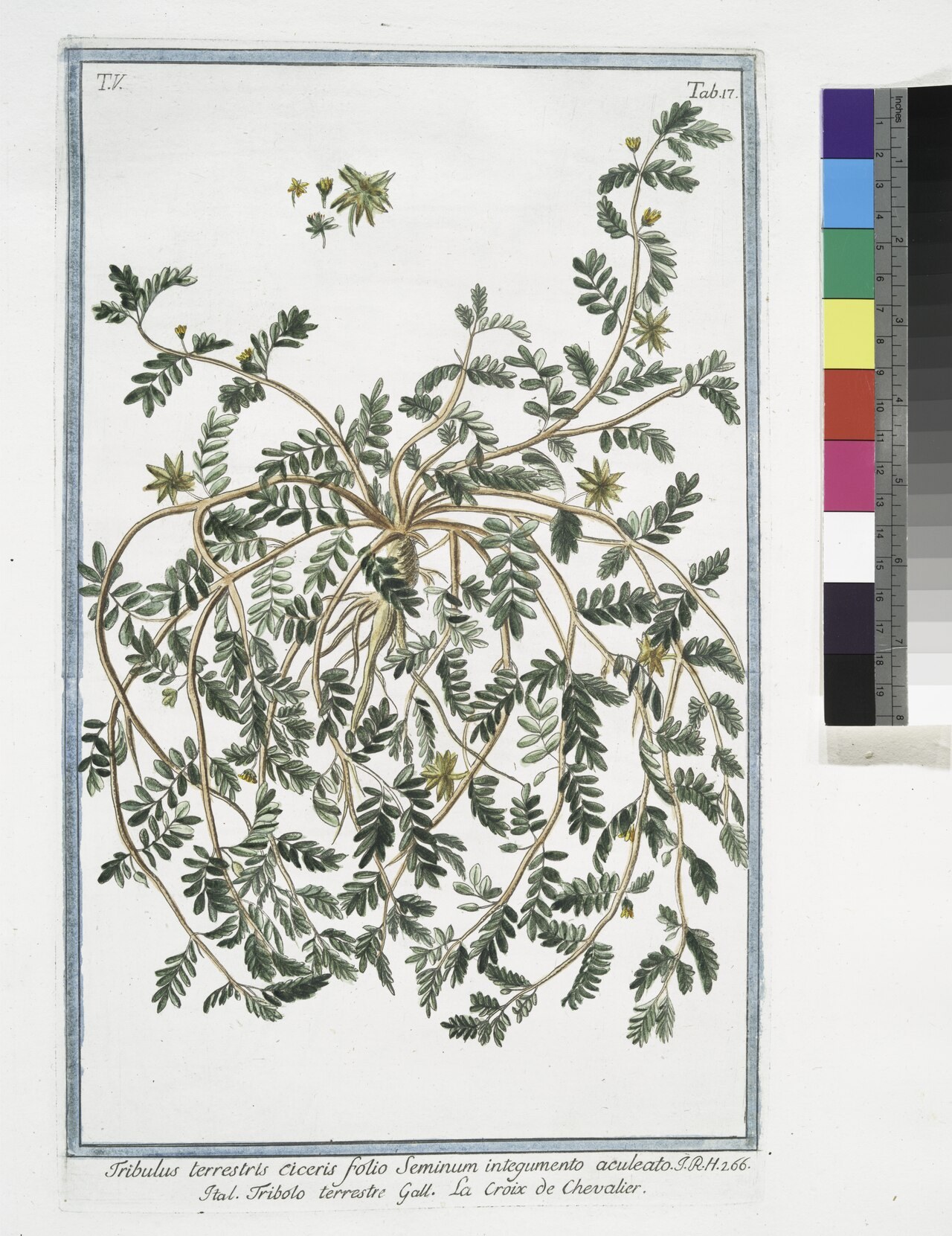
- TribulusTribulus terrestris, a plant of the family Zygophyllaceae whose four or five delicate, hai
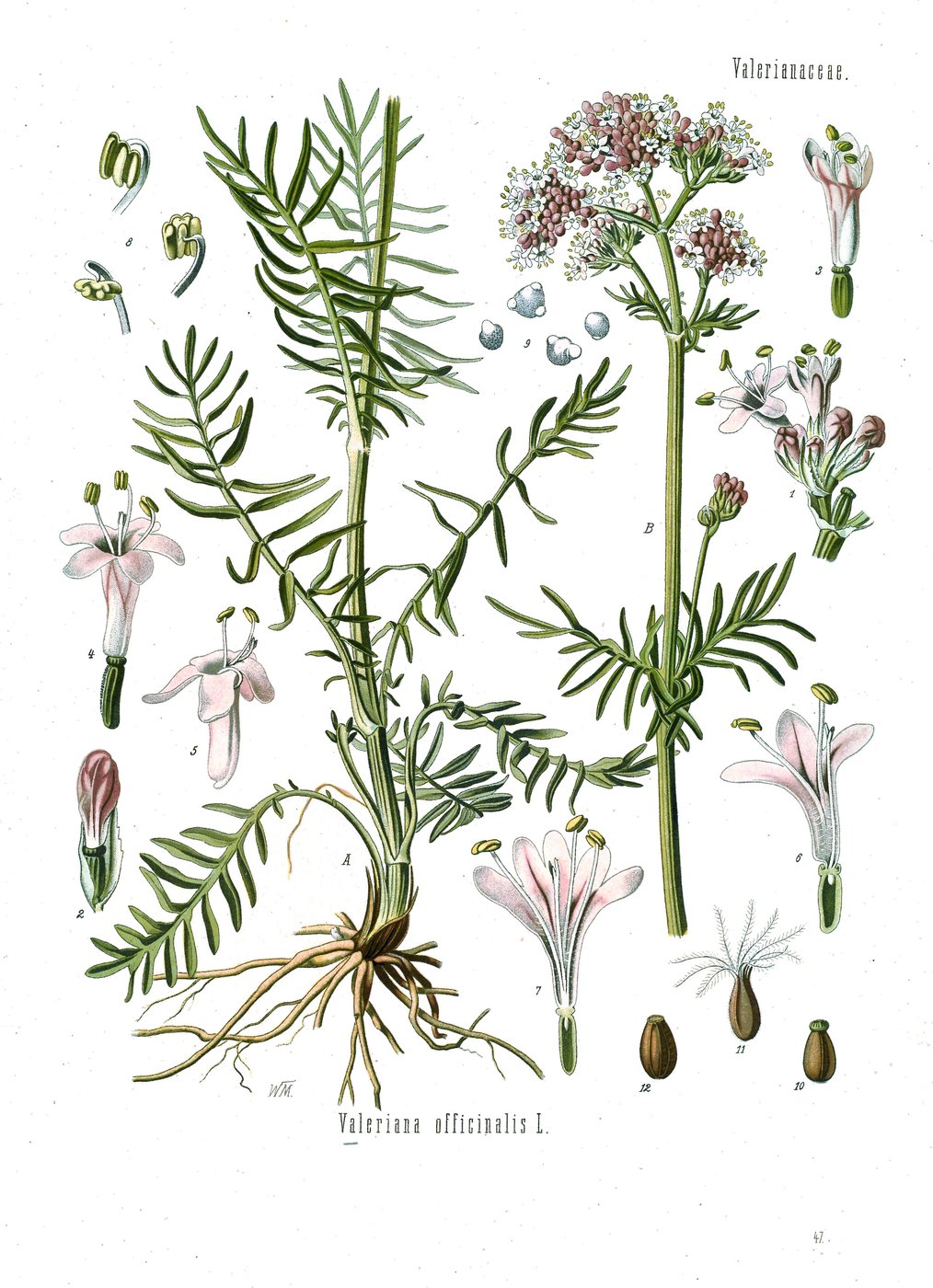
- ValerianValeriana officinalis; the root is used.
- VerdigrisCopper acetate, the green rust of copper.
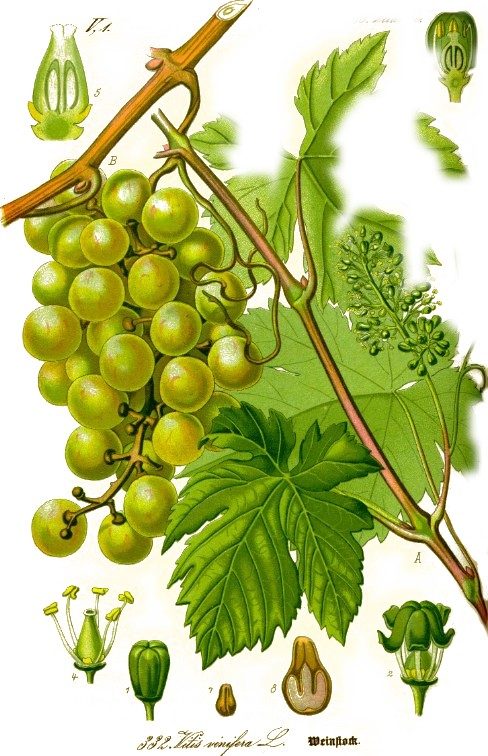
- Vine ashAsh of burnt vine wood.
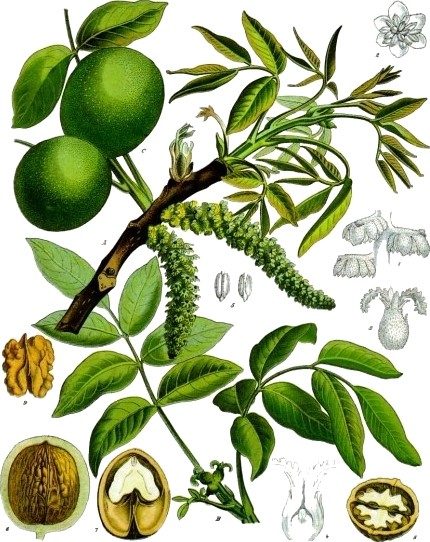
- Walnut, middle bark ofThe inner bark of Juglans regia.
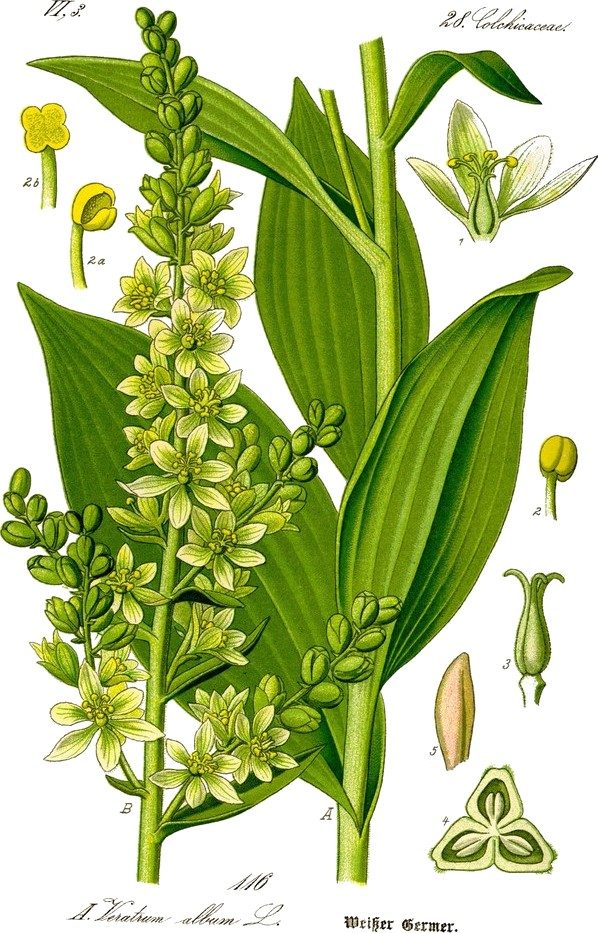
- White helleboreVeratrum album, false hellebore, of the family Melanthiaceae, unrelated to black hellebore
- Wormwood, oil ofArtemisia absinthium.