
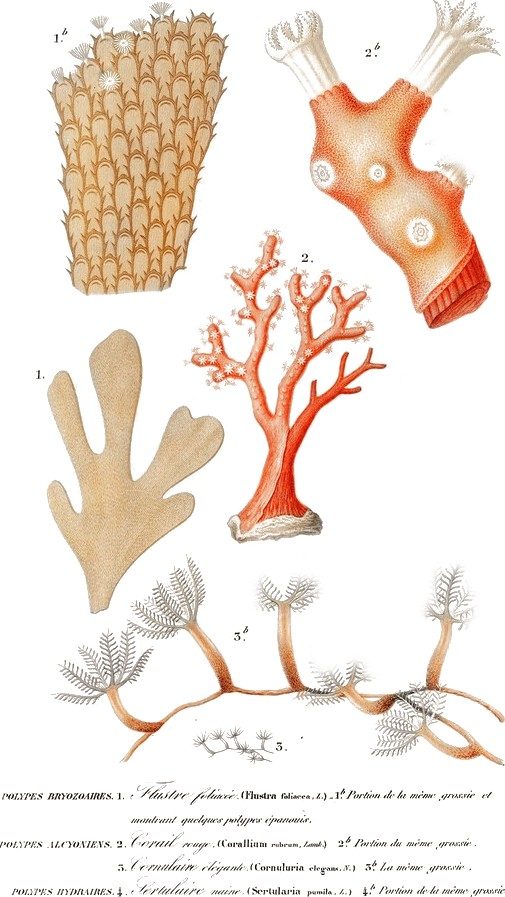
Coral, red
Corallo rosso
- Known today as
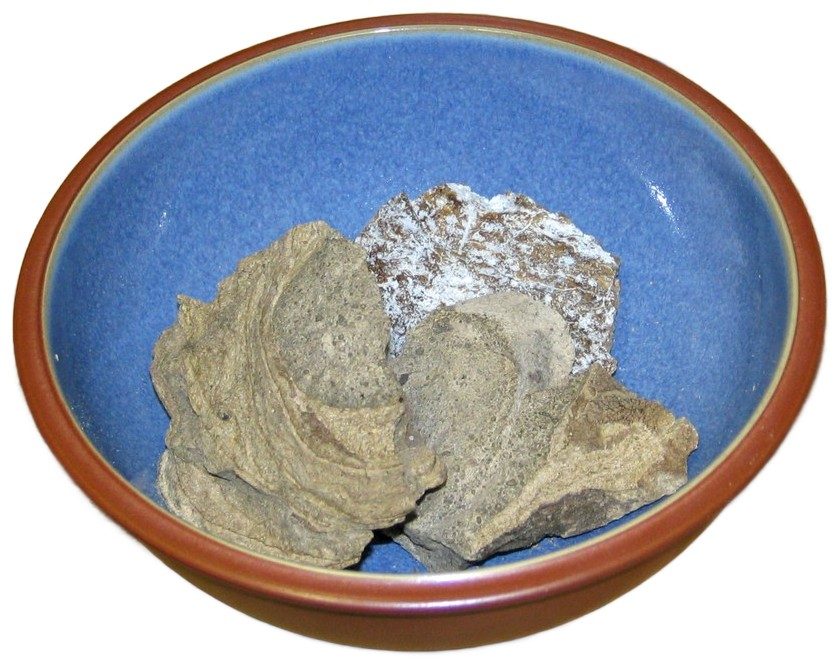
- Precious red coral, Corallium rubrum, of the western Mediterranean, prepared as powder.
- Kind
- Animal, in 2 older authorities
- Constituents
- calcium carbonate, magnesium, organic matrix
- Earliest authority quoted here
- Ovid (43 BC–AD 17/18)
- Qualities
- Cold, dry, and binding (Culpeper). What the degrees mean
- In other databases
- GBIF search · Wikidata search
- In the Canale glossary
- On the Manner of Discerning and Healing the Bewitched, Appendix A: Part Three, Chapter 6: Remedies Given by Mouth After the Purge
Revised October 17, 2026: Checked against its sources, each read in full, in part, or in its abstract. Version 1, first published September 25, 2026.
Coral, red: what did Canale use it for?
In a powder, and tied about the neck to prevent bewitchment, “according to Dioscorides” (chs. 6, 10).
Coral, red: what does modern science say?
Long prized for jewelry.
Coral, red: what did the older authorities say?
Coral, red: what lore surrounds it?
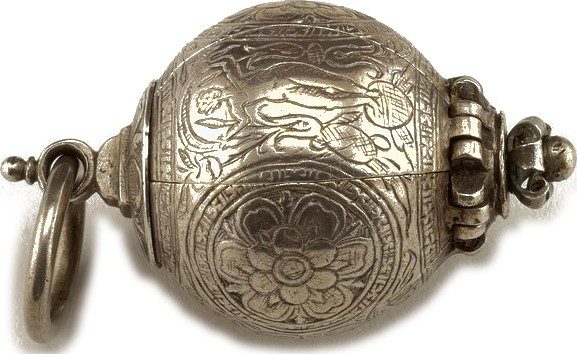
Branches of coral were hung at the necks of infants as a preservative, Pliny says, and English nurses in Elworthy’s day still fastened “the coral and bells” on a baby’s neck; in Italy, Elworthy found, a pendent horn of coral or metal was worn by nearly everyone against the evil eye.
Used in These Compounds
Coral, red is an ingredient of 3 compound medicines in the database. For Club members. Create a free account or sign in.
Pharmacognosy
- Constituents
- calcium carbonate ChEMBLas calcite, the skeleton
- magnesiumin the calcite, which is high-magnesium
- organic matrix1–2 per cent, with over a hundred proteins
- Mechanism
- Powdered, it is calcium carbonate, the stuff of antacid tablets that relieve heartburn; tied at the neck it is a bead. Coral of another kind, the stony Porites, is used as a bone-graft substitute because its structure is like that of cancellous bone.
- Standing
- Overfishing and warming have shrunk its populations, and the IUCN classes it as Endangered.
- Demers, C., et al. (2002). “Natural coral exoskeleton as a bone graft substitute: a review.” Bio-Medical Materials and Engineering 12. Abstract read · the text read
The abstract of each source, beneath its citation. For Club members. About the Club or sign in.
Constituent names open the compound’s record at PubChem, and “ChEMBL” beside a name opens its record at ChEMBL, the European Bioinformatics Institute’s database of bioactive molecules. Where a mechanism line was checked against ChEMBL (ChEMBL 37, read 1 October 2026), the check is shown with the measured value and its source paper, or says plainly that nothing has been measured. Doses are as the references give them, for description only; this is not medical advice. Each source carries the result of its check against Crossref, PubMed, or the authority’s page: see Verification.
What Medicine Makes of It
- The Evil EyeEnvy, the glance, and the anthropology of misfortune.
Sources
- Ganot, P., et al. (2024). Genome sequence of the Mediterranean red coral Corallium rubrum. BMC Research Notes 17: 375. Read in part · the text read
- Le Roy, N., et al. (2021). The skeletome of the red coral Corallium rubrum indicates an independent evolution of biomineralization process in octocorals. BMC Ecology and Evolution 21: 1. Read in part · the text read
- Garg, V., Narang, P., and Taneja, R. (2022). Antacids revisited: review on contemporary facts and relevance for self-management. Journal of International Medical Research 50(3). Read in part · the text read
- Pliny the Elder. Natural History XXXII.11, trans. J. Bostock and H. T. Riley (1855). Perseus Digital Library. Read in part · the text read
- Ovid. Metamorphoses, Books I–VII, trans. H. T. Riley. Project Gutenberg ebook 21765. Read in part · the text read
- Elworthy, F. T. (1895). The Evil Eye: An Account of This Ancient and Widespread Superstition. London: John Murray. Read in part · the text read
- Culpeper, N. (1653). Pharmacopoeia Londinensis: or the London Dispensatory. London: Peter Cole. Text Creation Partnership edition A35381. Read in part · the text read
Verification
- Checked
- October 1, 2026, October 17, 2026
- Passes
- Read against its sources in the pass over the remaining 343 entries
- Every dated or regulatory claim checked by category across the database
- Every source read, in full, in part, or in its abstract, and every sentence checked against what was read (October 17, 2026)
- Sources
- 8 cited: 7 read in part, 1 abstract read. 1 with the abstract on file.
- Corrections
- None recorded.
What was checked, how, and what was found is set out on the Verification page. A checked source is one whose record was found; it does not make the entry medical advice.
Club members can point at a technical term in this entry, such as a constituent, an action, or a word of Jung’s, to read its definition from the source. The Club.
Cite This Entry
Version 1 · first published September 25, 2026 · last revised October 17, 2026
- Chicago
“Coral, red.” In Materia Medica, edited by B. C. P. Statema. Version 1. The Thinking Press, 2026–. Last modified October 17, 2026. https://thethinkingpress.org/materia-medica/coral-red.
- MLA
“Coral, red.” Materia Medica, edited by B. C. P. Statema, version 1, The Thinking Press, 17 Oct. 2026, thethinkingpress.org/materia-medica/coral-red. Accessed 22 Nov. 2026.
- APA
Coral, red. (2026, October 17). In B. C. P. Statema (Ed.), Materia medica (Version 1). The Thinking Press. Retrieved November 22, 2026, from https://thethinkingpress.org/materia-medica/coral-red
See Also
Sharing calcium carbonate, organic matrix
Also in Ovid
Cypress in Ovid · Aconite in Ovid · Laurel in Ovid · everything Ovid names →
Also in Pliny the Elder
Cumin in Pliny the Elder · Clove in Pliny the Elder · Cyclamen, greater in Pliny the Elder · Clary, garden in Pliny the Elder · everything Pliny the Elder names →
Drawing on the same sources: Elworthy, Culpeper
Cornicello · The fig hand · The eye bead · Cordial flowers and fruits · Confection of hyacinth · Couch grass · the bibliography →
Of the same qualities: cold and dry
Endive · Chicory · Opium poppy · Camphor · Quince · White willow · what the degrees mean →
Nearby in the alphabet
Copal · Coriander (seed and leaf) · Contact relics · Corn silk (The silk of the maize ear) · Corn smut · Confection of alkermes (with apple juice, rose water, sugar, ambergris, and gold)
Historical description, not medical advice.
