
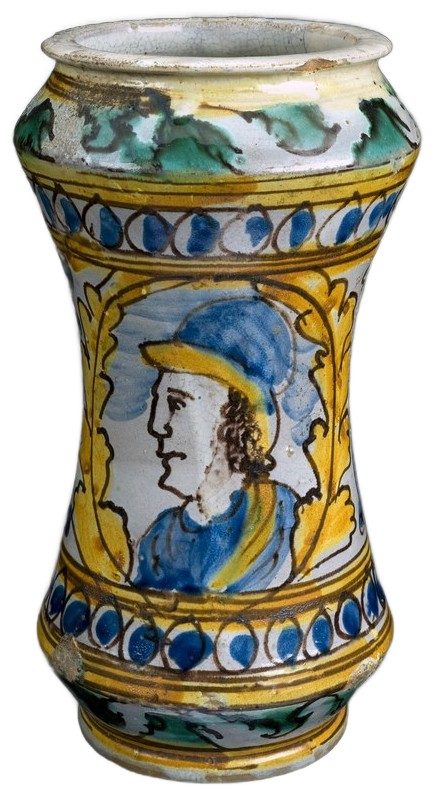
Species Pleris Archonticon
- Known today as
- A named compound powder of the apothecary, of aromatics such as cinnamon, cloves, aloeswood, and spikenard, with red coral and musk (note XL).
- Kind
- Compound
- Constituents
- cinnamon, cloves, galangal, nutmeg, mace, cardamom, red coral, musk and camphor, and 1 more
- In the Canale glossary
- On the Manner of Discerning and Healing the Bewitched, Appendix A: Part Three, Chapter 6: Remedies Given by Mouth After the Purge
Revised October 3, 2026: Checked against its sources, each read in full, in part, or in its abstract. Version 1, first published September 25, 2026.
Species Pleris Archonticon: what did Canale use it for?
In the powder for the bewitched and in morsels (ch. 6).
Species Pleris Archonticon: what does modern science say?
A cordial aromatic compound, commended by Culpeper for melancholy, weak stomachs, faintings, and bad memories.
Pharmacognosy & Toxicology
- Constituents
- cinnamon, cloves, galangal, nutmeg, mace, cardamomthe aromatics
- red coral
- musk and camphor
- silkeighteen grains in the London recipe
- Mechanism
- An aromatic powder that the London College took from Nicholaus, to be made up with ten times its weight of sugar in balm water into an electuary: Culpeper gives it for melancholy, weak stomachs, faintings, bad memories, the falling sickness, and cold afflictions of the lungs.
- Toxic dose
- A drachm in the morning, or more, as age and strength require (Culpeper).
- Culpeper, N. (1653). Pharmacopoeia Londinensis, “Species Pleres Archonticon.” Read in part · the text read
Constituent names open the compound’s record at PubChem, and “ChEMBL” beside a name opens its record at ChEMBL, the European Bioinformatics Institute’s database of bioactive molecules. Where a mechanism line was checked against ChEMBL (ChEMBL 37, read 1 October 2026), the check is shown with the measured value and its source paper, or says plainly that nothing has been measured. Doses are as the references give them, for description only; this is not medical advice. Each source carries the result of its check against Crossref, PubMed, or the authority’s page: see Verification.
In Their Own Words
The College's recipe for Pleres Arconticon, as Culpeper gives it, ends with pearls, white and red been (or avens and tormentil roots in their stead), red coral, torrified silk, musk and camphor, beaten into powder.
“Pearls, Been white and red, (or, if they be wanting, take the roots of Avens and Tormentil in their stead) red Coral, torrified Silk, of each eighteen grains, Musk six grains, Camphire four grains, beat them into powder according to art”
Nicholas Culpeper, M.D., The Complete Herbal … to which are now first annexed, the English Physician Enlarged, and Key to Physic, Dispensatory, “Species, or Powders”: Pleres Arconticon (Nicholaus). A New Edition. London: Thomas Kelly, 17, Paternoster Row (no year printed); Project Gutenberg eBook #49513. The text, read in part
Culpeper says Pleres Arconticon is exceedingly good for sad, melancholy and fearful spirits, strengthens weak stomachs, and helps those prone to fainting and swooning.
“It is exceedingly good for sad, melancholy, lumpish, pensive, grieving, vexing, pining, sighing, sobbing, fearful, careful spirits, it strengthens weak stomachs exceedingly, and help such as are prone to faintings and swoonings”
Nicholas Culpeper, M.D., The Complete Herbal … to which are now first annexed, the English Physician Enlarged, and Key to Physic, Dispensatory, “Species, or Powders”: Pleres Arconticon, Culpeper's comment. A New Edition. London: Thomas Kelly, 17, Paternoster Row (no year printed); Project Gutenberg eBook #49513. The text, read in part
Each passage is quoted from the text named, which the press fetched and read, and was checked word for word against a fresh copy of it; the link opens that copy. Passages are given as printed, without the editors’ footnote numbers, and with words broken across lines joined.
The Recipe
The recipe: 6 ingredients, each linked to its entry. For Club members. Create a free account or sign in.
Sources
- [28] Culpeper, N. (1653). Pharmacopœia Londinensis, or, The London Dispensatory [the Royal College of Physicians’ pharmacopoeia in English, with Culpeper’s commentary]. London: Peter Cole. Text Creation Partnership edition A35381. Read in part · the text read
Verification
- Checked
- October 1, 2026, and October 3, 2026
- Passes
- Every sentence read against its sources, in the pass over the remaining 343 entries
- Every dated or regulatory claim checked by category across the database
- Every source read, in full, in part, or in its abstract, and every sentence checked against what was read (October 3, 2026)
- Sources
- 2 cited: 2 read in part.
- Corrections
- None were needed.
What was checked, how, and what was found is set out on the Verification page. A checked source is one whose record was found; it does not make the entry medical advice.
Cite This Entry
Version 1 · first published September 25, 2026 · last revised October 3, 2026
- Chicago
“Species Pleris Archonticon.” In Materia Medica, edited by B. C. P. Statema. Version 1. The Thinking Press, 2026–. Last modified October 3, 2026. https://thethinkingpress.org/materia-medica/species-pleris-archonticon.
- MLA
“Species Pleris Archonticon.” Materia Medica, edited by B. C. P. Statema, version 1, The Thinking Press, 3 Oct. 2026, thethinkingpress.org/materia-medica/species-pleris-archonticon. Accessed 8 Oct. 2026.
- APA
Species Pleris Archonticon. (2026, October 3). In B. C. P. Statema (Ed.), Materia medica (Version 1). The Thinking Press. Retrieved October 8, 2026, from https://thethinkingpress.org/materia-medica/species-pleris-archonticon
Club members keep entries on a shelf with private notes, print the plates as cards, and receive an entry by email each week. Create a free account before January 1, 2027 and all of it is yours for good. About the Club
See Also
Drawing on the same sources: Culpeper
Nearby in the alphabet
Speedwell (Veronica chamaedrys and its relatives) · Southernwood (“lad’s love) · Spermaceti (A white wax from the head of the sperm whale) · Spikenard (a Himalayan valerian) · Solomon’s seal (Polygonatum multiflorum and its relatives) · Spirit of wine (Distilled alcohol) · Snapdragon (Antirrhinum majus)
Historical description, not medical advice.