
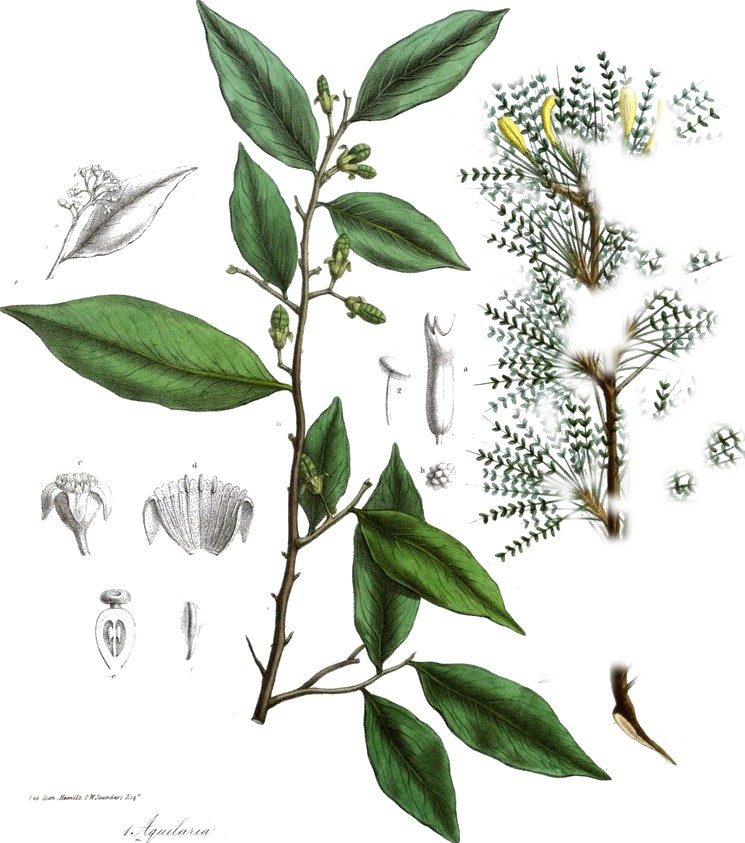
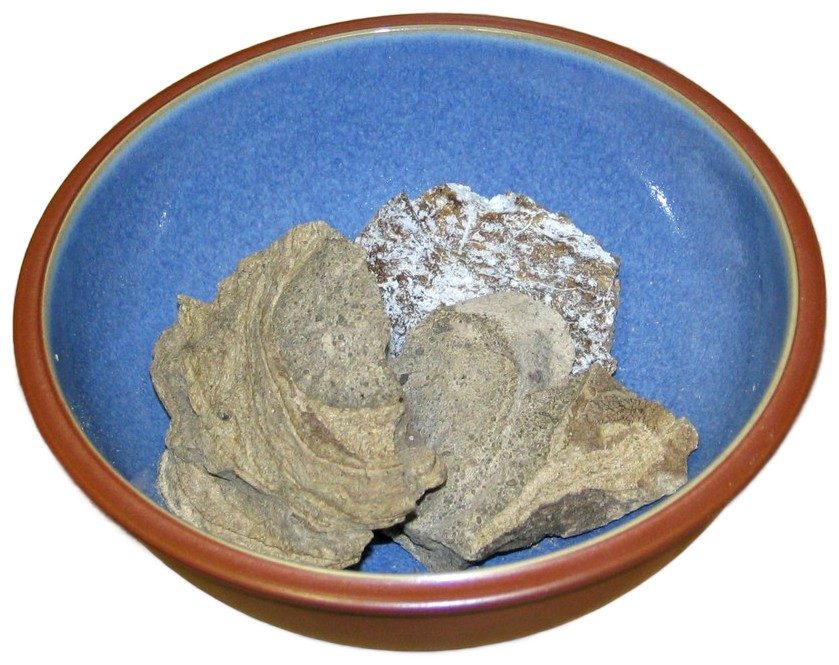
Agarwood
Legno aloe
- Known today as
- The fragrant resinous heartwood of Aquilaria trees, oud; not the aloe plant.
- Kind
- Resin & Wood
- Constituents
- 2-(2-phenylethyl)chromones, agarospirol and jinkoh-eremol, benzylacetone
- In other databases
- Plants of the World Online search · GBIF search · Wikidata search
- In the Canale glossary
- On the Manner of Discerning and Healing the Bewitched, Appendix A: Part Three, Chapter 6: Remedies Given by Mouth After the Purge
Agarwood: what did Canale use it for?
In the water, pills, julep, and oil (chs. 6, 9).
Agarwood: what does modern science say?
A perfume and incense wood.
Pharmacognosy & Toxicology
- Constituents
- 2-(2-phenylethyl)chromonesthe resin’s signature
- agarospirol and jinkoh-eremolsesquiterpenes
- benzylacetone ChEMBLin the smoke
- Mechanism
- The resin is laid down by Aquilaria trees in answer to a fungal infection of the wounded wood; its vapour is sedative in mice and the smoke is the incense. No internal pharmacology is established.
- Toxic dose
- No toxicity recorded.
- Standing
- CITES Appendix II since 2004 for all Aquilaria; the resin sells by the gram, and most wild trees are gone.
- Naef, R. (2011). “The volatile and semi-volatile constituents of agarwood, the infected heartwood of Aquilaria species.” Flavour and Fragrance Journal 26. Verified against its record · doi:10.1002/ffj.2034
- Takemoto, H., et al. (2008). “Sedative effects of vapor inhalation of agarwood oil and spikenard extract.” Journal of Natural Medicines 62. Verified against its record · doi:10.1007/s11418-007-0177-0
The abstract of each source, beneath its citation. For Club members. About the Club or sign in.
Constituent names open the compound’s record at PubChem, and “ChEMBL” beside a name opens its record at ChEMBL, the European Bioinformatics Institute’s database of bioactive molecules. Where a mechanism line was checked against ChEMBL (ChEMBL 37, read 1 October 2026), the check is shown with the measured value and its source paper, or says plainly that nothing has been measured. Doses are as the references give them, for description only; this is not medical advice. Each source carries the result of its check against Crossref, PubMed, or the authority’s page: see Verification.
Agarwood: what lore surrounds it?
Agarwood carries devotional weight in several traditions independently: it appears in Vedic texts for its healing properties, is central to Islamic incense practice,. The most famous single piece in the historical record is the Ranjatai, a block of aloeswood so prized that it passed through the hands of Japanese emperors and shoguns as a treasured relic.
In Their Own Words
Culpeper calls wood of aloes (Agallochum, lignum aloes) moderately hot and dry, a good cordial, a rich perfume, and a great strengthener of the stomach.
“Wood of Aloes; is moderately hot and dry: a good cordial: a rich perfume, a great strengthener to the stomach.”
Nicholas Culpeper, M.D., The Complete Herbal ... to which are now first annexed, the English Physician Enlarged, and Key to Physic, Simples: Woods and their Chips, or Raspings. A new edition. London: Thomas Kelly, 17, Paternoster Row, MDCCCL (Project Gutenberg eBook #49513). The text, read in part
Quincy says aloes-wood was esteemed a great strengthener of the nerves, particularly of the head and stomach, and that Angelus Sala admired it and made an extract of it with spirit of wine.
“…eſteemed a great Strengthner of the Nerves in general; but particularly of the Head and Stomach. Ang. Sala was a great Admirer of this Wood, and made an Extract from it with Spirit of Wine”
John Quincy, M.D., Pharmacopœia Officinalis & Extemporanea, or, A Complete English Dispensatory, Part II, Woods, no. 38 'Agallochy'. London: printed for E. Bell and others, 1724; the edition number on the title page is illegible in the scan (Internet Archive OCR text). The text, read in part
Each passage is quoted from the text named, which the press fetched and read, and was checked word for word against a fresh copy of it; the link opens that copy. Passages are given as printed, without the editors’ footnote numbers, and with words broken across lines joined.
Used in These Compounds
Agarwood is an ingredient of 4 compound medicines in the database. For Club members. Create a free account or sign in.
Sources
- [34] Duncan, H. Aloes. In J. Hastings (ed.), Hastings’ Dictionary of the New Testament. Online at studylight.org. Book, not indexed
- “Aloeswood” and “Ranjatai” (reference articles). Book, seen in reviews
Verification
- Checked
- October 1, 2026
- Passes
- Every sentence read against its sources, in the pass over the remaining 343 entries
- The Standing line checked against the authority it names (EMA, WHO, FDA, CITES, Commission E)
- Every dated or regulatory claim checked by category across the database
- Sources
- 4 cited: 2 verified against its record, 1 book, seen in reviews, 1 book, not indexed. 1 with the abstract on file.
- Corrections
- the claim that the Egyptians used it in embalming has no record; removed.
What was checked, how, and what was found is set out on the Verification page. A checked source is one whose record was found; it does not make the entry medical advice.
Cite This Entry
Version 1 · first published September 25, 2026
- Chicago
“Agarwood.” In Materia Medica, edited by B. C. P. Statema. Version 1. The Thinking Press, 2026–. Last modified September 25, 2026. https://thethinkingpress.org/materia-medica/agarwood.
- MLA
“Agarwood.” Materia Medica, edited by B. C. P. Statema, version 1, The Thinking Press, 25 Sept. 2026, thethinkingpress.org/materia-medica/agarwood. Accessed 8 Oct. 2026.
- APA
Agarwood. (2026, September 25). In B. C. P. Statema (Ed.), Materia medica (Version 1). The Thinking Press. Retrieved October 8, 2026, from https://thethinkingpress.org/materia-medica/agarwood
Club members keep entries on a shelf with private notes, print the plates as cards, and receive an entry by email each week. Create a free account before January 1, 2027 and all of it is yours for good. About the Club
See Also
Drawing on the same sources: Naef, Takemoto
Nearby in the alphabet
AGLA · Aflatoxin mould · Agnus Dei (blessed by the pope (note LXX)) · Adder’s-tongue fern (Ophioglossum vulgatum) · Agrimony (Agrimonia eupatoria) · Aconite (of the buttercup family) · Alkanet (Alkanna tinctoria (syn) · Abracadabra (one letter shorter each time, into a narrowing triangle)
Historical description, not medical advice.