
Aloe
Aloe
- Known today as
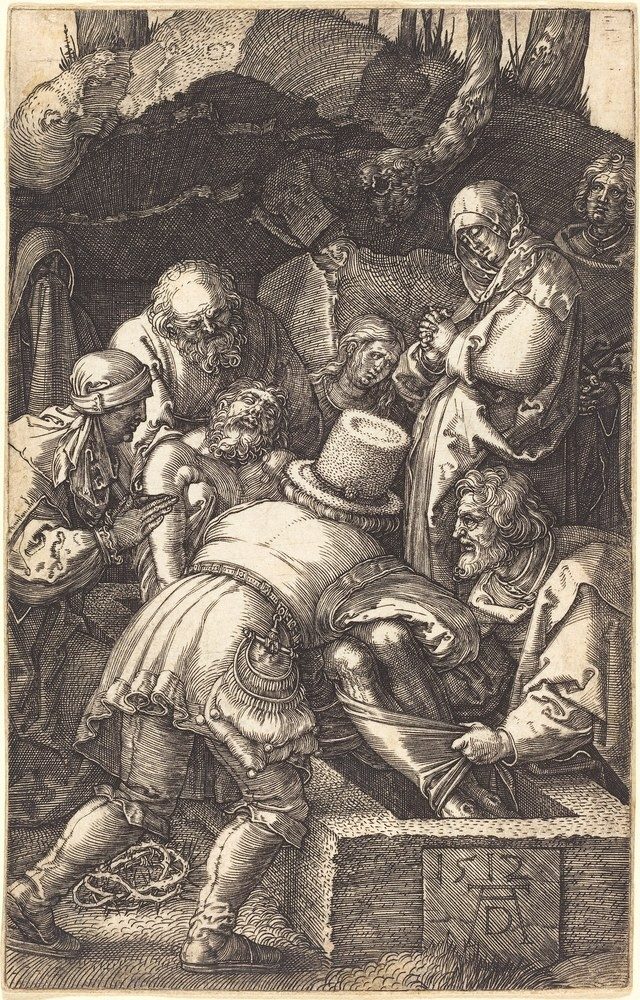
- Here the aloe of John 19:39, with which, mixed with myrrh, Nicodemus anointed Christ’s body; probably aloeswood (agarwood) rather than the aloe plant.
- Kind
- Sacramental, in 1 older authority
- Constituents
- agarospirol, jinkoh-eremol, 2-(2-phenylethyl)chromone
- Earliest authority here
- Pliny (AD 23/24–79)
- In the Canale glossary
- On the Manner of Discerning and Healing the Bewitched, Appendix A: Treatise Two: Blessed Objects and Materials
Revised October 1, 2026: An older authority added from a text read in full. Lore added from texts read in full. Version 1, first published September 25, 2026.
Aloe: what did Canale use it for?
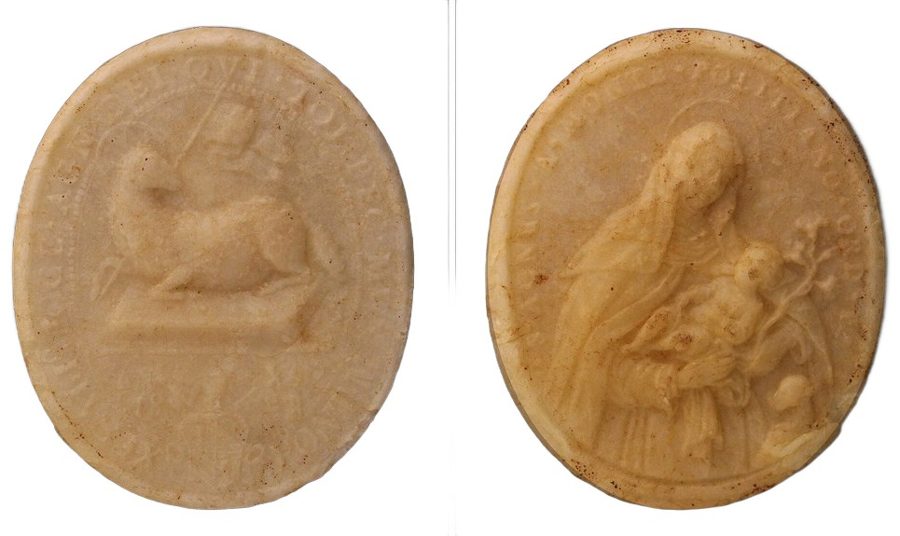
Blessed with myrrh “by the most sacred Body of Christ” (Treatise Two).
Aloe: what does modern science say?
See Agarwood.
Pharmacognosy & Toxicology
- Constituents
- agarospirol ChEMBLa sesquiterpene of the resinous wood
- jinkoh-eremol
- 2-(2-phenylethyl)chromone ChEMBLthe chromones that give the scent
- Mechanism
- The “aloe” of Scripture and of Canale is the fragrant wood, not the purgative leaf-juice of the same name: its sesquiterpenes and chromones are the perfume, and the smoke is sedative in mice.
- Toxic dose
- No toxicity recorded; the wood is burned, not swallowed.
- Standing
- A perfumery and incense material; the tree is protected under CITES Appendix II.
- Naef, R. (2011). “The volatile and semi-volatile constituents of agarwood.” Flavour and Fragrance Journal 26. Verified against its record · doi:10.1002/ffj.2034
- Takemoto, H., et al. (2008). “Sedative effects of vapor inhalation of agarwood oil.” Journal of Natural Medicines 62. Verified against its record · doi:10.1007/s11418-007-0177-0
The abstract of each source, beneath its citation. For Club members. About the Club or sign in.
Constituent names open the compound’s record at PubChem, and “ChEMBL” beside a name opens its record at ChEMBL, the European Bioinformatics Institute’s database of bioactive molecules. Where a mechanism line was checked against ChEMBL (ChEMBL 37, read 1 October 2026), the check is shown with the measured value and its source paper, or says plainly that nothing has been measured. Doses are as the references give them, for description only; this is not medical advice. Each source carries the result of its check against Crossref, PubMed, or the authority’s page: see Verification.
Aloe: what lore surrounds it?
Folkard keeps the biblical aloes, the fragrant wood, apart from the bitter drug: “All thy garments smell of Myrrh, and Aloes, and Cassia,” and the spice Nicodemus brought “to embalm the body of our Lord.” The heart of the wood, calambac, “is reckoned in the Indies more precious than gold itself.” He quotes Wood's Zoography on Egypt, where “whoever returns from a pilgrimage to Mecca hangs it over his street door as a proof of his having performed that holy journey,” and the belief “that this plant hinders evil spirits and apparitions from entering the house.” The Arabic Saber “signifies patience, and in Mecca at the end of most graves, facing the epitaph, is planted an Aloe.”
Grieve separates the two aloes: “The word Aloes, in Latin Lignum Aloes, is used in the Bible and in many ancient writings to designate a substance totally distinct from the modern Aloes, namely the resinous wood of Aquilaria agallocha,” long “valued for use as incense.” Of the living plant she records that “the Mussulman who has made a pilgrimage to the shrine of the Prophet is entitled to hang the Aloe over his doorway,” that “in Cairo, the Jews also adopt the practice,” and that near Mecca Burckhardt found at the end of every grave “a low shrubby species of Aloe whose Arabic name, saber, signifies patience,” its name referring “to the waiting-time between the burial and the resurrection morning.”
Aloe: what did the older authorities say?
- Pliny
- His aloe is the bitter plant, not the fragrant wood: it “bears a resemblance to the squill, except that it is larger,” with thicker leaves streaked obliquely, a tender stem red in the middle, and “a single root, which runs straight downwards, like a stake driven into the ground”; its smell is powerful and its taste bitter, the most esteemed comes from India, and the Asiatic kind is used only by laying the fresh leaves, glutinous “to a marvellous degree,” on wounds.
Sources
- [34] Duncan, H. Aloes. In J. Hastings (ed.), Hastings’ Dictionary of the New Testament. Online at studylight.org. Book, not indexed
- Pliny the Elder, Natural History 27.5, trans. J. Bostock & H. T. Riley (1855), Perseus Digital Library. Primary text
- Folkard, R. (1884). Plant Lore, Legends, and Lyrics, “Aloe.” Project Gutenberg #44638. Primary text
- Grieve, M. (1931). A Modern Herbal, “Aloes.” botanical.com/botanical/mgmh/a/aloes027.html Standard reference work
Verification
- Checked
- October 1, 2026
- Passes
- Every sentence read against its sources, in the pass over the remaining 343 entries
- The Standing line checked against the authority it names (EMA, WHO, FDA, CITES, Commission E)
- Every dated or regulatory claim checked by category across the database
- Each quotation from the older authorities checked word for word against the text, read in full
- Sources
- 6 cited: 2 verified against its record, 2 primary text, 1 standard reference work, 1 book, not indexed. 1 with the abstract on file.
- Corrections
- None were needed.
What was checked, how, and what was found is set out on the Verification page. A checked source is one whose record was found; it does not make the entry medical advice.
Cite This Entry
Version 1 · first published September 25, 2026 · last revised October 1, 2026
- Chicago
“Aloe.” In Materia Medica, edited by B. C. P. Statema. Version 1. The Thinking Press, 2026–. Last modified October 1, 2026. https://thethinkingpress.org/materia-medica/aloe.
- MLA
“Aloe.” Materia Medica, edited by B. C. P. Statema, version 1, The Thinking Press, 1 Oct. 2026, thethinkingpress.org/materia-medica/aloe. Accessed 8 Oct. 2026.
- APA
Aloe. (2026, October 1). In B. C. P. Statema (Ed.), Materia medica (Version 1). The Thinking Press. Retrieved October 8, 2026, from https://thethinkingpress.org/materia-medica/aloe
Club members keep entries on a shelf with private notes, print the plates as cards, and receive an entry by email each week. Create a free account before January 1, 2027 and all of it is yours for good. About the Club
See Also
Also in Pliny the Elder
Alum in Pliny the Elder · Alkanet in Pliny the Elder · Amber in Pliny the Elder · Agrimony in Pliny the Elder · everything Pliny the Elder names →
Drawing on the same sources: Folkard, Grieve, Naef, Takemoto
The amulet herbs · Wild rue · Apples, syrup of · Aniseed · Agarwood · Spikenard · the bibliography →

Historical description, not medical advice.