
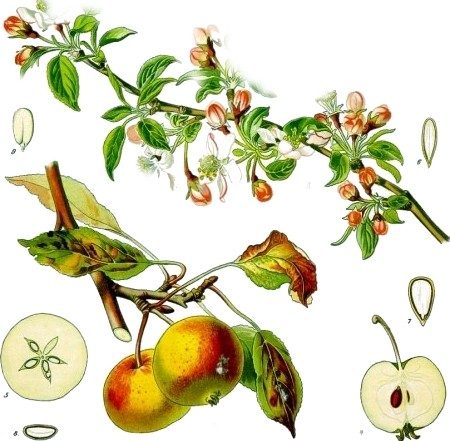
Apples, syrup of
Siroppo di pomi
- Known today as
- A syrup of sweet apples.
- Kind
- Compound
- Constituents
- sugar, malic acid
- In the Canale glossary
- On the Manner of Discerning and Healing the Bewitched, Appendix A: Treatise One, Part Three, Chapters 2–3: Purgative and Preparative Medicines
Revised October 3, 2026: Lore added from texts read in full. Checked against its sources, each read in full, in part, or in its abstract. Version 1, first published September 25, 2026.
Apples, syrup of: what did Canale use it for?
A preparative for phlegmatic patients (ch. 3). An apple also serves as a vessel for hellebore root (ch. 5).
Apples, syrup of: what does modern science say?
Culpeper called it “a fine cooling syrup” for hearts and stomachs overpressed with heat, safe in fevers because it “rather loosens than binds,” and good to quench thirst and stay hiccoughs.
Pharmacognosy & Toxicology
- Constituents
- sugar6–10 per cent of the fresh fruit
- malic acid ChEMBL
- Mechanism
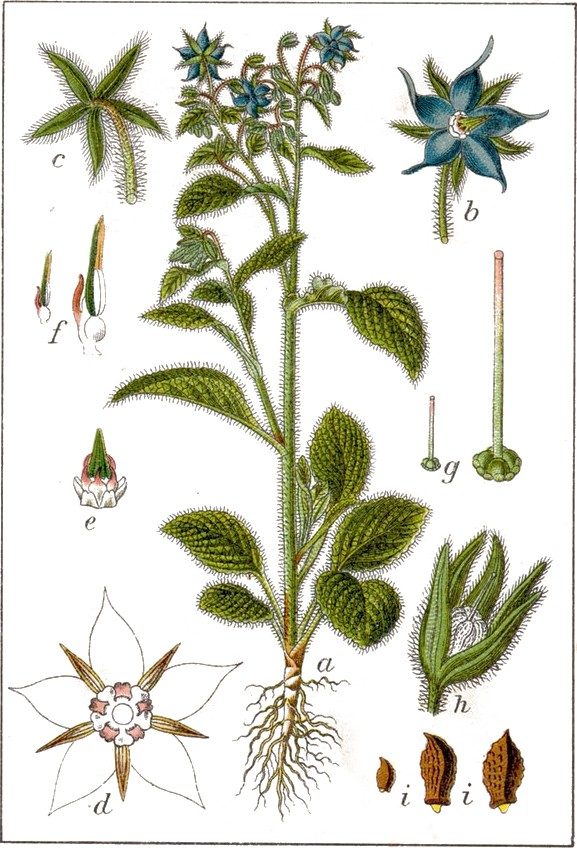
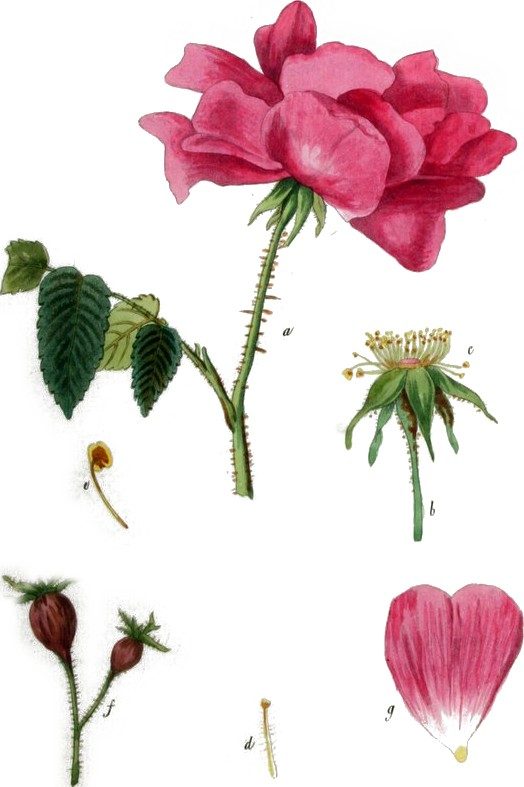
- The juice of sweet-scented apples with bugloss, violet leaves, and rose water, boiled with sugar into a syrup; Grieve puts the dietetic value of apples in their malic and tartaric acids.
- Toxic dose
- An ounce at a time, Culpeper says, in the morning or when needed.
- Standing
- A syrup of the London Dispensatory of 1653.
- Culpeper, N. (1653). Pharmacopoeia Londinensis, “Syrup of apples.” Read in part · the text read
Constituent names open the compound’s record at PubChem, and “ChEMBL” beside a name opens its record at ChEMBL, the European Bioinformatics Institute’s database of bioactive molecules. Where a mechanism line was checked against ChEMBL (ChEMBL 37, read 1 October 2026), the check is shown with the measured value and its source paper, or says plainly that nothing has been measured. Doses are as the references give them, for description only; this is not medical advice. Each source carries the result of its check against Crossref, PubMed, or the authority’s page: see Verification.
Apples, syrup of: what lore surrounds it?
Of the apple Folkard writes that “not only is the Apple mystical above all the fruits of the earth, but it is the supreme fruit.” The Scandinavian Iduna “religiously guarded in a box the Apples which the gods, when they felt old age approaching, had only to taste the juice of to become young again”; the Hesperides' apples were watched by a dragon; Atalanta lost her race stooping for three; and the apple inscribed Detur pulchriori “caused the ruin of Troy.” The Druids “were wont to cut their divining-rods from the Apple-tree,” Glastonbury was the “Apple Orchard,” and in Herefordshire, Devonshire and Cornwall the farmers still salute the trees on Christmas Eve, sprinkling them with cider and chanting, “Here's to thee, old Apple-tree, Whence thou may'st bud, and whence thou may'st blow; And whence thou may'st bear Apples enow.”
Grieve adds the cider country's health lore: “It is stated on medical authority that in countries where unsweetened cider is used as a common beverage, stone or calculus is unknown,” and among doctors in Normandy “not a single case of stone had been met with during forty years”; the old rhyme runs, “To eat an apple going to bed Will make the doctor beg his bread.” Rotten apples as a poultice “is an old Lincolnshire remedy for sore eyes,” and the superstition of Adam's apple “relates that a piece of the forbidden apple stuck in Adam's throat.”
In Their Own Words
Culpeper calls the syrup of apples a fine cooling syrup for stomachs overpressed with heat, safe in fevers because it rather loosens than binds, and good in hectic fevers.
“It is a fine cooling Syrup for such whose stomachs are overpressed with heat, and may safely be given in fevers, for it rather loosens than binds: it breeds good blood, and is profitable in hectic fevers”
Nicholas Culpeper, M.D., The Complete Herbal ... to which are now first annexed, the English Physician Enlarged, and Key to Physic, Altering Syrups: Syrupus de Pomis alterans, or Syrup of Apples. A new edition. London: Thomas Kelly, 17, Paternoster Row, MDCCCL (Project Gutenberg eBook #49513). The text, read in part
Each passage is quoted from the text named, which the press fetched and read, and was checked word for word against a fresh copy of it; the link opens that copy. Passages are given as printed, without the editors’ footnote numbers, and with words broken across lines joined.
Used in These Compounds
Apples, syrup of is an ingredient of 1 compound medicine in the database. For Club members. Create a free account or sign in.
Sources
- Folkard, R. (1884). Plant Lore, Legends, and Lyrics, “Apple.” Project Gutenberg #44638. Read in part · the text read
- Grieve, M. (1931). A Modern Herbal, “Apple.” botanical.com/botanical/mgmh/a/apple044.html Read in full · the text read
Verification
- Checked
- October 1, 2026, and October 3, 2026
- Passes
- Every sentence read against its sources, in the pass over the remaining 343 entries
- The Standing line checked against the authority it names (EMA, WHO, FDA, CITES, Commission E)
- Every dated or regulatory claim checked by category across the database
- Each quotation from the older authorities checked word for word against the text, read in full
- Every source read, in full, in part, or in its abstract, and every sentence checked against what was read (October 3, 2026)
- Sources
- 3 cited: 1 read in full, 2 read in part.
- Corrections
- None were needed.
What was checked, how, and what was found is set out on the Verification page. A checked source is one whose record was found; it does not make the entry medical advice.
Cite This Entry
Version 1 · first published September 25, 2026 · last revised October 3, 2026
- Chicago
“Apples, syrup of.” In Materia Medica, edited by B. C. P. Statema. Version 1. The Thinking Press, 2026–. Last modified October 3, 2026. https://thethinkingpress.org/materia-medica/apples-syrup-of.
- MLA
“Apples, syrup of.” Materia Medica, edited by B. C. P. Statema, version 1, The Thinking Press, 3 Oct. 2026, thethinkingpress.org/materia-medica/apples-syrup-of. Accessed 8 Oct. 2026.
- APA
Apples, syrup of. (2026, October 3). In B. C. P. Statema (Ed.), Materia medica (Version 1). The Thinking Press. Retrieved October 8, 2026, from https://thethinkingpress.org/materia-medica/apples-syrup-of
Club members keep entries on a shelf with private notes, print the plates as cards, and receive an entry by email each week. Create a free account before January 1, 2027 and all of it is yours for good. About the Club
See Also
Sharing sugar, malic acid
Drawing on the same sources: Folkard, Grieve, Culpeper
Borage · The amulet herbs · Cassia wood · Asarabacca · Aniseed · Balm · Bistort · the bibliography →
Nearby in the alphabet
Armenian bole (colored by iron oxide) · Antimony (The metallic element and its compounds) · Armenian stone, pills of (azurite, a blue copper carbonate) · Arthritica (named for its use against gout (note XLIX)) · Angel’s wings (fan-shaped fungus that rots conifer wood) · Asafoetida (“devil’s dung)
Historical description, not medical advice.