
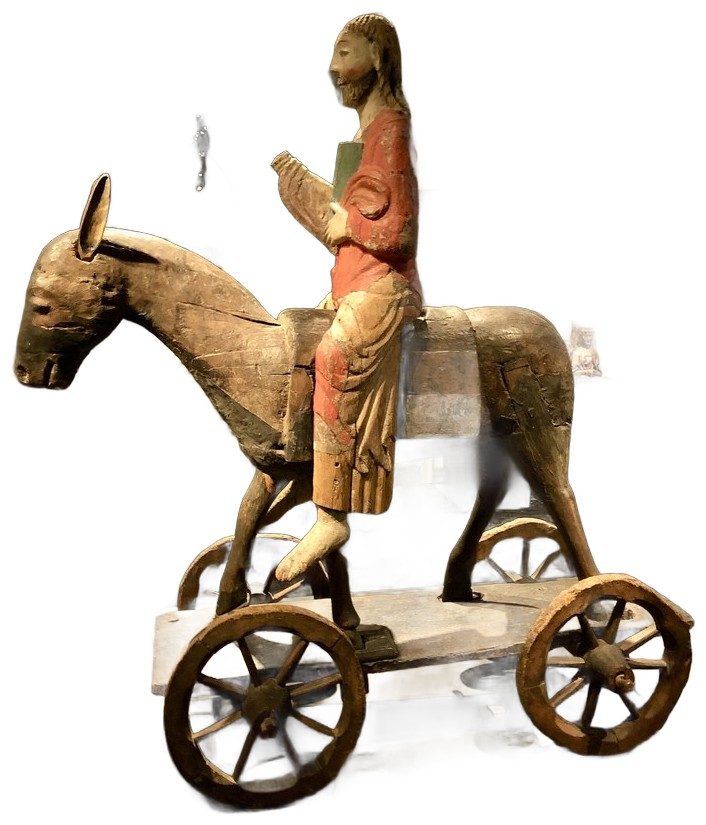
Palm and olive branches
Rami benedetti
- Known today as
- Branches blessed on Palm Sunday.
- Kind
- Sacramental, in 1 older authority
- Earliest authority here
- The Catholic Encyclopedia (New York, 1907–1914)
- In the Canale glossary
- On the Manner of Discerning and Healing the Bewitched, Appendix A: Treatise Two: Blessed Objects and Materials
Revised October 1, 2026: An authority added from a text read in full. Version 1, first published September 25, 2026.
Palm and olive branches: what did Canale use it for?
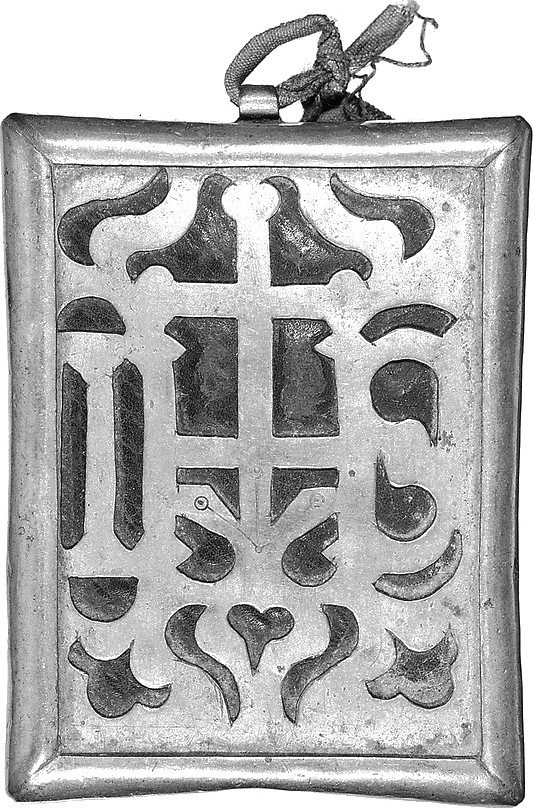
Taken home, “that into whatever place they shall be brought, the dwellers there may obtain Your blessing”; blessed olive in amulet packets (Treatise Two).
Palm and olive branches: what does modern science say?
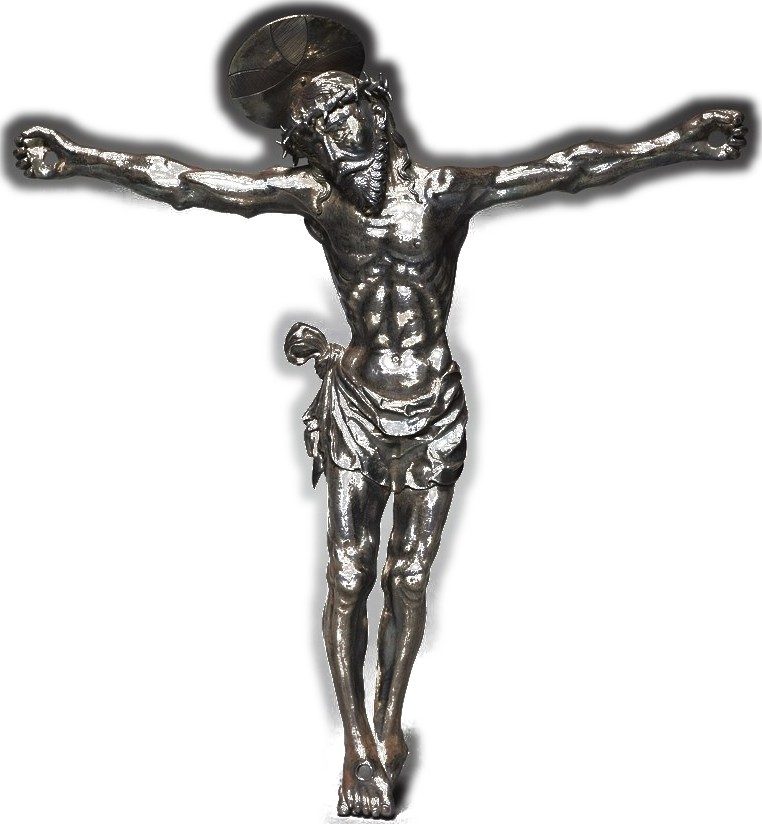
Still blessed and kept in homes, often tucked behind a crucifix.
Palm and olive branches: what did the older authorities say?
- The Catholic Encyclopedia
- The Catholic Encyclopedia notes that “in pre-Christian times the palm was regarded as a symbol of victory,” adopted by Christians as “a symbol of the victory of the faithful over the enemies of the soul,” whence the martyrs' “palm of martyrdom.” On 10 April 1688 the Congregation of Rites “decided … that the palm when found depicted on catacomb tombs was to be regarded as a proof that a martyr had been interred there,” an opinion later found “untenable,” since “the palm was represented not only on tombs of the post-persecution era, but even on pagan tombs.” Blessed palms stand with holy water and Agnus Deis among the sacramentals.
Sources
- [20] Catholic Culture. Catholic Activity: Blessed Palms in the Home. catholicculture.org. Book, not indexed
- [70] Knight, M. (2023). Palm Sunday: history and symbolism of sacramental palms. Florida Catholic / Archdiocese of Miami, 27 March 2023. Book, not indexed
- The Catholic Encyclopedia (New York, 1907–1914), “Palm in Christian Symbolism.” newadvent.org/cathen/11432a.htm Standard reference work
- The Catholic Encyclopedia (New York, 1907–1914), “Lourdes, Notre-Dame de.” newadvent.org/cathen/09389b.htm Standard reference work
Verification
- Checked
- October 1, 2026
- Passes
- Every dated or regulatory claim checked by category across the database
- Each quotation from the older authorities checked word for word against the text, read in full
- Sources
- 4 cited: 2 standard reference work, 2 book, not indexed.
- Corrections
- None were needed.
What was checked, how, and what was found is set out on the Verification page. A checked source is one whose record was found; it does not make the entry medical advice.
Cite This Entry
Version 1 · first published September 25, 2026 · last revised October 1, 2026
- Chicago
“Palm and olive branches.” In Materia Medica, edited by B. C. P. Statema. Version 1. The Thinking Press, 2026–. Last modified October 1, 2026. https://thethinkingpress.org/materia-medica/palm-and-olive-branches.
- MLA
“Palm and olive branches.” Materia Medica, edited by B. C. P. Statema, version 1, The Thinking Press, 1 Oct. 2026, thethinkingpress.org/materia-medica/palm-and-olive-branches. Accessed 8 Oct. 2026.
- APA
Palm and olive branches. (2026, October 1). In B. C. P. Statema (Ed.), Materia medica (Version 1). The Thinking Press. Retrieved October 8, 2026, from https://thethinkingpress.org/materia-medica/palm-and-olive-branches
Club members keep entries on a shelf with private notes, print the plates as cards, and receive an entry by email each week. Create a free account before January 1, 2027 and all of it is yours for good. About the Club
See Also
Also in The Catholic Encyclopedia
Paschal candle in The Catholic Encyclopedia · Oil of the sick in The Catholic Encyclopedia · Pilgrim badges and ampullae in The Catholic Encyclopedia · Oil of catechumens in The Catholic Encyclopedia · everything The Catholic Encyclopedia names →
Nearby in the alphabet
Palm of Christ (Ricinus communis (note XLII)) · Oyster mushroom (A shell-shaped mushroom of dead hardwood) · Panther cap (white-spotted amanita of European woods) · Oxymel, and oxymel of squill (Honey boiled with vinegar) · Paregoric (camphor, benzoic acid, and anise oil in spirit) · Ox eye (yellow ox-eye) · Parsley (Petroselinum crispum) · Orris (The dried root of Iris germanica ‘Florentina’ and I)
Historical description, not medical advice.