
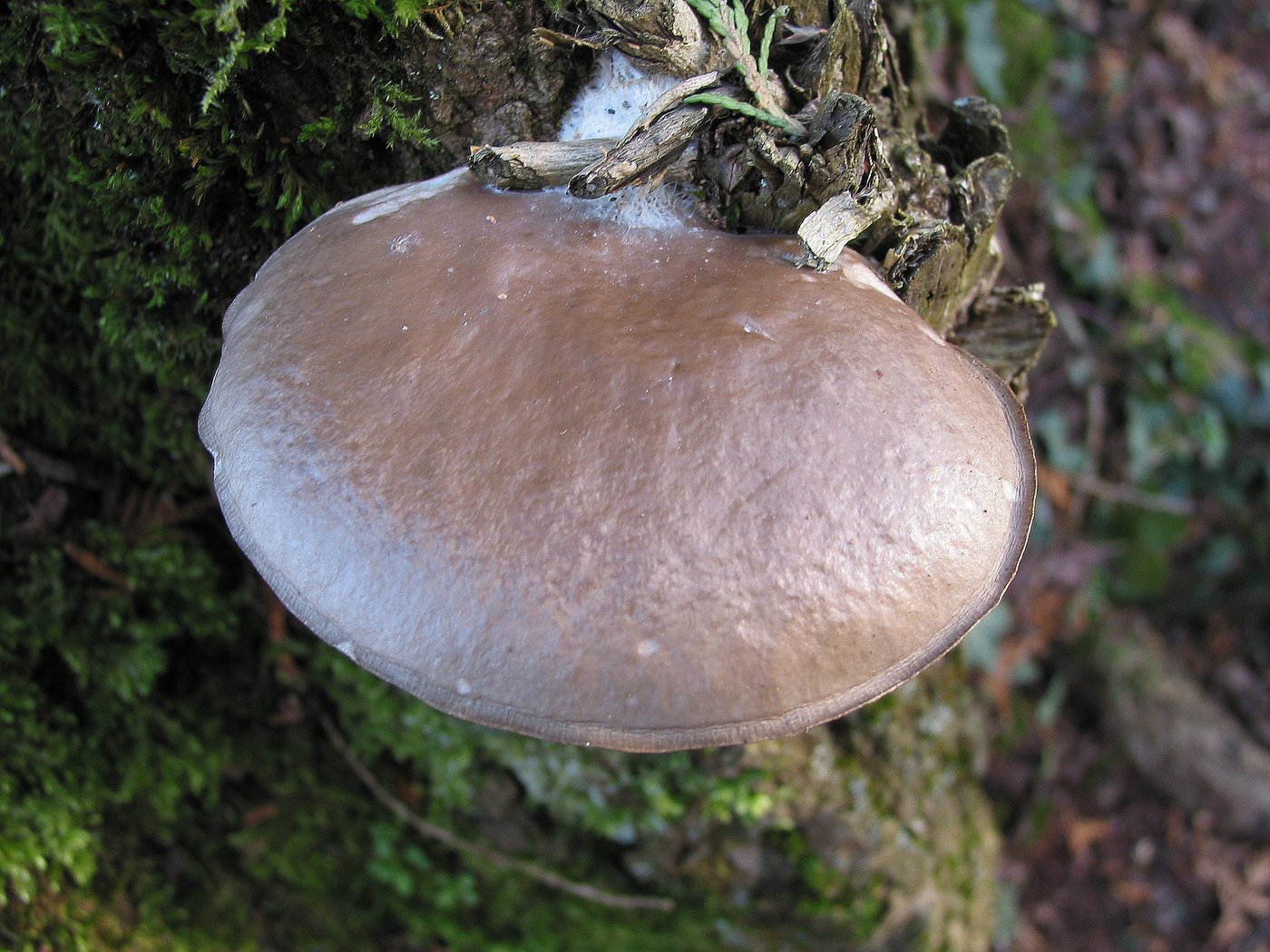
Oyster mushroom
Pleurotus ostreatus
- Known today as
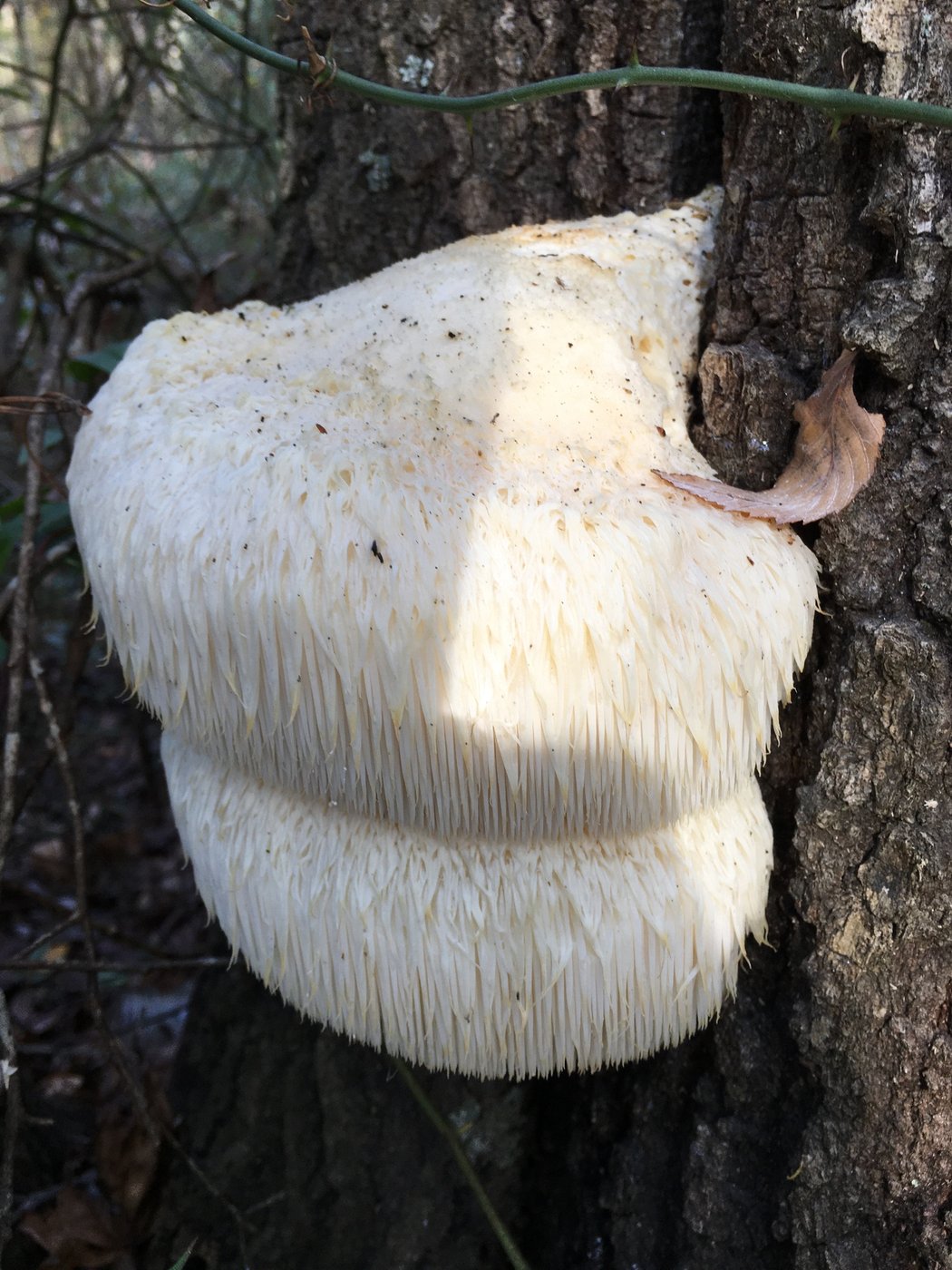
- A shell-shaped mushroom of dead hardwood.
- Kind
- Fungus
- Constituents
- lovastatin, ostreolysin
- In other databases
- GBIF search · Wikidata search
Oyster mushroom: what was it used for?
A common food, easily cultivated on straw and waste.
Oyster mushroom: what does modern science say?
Contains small amounts of lovastatin.
The toxic dose and the poisoning
- Toxic dose
- None from the cooked food.
The references for these lines are listed under Pharmacognosy, in Science. Doses are as the references give them, for description only; this is not medical advice. In a poisoning, call a poison centre.
Oyster mushroom: what lore surrounds it?
A carnivore: it paralyzes and digests tiny roundworms to feed on their nitrogen.
In Their Own Words
M. C. Cooke notes that the Oyster (A. ostreatus) grows on trees late in autumn and is held by many to be excellent food.
“Late in the autumn the Oyster (A. ostreatus) may be found growing on trees. But, whilst in the animal world the oyster that groweth upon trees is considered as degenerate and unfit for becoming the food of man, in the vegetable world the tree-loving oyster is held by many to be excellent food.”
M. C. Cooke, A Plain and Easy Account of British Fungi, Esculent agarics: the Oyster. London: Robert Hardwicke, 192, Piccadilly, 1862 (Internet Archive OCR text). The text, read in part
Each passage is quoted from the text named, which the press fetched and read, and was checked word for word against a fresh copy of it; the link opens that copy. Passages are given as printed, without the editors’ footnote numbers, and with words broken across lines joined.
Pharmacognosy
- Constituents
- lovastatin ChEMBLin small amounts
- ostreolysina pore-forming protein, destroyed by cooking
- Mechanism
- The mushroom holds lovastatin and lowers cholesterol in animals; its spores cause an occupational lung disease in growers.
- Checked against ChEMBL
- lovastatin: ChEMBL’s curated mechanism: inhibitor 3-hydroxy-3-methylglutaryl-coenzyme A reductase.
- Standing
- A food.
- Gunde-Cimerman, N., and Cimerman, A. (1995). “Pleurotus fruiting bodies contain the inhibitor of 3-hydroxy-3-methylglutaryl-coenzyme A reductase, lovastatin.” Experimental Mycology 19. Verified against its record · doi:10.1006/emyc.1995.1001
The abstract of each source, beneath its citation. For Club members. About the Club or sign in.
Constituent names open the compound’s record at PubChem, and “ChEMBL” beside a name opens its record at ChEMBL, the European Bioinformatics Institute’s database of bioactive molecules. Where a mechanism line was checked against ChEMBL (ChEMBL 37, read 1 October 2026), the check is shown with the measured value and its source paper, or says plainly that nothing has been measured. Doses are as the references give them, for description only; this is not medical advice. Each source carries the result of its check against Crossref, PubMed, or the authority’s page: see Verification.
Sources
- Thorn, R. G., & Barron, G. L. (1984). Carnivorous mushrooms. Science 224: 76–78. Verified against its record · doi:10.1126/science.224.4644.76
Verification
- Checked
- October 1, 2026
- Passes
- Read against its sources in the pass over the remaining 343 entries
- Every dated or regulatory claim checked by category across the database
- The mechanism read against ChEMBL (ChEMBL 37): curated mechanisms and measured activity
- Sources
- 2 cited: 2 verified against its record. 2 with the abstract on file.
- Corrections
- None recorded.
What was checked, how, and what was found is set out on the Verification page. A checked source is one whose record was found; it does not make the entry medical advice.
Club members can point at a technical term in this entry, such as a constituent, an action, or a word of Jung’s, to read its definition from the source. The Club.
Cite This Entry
Version 1 · first published September 25, 2026
- Chicago
“Oyster mushroom.” In Materia Medica, edited by B. C. P. Statema. Version 1. The Thinking Press, 2026–. Last modified September 25, 2026. https://thethinkingpress.org/materia-medica/oyster-mushroom.
- MLA
“Oyster mushroom.” Materia Medica, edited by B. C. P. Statema, version 1, The Thinking Press, 25 Sept. 2026, thethinkingpress.org/materia-medica/oyster-mushroom. Accessed 22 Nov. 2026.
- APA
Oyster mushroom. (2026, September 25). In B. C. P. Statema (Ed.), Materia medica (Version 1). The Thinking Press. Retrieved November 22, 2026, from https://thethinkingpress.org/materia-medica/oyster-mushroom
See Also
Nearby in the alphabet
Palm and olive branches (Branches blessed on Palm Sunday) · Oxymel, and oxymel of squill (Honey boiled with vinegar) · Palm of Christ (Ricinus communis (note XLII)) · Ox eye (yellow ox-eye) · Panther cap (of woods, heaths, and pastures) · Orris (The dried root of Iris germanica ‘Florentina’ and I) · Paregoric (camphor, benzoic acid, and anise oil in spirit) · Orpiment and realgar (Yellow and red arsenic sulfides)
Historical description, not medical advice.

