
Jet, oil of
Oglio di gagate
- Known today as
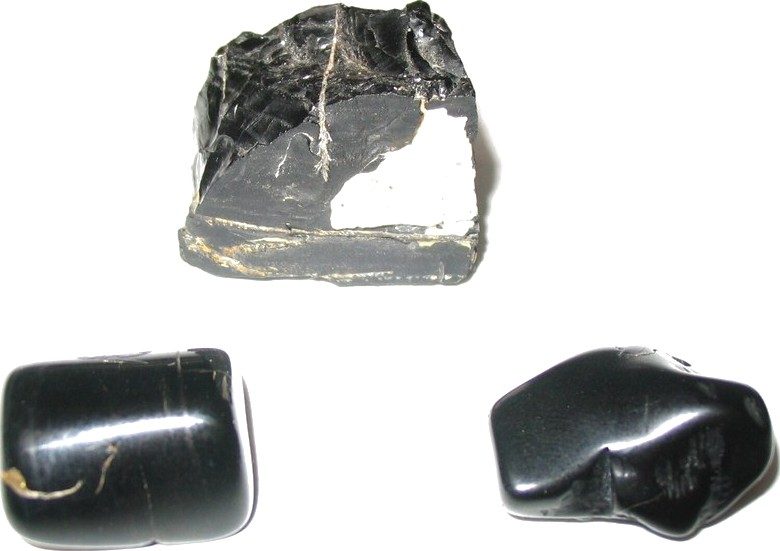
- Jet is fossilized wood, a dense variety of lignite; the oil was distilled from it.
- Kind
- Mineral, in 1 older authority
- Constituents
- phenols and cresols, polycyclic aromatic hydrocarbons, sulfur compounds
- Earliest authority here
- Pliny (AD 23/24–79)
- In other databases
- Wikidata search
- In the Canale glossary
- On the Manner of Discerning and Healing the Bewitched, Appendix A: Part Three, Chapter 9: Anointings
Revised October 1, 2026: An older authority added from a text read in full. Version 1, first published September 25, 2026.
Jet, oil of: what did Canale use it for?
For anointing (ch. 9).
Jet, oil of: what does modern science say?
Coal tar, a comparable distillate, does soothe some skin conditions. Pliny says the fumes of burnt jet kept serpents away and relieved hysterical fits, and that the magi used it in divination.
Pharmacognosy & Toxicology
- Constituents
- phenols and cresolsof the pyrolysis distillate
- polycyclic aromatic hydrocarbons
- sulfur compounds
- Mechanism
- Jet is a lignite, a fossil wood; distilled, it gives a tar oil like coal tar, antiseptic and keratolytic on the skin by its phenols, and carcinogenic by its aromatics. Rubbed on, it would do what coal tar does for psoriasis; burned, its smoke was the fumigation against the womb’s rising. Whitby jet is the same material carved.
- Toxic dose
- Carcinogenic on long exposure; not for internal use.
- Standing
- Coal tar remains a licensed treatment for psoriasis; oil of jet is obsolete.
- IARC (2012). Monographs, vol. 100F: coal-tar pitch and occupational exposures. Standard reference work
- Roelofzen, J. H. J., et al. (2010). “No increased risk of cancer after coal tar treatment in patients with psoriasis or eczema.” Journal of Investigative Dermatology 130. Verified against its record · doi:10.1038/jid.2009.389
The abstract of each source, beneath its citation. For Club members. About the Club or sign in.
Constituent names open the compound’s record at PubChem, and “ChEMBL” beside a name opens its record at ChEMBL, the European Bioinformatics Institute’s database of bioactive molecules. Where a mechanism line was checked against ChEMBL (ChEMBL 37, read 1 October 2026), the check is shown with the measured value and its source paper, or says plainly that nothing has been measured. Doses are as the references give them, for description only; this is not medical advice. Each source carries the result of its check against Crossref, PubMed, or the authority’s page: see Verification.
Jet, oil of: what lore surrounds it?
Jet has been mined from the cliffs at Whitby since about 1500 BC; the Romans in Britain carved it into jewelry, dagger handles, dice, and hairpins that traveled the empire, and the monks of Whitby Abbey later made it into rosaries. Its best-known chapter came after Prince Albert died in 1861: Queen Victoria’s forty years of mourning made Whitby jet the material of respectable mourning jewelry across Britain, a fashion that collapsed almost overnight after her death in 1901.
Jet, oil of: what did the older authorities say?
- Pliny
- Describes gagates, “so called from Gages, the name of a town and river in Lycia,” as black, smooth, light, and porous, little different from wood in appearance, brittle, and “emits a disagreeable odour when rubbed”; marks made with it on pottery cannot be effaced; its fumes “keep serpents at a distance, and dispel hysterical affections,” detect a tendency to epilepsy, and “act as a test of virginity”; a decoction in wine for toothache; and the magicians use it in axinomancy.
Sources
- [38] Encyclopaedia Britannica, online edition, britannica.com. Articles: Ambergris; Aristolochiaceae; Asafetida; Azurite; Castor-oil plant; Civet; Dragon’s blood; Garden cress; Jet; Kermes; Laudanum; Lye; Monemvasía; Musk; Precious coral; Saltpetre; Sulfur dioxide; Tartar emetic; Tropaeolum. Book, seen in reviews
- [83] Mayo Clinic. Coal tar (topical route): description. mayoclinic.org. Book, not indexed
- [98] Pliny the Elder. The Natural History. Trans. J. Bostock and H. T. Riley. London, 1855. Perseus Digital Library, Tufts University. Cited by book and chapter. Primary text
- [122] Whitby Museum. Jet FAQ. whitbymuseum.org.uk. Book, seen in reviews
- Lang Antiques, on jet. Book, not indexed
- Pliny the Elder, Natural History 36.34, trans. J. Bostock & H. T. Riley (1855), Perseus Digital Library. Primary text
Verification
- Checked
- October 1, 2026
- Passes
- Every sentence read against its sources, in the pass over the remaining 343 entries
- The Standing line checked against the authority it names (EMA, WHO, FDA, CITES, Commission E)
- Every dated or regulatory claim checked by category across the database
- Each quotation from the older authorities checked word for word against the text, read in full
- Sources
- 8 cited: 1 verified against its record, 2 primary text, 1 standard reference work, 2 book, seen in reviews, 2 book, not indexed. 1 with the abstract on file.
- Corrections
- None were needed.
What was checked, how, and what was found is set out on the Verification page. A checked source is one whose record was found; it does not make the entry medical advice.
Cite This Entry
Version 1 · first published September 25, 2026 · last revised October 1, 2026
- Chicago
“Jet, oil of.” In Materia Medica, edited by B. C. P. Statema. Version 1. The Thinking Press, 2026–. Last modified October 1, 2026. https://thethinkingpress.org/materia-medica/jet-oil-of.
- MLA
“Jet, oil of.” Materia Medica, edited by B. C. P. Statema, version 1, The Thinking Press, 1 Oct. 2026, thethinkingpress.org/materia-medica/jet-oil-of. Accessed 8 Oct. 2026.
- APA
Jet, oil of. (2026, October 1). In B. C. P. Statema (Ed.), Materia medica (Version 1). The Thinking Press. Retrieved October 8, 2026, from https://thethinkingpress.org/materia-medica/jet-oil-of
Club members keep entries on a shelf with private notes, print the plates as cards, and receive an entry by email each week. Create a free account before January 1, 2027 and all of it is yours for good. About the Club
See Also
Sharing polycyclic aromatic hydrocarbons
Also in Pliny the Elder
Juniper in Pliny the Elder · Houndstongue in Pliny the Elder · Kermes in Pliny the Elder · Honeyed wine and honeyed water in Pliny the Elder · everything Pliny the Elder names →
Nearby in the alphabet
Jewelweed · Jelly ear (rubbery, ear-shaped fungus, chiefly on elder) · Juneberry · James’s powder (secret in its making) · Jalap · Jack-o’-lantern
Historical description, not medical advice.