
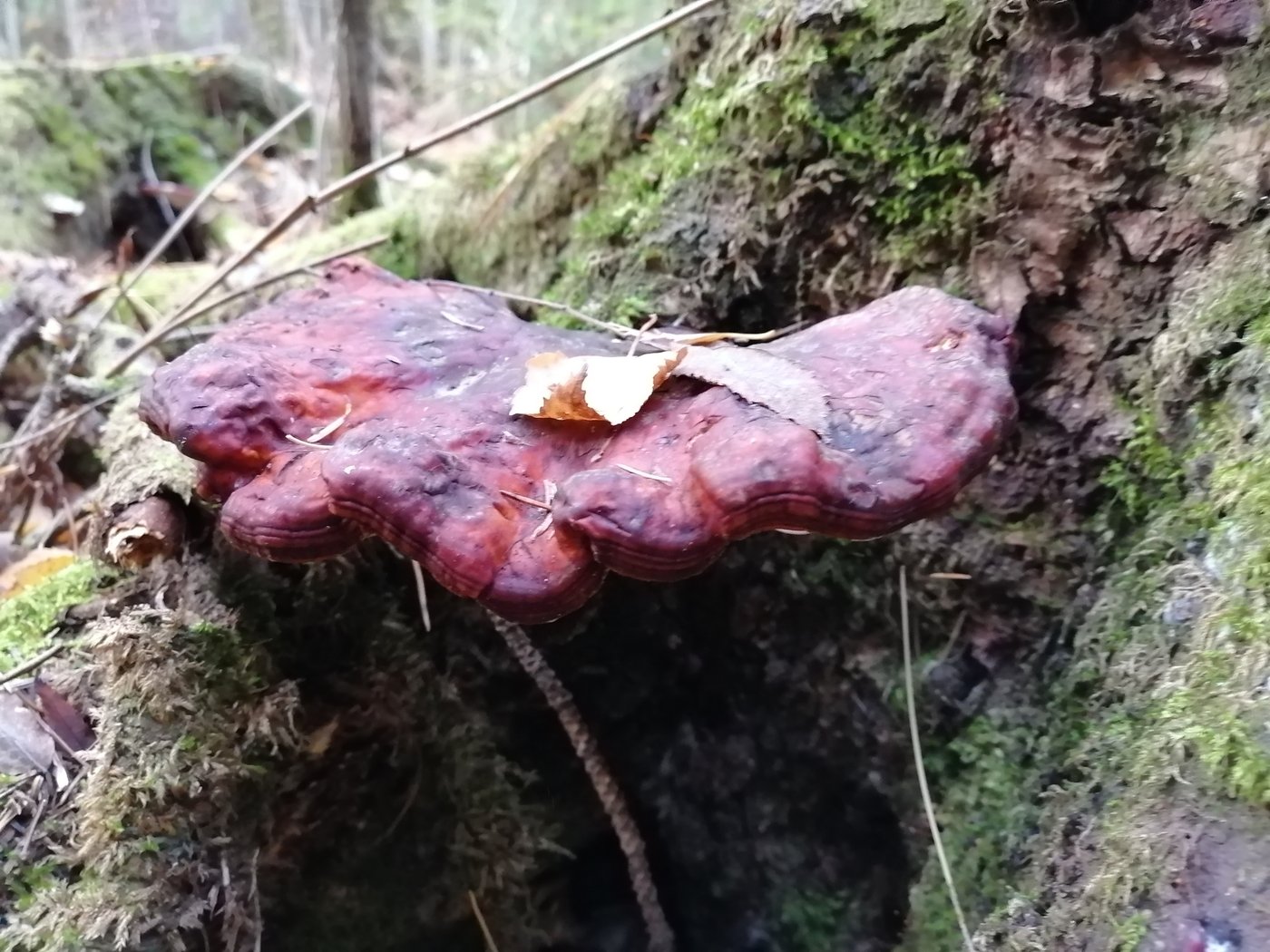
Reishi
Ganoderma lingzhi; Chinese lingzhi
- Known today as
- A lacquered, red-brown bracket of hardwoods.
- Kind
- Fungus, in 2 older authorities
- Constituents
- ganoderic acid A, beta-glucan
- Earliest authority here
- Ge Hong
- In other databases
- GBIF search · Wikidata search
Revised October 1, 2026: Tradition, lore, modern assessment, and sources extended. Version 1, first published September 25, 2026.
Reishi: what was it used for?
Taken in China for strength and long life for two thousand years.
Reishi: what does modern science say?
Its polysaccharides and triterpenes affect the immune system in the laboratory; human evidence is thin, and rare cases of liver injury are reported. Cultivation on logs and sawdust began in Japan in the 1970s and made the once-rare fungus a commodity. A Cochrane review of 2016 found no good evidence that it helps cancer patients, though its polysaccharides stir the immune system in the dish; a few cases of liver injury and of platelet trouble are recorded, so it should not be taken before surgery.
Pharmacognosy & Toxicology
- Constituents
- ganoderic acid A ChEMBLa triterpene
- beta-glucana polysaccharide
- Mechanism
- The β-glucans stimulate immune cells in the dish; the triterpenes are bitter and cytotoxic.
- Toxic dose
- Rare liver injury and bleeding reported.
- Standing
- No approved use; a Cochrane review finds no good evidence in cancer.
- Jin, X., et al. (2016). Cochrane Database of Systematic Reviews. Book, not indexed
Constituent names open the compound’s record at PubChem, and “ChEMBL” beside a name opens its record at ChEMBL, the European Bioinformatics Institute’s database of bioactive molecules. Where a mechanism line was checked against ChEMBL (ChEMBL 37, read 1 October 2026), the check is shown with the measured value and its source paper, or says plainly that nothing has been measured. Doses are as the references give them, for description only; this is not medical advice. Each source carries the result of its check against Crossref, PubMed, or the authority’s page: see Verification.
Reishi: what lore surrounds it?
The Divine Farmer’s Classic of Materia Medica, compiled in the Han dynasty, ranks it among the superior drugs that nourish life. It became a symbol of immortality in Chinese art.
The ruyi sceptre of the Chinese court, the sign of “as you wish,” is carved in the lobed shape of the lingzhi, and the fungus appears in the hands of the goddess Guanyin and in the carvings of the Forbidden City. Wild, it was rare enough to be sent to emperors as a portent.
Reishi: what did the older authorities say?
- Ge Hong
- In the Baopuzi of the fourth century the Taoist alchemist lists the zhi fungi among the means to immortality, and Taoist retreats were called the abodes of the mushrooms.
- Li Shizhen
- In the Bencao gangmu (completed 1578) describes six coloured zhi, each for an organ, and says the red strengthens the heart and the memory.
Sources
- Shennong bencao jing (Han dynasty). Read in part · the text read
- Ge Hong, Baopuzi. Book, seen in reviews
- Jin, X., et al. (2016). “Ganoderma lucidum (reishi mushroom) for the treatment of cancer.” Cochrane Database of Systematic Reviews. Verified against its record · doi:10.1002/14651858.cd007731.pub3
Verification
- Checked
- October 1, 2026
- Passes
- Every sentence read against its sources, in the fifty-entry sample
- The Standing line checked against the authority it names (EMA, WHO, FDA, CITES, Commission E)
- Every dated or regulatory claim checked by category across the database
- Sources
- 4 cited: 1 read in part, 1 verified against its record, 1 book, seen in reviews, 1 book, not indexed.
- Corrections
- dated the Bencao gangmu to 1596 while the red yeast rice entry dated it 1578. Now "completed 1578" in both.
What was checked, how, and what was found is set out on the Verification page. A checked source is one whose record was found; it does not make the entry medical advice.
Cite This Entry
Version 1 · first published September 25, 2026 · last revised October 1, 2026
- Chicago
“Reishi.” In Materia Medica, edited by B. C. P. Statema. Version 1. The Thinking Press, 2026–. Last modified October 1, 2026. https://thethinkingpress.org/materia-medica/reishi.
- MLA
“Reishi.” Materia Medica, edited by B. C. P. Statema, version 1, The Thinking Press, 1 Oct. 2026, thethinkingpress.org/materia-medica/reishi. Accessed 8 Oct. 2026.
- APA
Reishi. (2026, October 1). In B. C. P. Statema (Ed.), Materia medica (Version 1). The Thinking Press. Retrieved October 8, 2026, from https://thethinkingpress.org/materia-medica/reishi
Club members keep entries on a shelf with private notes, print the plates as cards, and receive an entry by email each week. Create a free account before January 1, 2027 and all of it is yours for good. About the Club
See Also
Sharing beta-glucan
Drawing on the same sources: Jin
Nearby in the alphabet
Rhubarb (Rheum officinale and R) · Red yeast rice (Rice fermented with a red mould) · Rocket (salad rocket) · Red roses (Dried petals of Rosa gallica) · The Roman Ritual (issued by Pope Paul V in 1614, the year of Canale’s treatise) · Ramps (the wild leek of the hardwood forests of the Great Lakes and the East) · Roquefort mould (The blue mould of blue cheeses) · Raisins (Dried grapes)

Historical description, not medical advice.