
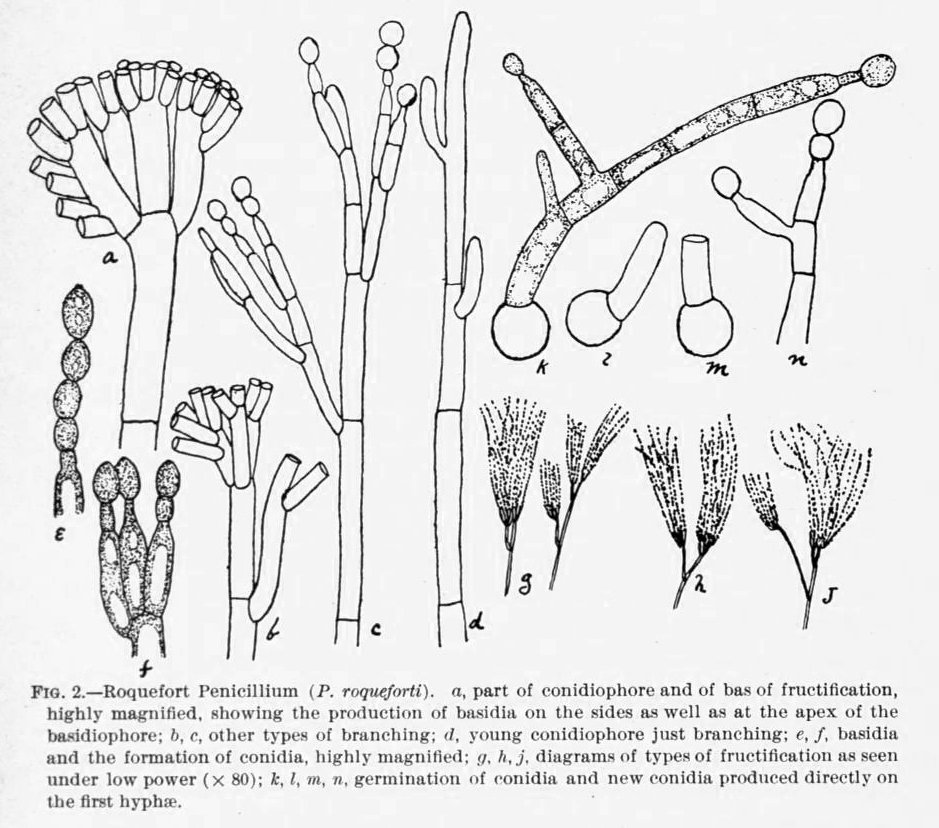
Roquefort mould
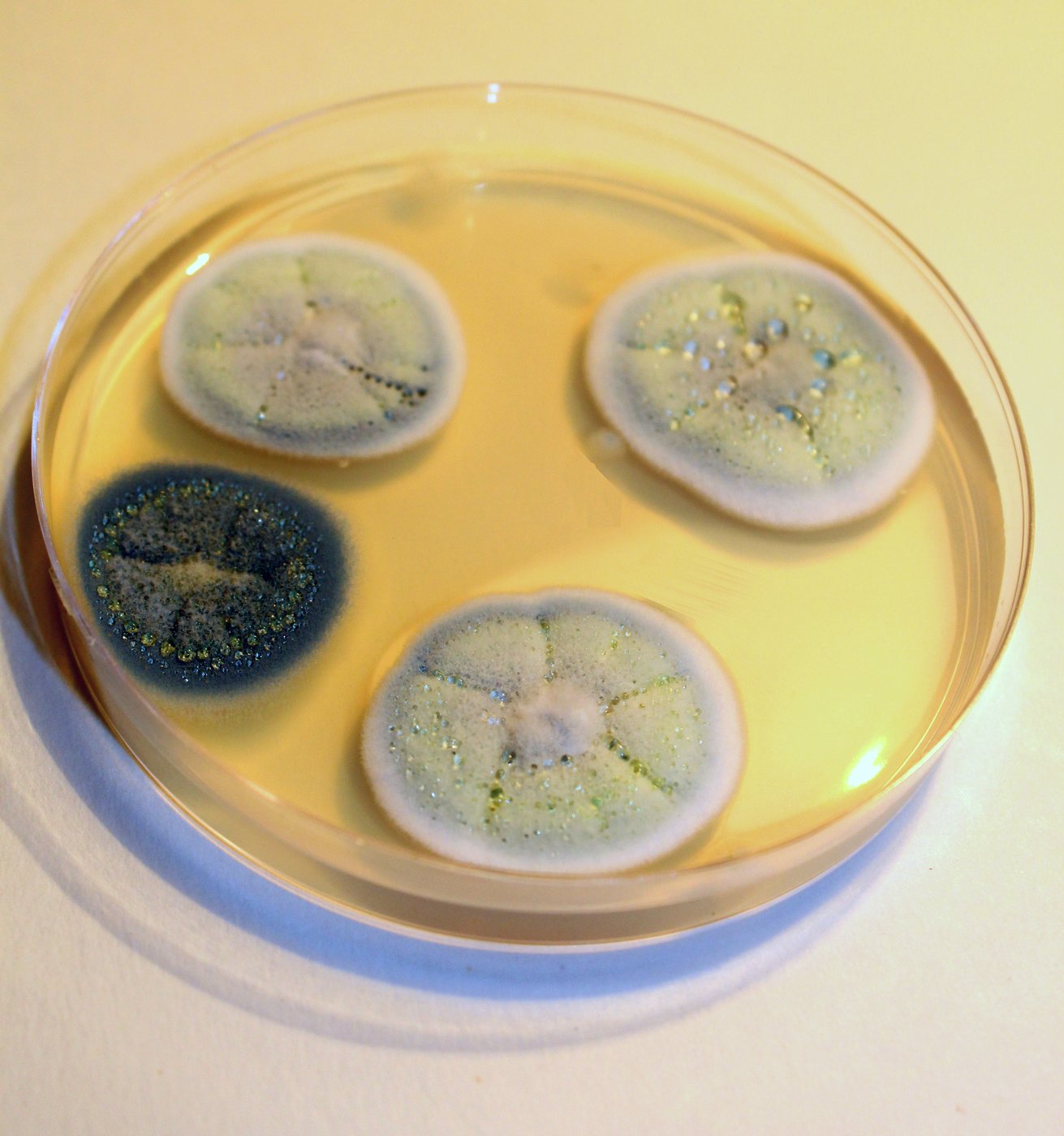
Penicillium roqueforti
- Known today as
- The blue mould of blue cheeses.
- Kind
- Fungus
- Constituents
- roquefortine C, PR toxin, mycophenolic acid, and 1 more
- In other databases
- GBIF search · Wikidata search
Revised October 1, 2026: The mechanism extended from ChEMBL's curated records. Version 1, first published September 25, 2026.
Roquefort mould: what was it used for?
Ripens Roquefort in the caves of Mount Combalou.
Roquefort mould: what does modern science say?
Safe to eat in cheese; a relative of the penicillin moulds.
Pharmacognosy & Toxicology
- Constituents
- roquefortine C ChEMBLa neurotoxic alkaloid, at low levels
- PR toxinunstable in cheese
- mycophenolic acid ChEMBLan immunosuppressant, in traces
- andrastins
- Mechanism
- The mould makes several mycotoxins in culture, and the cheese contains traces of roquefortine C and mycophenolic acid, which risk assessments have found far below any harmful dose; the lipases and proteases of the mould make the cheese. Mycophenolic acid from the related P. brevicompactum is the transplant drug mycophenolate; it inhibits IMPDH, the enzyme lymphocytes need to make guanine nucleotides.
- Checked against ChEMBL
- mycophenolic acid: ChEMBL’s curated mechanism: inhibitor Inosine-5'-monophosphate dehydrogenase (IMPDH).
- Toxic dose
- A food; the mycotoxins in cheese are below the levels of concern.
- Standing
- A food; the fungus is not on the European Union’s qualified-presumption-of-safety list, which excludes filamentous fungi, though EFSA has found no evidence that the cheese harms health.
- Fontaine, K., et al. (2015). “Occurrence of roquefortine C, mycophenolic acid and aflatoxin M1 mycotoxins in blue-veined cheeses.” Food Control 47. Verified against its record · doi:10.1016/j.foodcont.2014.07.046
Constituent names open the compound’s record at PubChem, and “ChEMBL” beside a name opens its record at ChEMBL, the European Bioinformatics Institute’s database of bioactive molecules. Where a mechanism line was checked against ChEMBL (ChEMBL 37, read 1 October 2026), the check is shown with the measured value and its source paper, or says plainly that nothing has been measured. Doses are as the references give them, for description only; this is not medical advice. Each source carries the result of its check against Crossref, PubMed, or the authority’s page: see Verification.
Roquefort mould: what lore surrounds it?
In 1411 Charles VI of France granted the people of Roquefort-sur-Soulzon the sole right to ripen the cheese in their caves.
In Their Own Words
The 1911 Britannica says Roquefort is made from ewes' milk in Aveyron, cured in the natural mountain caves at Roquefort, and is abundantly veined with a greenish-blue mould.
“Roquefort cheese is made from the milk of ewes, which are kept chiefly as dairy animals in the department of Aveyron, and the cheese is cured in the natural mountain caves at the village of Roquefort. It is a small, rather soft, white cheese, abundantly veined with a greenish-blue mould”
Encyclopædia Britannica, eleventh edition: Dairy, “Dairy”: French cheeses. The 1911 Encyclopædia Britannica, as transcribed on Wikisource. The text, read in part
Each passage is quoted from the text named, which the press fetched and read, and was checked word for word against a fresh copy of it; the link opens that copy. Passages are given as printed, without the editors’ footnote numbers, and with words broken across lines joined.
Sources
- The charter of Charles VI for Roquefort-sur-Soulzon (1411). Book, not indexed
Verification
- Checked
- October 1, 2026
- Passes
- Every sentence read against its sources, in the pass over the remaining 343 entries
- The Standing line checked against the authority it names (EMA, WHO, FDA, CITES, Commission E)
- Every dated or regulatory claim checked by category across the database
- The mechanism read against ChEMBL (ChEMBL 37): curated mechanisms and measured activity
- Sources
- 2 cited: 1 verified against its record, 1 book, not indexed.
- Corrections
- said the fungus is on the EU qualified-presumption-of-safety list. It is not; EFSA excludes filamentous fungi from that list (while finding no evidence the cheese harms health).
What was checked, how, and what was found is set out on the Verification page. A checked source is one whose record was found; it does not make the entry medical advice.
Cite This Entry
Version 1 · first published September 25, 2026 · last revised October 1, 2026
- Chicago
“Roquefort mould.” In Materia Medica, edited by B. C. P. Statema. Version 1. The Thinking Press, 2026–. Last modified October 1, 2026. https://thethinkingpress.org/materia-medica/roquefort-mould.
- MLA
“Roquefort mould.” Materia Medica, edited by B. C. P. Statema, version 1, The Thinking Press, 1 Oct. 2026, thethinkingpress.org/materia-medica/roquefort-mould. Accessed 8 Oct. 2026.
- APA
Roquefort mould. (2026, October 1). In B. C. P. Statema (Ed.), Materia medica (Version 1). The Thinking Press. Retrieved October 8, 2026, from https://thethinkingpress.org/materia-medica/roquefort-mould
Club members keep entries on a shelf with private notes, print the plates as cards, and receive an entry by email each week. Create a free account before January 1, 2027 and all of it is yours for good. About the Club
See Also
Nearby in the alphabet
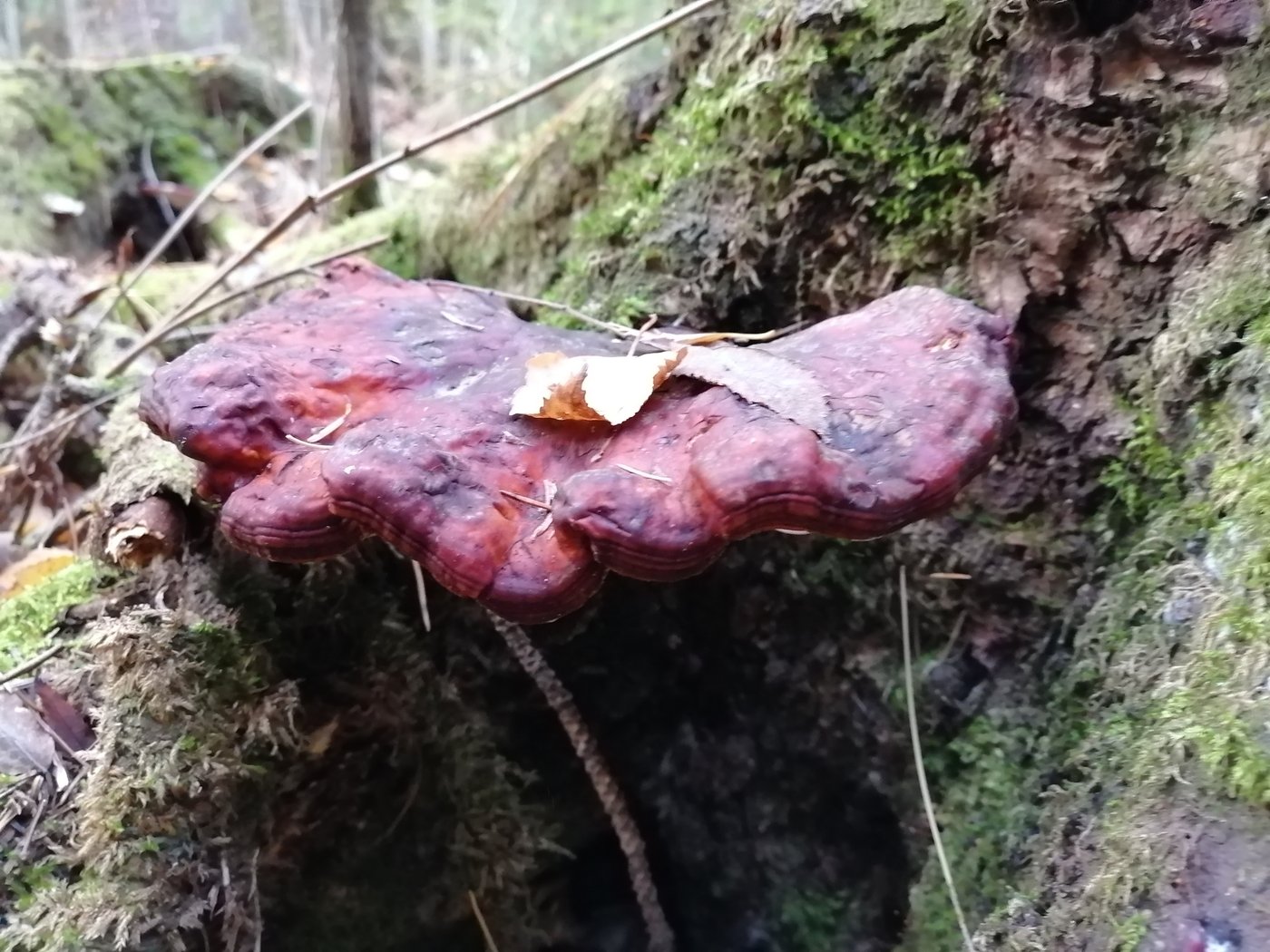
Rosary (Strings of prayer beads) · The Roman Ritual (issued by Pope Paul V in 1614, the year of Canale’s treatise) · Rose · Rocket (salad rocket) · Rosemary (Salvia rosmarinus (formerly Rosmarinus officinalis)) · Rhubarb (Rheum officinale and R) · Rosemary rice water (A rinse for the hair and the skin made in the kitchen) · Reishi (red-brown bracket of hardwoods)

Historical description, not medical advice.