
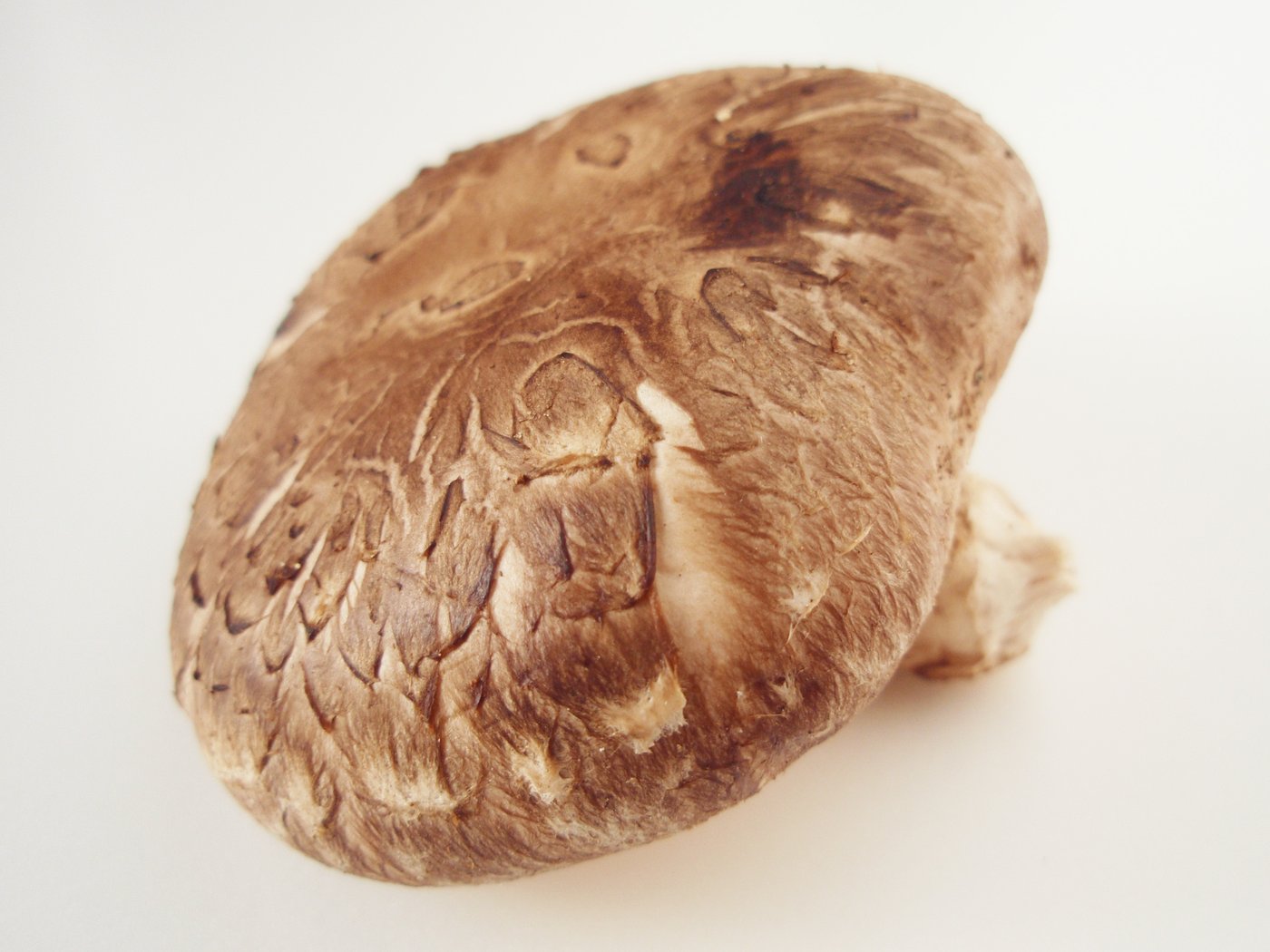
Shiitake
Lentinula edodes
- Known today as
- An edible mushroom first grown in Japan and China, now the second most cultivated mushroom in the world.
- Kind
- Fungus
- Constituents
- lentinan, eritadenine, lenthionine
- In other databases
- GBIF search · Wikidata search
Revised October 17, 2026: Checked against its sources, each read in full, in part, or in its abstract. Version 1, first published September 25, 2026.
Shiitake: what was it used for?
Food and medicine in the East.
Shiitake: what does modern science say?
Its polysaccharide lentinan has been used in Japan in cancer treatment. Eaten raw or undercooked it can cause a whip-like rash.
The toxic dose and the poisoning
- Toxic dose
- Shiitake dermatitis from raw mushrooms, usually clearing in weeks.
The references for these lines are listed under Pharmacognosy, in Science. Doses are as the references give them, for description only; this is not medical advice. In a poisoning, call a poison centre.
Shiitake: what lore surrounds it?
It has been used as a medicine in East Asia for more than two thousand years.
In Their Own Words
B. M. Duggar describes the Japanese Shiitake (Cortinellus Shiitake) as having been cultivated in this manner (on wood) for several centuries, sold fresh and also preserved for export, and says China offered a good market for dried mushrooms from Japan and New Zealand.
“The fungus has been cultivated in this manner for several centuries. It is sold as fresh product and is also preserved for the export trade. It is said that China offers a good market for dried mushrooms shipped both from Japan and New Zealand.”
B. M. Duggar, Mushroom Growing, Cortinellus, pp. 161–163. New York: Orange Judd Company; London: Kegan Paul, Trench, Trübner & Co., Limited, 1915 (Internet Archive OCR text). The text, read in part
Each passage is quoted from the text named, which the press fetched and read, and was checked word for word against a fresh copy of it; the link opens that copy. Passages are given as printed, without the editors’ footnote numbers, and with words broken across lines joined.
Pharmacognosy
- Constituents
- lentinan ChEMBLa β-glucan
- eritadenine ChEMBLlowers cholesterol in animals
- lenthionine ChEMBLthe chief odour
- Mechanism
- Lentinan, injected, stirs the immune system and is licensed in Japan beside chemotherapy for gastric cancer; eaten raw or undercooked, the mushroom causes a whip-like rash, shiitake dermatitis, in a few people.
- Standing
- A food; lentinan is an approved drug in Japan and some other Asian countries.
- Nakamura, T. (1992). “Shiitake (Lentinus edodes) dermatitis.” Contact Dermatitis 27. Abstract read · the text read
- Ina, K., et al. (2013). “The use of lentinan for treating gastric cancer.” Anti-Cancer Agents in Medicinal Chemistry 13. Abstract read · the text read
The abstract of each source, beneath its citation. For Club members. About the Club or sign in.
Constituent names open the compound’s record at PubChem, and “ChEMBL” beside a name opens its record at ChEMBL, the European Bioinformatics Institute’s database of bioactive molecules. Where a mechanism line was checked against ChEMBL (ChEMBL 37, read 1 October 2026), the check is shown with the measured value and its source paper, or says plainly that nothing has been measured. Doses are as the references give them, for description only; this is not medical advice. Each source carries the result of its check against Crossref, PubMed, or the authority’s page: see Verification.
Sources
- National Cancer Institute, PDQ: Medicinal Mushrooms. Read in full · the text read
- Lindequist, U. (2024). Medicinal mushrooms as multicomponent mixtures: demonstrated with the example of Lentinula edodes. Journal of Fungi 10: 153. Read in full · the text read
- Boels, D., et al. (2014). Shiitake dermatitis recorded by French poison control centers: new case series with clinical observations. Clinical Toxicology. Abstract read · the text read
Verification
- Checked
- October 1, 2026, October 17, 2026
- Passes
- Read against its sources in the pass over the remaining 343 entries
- Every dated or regulatory claim checked by category across the database
- Every source read, in full, in part, or in its abstract, and every sentence checked against what was read (October 17, 2026)
- Sources
- 5 cited: 2 read in full, 3 abstract read. 3 with the abstract on file.
- Corrections
- None recorded.
What was checked, how, and what was found is set out on the Verification page. A checked source is one whose record was found; it does not make the entry medical advice.
Club members can point at a technical term in this entry, such as a constituent, an action, or a word of Jung’s, to read its definition from the source. The Club.
Cite This Entry
Version 1 · first published September 25, 2026 · last revised October 17, 2026
- Chicago
“Shiitake.” In Materia Medica, edited by B. C. P. Statema. Version 1. The Thinking Press, 2026–. Last modified October 17, 2026. https://thethinkingpress.org/materia-medica/shiitake.
- MLA
“Shiitake.” Materia Medica, edited by B. C. P. Statema, version 1, The Thinking Press, 17 Oct. 2026, thethinkingpress.org/materia-medica/shiitake. Accessed 22 Nov. 2026.
- APA
Shiitake. (2026, October 17). In B. C. P. Statema (Ed.), Materia medica (Version 1). The Thinking Press. Retrieved November 22, 2026, from https://thethinkingpress.org/materia-medica/shiitake
See Also
Nearby in the alphabet
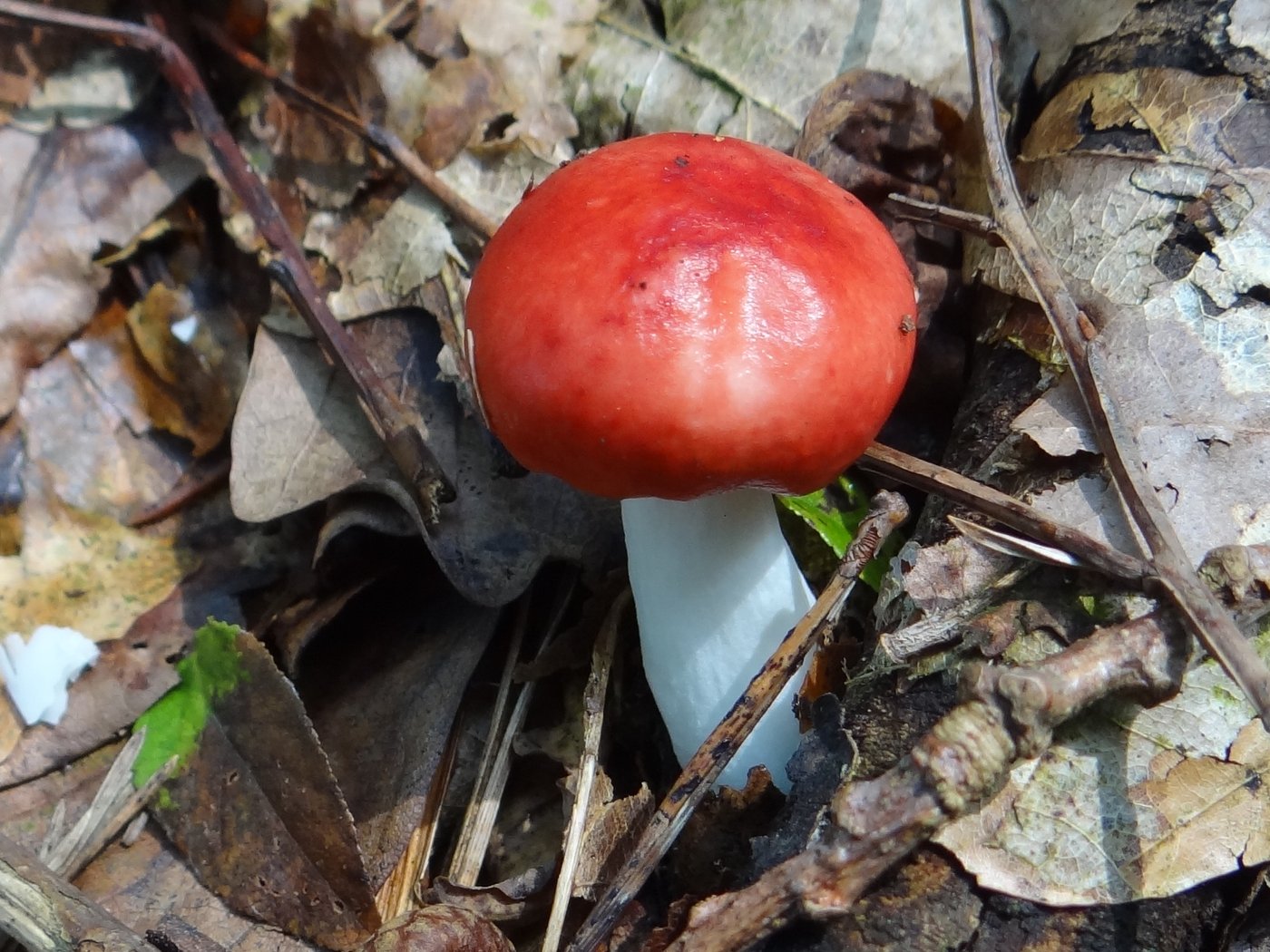
The sickener (very fragile mushroom of woods, especially of beech) · Shepherd’s purse · Silphium (probably a giant fennel (Ferula)) · Senna (The leaves and pods of Senna alexandrina) · Silver · Self-heal (Prunella vulgaris) · Skullcap · Scapular (worn over the shoulders, a miniature of the monastic scapular)
Historical description, not medical advice.

