
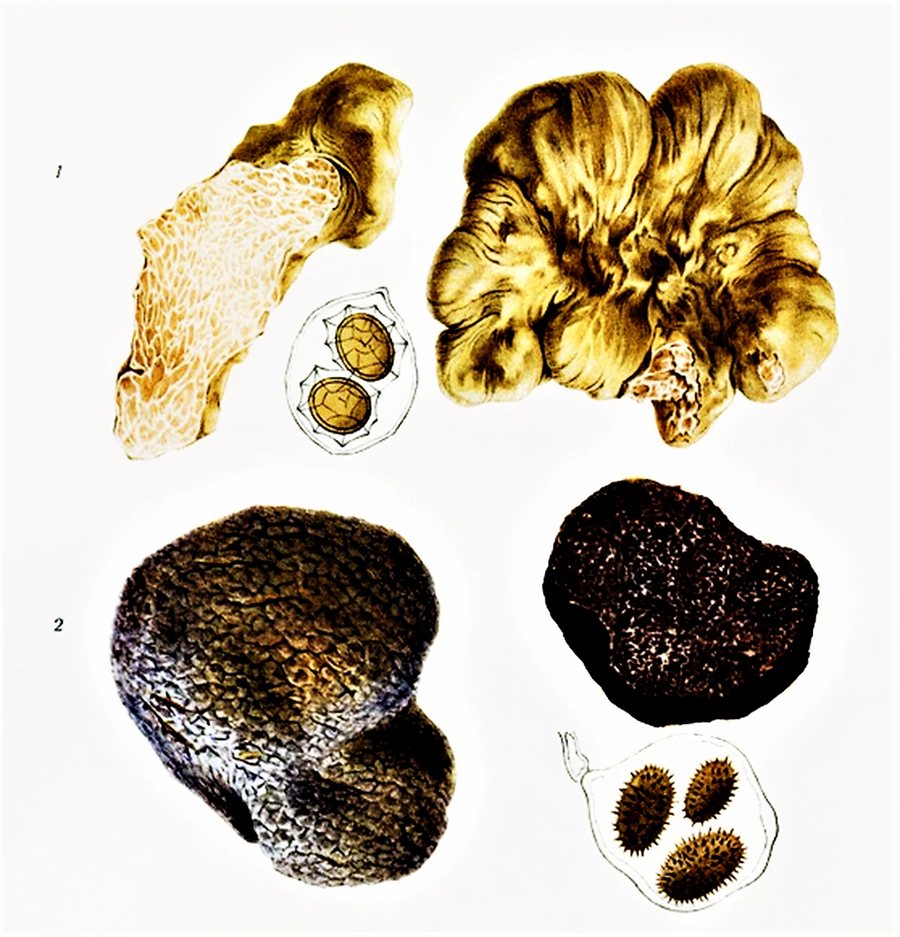
Truffle
Tuber melanosporum, T. magnatum
- Known today as
- Underground fruiting bodies of fungi that live with the roots of oak and hazel.
- Kind
- Fungus, in 1 older authority
- Constituents
- dimethyl sulfide, androstenol
- Earliest authority here
- Pliny (AD 23/24–79)
- Qualities
- Cold and moist, as Galen held of all mushrooms. What the degrees mean
- In other databases
- GBIF search · Wikidata search
Revised October 1, 2026: An older authority added from a text read in full. Version 1, first published September 25, 2026.
Truffle: what was it used for?
A food of princes, and in old medicine a heating aphrodisiac.
Truffle: what does modern science say?
Found by pigs and dogs through their smell, which mimics a pig sex hormone.
Pharmacognosy & Toxicology
- Constituents
- dimethyl sulfide ChEMBLthe scent the pig and the dog find
- androstenol ChEMBLa boar pheromone, found in the black truffle in 1981
- Mechanism
- The scent compounds; nothing medicinal. Androstenol was proposed in 1981 to explain the sow’s eagerness, but pigs ignore the pure steroid and follow dimethyl sulfide (Talou, 1990); the dog has replaced the sow because it does not eat the find.
- Toxic dose
- None.
- Standing
- A food.
- Talou, T., et al. (1990). “Dimethyl sulphide: the secret for black truffle hunting by animals?” Mycological Research 94. Verified against its record · doi:10.1016/s0953-7562(09)80630-8
Constituent names open the compound’s record at PubChem, and “ChEMBL” beside a name opens its record at ChEMBL, the European Bioinformatics Institute’s database of bioactive molecules. Where a mechanism line was checked against ChEMBL (ChEMBL 37, read 1 October 2026), the check is shown with the measured value and its source paper, or says plainly that nothing has been measured. Doses are as the references give them, for description only; this is not medical advice. Each source carries the result of its check against Crossref, PubMed, or the authority’s page: see Verification.
Truffle: what lore surrounds it?
Plutarch asks at table why truffles were thought to be born of thunder. Brillat-Savarin called the truffle the diamond of the kitchen.
Truffle: what did the older authorities say?
- Pliny
- Of the marvels of Nature “the very greatest of all, beyond a doubt, is the fact that any plant should spring up and grow without a root,” and such is the truffle, “connected with it by no fibres, not so much as a single thread even,” which he concludes is “nothing else but a callous concretion of the earth”: it grows in dry sandy soils, often larger than a quince and weighing a pound, in two kinds, one full of sand and bad for the teeth, red or black outside and white within, those of Africa the most esteemed; they come after autumn showers and thunderstorms, “thunder contributing more particularly to their developement,” last no more than a year, and are most delicate in spring.
Sources
- Plutarch, Table Talk. Book, seen in reviews
- Brillat-Savarin, J. A. (1825). Physiologie du goût. Book, seen in reviews
- Pliny the Elder, Natural History 19.11, 19.13, trans. J. Bostock & H. T. Riley (1855), Perseus Digital Library. Primary text
Verification
- Checked
- October 1, 2026
- Passes
- Every sentence read against its sources, in the pass over the remaining 343 entries
- The Standing line checked against the authority it names (EMA, WHO, FDA, CITES, Commission E)
- Every dated or regulatory claim checked by category across the database
- Each quotation from the older authorities checked word for word against the text, read in full
- Sources
- 4 cited: 1 verified against its record, 1 primary text, 2 book, seen in reviews.
- Corrections
- androstenol was found in the black truffle (Claus, 1981), not the white, and the entry's own cited source (Talou, 1990) showed pigs ignore the pure steroid and follow dimethyl sulfide. The mechanism now says so.
What was checked, how, and what was found is set out on the Verification page. A checked source is one whose record was found; it does not make the entry medical advice.
Cite This Entry
Version 1 · first published September 25, 2026 · last revised October 1, 2026
- Chicago
“Truffle.” In Materia Medica, edited by B. C. P. Statema. Version 1. The Thinking Press, 2026–. Last modified October 1, 2026. https://thethinkingpress.org/materia-medica/truffle.
- MLA
“Truffle.” Materia Medica, edited by B. C. P. Statema, version 1, The Thinking Press, 1 Oct. 2026, thethinkingpress.org/materia-medica/truffle. Accessed 8 Oct. 2026.
- APA
Truffle. (2026, October 1). In B. C. P. Statema (Ed.), Materia medica (Version 1). The Thinking Press. Retrieved October 8, 2026, from https://thethinkingpress.org/materia-medica/truffle
Club members keep entries on a shelf with private notes, print the plates as cards, and receive an entry by email each week. Create a free account before January 1, 2027 and all of it is yours for good. About the Club
See Also
Also in Pliny the Elder
Turpentine in Pliny the Elder · Troche of agaric in Pliny the Elder · Verbena in Pliny the Elder · Tongue stones in Pliny the Elder · everything Pliny the Elder names →
Drawing on the same sources: Plutarch
Of the same qualities: cold and moist
Violet, lettuce, sow-thistle · Saffron milk cap · Caesar’s mushroom · Quicksilver · Houseleek · Purslane · what the degrees mean →
Nearby in the alphabet
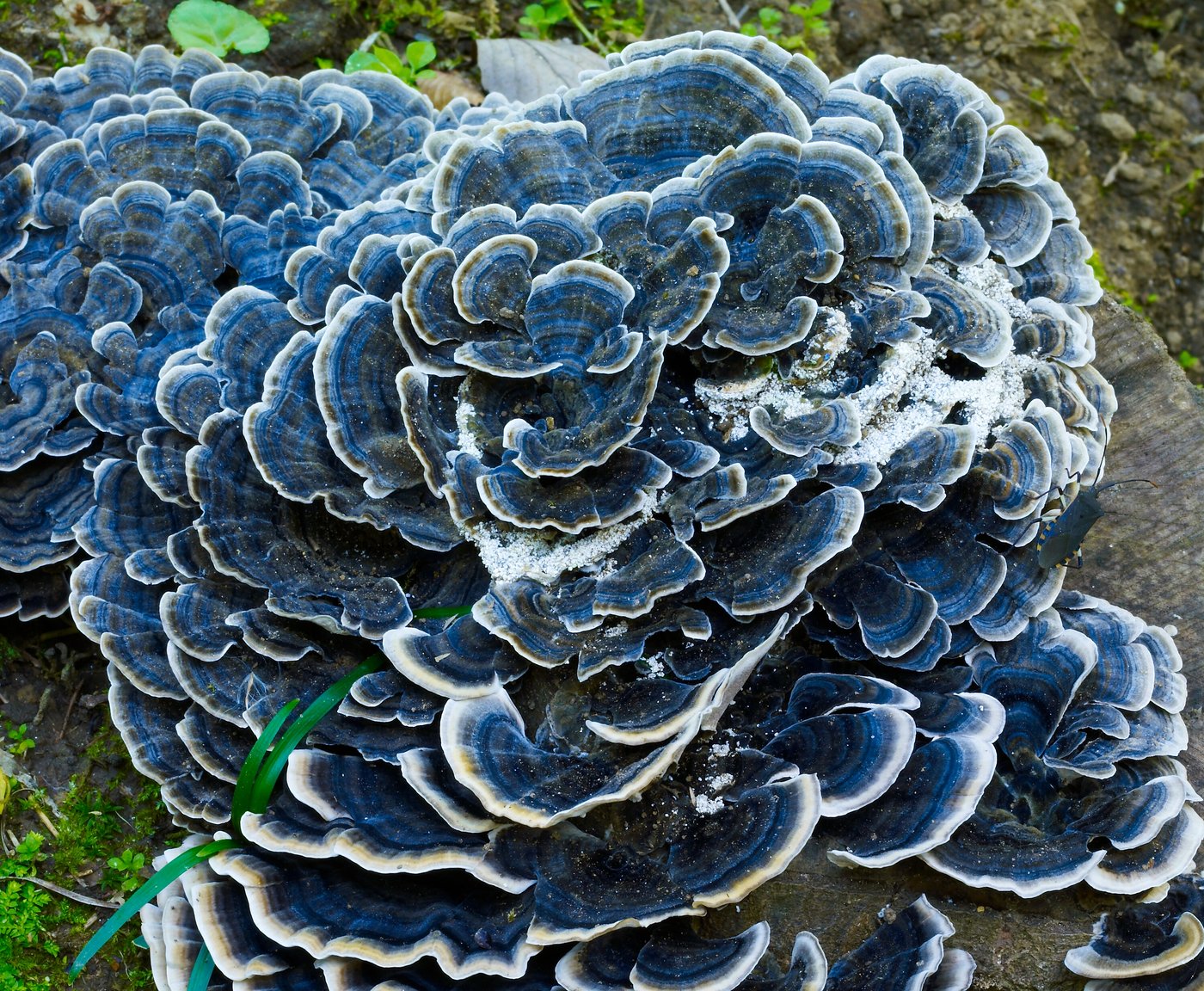
Turkey tail (banded bracket of dead wood, common worldwide) · Turmeric (of the ginger family, whose root is deep yellow within) · Touch-pieces · Tormentil · Unicorn’s horn (Monodon monoceros)
Historical description, not medical advice.